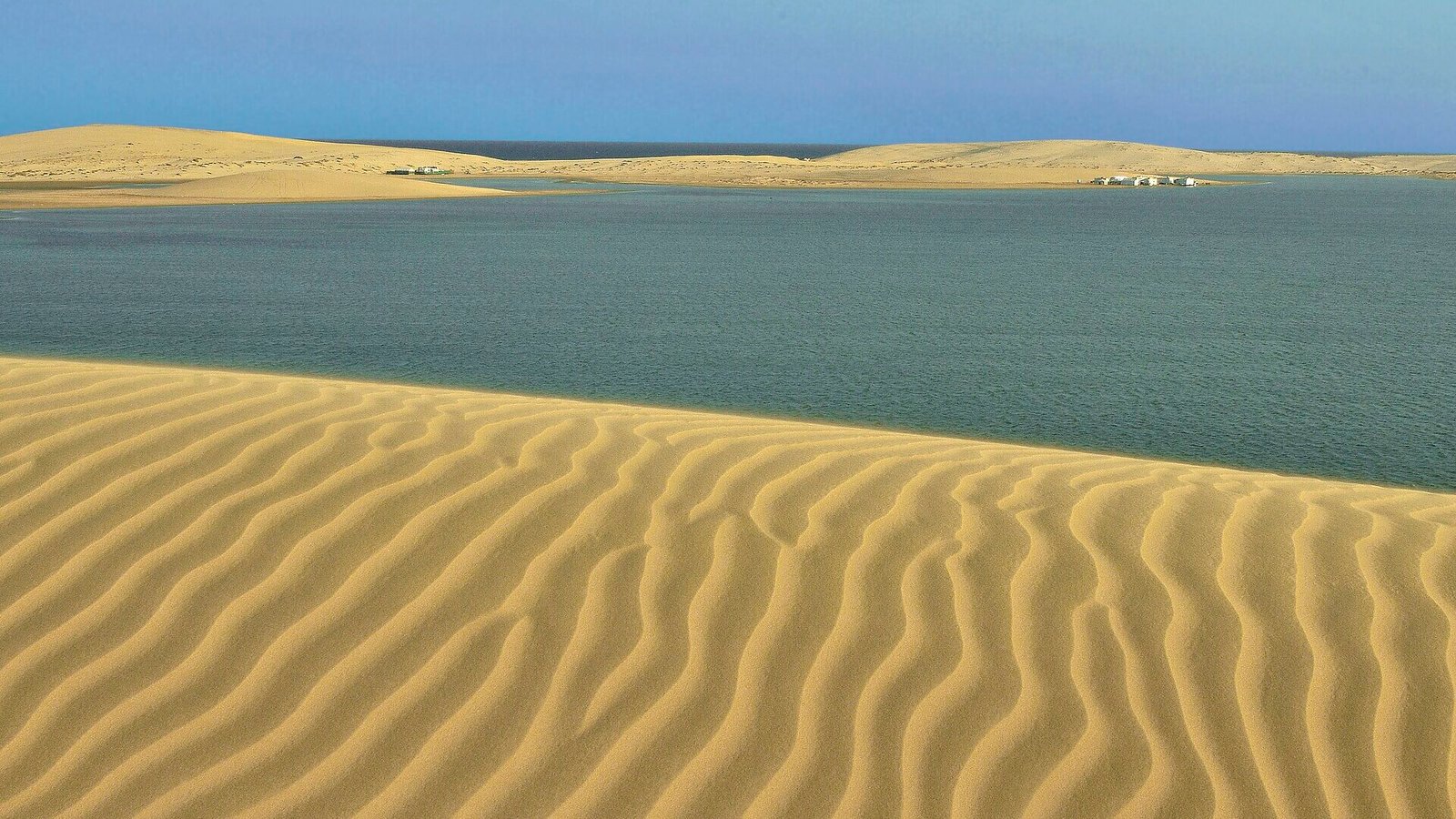
Khor Al Adaid Inland Sea, Al Wakrah
Qatar's Inland Sea, where dunes meet a tidal lagoon on the Saudi border. How to plan it: tour or self-drive, camping, safety and timing.
Khor Al Adaid, Al Wakrah (south-east Qatar, via Sealine)
Overview
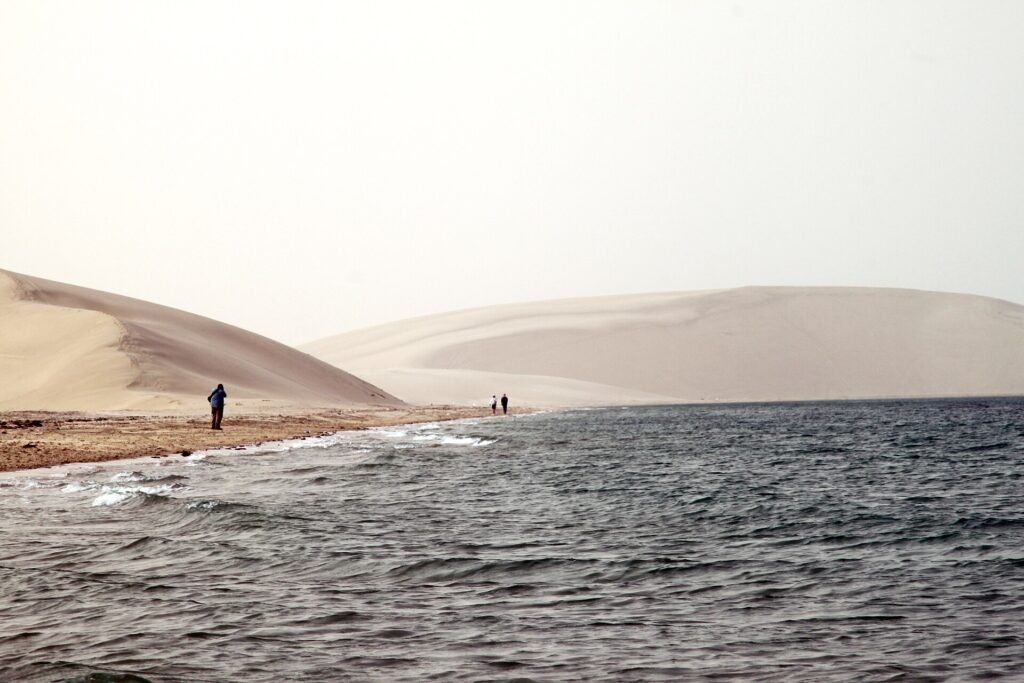
Khor Al Adaid is where Qatar’s desert runs straight into the sea. In the far south-east of the country, about 78 km from Doha and right against the border with Saudi Arabia, a narrow tidal channel leaves the Gulf and winds inland to a wide, shallow lagoon ringed by pale sand dunes. Locals and residents simply call it the Inland Sea.
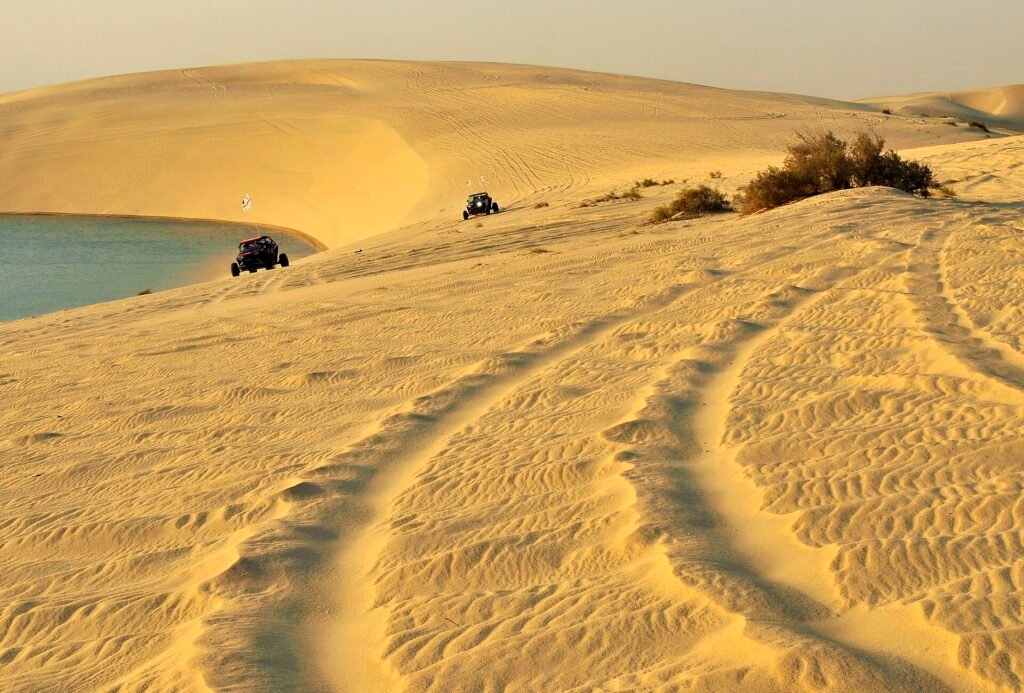
There is no road to the water. Every visit ends with a drive across open dunes from the Sealine area south of Mesaieed, and that drive shapes the whole trip. It decides whether you book a tour or take your own 4×4, how long you stay, whether you sleep out under the stars and how much you need to pack. Get the planning right and it is one of the best days out in Qatar. Get it wrong and you can spend the afternoon digging a car out of soft sand with no phone signal.
This guide is about the planning. It walks you through the choice between a tour and a self-drive, what an overnight stay really involves, the safety rules that experienced desert drivers follow, and what to do once you reach the shore. It suits first-time visitors, families, photographers and anyone thinking of taking their own car into the dunes for the first time.
History and background
Khor Al Adaid (also written Khawr al Udayd or Khor Al Udeid) is part of Al Wakrah municipality. Qatar declared the area a nature reserve in 2007, and it is on UNESCO’s Tentative List of sites proposed for World Heritage status. Visit Qatar describes a tidal bay around 10 km long, dunes that reach about 40 metres, and a landscape of rocky ridges, cliffs and coastal sabkha, the flat salt crusts that form where seawater evaporates in the heat. It is the country’s largest protected area.
The empty shoreline has a surprisingly busy past. According to Wikipedia’s summary of British records, members of the Al Kubaisat section of the Bani Yas tribe moved here from Abu Dhabi in several waves between 1835 and 1869. They repaired boats and dived for pearls, and by 1869 the settlement was said to have around 200 people and 30 pearling vessels. The inlet also had a reputation among British naval officers as a refuge for raiders. Disputes with Abu Dhabi, a raid on the village in 1879 and a lack of fresh water ended the settlement, which had been abandoned by 1880.
The lagoon’s position kept it at the centre of regional border questions through the 20th century, with Qatar, Saudi Arabia and Abu Dhabi all involved at different times. A 1974 agreement placed it against the Saudi border rather than Abu Dhabi, and Qatar and Saudi Arabia completed the demarcation of their land border in 2021. The views you get across the water today take in both countries, which is worth remembering when you choose where to drive.
Wildlife is a big part of why the area is protected. Visit Qatar lists Arabian oryx, Arabian gazelle, desert foxes, dugongs, green sea turtles, flamingos, stingrays and sea slugs among the species found in and around the reserve, and ospreys nest on this coast. At low tide you may also spot fossil shells in the rock along the shore.
What to see and do
Choose your trip: tour or self-drive
This is the decision that matters most, so make it first.
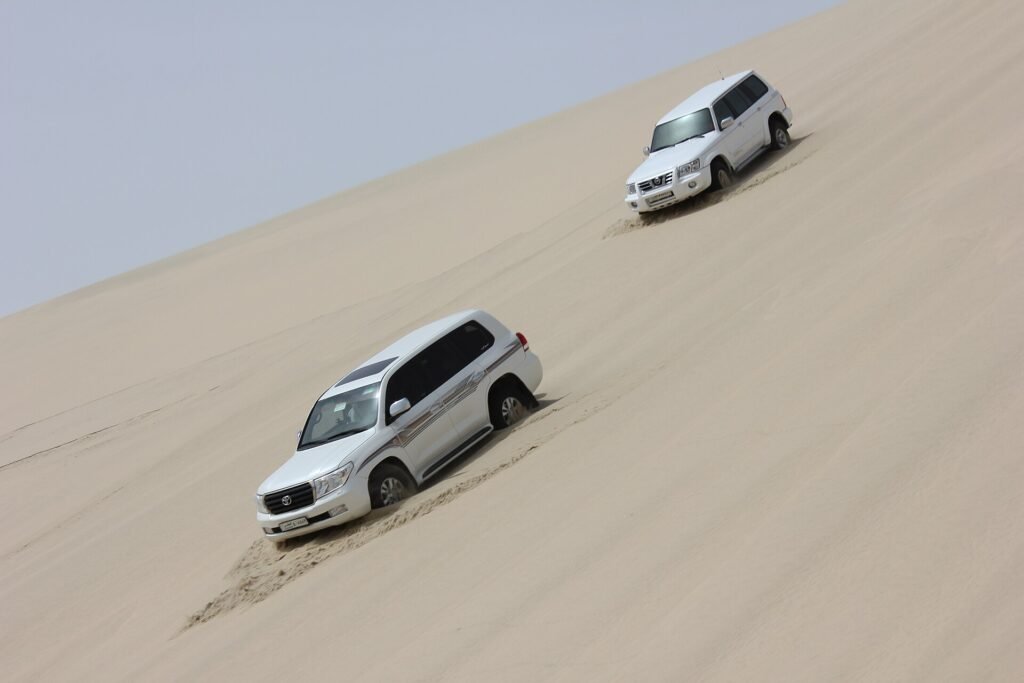
A guided desert safari is how most people go, and for good reason. The operator provides a 4×4 and a driver who knows the dunes, usually collects you from your hotel or home in Doha, handles tyre pressure and recovery if anything goes wrong, and times the trip around the light and the heat. Half-day afternoon trips that end with sunset at the water are the most popular format. Many packages add sandboarding, a camel ride or quad biking near Sealine, and some include a stop at a camp for dinner. Prices vary by operator, season, group size and whether the car is shared or private, so compare what is included before you book. Transit tours for airport layover passengers also exist, lasting around four hours.
Driving yourself gives you freedom over timing and where you stop, but it is only sensible if you have real dune-driving experience, a capable 4×4 in good condition and at least one other vehicle travelling with you. If you have driven on sand in the Gulf before and know how to recover a stuck car, it can be a superb day. If you have not, book a tour for your first visit and watch how the driver handles the slopes.
The dune crossing
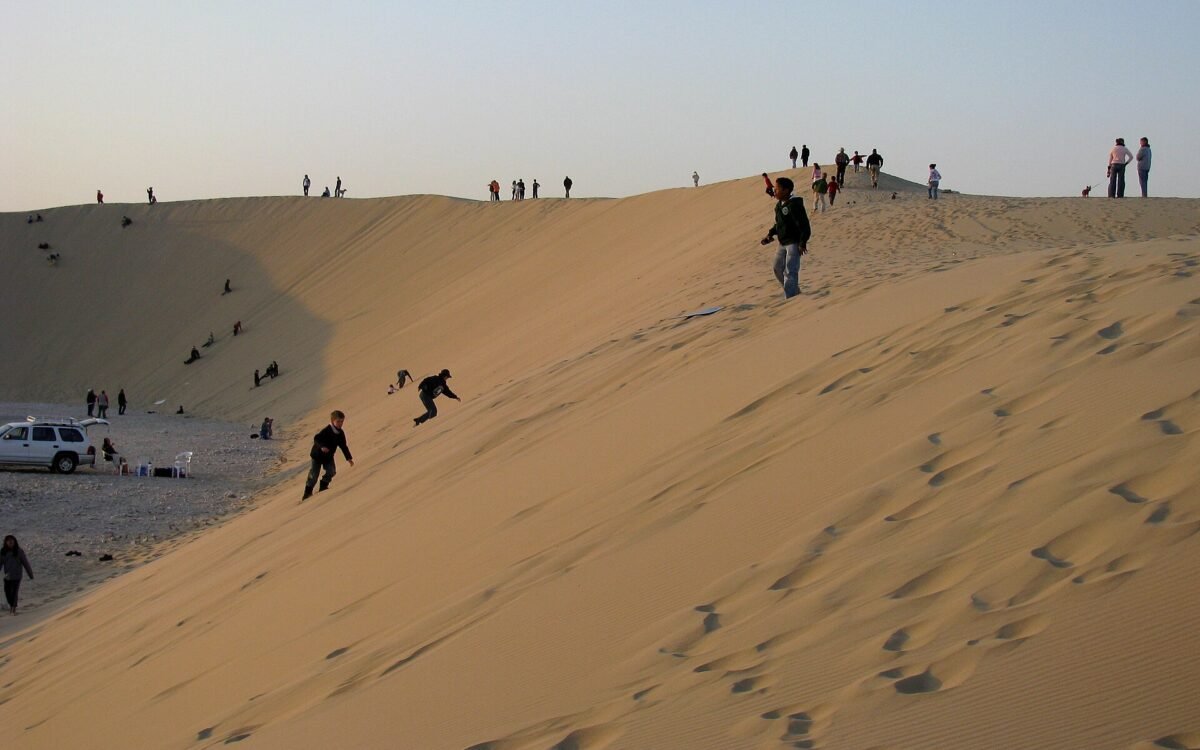
The drive from the end of the tarmac at Sealine to the water takes around 40 minutes to an hour, depending on your route and how much you stop. Drivers climb the dune faces at an angle, crest them slowly and slide down the soft lee side. Passengers who get car sick should sit in the front and say so before you set off. Good tour drivers will tone things down if you ask. For many visitors the crossing is as memorable as the lagoon itself.
Swimming and paddling in the lagoon
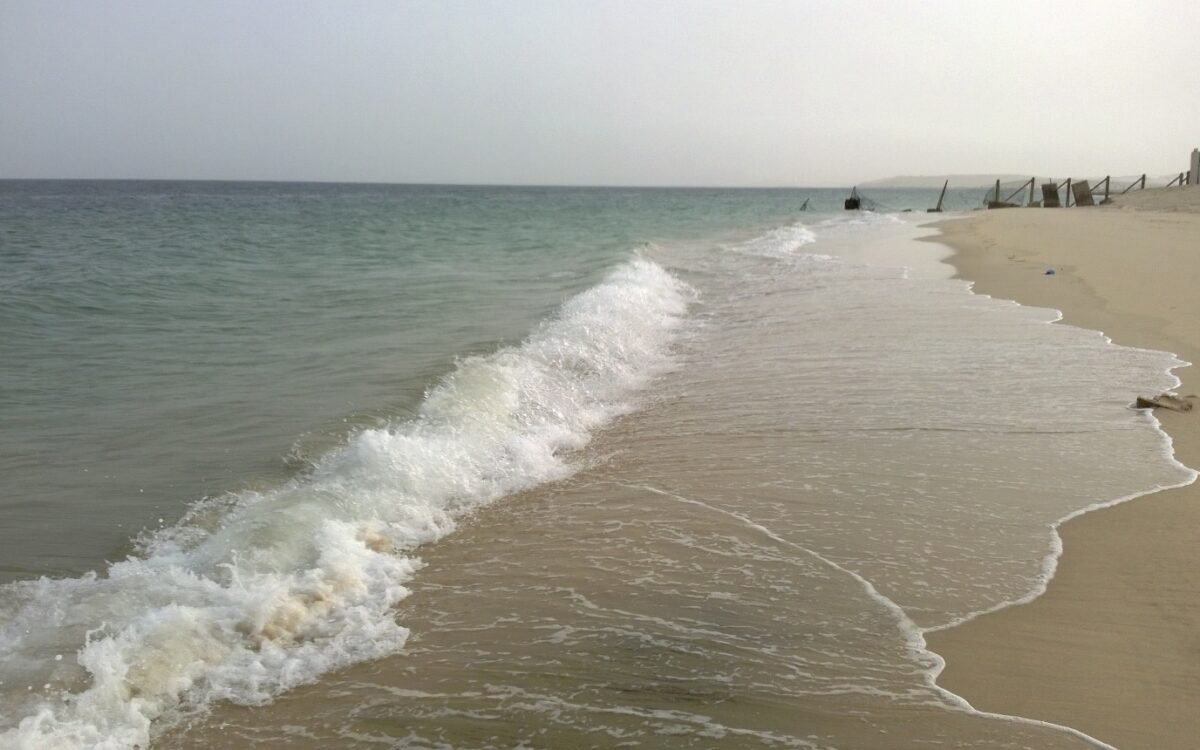
Once you reach the shore, the water is usually calm, warm and shallow near the edge, and Visit Qatar describes it as safe for swimming. There are no lifeguards, changing rooms or showers, so swim with others, keep children close and watch for currents where the channel narrows. Some operators bring kayaks, and Visit Qatar also lists fishing and snorkelling among the activities in the area.
Climbing the dunes for the view
Walk up the highest dune near your stopping point for the classic view: the lagoon laid out below, a band of blue between two shores of sand, and the dunes on the far side, which belong to Saudi Arabia. It is harder work than it looks in soft sand, so go early or late in the day and take water with you. Sandboarding down is the reward.
Sunset, stars and the night sky
Afternoon trips are planned so you watch the sun go down over the dunes, when the sand turns orange and the water goes silver. If you stay after dark, you will see how little light pollution there is this far south. On a clear, moonless night in winter the sky is full of stars, which is one of the best reasons to camp.
Staying overnight
There are two ways to spend the night. The first is a licensed commercial camp or resort in the wider Sealine and Khor Al Adaid area. Visit Qatar names Sealine Beach (a Murwab resort), Regency Sealine Camp and Outpost Al Barari, a set of luxury villas, as places to stay. Many tour operators also sell overnight packages that include a barbecue dinner, a tent at a desert camp and breakfast, with the dune drive the next morning.
The second is setting up your own camp. Qatar’s Ministry of Environment and Climate Change runs a seasonal camping permit system for the desert and nature reserves, and Khor Al Adaid is one of the southern reserve areas included. For the 2025 to 2026 season, the camping period ran from 15 October to 15 April and permits were limited to Qatari nationals aged 25 and over, registered through the ministry’s online system. Rules can change from season to season, so check the ministry’s latest announcement before you plan a private camp. For most visitors, a licensed camp is the realistic option.
Wildlife watching
The reserve’s birds are easiest to see early in the morning, when ospreys fish along the channel and waders feed on the tidal flats. Flamingos turn up in some seasons. Dugongs and turtles live in the wider waters of the reserve but sightings are rare, so treat any as a bonus. Keep well back from animals and nests, and never chase wildlife in a vehicle.
How to get there
The trip has two parts: a paved drive from Doha to Sealine, then an off-road crossing to the water.
- Doha to Mesaieed. Head south on the Mesaieed Road, past Al Wakrah and Al Wukair, towards the industrial city of Mesaieed.
- Mesaieed to Sealine. Follow the signs for Sealine, skirting Mesaieed to the south. The tarmac ends near the Sealine Beach resort area, where you will see the dunes start and tour cars gathering. Allow roughly an hour from central Doha to this point.
- Air down. Before you leave the tarmac, reduce tyre pressure. Visit Qatar and experienced local drivers suggest around 18 to 20 psi, which gives the tyres a wider footprint on soft sand.
- Cross the dunes. From Sealine it is roughly 40 minutes to an hour across open sand to the northern shore of the lagoon. There are no signs or marked tracks, so navigate with GPS and experience. Visit Qatar gives the coordinates N24 42 50, E51 24 55, which is the point used for the map pin on this page.
- Reinflate. Pump the tyres back up with a portable compressor before you drive on tarmac again. Driving on the highway with soft tyres is dangerous.
A normal car can reach Sealine and its beach, but it cannot go any further. Taxis and ride-hailing cars will not drive on the dunes, and there is no public transport to Sealine or the Inland Sea. If you are hiring a car, read the rental agreement carefully: many do not allow off-road driving, and damage in the dunes may not be covered by the insurance.
If you are not driving yourself, book a desert safari from Doha. Most include pick-up and drop-off, and the whole trip normally takes between four and six hours, longer if you add dinner or an overnight stay.
Best time to visit
The comfortable season runs from about November to April, with October and early May usable if you go early or late in the day. December to February are the coolest months and the busiest for camping. From June to September the desert is extremely hot, the sand radiates heat and there is no shade at the water. Summer trips do run, but only at sunrise or in the evening, and the heat is a real safety risk.
Afternoon trips that end at sunset are the most popular, with the best light for photos. Early-morning trips are quieter and cooler, and better for birdwatching. Weekends (Friday and Saturday) and public holidays bring many more vehicles to Sealine and the dunes, so go midweek if you want space. Check the wind forecast too: strong winds, including the shamal that blows from the north-west, can whip up sand and cut visibility.
Tips for your visit
- Never go alone. If you self-drive, travel in convoy with at least one other 4×4 and tell someone at home your route and return time.
- Carry recovery gear. A tow rope, shovel, compressor, tyre pressure gauge and spare tyre are the minimum. Recovery boards are worth having.
- Don’t power out of trouble. If you get stuck, stop, let the engine calm down and dig out rather than spinning the wheels deeper.
- Fill up before Sealine. There is fuel and food on the way through Mesaieed and Al Wakrah, but nothing beyond the resort area.
- Download offline maps. Mobile signal is unreliable in the dunes, so save your route and the shore coordinates before you set off.
- Stay on the Qatari side. The lagoon lies against the Saudi border. Don’t drive around the southern shore or try to cross the channel.
- Check the tour company. Book with a licensed operator, ask what the car, driver and extras include, and confirm whether pick-up is shared or private.
- Leave nothing behind. This is a protected reserve. Take all rubbish home, don’t light fires on the vegetation, and keep your distance from wildlife.
What to bring
- At least two litres of water per person, more in the warmer months
- Swimwear, a towel and a change of clothes
- Sun hat, sunglasses and high-factor sunscreen
- Sandals or water shoes for the shore, and trainers for climbing dunes
- A light jacket for winter evenings, when the desert cools quickly
- A phone power bank and offline maps
- Snacks or a picnic if your tour does not include food
- Bin bags to carry out all your rubbish
Combine it with nearby places
Sealine Beach. The starting point for every trip to the Inland Sea has its own long, sandy beach where the dunes meet the Gulf. It works well for a swim before you head into the dunes, or as a stop for families who don’t want the full crossing.
Singing Sand Dunes. Crescent-shaped dunes in the desert inland of Mesaieed, known for the low hum their sand can make as it slides. They are a short detour on the way south and a gentle introduction to the desert before the big dunes at Sealine.
Al Wakrah Souq and Beach. On your way back north, the restored souq in Al Wakrah is a relaxed place to stop for dinner by the sea, with a family beach alongside.
Mesaieed. The industrial town you pass through is the last place for fuel, supermarkets and fast food before the dunes, which makes it a practical stop on the way out.
Frequently asked questions
Do I need a tour to visit Khor Al Adaid?
Not legally, but in practice most people should take one. There is no road to the water, so you need a 4×4, dune-driving skills, recovery gear and ideally a second vehicle. A licensed tour provides all of that, plus pick-up from Doha.
Is there an entry fee or permit for a day trip?
No. Day visits to the reserve are free and don’t need a permit. You pay for your tour, or for fuel and equipment if you drive yourself. Overnight camping on your own is a different matter and falls under the Ministry of Environment and Climate Change’s seasonal permit system.
Can non-Qataris camp at the Inland Sea?
For the 2025 to 2026 season, private camping permits were limited to Qatari nationals aged 25 and over. Everyone else can stay overnight through a licensed commercial camp or a tour operator’s overnight package in the Sealine and Khor Al Adaid area. Check the ministry’s announcement for the current season.
How long does the trip take?
Allow about an hour from Doha to Sealine on paved roads, then 40 minutes to an hour across the dunes. Half-day tours usually last four to six hours door to door. An overnight trip takes most of two days.
What tyre pressure should I use in the dunes?
Around 18 to 20 psi is the figure commonly recommended for the sand between Sealine and the Inland Sea. Reinflate to normal road pressure before you drive back on tarmac.
Is the Inland Sea good for children?
Yes, with care. Children usually love the dune drive, sandboarding and the calm, shallow water. Choose a gentler driver or a shorter route for young children, bring plenty of water and shade, and supervise them closely in the water as there are no lifeguards.
When is the best time of year to go?
November to April, with the coolest weather from December to February. In summer, go only at sunrise or in the evening, as the heat in the dunes is dangerous in the middle of the day.
Last checked October 2026. Hours, fees and access can change, so confirm with the official source before you go.
Read the Companies in Qatar visitor guide ↗
More places nearby
All places →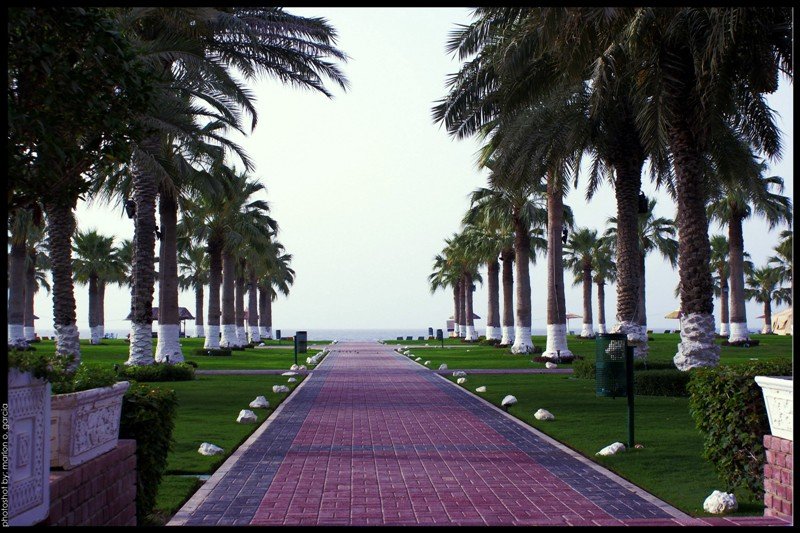
Run a tour, café or stay near Khor Al Adaid Inland Sea, Al Wakrah?
List your business free on Companies in Qatar, or get featured on Qatar Unseen in front of people planning their trip.