Lawh Wa Qalam: M. F. Husain Museum, Education City
Doha's newest museum tells M. F. Husain's story in a building born from his own sketch, ending with his vast final installation. Free entry.
Ghazal Al Shagab St, Education City, Al Rayyan
Overview
Lawh Wa Qalam: M. F. Husain Museum is the newest museum in Education City and one of the most distinctive buildings in Doha. Opened by Qatar Foundation at the end of November 2025, it is devoted to Maqbool Fida Husain, the Indian modernist often described as one of the most important South Asian artists of the 20th century, who spent the last years of his life in Qatar. In 2026 TIME included it in its list of the World’s Greatest Places.
The name means “tablet and pen” in Arabic. Inside, four galleries trace Husain’s life from painting cinema billboards in Bombay to his final, enormous project made in Doha, with more than 150 works and personal objects in paintings, sculpture, film, tapestry, photography and poetry. Many of the works had never been shown in public before. Entry is free.
Because it is so new, many residents still have not been, and visitors often don’t know it exists. This guide explains what is inside, how to move through the galleries, and how to build a relaxed half-day around it with the other art and architecture of Education City. It suits art lovers, families with older children, architecture fans and anyone curious about the cultural links between the Gulf and South Asia.
The story behind the museum
M. F. Husain began his career in Bombay (now Mumbai) painting large cinema hoardings, and went on to become a founding member of the Progressive Artists’ Group in 1947, the circle that shaped modern art in independent India. Over a very long career he painted horses, Indian epics, the independence movement, Mother Teresa and the everyday life of India in a bold, colourful style, and he also made films. Some of his later paintings of Hindu deities caused fierce controversy and legal cases in India, and from 2006 he lived in self-imposed exile, mainly in Doha and London. Qatar granted him citizenship in 2010. He died in London in June 2011.
In Qatar, Husain devoted much of his energy to two major projects: a series of paintings on Arab civilisation, and a monumental installation about human progress called Seeroo fi al Ardh (“Travel Through the Earth”). Conceived around 2009 and left unfinished at his death, the installation was completed and opened at Education City in 2019. It now forms the climax of the museum.
The building itself grew out of a sketch Husain made in 2008. The Indian architect Martand Khosla turned it into a compound of two square pavilions, one deep blue and one grey, linked by a white cylindrical tower and entered through a golden arched doorway. The exterior is clad in glazed tiles that help keep out the heat. Covering more than 3,000 square metres, the museum was inaugurated by Sheikha Moza on 27 November 2025 and opened to the public the next day. It is a member of the International Council of Museums.
What to see and do
Start outside with the building
Before going in, walk around the exterior. The contrast between the blue and grey blocks and the white drum of the tower is striking in strong sunlight, and it is fun to look for the shapes of Husain’s original sketch in the finished building. The golden entrance arch is the obvious photo spot.
Gallery 1: A World of His Own
The first gallery introduces Husain’s life and his restless move between media: painting, sculpture, tapestry, photography, cinema and poetry. At its heart is a film tower showing a selection of his films. Spend a few minutes here even if film is not your thing; it explains how Husain thought in moving images as much as in paint.
Gallery 2: A Curious Mind
This gallery looks at Husain as a thinker fascinated by history, religion and philosophy, which he treated not as boundaries but as sources of meaning. Expect works that meditate on faith, unity and diversity. It is a quieter, more reflective room than the first, so slow down.
Gallery 3: An Artist Without Borders
Here the focus moves to Husain’s last years and his reconnection with his Yemeni ancestry and Arab heritage. This is where you will find the Arab civilisation paintings, a series of 35 works he completed before his death, which combine Arabic calligraphy with his expressive brushwork. Horses, his favourite motif, gallop through the whole room.
Gallery 4: Seeroo fi al Ardh
The final gallery holds Husain’s last and most ambitious work, a large kinetic installation celebrating human ingenuity. It brings together horse figures, sculptures referring to the Andalusian polymath Abbas ibn Firnas and to Leonardo da Vinci’s flying machine, and vintage cars, with art, science and technology presented as parallel forms of imagination. Walk all the way round it before reading the panels; the scale is the point.
Works to look out for
The museum’s own collection highlights include Doll’s Wedding, inspired by Indian weddings and Husain’s love of toys; Quit India Movement, about India’s struggle for independence; Ashoka, a portrait of the emperor who renounced violence; Call of the Desert, painted in Doha as a reflection on his ancestry and faith; Battle of Badr; The Artist and His Model, in which the model is a horse; and Bilal, which marks Barack Obama’s election as US president. Displays can rotate, so treat this as a checklist rather than a promise.
The personal archive
Scattered through the galleries are personal objects that make Husain feel very present: his tools, photographs and, most poignantly, the Indian passport he surrendered when he took Qatari nationality. These small items are what many visitors remember most.
Library, studio and gift shop
The museum has a library with books on art, Arab culture and Husain himself, a creative studio that runs workshops and family programmes, a café and a gift shop selling prints, notebooks and souvenirs based on his work. Check the “What’s On” page on the museum’s website for upcoming workshops and guided tours.
How to get there
The museum is on Ghazal Al Shagab Street in Education City, the Qatar Foundation campus in Al Rayyan, on the western side of Doha. From West Bay or the Corniche it is roughly a 20 to 30 minute drive via Al Luqta Street or Dukhan Road, depending on traffic. Put “Lawh Wa Qalam” into your maps app; Education City has many similar-looking roads and buildings, so the exact pin helps.
By car, there is a dedicated car park right in front of the museum and valet parking at the entrance. By public transport, take the Doha Metro Green Line to Qatar National Library station, then change to the Education City Tram and get off at the Northnest stop, which the museum recommends. Taxis and ride-hailing apps are easy to use in Education City, both to arrive and to leave.
The museum and its galleries are wheelchair accessible, with a ramp at the entrance, lifts, accessible parking and two accessible toilets.
Best time to visit
As an indoor, air-conditioned museum it works in any season, and it makes an excellent summer outing. From November to March you can combine it with a walk to the outdoor sculptures and parks in Education City.
Official opening hours are 10am to 5pm on Saturday, Sunday, Tuesday, Wednesday and Thursday, and 1.30pm to 7.30pm on Friday. The museum is closed on Mondays and national holidays. Weekday mornings are calm; school groups sometimes visit, so if you want the galleries to yourself, aim for early afternoon on a weekday. Friday’s later closing makes it a good choice for an evening of culture.
Tips for your visit
- Check the day. It is closed on Mondays, which catches out people used to Qatar Museums’ different closing days.
- Dress modestly. The museum asks visitors to cover shoulders and knees and says entry may be refused for unsuitable clothing.
- Allow at least 90 minutes. The building is not huge, but the film tower and the final installation reward time.
- Join a guided tour. Tours in Arabic and English have been offered since opening; ask at reception or check the website’s guided tours page.
- Photography is allowed without flash, according to reports at opening, but always follow signs in individual galleries.
- Read a little about Husain first. Ten minutes on his life, from cinema billboards to exile in Doha, makes the galleries far richer.
- Bring children who like stories. The horses, cars and flying machines in the final gallery work well for older kids, and the creative studio runs workshops.
Combine it with nearby places
- The Miraculous Journey by Damien Hirst. Fourteen giant bronze sculptures of a baby’s development outside Sidra Medicine, a few minutes’ drive across Education City.
- Maman by Louise Bourgeois. The famous giant spider inside the Qatar National Convention Centre, on the edge of Education City.
- Oxygen Park. A landscaped park with shaded walking loops and play areas, ideal for stretching your legs after the museum.
- Mathaf: Arab Museum of Modern Art. Also in Education City, with a collection of modern and contemporary Arab art that pairs naturally with Husain’s Arab civilisation paintings.
- Qatar National Library. Rem Koolhaas’s vast, light-filled library is next to the metro station you pass on the way, and it is free to visit.
Frequently asked questions
Is Lawh Wa Qalam free?
Yes. Visit Qatar lists entry to the M. F. Husain Museum as free. Some workshops and special programmes may need booking.
What are the opening hours?
Saturday to Thursday (except Monday) from 10am to 5pm, and Friday from 1.30pm to 7.30pm. It is closed on Mondays and national holidays.
Where exactly is it?
On Ghazal Al Shagab Street in Education City, Al Rayyan. By public transport, take the Green Line to Qatar National Library station and the Education City Tram to the Northnest stop.
What does Lawh Wa Qalam mean?
It is Arabic for “tablet and pen”, a reference to writing, drawing and knowledge.
Who was M. F. Husain?
Maqbool Fida Husain was a leading Indian modernist and a founder of the Progressive Artists’ Group. He spent his final years in Qatar, became a Qatari citizen in 2010 and died in 2011.
How long do I need?
Around 90 minutes to two hours, longer if you join a tour or use the library.
Last checked October 2026. Hours, fees and access can change, so confirm with the official source before you go.
More places nearby
All places →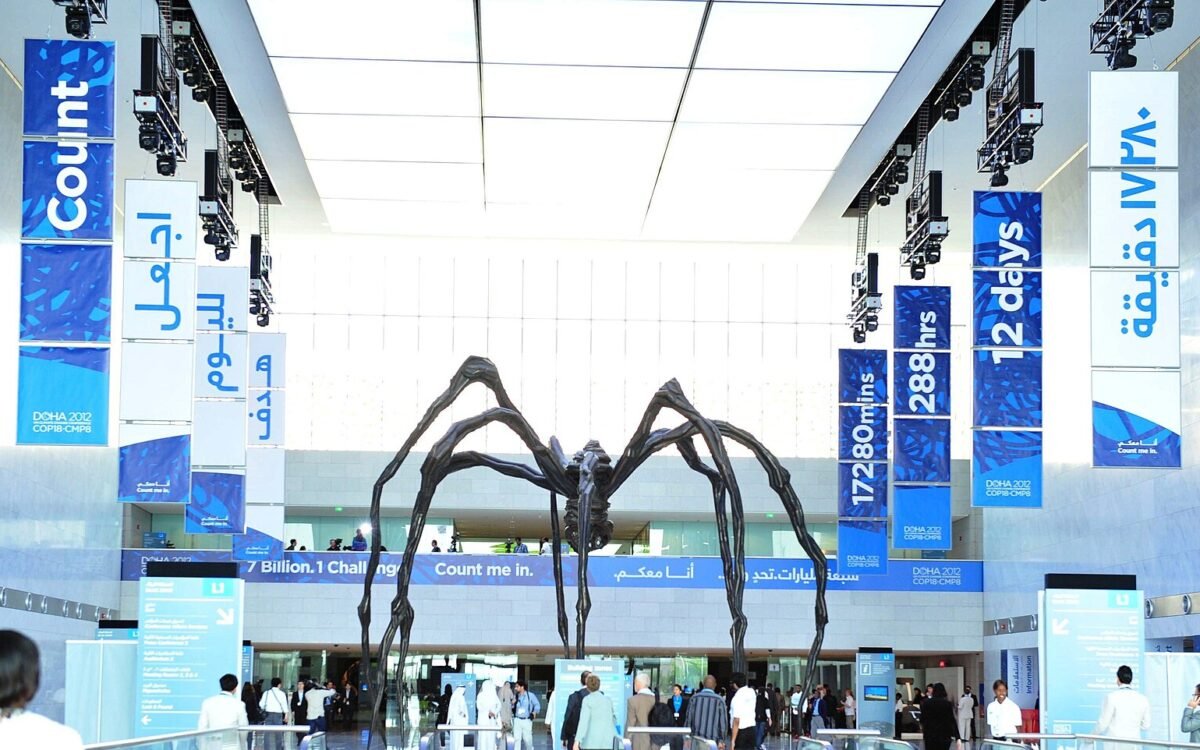
Run a tour, café or stay near Lawh Wa Qalam: M. F. Husain Museum, Education City?
List your business free on Companies in Qatar, or get featured on Qatar Unseen in front of people planning their trip.