Our Habitas Ras Abrouq, Zekreet Peninsula
An eco-luxury villa resort on the wild Zekreet Peninsula: what the stay is really like, who it suits and whether it is worth a weekend.
Ras Abrouq, Zekreet Road, Zekreet Peninsula (west coast)
Overview
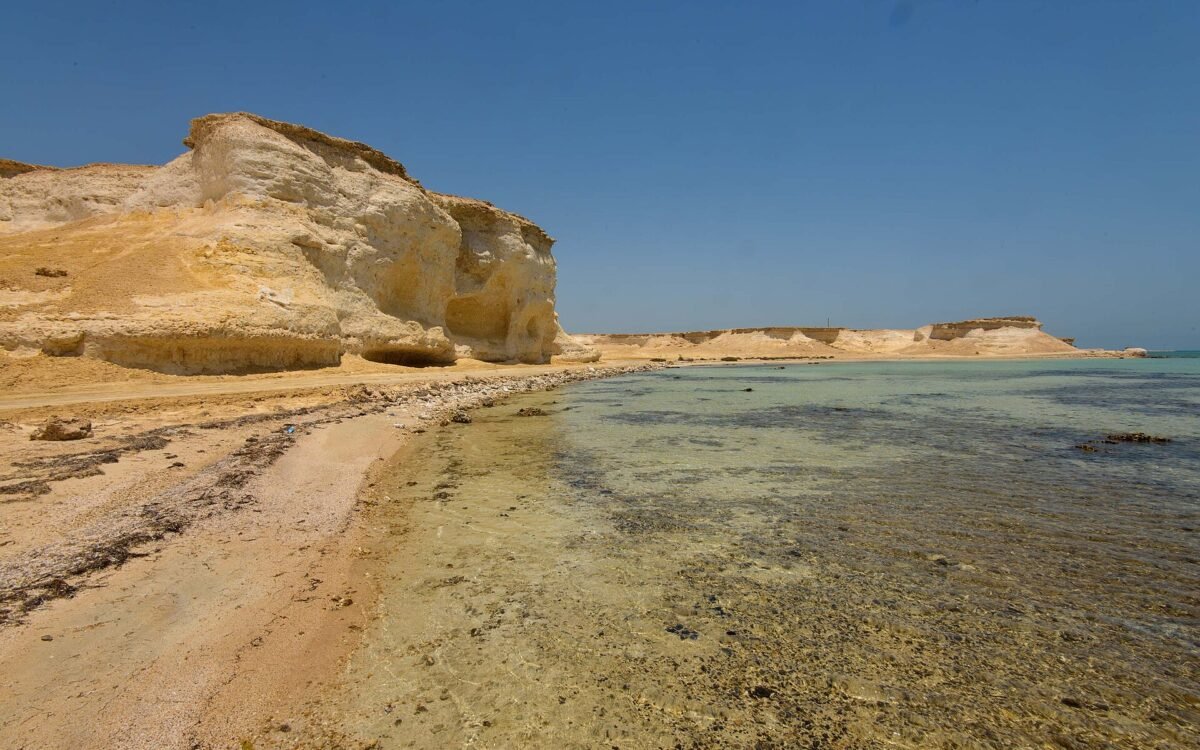
Our Habitas Ras Abrouq is a villa resort on the Zekreet Peninsula, on Qatar’s quiet west coast, roughly an hour’s drive from Doha. It sits on a sandy bay between limestone outcrops, on the edge of the Al Reem Biosphere Reserve, and it is the only place to stay in this corner of the country. The villas are low, tented structures in sand and cream tones, spread out so that most face the sea rather than each other.
This is not a classic beach hotel. There is one main restaurant, no televisions in the rooms, and a programme of activities built around the landscape: kayaking and paddleboarding in the bay, e-bikes and guided outings into the desert, sunrise yoga, sound sessions and craft workshops. The point is to switch off. If you want nightlife, a choice of five restaurants or a big kids’ club, you will be happier elsewhere.
So is it worth it for a weekend escape? For couples, small groups of friends and families who like the outdoors, it is one of the most distinctive stays in Qatar, and the setting is genuinely hard to reach any other way. For anyone who mainly wants to lie by a pool with a cocktail menu and room service, the price is harder to justify. This guide sets out what to expect so you can decide.
The story behind the resort
Ras Abrouq is the northern tip of the Zekreet Peninsula, a stretch of wind-carved limestone, gravel plains and sabkha (salt flat) that juts into the Gulf of Salwa. The land around it belongs to the Al Reem Biosphere Reserve, which UNESCO added to its Man and the Biosphere network in 2007. Oryx and gazelles are kept in fenced areas of the reserve, and the coast is used by migrating birds in winter.
For years the area was known mainly for its landmarks: the mushroom-shaped rock formations, the abandoned Zekreet Film City set, and Richard Serra’s steel plates, East-West/West-East, installed in 2014. The northern part of the peninsula was gated for long periods, and there was nowhere to sleep.
That changed when Qatar Airways Group, through its hospitality arm Dhiafatina, partnered with the eco-luxury brand Our Habitas. The resort opened in early 2024; Gulf Times reported the launch on 23 February 2024. Our Habitas is known for design-led, low-impact resorts in places such as AlUla in Saudi Arabia, and the Qatar property follows the same idea: light-footprint villas, locally sourced textiles and crafts, and days structured around nature, wellbeing and culture. Since late 2024 the area around the resort has also hosted Visit Qatar’s winter Brouq event, which brought more day visitors to the peninsula during the cooler months.
What to expect
Villas rather than rooms
All accommodation is in villas. According to the resort there are 42 of them, in seven layouts. The smallest is the one-bedroom Brouq Villa; the Al Maha Villa adds sea views and beach access; the Zekreet and Qataf options pair two neighbouring one-bedroom villas, which suits two couples or a family with older children; the Reem Villa has two bedrooms and a private plunge pool; Al Dhabi spreads three bedrooms across two villas; and the Lula Royal Villa has four bedrooms. Press reviews describe villa sizes from about 173 square metres for two people up to around 620 square metres for eight, each with a terrace and a private pool.
Inside, the look is earthy and calm: canvas ceilings, timber, woven rugs, Sadu-pattern textiles and artwork sourced from local artisans. There are no TVs, which several reviewers flag as either the best or the most surprising thing about the stay. Bring a book.
Food: one restaurant, used well
Qissa is the main restaurant and serves breakfast, lunch and dinner, indoors or on a terrace facing the bay. The resort describes it as farm-to-table with local ingredients, and reviewers mention sharing plates, local seafood, grilled meats and good vegetarian options, with Arabic and Latin American touches. There is also a terrace lounge and a beach club area. Because the resort is isolated, you will eat almost every meal here, so it is worth reading recent reviews of the food before you commit to more than a night or two. Near+Far Magazine noted that in-room dining was not a big part of the offer, as the design nudges guests towards the shared spaces.
Complimentary activities
A weekly schedule of free activities is one of the resort’s strongest points. The programme is organised around art and culture, wellness, adventure, learning, food and music. Depending on the week, that can mean sunrise yoga, breathwork, sound baths on the wellness deck at sunset, Arabic coffee sessions, and workshops in calligraphy, pottery or Al Sadu weaving. Kayaks and stand-up paddleboards are available from the water-sports hub, and there are e-bike outings and two padel courts. Activities depend on weather and availability, so check the current schedule when you arrive.
Spa, gym and pool
The wellness centre offers massages, facials and body treatments, plus less usual sessions such as sound healing. There is a Technogym-equipped gym and an infinity pool looking out over the Gulf, in addition to the pools at the villas. Spa treatments are paid extras.
The landscape on your doorstep
What you are really paying for is the setting. The limestone formations of Ras Abrouq, the Zekreet mushroom rocks and the Film City set are all close by, and guided safari-style outings with rangers are offered into the wider reserve. Sunsets over the bay are the daily highlight, and after dark the sky is far darker than anywhere near Doha, which makes it a good base for stargazing on clear winter nights.
Visiting without staying
The resort’s own travel page says every visitor needs a day pass, room, restaurant or event reservation to enter. In other words, you cannot just drive up, but non-guests can come for a meal at Qissa or on a day pass when these are offered. Day-pass inclusions and prices change by season and are not published consistently online, so contact the resort before you plan a day trip around it.
How much does it cost?
This is a premium resort and rates move a lot with season, villa type and day of the week. As a reference point, Wanderlust quoted rates from £560 a night including breakfast in December 2024, and Luxe Wellness Club listed stays from €500. These are indicative only; check current rates directly with the resort. Weekday nights and summer months are usually the cheapest, and the resort runs packages from time to time, such as stays with food and drink credit.
How to get there
From central Doha, allow about an hour to 75 minutes. The resort’s address is Zekreet Road, Dukhan.
- Take Dukhan Highway west out of Doha.
- Leave at the Zekreet exit and follow the road towards Zekreet and the coast.
- Continue north up the peninsula towards Film City and Ras Abrouq. The last section runs on desert road and tracks.
The resort itself warns that its location is not reliably shown on Google and other map apps and provides its own map, so ask for directions when you book rather than trusting your phone. Gates control access to the northern part of the peninsula; your booking is your reason to pass. A standard car can manage in dry conditions if you drive carefully, but an SUV is more comfortable on the final stretch. Taxis and ride-hailing are not a realistic option here. The resort offers private transfers, including from Hamad International Airport, on request.
Best time to visit
November to March is the sweet spot. Days are warm rather than hot, the water is pleasant for paddling, and the outdoor programme runs at its best. Desert nights in December and January can be surprisingly cold, so pack a warm layer. April and October are shoulder months: hot at midday but fine early and late. From May to September the heat and humidity are intense and the outdoor side of the stay, which is the whole point, is limited to the edges of the day.
Weekends (Friday and Saturday) fill up with Doha residents and reviewers note the resort gets busy. A Sunday to Tuesday stay is quieter and often better value. If the Brouq winter event is running nearby, expect more traffic on the peninsula in the afternoons and evenings.
Tips for your visit
- Get the resort’s own directions before you set off, and time your arrival for daylight so the desert road is easy to follow.
- Look at the weekly activity schedule on day one and book the popular sessions (sunrise yoga, e-bike outings, workshops) early.
- Plan to eat every meal at Qissa. There is nothing else nearby, so a quick look at recent reviews and menus helps set expectations.
- Bring some cash in Qatari riyals, as the resort itself advises.
- Pack modest clothing for any excursions outside the resort, as the resort recommends.
- Fill your tank before leaving Doha or at the highway service stations; there is no fuel on the peninsula.
- Respect the reserve rules if you explore: stay on tracks, don’t disturb wildlife and don’t take stones or plants.
- If you want a bigger villa for a group, the paired one-bedroom options often work out simpler than a single large villa.
What to bring
- Swimwear, reef-safe sunscreen and a hat
- Closed shoes or sandals with grip for the limestone and tracks
- A warm layer for winter evenings
- Binoculars for birds and wildlife
- Books or games, since there are no TVs
Combine it with nearby places
Ras Abrouq and Al Reem Biosphere Reserve. Our full guide to the peninsula around the resort: its geology, wildlife, access rules and the winter Brouq event.
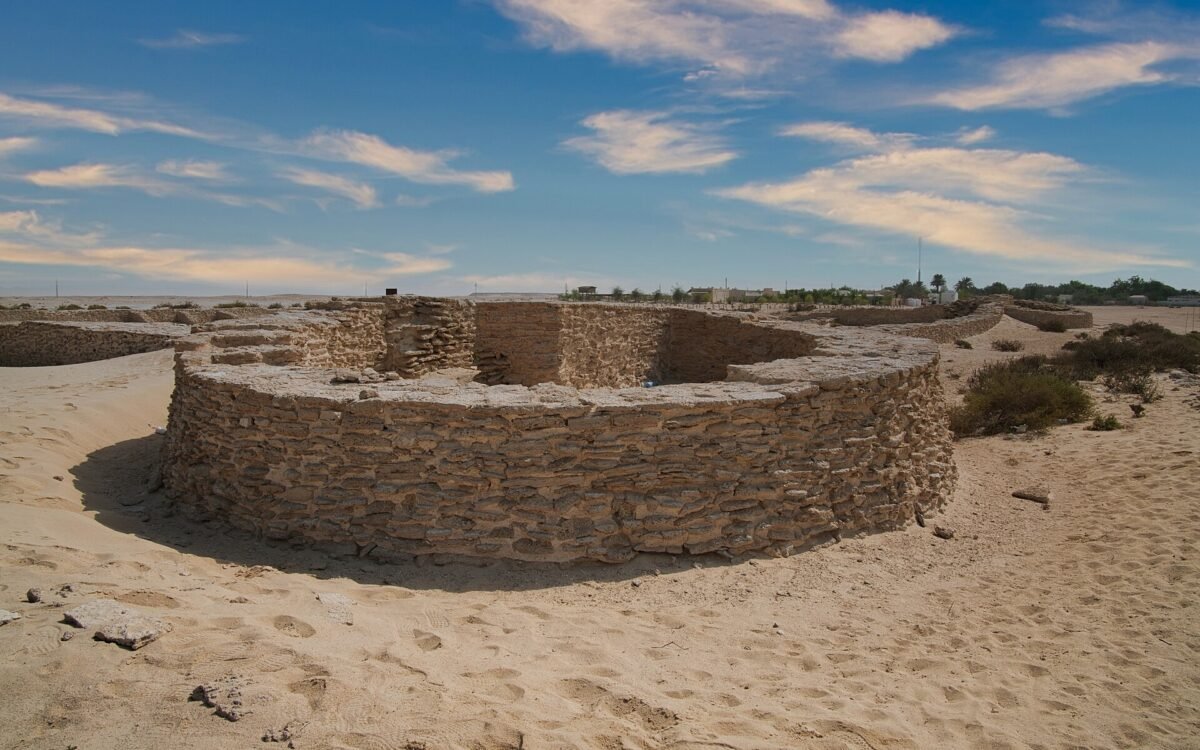
Zekreet Film City. A mock desert village built as a film set, less than 2 km from the resort. It is especially photogenic in late-afternoon light.
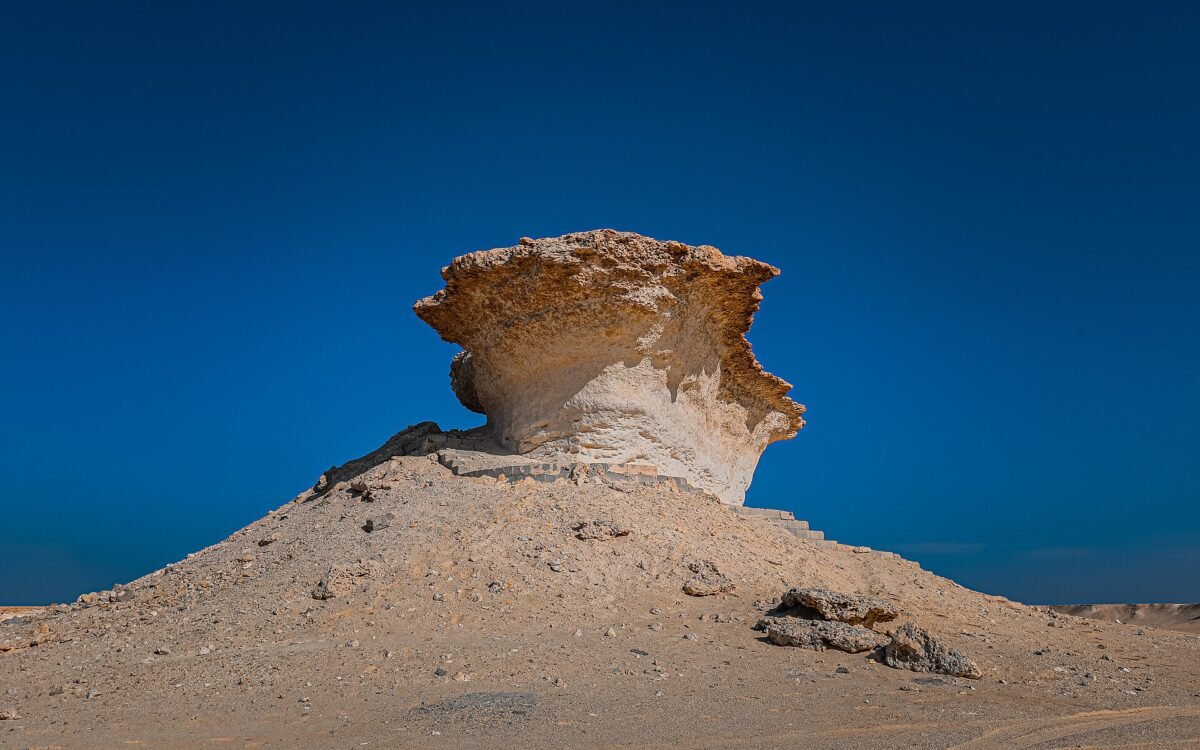
Zekreet Mushroom Rocks. Wind-eroded limestone pillars right beside the resort area, best explored early in the morning.
East-West/West-East by Richard Serra. Four towering steel plates set across a desert corridor a short drive south of the resort, and an easy stop on the way in or out.
Umm Bab Beach. A simple public beach further south along the west coast, if you want a stop on a longer road trip.
Frequently asked questions
Can I visit Our Habitas Ras Abrouq without staying overnight?
Only with a reservation. The resort says all visitors need a day pass, room, restaurant or event booking. Non-guests can book a table at Qissa or a day pass when offered; check current options directly with the resort.
Do I need a 4×4 to reach the resort?
Not necessarily. The last stretch is on desert road and tracks, which a normal car can handle carefully in dry weather, but an SUV is more comfortable. The resort can also arrange transfers.
Do all villas have private pools?
Press reviews describe every villa as having a private pool and terrace, and the resort highlights a plunge pool in the two-bedroom Reem Villa. Confirm the pool type for your villa when booking.
Is the resort good for children?
Families do stay, and the larger villas are designed for them, with the beach, paddling and outdoor activities being a good fit for active children. There is no big kids’ club or water park, so it suits families who enjoy nature more than entertainment.
How far is it from Doha?
About an hour’s drive west from the city, via Dukhan Highway and the Zekreet road, with the final section on desert road.
Is it open in summer?
Yes, the resort takes bookings year-round, but from May to September the heat limits outdoor activities to early morning and evening. The best months are November to March.
Last checked October 2026. Hours, fees and access can change, so confirm with the official source before you go.
More places nearby
All places →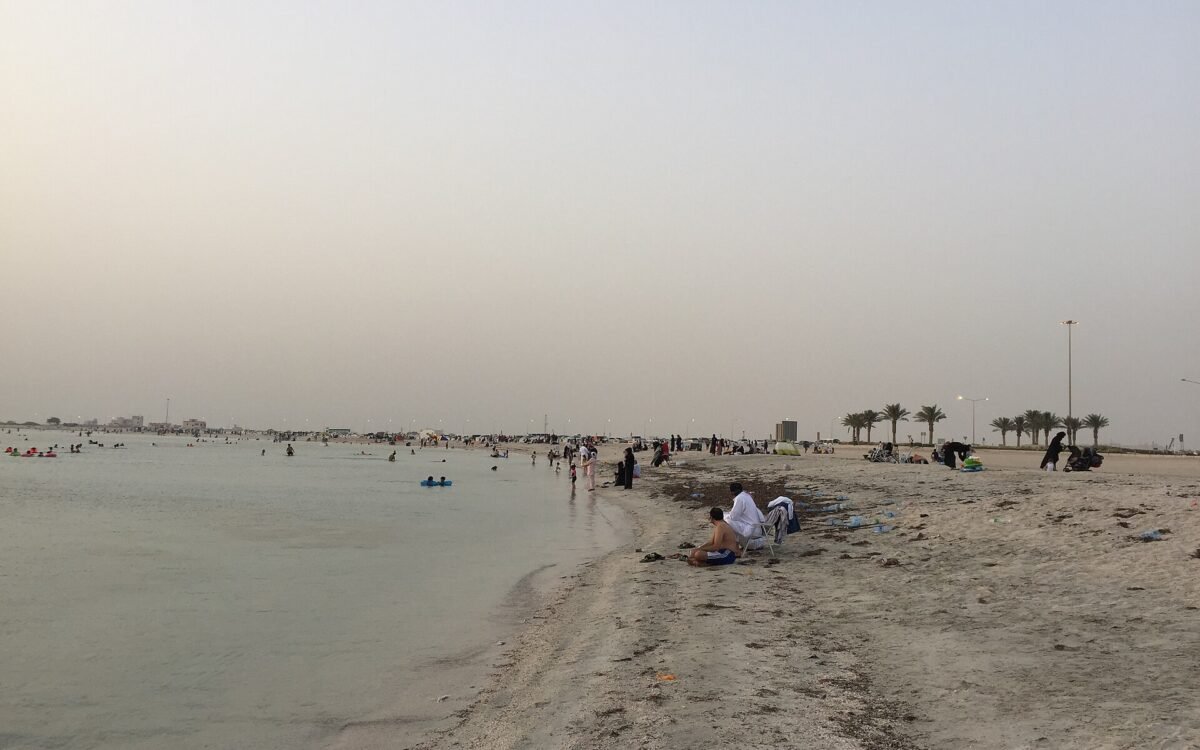
Run a tour, café or stay near Our Habitas Ras Abrouq, Zekreet Peninsula?
List your business free on Companies in Qatar, or get featured on Qatar Unseen in front of people planning their trip.