Ras Abrouq & Al Reem Biosphere Reserve, Zekreet Peninsula
White cliffs, oryx and a UNESCO biosphere reserve at the tip of the Zekreet Peninsula. What you can see, access rules and when to go.
Ras Abrouq, Zekreet Peninsula, Al Shahaniya (west coast)
Overview
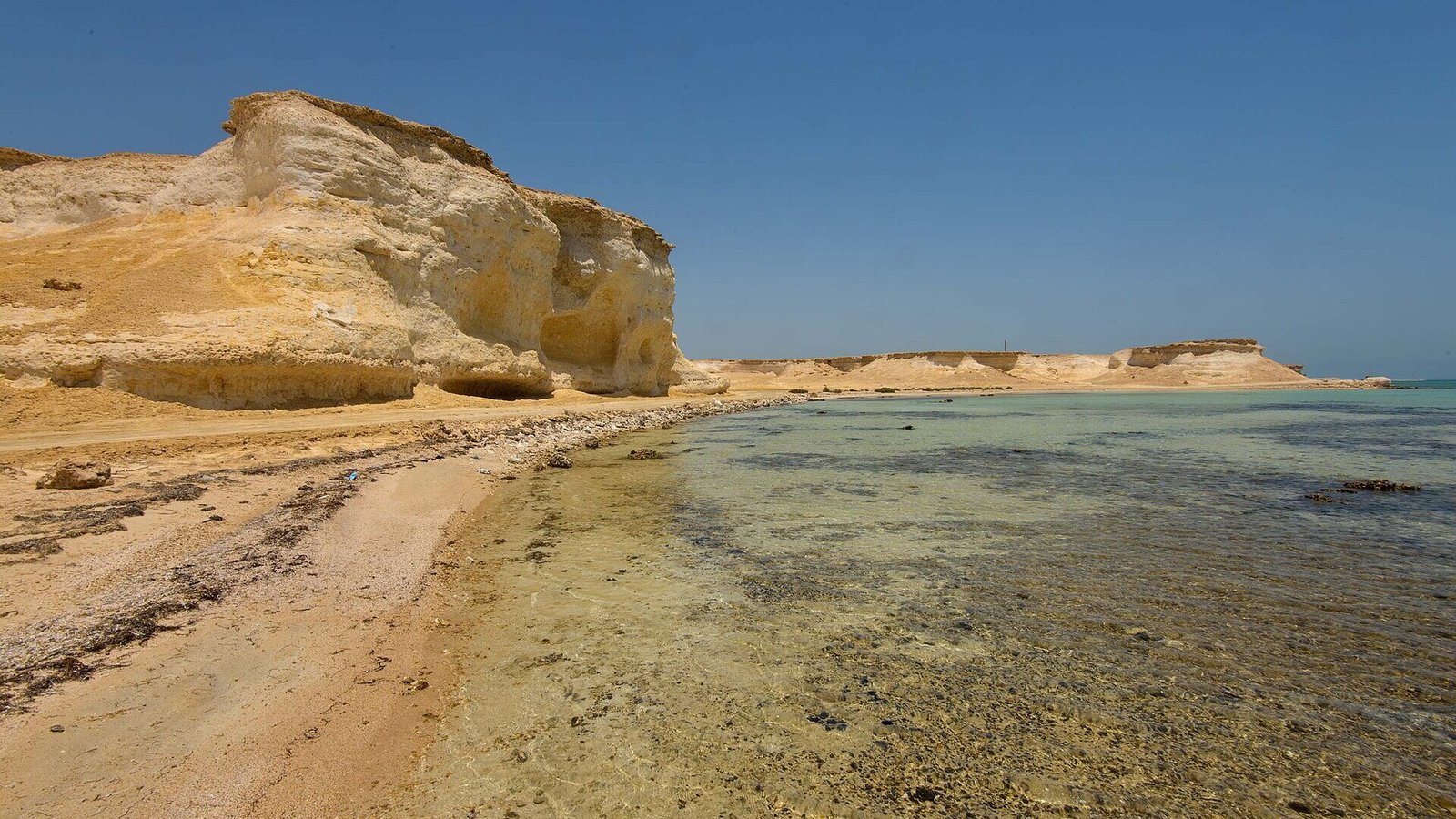
Ras Abrouq is the northern cape of the Zekreet Peninsula, the knuckle of land that pushes into the Gulf north of Dukhan on Qatar’s west coast. It is a place of white limestone cliffs, clear shallow water, wide gravel plains and animals you rarely see elsewhere in the country: Arabian oryx, sand gazelles and ostriches. Offshore lie the low Dawakhil Islands.
All of it sits within the Al Reem Biosphere Reserve, Qatar’s first UNESCO biosphere reserve and one of its largest protected areas. The reserve is not a single fenced park but a patchwork of core conservation areas, buffer land and working countryside, stretching across a big slice of north-west Qatar.
The key thing to understand is access. The tip of the peninsula is not an open, drive-anywhere nature spot. The northern part has been gated for long periods since around 2020–21, and in recent winters the main way in for the public has been Visit Qatar’s seasonal Brouq event, or a stay or visit at the Our Habitas Ras Abrouq resort. This guide sets out what the area offers, what the rules are and how to see it responsibly. It suits wildlife watchers, photographers, families and anyone wanting a slower, greener side of Qatar.
History and background
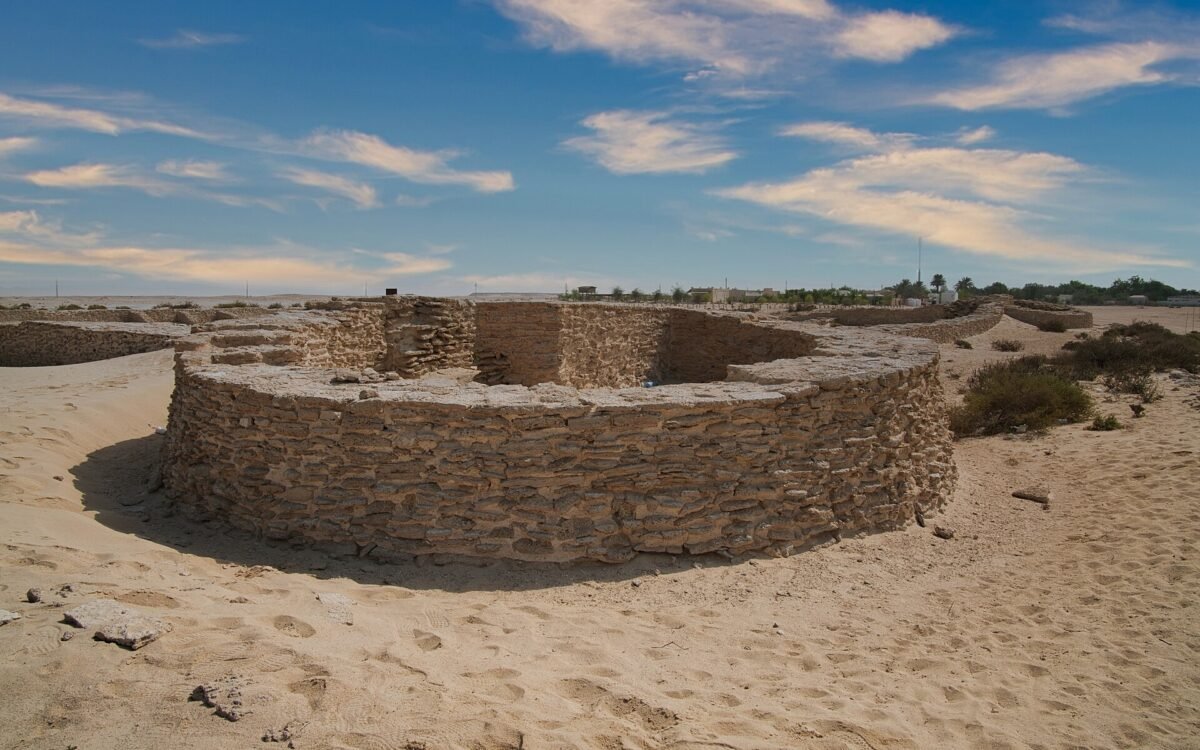
People have used this coast for thousands of years. Wikipedia describes Ras Abrouq as one of the most extensive Neolithic sites in Qatar, with finds that include flint tools and Ubaid-period pottery, third-millennium BC Dilmun ceramics and beads, burial mounds and the remains of a later fishing station. Qatar Tourism also highlights the flint hunting tools found here as evidence of prehistoric settlement.
The land has been protected in stages. The Ministry’s educational booklet on Al Reem says the area was first set aside as a protected zone in 1994. It was formally established as Al Reem Reserve under Decision No. 7 of 2005, and in 2007 UNESCO recognised it as a biosphere reserve, the first in Qatar. The Ministry of Environment and Climate Change puts its size at roughly 10% of Qatar’s land area, about 1,150 square kilometres, located around 65 km west of Doha.
As a biosphere reserve, Al Reem is managed in three types of zone. Core zones are strictly protected. Buffer areas are used for research and education. Transition zones allow controlled human activity such as grazing, farming and licensed falconry. Wikipedia notes that large parts of Ras Abrouq are legally protected for gazelles, and that the area has a high concentration of ostriches.
Tourism has arrived in the last few years. Our Habitas Ras Abrouq, a low-rise resort of villas among the limestone, opened on the bay, and from December 2024 Qatar Tourism ran a winter desert event here with a dedicated Wildlife Park zone. It returned as Brouq Season from 26 November 2025.
What to see and do
Watch for oryx and gazelles
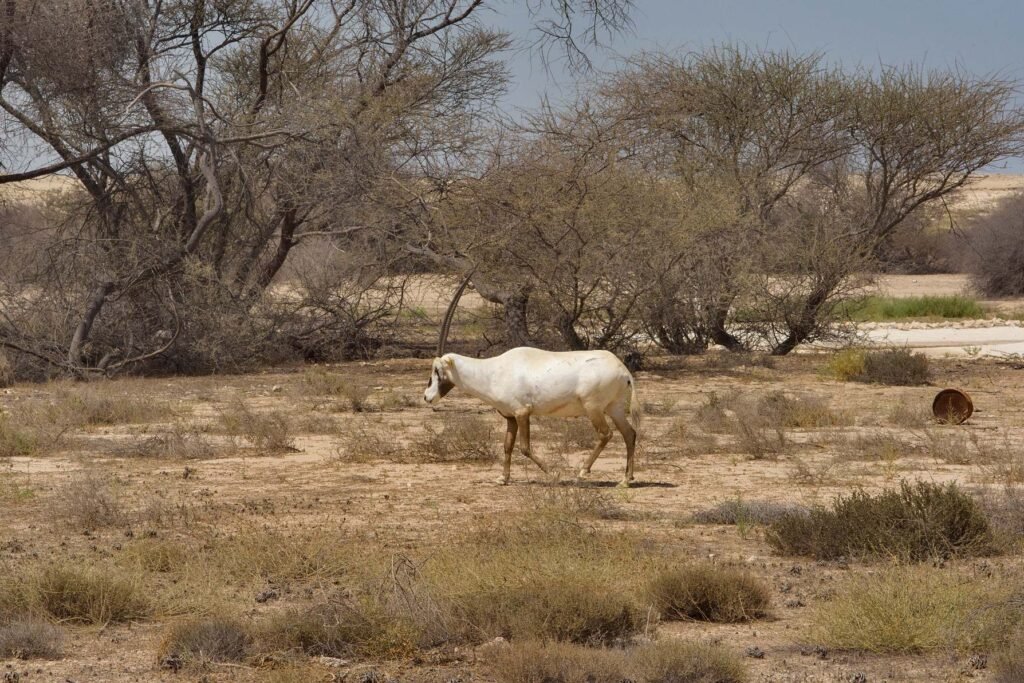
The Arabian oryx is Qatar’s national animal, and seeing a herd grazing wild among the acacias on the peninsula is a real thrill. The reserve also protects the sand gazelle, Arabian red fox, Cape hare and Ethiopian hedgehog, according to the Ministry. Your best chances are early morning and late afternoon. Watch from your car or from a distance, keep noise down, and never chase, feed or corner an animal.
Join the Wildlife Experience in season
During Brouq Season, the Wildlife Experience zone has offered guided nature routes by camel or on horseback across the reserve. It is the most straightforward way for most people to explore the protected landscape with a guide. Check the Visit Qatar events calendar each autumn to see what is on and what it costs.
Walk the white cliffs and coast
The limestone cliffs along the shore are sculpted into ledges and overhangs, dropping to shallow, clear water. Qatar Tourism describes them as shaped by wind and water over millennia. The shoreline is best explored on foot at low tide in the cooler months. Keep back from cliff edges, which are soft and can crumble.
Birdwatching
The Ministry lists birds including the houbara bustard, Socotra cormorant, greater hoopoe-lark, terns and flamingos in the reserve. Winter brings migrants to the coast and the vegetated depressions inland. Bring binoculars and scan the shoreline and the islands offshore.
Read the landscape
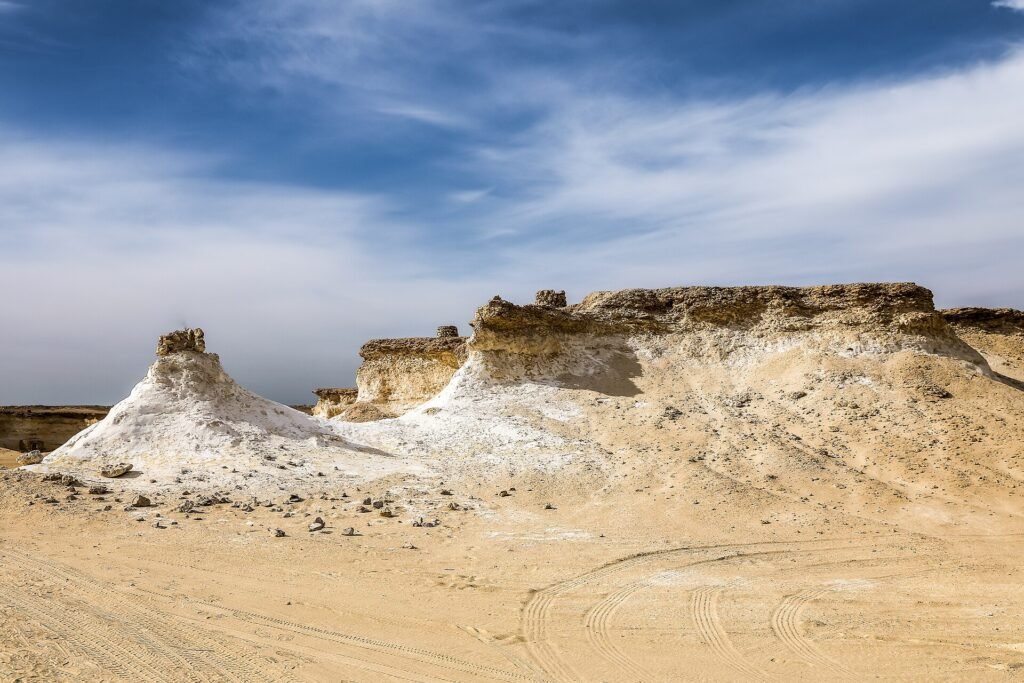
The Ministry identifies seven ecosystems in Al Reem, including gravel plains (hazm), seasonal watercourses (wadis), vegetated depressions (rawdahs), salt flats (sabkhas), sandy beaches and the distinctive limestone formations known locally as brouq. Around 85 plant species have been recorded, from acacia trees to low shrubs. Driving across the peninsula you pass through several of these in a few kilometres.
Paddle or relax at the resort
Our Habitas Ras Abrouq offers kayaking and paddleboarding in the bay and a restaurant, Qissa, with sea views. During Brouq Season, Visit Qatar listed resort day passes among the event packages. Outside the season, contact the resort directly to ask about non-resident access.
Stargazing
This is one of the darkest corners within an hour of Doha. Brouq Season has included scheduled stargazing sessions, and on a clear winter night the sky over the cliffs is spectacular.
How to get there
Ras Abrouq is at the northern end of the Zekreet Peninsula, about an hour’s drive from central Doha. For the map pin, use the Our Habitas Ras Abrouq resort area at 25.5859, 50.8312, which is also the hub of the winter Brouq Season.
- Take Dukhan Highway west from Doha.
- Leave at the Zekreet exit (listed by Visit Qatar as exit 72) and follow Zekreet Road towards the coast.
- Continue north along the desert road towards Film City and Our Habitas. During Brouq Season the route is signposted.
Access rules. Gates cross the tracks leading north, and the northern part of the peninsula has been closed to general traffic for long periods since around 2020–21. Treat access as open only when there is a clear reason: a ticketed Visit Qatar event, a resort booking, or an organised tour with permission. If a gate is closed, do not drive around it. The southern part of the peninsula, including the Richard Serra sculpture, has remained reachable along the desert tracks.
Reserve regulations. The Ministry’s guidance for Al Reem prohibits firearms, removing plants or animals, driving in sensitive areas and camping outside licensed grounds, and asks visitors to respect local culture. Qatar’s reserves are patrolled by Ministry inspectors, and violations are prosecuted. Groups wanting to visit protected reserves have been asked to apply to the Ministry of Environment and Climate Change’s public relations department with the date, purpose and number of visitors.
Vehicle. Visit Qatar and event guides said a standard car usually copes with the main event route in dry weather, but an SUV or 4×4 is more comfortable. Off the main road, tracks are rough and sandy. Event guides also advised against relying on taxis or ride-hailing; drive yourself or book a tour, including the private tours Visit Qatar lists through Discover Qatar.
Best time to visit
November to March is by far the best period. It is when temperatures are pleasant, wildlife is most active in daylight, migrant birds are around, and Brouq Season has run. In 2025–26 the event was open 2pm to 9pm Sunday to Thursday, 1pm to 9pm on Friday and 10am to 9pm on Saturday, with general entry at QAR 50 for adults and QAR 30 for children under 12.
For wildlife, the first and last two hours of daylight are best. For the coast, check tide times: low tide exposes more of the rocky shore, while high tide is better for paddling. From May to September the heat and humidity are severe, and there is little shade.
Tips for your visit
- Confirm access before you drive. Check the Visit Qatar events calendar or contact the resort. Without an event or booking, assume the northern tip is closed.
- Give animals space. Stay at least as far away as they need to keep grazing calmly. If an animal stops feeding and stares at you, you are too close.
- Keep to tracks. Vehicles are banned from sensitive areas, and tyre marks scar the desert crust for years.
- Take nothing. Flint, pottery, shells, plants and stones all stay where they are. Parts of the peninsula are archaeological sites.
- Camp only where licensed. Camping in Qatar is regulated by the Ministry, and it is only allowed in designated areas of the reserve.
- Bring binoculars. Most wildlife sightings are at a distance.
- Stock up before Zekreet. Outside the resort and event area there are no shops or facilities.
- Drones need permission, and flying near wildlife causes stress, so leave it at home unless you have approval.
What to bring
- Binoculars and a camera with a telephoto lens
- Plenty of water and snacks
- Hat, sunglasses and reef-safe sunscreen
- Sturdy shoes, plus sandals or water shoes for the rocky shore
- A warm layer for winter evenings
- Your event ticket or booking confirmation
- A bag for all your rubbish
Combine it with nearby places
Zekreet Film City. The walled TV-set village sits just south-east of the resort and has been the market and food zone of Brouq Season.
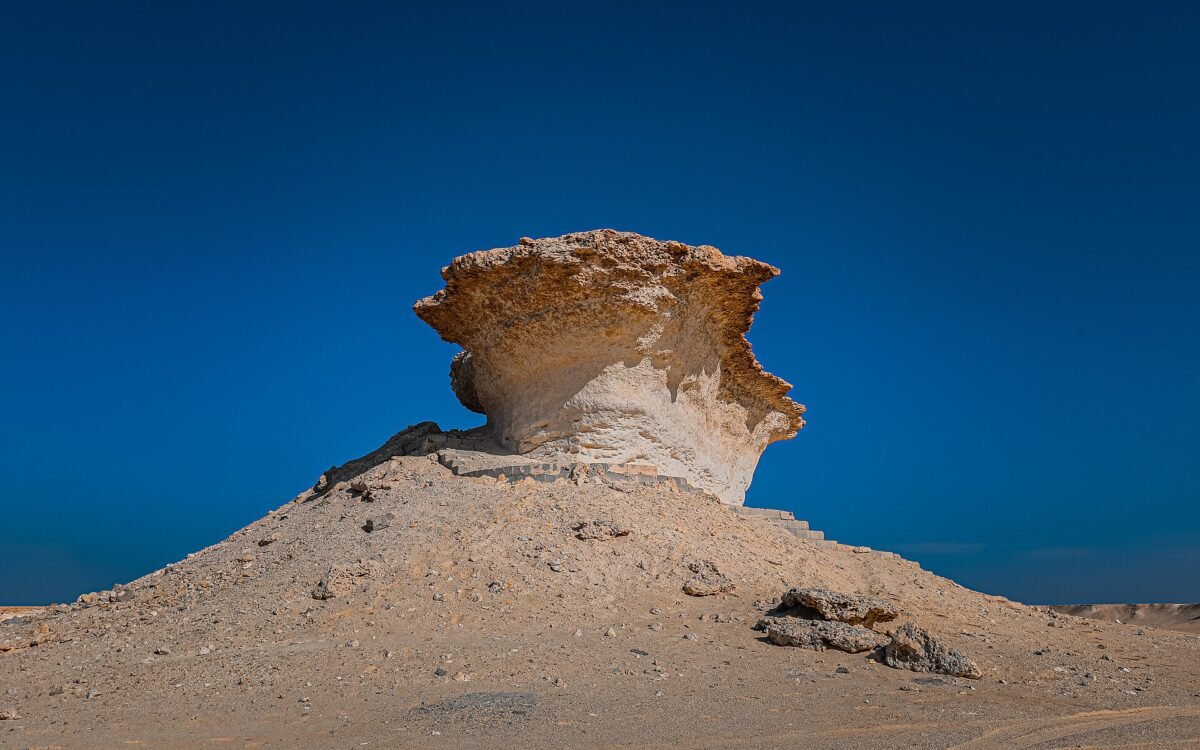
Zekreet Mushroom Rocks. The wind-carved limestone pillars, including the hut on a pillar, surround the northern part of the peninsula.
East-West/West-East by Richard Serra. Four giant steel plates in the Brouq Nature Reserve to the south, best at sunset.
Zekreet Fort. A small fort near Zekreet village, attributed to around 1800 and excavated in the 1970s, on the way back towards the highway.
Frequently asked questions
Can I visit Ras Abrouq?
Yes, but not freely at all times. The northern tip has been gated for long periods since around 2020–21. The public has been able to visit during Visit Qatar’s winter Brouq Season, and resort guests at Our Habitas Ras Abrouq can access the area. Check before you drive.
Where can I see Arabian oryx in the wild in Qatar?
The Al Reem Biosphere Reserve, including the Zekreet Peninsula and Ras Abrouq, is one of the best places. Oryx have been photographed near Film City, and travel writers staying at the resort have described seeing wild herds.
How big is the Al Reem Biosphere Reserve?
About 1,150 square kilometres, roughly 10% of Qatar’s land area, according to the Ministry of Environment and Climate Change. UNESCO recognised it as a biosphere reserve in 2007.
Is there an entry fee?
There is no fee for the reserve itself. Brouq Season is ticketed; in 2025–26 general entry cost QAR 50 for adults and QAR 30 for children under 12. Resort access is by booking.
Can I camp at Ras Abrouq?
Only in licensed camping areas. The Ministry’s rules for Al Reem restrict camping to designated grounds, and during Brouq Season glamping has been offered as a bookable package.
Do I need a 4×4?
For the main event route, event guides said a normal car usually manages in dry weather. For anything off the main road, a 4×4 is strongly recommended.
Last checked October 2026. Hours, fees and access can change, so confirm with the official source before you go.
More places nearby
All places →
Run a tour, café or stay near Ras Abrouq & Al Reem Biosphere Reserve, Zekreet Peninsula?
List your business free on Companies in Qatar, or get featured on Qatar Unseen in front of people planning their trip.