Umm Bab Beach (Palm Tree Beach), Umm Bab
A quiet west-coast beach known for its cluster of palms, calm water and sunsets over the sea. Route, camping, facilities and tips.
Umm Bab (Al Kharaij), Al Shahaniya (south-west coast)
Overview
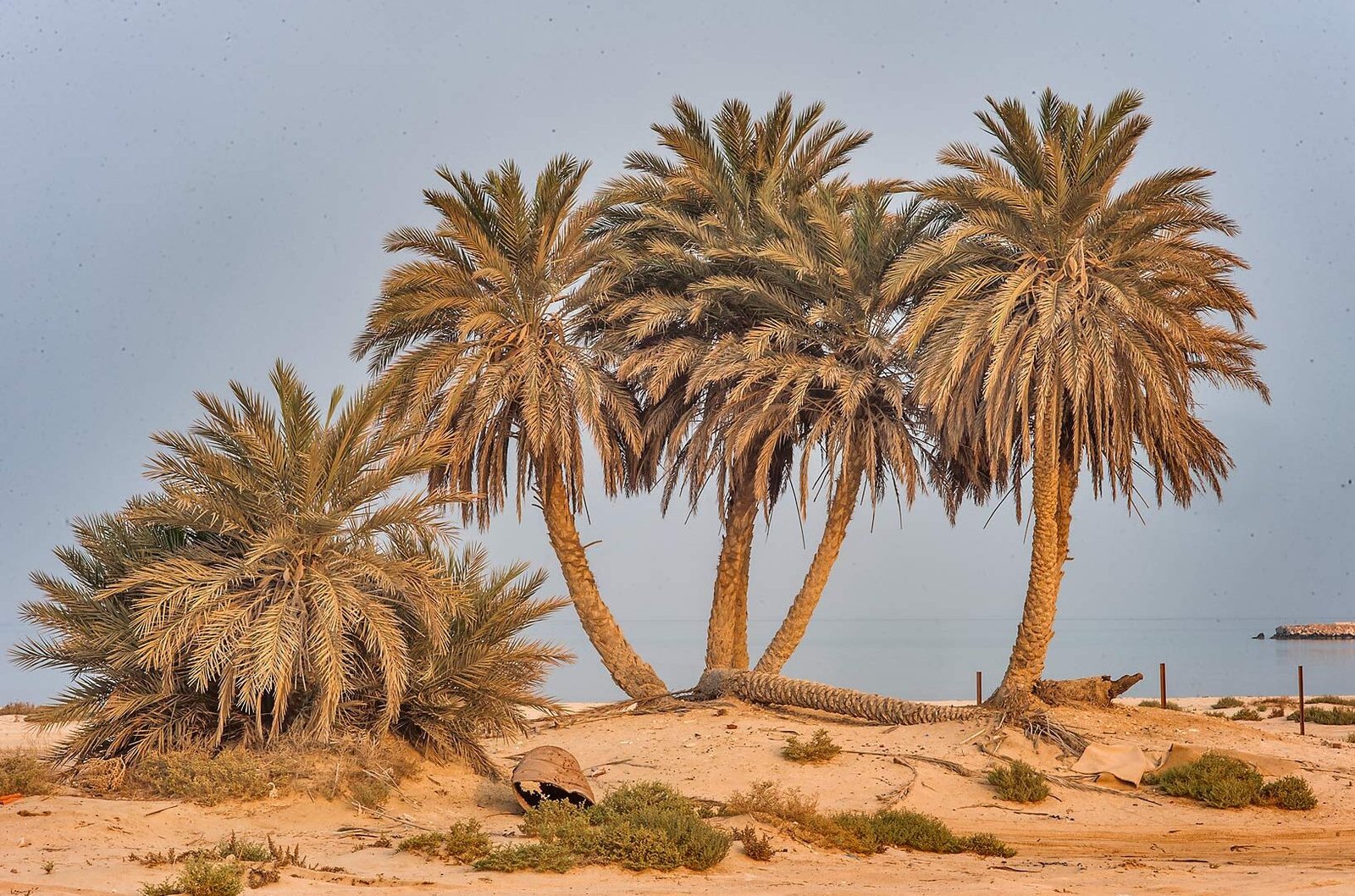
At the end of a long, straight road across the western desert, a small group of date palms stands on the sand beside a short breakwater, with the shallow Gulf of Salwa stretching away behind them. That cluster of palms gives Umm Bab Beach its nickname, Palm Tree Beach, and it has become one of the best-known landmarks on Qatar’s quiet south-west coast.
Umm Bab is not a resort beach. It is a long, open shoreline with pale sand, shallow and usually calm water, and very little development. People come here to camp, barbecue, watch the sun go down over the sea and get away from Doha’s crowds for a day or a night.
It suits campers, families who are happy to bring everything with them, photographers and anyone who likes an empty horizon. It is less suited to people who want lifeguards, cafés or a soft, sandy swim straight off the beach: the seabed is shallow and stony in places, and facilities are limited.
History and background
Umm Bab is a small settlement in the municipality of Al Shahaniya, about 25 km south of Dukhan. According to Wikipedia, the name means “mother of the gateway”, after a narrow passage between two small hills nearby that looks like a doorway. The beach is also known as Al Kharaij (sometimes spelt Al Khraij).
The modern village grew up with Qatar’s oil industry. After oil was found at Dukhan, Qatar Petroleum built a housing village south of Umm Bab in 1948 for workers and local families, along with a road to reach it. The area was also on the route of the pipeline that carried Qatar’s first oil exports from Dukhan to Mesaieed in 1949. In 1969 the Qatar National Cement Company began production north of the village, which Wikipedia describes as Qatar’s first major non-oil industry. You will pass its works and the quarries on the drive in.
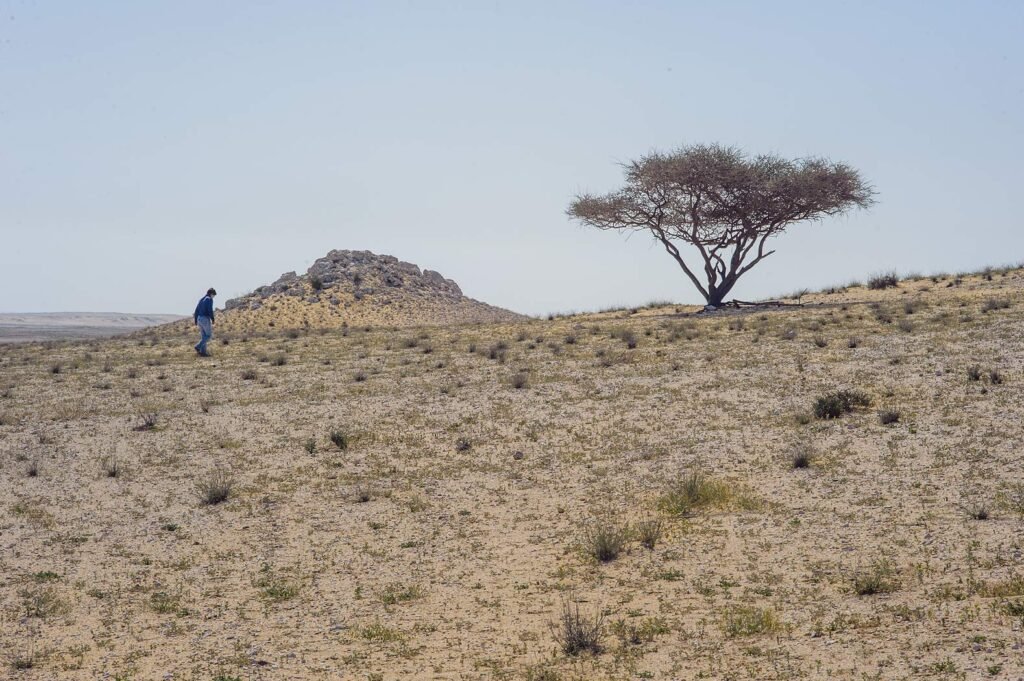
The land around Umm Bab is much older than the village. The nearby Asaila archaeological site shows people were here around 8,000 years ago in the Neolithic period, and in 2018 archaeologists reported Qatar’s first inland rock art site near Umm Bab.
The beach itself is a local favourite rather than a developed attraction. Gulf Times described it in 2021 as secluded and calm, with families and groups of friends camping overnight to watch the sunset. In 2024 The Peninsula listed Umm Bab among 28 public beaches where the Ministry of Municipality provides services, though what is provided varies from beach to beach.
What to see and do
The palm trees and breakwater
The palms are clustered near the end of the road beside a small breakwater. They are the obvious photo, especially with the sun low behind them. They also give a little welcome shade in the middle of the day. Don’t climb the trees or hang things from them, and leave the space around them clear for others.
Sunset over the Gulf of Salwa
Umm Bab faces west across open water, so the sun sets straight over the sea. On a clear winter evening the sky turns orange and pink behind the palms and the breakwater. This is the main reason many people make the drive, and it is worth staying for the afterglow.
Paddling and swimming
The water is usually clear, calm and shallow, which makes it pleasant for paddling and floating. Visitors report that the seabed is rocky in places, so water shoes help. There are no lifeguards, so keep children within arm’s reach and do not swim alone.
Camping and barbecues
Umm Bab is popular for overnight camping and barbecues in the cooler months. Camping in Qatar is regulated by the Ministry of Environment and Climate Change, which runs a winter camping season with registration, so check the current rules and dates before you pitch a tent. Use a proper barbecue stand rather than lighting fires directly on the sand, and take every scrap of rubbish home.
Stargazing
Once the sun has gone, the beach gets properly dark. With Doha far to the east, the sky over the sea is some of the clearest you will find within a couple of hours of the city, especially on moonless winter nights.
Desert life on the dunes
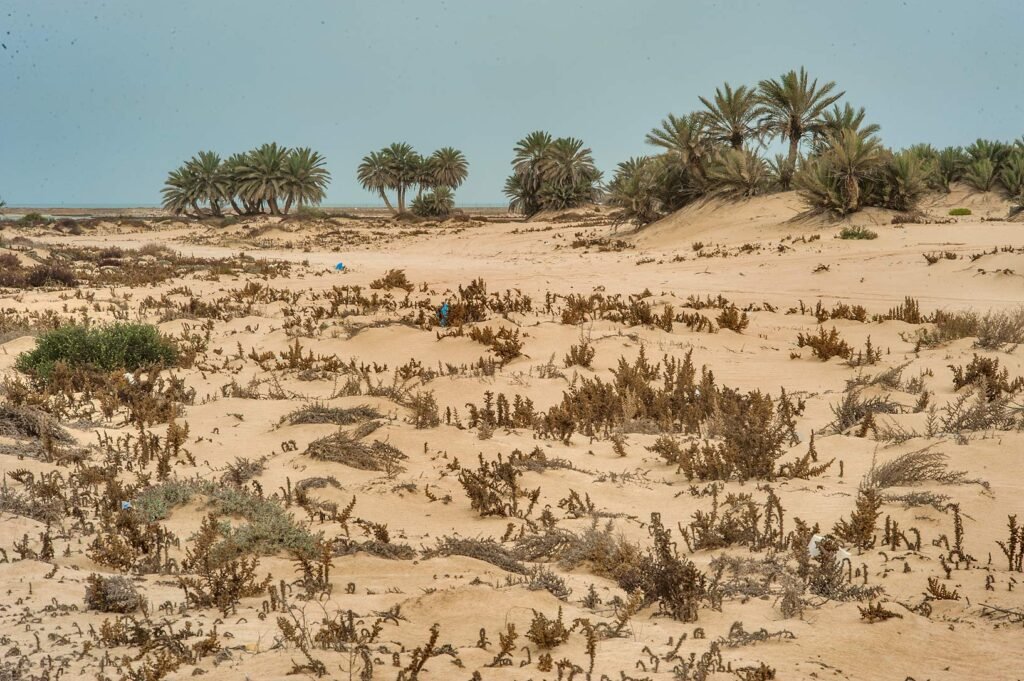
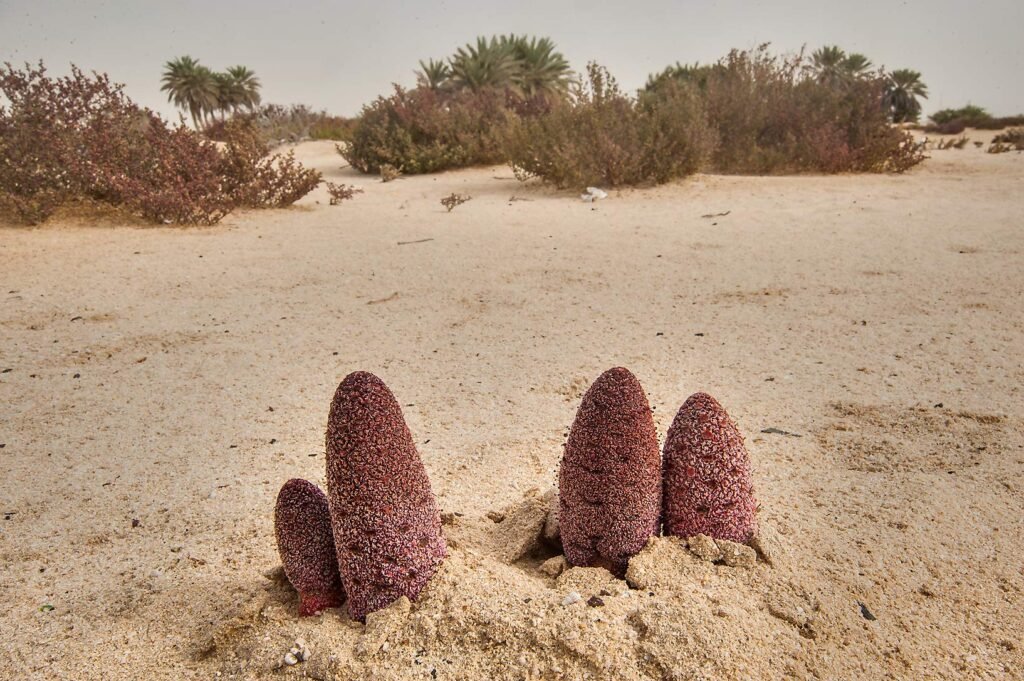
Behind the beach, low dunes are dotted with salt-tolerant plants. Look out for desert thumb, a strange red parasitic plant that pushes up through the sand like a cluster of fingers. Camels are often seen grazing in the area too. Admire them from a distance and keep dogs on a lead.
Planning an overnight stay
If you camp, aim to arrive by mid-afternoon. That gives you time to find a flat, firm pitch above the high-tide line, set up while it is still light and walk the shore before sunset. Pitch with your back to the wind, weigh down tent edges well (winter gusts can be strong) and keep your car pointing out towards the road in case the sand softens overnight. Winter nights on the coast get cold and damp, so bring more layers than you expect. In the morning, the beach is at its quietest, with flat water and soft light from behind you over the desert.
How to get there
Palm Tree Beach is on Qatar’s south-west coast, about 110 km by road from central Doha. Allow roughly an hour and a half each way. The palm cluster and breakwater are at about 25.2010, 50.7660, beside the Umm Bab coastguard post.
- From Doha, take Salwa Road west for around 65 km.
- Turn north-west onto the Sawda Natheel (Umm Bab) road and follow it for about 35 km across the desert towards Umm Bab. You will pass the cement works and quarries.
- Continue through the Umm Bab area towards the coast and follow the road to its end by the palms and breakwater.
If you are coming from Dukhan or the Zekreet Peninsula, the same Sawda Natheel road runs south from Dukhan Highway. It is about an hour and a half by road between Umm Bab and Zekreet Film City.
Do you need a 4×4? Not for the main beach. Several guides say a normal car reaches the parking areas near the palms without trouble. If you want to drive along the shore to a more private spot, you will be on sand, and a 4×4 with the right tyre pressures is needed. Many people get stuck every winter on soft beach sand.
Road safety. Part of the route is a long single-carriageway road shared with heavy trucks from the cement works and quarries, and visitors have described it as tiring and hazardous, with dust in windy weather. Drive in daylight if you can, don’t overtake unless you can see well ahead, and slow down if sand is blowing across the road.
Public transport. There is none. A taxi from Doha would need to be booked for the return too. Driving yourself is the only practical option.
Best time to visit
October or November to April is the comfortable season, and March and April bring warmer water for swimming. From May to September the heat is extreme, and only very early mornings or evenings are bearable.
For the classic view, arrive at least an hour before sunset. Winter weekends (Friday and Saturday) bring campers and families, so the area around the palms can be busy by the afternoon. For solitude, come on a weekday.
Check the wind forecast. On days of strong northerly wind (the shamal), blowing sand makes the beach unpleasant and the drive in harder.
Tips for your visit
- Bring everything. Guides report no shops, lifeguards or reliable toilets and showers at the beach. Visitors mention the petrol station at Mekaines on Salwa Road as the last reliable stop.
- Wear water shoes. The seabed is rocky and shallow in places.
- Park on firm ground. The sand close to the water can be soft even when it looks hard.
- Respect the coastguard post. Keep a respectful distance from the Coast and Border Security centre next to the beach and do not photograph it.
- Follow camping rules. Check the Ministry of Environment and Climate Change camping season and registration requirements before an overnight stay.
- Leave no trace. Take all rubbish, charcoal and food waste home. The beach has no regular clean-up on the scale of Doha’s beaches.
- Dress modestly away from the water. This is a local family beach; swimwear is fine for swimming, but cover up when you walk around.
- Keep an eye on children. The water is shallow, but there are no lifeguards.
What to bring
- Plenty of water, food and a cool box
- A sunshade or beach tent, as the palms give little shade
- Water shoes
- A barbecue stand and charcoal if you plan to grill
- Rubbish bags
- Warm layers and blankets for winter evenings
- A torch and power bank if you stay after dark
Combine it with nearby places
Dukhan. Qatar’s onshore oil town lies to the north, with shops, restaurants and fuel on the way to the Zekreet Peninsula.
East-West/West-East by Richard Serra. The four steel plates on the Zekreet Peninsula make a spectacular sunset stop if you are driving north instead of back to Doha.
Zekreet Mushroom Rocks. Wind-carved limestone pillars on the same peninsula, best early or late in the day.
Zekreet Film City. The TV-set village is open during Visit Qatar’s winter season at Ras Abrouq, and makes a full west-coast weekend when paired with a night camping at Umm Bab.
Frequently asked questions
Why is Umm Bab called Palm Tree Beach?
Because of a small cluster of date palms near the end of the road, beside a small breakwater. The beach is also known as Al Kharaij.
How far is Umm Bab Beach from Doha?
About 110 km by road, which takes around an hour and a half via Salwa Road and the Sawda Natheel road.
Do I need a 4×4 for Umm Bab?
No, the main beach by the palms can be reached in a normal car. You only need a 4×4 if you plan to drive along the sand.
Are there toilets or facilities?
Do not count on them. The Ministry of Municipality lists Umm Bab among its serviced beaches, but guides and visitors consistently report no lifeguards and few or no facilities. Bring everything you need.
Can you camp at Umm Bab?
Yes, it is a popular camping beach in winter. Check the Ministry of Environment and Climate Change’s camping season dates and registration rules first.
Is it safe to swim?
The water is usually calm and shallow, but there are no lifeguards and the seabed is rocky in places. Swim with others, wear water shoes and supervise children closely.
Last checked October 2026. Hours, fees and access can change, so confirm with the official source before you go.
More places nearby
All places →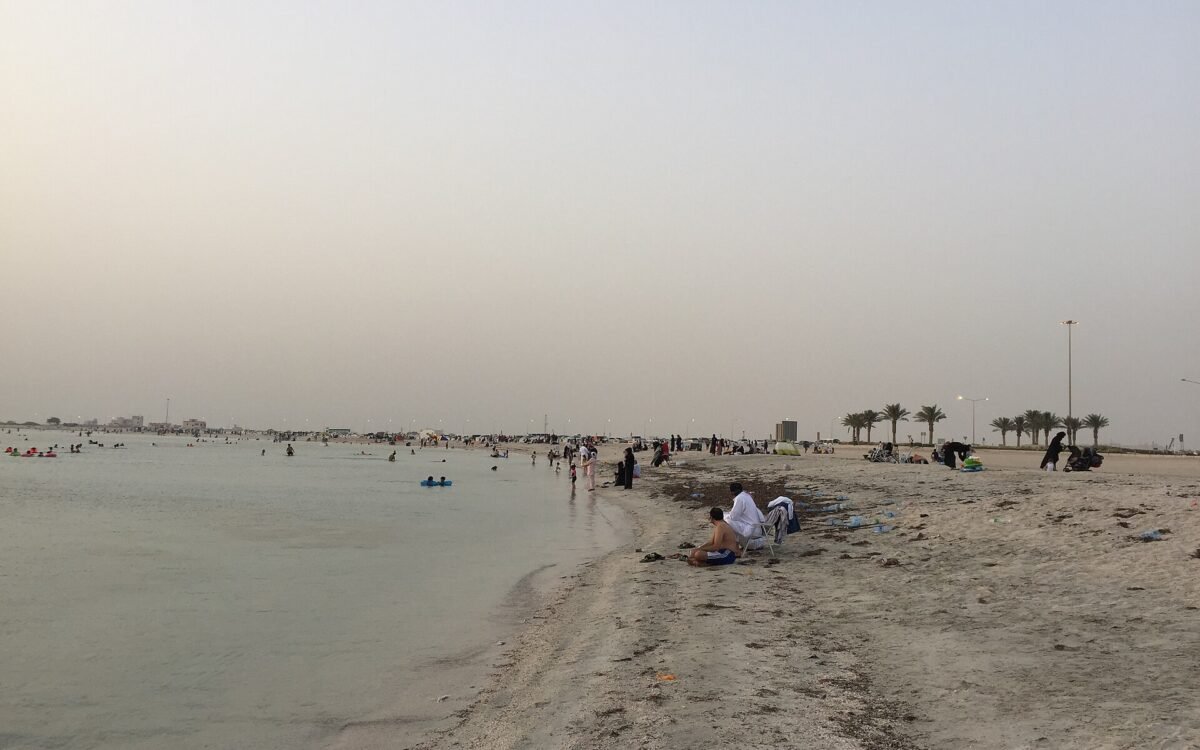 Beaches & IslandsDukhan Beach, DukhanDukhan & West Coast
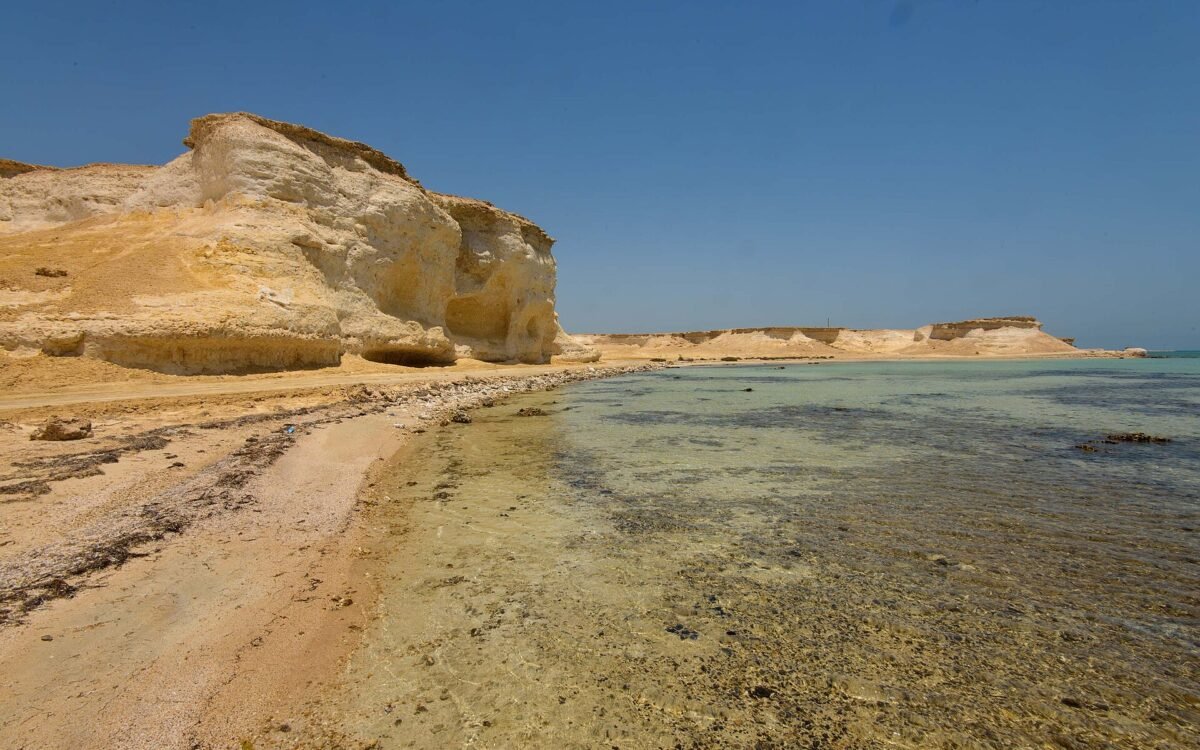 Nature & MangrovesRas Abrouq & Al Reem Biosphere Reserve, Zekreet PeninsulaDukhan & West Coast
🏝️ Beaches & IslandsOur Habitas Ras Abrouq, Zekreet PeninsulaDukhan & West Coast
Nature & MangrovesRas Abrouq & Al Reem Biosphere Reserve, Zekreet PeninsulaDukhan & West Coast
🏝️ Beaches & IslandsOur Habitas Ras Abrouq, Zekreet PeninsulaDukhan & West Coast
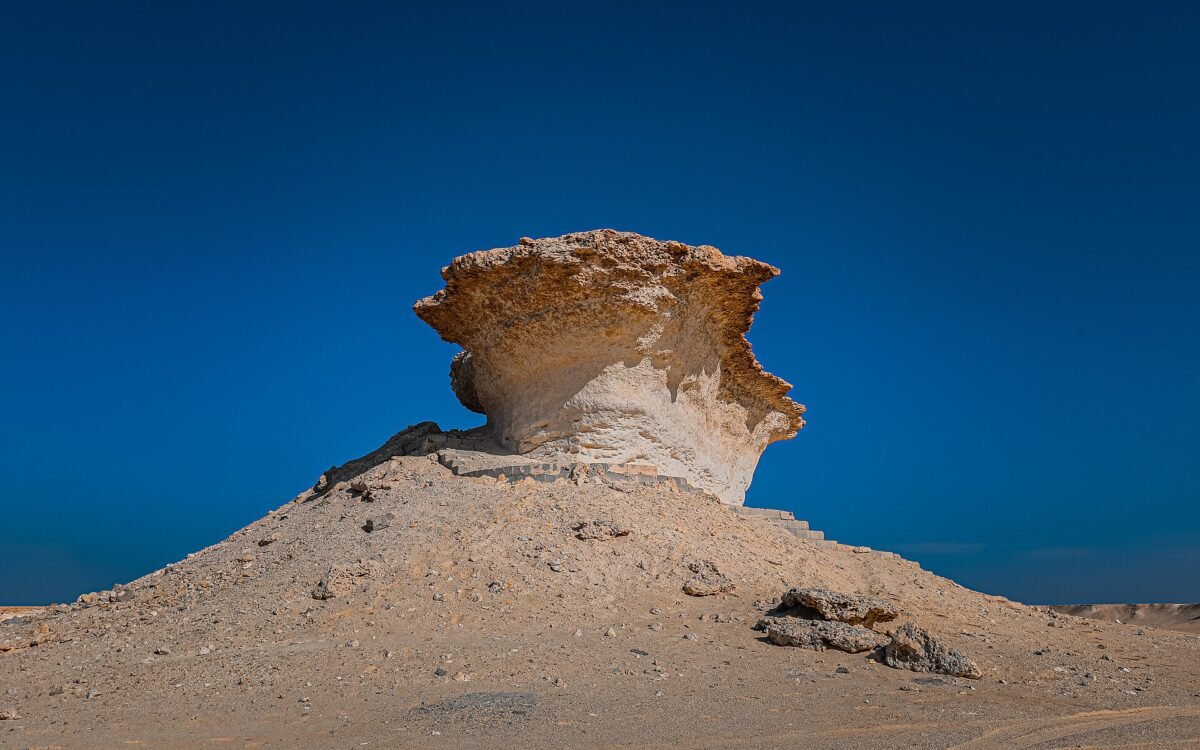 Desert & DunesZekreet Mushroom Rocks, Zekreet PeninsulaDukhan & West Coast
Run a tour, café or stay near Umm Bab Beach (Palm Tree Beach), Umm Bab?
List your business free on Companies in Qatar, or get featured on Qatar Unseen in front of people planning their trip.