Msheireb Museums, Doha
Four free heritage-house museums in Msheireb that tell Qatar's 20th-century story, from pre-oil family life and oil pioneers to the history of slavery.
Heritage Quarter, Msheireb Downtown Doha (near Msheireb metro)
Overview
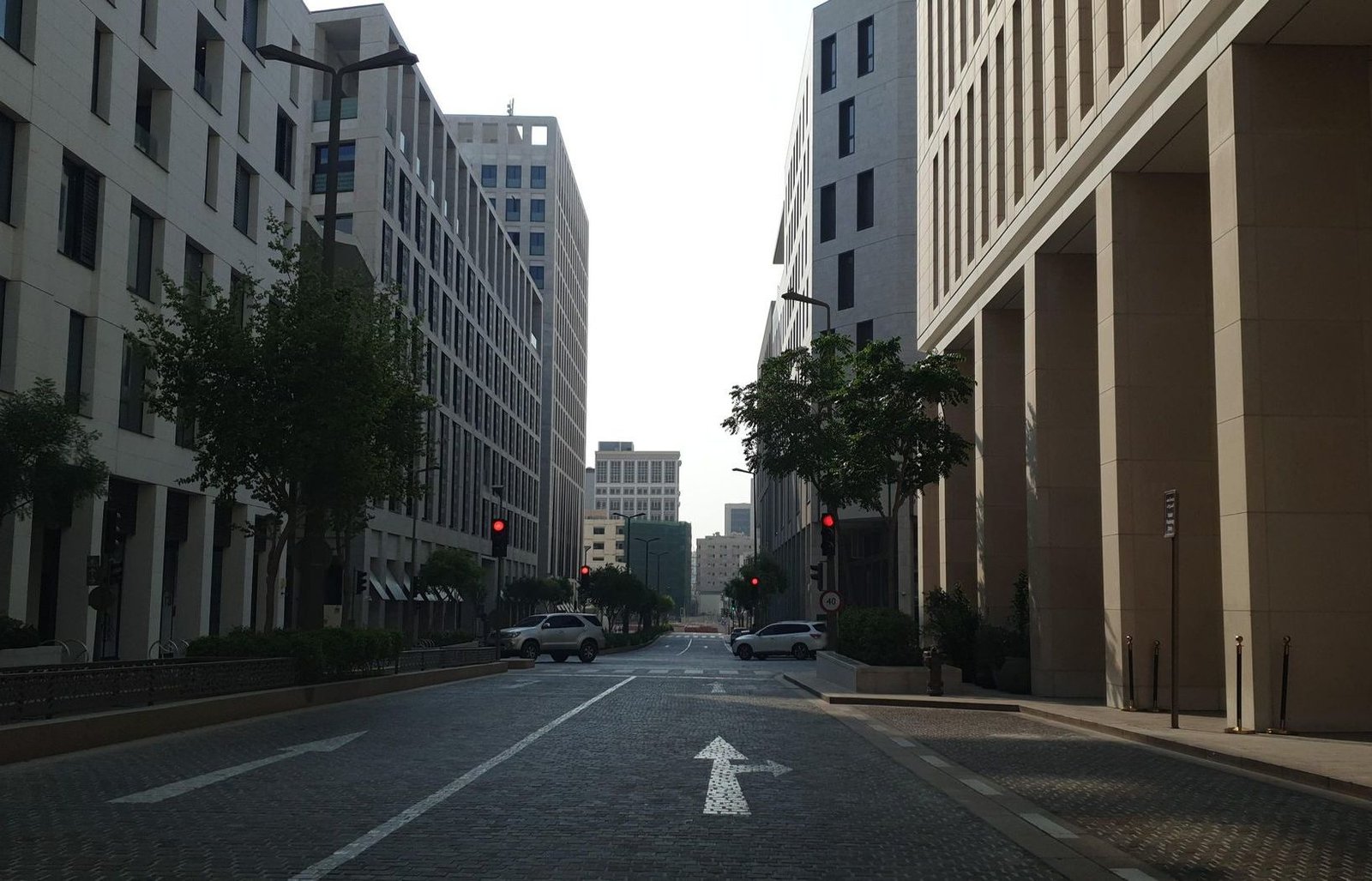
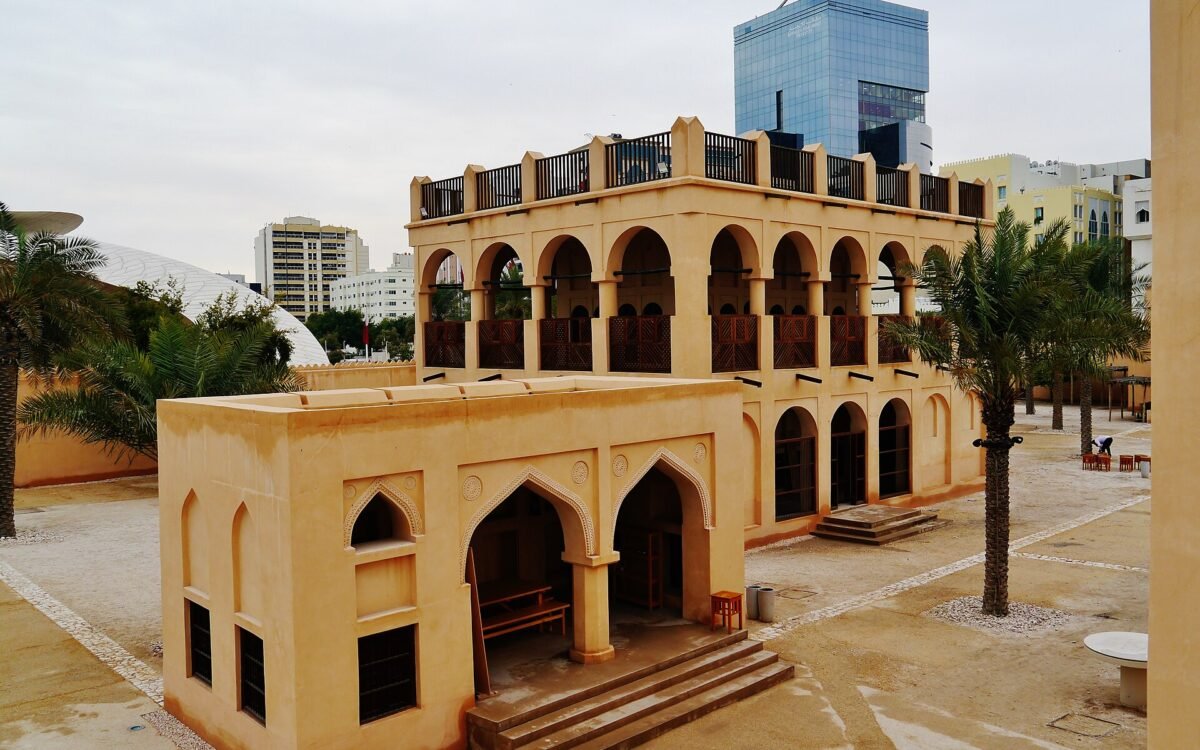
Msheireb Museums is a group of four restored heritage houses in the middle of Msheireb Downtown Doha, the rebuilt city-centre district next to Souq Waqif. Each house is a small museum with its own subject: Bin Jelmood House on slavery and human exploitation, Company House on Qatar’s first oil workers, Mohammed Bin Jassim House on the history and rebuilding of Msheireb itself, and Radwani House on everyday family life before oil. Entry to all four is free.
Many visitors to Doha walk straight past them on the way from the metro to the souq. That is a pity, because together they tell the story of how Qatar changed in the 20th century more personally than any of the big national museums. The galleries are compact, well designed and full of recorded voices, photographs and objects, and you can see all four in a morning or an afternoon.
This guide is for people who want to do the houses properly: which order to visit them in, what to look for inside, how long to allow, and how to fit them around the rest of the old city. It suits history lovers, families with older children, and anyone who wants to understand the Qatar behind the skyline.
History and background
Msheireb is one of Doha’s oldest neighbourhoods. The name is usually explained as “a place to drink water”, after the wells that once drew people here. Through the mid-20th century it was a busy commercial and residential quarter of courtyard houses and narrow lanes, but as Doha spread outwards many families moved away and the area declined.
In 2010 Msheireb Properties, a Qatar Foundation subsidiary, began a large regeneration project to rebuild the district as a walkable, sustainable city quarter that draws on traditional Qatari architecture. The last phase was completed in 2022. A handful of historic buildings in the Heritage Quarter were kept, and four of them were restored by the architects John McAslan + Partners and turned into museums. Msheireb Museums formally opened to the public in October 2015, and the project was later named among the Royal Institute of British Architects’ best new buildings of 2018.
Each house has its own past. Radwani House was built in the 1920s and was a family home between the Al Jasrah and Msheireb quarters; during its restoration, it hosted the first archaeological digs carried out in central Doha. Mohammed Bin Jassim House was built by Sheikh Mohammed bin Jassim Al Thani, a son of Sheikh Jassim bin Mohammed Al Thani, the founder of modern Qatar. Company House was the headquarters of Qatar’s first oil company, and Bin Jelmood House, the most architecturally dramatic of the four, was given the most sensitive subject.
What to see and do
Start at Radwani House for everyday life
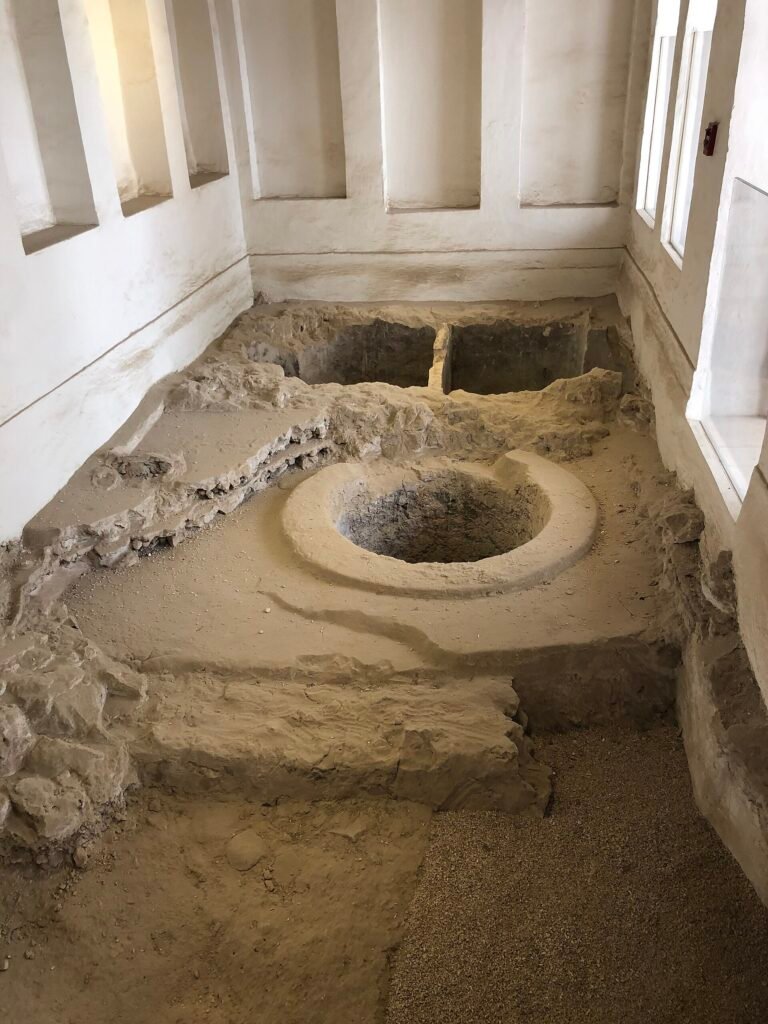
Radwani House is the smallest and most intimate of the four, and a good place to begin. It shows how a Qatari family lived in a traditional courtyard house, with rooms arranged around an open central space, and how daily routines changed with the arrival of electricity, running water and oil wealth. Look down as well as around: parts of the excavations carried out here, the first in the centre of the city, are displayed under glass.
Understand the district at Mohammed Bin Jassim House
This house, built by a son of the founder of modern Qatar, now explains Msheireb itself: the old neighbourhood, its demolition and the thinking behind the new district’s design and sustainability goals. It is also home to the Echo Memory art project, which uses everyday objects recovered from the site during demolition. It is the best place to understand what you are walking through when you step back outside.
Meet the oil pioneers at Company House
Company House occupies the former headquarters of Qatar’s first oil company. Its galleries tell the story of the Qatari men who went to work in the early oil industry, often in hard conditions, and of the families they supported. Recorded testimonies, photographs and personal objects make it much more human than a typical industry museum. The architects enclosed the former courtyard under a top-lit lattice roof, which is worth a look in itself.
Give Bin Jelmood House the most time
Bin Jelmood House deals with the history of slavery, with a particular focus on the Indian Ocean trade and the Gulf, and on modern forms of exploitation. It includes photographs and recorded interviews with Qataris of enslaved ancestry, and its stated aim is to raise awareness and support the global fight against human exploitation. It is thoughtful and at times moving, and it is unusual to find a museum in the region that addresses this subject so directly. Allow at least 45 minutes, and prepare younger children for what they will see.
Check what’s on temporarily
The houses host temporary exhibitions, talks and family programmes alongside the permanent galleries. Recent examples have included a science exhibition on DNA and architecture shows. Check the museums’ website or app before you go to see what is on.
Join a guided tour
Msheireb Museums offers guided tours for individuals and groups, as well as educational tours for schools and universities. A guide adds a lot of context, especially in Bin Jelmood and Company House. There is also a museum app for self-guided visits.
Walk the Heritage Quarter
Between the houses, take time to look at the lanes and courtyards of the Heritage Quarter and the new buildings around it, which borrow from traditional forms such as shaded alleys, thick walls and small windows. The Sogha gift shop, in Bin Jelmood House and Company House, sells locally themed books and gifts.
How to get there
By metro: Msheireb station is the central interchange of the Doha Metro, where the Red, Green and Gold lines meet, and it opens directly into the district. The houses are a few minutes’ walk from the station exits.
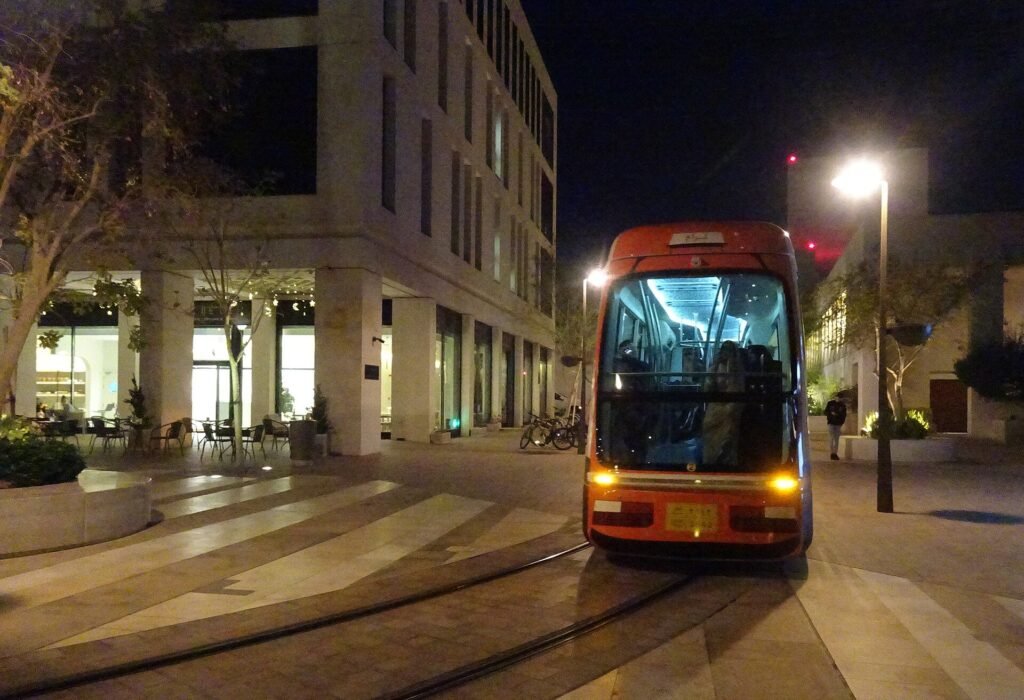
By tram: The free Msheireb Tram runs a loop around the district and is handy if you are coming from the other end of Msheireb or want to rest your legs between sights.
By car: Msheireb is in central Doha, between Souq Waqif and the Corniche, about 10 to 15 minutes’ drive from West Bay. The museums direct visitors to the Jumaa Mosque parking area; Msheireb also has underground car parks.
On foot: From Souq Waqif, Msheireb is a walk of roughly 10 to 15 minutes to the west.
Best time to visit
Because the museums are indoors and air-conditioned, they work all year, and they are an excellent choice for a hot summer day. The walk between the houses is short but exposed in summer, so the free tram or a morning visit helps.
Opening hours at the time of writing are Monday to Thursday and Saturday 9am to 5pm, and Friday 3pm to 9pm; the museums are closed on Sundays. Last entry is 30 minutes before closing, and hours can change on national holidays. Weekday mornings are quietest. The Friday evening session is a good option if you want to combine the museums with dinner at Souq Waqif.
Tips for your visit
- Don’t come on a Sunday. The museums are closed on Sundays, which catches many visitors out.
- Dress conservatively. The museums ask visitors to cover shoulders to knees and may refuse entry for unsuitable clothing.
- Allow two to three hours for all four. The houses are small, but the recorded testimonies deserve time.
- Visit Bin Jelmood House when you are fresh. It is the most demanding and the most rewarding of the four.
- Photography is fine for personal use. Be respectful in galleries that feature personal testimonies.
- Use the free tram in summer. It cuts down time in the sun between the houses and the station.
- Accessibility is good. Most spaces are wheelchair accessible, wheelchairs are available in all houses, and there are baby-changing facilities.
- Check the programme. Temporary exhibitions and events can change which rooms are open.
Combine it with nearby places
Souq Waqif. Doha’s restored market is a short walk away and the natural place for lunch, tea or dinner after the museums.
Barahat Msheireb. The large covered square at the heart of the district hosts events and is lined with cafés, a good place to sit between houses.
Al Koot Fort. The small whitewashed fort near Souq Waqif is one of the few surviving historic military buildings in central Doha; admire it from outside if it is not open.
Al Bidda Park. One metro stop away on the Red Line, the city’s biggest central park is ideal for a walk after an indoor morning. See our Al Bidda Park guide.
National Museum of Qatar. For the big-picture story of the country, from geology to independence, the desert-rose museum is a 10-minute drive away.
Frequently asked questions
Are Msheireb Museums free?
Yes. Entry to all four houses is free.
What are the opening hours of Msheireb Museums?
Monday to Thursday and Saturday 9am to 5pm, Friday 3pm to 9pm, and closed on Sundays. Last entry is 30 minutes before closing, and hours may change on holidays.
What are the four Msheireb Museums?
Bin Jelmood House (slavery and human exploitation), Company House (Qatar’s early oil workers), Mohammed Bin Jassim House (the history and redevelopment of Msheireb) and Radwani House (traditional family life).
How long do I need at Msheireb Museums?
Allow two to three hours to see all four houses at a comfortable pace, or about an hour if you only visit Bin Jelmood House.
Is there a dress code?
Yes. Visitors are asked to wear conservative clothing covering shoulders to knees.
How do I get to Msheireb Museums by metro?
Take any of the Red, Green or Gold lines to Msheireb station. The houses are a short walk from the exits.
Are Msheireb Museums suitable for children?
Radwani House and Company House work well for families. Bin Jelmood House covers slavery and exploitation, so younger children may need some preparation and guidance.
Last checked October 2026. Hours, fees and access can change, so confirm with the official source before you go.
More places nearby
All places →
Run a tour, café or stay near Msheireb Museums, Doha?
List your business free on Companies in Qatar, or get featured on Qatar Unseen in front of people planning their trip.