Old Palace at the National Museum of Qatar, Doha
Inside Jean Nouvel's desert rose sits the restored palace of Sheikh Abdullah bin Jassim, Qatar's first national museum. Here's how to see it properly.
National Museum of Qatar, Museum Park St, Old Salata, Doha
Overview
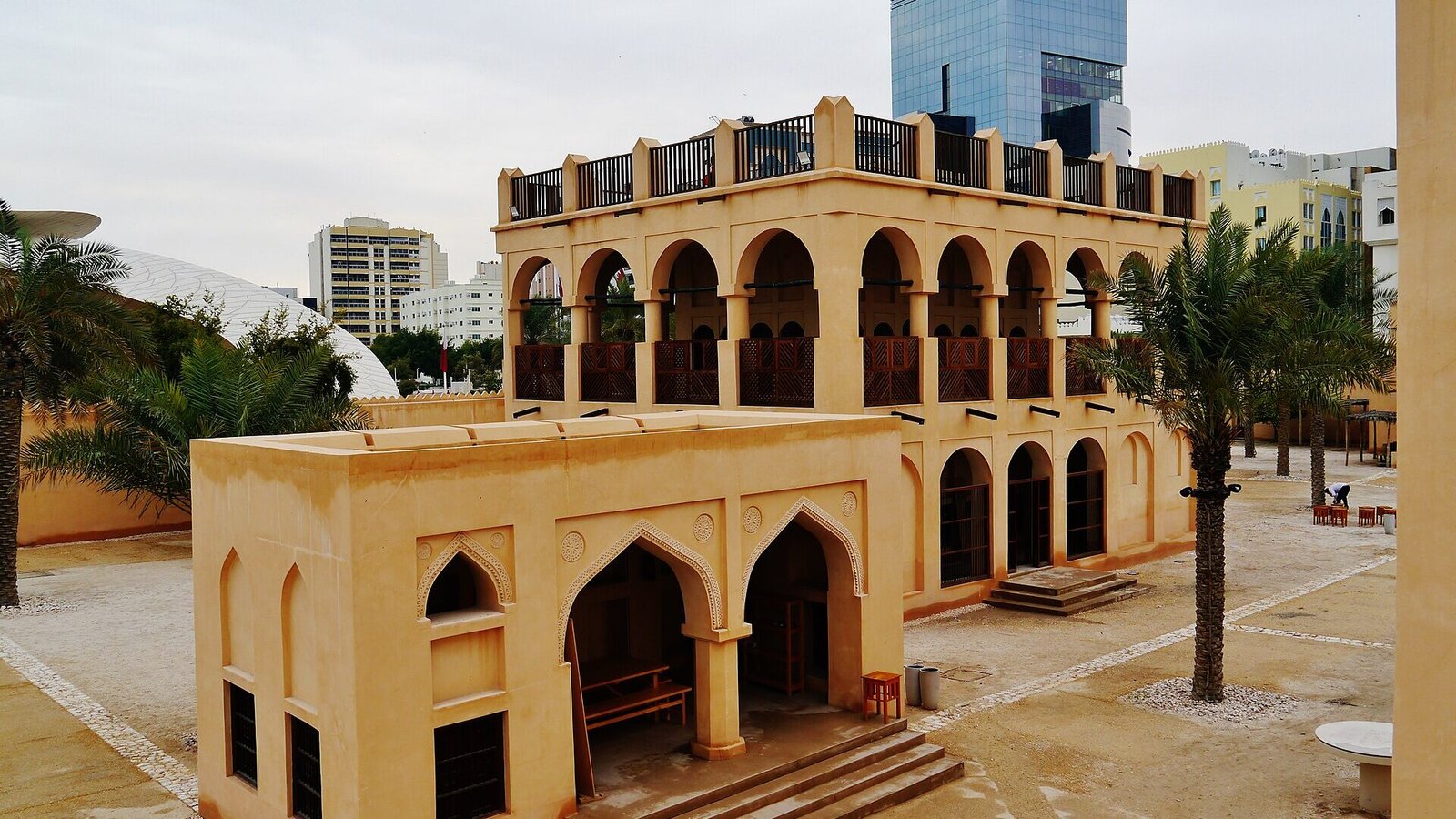
Most people who visit the National Museum of Qatar come away talking about Jean Nouvel’s “desert rose” building, the films projected across gallery walls and the Pearl Carpet of Baroda. Fewer notice that the whole museum was designed around something much older and quieter: the restored palace of Sheikh Abdullah bin Jassim Al Thani, a cluster of sand-coloured, early 20th-century buildings set in a courtyard at the heart of the complex. Qatar Museums calls it the museum’s largest artefact.
The Old Palace was a royal family home and seat of government, and from 1975 it housed Qatar’s first national museum. Today you can walk around its arcades, peer into rooms with painted wooden ceilings, and see how traditional Qatari builders worked with stone, timber and plaster before air conditioning, glass towers and highways changed everything.
This guide is for anyone who wants to look at the National Museum from a different angle: as a place where old Doha survives inside new Doha. It explains the palace’s story, what to look out for, how to fit it into a visit to the main galleries, and the best light for photographs. It suits history and architecture lovers, photographers and residents who have “done” the museum once and want a reason to go back.
The story behind the palace
The palace stands in what was once the seaside district of Fereej Al Salata, on the southern edge of old Doha. Sheikh Jassim bin Mohammed Al Thani, the founder of modern Qatar, had his family residence here; after his death in 1913, his son Sheikh Abdullah bin Jassim Al Thani, ruler of Qatar, continued to use and expand it. Rather than following a single master plan, the complex grew over time into a walled compound of courtyard houses for Sheikh Abdullah and his sons Hamad and Ali, reception halls (majlis), guard and gatehouse quarters and rooms for the mosque caretaker. Its dominant building, a two-storey arcaded structure, dates from 1918.
The palace served as both family home and seat of government until the ruler moved his court elsewhere in the early 1920s. Over the following decades it fell into disrepair. In 1972 Sheikh Khalifa bin Hamad Al Thani decided to turn it into a national museum, and the restored palace, with a new Museum of State built partly below ground along its north side, opened as the Qatar National Museum in June 1975. The firm Michael Rice and Co. worked on the conversion, and in 1980 the project received the Aga Khan Award for Architecture for its sensitive treatment of historic buildings.
When Qatar Museums commissioned Jean Nouvel to design a new National Museum, the palace stayed at its core. Between 2012 and 2015 the Berlin practice Ziegert Roswag Seiler Architekten Ingenieure restored it again, using natural materials and techniques of the period and training local craftspeople in timber treatment, ornament and painted ceiling repair and historic plaster. The new museum, whose interlocking discs curl around the old buildings, opened on 28 March 2019.
What to see and do
Find the palace first
The National Museum’s galleries form a long loop, and the Old Palace is not a numbered gallery; you encounter it as part of the route and from the courtyard at the centre of the complex. Ask staff at the entrance where the palace is accessible on the day, and plan to see it either at the start, to set the scene, or as a calm break halfway round.
Look up at the painted ceilings
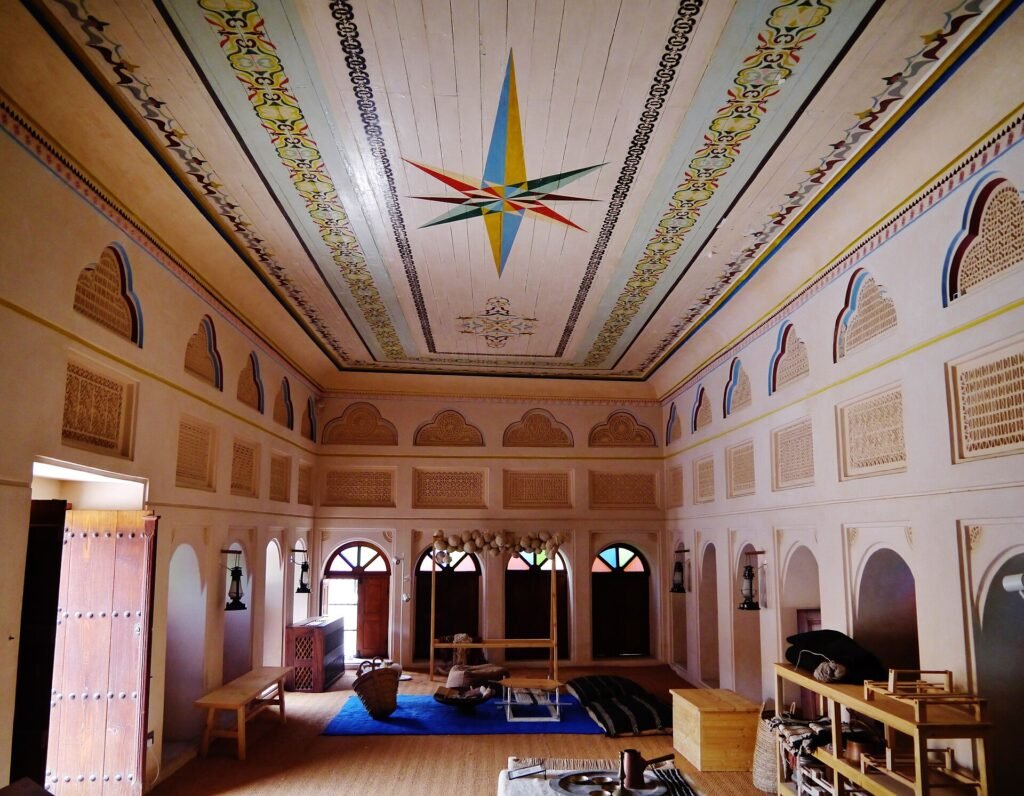
Several rooms have wooden ceilings painted in geometric and floral patterns, carefully conserved during the restoration. They are easy to miss if you only look at eye level. Stand in the doorway, let your eyes adjust to the softer light and look up; the colours are surprisingly bright.
Walk the arcades
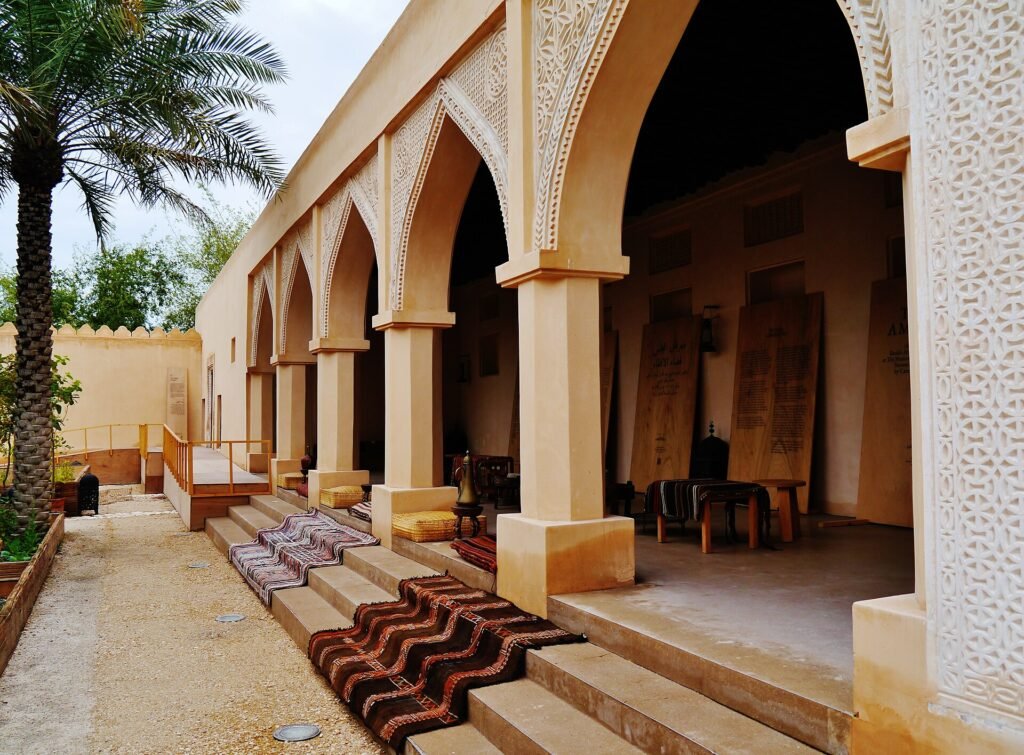
The two-storey arcaded building of 1918 is the palace’s centrepiece. Its rhythm of pointed arches, shaded verandas and carved details was designed for a hot climate: deep shade, cross-breezes and thick walls. Walk its length slowly and notice how the deep verandas keep the rooms behind them in shade.
Spot the majlis and family houses
The complex included separate courtyard houses for Sheikh Abdullah and his sons, reception rooms where the ruler received visitors, and quarters for guards and gatekeepers. Seeing these spaces side by side helps you understand how a ruling household lived and governed in the early 20th century, long before ministries and office towers.
Study the gates and walls
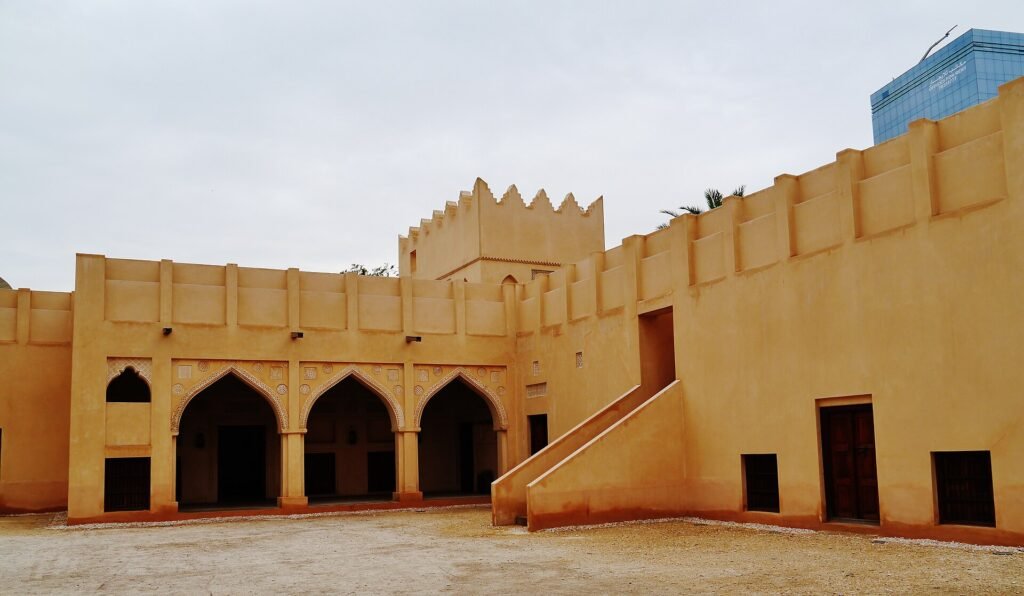
Look at the crenellated walls, the carved plaster panels and the timber doors of the north and south gates. These details are typical of traditional Gulf architecture, and you will recognise them later at sites such as Al Zubarah Fort and Umm Salal Mohammed Fort.
Frame old and new together
The most striking views are where the low, sand-coloured palace meets Nouvel’s huge, tilted discs. From the courtyard you can photograph both in one frame, a visual summary of how far Qatar has travelled in a century.
Add a temporary exhibition
Your ticket also covers NMoQ’s temporary shows. At the time of writing, “A Sneak Peek at the Qatar Auto Museum Project” runs until 2 February 2027, and two new exhibitions, on the maritime trade in ancient Chinese ceramics and on the Italian artist Giuseppe Penone, open on 26 October 2026.
How to get there
The National Museum of Qatar is at the southern end of the Doha Corniche, in the Old Salata area, a short taxi ride from Souq Waqif. The simplest way to arrive is by Doha Metro: National Museum station on the Gold Line is right beside the museum. Vehicle and pedestrian access is from the roundabout at Mathaf Street and Museum Park Street, and there is parking on site.
Taxis and ride-hailing apps drop off at the main entrance. On a cool evening you can also walk from Souq Waqif or the Corniche, though the roads around the museum are busy.
Best time to visit
The galleries are indoors, so the museum works year-round. The palace courtyard is open to the sky, so from about May to September it is best seen in the morning, before the stone heats up, or late in the day. From November to March, late afternoon light warms the walls and makes the best photographs.
Official hours are 9am to 7pm on Saturday, Sunday, Monday and Wednesday, 9am to 9pm on Thursday and 1.30pm to 7pm on Friday; the museum is closed on Tuesdays. Last entry is 45 minutes before closing. Weekday mornings in term time can bring school groups, so afternoons are usually calmer.
Tips for your visit
- Check for closures. The museum’s website notes that some galleries may be closed for enhancement in 2026. If the palace is your main reason for going, call or ask on arrival.
- Bring your QID. Entry to Qatar Museums venues is free for residents with a valid QID and for children under 16. Non-resident adults pay QAR 50, with half price for non-resident students.
- Allow extra time. Two to three hours covers the main galleries; add 30 to 45 minutes to explore the palace properly.
- Use the audio guide. Qatar Museums’ audio tours, in several languages, add useful context to the palace and galleries.
- Dress modestly. Cover shoulders and knees, as in all Qatar Museums venues.
- Don’t touch the plasterwork. The restored surfaces are fragile.
- Plan around closing days. MIA closes on Wednesdays and NMoQ on Tuesdays, so you can see both in one day on any day except those two.
Combine it with nearby places
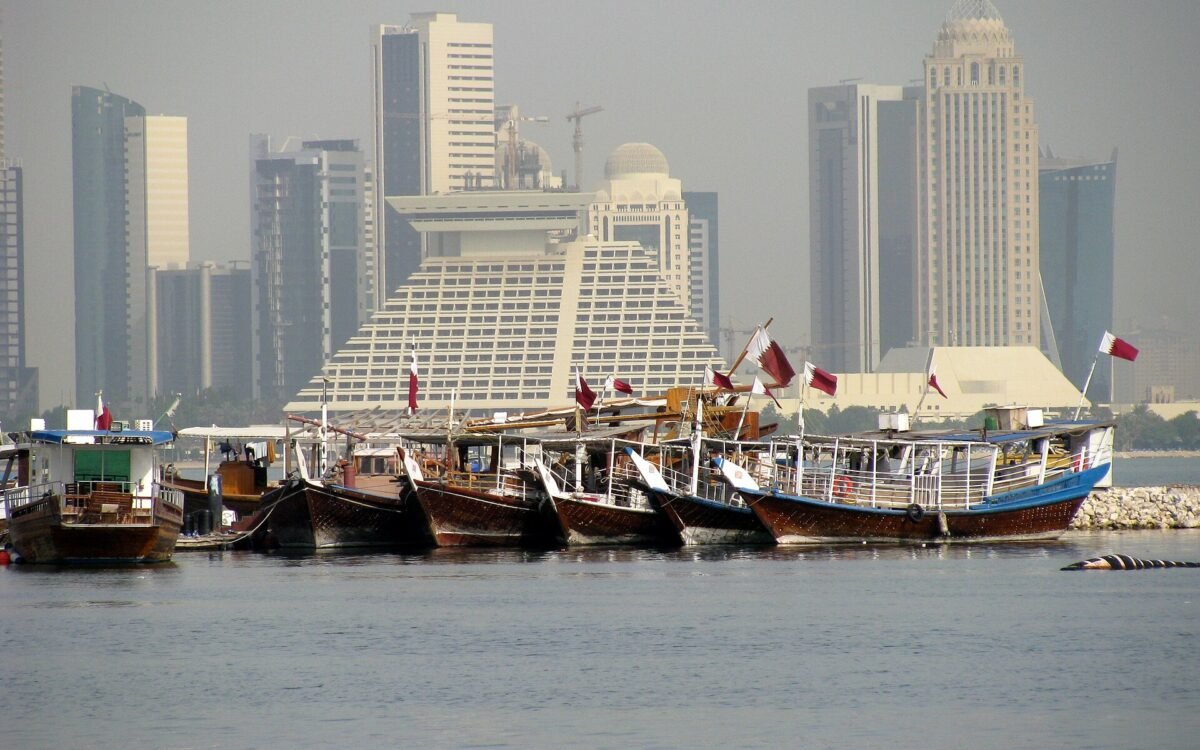
- Dhow Harbour. Just along the Corniche, where traditional wooden boats moor and short bay cruises leave, a living link to the seafaring world shown in the museum.
- Richard Serra’s 7 at MIA Park. A 24-metre steel sculpture at the tip of MIA Park, best at sunset after a day in the galleries.
- Msheireb Museums. Four restored heritage houses that continue the story of 20th-century Doha, a short metro or taxi ride away.
- Souq Waqif. The rebuilt old market, ideal for dinner afterwards; try Bandar Aden for Yemeni food or Athr Café for coffee.
Frequently asked questions
Is the Old Palace included in the National Museum ticket?
Yes. The palace sits at the heart of the museum, and access is part of a standard NMoQ visit. Entry is free for Qatar residents with a QID and for under-16s; non-resident adults pay QAR 50.
Who lived in the Old Palace?
It was the home of Sheikh Abdullah bin Jassim Al Thani, ruler of Qatar, and his family, and it also served as the seat of government until the early 1920s.
Was the palace the first National Museum?
Yes. In 1975 it opened as the Qatar National Museum, and the conversion won the Aga Khan Award for Architecture in 1980.
When was the palace restored?
A three-year restoration by the Berlin firm Ziegert Roswag Seiler Architekten Ingenieure was completed in 2015, before the new museum opened in 2019.
Which metro station is closest?
National Museum station on the Gold Line, beside the museum.
Is the National Museum open on Tuesdays?
No. It is closed on Tuesdays and opens 9am to 7pm on most other days, until 9pm on Thursdays and from 1.30pm on Fridays.
Last checked October 2026. Hours, fees and access can change, so confirm with the official source before you go.
Read the Companies in Qatar visitor guide ↗
More places nearby
All places →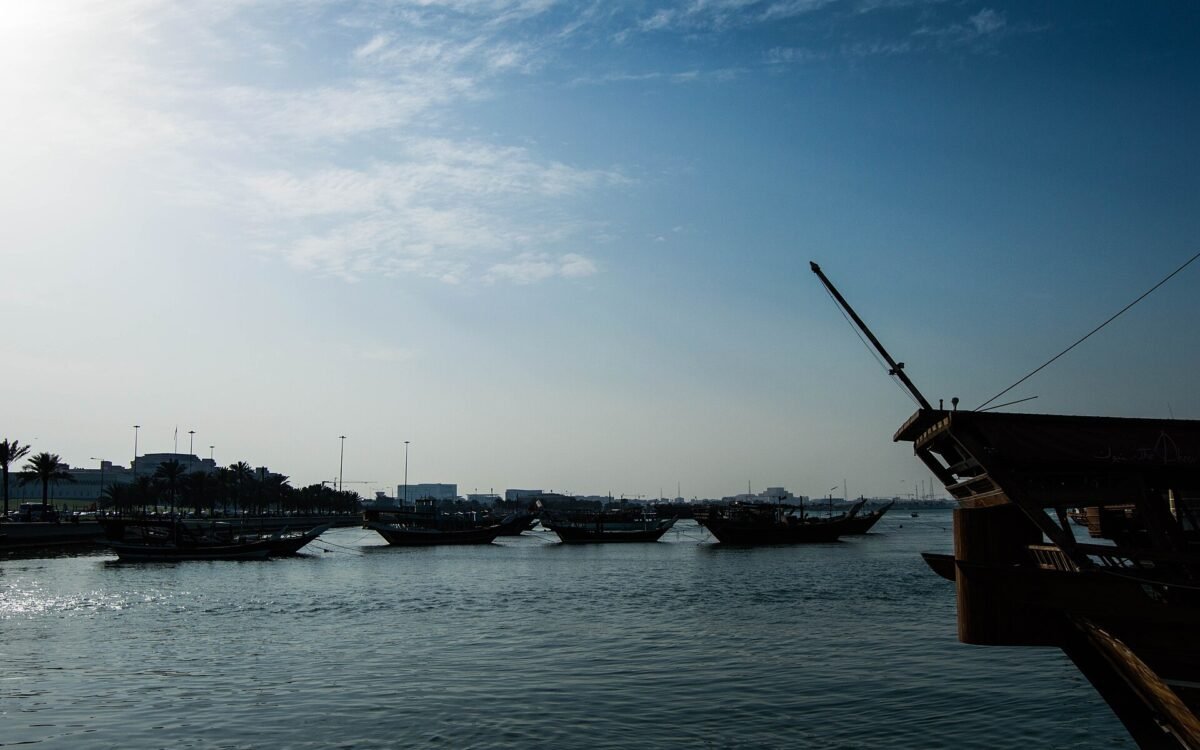
Run a tour, café or stay near Old Palace at the National Museum of Qatar, Doha?
List your business free on Companies in Qatar, or get featured on Qatar Unseen in front of people planning their trip.