Zekreet Fort, Zekreet
The west coast's only fort: low beach-rock walls, corner towers and date presses from around 1810, on the road to Zekreet's rock formations.
North of Zekreet village, Zekreet Peninsula (west coast)
Overview
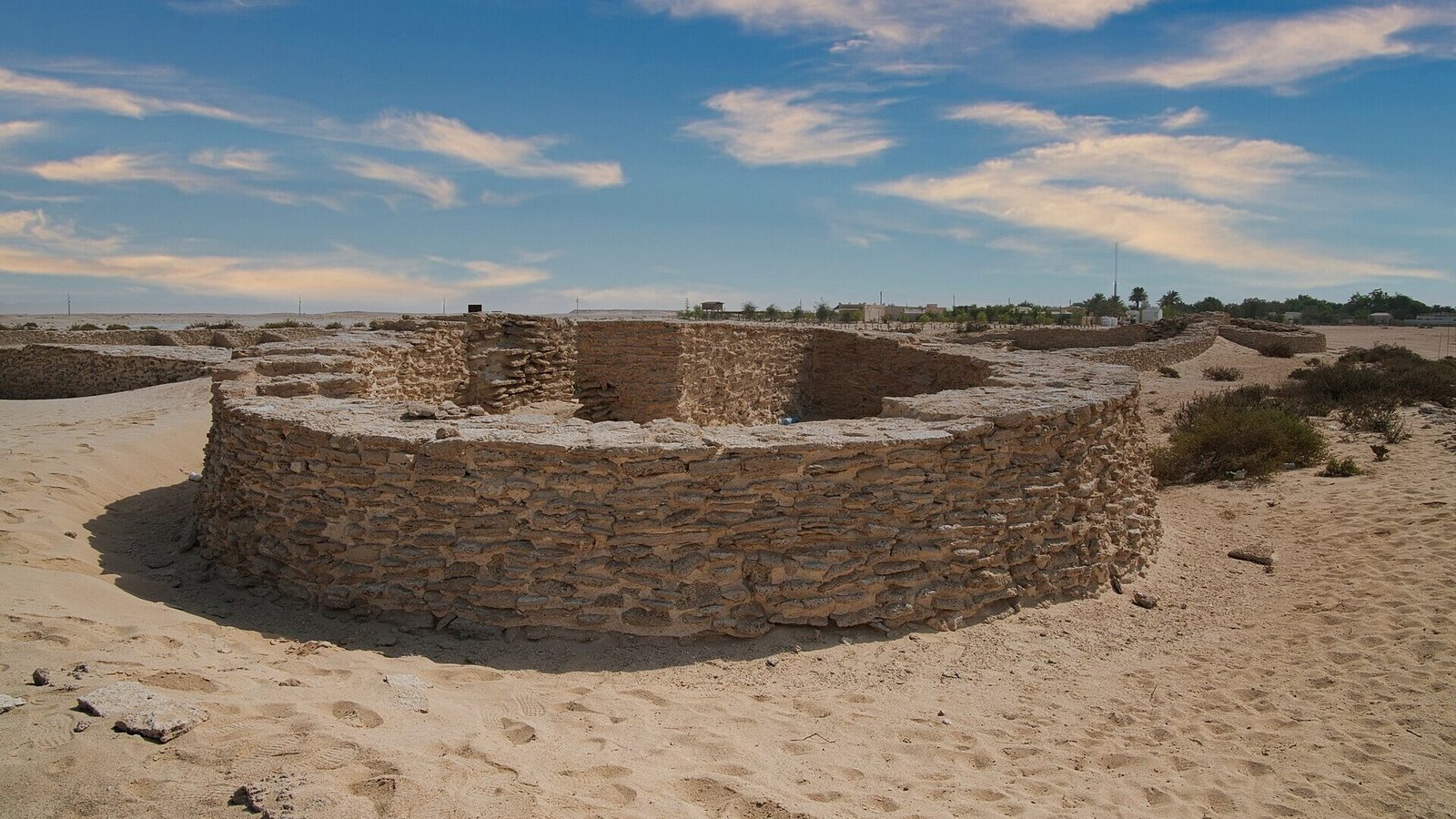
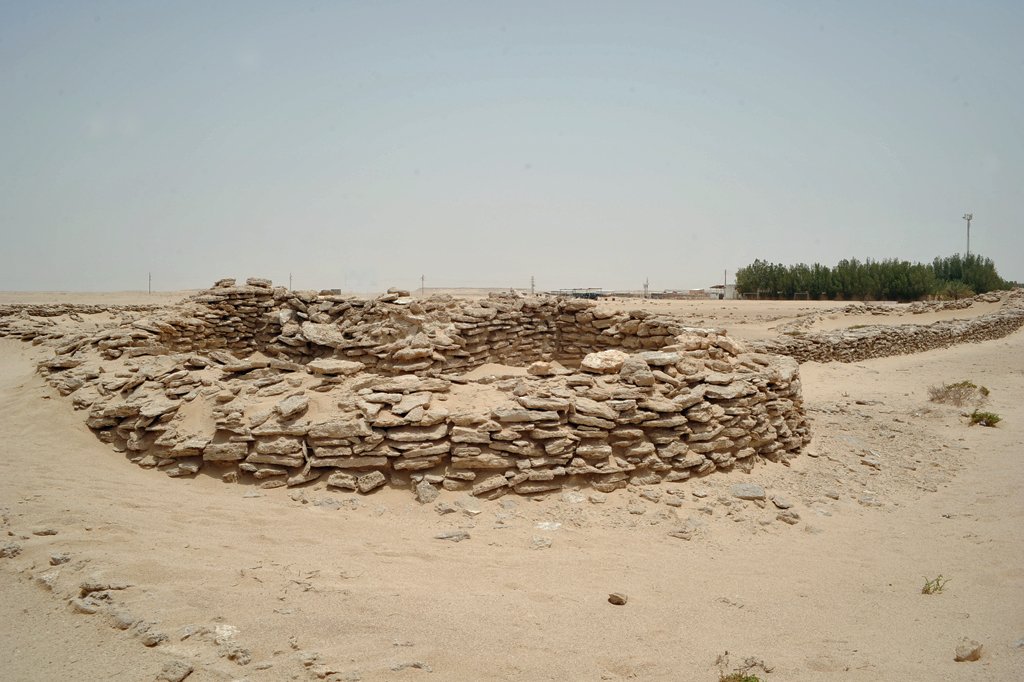
Zekreet Fort is a low, square ruin of rough stone on the flat ground just north of Zekreet village, on Qatar’s west coast about 80 km from Doha. Qatar Museums describes it as the only fort in the western region of the country. It is not a tall, restored landmark like Al Zubarah. What survives is a ring of thick, knee-to-shoulder-high walls, the stumps of corner towers and the outlines of small rooms, sitting in a pale landscape of gravel, sabkha and eroded limestone.
That modesty is part of the appeal. Most people drive past on their way to the mushroom rocks, Film City or Richard Serra’s steel plates, and never stop. If you do, you get a quiet look at how people lived on this coast two centuries ago, built from the same beach rock you can see along the shore, with date-pressing rooms that tell you this was a place of storage and daily life as much as defence.
This guide is for people who like to read a landscape: history fans, photographers, families on a Zekreet Peninsula day trip and anyone curious about the older layers under the peninsula’s famous rock formations. Before you plan around it, read the access section below, because Qatar Museums currently lists the site as temporarily closed.
History and background
Qatar Museums dates the fort to between 1809 and 1812 and links it to Rahma bin Jaber Al Jalahmah, a tribal leader and sea raider who was one of the most feared figures in the Gulf at the time. Other accounts put construction more loosely in the late 18th or early 19th century, around 1800. Rahma bin Jaber also used Al Khuwayr, on the far north-west coast, as a base, so the fort belongs to a turbulent chapter of shifting alliances and raids up and down the Qatar peninsula.
The builders used faroush, the flat slabs of beach rock that form naturally along the shoreline, laid as rubble walls with mud mortar. The first phase was a plain rectangular enclosure. Round towers were added at the corners later to strengthen it, which is why the towers sit a little awkwardly against the walls. Inside, the enclosure held small structures including three madabis, rooms with grooved floors where sacks of dates were stacked so that their syrup (dibs) could run off into a collecting pit. Seeing date presses inside a fort is a useful reminder that these buildings were fortified homes and stores, not just military posts.
The fort seems to have been occupied only briefly before it fell out of use and slowly disappeared under sand. Archaeologists uncovered it in excavations in 1973 and 1974 led by the British archaeologist Beatrice de Cardi, and a French team carried out further work in the Zekreet area in the early 2000s. Qatar Museums now manages the site together with a nearby mosque from the early 20th century, whose courtyard has cylindrical minarets on its northern and southern walls, each crowned with a small dome on six pillars. During restoration, later additions to the mosque were removed and traditional materials were used for its ceilings and walls.
The village beside the fort has its own story. Zekreet grew in the 1940s after oil was found at nearby Dukhan, and a shallow-water harbour was built here to serve the oil operation. Once the port at Mesaieed opened on the east coast in the early 1950s, that role faded, and many families later moved to Dukhan for work.
What to see and do
Walk the outline of the walls
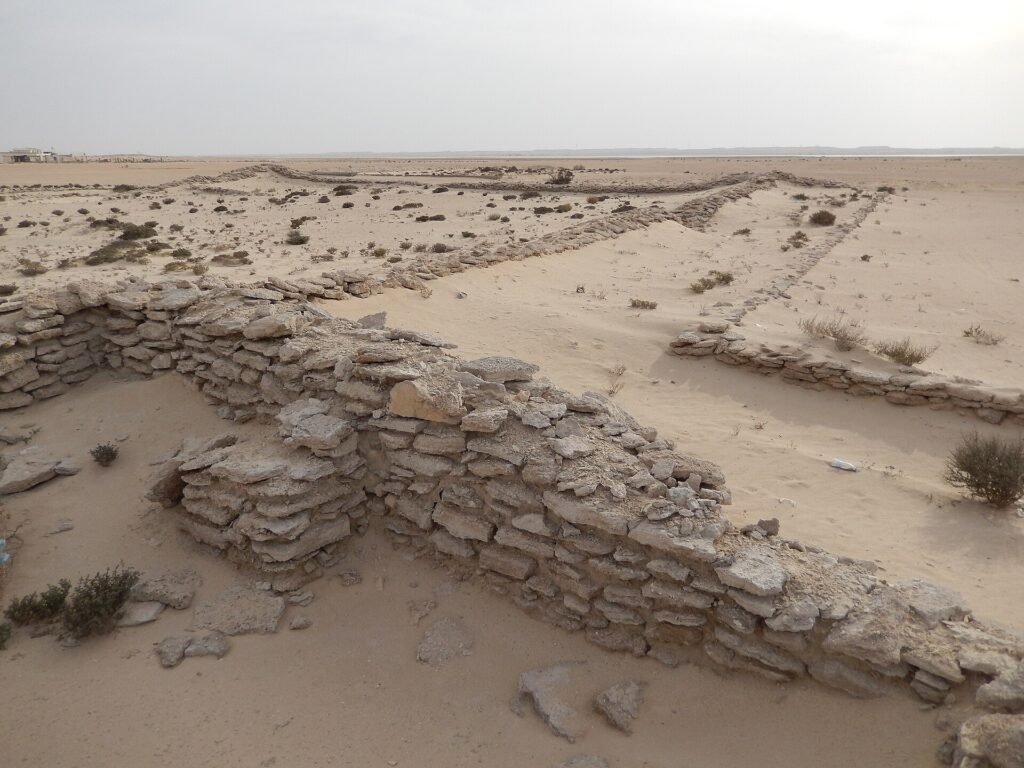
The best way to understand the fort is to walk slowly around the outside first. You can make out the rectangle of the main enclosure and the way the rounded corner towers were pushed up against it. Look closely at the stonework: flat, layered slabs of beach rock, some still showing the ripple texture of the shore they came from. The walls are low enough that you can see across the whole interior from most points, which makes it easy to picture the layout.
Find the date-pressing rooms
Inside the enclosure, look for small rectangular rooms divided by low ridges. These are the madabis. Their floors were built with channels so date syrup could drain away from the stacked sacks. Reviewers often single out the date-press building as the best-preserved part of the site. If you have visited Al Zubarah or the restored houses at Al Wakrah, you will recognise the idea; here it is in its rawest form.
Read the signs, then read the ground
There are bilingual information panels at the site. After reading them, take a few minutes to look at the ground around the fort. Pieces of beach rock, low mounds and faint lines in the gravel hint at other structures that are no longer standing. Don’t pick anything up or climb on the walls. They are fragile, and the site is a protected heritage area.
Look out to the coast and the escarpment
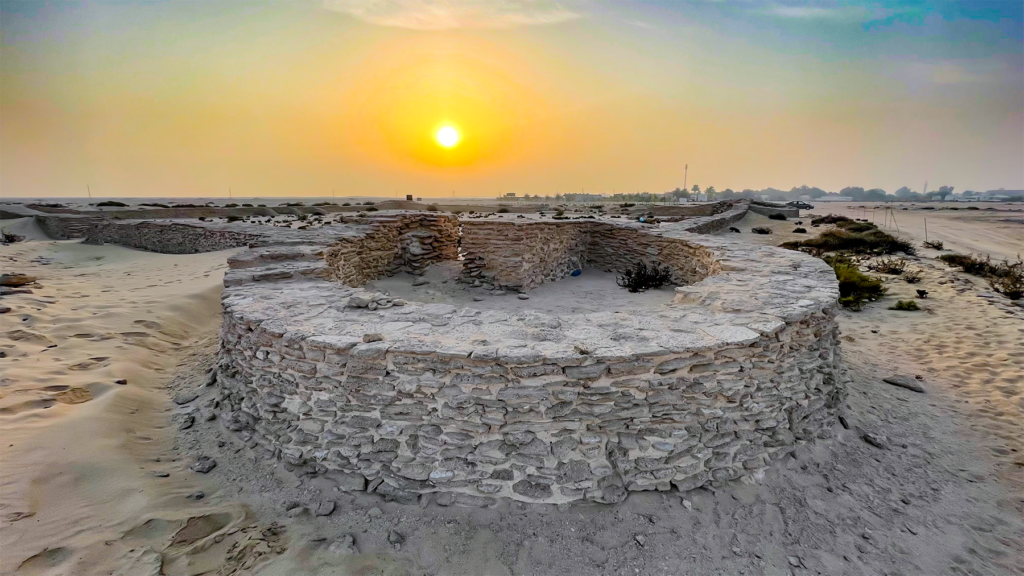
The fort stands on open ground between the sea and the eroded limestone hills that run up the peninsula. Climb nothing, but turn around: to one side is the sweep of Zekreet bay, to the other the white, flat-topped ridges that lead towards the Brouq Nature Reserve. In soft light the whole scene turns gold and grey, and you get a sense of why someone chose this spot, with the coast close but not too exposed.
Photograph it at low sun
In midday light the fort is flat and hard to read. Early morning or the last hour before sunset brings out the texture of the stone and throws long shadows from the towers, which makes the outline much clearer in photos. A wide-angle lens helps, and a slightly raised angle (standing a few metres back on higher ground) shows the plan better than shooting from wall level. Drones are tightly regulated in Qatar, so don’t fly one without the proper permission.
Make it the history stop on a peninsula day
On its own the fort is a 20 to 40 minute visit. Its real value is as the historical anchor of a day on the Zekreet Peninsula, where most attractions are natural or modern. Start here in the morning, then head north to the rock formations and Serra’s sculpture, and you will see the peninsula’s past and present in one loop.
How to get there
From central Doha, take the Dukhan Road west. After roughly 80 km, follow the signs for Zekreet and turn right (north) at the Zekreet junction, then continue towards the village. The fort lies just north of the village; the map pin on this page is set on the site itself. Allow about an hour to an hour and a quarter from Doha, depending on traffic leaving the city.
The highway and the road to the village are paved. The last short stretch to the fort runs over sand and gravel. Visitors report reaching it in an ordinary car with care in dry conditions, but a 4×4 or SUV gives you more clearance, and you will want one anyway if you plan to explore the tracks towards Ras Abrouq and the rock formations. Park on firm ground away from the walls and walk the final metres.
There is no public transport to Zekreet. A taxi or ride-hailing car from Doha is possible but expensive for the return trip and drivers may be reluctant to wait. Private tour companies run west-coast and Zekreet Peninsula day trips by 4×4, usually focusing on the rock formations and Serra’s sculpture; if the fort matters to you, ask whether it is on the route.
Best time to visit
The cooler months from November to March are the most comfortable. From May to September the west coast is very hot and exposed, and there is no shade at the fort. Whatever the month, go in the early morning or late afternoon: the light is better for photos and the heat is easier to manage. Weekends (Friday and Saturday) bring more traffic to the peninsula’s campsites and beaches, but the fort itself is rarely busy.
Most importantly, check the status before you go. At the time of writing, Qatar Museums lists Zekreet Fort as temporarily closed until further notice. When it is open, the published hours are Saturday to Thursday 9am to 5pm and Friday 12:30pm to 5pm.
Tips for your visit
- Check the Qatar Museums page first. The site is currently listed as temporarily closed. If the enclosure is shut when you arrive, respect any fences or barriers and view the walls from outside rather than walking in.
- Set your expectations. This is a ruin of low walls, not a restored castle. Knowing the story beforehand makes the visit far more rewarding.
- Bring everything with you. There are no shops, cafés or toilets at the site. Dukhan, a short drive south, is the nearest town, but much of it is a controlled QatarEnergy area.
- Stay off the walls. Don’t climb, sit on or move stones. Even small knocks damage beach-rock masonry.
- Drive gently on the final track. Keep to existing tyre lines, avoid soft sabkha after rain, and don’t drive onto the archaeological area.
- Dress for the sun and wind. The site is completely open. A hat and closed shoes are more useful than you expect.
- Combine it. The fort is small, so plan it as one stop in a longer Zekreet Peninsula loop.
What to bring
- Plenty of water and snacks
- Sun hat, sunglasses and sunscreen
- Closed shoes for stony, uneven ground
- A fully charged phone and offline map
- A bag for your rubbish
- Camera with a wide-angle lens for the low walls
Combine it with nearby places
East-West/West-East by Richard Serra. Four steel plates, each more than 14 metres tall, stand in a line across a desert corridor a few kilometres north-east of the fort. A striking contrast with an 18th-century ruin, and best near sunset.
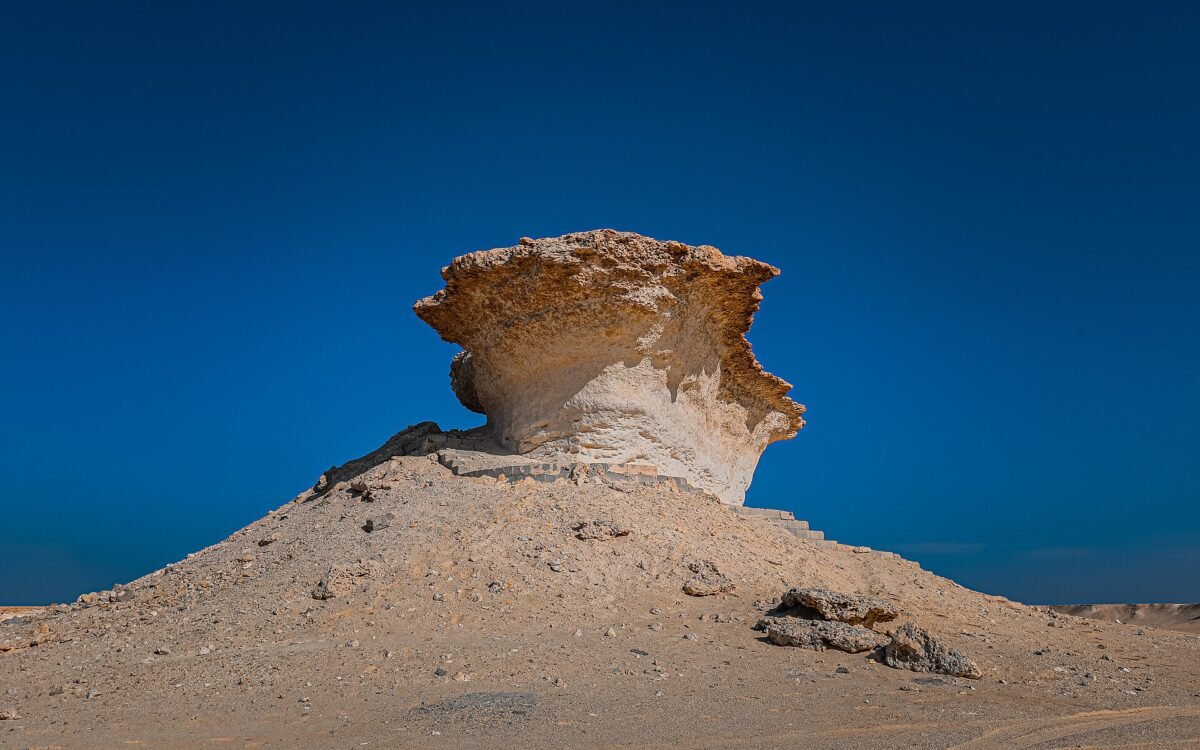
Zekreet Mushroom Rocks. Wind-carved limestone pillars with wide caps and narrow stems scattered across the peninsula. Great for photos and easy short walks.
Zekreet Film City. A replica Arabian village built as a film set on the northern part of the peninsula, surrounded by dramatic rock.
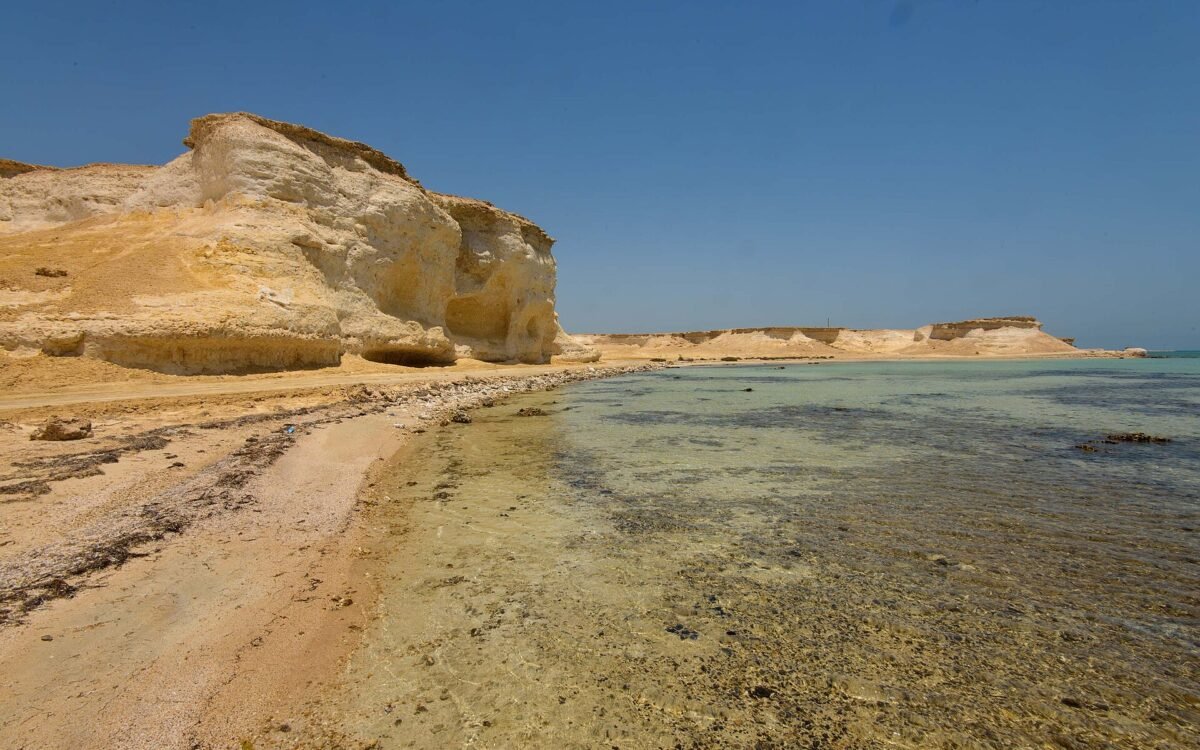
Ras Abrouq and Al Reem Biosphere Reserve. The peninsula’s northern cape, with white cliffs, clear shallow water and a chance of spotting oryx and gazelles.
Dukhan Beach. Head south past Dukhan for a swim or a picnic on the public beach afterwards.
Frequently asked questions
Is Zekreet Fort open to visitors?
At the time of writing, Qatar Museums lists Zekreet Fort as temporarily closed until further notice. Check the official Qatar Museums page before you travel. When the site is open, its published hours are Saturday to Thursday 9am to 5pm and Friday 12:30pm to 5pm.
How old is Zekreet Fort?
Qatar Museums dates it to 1809 to 1812. Other sources describe it more broadly as late 18th or early 19th century. It was excavated in 1973 and 1974.
Who built Zekreet Fort?
It is attributed to Rahma bin Jaber Al Jalahmah, a powerful tribal leader and sea raider active in the Gulf in the late 18th and early 19th centuries.
Do I need a 4×4 to reach Zekreet Fort?
The roads to Zekreet village are paved and the last stretch to the fort is a short sandy, stony track. Visitors report managing it in a normal car with care, but an SUV or 4×4 is better, especially if you plan to explore the rest of the peninsula.
How long should I spend at the fort?
Twenty to forty minutes is enough for the fort itself. Most people combine it with the rock formations, Film City and Serra’s sculpture for a half-day or full-day trip.
How far is Zekreet Fort from Doha?
Roughly 80 to 90 km by road, about an hour to an hour and a quarter by car via the Dukhan Road and the Zekreet turn-off.
Last checked October 2026. Hours, fees and access can change, so confirm with the official source before you go.
More places nearby
All places →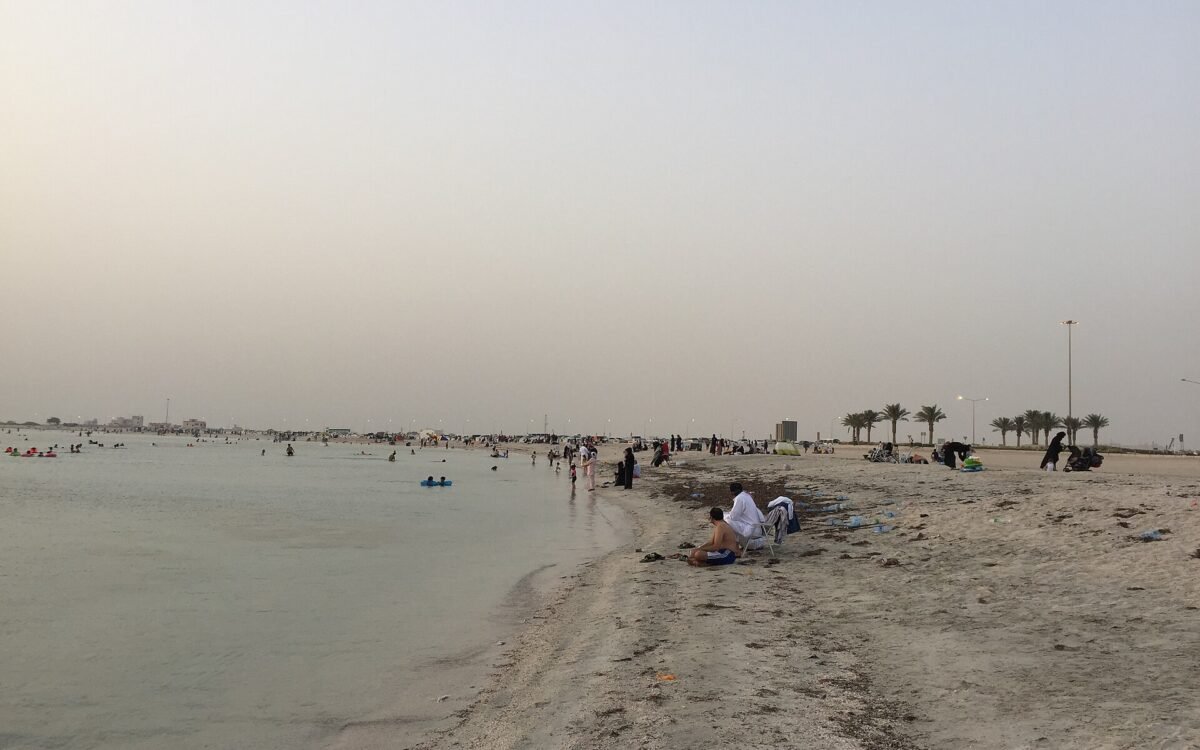 Beaches & IslandsDukhan Beach, DukhanDukhan & West Coast
 Nature & MangrovesRas Abrouq & Al Reem Biosphere Reserve, Zekreet PeninsulaDukhan & West Coast
🏝️ Beaches & IslandsOur Habitas Ras Abrouq, Zekreet PeninsulaDukhan & West Coast
Nature & MangrovesRas Abrouq & Al Reem Biosphere Reserve, Zekreet PeninsulaDukhan & West Coast
🏝️ Beaches & IslandsOur Habitas Ras Abrouq, Zekreet PeninsulaDukhan & West Coast
 Desert & DunesZekreet Mushroom Rocks, Zekreet PeninsulaDukhan & West Coast
Run a tour, café or stay near Zekreet Fort, Zekreet?
List your business free on Companies in Qatar, or get featured on Qatar Unseen in front of people planning their trip.