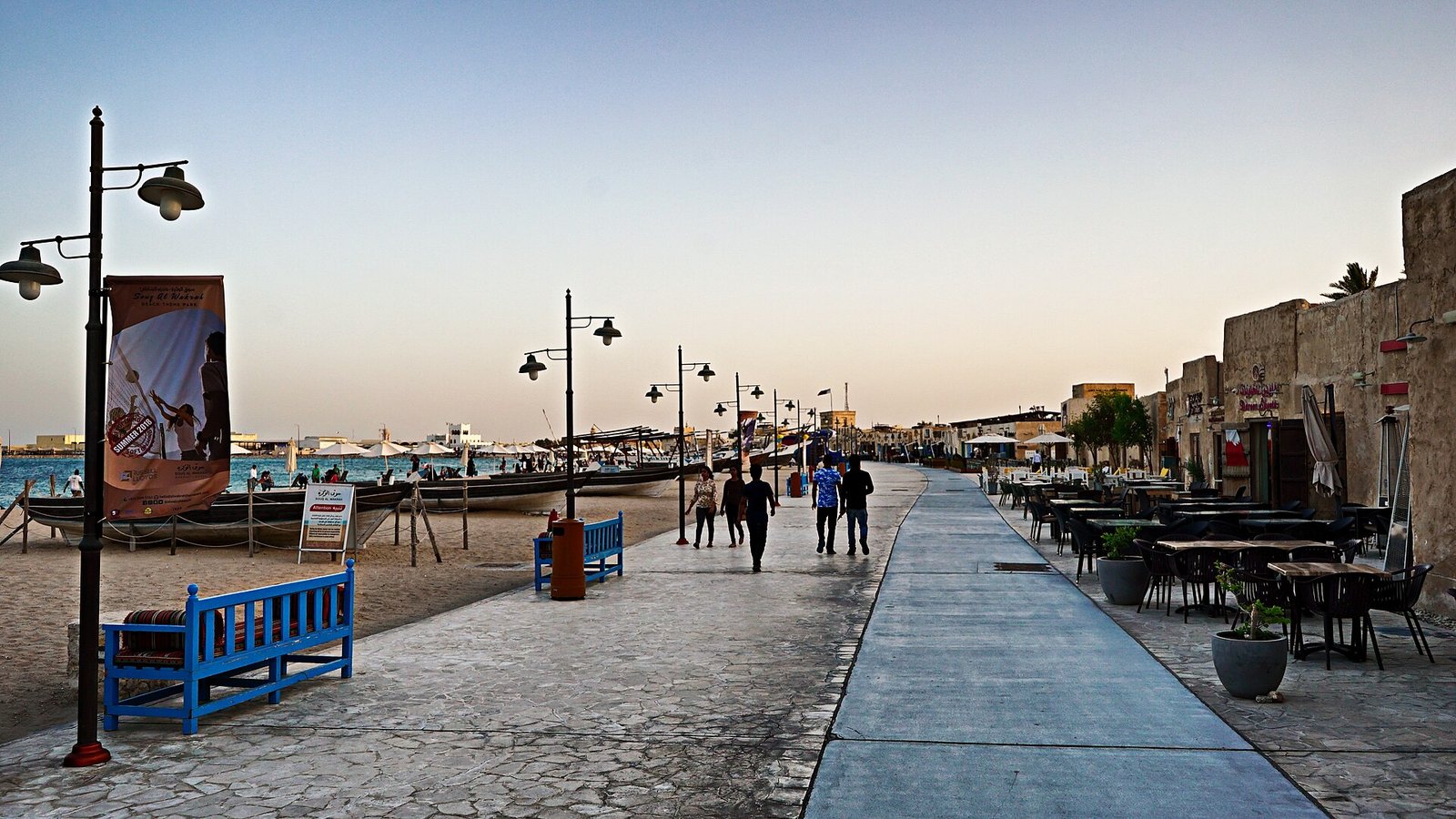
Al Wakrah Souq and Beach, Al Wakrah
An evening in Qatar's old pearling town: low-tide shore walks, the rebuilt seafront souq, seafood dinners and a glimpse of the old town.
Souq Al Wakrah, seafront, Al Wakrah
Overview
Al Wakrah is the old pearling town on the coast just south of Doha, and its seafront is one of the most pleasant places in Qatar to spend an evening. A rebuilt souq of low, clay-coloured buildings runs along the shore, a public beach stretches beside it, and the fishing harbour, the old town and a World Cup stadium are all within a few minutes’ drive.
Most people treat it as a dinner stop: park, eat grilled fish by the sea, walk back to the car. That’s a good evening, but you can get far more from Al Wakrah if you think of it as a small coastal town to explore at walking pace. Arrive before sunset, walk the shore while the tide is out, wander the lanes as the lights come on, then eat. This guide is built around that kind of visit.
It suits families with children who need space to run, couples looking for a relaxed evening away from Doha’s crowds, visitors with a few hours to spare before a flight from Hamad International Airport, and anyone curious about Qatar’s pearling past.
History and background
Al Wakrah grew up in the first half of the 19th century. According to Wikipedia, the town was founded between about 1822 and 1845 by Ali bin Nasir, a tribal chief who had left Al Bidda (the settlement that became Doha) after a dispute. The name is usually linked to the Arabic wakar, a bird’s nest, after a nearby hill where birds nested.
Like most of Qatar’s coast, the town lived from the sea. It became one of the country’s main pearling centres, and British records from the early 20th century counted around 250 to 300 boats working from its harbour. The 19th century also brought conflict: the town and its fort were caught up in the struggles between Qatari leaders and Bahrain in the 1860s. When the pearl trade collapsed in the 1930s and oil arrived, Al Wakrah slowly changed from a fishing port into a suburb of Doha, and many old coastal buildings fell into ruin.
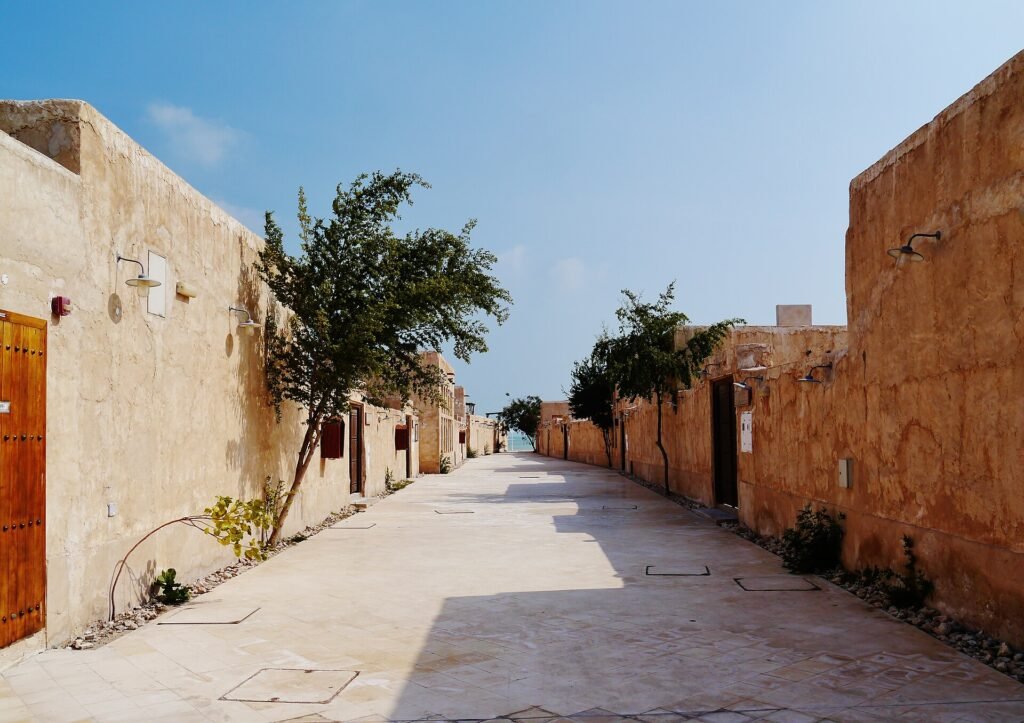
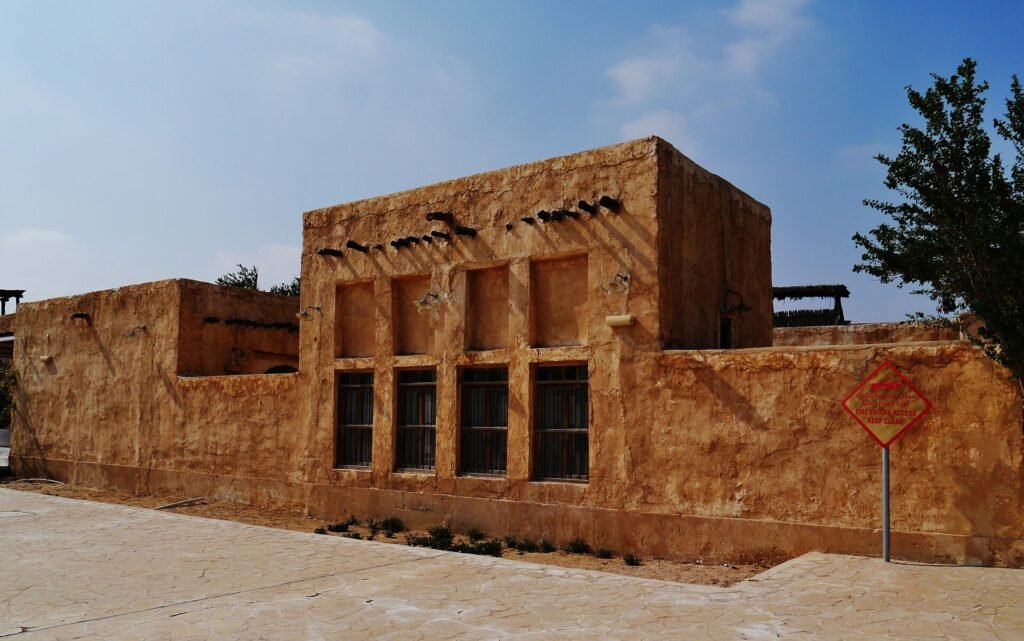
The souq you see today is a careful reconstruction. After the success of the Souq Waqif restoration in Doha, planning for a new market at Al Wakrah began in 2008. Souq Al Wakrah opened on 19 December 2014, to coincide with Qatar National Day. It follows traditional building rules: two- or three-storey buildings of stone and wood with thick walls, internal courtyards and narrow, winding lanes, laid out in a long strip along the shore with more than 100 commercial units. The beach in front opened in July 2017, and in 2018 part of the souq became a heritage-style hotel run by Tivoli Hotels.
A short walk inland, some genuinely old buildings survive, including historic mosques from the 1930s and 1940s and the two-storey beachfront house of Sheikh Ghanim bin Abdulrahman, restored in 2004. And on the edge of town stands the modern landmark: Al Janoub Stadium, designed by Zaha Hadid for the 2022 FIFA World Cup, with a curved roof inspired by the sails of a dhow.
What to see and do
Walk the shore at low tide
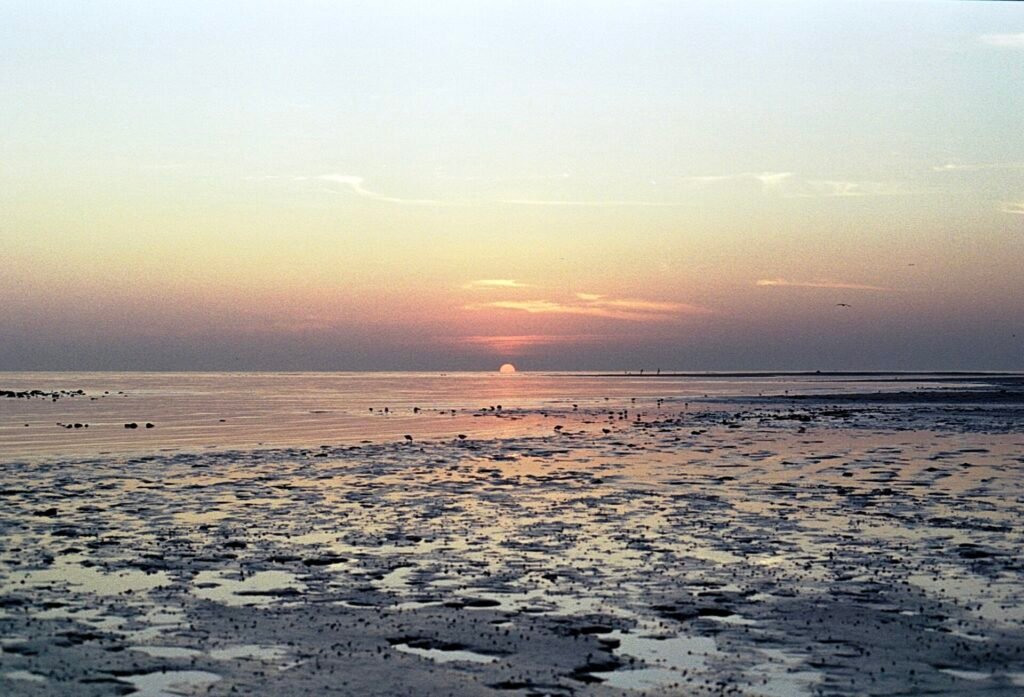
Al Wakrah’s coast is very shallow, and when the tide goes out, a wide band of sand, rock and pools appears. This is the best time to explore with children. Visit Qatar points out that they can watch small fish and crabs and collect shells, and in the pools you may spot sea snails and tiny shrimps. Wear water shoes, as the rocks are sharp and slippery, and put everything back where you found it. Check a tide table before you go: at high tide the water comes much closer to the promenade.
The beach beside the souq
The public beach alongside the souq is designed for families, with shaded seating, children’s play areas and sports areas. It is one of the beaches in the Ministry of Municipality’s upgrade project announced in 2025, which listed around 200 wooden umbrellas, 300 covered seating areas, shaded play areas on soft sand and space for restaurants and food carts at Al Wakrah. Rules are posted at the entrances. Expect modest swimwear to be required and follow any instructions from beach staff. The water is calm, but it is shallow and rocky in places, so keep an eye on younger swimmers.
Sunset on the promenade
The paved promenade in front of the souq faces east over the Gulf, so the sun sets behind the buildings rather than over the water. The payoff is the light: in the last hour of the day the clay walls glow warm orange, and the replica dhows on the sand are easy to frame against a pink sky. After dark, the lanterns come on and the promenade fills with families.
Lose yourself in the lanes
Step back from the seafront into the souq’s alleys. Compared with Souq Waqif, it is calmer and more spread out, with quiet courtyards, small mosques and shaded passages between thick walls. Shops sell things like spices, dates, honey, perfumes, textiles and souvenirs, although not every unit is open, so some lanes are almost empty. That is part of the charm: it is one of the easiest places in Qatar to take photographs of traditional-style architecture without crowds.
Seafood dinner and something sweet
Restaurants are concentrated along the waterfront, many with outdoor tables facing the sea. Grilled fish and Gulf seafood are the obvious choice, and you will also find Middle Eastern, Turkish and South Asian menus. Afterwards, look for a sweet shop or café for kunafa, luqaimat or a cup of karak tea. Menus and opening hours change, so check recent reviews before you set your heart on a particular place.
The fishing harbour and old town
For a glimpse of the working coast, drive a few minutes to Al Wakrah’s fishing harbour, where boats unload and dhows are moored. In the old town between the harbour and the souq, look out for the surviving historic mosques and old houses. Most are not set up as visitor attractions, so view them from the street, dress modestly and don’t enter a mosque during prayer times unless you are there to pray.
See Al Janoub Stadium
Al Janoub Stadium, which opened in May 2019 and held World Cup matches in 2022, is one of the most striking buildings in southern Qatar. Its sweeping roof was designed to evoke the hull and sails of a traditional dhow, a nod to Al Wakrah’s seafaring history. Drive past for a look at the architecture, or check the fixtures if you want to see a match there.
How to get there
Souq Al Wakrah is about 19 km south of central Doha. Visit Qatar puts the drive at 25 to 30 minutes via Al Wakrah Main Road, depending on traffic, and it is only a short drive from Hamad International Airport.
- By car. Drive south from Doha towards Al Wakrah and follow the signs for the souq on the seafront. There are surface car parks along the western side of the souq and more informal parking at the southern end. Parking is free. At weekends, arrive before sunset to find a space close to the promenade.
- By metro. The Doha Metro Red Line runs south to Al Wakra station. From there, take a Metrolink feeder bus or a short taxi or ride-hailing trip to the souq. Check the current feeder route in the Karwa Journey Planner app before you travel.
- By taxi or ride-hailing. Easy from anywhere in Doha, and a good option if you are coming from or going to the airport. Ride-hailing cars are usually easy to find here in the evening.
No 4×4 is needed. Everything is on paved roads, and the souq, beach and promenade are all flat and easy to walk.
Best time to visit
From October to April, come in the late afternoon and stay into the evening. Arrive an hour or so before sunset for the beach and the low-tide shore, then walk the souq and eat once it gets dark. Many shops open late and some close in the early afternoon, so the souq comes to life after about 4pm.
In summer, evenings are still hot and humid but the seafront catches a breeze, and many families visit after dark. Friday and Saturday evenings and public holidays are the busiest times, with a lively atmosphere but more crowded restaurants and car parks. On Fridays, many shops open only after the midday prayers. For a quieter visit, try a weekday evening.
For rock pooling, low tide matters more than the time of day. Tides change every day, so check a tide table and aim to arrive an hour or two before low water.
Tips for your visit
- Plan around the tide. Low tide for exploring the shore, high tide for swimming closer to the promenade.
- Bring water shoes. The seabed is rocky in places and there can be sharp shells and broken coral.
- Dress modestly. Cover shoulders and knees in the souq, and wear modest swimwear on the beach.
- Follow the beach rules. Check the signs at the entrance. Rules on barbecues, smoking, pets and camping can differ between beaches.
- Carry a little cash. Most restaurants take cards, but some small shops and stalls prefer cash.
- Check restaurant reviews. Quality and prices vary a lot along the waterfront.
- Use it as an airport stop. With a few hours before a flight, the souq is a relaxed alternative to waiting at the terminal.
- Respect the old town. The historic mosques and houses are part of a living neighbourhood. Photograph from the street and keep noise down.
What to bring
- Water shoes for the rocky shore
- Swimwear (modest) and a towel if you plan to swim
- A small bucket or net for children to look at rock-pool life (and put it back)
- Sunscreen and a hat for daytime visits
- A light layer for winter evenings by the sea
- Some cash for small shops
Combine it with nearby places
Sealine Beach. About half an hour further south past Mesaieed, Sealine swaps the town seafront for big sand dunes rolling down to the sea, with camel rides and quad bikes. Spend the afternoon there and stop in Al Wakrah for dinner on the way home.
Singing Sand Dunes. The crescent dunes inland of Mesaieed hum when their sand slides on dry days. Visit in the late afternoon and drive to Al Wakrah as the sun goes down.
Khor Al Adaid Inland Sea. Many desert safaris to the Inland Sea return through Al Wakrah, and the souq is the natural place for a late meal after a day in the dunes.
Al Wukair. The town immediately inland of Al Wakrah is a handy stop for supermarkets and fuel before heading south into the desert.
Frequently asked questions
Is Souq Al Wakrah worth visiting if I’ve been to Souq Waqif?
Yes, especially for an evening. It is quieter and more spread out than Souq Waqif, and the big difference is the sea: you can walk from the lanes straight onto the beach and promenade.
Can you swim at Al Wakrah?
Yes. The public beach beside the souq is open for swimming, with calm but shallow and rocky water. Wear modest swimwear, water shoes and follow the rules posted at the entrance.
When is the best time for rock pooling?
Around low tide, which changes every day. Check a tide table and arrive an hour or two before low water. Late afternoon low tides in the cooler months are ideal.
How do I get to Al Wakrah by public transport?
Take the Doha Metro Red Line to Al Wakra station, then a Metrolink feeder bus or a short taxi ride to the souq.
Is there an entry fee?
No. The souq, promenade, beach and main car parks are free. You pay only for food, shopping and any activities.
How long should I spend in Al Wakrah?
Two to three hours covers a beach walk, a wander through the souq and dinner. Add time if you want to see the harbour, the old town and Al Janoub Stadium.
Last checked October 2026. Hours, fees and access can change, so confirm with the official source before you go.
Read the Companies in Qatar visitor guide ↗
More places nearby
All places →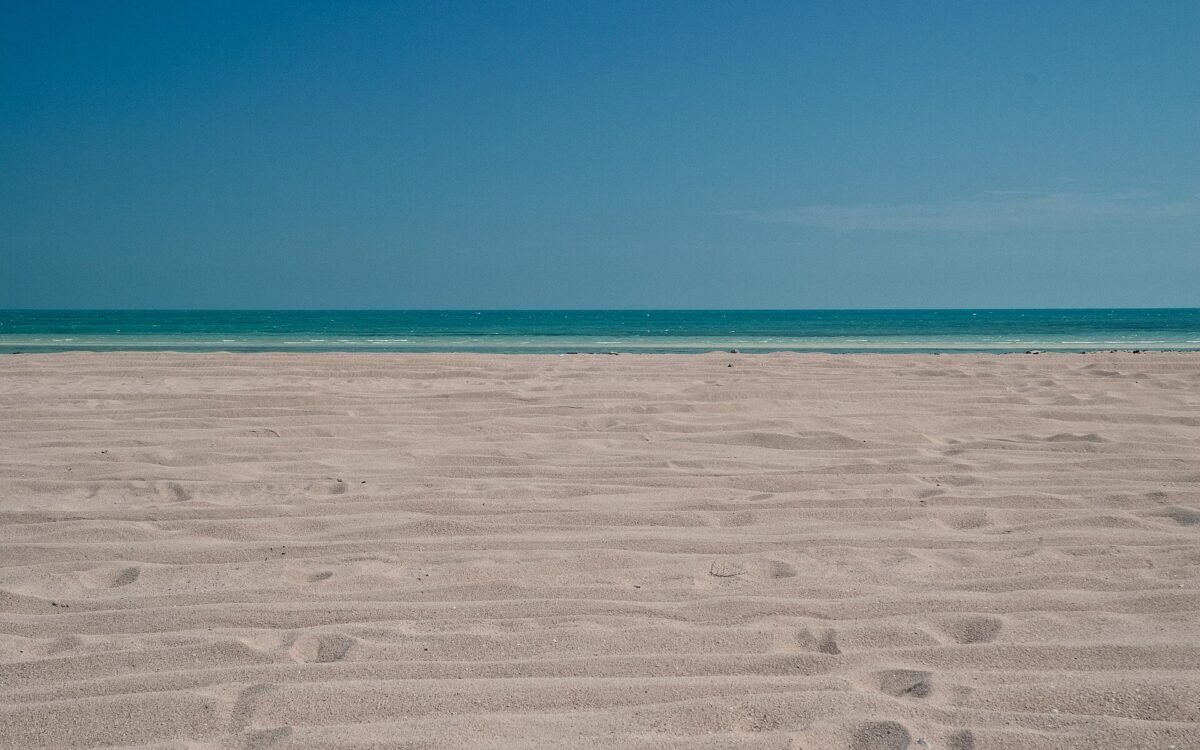
Run a tour, café or stay near Al Wakrah Souq and Beach, Al Wakrah?
List your business free on Companies in Qatar, or get featured on Qatar Unseen in front of people planning their trip.