Al Shahaniya Camel Racetrack, Al Shahaniya
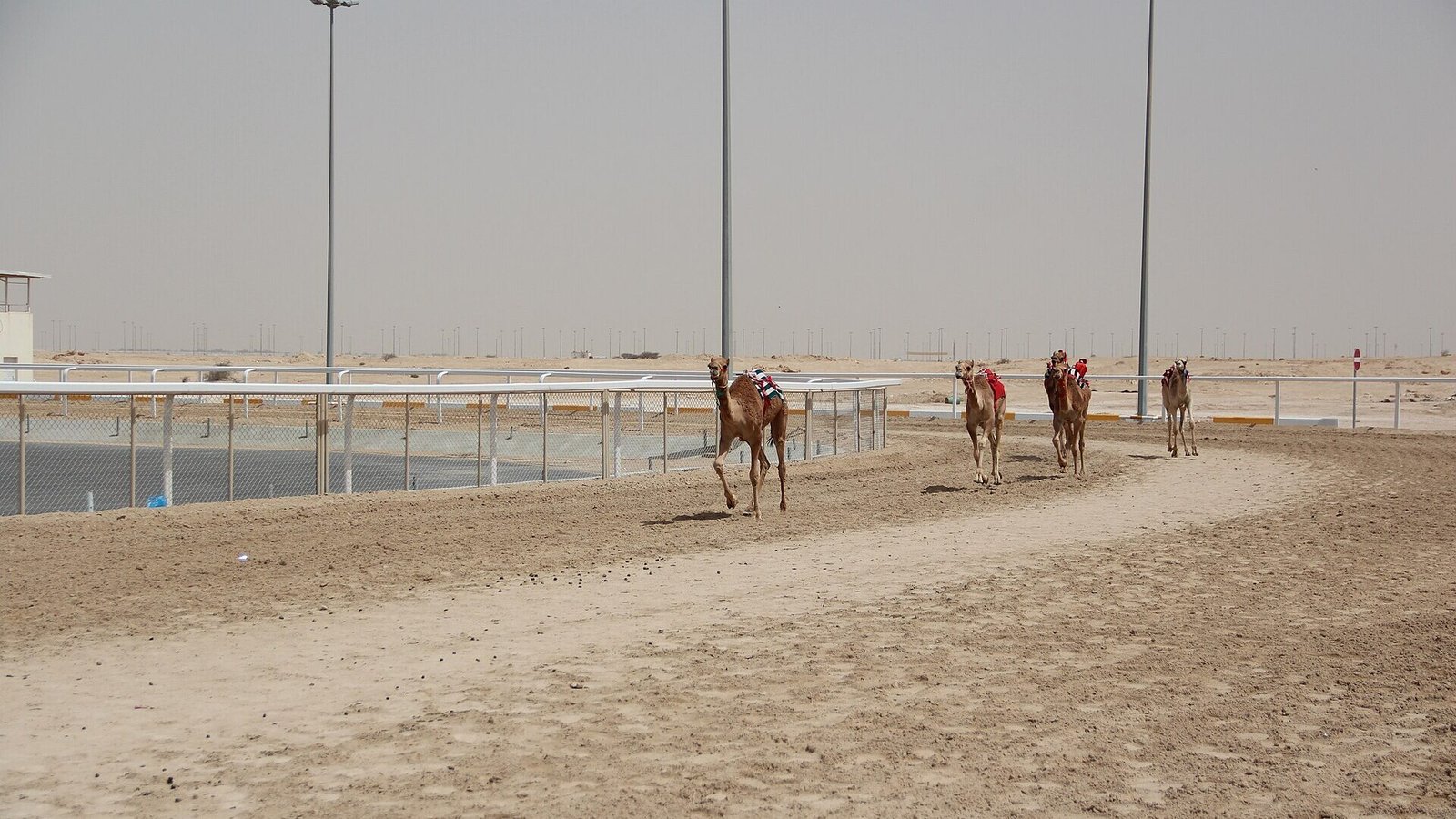
Watch robot-jockeyed camels race across the sand while a convoy of 4x4s chases them, at Qatar's main racetrack west of Doha.
Al Shahaniya, off Dukhan Highway (central Qatar)
Overview
Al Shahaniya Camel Racetrack is the home of Qatar’s favourite traditional sport. It sits on the edge of Al Shahaniya city in central Qatar, off the Dukhan Highway, roughly 40 to 50 minutes’ drive west of Doha. From September to April, strings of racing camels thunder around its sandy oval while small robot jockeys in bright silks crack tiny whips on their backs, and a convoy of 4x4s races along a parallel road beside them.
It is one of the most memorable things you can see in Qatar, and one of the least polished. There is no visitor centre, no ticket desk and no printed programme in English. You turn up early, find a spot by the track or near the finish, and watch a sport that is deeply rooted in Gulf culture and still run mainly for its owners and trainers rather than for tourists. That is exactly why it is worth the drive.
This guide is written for independent visitors: how the racing season works, how to tell whether anything is on, where to stand, how to behave around the camels and the convoy, and what else to fit into a morning in central Qatar. It suits curious first-timers, photographers, families with older children and anyone who wants to see a side of the country that has little to do with glass towers and malls.
The story behind the racetrack
Camels have been raced informally in Arabia for centuries, at weddings, holidays and tribal gatherings. Qatar Museums traces organised camel racing back as far as the 7th century, with rubies once given as prizes. The modern, professional version in Qatar began at Al Shahaniya in the early 1970s (sources give 1972 or 1973), and the town has been the centre of the sport ever since. Al Shahaniya became the seat of its own municipality in 2014, and today the racetrack and the training complexes around it form what is almost a small camel town.
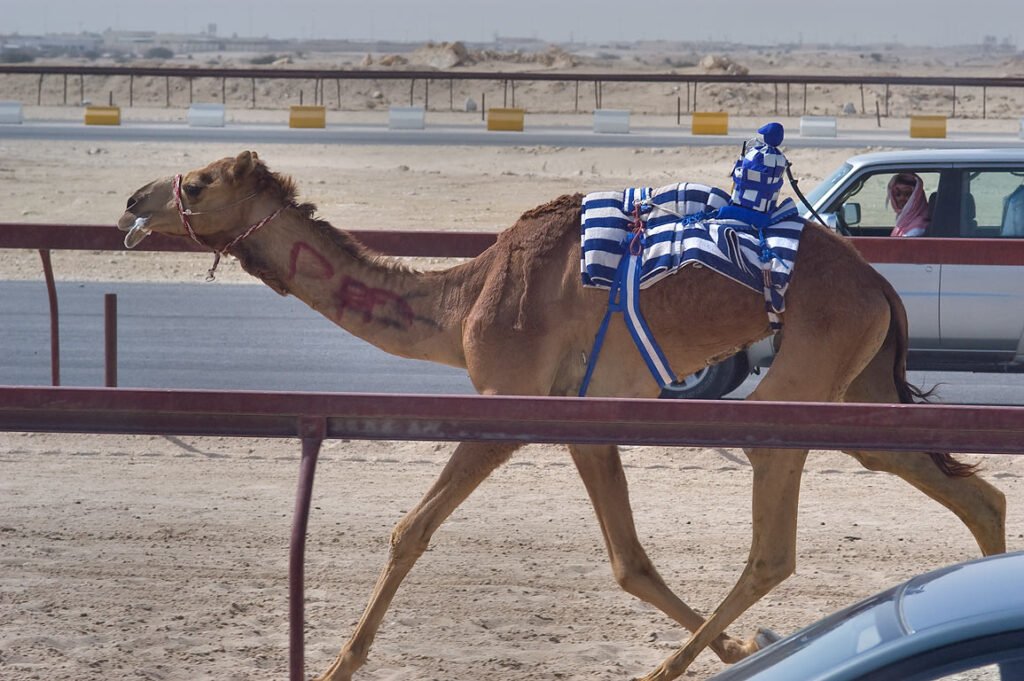
The biggest change came in the 2000s. For decades races across the Gulf were ridden by very young, very light boys, often brought in from abroad. Qatar began developing an alternative in 2001, and the first working robot jockey was built in 2003 by Rashid Ali Ibrahim of the Qatar Scientific Club. Early prototypes built with Swiss robotics firm K-Team weighed 16 to 18 kg and proved too heavy and costly. In 2005 the Emir banned child jockeys, and robots took over. Today’s models are far lighter, around 2 to 3 kg, and are strapped to the camel’s saddle area.
A modern robot jockey is essentially a remote-controlled whip with a small speaker. Trainers drive alongside the track in their cars, pressing buttons on a handset to flick the whip and talking to their camel through the speaker, often while steering with the other hand. It sounds odd on paper and looks even odder in person, which is part of the appeal.
Racing is organised by the Camel Racing Organising Committee, and the calendar runs from late summer into spring. Everyday meetings are held for local and international owners, and the season builds to three big festivals: the Founder Sheikh Jassim bin Mohammed bin Thani Camel Festival in December, the Father Amir’s festival in February, and the Amir’s Sword festival in the spring, whose top prize is a golden sword. The 2026 to 2027 season opened on 7 September 2026 with a run of morning sessions.
What to see and do
Watch a race from the finish area
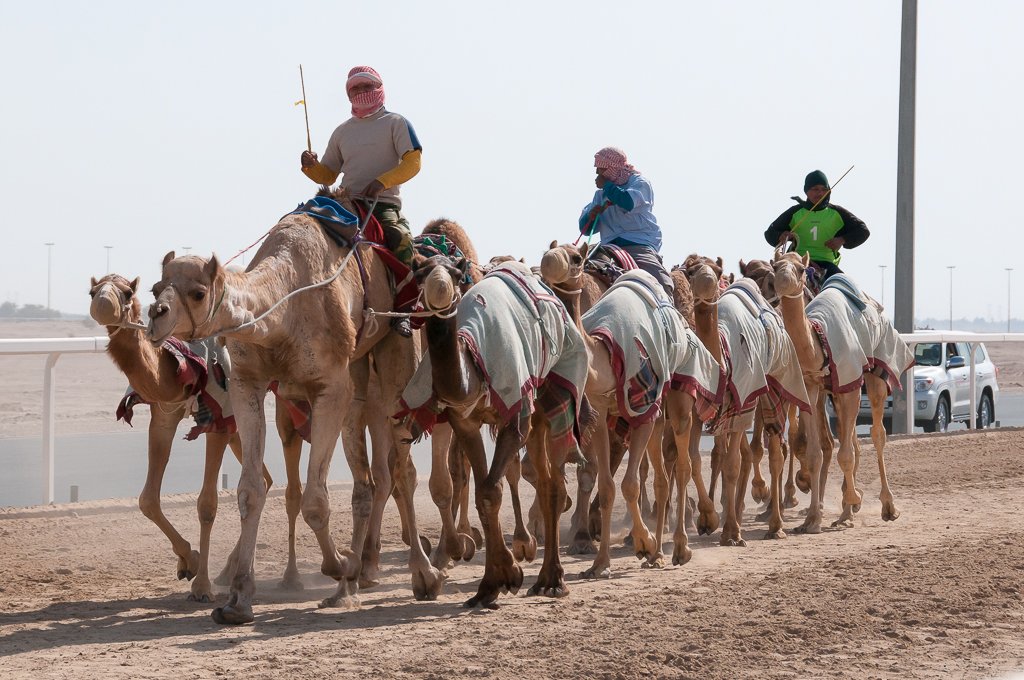
Races are fast and surprisingly short to watch from one spot. Each race typically has around 10 to 12 camels, and on a busy morning there can be as many as ten races, grouped by the age and sex of the camels. Distances vary: young camels run shorter sprints of a couple of kilometres, while older animals run longer races of several kilometres. Racing camels can hit around 65 km/h in short bursts and hold a strong pace for much longer than you might expect.
The finish area, with its covered grandstand and the building that houses officials, is where most of the action ends and where owners gather afterwards. If you want one good look at the camels at full stretch, stand near the final straight and wait for the dust cloud to appear.
See the robot jockeys up close
Before and after races, handlers lead camels to and from the start with the robots already fitted. This is when you get the best view of them: small, boxy figures dressed in racing colours, each with a whip on a short rod and an aerial. Many visitors come for the robots alone, and it is worth staying a while in the areas where camels are being walked so you can see how they are fitted and tested. Keep a respectful distance and ask before photographing people.
Understand the car convoy
The most chaotic sight at Al Shahaniya is not on the track but beside it. As soon as a race starts, a stream of Land Cruisers and pickups roars along the road running parallel to the sand, carrying owners and trainers who steer, shout into radios and work the robot controls at the same time. Local custom is to follow the race by car, and some spectators do. As a first-time visitor, the sensible choice is to watch the convoy rather than join it. It moves fast, it is packed with people who know exactly where they are going, and there is no room for hesitant drivers.
Walk past the training grounds and stables
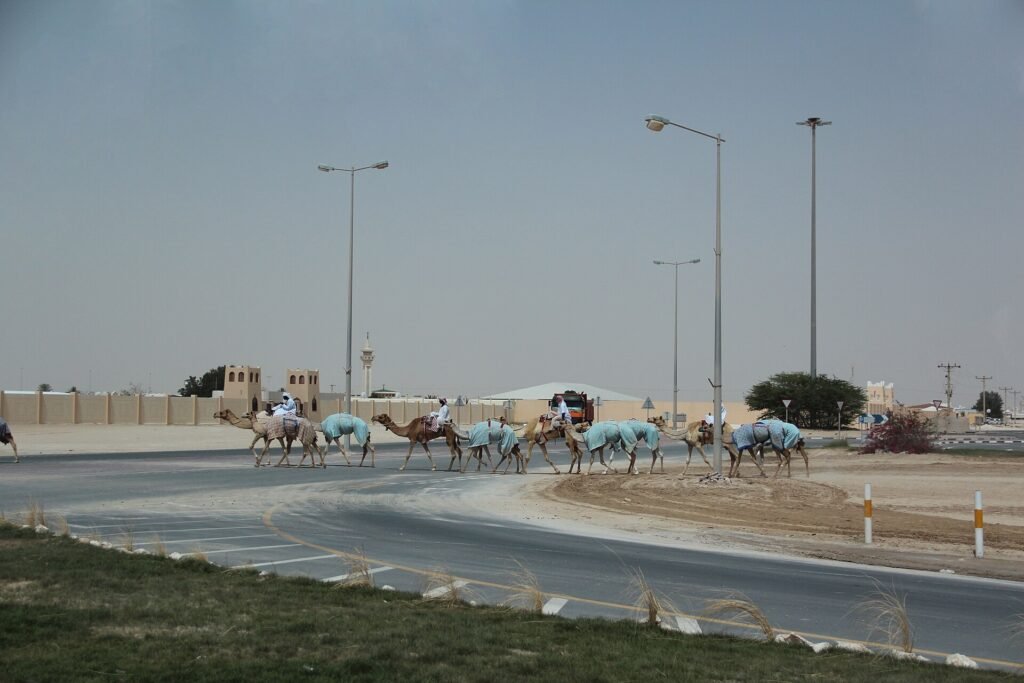
The racetrack is surrounded by camel farms, pens and training areas, and you will see camels everywhere: being exercised in long strings, crossing the road with their handlers, resting in their enclosures. Visitors are generally welcome to look around the edges of the stable areas, and outside the racing season the morning training sessions are often the main thing to see. Stick to public roads and open ground, don’t enter pens or private compounds uninvited, and don’t feed or touch the animals.
Catch a festival day
If you can time your visit to one of the major festivals, you get a very different atmosphere: bigger crowds, higher-profile races, extra facilities and sometimes afternoon or evening sessions. Festivals such as the Founder Sheikh Jassim festival in December and the Amir’s Sword festival in spring can draw owners from across the Gulf. Some reserved seating on big days may be charged separately, and some areas are for invited guests, so follow the stewards.
Photograph the sport
Low morning sun, dust and colourful silks make for strong pictures. A zoom lens helps, because you should not get close to the track itself. Wide shots of the convoy alongside the camels tell the story best, while tighter shots of the robots and the camels’ faces work well in the walking areas. Drones are not something to improvise here; Qatar has strict drone rules and a race meeting is no place to test them.
How to get there
The racetrack is on the north side of Al Shahaniya city, west of Doha. From central Doha, take the Dukhan Highway west through Al Rayyan, and keep going until you reach the Al Shahaniya exits. Set your map app to the racetrack pin, as the final turns are through local roads. Allow 40 to 50 minutes in normal traffic. The roads are good multi-lane highways and paved local roads, so you do not need a 4×4.
Parking is informal, on hard ground near the grandstand and along the roads around the track. Leave your car well clear of the convoy road and of any gates used by trucks and trailers.
There is no Doha Metro or practical bus connection to the racetrack. If you don’t have a car, a taxi or ride-hailing app will get you there, but it can be hard to find a car for the return journey, so agree a pick-up time or ask the driver to wait. Several Doha tour operators also include the racetrack in half-day or west-coast day tours, which is the easiest option if you want someone to explain what you are seeing.
Best time to visit
The racing season runs roughly from September to April. For comfort, the most visitor-friendly months are October to February, when mornings are cool and dry; February to April is when the biggest festivals take place. From May to August there is little or no racing, and the heat makes a visit much less appealing, although you may still see early-morning training.
Races are usually held early in the morning to avoid the heat, so plan to arrive soon after sunrise. There is no fixed weekly timetable that visitors can rely on, and not every Friday has racing. Check recent local news (Qatar News Agency, The Peninsula, Gulf Times and Marhaba all report on the season) or ask around before you set off. If nothing is on, the training grounds still make the trip worthwhile, but set your expectations accordingly.
Tips for your visit
- Confirm racing before you drive out. The schedule is set for owners, not tourists, and changes with the season and festivals.
- Arrive early. Morning sessions can start soon after sunrise and may be over by mid-morning.
- Entry is normally free. General spectator access to regular race days usually costs nothing; big festivals may have separate reserved seating.
- Stay off the track and the convoy road. Camels, handlers and cars all move quickly and unpredictably. Follow any instruction from marshals or staff.
- Don’t touch or feed the camels. They are valuable athletes, and even a calm-looking camel can bite or kick.
- Ask before photographing people. Most owners and handlers are friendly, but always ask, and be especially careful around women and family groups.
- Dress modestly. Shoulders and knees covered is the norm in this conservative, mostly male setting.
- Bring your own supplies. Food and toilet facilities vary and are more reliable on festival days than on ordinary mornings.
What to bring
- Hat, sunglasses and sunscreen, even in winter
- Plenty of water and a snack
- A light layer for cool early mornings from December to February
- Closed shoes for dusty, uneven ground
- A camera with a zoom lens
- A fully charged phone with offline maps
Combine it with nearby places
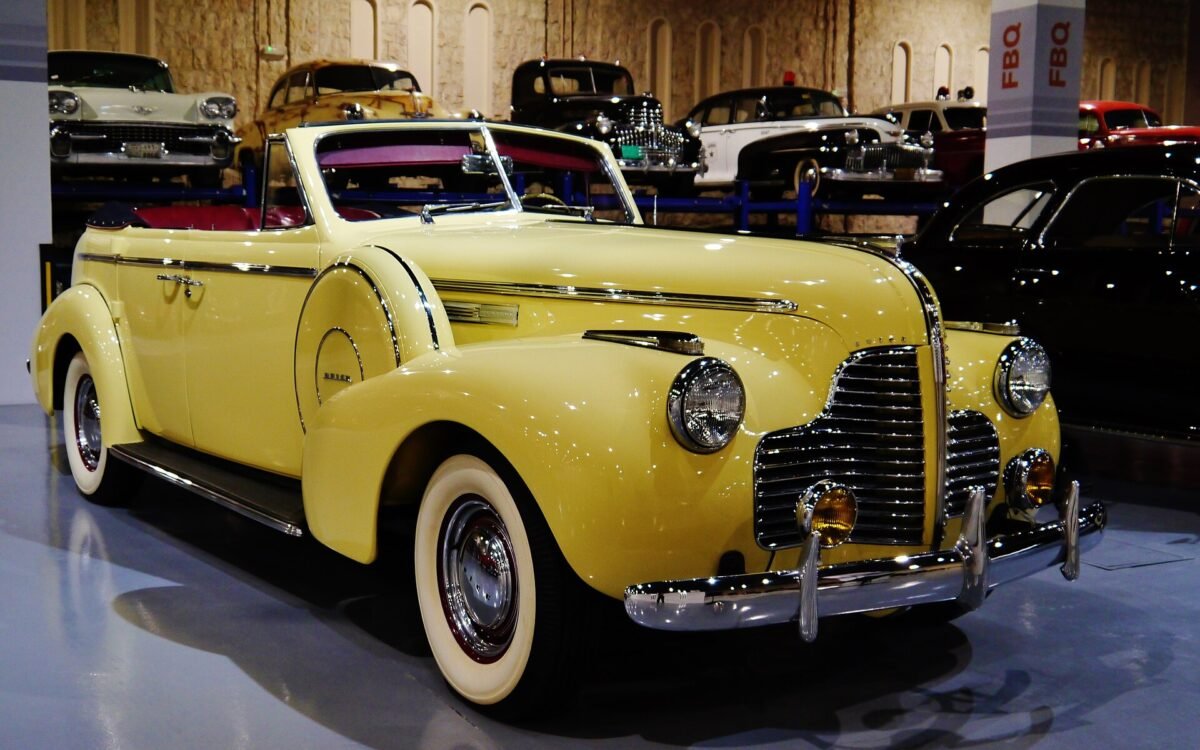
Sheikh Faisal Bin Qassim Al Thani Museum. A short drive away in Al Samriya, off the Dukhan Road, this vast private collection covers everything from vintage cars and carpets to Qatari heritage and old coins. It pairs naturally with a racing morning.
East-West/West-East by Richard Serra. Keep driving west towards Zekreet and you reach four giant steel plates standing across the desert in the Brouq Nature Reserve. Allow a full day if you combine both.
Zekreet Film City and the mushroom rocks. The same trip west takes you past the eroded limestone formations and the fort-like film set on the Zekreet peninsula, which needs a 4×4 or careful driving on the final tracks.
Oxygen Park, Education City. On the way back into Doha, this shaded park is a good place to stretch your legs and get a coffee once the morning heat builds.
Frequently asked questions
Is it free to watch camel racing at Al Shahaniya?
Yes, general spectator access to regular race days is usually free. Major festivals may have reserved seating or invitation-only areas.
When is the camel racing season in Qatar?
Racing runs roughly from September to April, with the most comfortable visiting months between October and February and the major festivals in December, February and spring.
What time do the races start?
Most regular races are held in the early morning, starting soon after sunrise. There is no fixed public timetable, so check recent news before you go.
Are robot jockeys still used?
Yes. Qatar banned child jockeys in 2005, and all races now use lightweight remote-controlled robots operated by trainers driving alongside the track.
Can I get to the racetrack by metro?
No. There is no metro or practical bus link to Al Shahaniya. Drive, take a taxi with a return arranged, or join a tour.
Do I need a 4×4 to visit?
No. The Dukhan Highway and the local roads to the track are paved, so any car will do.
Is camel racing suitable for children?
Yes, for children who can stay close to an adult. The main risks are moving cars and animals, so keep them well away from the track edge and the convoy road.
Last checked October 2026. Hours, fees and access can change, so confirm with the official source before you go.
More places nearby
All places →
Run a tour, café or stay near Al Shahaniya Camel Racetrack, Al Shahaniya?
List your business free on Companies in Qatar, or get featured on Qatar Unseen in front of people planning their trip.