Sheikh Faisal Bin Qassim Al Thani Museum, Al Samriya
Vintage cars, Qurans, a Damascus house and a leaning mosque: how to plan a half-day at Qatar's eccentric private museum west of Doha.
Al Samriya estate, off Dukhan Road, Al Shahaniya
Overview
The Sheikh Faisal Bin Qassim Al Thani Museum, usually shortened to the FBQ Museum, is one man’s collection turned into a destination. It sits on the Al Samriya estate in Al Shahaniya municipality, about 22 km west of Doha along Dukhan Road, and it holds well over 15,000 objects gathered over roughly 50 years: vintage cars, Qurans and calligraphy, jewellery, weapons, coins, furniture, fossils, Bedouin tents, a rebuilt Damascus house and much more.
It is not a curated national museum in the style of the Museum of Islamic Art. Labels are sometimes sparse, the rooms follow the collector’s passions rather than a neat timeline, and you can turn a corner from a case of prayer beads into a hall of antique telephones. That is exactly why people love it. It feels like wandering through the storerooms of a very curious, very well-travelled grandparent.
This guide is about getting the most from a half-day out at Al Samriya: how to pace the main museum, why the car museum deserves its own slot, where the leaning mosque fits in, and the few things that trip up first-time visitors (the carpets, for example, are not where most people expect). It suits families, car lovers, anyone interested in everyday life in the Gulf before oil, and residents who have “done” the Doha museums and want something different.
The story behind the collection
Sheikh Faisal bin Qassim Al Thani is a Qatari businessman who started collecting as a young man and kept going for half a century, buying on his travels and acquiring pieces linked to Qatari families and his own. He opened the museum to the public in 1998, which makes it one of the older museums in the country and considerably older than most of Qatar Museums’ flagship venues.
The complex was built over a historic fort in Al Samriya and styled to look like one, with sand-coloured walls and battlements. The wider estate covers around 530,000 square metres. Inside, the collection is organised into about 15 halls and four broad themes: Islamic art, vehicles, coins and currency, and traditional Qatari life. Unlike the Qatar Museums network, the FBQ Museum is privately owned and run by the Al Samriya estate.
The estate kept growing. On 4 December 2022, during the FIFA World Cup, a dedicated FBQ Car Museum opened next to the main building. Around the same time, a mosque and minaret that deliberately lean to one side were completed; designed by Sheikh Faisal himself, they caused a stir on social media in 2023 and have since become one of the estate’s most photographed sights.
What to see and do
Start with the Qatari rooms, not the showpieces
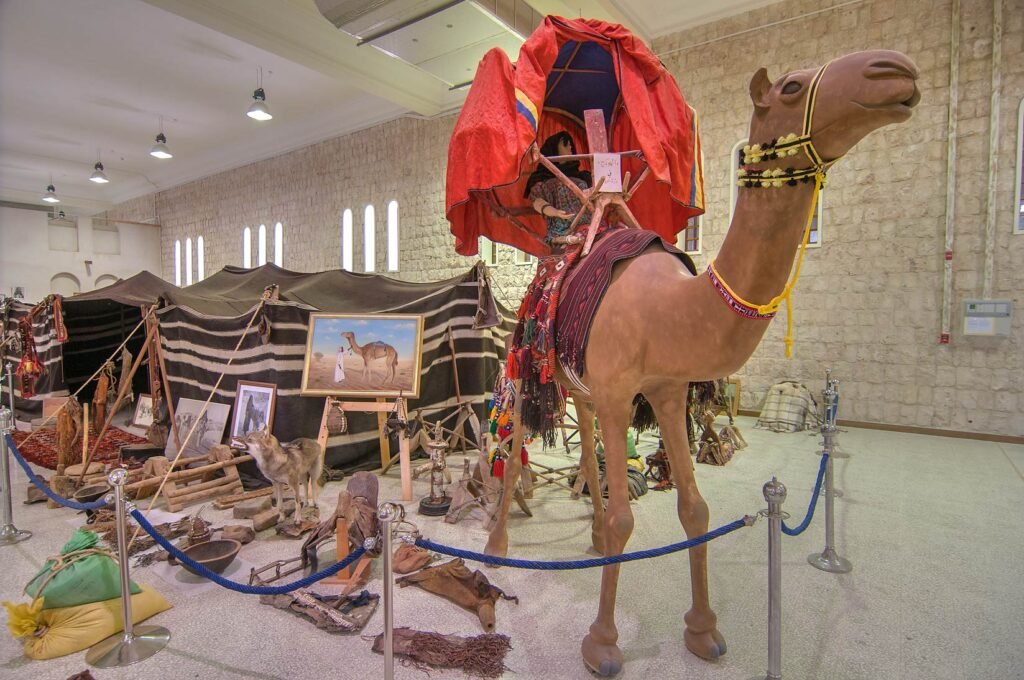
It is tempting to head straight for the cars, but the rooms on traditional Qatari life give the rest of the visit context. Look for the pearling tools, the model dhows, the Bedouin tents and household goods, and the two model Qatari homes that show how families lived before air conditioning. Small things stand out: cooking pots, coffee equipment, a bowl of dried locusts once eaten as a snack. If you have children with you, this is where their questions usually start.
Give the Islamic art halls proper time
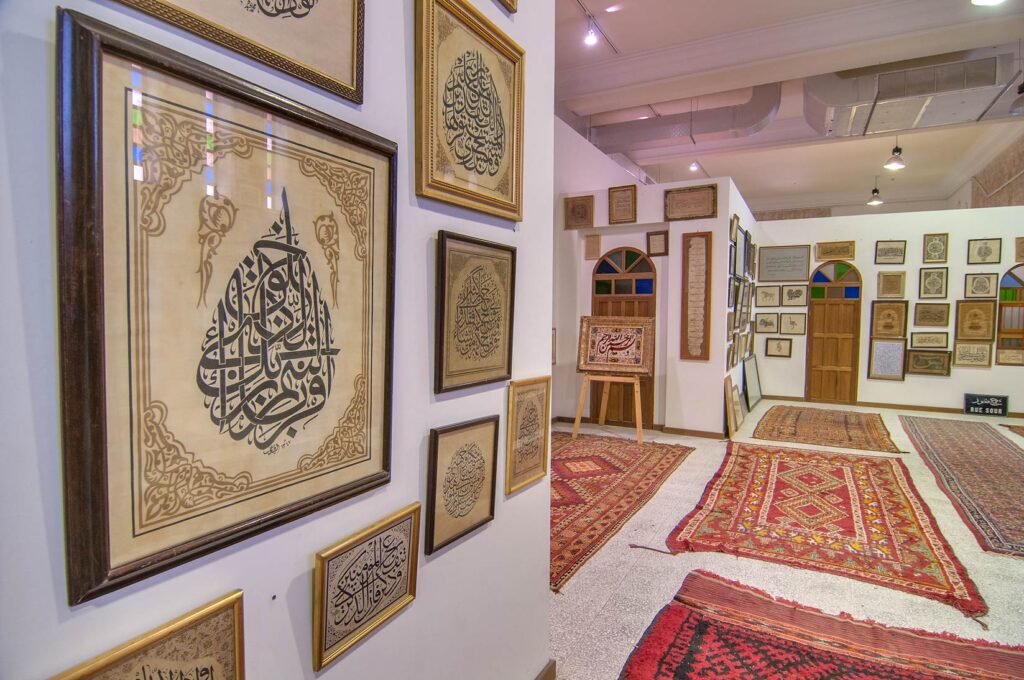
Islamic art takes up several halls, covering textiles, manuscripts, paintings and calligraphy. Visit Qatar singles out the Quran room, which holds a large number of Qurans along with a section of kiswah, the embroidered cloth that covers the Kaaba in Mecca. The calligraphy hall is dense, so slow down and pick a few pieces to look at closely rather than trying to take in every frame. Many visitors rush this part on the way to the cars and regret it later.
Walk through the Damascus house
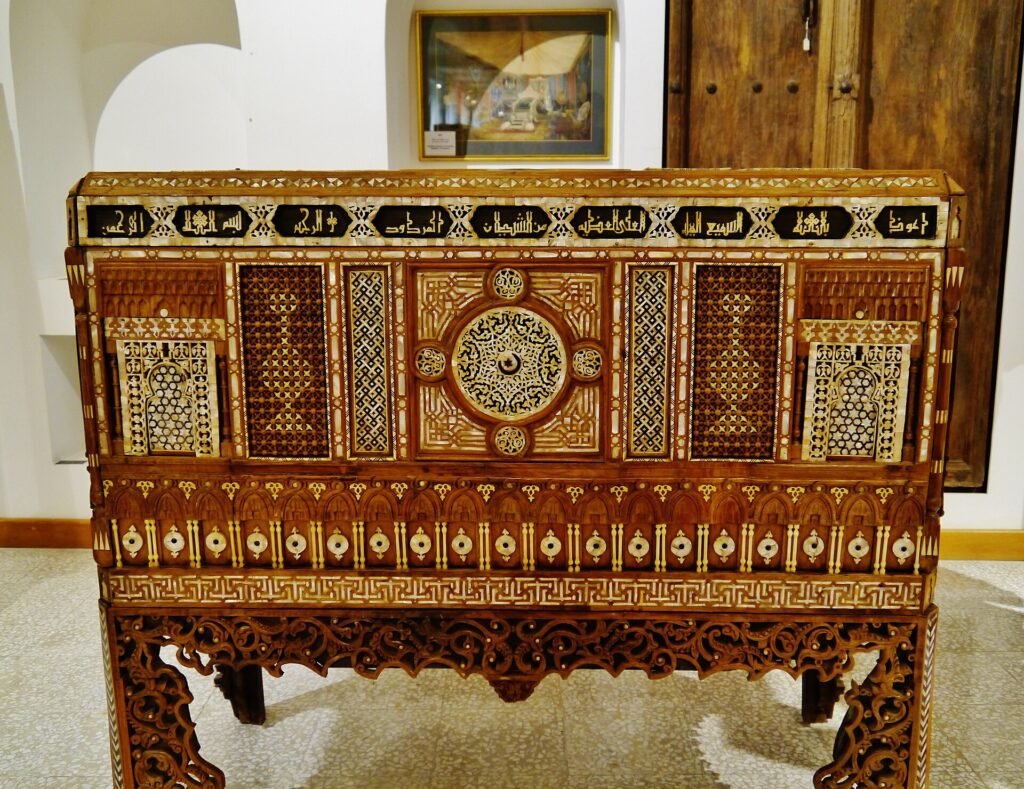
One of the most memorable spaces is a traditional Syrian home from Damascus, reassembled inside the museum and furnished, with a courtyard and two living rooms. The painted and carved woodwork is the attraction here. Stand in the courtyard for a minute and look up; the scale of the decoration is easy to miss when you are focused on the furniture.
Browse the “cabinet of curiosities” halls
Between the themed rooms you will find the collections that make the FBQ Museum feel unlike anywhere else in Qatar: coins and banknotes from ancient times to the present, weapons, jewellery, fossils, antique furniture, musical instruments, clothing from across the region, old radios and telephones. There is no correct route through these. Wander, and let the odd juxtapositions be part of the fun.
Save energy for the FBQ Car Museum
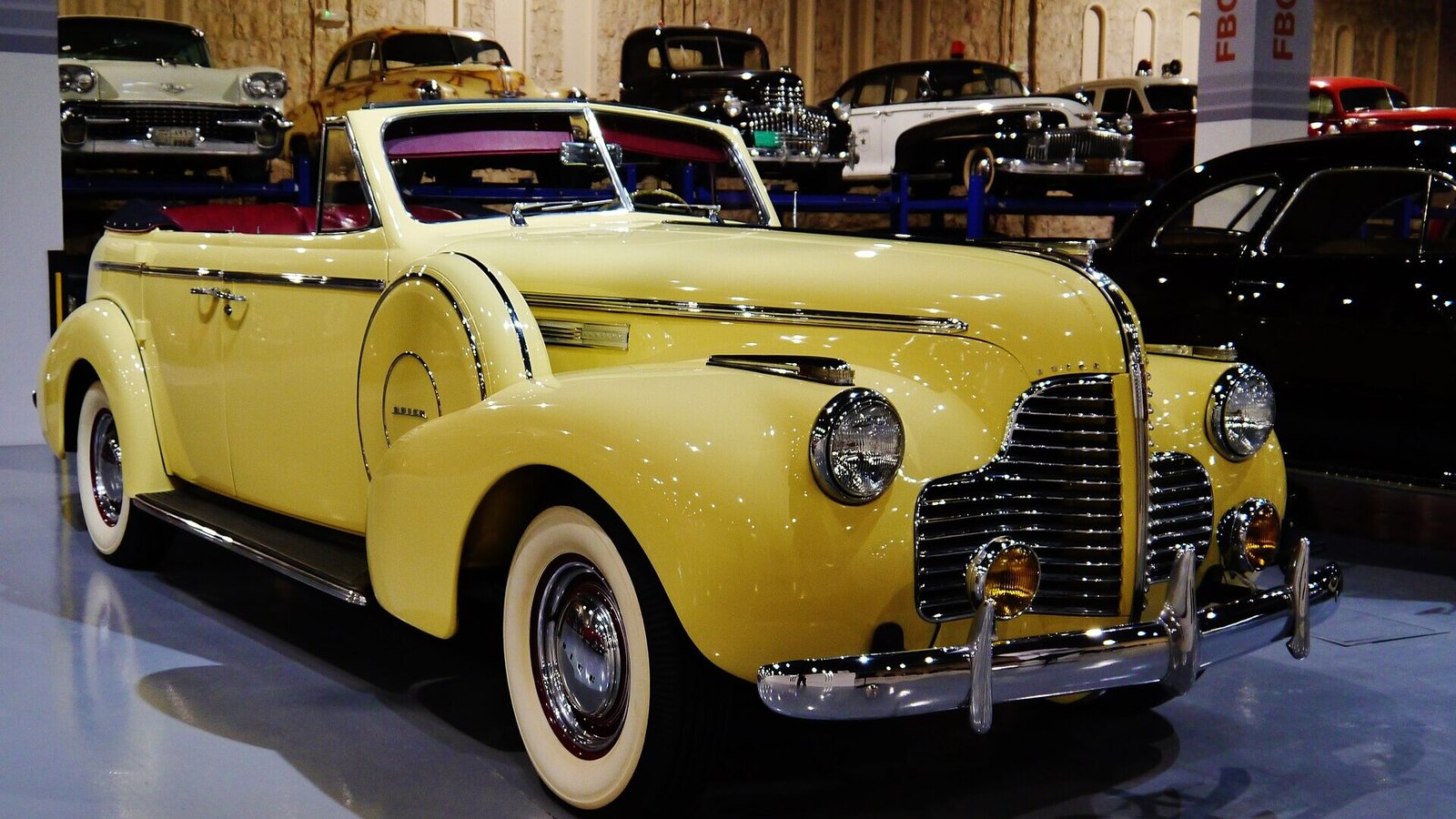
The car museum is a separate building and is included in the standard ticket. It opened in December 2022 with around 300 cars on show, drawn from a wider collection that the museum says runs to over 1,000 vehicles; the estate’s own website now describes “around 400” classic cars. The displays run broadly in order across eight zones, from the early 1900s to the 1980s. Press coverage at the opening highlighted a 1908 Studebaker, a 1924 Ford Model T roadster, a 1937 Peugeot roadster, 1950s American classics such as a 1958 Cadillac, a 1968 Ford Mustang and even a 1940 army tank. Some vehicles belonged to Sheikh Faisal and his father. Allow at least 45 minutes; car enthusiasts will want longer.
See the leaning mosque and minaret
Outside, the estate’s mosque and its 27-metre minaret tilt at a striking angle, reported by Doha News as around 20 degrees. The design is intentional. The structure sits on a deep raft foundation, is clad in stone taken from the excavations for the site, has a dome and crescent in antique copper, and is fitted with around 30 sensors that monitor stress and strain. It is a working mosque, so dress modestly and be respectful of anyone praying; most visitors simply photograph it from outside.
Notice the building itself
Before you leave, walk around the outside of the main museum. The fort-style walls, towers and gateways are modern, but they reflect the old fort that stood on the site and the traditional military architecture you will see at places like Al Zubarah and Umm Salal Mohammed. Late afternoon light turns the walls warm gold.
How to get there
The museum is on the Al Samriya estate, north of Dukhan Road in Al Shahaniya municipality. From central Doha, take Dukhan Road (Route 1) west past Education City and Mall of Qatar, then follow the signs for Al Samriya and the museum. It is roughly 22 km west of Doha’s western edge; from West Bay or the Corniche, allow about 35 to 45 minutes outside rush hour. The roads are paved all the way and any normal car will do. There is parking on site.
There is no metro station or practical bus service. The Doha Metro’s Green Line ends at Al Riffa near Mall of Qatar, but that still leaves a long drive to the estate. Most visitors without a car use a taxi or a ride-hailing app (Uber and Karwa both operate in Qatar). Pickups from Al Samriya can be slow, so either ask your driver to wait or book the return before you go into the galleries. Some Doha tour operators include the museum in west-of-Doha day tours, often combined with the camel racetrack or Zekreet.
Best time to visit
Because the galleries are indoors and air-conditioned, the museum works all year. It is a good summer outing when the beaches and deserts are too hot. From about November to March you can also enjoy the estate grounds and the leaning mosque in comfortable weather, and pair the trip with outdoor stops on the west side of the country.
Check the day carefully. The museum’s official website lists these regular hours: Monday to Thursday 9am to 5pm, Friday 2pm to 7pm, Saturday 10am to 6pm, and closed on Sunday, with last entry 30 minutes before closing. During Ramadan it opens in the evening instead (6.30pm to 11pm, Monday to Saturday). Other listings, including Visit Qatar, show slightly different times and even Sunday opening, so phone ahead before a long drive. Weekday mornings are the quietest; Friday afternoons and Saturdays bring families and tour groups.
Tips for your visit
- Don’t expect the carpets. The estate’s Carpet Museum, with more than 600 hand-woven rugs, is not at Al Samriya. According to the estate’s website it is on the sixth floor of the Marriott Marquis City Center hotel in Doha and visits are by appointment only.
- Budget three hours. Two hours in the main museum and at least 45 minutes in the car museum is a comfortable minimum.
- Book a guided tour if you want the stories. Guided tours cost QR 25 per person on top of the ticket, and they help make sense of a collection with limited labelling.
- Bring your ID or student card. Students, teachers, museum professionals and over-65s pay QR 30 instead of QR 50, and some groups enter free.
- Leave the selfie stick in the car. Photography without flash is allowed, but selfie sticks are not.
- Eat before or after. Food, drink and chewing gum are not allowed in the galleries (water is the exception); there is a cafeteria on site.
- Dress for the mosque. If you want to approach the leaning mosque, cover shoulders and knees; women may want a scarf.
What to bring
- ID or student card for discounted tickets
- A light layer, as the galleries are well air-conditioned
- Water for the drive, plus sunglasses and a hat for the estate grounds
- A phone or camera with space for a lot of photos
Combine it with nearby places
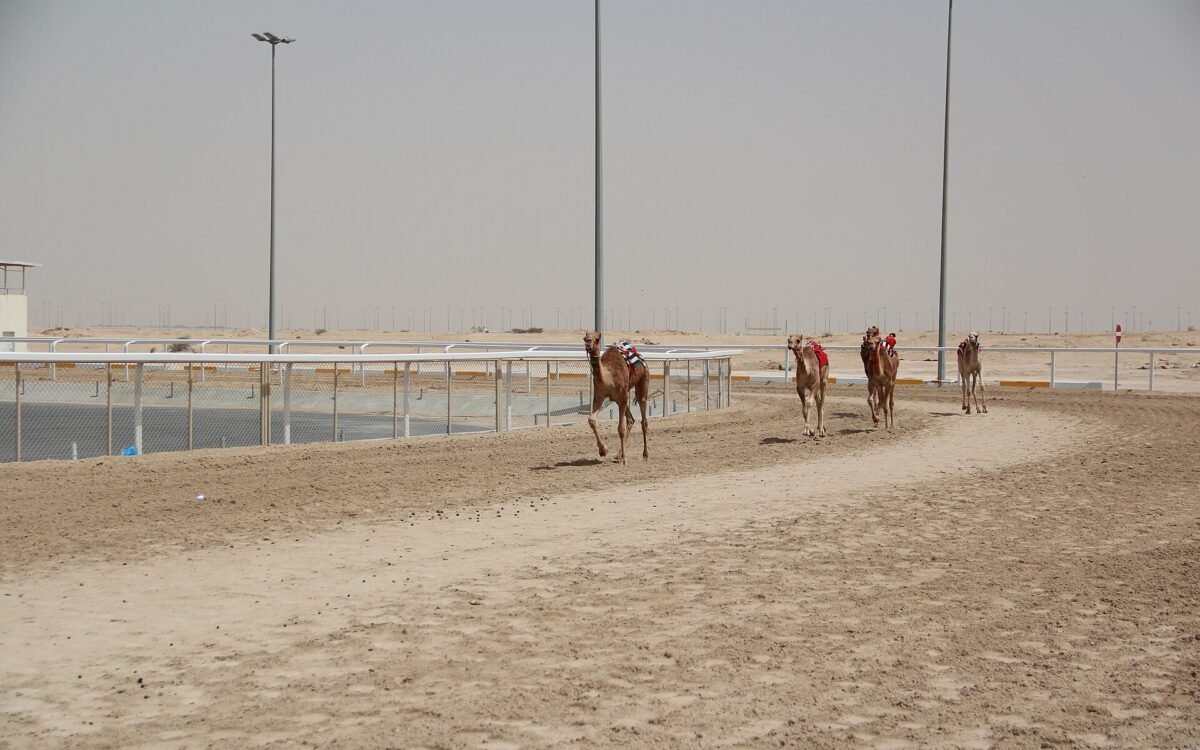
- Al Shahaniya camel racetrack. A short drive further west, this is the country’s main camel racing venue. In the cooler racing season you can watch training runs and races, often with robot jockeys, from the roadside or the stands.
- East-West/West-East by Richard Serra. Four towering steel plates in the Brouq Nature Reserve, about an hour further west along Dukhan Road. It makes a natural “art day” with the museum; the final stretch is on gravel.
- Zekreet mushroom rocks and Film City. Wind-carved limestone formations and an abandoned film set in the same corner of the peninsula, good for late-afternoon light.
- Oxygen Park, Education City. On the way back into Doha, a landscaped park with walking trails and play areas, handy for letting children run after a morning indoors.
Frequently asked questions
How much does the Sheikh Faisal Museum cost?
The official website lists QR 50 for adults, QR 35 each for groups of ten or more, and QR 30 for students, teachers, museum professionals and over-65s. Children under 12 enter free. A guided tour is an extra QR 25 per person, and the car museum is included in the ticket.
Is the Sheikh Faisal Museum open on Sundays?
The museum’s own website says it is closed on Sundays, although some tourism listings show Sunday opening. Call +974 4490 2340 before visiting on a Sunday or any public holiday.
Where is the carpet museum?
The estate’s Carpet Museum is in Doha, on the sixth floor of the Marriott Marquis City Center hotel, and is open by appointment only. It is not part of a walk-in visit to Al Samriya.
Can I visit the leaning mosque?
Yes, it stands on the museum estate and you can see and photograph it when you visit. It is a working mosque, so dress modestly and avoid prayer times if you want to look inside.
How long should I spend there?
Plan on about three hours for the main museum and the car museum together. Collectors and car enthusiasts can easily spend half a day.
Can I get there by metro?
No. The nearest metro station is Al Riffa (Mall of Qatar) on the Green Line, and you would still need a taxi from there. Driving or a ride-hailing app is the realistic option.
Is it good for children?
Generally yes. The cars, tents, model homes and odd objects keep most children interested, and under-12s enter free. The main building is large, so plan a break at the cafeteria.
Last checked October 2026. Hours, fees and access can change, so confirm with the official source before you go.
Read the Companies in Qatar visitor guide ↗
More places nearby
All places →
Run a tour, café or stay near Sheikh Faisal Bin Qassim Al Thani Museum, Al Samriya?
List your business free on Companies in Qatar, or get featured on Qatar Unseen in front of people planning their trip.