Dahl Al Misfir Cave, Rawdat Rashed
Qatar's largest accessible cave, a 35–40 m gypsum sinkhole south-west of Doha. Opening status, safety rules and how to get there.
South of Rawdat Rashed, Al Shahaniya (central Qatar, ~40 km SW of Doha)
Overview
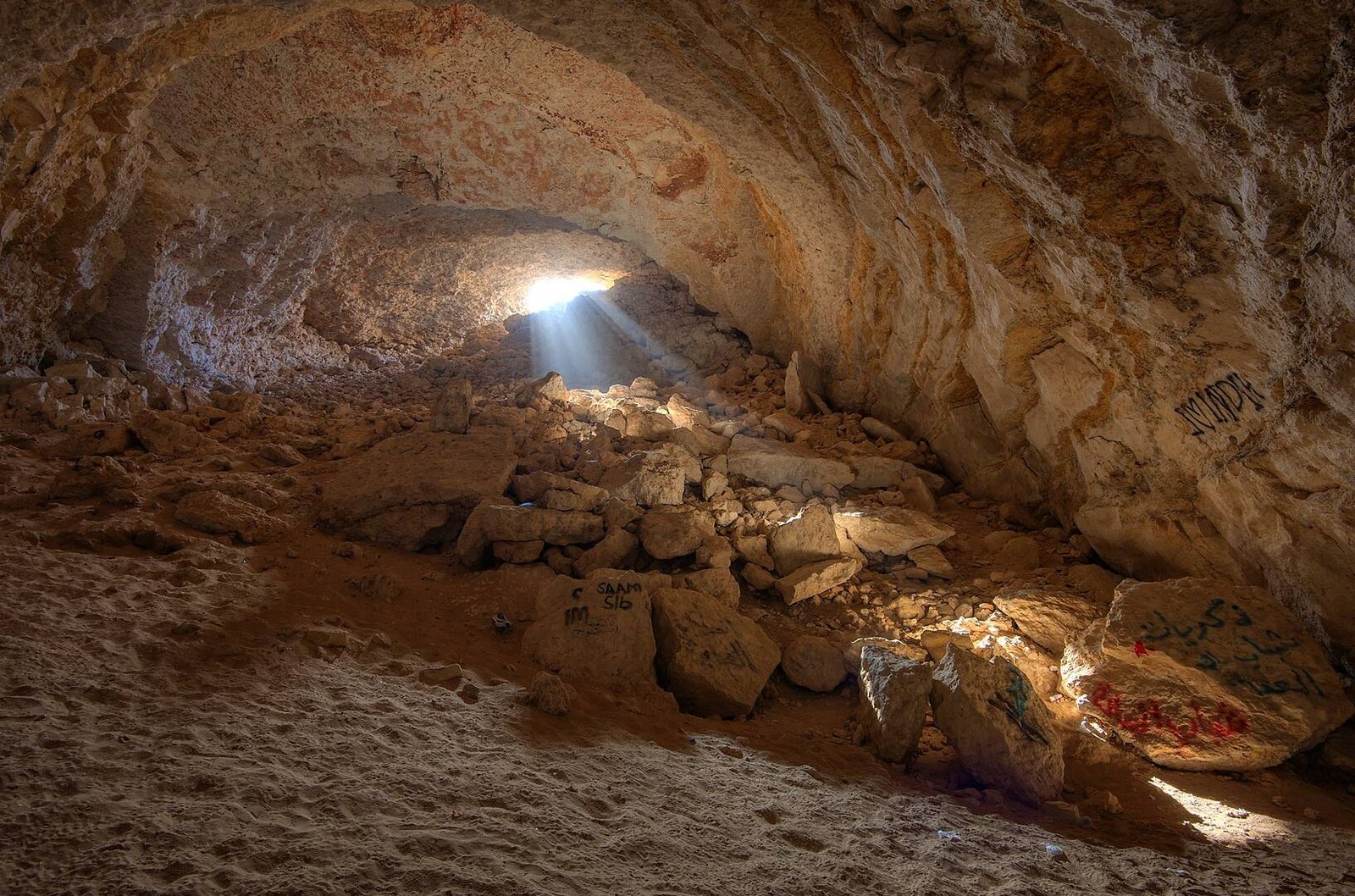
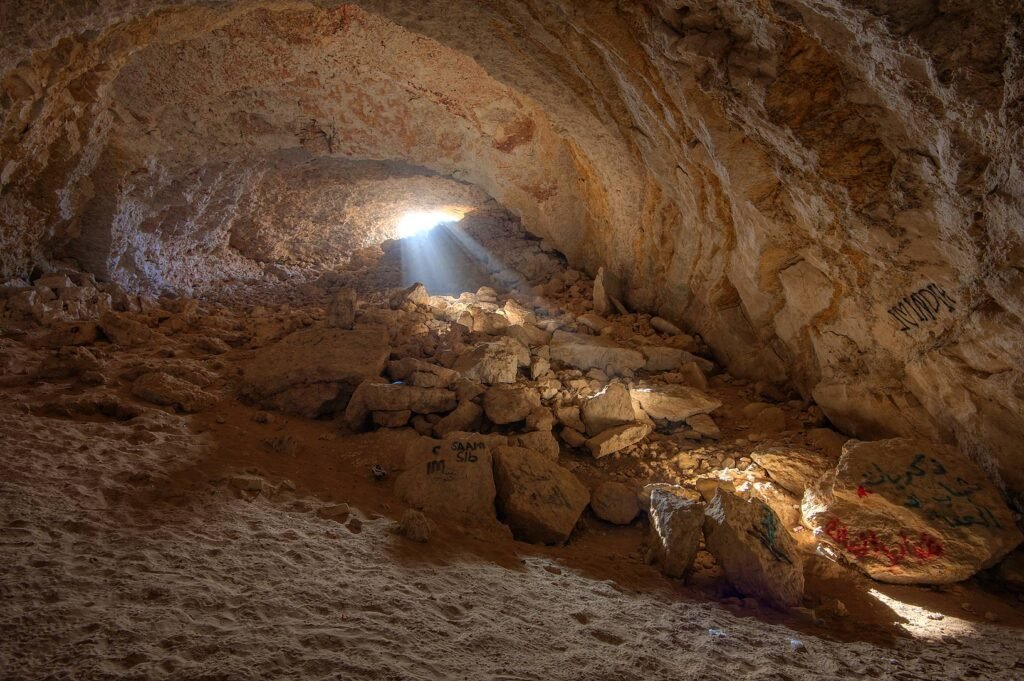
In the stony desert south-west of Doha, a fenced enclosure surrounds a dark opening in the ground. Step down into it and you are in Dahl Al Misfir, the largest accessible cave in Qatar: a steep, boulder-strewn chamber that drops around 35 to 40 metres below the surface, lit only by the daylight falling through the entrance.
A dahl is a cave or sinkhole in Qatari Arabic, and this one is famous for its gypsum. The rock inside is rich in fibrous gypsum crystals that give parts of the walls a faint, pale glow when light hits them. It is a rare chance to see Qatar from the inside, and a genuinely different half-day out from the city.
Dahl Al Misfir is open to the public, free of charge and unstaffed, in daylight hours. That freedom comes with responsibility: the descent is steep, the rocks are loose and there is no lighting, no rescue post and no mobile coverage guarantee at the bottom. This guide explains what to expect, the safety rules and how to reach it. It suits adventurous adults and older children with good footwear. It is not a place for toddlers, anyone unsteady on their feet, or a visit after rain.
History and background
Dahl Al Misfir lies just south of the village of Rawdat Rashed, in central Qatar about 40 km from Doha. The area was part of Al Rayyan municipality until 2014, when it was incorporated into the new municipality of Al Shahaniya. Wikipedia describes the cave’s gypsum as coming from the Lower Dammam and Rus formations, part of the limestone and evaporite layers that make up much of Qatar’s bedrock.
How old is it? The rocks around it are Eocene, roughly 40 to 50 million years old, and the cave itself is younger. Visit Qatar and Qatar Tribune give an estimated formation date of between 325,000 and 500,000 years ago, in the mid-Pleistocene, while Wikipedia notes that its exact age is unknown. Caves like this typically form when water slowly dissolves soluble rock such as gypsum below the surface, until the roof collapses and opens a sinkhole.
For years the cave was a well-known but informal off-road destination. In November 2022 the Ministry of Environment and Climate Change reopened it after what Wikipedia describes as the first comprehensive geological survey of the site, carried out with Qatar Museums and ExxonMobil Research Qatar. The Minister of Environment and Climate Change inaugurated the site on 11 November 2022. The teams used LiDAR scanning and 3D mapping, and the rehabilitation added safer access paths, protective barriers, shaded rest areas and a sign with a cave map and QR code linking to 3D drawings and 360-degree images.
Since then it has become a popular outing, especially on public holidays. The Peninsula reported families flocking to it during the Eid Al Fitr break in 2023.
What to see and do
The descent into the chamber
From the fenced rim, a rough path leads down a steep slope of rock and rubble into the cave. The Peninsula has described it as a steep and rugged passage. Take it slowly, test each foothold and use your hands where you need to. The pathways and barriers installed in 2022 help, but this is still a natural slope, not a staircase.
The gypsum glow
Once your eyes adjust, look at the walls and loose rocks where the light catches them. Fibrous gypsum gives a soft, silvery sheen that has led to descriptions of a moon-like or phosphorescent glow. Shine a torch across the surfaces at a low angle to see the crystal fibres.
Desert roses
The gypsum of central Qatar also forms desert roses, clusters of flat crystals that look like petals. The desert rose is the formation that inspired the interlocking discs of the National Museum of Qatar in Doha. Look, photograph, and leave any crystals exactly where they are.
The cool air below
Temperatures drop noticeably as you go deeper, a welcome change on a warm day. Visit Qatar advises layered clothing for that reason. The air can also feel still and dusty, so take your time on the way back up.
The QR-code cave map
At the top, find the Ministry’s information sign. Scanning its QR code brings up the 3D cave drawings and panoramic images created from the LiDAR survey, which show parts of the cave you will not reach on foot.
Birds around the rim
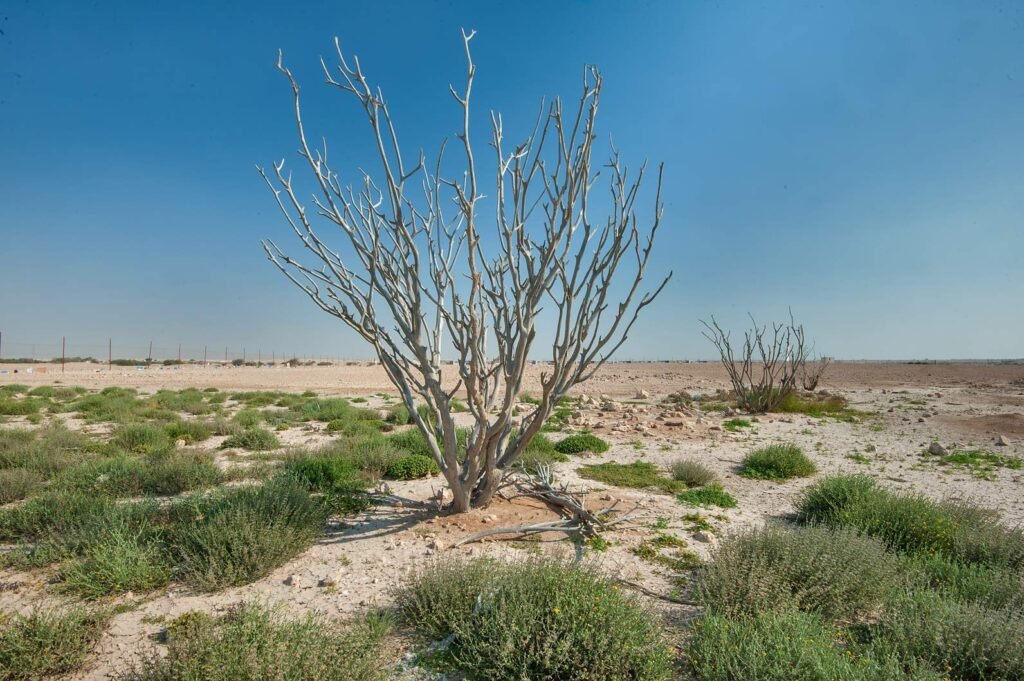
The surrounding desert is on a migration route. The Peninsula mentions nightjars, wagtails, bee-eaters and Eurasian hoopoes passing through, so keep an eye on the scrub around the enclosure in spring and autumn.
How to get there
Dahl Al Misfir is about 40 km south-west of central Doha, and Visit Qatar puts the drive at around 50 minutes. Use the coordinates 25.1751, 51.2117 for your map pin, and download an offline map before you set off.
- From Doha, take Salwa Road west, past the edge of the city.
- Leave Salwa Road for the desert tracks heading north towards the Rawdat Rashed area. Alternatively, approach from the north via Rawdat Rashed Road, which links to Dukhan Highway.
- Follow your GPS along the tracks for the last few kilometres. Look for the wire fence around the cave entrance, and park outside the enclosure.
Do you need a 4×4? Visit Qatar, The Peninsula and Qatar Tribune all describe the final approach as off-road and recommend a 4×4. The tracks are stony with sandy patches. Do not attempt it in a low car, and avoid it after rain.
Without a car. There is no public transport. Several Doha operators run half-day tours that combine Dahl Al Misfir with the Singing Sand Dunes, which is the easiest way to go if you do not drive off-road.
Best time to visit
November to March is the best season. The walk to the entrance is fully exposed, and a 2025 tour review described temperatures of 46°C during a hot-weather visit, with a child falling ill. In summer, the cave is only an option very early in the morning, and even then it is not recommended.
Go in daylight only. The site is open during the day, and there is no electricity or lighting in the cave. Late morning, when the sun is high, sends the most light down through the entrance.
Never go during or just after rain. The Peninsula reported that entry is prohibited in rainy periods because of the risk of landslides and rockfalls. Public holidays such as Eid and National Day bring big crowds; for a quieter visit, go on a weekday.
Tips for your visit
- Follow the safety rules on site. The Peninsula reported that the Ministry advises visitors to bring a helmet, sturdy shoes, a torch and rope, and to go in a group of at least three, with one person staying outside.
- Wear proper hiking shoes. The floor is loose rock and gravel. Sandals and trainers with worn soles are a bad idea.
- Keep small children out. Visit Qatar says the cave is not recommended for small children because of loose rocks and the depth.
- Stay within the barriers. They mark the safer routes created in 2022.
- Take nothing, leave nothing. Gypsum crystals and desert roses are part of a protected natural site. Carry out all rubbish.
- Do not climb the sides. Stick to the main path down and back; the walls and ledges are unstable.
- Tell someone where you are. The site is unstaffed, and there is no guarantee of phone signal inside the cave.
- Watch for insects and small animals among the rocks, and don’t put your hands where you cannot see.
What to bring
- Hiking shoes with good grip
- A head torch (keeps both hands free) and a spare
- A helmet, especially for children and teenagers
- Gloves for gripping rough rock
- A light layer for the cooler air below
- Plenty of water
- A basic first-aid kit
Combine it with nearby places
Singing Sand Dunes. The dunes towards Mesaieed are known for the low hum the sand makes when it slides. Tour operators regularly pair them with Dahl Al Misfir for a half-day desert outing.
Rawdat Rashed. The village just north of the cave takes its name from a rawdah, a vegetated desert depression. After good winter rain, the plain around it can turn surprisingly green.
Al Shahaniya. Continue north along Rawdat Rashed Road towards Dukhan Highway and you reach the Al Shahaniya area, home of Qatar’s main camel racetrack, where races are held in the cooler months.
Zekreet Peninsula. If you have a full day and a 4×4, Dukhan Highway takes you west to Richard Serra’s East-West/West-East and the Zekreet mushroom rocks, about an hour further on.
Frequently asked questions
Is Dahl Al Misfir open to visitors?
Yes. Since the Ministry of Environment and Climate Change reopened it in November 2022, it has been open to the public in daylight, with no ticket. The site is fenced and unstaffed. Entry is prohibited in rainy periods because of the risk of rockfalls.
How deep is Dahl Al Misfir?
Official and press sources put it at about 35 to 40 metres deep, making it Qatar’s largest accessible cave.
Is there an entry fee?
No. There is no admission charge and no set opening hours beyond daylight.
Is Dahl Al Misfir safe for children?
It is not recommended for small children. The descent is steep, the rocks are loose and there is no lighting. Older children can visit with close supervision, good shoes and ideally a helmet.
Do I need a 4×4 to reach the cave?
Yes, the last stretch is off-road on stony, sandy tracks, and official and press sources all recommend a 4×4. Alternatively, join a tour from Doha.
Why does the cave glow?
The walls contain fibrous gypsum crystals that reflect light with a soft, silvery sheen, often described as a faint phosphorescent or moon-like glow.
Which municipality is Dahl Al Misfir in?
It is just south of Rawdat Rashed, which has been part of Al Shahaniya municipality since 2014. Before that the area belonged to Al Rayyan, and you will still see it listed under Al Rayyan in many places.
Last checked October 2026. Hours, fees and access can change, so confirm with the official source before you go.
More places nearby
All places →
Run a tour, café or stay near Dahl Al Misfir Cave, Rawdat Rashed?
List your business free on Companies in Qatar, or get featured on Qatar Unseen in front of people planning their trip.