Al Jumail Abandoned Village, Al Shamal
A 19th-century pearling and fishing village on Qatar's north-west coast, empty since the 1970s. What you can see from outside the fence and how to plan a visit.
Al Jumail, Al Shamal (north-west coast, west of Al Ruwais)
Overview
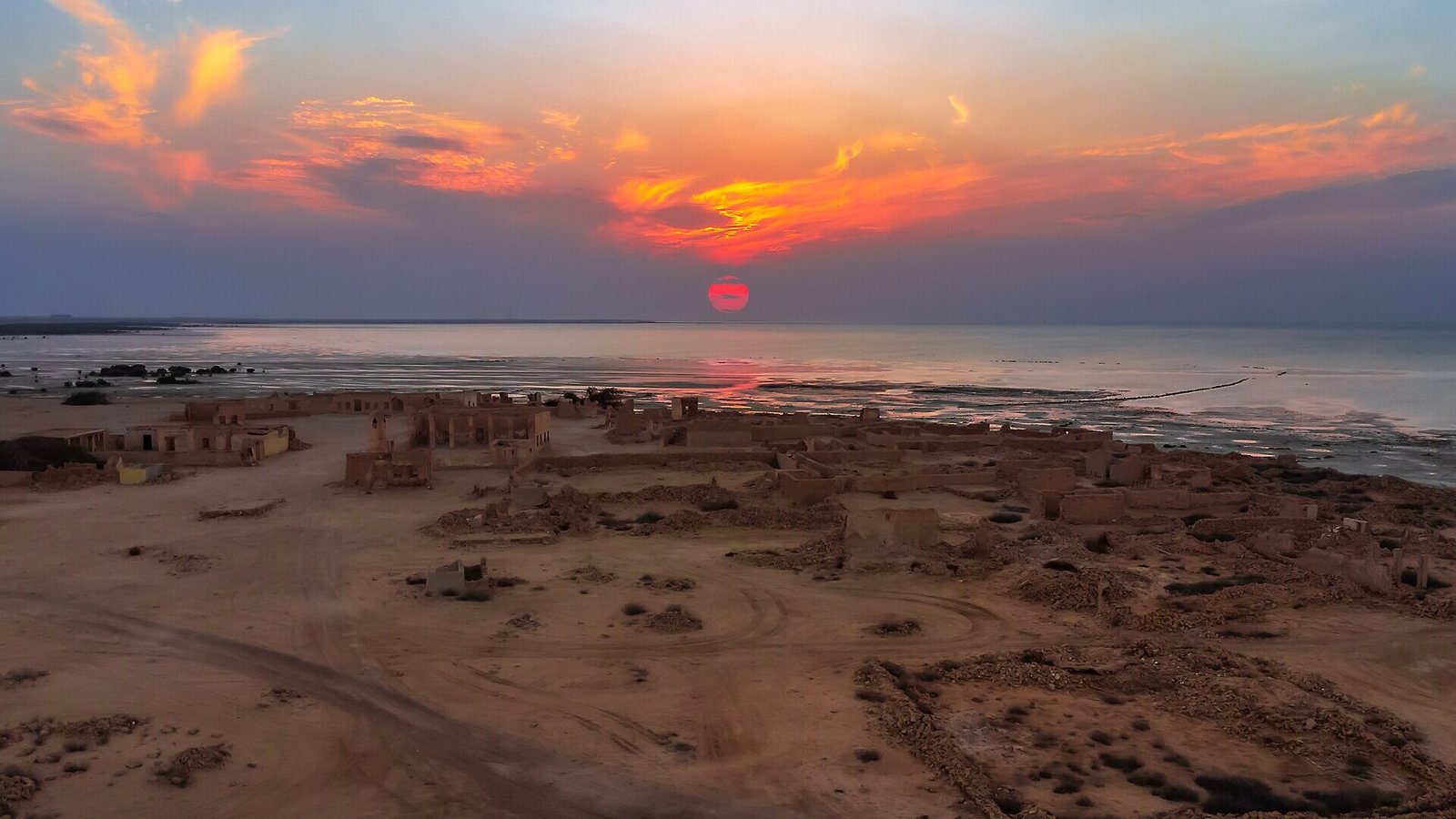
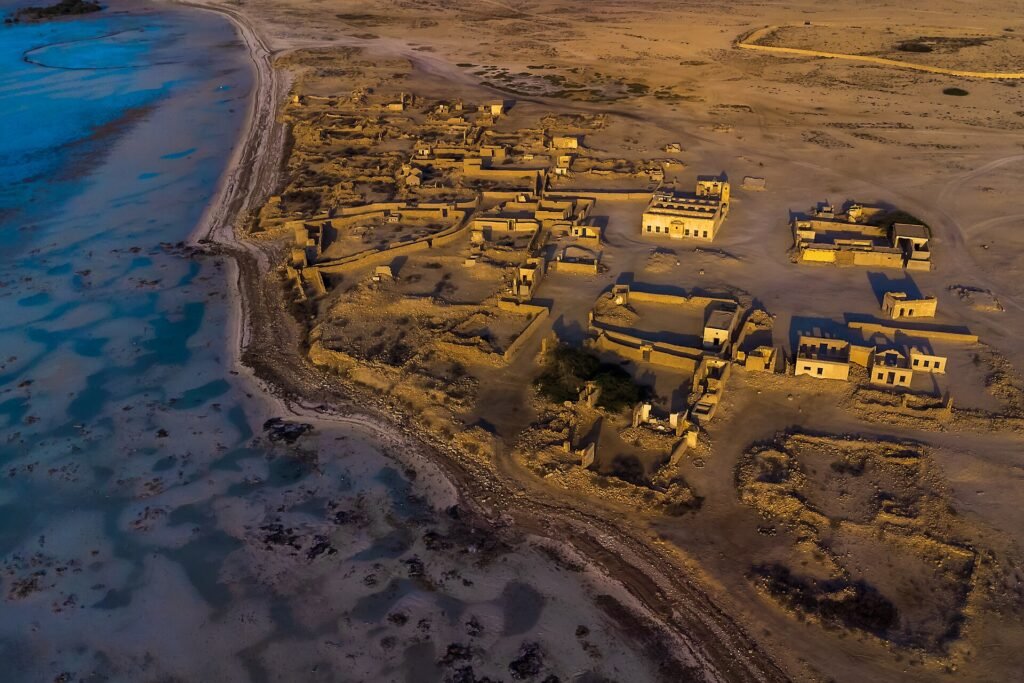
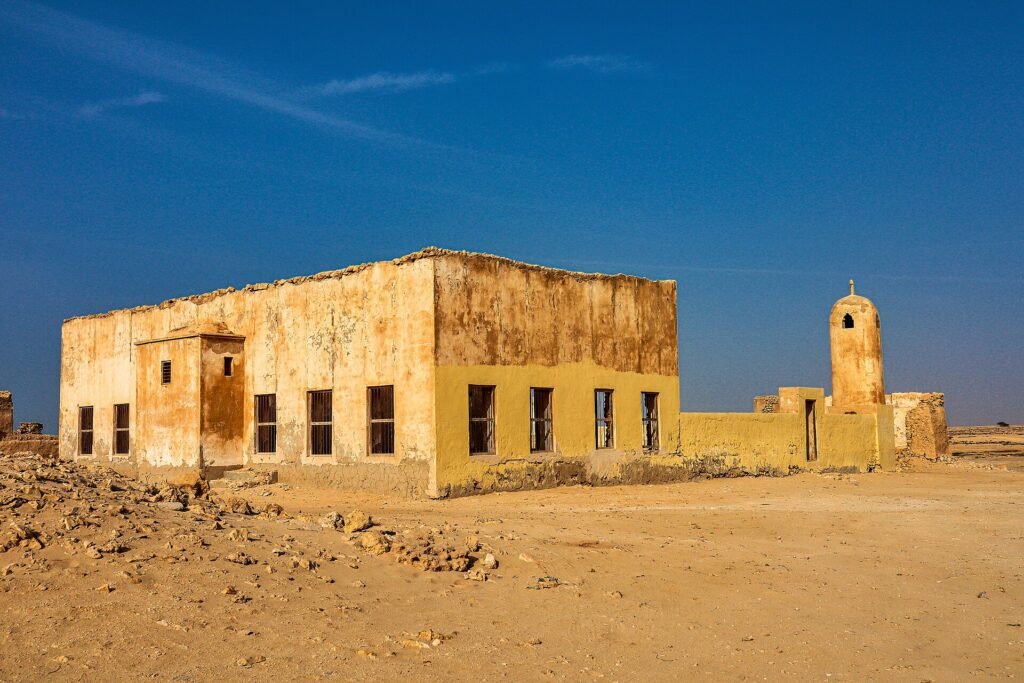
Al Jumail is a ruined fishing and pearling village on Qatar’s north-west coast, a few kilometres west of Al Ruwais in the municipality of Al Shamal. Low walls of coral stone and mud plaster run in rough lines towards a shallow bay, and above them rises the one structure that has kept its shape: a small mosque with its minaret still standing.
It is one of the most photographed abandoned villages in the country, and for good reason. The site is compact, the light off the Gulf at the end of the day is superb, and the ruins give a clear picture of how coastal families lived before oil and gas changed Qatar’s economy.
There is one important thing to know before you set off. Qatar Museums, which manages the site as Al Jumail Heritage Village, states that it is not accessible to the public, and visitors since at least 2021 have reported a fence around it. This guide is written with that in mind: it covers what the place is, what you can realistically see from outside the boundary, and the nearby heritage sites in the north that you can actually walk around. It suits history lovers, photographers and anyone already making a day trip to Al Zubarah or Al Ruwais.
History and background
The written record of Al Jumail goes back a long way, although the sources do not all agree on the details. According to Wikipedia’s account, drawing on local histories, the Al Hassan branch of the Al Muhannadi tribe settled here in the mid-18th century after first living in Al Khor. They built a defensive wall and stone fish traps along the shore before eventually moving back to Al Khor. A British survey of the Gulf in the 1820s recorded a small village called “Yamale” on this stretch of coast, and J. G. Lorimer’s Gazetteer of the Persian Gulf, published in 1908, noted the remains of houses and a fort here.
Qatar Museums dates the village as it stands today to the early 19th century. It describes Al Jumail as home to the Al Kubaisa (Al Kubaisi) tribe, with members of the Al Mahanda, Al Bu Kawara and Al Humaidat also living here, and says the village stayed inhabited into the mid-20th century. Some sources date the surviving buildings to the second half of the 19th century instead, so treat any single date with caution.
Life here followed the sea. Families fished the shallow bays, worked the stone fish traps (known locally as masakir) and took part in the pearl diving seasons. Houses were built from coral rock, limestone and compressed mud, with thick walls that helped keep the rooms cooler. The name is usually linked to the Arabic word jameel, meaning beautiful, though another explanation connects it to the word for camel. You will also see it spelt Al Jemail or Al Jamil.
As Qatar’s oil and gas economy grew in the 20th century, work and services moved to Doha and the new towns, and the old coastal livelihoods could no longer support a village. Doha News reported in 2015 that Al Jumail had been completely abandoned by the 1970s. The same report said that maps of the site record more than 60 structures, that parts of the village were rebuilt as a film set in 2009, and that Qatar Museums and the then Qatar Tourism Authority were seeking designers to turn it into a “living history” open-air museum. No opening date was announced, and at the time of writing the site remains closed.
What to see and do
The mosque and minaret
The mosque is the landmark that makes Al Jumail recognisable. It is a small, plain building of the kind found in many old Qatari villages, with a slim minaret that still stands above the ruined houses. Wikipedia records a mosque here as the Al Hussein Mosque. Because the land is flat and the minaret is the tallest thing for some distance, it is the part of the village you are most likely to pick out from outside the fence.
Coral-stone houses and courtyards
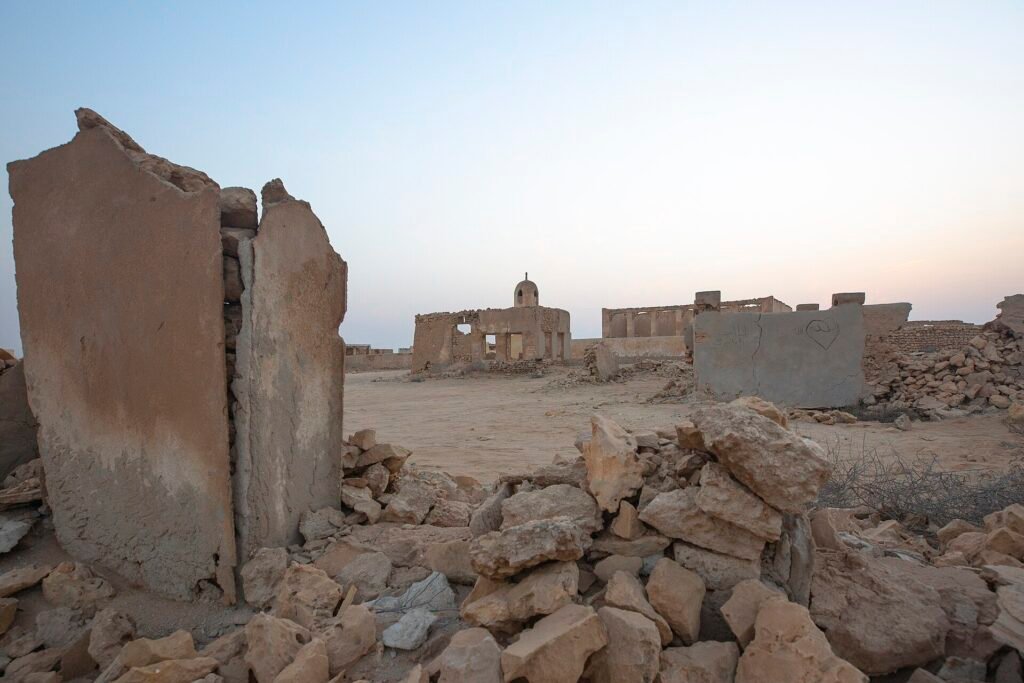
Most of the village is made up of broken walls, doorways and the outlines of rooms and courtyards. You can read the layout of a traditional coastal settlement in them: houses clustered close together near the water, thick walls with small openings, and building materials gathered from the shore. Some walls from the 2009 film-set rebuild look neater than the original fabric, so not everything you see is equally old.
The shoreline and the fish traps
The village sits beside a shallow, calm bay with low beachrock along the water’s edge. Historically the Al Hassan settlers built stone fish traps along this coast, and intertidal traps of this kind can still be found in several places on Qatar’s northern shores. Scan the flats at low tide and you may make out lines of stone in the shallows, but do not assume that anything you see is a historic trap without a sign or a guide to confirm it.
Photography from outside the boundary
Al Jumail is best known as a photography location, especially in the hour before sunset when the coral walls turn gold and the Gulf behind them catches the light. With the site closed, keep to the outside of the fence and use a longer lens rather than trying to get in close. The broad, flat surroundings make it easy to frame the minaret against the sky. Flying a drone in Qatar requires registration and permission from the civil aviation authorities, so do not launch one here on a whim.
Reading the wider landscape
Al Jumail is one of several empty villages along this coast. Within a short drive you are near Al Arish, Al Khuwayr and, further south-west, Al Zubarah, the UNESCO-listed former trading and pearling town. Seeing Al Jumail as part of this chain helps explain the north’s history: a string of small ports and fishing settlements that thrived on the sea and emptied within a generation once the economy moved on.
Joining a guided heritage tour
Several Doha tour operators sell northern heritage day trips that list Al Jumail alongside Al Zubarah Fort, Al Ruwais and the Olafur Eliasson desert installation. If you book one, ask the operator directly whether they have permission to take guests inside Al Jumail or whether it is a stop outside the fence. A good guide will add stories and context that no sign at the site provides.
How to get there
Al Jumail is roughly 100 to 110 km north of central Doha, and the drive takes about an hour to an hour and a half depending on where you start and on traffic. All of it is on good tarmac except the last short stretch.
- From Doha, take Al Shamal Road (the main north highway) all the way to the roundabouts at Madinat Al Shamal, near Al Ruwais.
- Head west on Al Areesh Road, the road towards Al Arish and Al Zubarah.
- Watch for the signpost for Al Jumail, which points north towards the coast. One visitor measured the turn-off at about 6.5 km from the first Madinat Al Shamal roundabout.
- From the main road, an unpaved track of around 600 m leads towards the village. Visitors have described it as a reasonable dirt track that a normal car can manage in dry conditions. A 4×4 is not essential, but drive slowly and avoid soft sand.
For the map pin, use the coordinates 26.0948, 51.1545 (the village as marked on OpenStreetMap). There is no formal car park. Pull off where the track widens, do not block the gate or the track, and keep your car on hard ground.
There is no public transport to Al Jumail. A taxi or ride-hailing car from Doha is possible, but you would need to arrange the return trip in advance, as you are very unlikely to find a car waiting in this part of Al Shamal. The simplest options are to drive yourself or to join a northern heritage tour from Doha.
Best time to visit
Come between November and March, when daytime temperatures are pleasant enough to be outdoors. From late spring to early autumn the north of Qatar is extremely hot and humid, the site has no shade, and even a short stop can be uncomfortable.
The best time of day is late afternoon. The west-facing coast means the sun sets over the Gulf behind the ruins, which is when the famous golden-hour photos are taken. Early morning is a good alternative, with softer light and cooler air.
Weekends (Friday and Saturday) bring more day-trippers to the north, especially in the cooler months. If you want the view of the minaret to yourself, go on a weekday. After rain, which is rare but does happen in winter, the dirt track can turn muddy, so give it a day or two to dry out.
Tips for your visit
- Respect the closure. Qatar Museums lists the village as not accessible to the public. If the gate is closed, stay outside the fence, even if you see others inside.
- Leave everything where it is. Pottery shards, beads and glass fragments lie on the ground across old village sites. They are part of the archaeological record, and removing them is not allowed.
- Never climb on the walls. The coral stone and mud plaster are fragile, and the ruins have already suffered from weathering and vandalism.
- Go with company. The area is remote and quiet, and mobile coverage and help can be patchy. Tell someone where you are going.
- Fill up before you leave the highway. There are no facilities at the site. Use the petrol stations, shops and cafés in Madinat Al Shamal or Al Ruwais.
- Dress modestly. This is a heritage site with a mosque at its centre. Cover shoulders and knees.
- Check before you go. Look at the Qatar Museums heritage sites page for any change in status, open days or guided visits.
- Plan your light. Arrive at least 45 minutes before sunset so you have time to walk the fence line and find your angles.
What to bring
- Plenty of water, more than you think you need
- Sun hat, sunglasses and sunscreen
- Closed-toe shoes for rough, stony ground
- A camera with a zoom or telephoto lens
- A torch if you stay for sunset and walk back to the car in the dusk
- Snacks, as there is nowhere to buy food on site
- A bag to take all your rubbish home
Combine it with nearby places
Al Ruwais. The small port town at the northern end of Al Shamal Road is only a few minutes’ drive from Al Jumail. Walk along the harbour to see the fishing boats, look out for the Al Ruwais heritage mosque, one of the historic mosques listed by Qatar Museums, and stop at a local café before the drive home.
Abu Dhalouf. Close to Al Ruwais, this coastal village has a small park and the Bahar Mosque, which opened in 1940 and has been restored by Qatar Museums. It is a quick detour that pairs well with Al Ruwais.
Al Zubarah Archaeological Site and Fort. Roughly 25 km south-west by road, this is the heritage site in the north that you can actually walk around. The fort and the excavated town, a UNESCO World Heritage Site since 2013, open Saturday to Thursday from 9am to 5pm and on Friday from 12.30pm to 5pm. Qatar Museums asks visitors to book a ticket online. If Al Jumail leaves you wanting to see inside an old pearling town, this is where to go.
Shadows Travelling on the Sea of the Day. Olafur Eliasson’s 2022 installation of twenty mirrored circular shelters stands in the desert north of Al Zubarah. The mirrors reflect you, the sky and the sand in disorienting ways, and it makes a striking contrast to the old stone of Al Jumail. Check the Qatar Museums public art page for directions before you go.
Frequently asked questions
Can you go inside Al Jumail village?
Not officially. Qatar Museums states that Al Jumail Heritage Village is not accessible to the public, and the site has been fenced. You can see the minaret and the nearest ruins from outside the boundary. Watch for Qatar Museums open days or guided visits if you want to go inside.
Where exactly is Al Jumail?
It is on the north-west coast of Qatar in the municipality of Al Shamal, a few kilometres west of Al Ruwais and north of Al Areesh Road, the road between Madinat Al Shamal and Al Zubarah. The coordinates are approximately 26.0948, 51.1545.
Why was Al Jumail abandoned?
Like many small coastal villages in Qatar, it emptied as the oil and gas economy grew and families moved to Doha and the new towns, where there was work, housing and services. Reports say the last residents had left by the 1970s.
Do I need a 4×4 to reach Al Jumail?
No. The drive from Doha is on paved highway, and the final stretch is a short dirt track that an ordinary car can manage slowly in dry weather. Avoid it after rain and keep off soft sand.
Is there an entrance fee?
No. There is no ticket, no visitor centre and no facilities, because the site is not open to the public.
How long should I spend at Al Jumail?
Around 30 minutes to an hour is enough to walk the outside of the site and take photos. Most people combine it with Al Ruwais and Al Zubarah as part of a half-day or full-day trip to the north.
When is the best time for photos?
The hour before sunset, between November and March. The sun drops over the Gulf behind the village and lights up the coral-stone walls and the minaret.
Last checked October 2026. Hours, fees and access can change, so confirm with the official source before you go.
More places nearby
All places →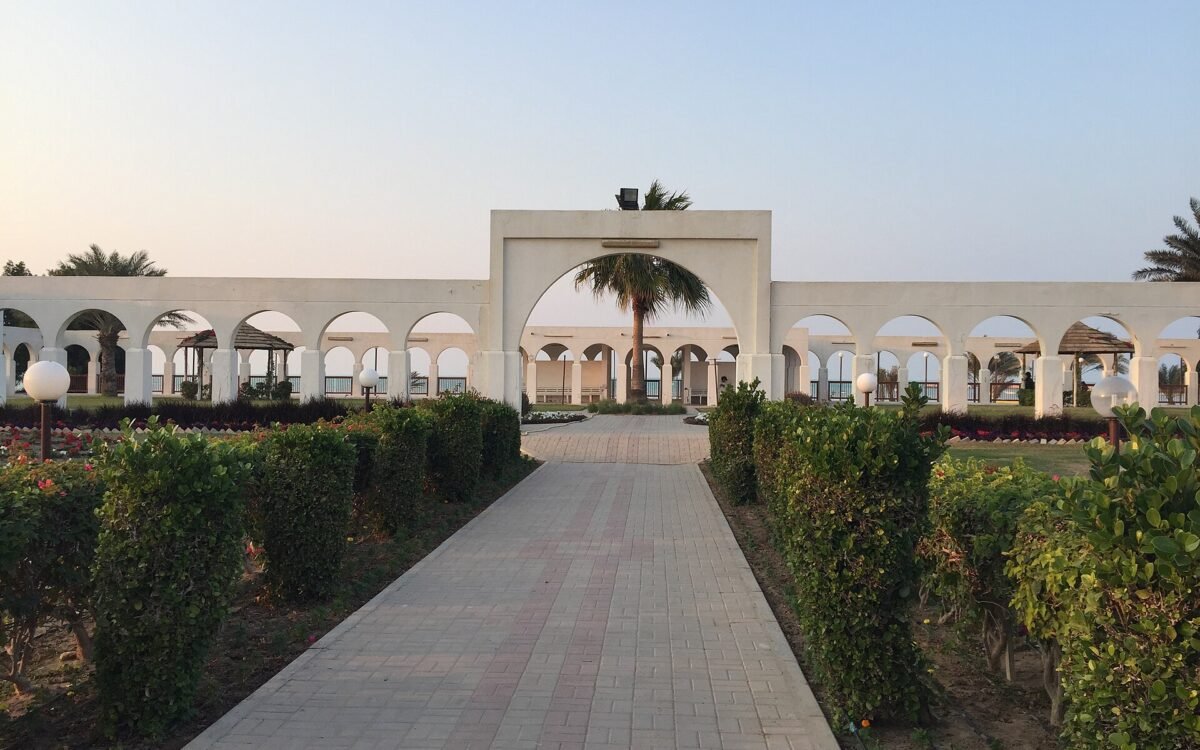 Beaches & IslandsAbu Dhalouf Park and Bahar Mosque, Al ShamalAl Shamal & Zubarah
 Beaches & IslandsAl Ghariya Beach, Al ShamalAl Shamal & Zubarah
 Heritage & FortsAl Jassasiya Rock Carvings, Al ShamalAl Shamal & Zubarah
Run a tour, café or stay near Al Jumail Abandoned Village, Al Shamal?
List your business free on Companies in Qatar, or get featured on Qatar Unseen in front of people planning their trip.