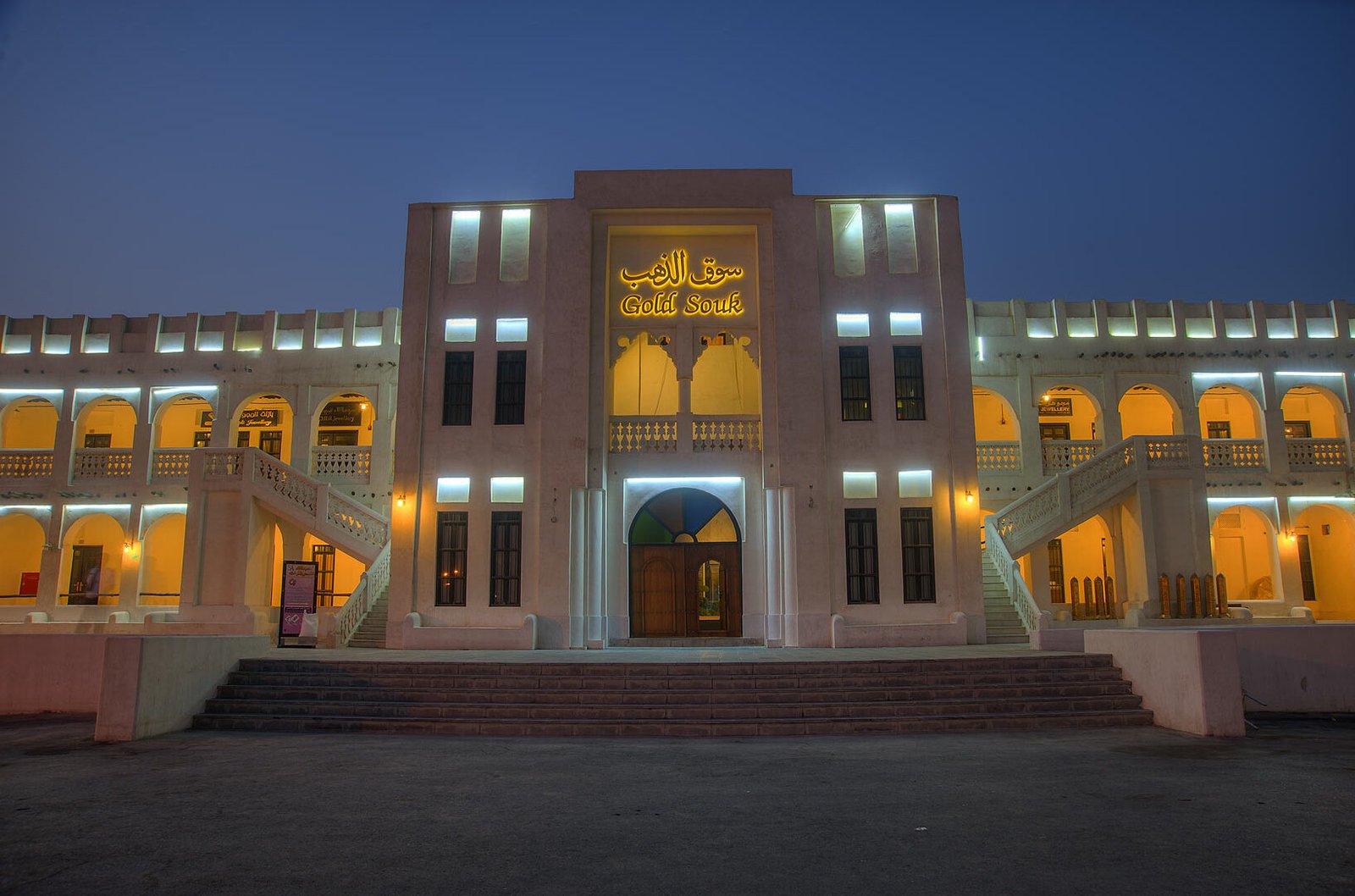
Gold Souq, Doha
Bridal sets, 22 carat bangles and Arabic name pendants: how Doha’s Gold Souq works, how prices are set and how to shop it with confidence.
Souq Al Najada, Ali Bin Abdulla Street (east of Souq Waqif), central Doha
Overview
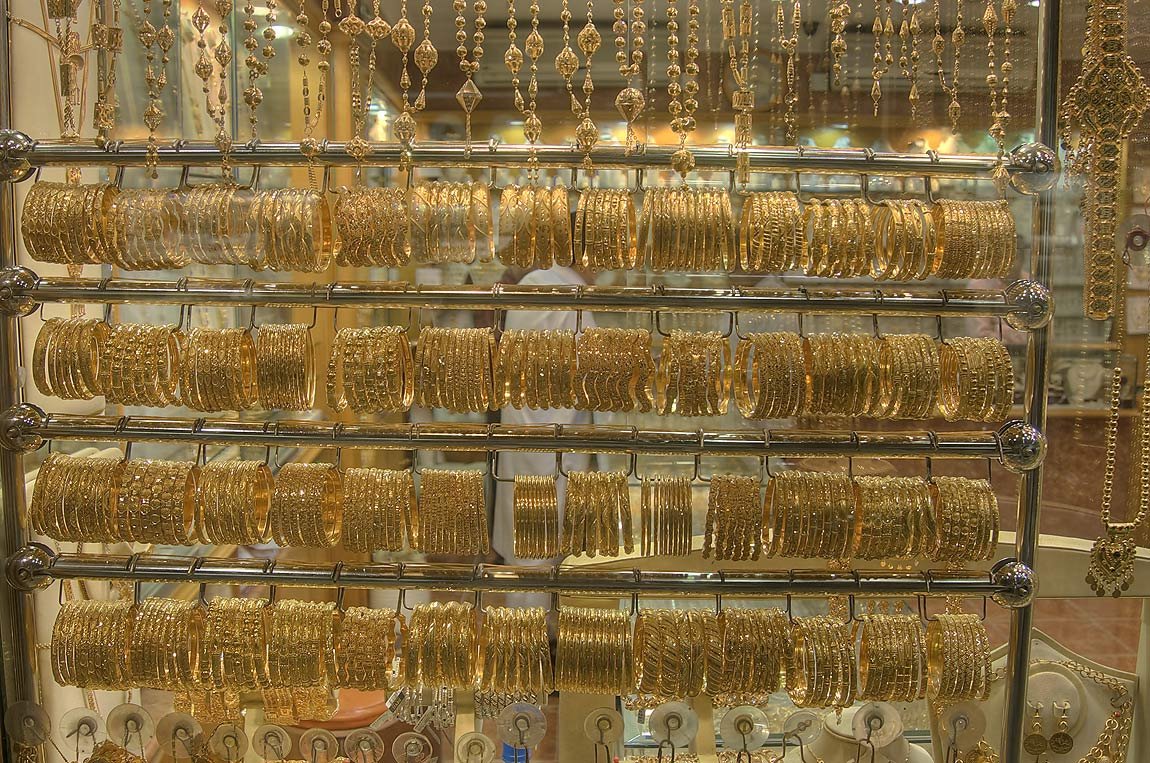
Doha’s Gold Souq is a compact block of jewellery shops a short walk east of Souq Waqif, in the older commercial district around Ali Bin Abdulla Street and Souq Al Najada. The windows are packed with bangles, heavy necklaces, bridal sets, coins and chains, lit so brightly that the whole arcade glows after dark. Marhaba counts more than 40 shops, most of them specialising in 18 and 22 carat gold.
Plenty of visitors reach Souq Waqif and never find it, because it sits across the road from the restored market and looks like an ordinary modern arcade from the outside. Inside, it is one of the most interesting places in the city to watch everyday Doha life: families choosing wedding gold, workers from across Asia buying a chain to send home, and jewellers weighing, bargaining and resizing at the counter.
This guide is for window-shoppers as much as buyers. It explains how prices work, what the different carats mean, what to check before you pay and how to fit the souq into an evening in the old centre. You don’t need to spend anything to enjoy it, and it takes as little as half an hour to walk through.
Gold, pearls and the old Doha trade
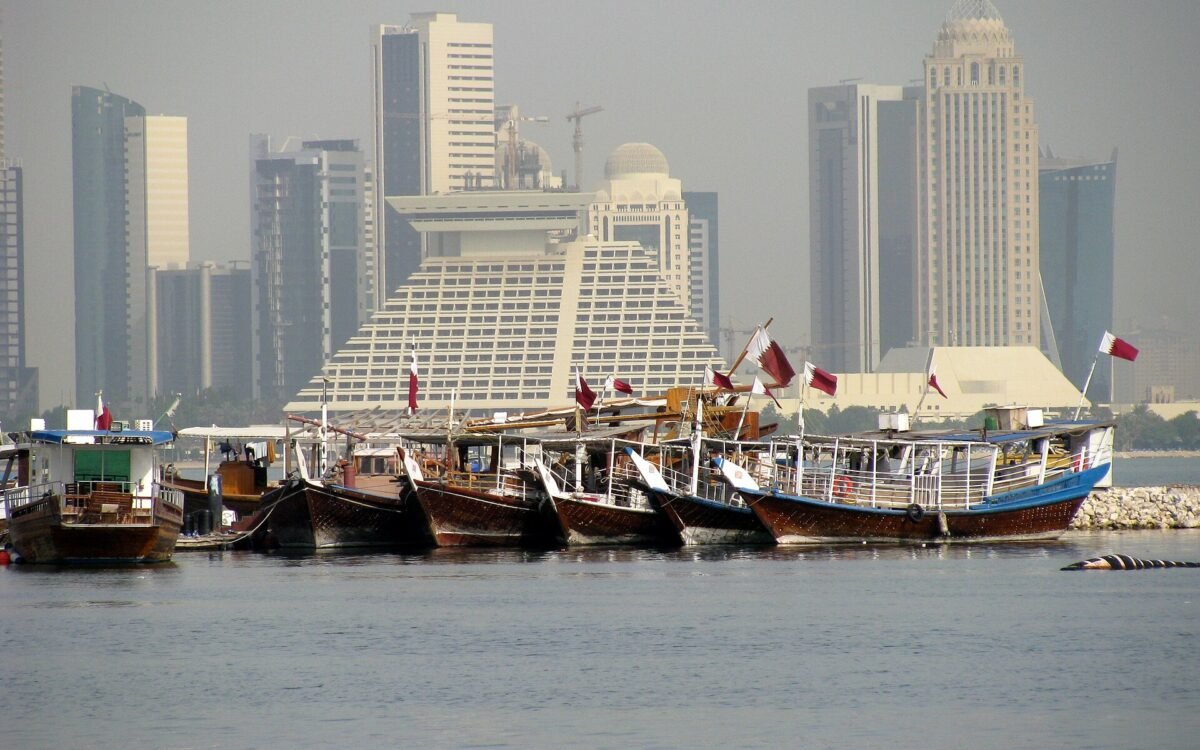
Long before oil, Qatar’s wealth came from the sea. Pearling was the backbone of the economy for generations, and the merchants of Doha traded pearls, textiles and goods through the markets that grew up around the Musheireb valley and the old harbour. Jewellery was a way of holding and displaying wealth, and gold given at a marriage has long been an important part of Gulf wedding customs.
The area around today’s Gold Souq, between Souq Waqif and the streets of Al Najada and Al Asmakh, was part of that old trading heart. As Doha grew in the second half of the 20th century, this district filled with small shops selling cloth, electronics, perfume and gold, many run by families who had come to Qatar to trade. The Gold Souq building you see now is modern, but the business done inside it follows a very old pattern.
Marhaba notes that many of the goldsmiths are second- and third-generation craftsmen who can design pieces to order, resize rings and bangles and repair broken chains. Lonely Planet points out that the souq is at its busiest before religious holidays, when men traditionally buy 22 carat bangles and jewellery sets for the women in their families. Qatari bridal sets can be very large and very valuable, and seeing them on display is one of the reasons people come.
What to see and do
Walk the arcade after dark
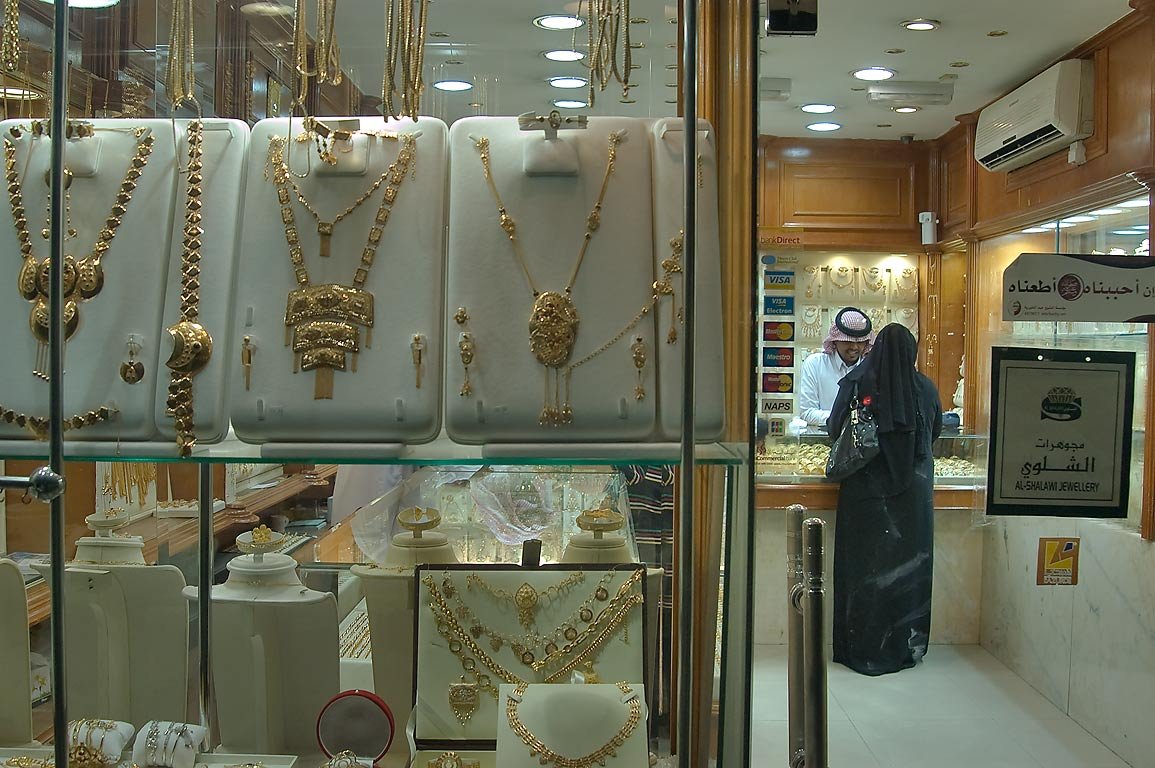
Start simply by walking the length of the souq in the evening, when the lighting is at its most dramatic and the shops are busy. Look for the contrast between the shops that cater to Qatari and Gulf taste, with heavy, bright 22 carat pieces and traditional designs, and those aimed at South Asian customers, where you will see different styles of bangles, chains and bridal sets.
Look for traditional Gulf designs
Some windows display elaborate bridal jewellery: wide collar necklaces, long chains, forehead and hair ornaments and stacks of matching bangles. These pieces are made for weddings and family occasions rather than daily wear. Even if you are not buying, it is worth asking a jeweller to explain a piece; many are proud of the work and happy to talk when the shop is quiet.
Have something made or personalised
A popular souvenir is a pendant with your name, or someone else’s, in Arabic script. ILoveQatar mentions name pieces as a speciality, and many shops can make them in gold or silver. Allow time for the order; depending on the shop and the season it can take from a few hours to several days, so ask before you commit.
Look at pearls
Marhaba notes that pearls are sold here too, a reminder of Qatar’s pearling past. Quality and origin vary a great deal, so if you are thinking of buying pearls as anything more than a pretty souvenir, ask clear questions about whether they are natural or cultured and get it written on your receipt.
Watch the weighing
Every gold sale is done by weight. Watch a purchase at the counter and you will see the piece go on a digital scale, the price calculated from that day’s rate plus a charge for workmanship, and then the bargaining begin. It is a small piece of theatre, and it helps you understand what you are paying for if you decide to buy.
Explore the side streets
Once you have seen the main arcade, wander the lanes around it. This older commercial quarter is a world away from the polished malls of West Bay: tailors working at sewing machines in narrow shopfronts, bolts of fabric stacked to the ceiling, perfume sellers, money exchanges and small restaurants serving workers on their evening break. Marhaba lists a secondary cluster of gold shops behind Souq Al Faraj, near Ali Bin Abdulla Street and Al Ashat Street, if you want to compare prices away from the main souq.
How prices work
Gold prices in Qatar follow the international market and change daily. A piece is priced by its weight in grams at that day’s rate for its purity, plus a making charge for the craftsmanship. According to Marhaba, the price depends on the weight at the day’s market price and on whether the piece is hand or machine made.
- 24 carat is almost pure gold, soft and mostly sold as bars and coins.
- 22 carat is the traditional choice for Gulf and South Asian jewellery: rich in colour, heavier and softer.
- 21 carat is also common in the region.
- 18 carat is harder wearing and used for more delicate, gem-set or Western-style pieces.
The gold rate itself is not usually negotiable, but the making charge often is. Check the day’s gold rate for Qatar on your phone before you go in, so you know what share of the price is metal and what is workmanship. Marhaba reports that gold sold in Qatar is tested and hallmarked in the country, and that shops issue invoices showing purity, carat and workmanship charges in line with Ministry of Commerce and Industry rules.
How to get there
The Gold Souq is in central Doha, on the eastern side of Souq Waqif. Marhaba places it in Souq Al Najada on Ali Bin Abdulla Street, opposite the Al Najada Doha Hotel. From the main Souq Waqif lanes it is a few minutes’ walk; cross the road at the eastern edge of the old market and ask for the gold souq if you lose your bearings.
By metro: Souq Waqif station on the Gold Line is the closest, and Msheireb interchange station is within walking distance.
By car: Street parking nearby is limited and busy in the evening. The easiest option is to park in one of the Souq Waqif car parks and walk across.
By taxi: Ask for the Gold Souq near Souq Waqif or the Al Najada area.
The whole area is flat and paved, and easy to explore on foot.
Best time to visit
The souq is best in the evening, when it is cooler outside, the shops are busy and the lighting shows off the jewellery. Like most of the traditional markets in this part of Doha, shops generally open in the morning, close for a long break in the early afternoon and reopen in the late afternoon until around 10pm. Friday mornings are quiet or closed.
The busiest times are the days before Eid and during the wedding season, when families shop together. That is the most atmospheric time to go, but not the best if you want a jeweller’s full attention. Between November and March the walk between here and Souq Waqif is very pleasant; in summer, come after sunset.
Tips for your visit
- Check the day’s gold rate before you shop, and ask each jeweller to separate the gold price from the making charge.
- Compare a few shops before buying; prices and charges vary.
- Bargain politely on the making charge. Walking away is fine, and you may be called back with a better offer.
- Always get a proper invoice showing weight, carat and charges. You will need it if you ever want to sell the piece back in Qatar.
- If you want to sell gold, Marhaba reports that you need the purchase receipt or a no-objection certificate from the police.
- Most shops accept cards, but some may give a better price for cash.
- Ask before photographing inside a shop. Many are happy for you to take pictures, but security is tight and some are not.
- Dress modestly, as you would in Souq Waqif.
What to bring
- Your phone with a gold-rate app or website bookmarked, to check the day’s price
- A card and some cash; a few shops may prefer one or the other
- Your ring or bangle size if you plan to buy, or an existing piece to match
- Modest clothing and comfortable shoes for walking between the souqs
Combine it with nearby places
Souq Waqif. Doha’s restored old market is just across the road, with spice and textile lanes, cafés and the Falcon Souq on its western edge.
Souq Al Asiery and the textile souqs. The streets around the Gold Souq are full of small fabric, tailoring and clothing shops, where you can have an abaya or thobe made to measure.
Msheireb Museums. Four free heritage-house museums a short walk south-west, telling the story of 20th-century Qatar.
Bandar Aden. A long-running Yemeni restaurant inside Souq Waqif, known for mandi and saltah, for dinner after shopping.
Athr Café. A calm courtyard café in the souq’s perfume lanes for Qatari coffee and a sit-down.
Frequently asked questions
Where is the Gold Souq in Doha?
It is in central Doha, just east of Souq Waqif, in the Souq Al Najada area on Ali Bin Abdulla Street, opposite the Al Najada Doha Hotel.
Is gold cheaper in Qatar?
The price of the gold itself follows the global market, so it is similar everywhere. Buyers often find value in Doha because making charges can be modest and there is room to negotiate them. Compare the total with what you would pay at home.
What are the Gold Souq opening hours?
Shops set their own hours, but most open in the morning, close for a midday break and reopen from late afternoon until about 10pm. Friday mornings are generally closed.
Can you bargain at the Gold Souq?
Yes, on the making charge rather than the daily gold rate. Be polite, compare shops, and ask for the price to be broken down.
What carat gold is sold in Doha?
Mostly 18 and 22 carat, with 21 and 24 carat also available. 22 carat is the traditional choice for Gulf jewellery; 18 carat is more durable for everyday pieces.
Can I sell gold at the Gold Souq?
Yes, but you need the original purchase receipt or a no-objection certificate from the police, as Qatar regulates second-hand gold sales.
Is the Gold Souq worth visiting if I am not buying?
Yes. The window displays, especially the large bridal sets, are a sight in themselves, and the busy evening atmosphere gives you a glimpse of everyday Doha that most visitors miss. Half an hour is enough, and it combines easily with Souq Waqif.
Last checked October 2026. Hours, fees and access can change, so confirm with the official source before you go.
More places nearby
All places →
Run a tour, café or stay near Gold Souq, Doha?
List your business free on Companies in Qatar, or get featured on Qatar Unseen in front of people planning their trip.