Falcon Souq & Falcon Hospital, Souq Waqif
Hooded falcons, handmade leather hoods and a specialist bird hospital: a guide to the falconry corner of Doha’s old market and how to visit it respectfully.
Western side of Souq Waqif, Al Jasra Street, central Doha
Overview
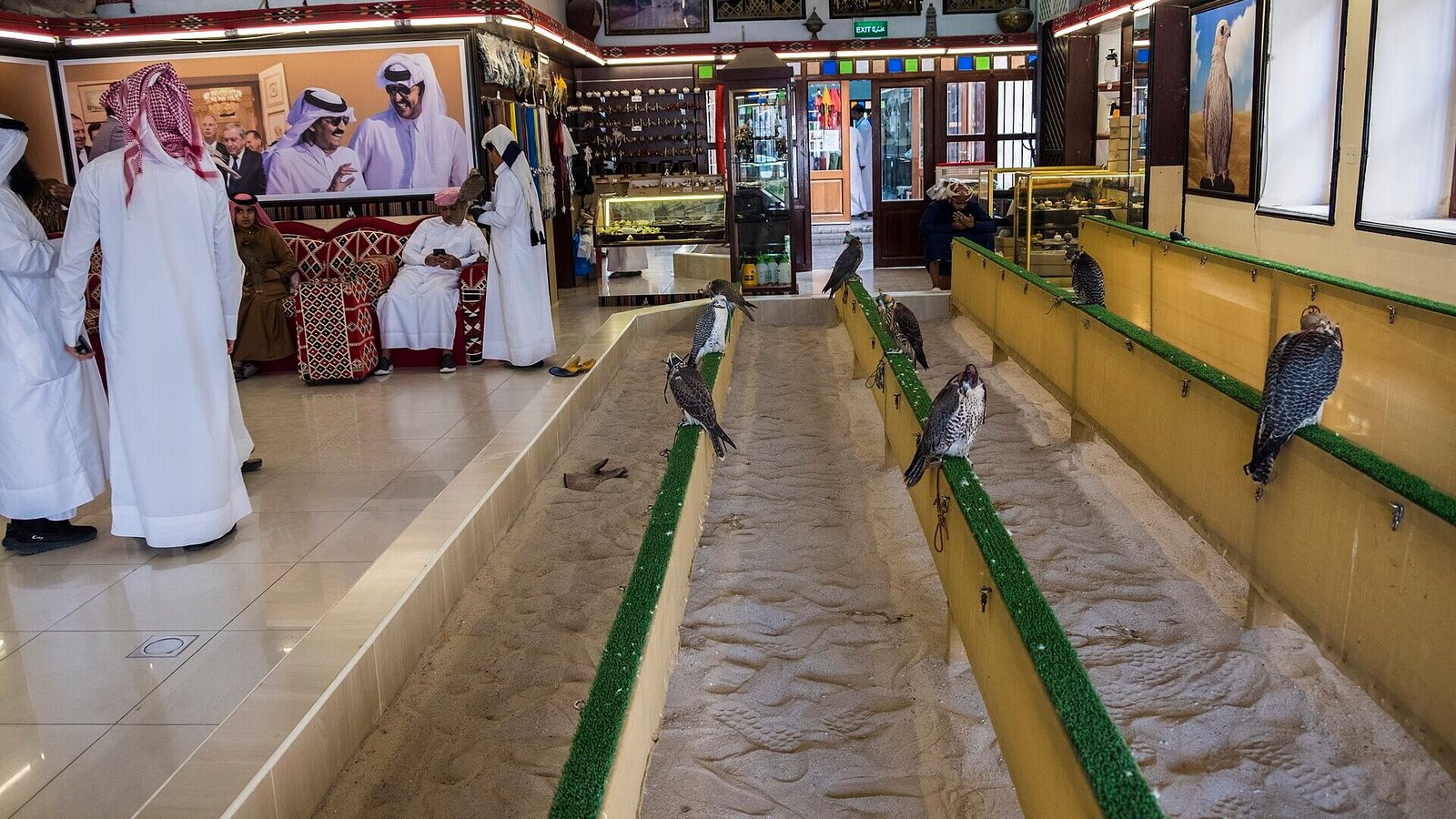
On the western edge of Souq Waqif, a few steps from the main car park, there is a lane where the shop windows are full of birds rather than spices. This is the Falcon Souq, the part of Doha’s old market given over to falcons and falconry. Hooded birds sit on padded perches along the walls, owners bring their own birds in for advice, and the shelves hold hoods, gloves, leashes and tracking gear. Next door is the Souq Waqif Falcon Hospital, a specialist veterinary clinic that treats tens of thousands of birds a year.
Most visitors to Souq Waqif stay on the main spice and textile lanes and miss this corner entirely, or walk past without realising what they are looking at. That is a shame, because it is one of the few places in the city where a centuries-old Gulf tradition is still going about its daily business in front of you. Nobody is putting on a show. The men handling the birds are buyers, sellers, trainers and owners, and the conversations are about hunting, health and price.
This guide is for people who want to understand what they are seeing: which birds are which, what the equipment is for, how the market changes through the year and how to behave in a space that is a working market first and a sight second. It suits curious first-time visitors, photographers, families with older children and anyone interested in Qatari heritage. You can see it in half an hour, or linger much longer if you get talking.
The story behind the Falcon Souq
Falconry reached the Gulf with the Bedouin, who trapped and trained wild falcons to hunt birds and small animals for food during the cooler months. Visit Qatar describes it as a partnership between bird and trainer, and the falcon is now Qatar’s national bird. What began as a survival skill has become a sport, a social life and, for many Qatari families, a link to the way their grandparents lived.
Souq Waqif itself has been Doha’s trading heart for at least a century. Its name is usually explained as the “standing market”, because traders once stood at the banks of the Musheireb valley to sell their goods. By the 1990s much of it had decayed, and a fire in 2003 destroyed a large part of the old market. From 2006 the state rebuilt and restored it in traditional style, removing later concrete structures and reviving the old lanes, with the work completed around 2008. A dedicated falcon quarter was part of that revival.
The Souq Waqif Falcon Hospital opened in 2008 next to the market. It offers examinations, endoscopy, X-rays, blood tests, parasite and PCR testing, vaccinations, microchipping and the health certificates that birds need to travel abroad or enter competitions. According to Gulf Times, the hospital and its Al Khor branch treated around 35,000 falcons in 2022, and the director said a similar number are seen every year. At the height of the season the waiting room can be busy with owners holding hooded birds on their gloved fists.
Today falconry in Qatar supports a whole economy: breeders abroad, importers, trainers, craftsmen who make the gear, vets and big competitions such as the winter Marmi festival. The Falcon Souq is the place where most of those strands meet in public.
What to see and do
Browse the falcon shops
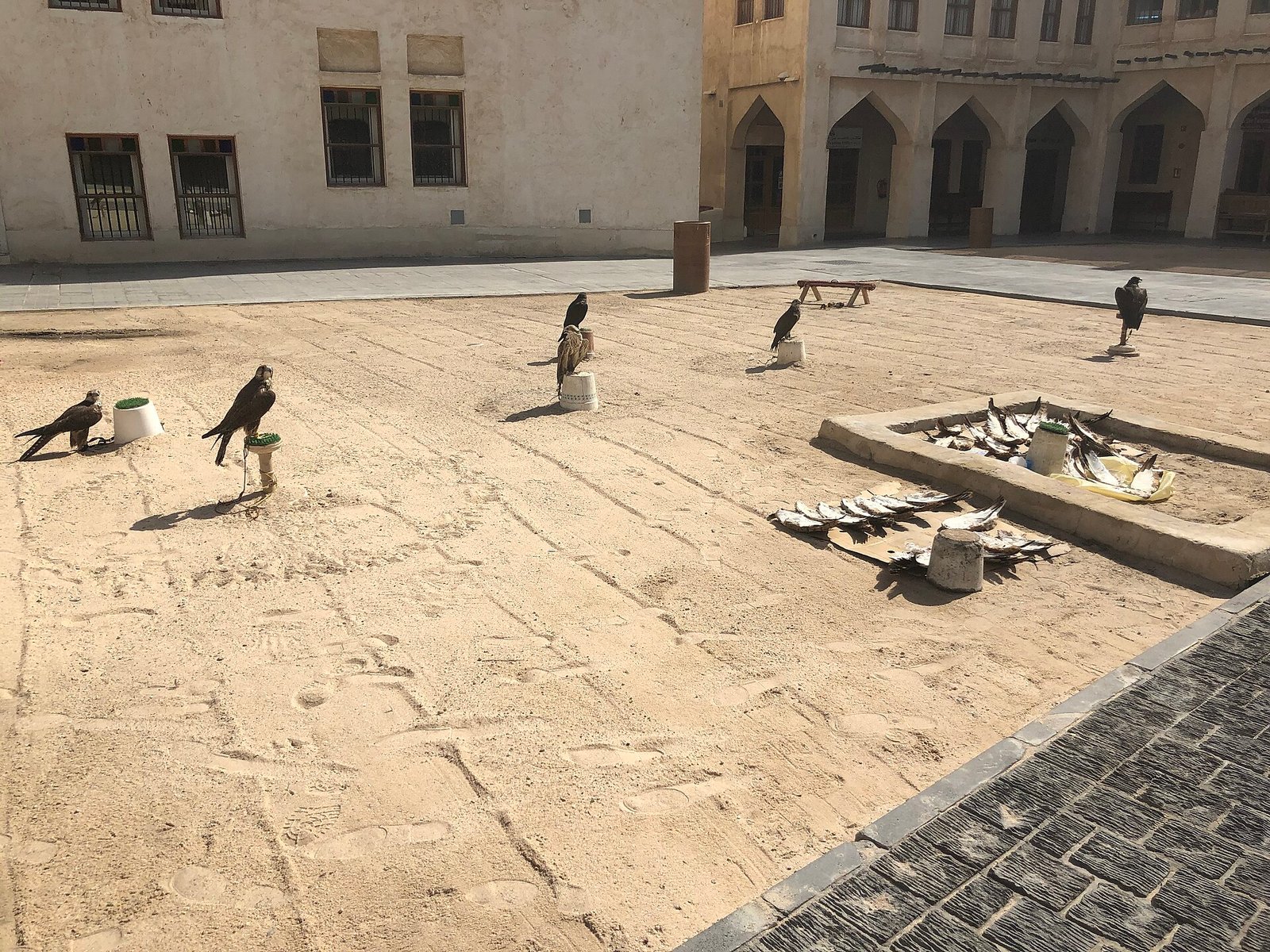
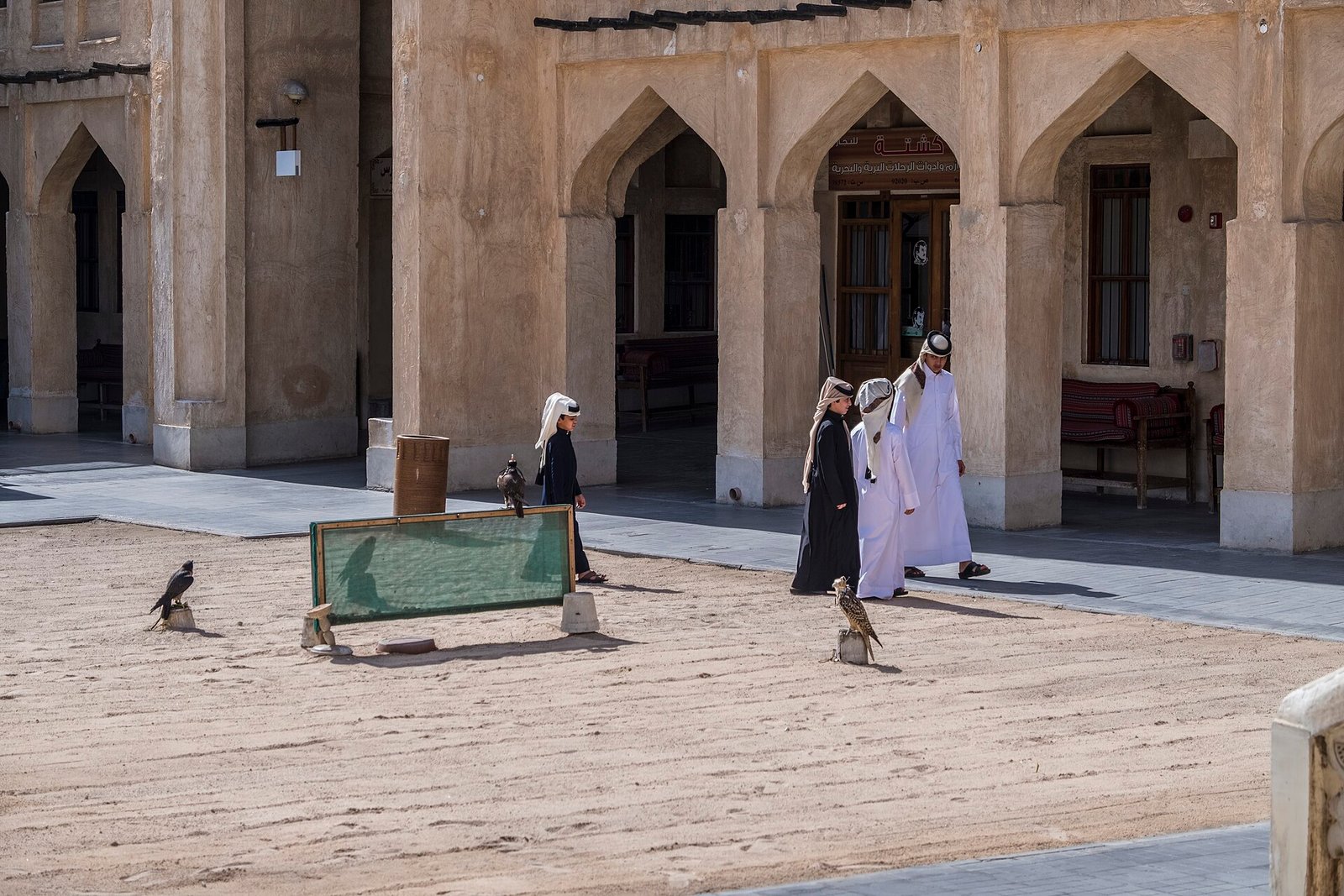
The shops open onto a small arcaded courtyard and a covered lane. Inside, birds sit hooded on low perches or on padded benches, often lined up by type. Some shops specialise in birds, others mainly in equipment, and a few do both. Walk slowly, look in through the open doors and you will usually be invited in. Shopkeepers are used to foreign visitors and many are happy to explain which bird is which, as long as you are polite and not blocking a customer.
Learn to tell the birds apart
The two falcons you will hear about most are the saker (known locally as hurr) and the peregrine (shaheen). Sakers are large, powerful and highly prized. Peregrines are famous as the fastest animals on earth in a hunting dive. You may also see captive-bred hybrids and birds imported from breeding farms in Europe and North America. Colour, size, the shape of the head and the condition of the feathers all affect value, and owners will happily argue about which matters most.
Look at the equipment
The gear is as interesting as the birds. The leather hood, the burqa, keeps a falcon calm by covering its eyes. The Peninsula reports that artisans at the souq still make hoods, gloves and perches by hand from camel or goat leather. Alongside the traditional pieces you will find modern additions such as GPS trackers and telemetry sets, which help owners find a bird that has flown out of sight during hunting or training.
Understand the prices
Prices are one of the things visitors ask about most. Gulf Times reported imported falcons at the souq selling for roughly QAR 2,500 to QAR 30,000, with top sakers going above QAR 100,000, and The Peninsula reported young birds from around QAR 2,000 and competition-trained birds from QAR 70,000 upwards. Exceptional birds sell for far more at auctions. Prices are negotiated shop by shop, so treat any figure you hear as a guide, and don’t ask what a bird costs unless you are genuinely interested in the answer.
See the Falcon Hospital from the outside, or arrange a visit
The hospital building sits beside the souq, marked by signs and falcon motifs. It is a working clinic whose published hours are 7am to 2pm, Saturday to Thursday, which means it is usually closed during the evening hours when most tourists come to the souq. The hospital has in the past welcomed visitors and lists a small museum and a virtual tour on its website, but it is a medical facility first. If you would like to see inside, contact it in advance rather than turning up and expecting a tour.
Watch the owners
The best part of the Falcon Souq is often not the shops but the people. In the late afternoon and evening, especially in the cooler months, owners arrive with birds on their fists to buy supplies, ask for advice or simply meet friends. Watching how they carry, calm and feed their birds tells you more about falconry than any museum label.
How to get there
The Falcon Souq is on the western side of Souq Waqif in central Doha, next to the main car park on Al Jasra Street and close to the Falcon Hospital. If you enter the souq from the Corniche side, walk through towards the western end and follow signs for the falcon souq, or ask any shopkeeper.
By metro: Souq Waqif station on the Gold Line is the closest stop and a short walk away. Msheireb station, where the Red, Green and Gold lines meet, is also within walking distance.
By car: Souq Waqif has large car parks, including underground parking, and the western car park is the most convenient for the falcon area. In the evening and at weekends parking fills quickly, so arrive early or use the metro.
By taxi or ride-hailing: Ask for Souq Waqif and say you want the falcon souq or the falcon hospital; drivers will drop you on the western side.
No special vehicle is needed. It is a flat, paved, city-centre walk.
Best time to visit
The falconry season is the key. Hunting season begins when the temperatures and humidity drop, and Visit Qatar gives October as the start. From autumn through winter the shops are at their busiest, new birds arrive, owners are training for competitions and the hospital is full. In the heat of summer many birds are moulting and the market is noticeably quieter.
For time of day, come in the late afternoon or evening, roughly from 4pm, when most shops reopen after the midday break and the souq comes to life. Weekday evenings are calmer than Thursday and Friday nights. If you want to see the hospital, you will need a separate morning visit because it closes at 2pm.
During Ramadan the souq keeps different hours, with shops typically opening after iftar and staying open late.
Tips for your visit
- Always ask before photographing a bird or its owner, and accept a no gracefully.
- Don’t touch a falcon unless the handler invites you to, and follow their instructions exactly if they do.
- Avoid sudden movements, flash photography and loud noise near the birds; they are sensitive to disturbance.
- If a shop offers to put a falcon on your arm for a photo, it is fair to ask first whether there is a charge.
- Dress modestly, as you would anywhere in Souq Waqif. Shoulders and knees covered is a safe guide.
- Remember that this is a working market. Step aside for customers and don’t crowd doorways.
- If you are tempted to buy equipment as a souvenir, a small leather hood makes an unusual gift. Birds, of course, are not a souvenir: exporting a falcon needs permits and health documents.
What to bring
- A camera or phone with a good zoom, so you can photograph birds without getting too close
- Cash for small purchases, although many shops take cards
- Modest clothing and comfortable shoes for the souq lanes
- A light layer for winter evenings, which can be cooler than you expect
Combine it with nearby places
Horse Stables & Camel Pen. On the same western side of the souq, the Arabian horses ridden by the heritage police and the camel pen are a short walk away and pair naturally with the falcons.
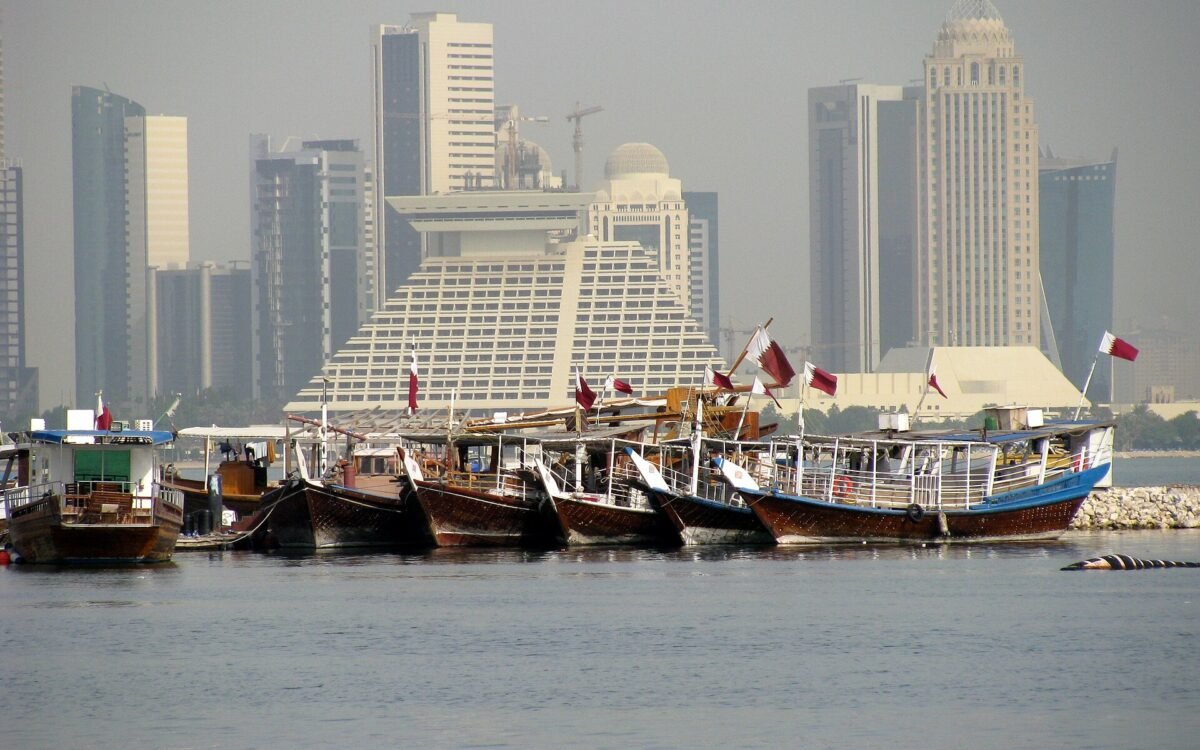
Gold Souq and the Dhow Harbour. The jewellery arcade east of the souq and the dhows on the Corniche opposite make an easy evening loop on foot.
Shay Al Shoomoos. A small café in the souq serving a home-style Qatari breakfast of regag bread, balaleet and eggs. It is a good stop if you come early in the day to see the hospital.
Bandar Aden. A long-running Yemeni restaurant inside the souq, handy for dinner after an evening at the Falcon Souq.
Athr Café. A quiet courtyard café among the perfume lanes, with traditional Qatari coffee, for a break away from the evening crowds.
Msheireb Museums. Four free heritage-house museums a short walk south of the souq, telling Qatar’s 20th-century story from pre-oil family life to the oil pioneers and the history of slavery.
Souq Waqif Boutique Hotels. If you want to stay right in the old market, these small heritage hotels put you a few minutes’ walk from the falcon lanes.
Frequently asked questions
Is the Falcon Souq free to visit?
Yes. There is no entry fee to Souq Waqif or its falcon area. You only pay if you buy something, or if a shop charges for a posed photo with a bird.
What are the Falcon Souq opening hours?
Shops keep typical souq hours, with a morning session and a longer evening session from about 4pm to 10pm. Many are closed on Friday mornings. Hours vary from shop to shop and change during Ramadan.
Can tourists visit the Souq Waqif Falcon Hospital?
It is a working veterinary hospital open 7am to 2pm, Saturday to Thursday. It has welcomed visitors before, but you should contact it in advance to ask whether a visit is possible rather than arriving unannounced.
Can I hold a falcon at Souq Waqif?
Sometimes. Some shopkeepers will let you hold a bird on a gloved arm under supervision. Only do it when invited, follow the handler’s directions and ask about any fee first.
How much does a falcon cost in Qatar?
Press reports put ordinary imported birds at the souq from a few thousand riyals, with trained competition birds costing tens of thousands and the best sakers well over QAR 100,000. Prices vary widely by species, age and training.
When is the best time to see falcons at Souq Waqif?
From October to the end of winter, in the late afternoon or evening. This is the hunting and competition season, when the market is at its liveliest.
Is the Falcon Souq suitable for children?
Yes, older children usually love it. Keep them close, explain that the birds must not be touched without permission, and keep noise down inside the shops.
Last checked October 2026. Hours, fees and access can change, so confirm with the official source before you go.
Read the Companies in Qatar visitor guide ↗
More places nearby
All places →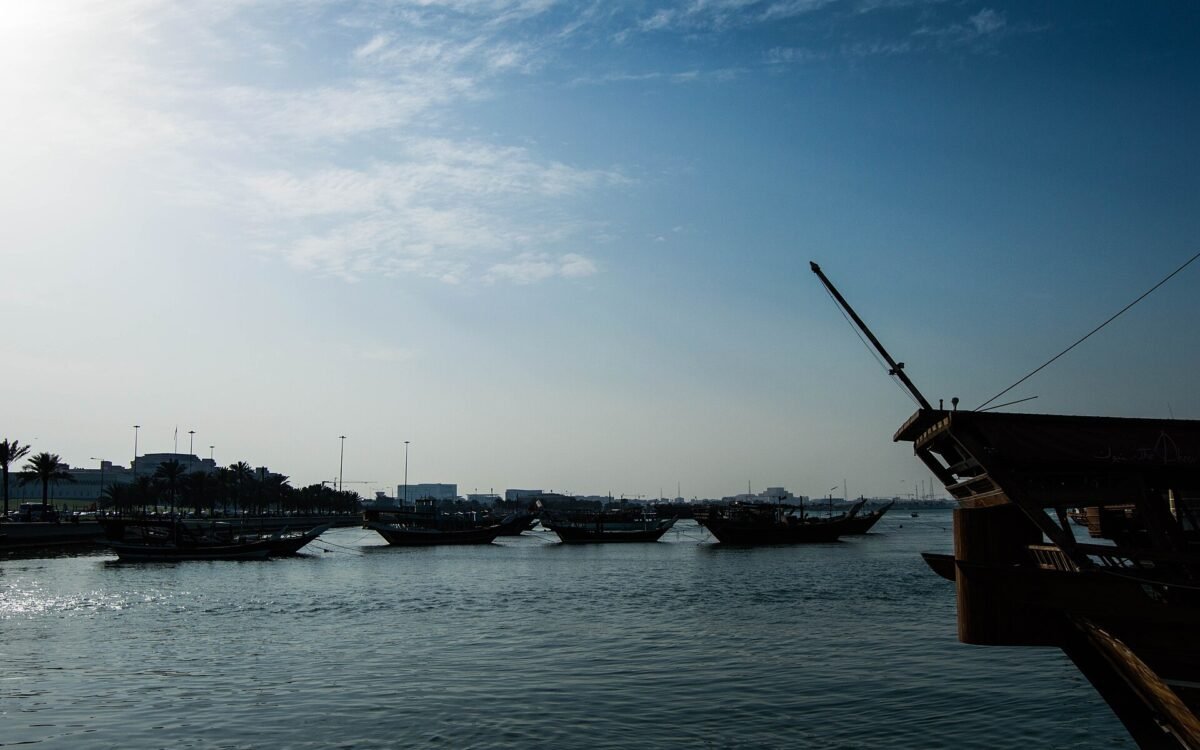
Run a tour, café or stay near Falcon Souq & Falcon Hospital, Souq Waqif?
List your business free on Companies in Qatar, or get featured on Qatar Unseen in front of people planning their trip.