Al Karaana Lagoon, Al Rayyan
A former industrial dump turned birdwatching lagoon in the desert south-west of Doha, where ospreys, herons and foxes now visit the water.
Al Karaana, off Salwa Road (about 60 km south-west of Doha)
Overview
Al Karaana Lagoon is a cluster of man-made lakes in the open desert about 60 km south-west of Doha, just off Salwa Road. A few years ago this was one of the most polluted places in Qatar. Today the water is surrounded by reeds and green scrub, fish move in the shallows, and the lagoons have become one of the more reliable places in the country to see wetland and migrating birds.
It is not a park. There is no visitor centre, no café, no toilets, no signboards explaining what you are looking at, and the final stretch is on gravel tracks. What you get instead is a quiet, wide landscape where open water meets bare desert, and a surprising amount of wildlife for a place that sits next to a treatment works and a highway.
This guide is for birdwatchers, nature photographers and curious drivers who like a slightly offbeat half-day trip. It explains the site’s unusual history, what you can realistically expect to see, how to find your way in, and the rules that help keep the lagoons a refuge rather than a hunting ground. Read the access notes carefully before you go: this is working infrastructure, and conditions on the ground can change.
The story behind the lagoons
Al Karaana itself is an old stopping point on the route between Hofuf in eastern Saudi Arabia and Doha. Its name is usually explained as coming from the Arabic karaa, meaning rainwater or fresh water, after a well known for the quality of its water. In 1908 the British gazetteer compiled by J. G. Lorimer recorded a deep masonry well here, and in the 1930s the Royal Air Force photographed a small settlement and looked at the area for a landing strip. The modern village grew from the 1960s, when families of the Al Murrah tribe settled here, and the Salwa Road reached it around 1970.
The lagoons have a much less romantic origin. From 2006, ten unlined lagoons covering around 4 square kilometres were used to dump industrial wastewater, at one point around 6,000 cubic metres a day. Over the years a thick layer of contaminated sludge built up, reaching about 3.5 metres in places, and the site became a recognised environmental problem.
The Public Works Authority, Ashghal, took on the clean-up. The old lagoons were drained, roughly 40,000 tonnes of sludge were dried in a mobile thermal unit brought in from the Netherlands and sent to a specially designed landfill, and the soil underneath was treated. In their place Ashghal built three new artificial lagoons to store up to 2.4 million cubic metres of treated sewage effluent, plus separate evaporation ponds for industrial effluent. Trees were planted, partly by pupils from the local boys’ school, and the project was declared complete in November 2019.
Wildlife moved in quickly. During the 2020 Global Big Day count, members of the Qatar Natural History Group recorded 31 bird species at the lagoon in a single visit, and more than 55 bird species have since been reported here, along with fish, frogs, several mammals and the occasional Arabian red fox. Local press has described the lagoon as a rest stop for migratory birds crossing the Gulf.
What to see and do
Scan the water for birds
The main reason to come is birdlife. Species reported by local press and birders include ospreys, purple herons, kestrels and water pipits, and Ashghal has also reported swans on the water. What you see depends heavily on the time of year: winter and the spring and autumn migration periods are far busier than the summer months. Walk slowly along the banks, stop often, and let the birds settle rather than pushing towards them.
Look for desert wildlife on the margins
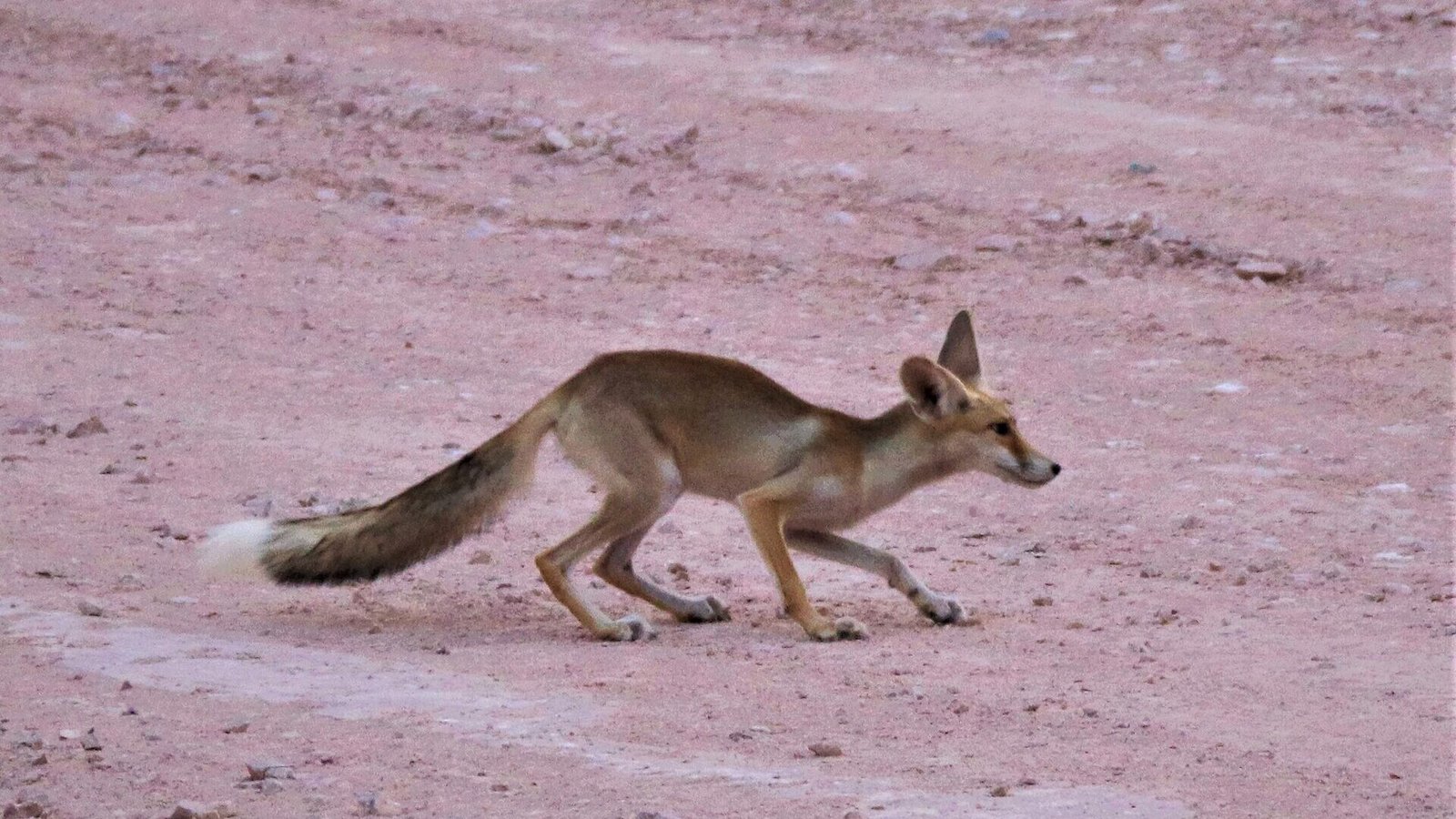
The lagoons sit in open, stony desert, and the mix of water and dry ground draws other animals too. Arabian red foxes have been photographed here, lizards are common on warm days, and the reeds hold frogs and insects that feed the birds. Early morning, when tracks in the sand are still fresh, is the best time to notice who has been around overnight.
Photograph water in the desert
Few places in Qatar give you reflections, reeds and open sky in one frame. Calm early mornings produce mirror-like water, and the low light picks out the texture of the surrounding gravel plains. A long lens is essential for birds; a wide lens works for the landscape, especially with winter clouds.
Walk the embankments
The lagoons are enclosed by earth banks that make natural viewing platforms. Walking along them gives you height over the reeds and a sense of the scale of the site. Stick to obvious paths and banks, keep away from pumps, pipes, gates and any fenced equipment, and never walk across wet margins where the ground can be soft.
Notice the desert plants
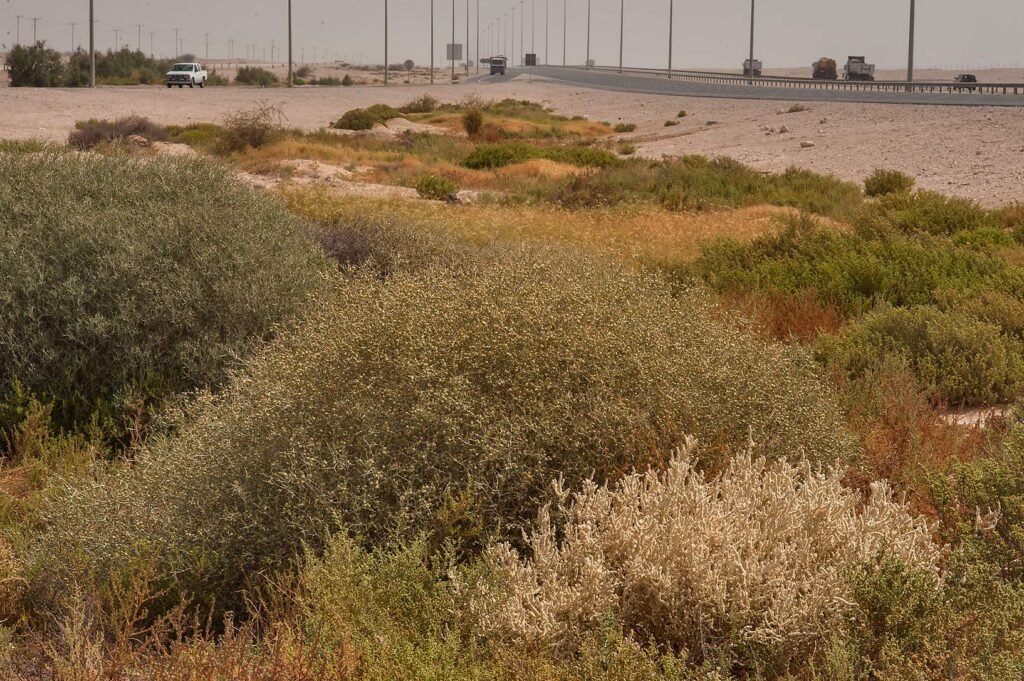
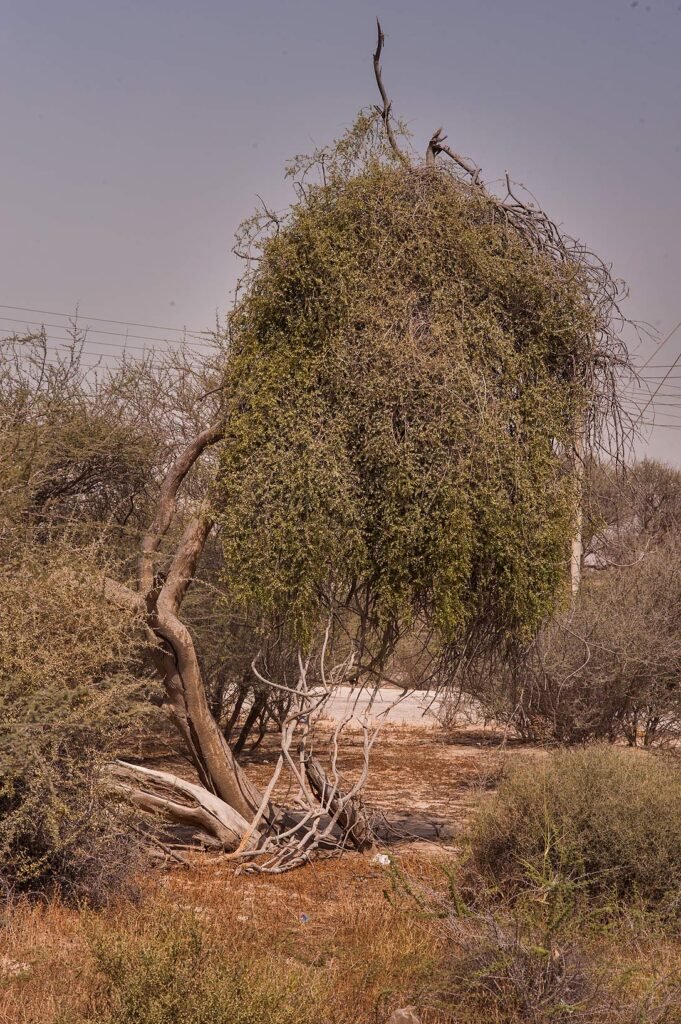
The ground around Al Karaana is not bare. Shallow depressions near the lagoons and along the Salwa Road collect enough rain to support low shrubs, grasses and trees, some of them draped in the climbing vine Cocculus pendulus, a native desert creeper. After a wet winter these depressions turn noticeably green, and they attract insects and small birds of their own. It is worth stopping at one on the way in and comparing it with the lusher, irrigated growth around the water.
Bring a picnic and slow down
With no facilities on site, a visit here is a self-sufficient outing: a flask of coffee, a camp chair in the shade of your car and a pair of binoculars. Do not swim, paddle or fish. The water is treated effluent, signs warn against bathing, and fishing and disturbing the birds go against the rules set to protect the site.
How to get there
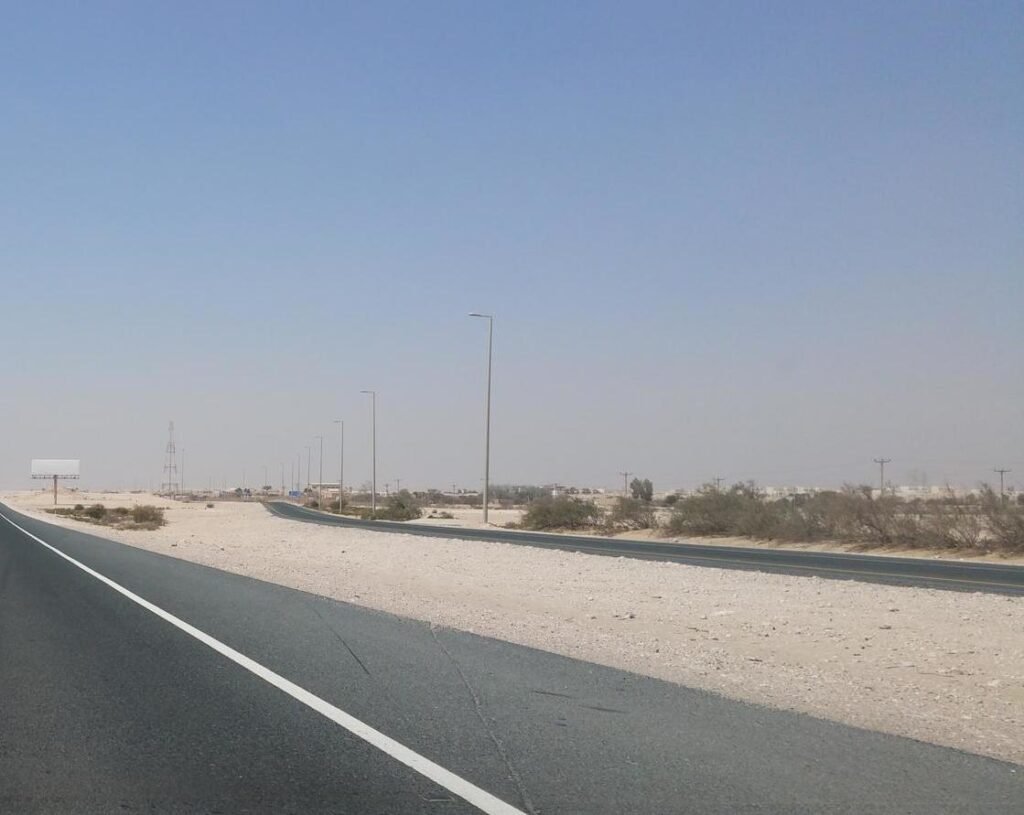
From Doha, drive out on Salwa Road (heading towards the Saudi border) for roughly 50 km and take the exit signed for Al Karaana. Allow about 45 minutes to an hour from central Doha. You pass the treatment facility before reaching the lagoons, and the last part of the route leaves the tarmac for gravel tracks. Brown tourist signs have been reported along the way, but they do not take you all the way, so set your map app to the lagoon pin before you lose signal.
Visitors have made the trip in ordinary saloon cars, driving slowly on the gravel, while others recommend a higher-clearance vehicle or a 4×4 for peace of mind. Avoid the tracks after heavy rain, when soft patches can trap a two-wheel-drive car. Park on firm ground away from gates and access roads used by service vehicles.
There is no public transport, and taxis are not practical for a site like this. You need your own car, ideally with someone in your group who is comfortable driving off tarmac. Fuel up before you leave Doha or at a petrol station on the Salwa Road: visitors report the nearest stations are around half an hour away.
Access note: Al Karaana is part of Qatar’s treated-water infrastructure, not a formally managed visitor attraction, and there are no published opening hours. Visitors and birdwatchers have used the lagoon freely for several years, but if you find new fences, closed gates or signs restricting entry, respect them and turn back.
Best time to visit
Come between November and March. The weather is comfortable for walking, and the winter months coincide with the busiest bird activity, with migrants passing through in autumn and spring. From May to September, the heat is extreme, there is no shade, and you will see far less.
The first two hours after sunrise are best: the light is soft, the water is often still, birds are actively feeding and the temperature is pleasant. Late afternoon is the second choice. Don’t stay after dark. The tracks are unlit, the area is isolated, and navigating gravel roads at night is a poor idea. Weekends are busier with families and photographers, so a weekday morning gives you the quietest experience.
Tips for your visit
- Treat it as a wild site. No shops, shade, toilets or rangers. Arrive self-sufficient.
- Keep your distance from birds. Rules for the lagoon prohibit hunting, approaching birds closely, disturbing nests and using bird-calling devices.
- Don’t swim or fish. The water is treated effluent and fishing is not permitted.
- Drive slowly on the gravel. Sharp stones and ruts are the usual cause of punctures; check your spare before you go.
- Watch for snakes in tall vegetation. Stick to open ground and wear closed shoes.
- Check the wind. Visitors note that odours from the treatment works further south can drift over the lagoons when the wind comes from that direction.
- Take every scrap of rubbish home. There are no bins, and litter harms the wildlife you came to see.
- Tell someone your plan. Coverage can be patchy away from the highway, so share your route and expected return time.
What to bring
- Binoculars and, if you have one, a telephoto lens
- Plenty of water, snacks and a flask
- Hat, sunglasses and sunscreen
- Closed shoes or walking boots
- Insect repellent for still, warm mornings
- A bin bag for your rubbish
- A spare tyre in good condition and a tyre gauge
Combine it with nearby places
Dahl Al Misfir. Qatar’s best-known cave, a deep sinkhole with glowing gypsum walls, lies north of Al Karaana in central Qatar. The two make a good “geology and wildlife” day.
Singing Sand Dunes. East of Al Karaana, towards Mesaieed, these crescent dunes hum when the sand slides. Late afternoon there follows a morning at the lagoon nicely.
Al Shahaniya Camel Racetrack. In season, race mornings at Qatar’s main camel track are a memorable contrast to the silence of the lagoon. Combine them on separate days or start very early.
Sealine Beach. If you want the sea after the desert, the beaches and big dunes south of Mesaieed are within reach on the way back towards Doha.
Frequently asked questions
Is Al Karaana Lagoon free to visit?
Yes. There is no entry fee or ticket, and no formal opening hours. Visit in daylight only.
Do I need a 4×4 to reach Al Karaana Lagoon?
Not necessarily. Visitors have reached it in saloon cars by driving slowly on the final gravel tracks, but a higher-clearance vehicle is more comfortable and safer after rain.
Can you swim in Al Karaana Lagoon?
No. The lagoons hold treated sewage effluent and signs warn against bathing. Fishing is also not allowed.
What birds can I see at Al Karaana?
Reported species include osprey, purple heron, kestrel and water pipit, and more than 55 bird species have been recorded overall. Winter and the migration seasons are best.
How far is Al Karaana Lagoon from Doha?
About 60 km south-west of Doha via Salwa Road, roughly 45 minutes to an hour’s drive.
Is it safe to visit with children?
Yes, with close supervision. Keep children away from the water’s edge, soft margins and any equipment, and watch for snakes in long vegetation.
Last checked October 2026. Hours, fees and access can change, so confirm with the official source before you go.
More places nearby
All places →
Run a tour, café or stay near Al Karaana Lagoon, Al Rayyan?
List your business free on Companies in Qatar, or get featured on Qatar Unseen in front of people planning their trip.