Dhow Harbour, Doha Corniche
Wooden dhows, a giant pearl and the West Bay skyline across the water: a waterfront guide to Doha’s dhow harbour and its short evening boat rides.
Southern Corniche, opposite Souq Waqif, central Doha
Overview
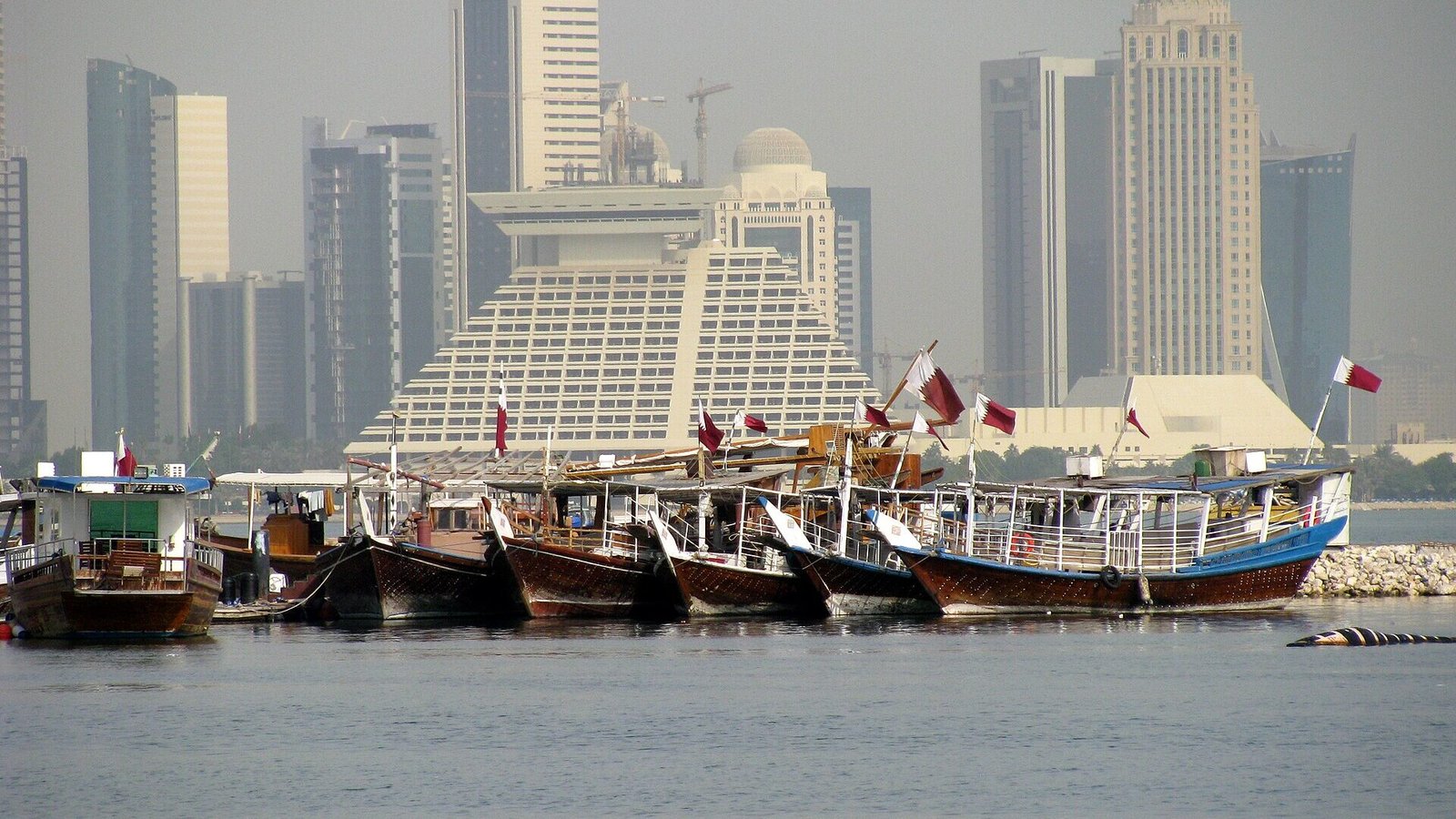
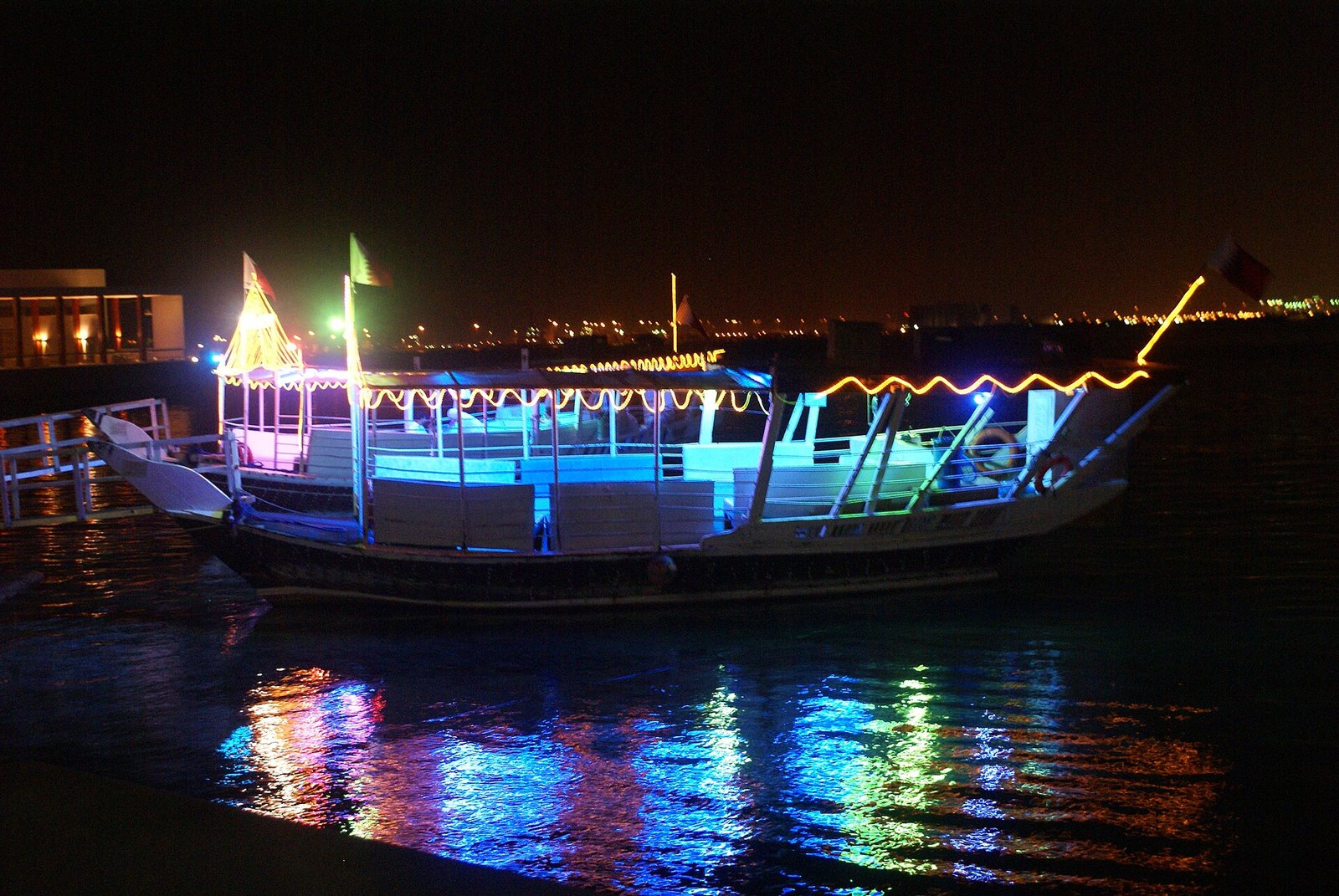
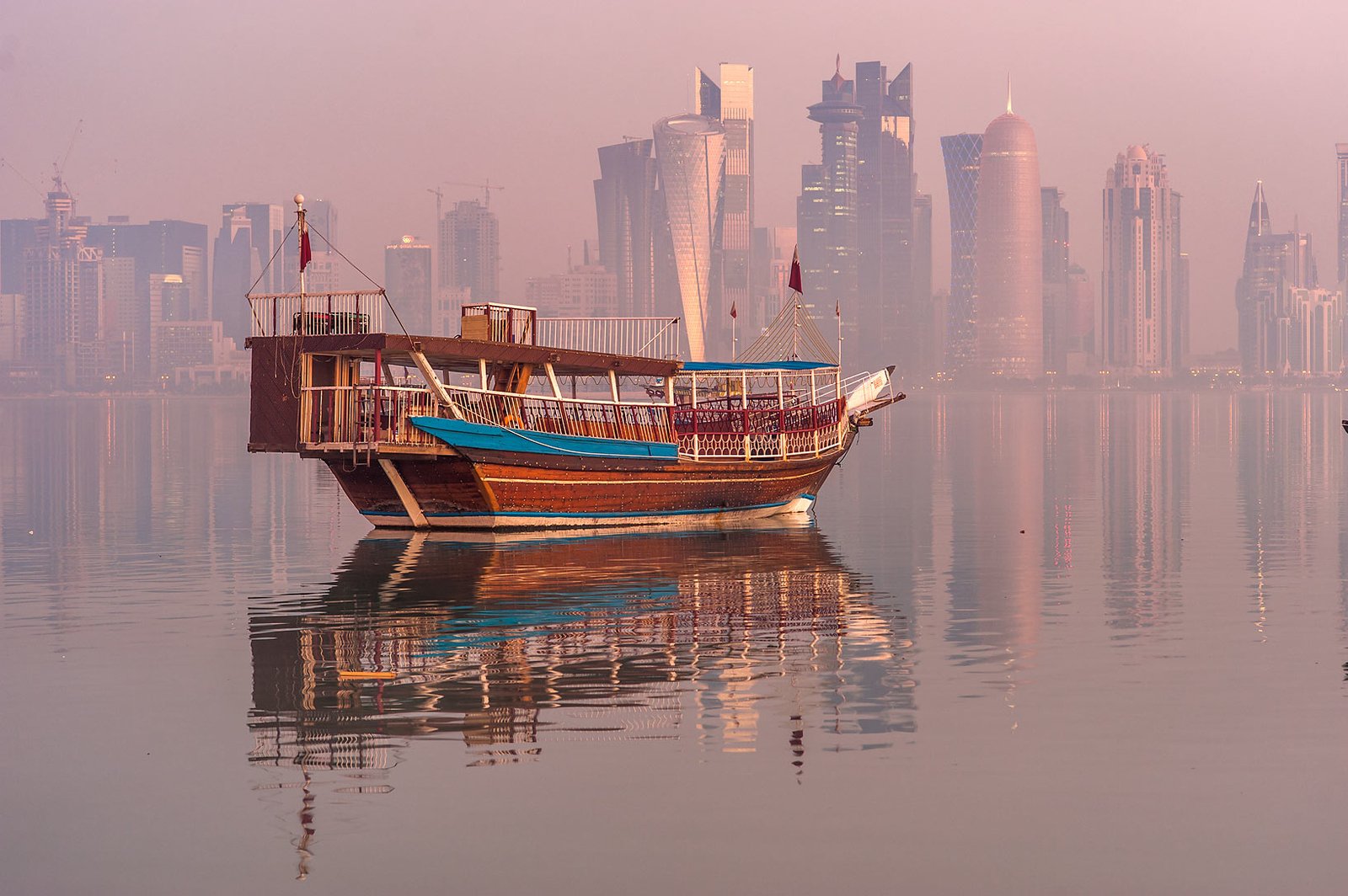
Opposite Souq Waqif, where the Doha Corniche bends round the southern end of the bay, a fleet of wooden dhows lies at anchor in the sheltered water. Some are working fishing boats, some are pleasure craft that take visitors out on short rides, and at night many are strung with coloured lights. Behind them the towers of West Bay rise across the bay, and at the harbour entrance stands the Pearl Monument, a giant oyster shell holding a pearl.
The dhow harbour is not a ticketed attraction and it is easy to treat it as background on the way from Souq Waqif to the Museum of Islamic Art. Slow down here, though, and it becomes one of the best places in Doha to connect the modern city with its maritime past. The boats are built in the same tradition as those that carried pearl divers out to the oyster beds a century ago, and the harbour is still a place where people work on the water.
This guide looks at the harbour from a waterfront explorer’s angle: where to stand for the best views and photos, how the short dhow rides work and what to agree before you step aboard, when the light is best, and how to string it together with the old centre. It suits couples, families, photographers and anyone with an hour to spare before dinner at the souq.
The story of the dhows
For centuries the Gulf’s economy depended on the sea, and the dhow was its workhorse. ILoveQatar notes that the word describes the traditional wooden vessels of the region, used for fishing, pearling and carrying cargo, and that Greek texts point to similar boats as early as 600 BC. Builders shaped the hulls from timber and caulked the seams with cotton soaked in oil to keep the water out; a well-kept boat could last for generations.
In Qatar, the most important use was pearling. Before oil, much of the male population of coastal towns such as Doha, Al Wakrah and Al Khor spent the summer months at sea on pearling dhows, diving on the oyster banks while a captain and crew managed the boat. The trade collapsed in the early 20th century, after cultured pearls reached the market and the global economy slumped, and Qatar’s fortunes changed again with the discovery of oil.
The dhow did not disappear. It remains a symbol of national identity and, as ILoveQatar points out, appears on Qatar’s one-riyal banknote. The Corniche itself was laid out as the city grew, curving round the bay that once served as Doha’s natural harbour, and the dhows that moor here today keep that link alive. Each year Katara Cultural Village hosts the Katara Traditional Dhow Festival, which celebrates boat-building, sea songs and maritime crafts; its 15th edition opened in late November 2025, with participants from 12 countries, according to Qatar News Agency.
What to see and do
Walk the waterfront at the harbour
The simplest pleasure is a slow walk along the promenade opposite Souq Waqif, looking at the boats. Look at the details: carved prows, painted hulls, tyres hung as fenders, coiled ropes and the shaded wooden decks with their cushions and carpets. Some boats are clearly working vessels; others have been fitted out for parties and tours, with lights, speakers and seating.
Take a short dhow ride
Boatmen wait along the harbour wall in the late afternoon and evening, offering short trips round the bay. A shared ride is a cheap and easy way onto the water; ILoveQatar has reported prices of around QAR 20 to 25 per person, but prices are set by each boat and can change, so agree the price and length of the trip before you board. On the water you get a view of the West Bay skyline across the bay, the Museum of Islamic Art on its island and the old centre behind you.
Book a private dhow or an organised cruise
If you want the boat to yourself, a group or a meal on board, tour operators run private dhow charters and sunset cruises from the Corniche. ILoveQatar reported private rentals in the region of QAR 800 to 2,000, often with a minimum booking time, and online platforms list shorter group cruises combined with a Corniche walk. Compare what is included, such as food, drinks, hotel pick-up and life jackets, before you choose.
Photograph the Pearl Monument
The Pearl Monument, an oyster shell with a pearl at its heart, stands at the harbour entrance on the Corniche and is one of the city’s best-known photo spots. It is a nod to the pearling history that the dhows represent. Early morning is the quietest time to photograph it without crowds.
Watch the skyline change at dusk
From the harbour wall you can watch the sky glow as the sun sets off to the west, then the West Bay towers light up one by one, with the dhows in the foreground. It is one of the classic views of Doha, and from here you see it framed by boats rather than traffic.
Spot the Banana Island ferry
Al Shyoukh Terminal, on the Corniche opposite Souq Waqif, is the departure point for the boat to the Banana Island Resort. Even if you are not going, the comings and goings of the resort ferry add to the harbour’s sense of being a working waterfront.
Find the best photo angles
For the classic shot of dhows against the skyline, stand on the Corniche promenade opposite Souq Waqif and shoot north-west across the moorings towards West Bay. A longer lens compresses the boats and towers together. For a cleaner composition, walk east towards the Museum of Islamic Art, where you can frame single boats against open water. After dark, steady your phone or camera on the harbour wall to catch the reflections of the coloured lights without blur.
What first-timers get wrong
The most common mistake is treating the dhow harbour as a quick stop on the drive along the Corniche. Parking along the waterfront is limited, and people end up circling instead of walking. Park once at Souq Waqif and do the harbour, the souq and the Gold Souq on foot.
The second is boarding a boat without agreeing terms. Most boatmen are straightforward, but misunderstandings over whether a price is per person or per boat, or how long the trip lasts, are the usual source of complaints. Settle it on the quay.
The third is coming in the middle of a summer day. The harbour has little shade, and the glare off the water is fierce. Go early, late or after dark instead.
How to get there
The dhows moor along the southern Corniche, opposite Souq Waqif and between the Pearl Monument and the Museum of Islamic Art. From Souq Waqif you simply cross to the Corniche side; there are pedestrian crossings and underpasses along the road.
By metro: Souq Waqif station on the Gold Line is the closest, a short walk away. Corniche station on the Red Line is further west along the bay; from there it is a longer but pleasant waterfront walk.
By car: Use the Souq Waqif car parks and walk across to the Corniche, or try the parking near the Museum of Islamic Art and walk east. Evening parking fills up at weekends.
On foot or by bike: The Corniche promenade runs for about 7 km round the bay, according to ILoveQatar, and has cycle lanes and rentable bikes and e-scooters, so the harbour makes an easy stop on a longer walk or ride.
Best time to visit
From November to March the weather is ideal for being on the water, and late afternoon into sunset is the best time of day. The light turns warm, the skyline begins to glow and the boatmen are out looking for passengers. Evenings are the liveliest, especially on Thursdays, Fridays and public holidays, when families come down to the Corniche.
Early morning is the best time for quiet photographs of the boats, with flat water and soft light, though fewer rides operate. In summer, from roughly May to September, the heat and humidity make daytime visits uncomfortable; come after dark, when the lit-up dhows are at their most photogenic. Wind can make the bay choppy in winter, and rides may not go out in rough weather.
Tips for your visit
- Agree the price, the length of the trip and whether it is shared or private before you step aboard.
- Ask for life jackets, especially with children, and check they are on board before leaving.
- Hold children’s hands on the harbour edge and when boarding; the step from the wall to the deck can be awkward.
- Take off shoes if the crew asks; many decks are carpeted.
- Bring small notes for shared rides.
- Keep music and behaviour respectful, as this is a family space.
- For sunset photos, arrive at least 30 minutes early to find your spot along the wall.
What to bring
- Water, especially if you plan to walk the Corniche
- A light jacket for winter evenings on the water
- Sun protection for daytime visits
- A camera with a wide-angle setting for the skyline and a zoom for boat details
- Cash for a shared ride
Combine it with nearby places
Falcon Souq. Cross the road into Souq Waqif and walk to its western edge to see hooded falcons and the falconry shops.
Gold Souq. A short walk east of Souq Waqif, the bright jewellery arcade is at its liveliest in the evening.
Museum of Islamic Art and MIA Park. At the eastern end of the harbour, the museum and its waterfront park offer one of the best viewpoints across the bay.
Al Bidda Park. Further west along the Corniche, Doha’s largest central park is good for a picnic or a longer walk.
Bandar Aden. A Yemeni restaurant inside Souq Waqif, for mandi and saltah after your boat ride.
Frequently asked questions
Where is the dhow harbour in Doha?
On the southern Corniche, opposite Souq Waqif, between the Pearl Monument and the Museum of Islamic Art. The nearest metro station is Souq Waqif on the Gold Line.
How much is a dhow ride in Doha?
Shared rides with boatmen on the Corniche are inexpensive, with ILoveQatar reporting about QAR 20 to 25 per person, but each boat sets its own price. Private charters and organised cruises cost much more. Always confirm the price before boarding.
How long is a dhow ride?
Shared rides around the bay are usually short, often around half an hour. Organised cruises are typically one to two hours, and private charters can be booked for longer.
Is the dhow harbour free to visit?
Yes. Walking along the harbour and the Corniche is free. You only pay if you take a boat ride.
What is the best time for a dhow cruise?
Between November and March, around sunset. You get warm light on the water, the skyline lighting up and comfortable temperatures.
Are dhow rides safe for children?
Generally yes, in calm weather, but check that life jackets are on board, keep children seated and supervise them closely when boarding.
Last checked October 2026. Hours, fees and access can change, so confirm with the official source before you go.
Read the Companies in Qatar visitor guide ↗
More places nearby
All places →
Run a tour, café or stay near Dhow Harbour, Doha Corniche?
List your business free on Companies in Qatar, or get featured on Qatar Unseen in front of people planning their trip.