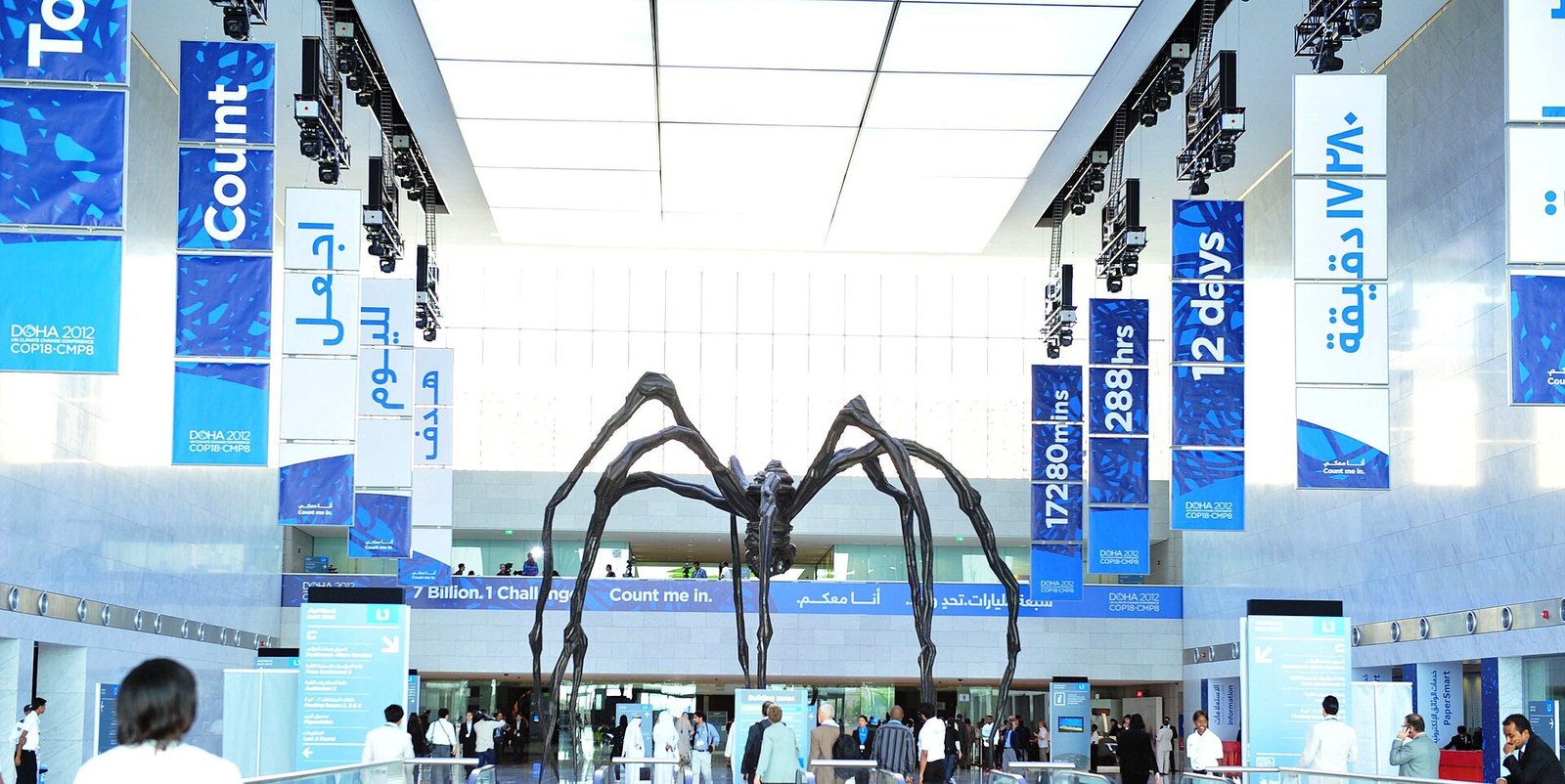
Maman by Louise Bourgeois, Qatar National Convention Centre
Louise Bourgeois's giant bronze spider lives in the foyer of Doha's convention centre. How to see it, what to look for and what to pair it with.
QNCC foyer, Al Luqta St, Education City, Al Rayyan
Overview
Inside the glass-roofed foyer of the Qatar National Convention Centre (QNCC) stands one of the most famous sculptures of the past half-century: Maman, Louise Bourgeois’s giant spider. Around 9 metres high and more than 10 metres across, it straddles the hall on eight thin, jointed legs, carrying a sac of marble eggs beneath its body. Versions of the same work draw crowds at the Guggenheim in Bilbao, the National Gallery of Canada and Roppongi Hills in Tokyo. In Doha it sits in a conference venue, which is exactly why so many people have never seen it.
The spider can look menacing at first, but Bourgeois meant it as a tribute to her mother: patient, clever, protective and endlessly repairing. Standing beneath it, looking up at the eggs and the long legs arching over you, is a genuinely moving experience, and one that costs nothing.
This guide explains how and when you can realistically see Maman in Doha, what to look for once you are there, and how to combine it with the other public art and museums of Education City. It suits art lovers, architecture fans, families with children who like big spectacles, and anyone heading to an event at QNCC who wants to know what they are looking at.
The story behind the spider
Louise Bourgeois (1911 to 2010) was born in Paris and spent most of her working life in New York. She grew up around her family’s tapestry restoration business, and her mother, Joséphine, repaired the old textiles. Spiders became one of Bourgeois’s central motifs in the 1990s. In her words, quoted by Qatar Museums, the spider is “an ode to my mother”, a helpful, protective presence rather than a threat, because spiders, like her mother, weave and mend.
The original Maman was made in steel in 1999 for the opening of the Unilever Series in the Turbine Hall of Tate Modern in London. Six bronze editions followed. Today they are on permanent display in a handful of places worldwide, including Ottawa, Bilbao, Tokyo, Seoul, Bentonville in Arkansas, and Doha. The Doha version is made of bronze, stainless steel and marble, and the sac beneath its body holds white and grey marble eggs.
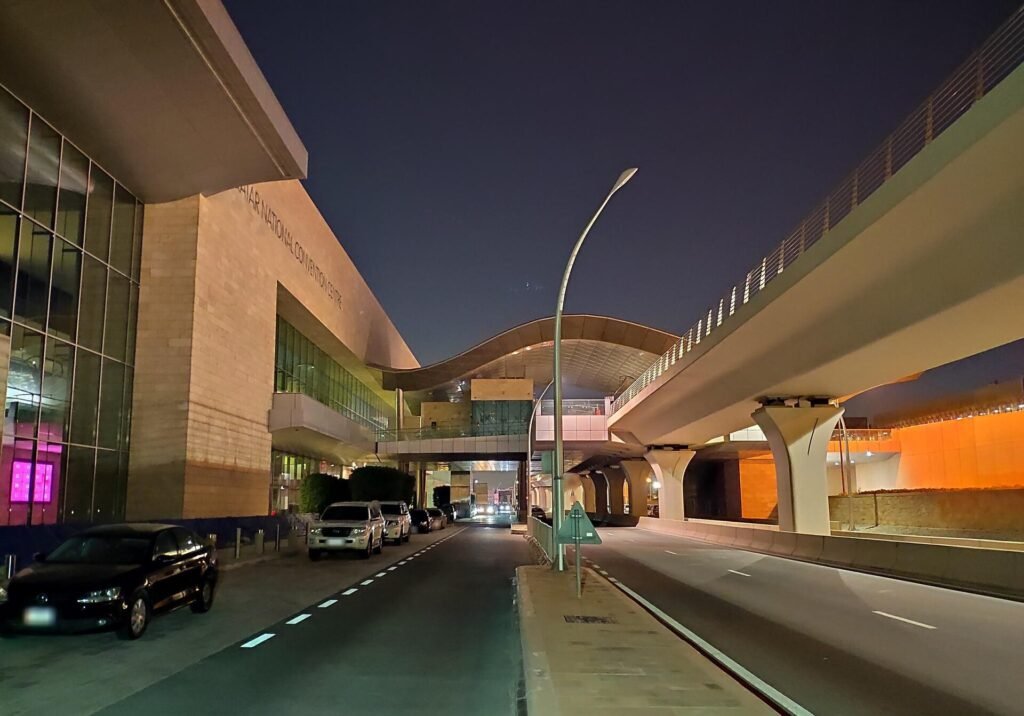
The spider arrived when QNCC opened in December 2011. The building, designed by the Japanese architect Arata Isozaki with RHWL Architects, is famous for its 250-metre-long facade supported by two giant steel “trees”, inspired by the sidra, a hardy native tree with deep meaning in Islamic tradition. Placing Maman in the foyer gave the convention centre an artwork of international stature, and it has since become an unofficial meeting point for conference delegates and exhibition visitors. Qatar Museums lists it in its public art collection.
What to see and do
Walk underneath it
The best way to experience Maman is from below. Walk between the legs, stand near the centre and look straight up at the body and the egg sac. The scale only really registers from here; the legs rise well above your head, and the thin bronze joints make the whole thing look as if it might take a step.
Look for the eggs
The mesh sac hanging under the spider’s body holds the marble eggs that make this a portrait of motherhood rather than a monster. It is easy to miss from across the foyer, so get close and look up. Once you have seen the eggs, the whole sculpture reads differently.
Study the texture of the legs
Up close, the bronze legs are ribbed and knotted, a little like old wood or twisted fabric, which links back to Bourgeois’s childhood among tapestries. Notice how they taper to fine points where they touch the floor, as if the spider barely rests its weight.
Take in the architecture
Step back to see the spider against the foyer’s glass and the building’s structure. Outside, the two vast steel sidra trees that hold up the front canopy are worth a look in their own right. Their branching forms echo the spider’s legs surprisingly well, so photograph them together if you can.
Bring the children
Children tend to love Maman: it is enormous, slightly scary and completely unexpected in a building full of conference halls. If you visit with young ones, tell them the story of Bourgeois’s mother, the tapestry restorer, before you arrive, and let them find the eggs themselves. It turns a quick look into a small adventure.
Compare it with Doha’s other giants
Maman is one of several large-scale works by internationally famous artists that Qatar Museums has placed in public settings around Doha. Seen alongside Richard Serra’s steel tower at MIA Park and Damien Hirst’s bronze babies at Sidra Medicine, it shows how differently artists approach monumental scale: Serra with pure, heavy geometry, Hirst with literal, anatomical figures, and Bourgeois with a single creature that is at once fragile and powerful.
Pair it with an event
QNCC hosts exhibitions, conferences, concerts and theatre performances throughout the year, many of them open to the public. Seeing Maman on your way into one of these is the easiest way to visit, and it gives you somewhere to wait that most venues cannot match.
How to get there
QNCC is on Al Luqta Street in Gharrafat Al Rayyan, on the north-eastern edge of Education City and close to the junction with Dukhan Road. From West Bay or the Corniche it is roughly a 20 to 30 minute drive, depending on traffic. There is a dedicated car park on site, with valet parking during many events.
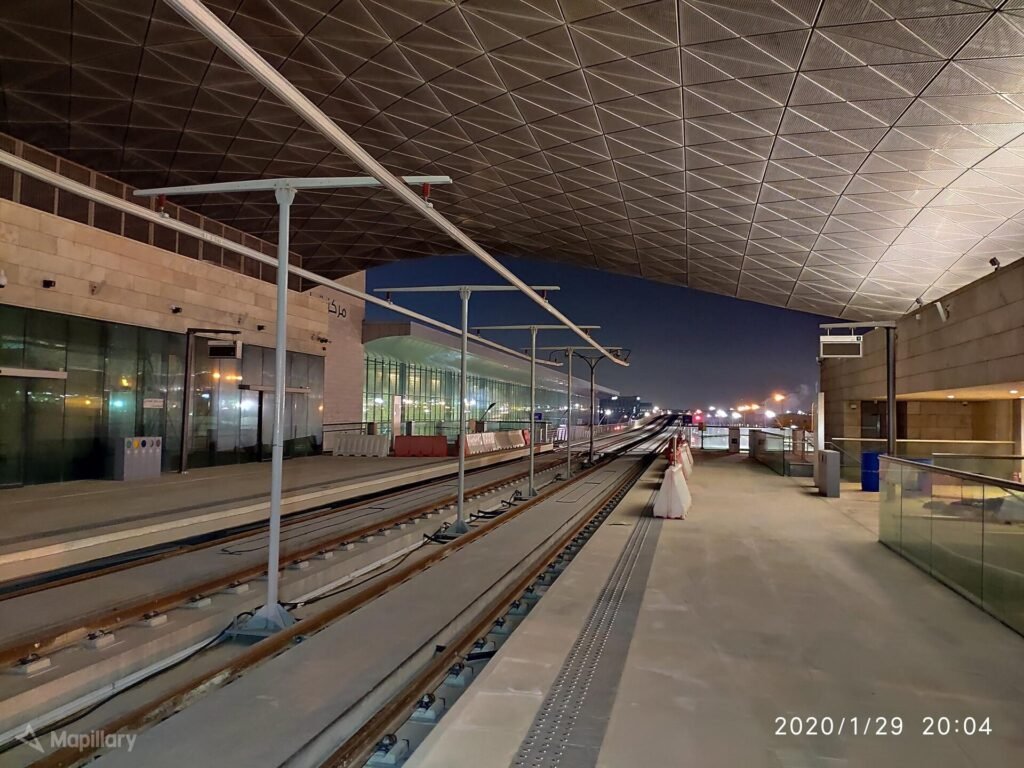
By public transport, take the Doha Metro Green Line to Qatar National Library station, which serves this part of Education City. From there it is a short walk or a quick taxi ride to the convention centre’s main entrance. Taxis and ride-hailing apps drop off directly in front of the building.
Best time to visit
Because Maman is indoors, weather is not an issue, and it makes a good stop in the hottest months. The bigger question is access. The foyer is open to visitors attending events and exhibitions, and that is when you can walk in most easily. On days with nothing scheduled, security may limit access, so check QNCC’s events calendar first and aim for a day when a public exhibition, show or performance is on.
Large public exhibitions can be busy at weekends and in the evenings. If you want photographs without crowds, arrive soon after an event opens or during a quieter weekday session. The glass roof means the foyer is brightest in the middle of the day.
Tips for your visit
- Check the events calendar first. The simplest way into the foyer is to visit while a public event or exhibition is running.
- Ask security politely. If there is no event, explain that you want to see the sculpture; staff may or may not be able to let you in, so don’t make a special trip without checking.
- Don’t touch or lean on the legs. It is a valuable artwork, and the fine points of the legs are delicate.
- Use a wide-angle lens. To fit the whole spider in from below, a phone’s ultra-wide setting is ideal.
- Dress smartly-casual. It is a conference venue, and modest clothing is expected, as in most public buildings in Qatar.
- Combine it with the other spiders in your travels. If you have seen Maman in Bilbao, Ottawa or Tokyo, comparing the settings is part of the fun.
- Allow 15 to 30 minutes for the sculpture itself; more if you are staying for an event.
Combine it with nearby places
- The Miraculous Journey by Damien Hirst. Fourteen monumental bronzes of a baby’s development, outside Sidra Medicine, a few minutes away.
- Lawh Wa Qalam: M. F. Husain Museum. A free museum devoted to the Indian modernist who spent his last years in Doha, in a building based on his own sketch.
- Oxygen Park. Education City’s green park, with shaded paths and play areas.
- Qatar National Library. Rem Koolhaas’s dramatic library, free to enter, near the metro station of the same name.
- Sheikh Faisal Bin Qassim Al Thani Museum. If you have a car, continue west on Dukhan Road to this eccentric private museum of cars and curiosities.
Frequently asked questions
Where is Maman in Doha?
In the main foyer of the Qatar National Convention Centre on Al Luqta Street, Education City, Al Rayyan.
Can anyone go and see Maman?
Qatar Museums lists it as a public artwork, but it is inside a convention centre. The foyer is easiest to enter when an event or exhibition is on; at other times access depends on the venue.
Is it free?
There is no charge to see the sculpture itself. Some events at QNCC require tickets, but many exhibitions are free to enter.
How big is Maman?
The bronze editions are a little over 9 metres high and around 10 metres wide.
Why a spider?
Louise Bourgeois created it as a tribute to her mother, who restored tapestries. She saw the spider as a weaver and protector rather than something to fear.
How many Maman sculptures are there?
The original steel version was made in 1999 for Tate Modern, followed by six bronze editions. Doha’s is one of the bronzes on permanent display around the world.
Last checked October 2026. Hours, fees and access can change, so confirm with the official source before you go.
More places nearby
All places →
Run a tour, café or stay near Maman by Louise Bourgeois, Qatar National Convention Centre?
List your business free on Companies in Qatar, or get featured on Qatar Unseen in front of people planning their trip.