Rawdat Rashed and the Desert Rawdas, Al Shahaniya
Explore the green desert meadows of central Qatar, a rare ghaf stand and the karst country around Dahl Al Misfir, and learn the rules that protect them.
Rawdat Rashed, Al Shahaniya (central Qatar, ~45 km west of Doha)
Overview
Rawdat Rashed is a small settlement and a wide stretch of desert in central Qatar, about 45 km west of Doha in the Al Shahaniya municipality. It takes its name from a rawda, one of the shallow green depressions that dot Qatar’s interior, and it sits in one of the best places in the country to understand what these desert meadows are, why they matter and how fragile they are.
There is no single monument here. What you come for is the landscape: low, stony plains broken by bowls of acacia, sidr and shrubs, which turn surprisingly green after a wet winter; a rare stand of ghaf trees at neighbouring Rawdat Al Ghafat; and, just to the south, the gypsum cave of Dahl Al Misfir. In the cooler months the area is also one of the designated zones for Qatar’s winter camping season.
This guide is for curious drivers, families with an off-road vehicle, nature photographers and anyone who wants to see the “green” side of the Qatari desert. It explains how rawdas form, what lives in them, the rules that now protect them, and how to enjoy the area without damaging it. If you only read one section, make it the one on protection rules: driving onto a rawda is now an offence, and fences have gone up around many of them.
The story behind the rawdas
In Arabic, rawda means garden or meadow. In Qatar the word describes a natural depression where rainwater and fine soil collect. Most rawdas are karst features: over long periods, groundwater dissolves the limestone underground, creating cavities. Windblown sand and silt fill the openings, the roofs eventually collapse, and a shallow bowl forms at the surface. When the occasional winter storms come, run-off drains into these bowls, soaks into the deeper soil and supports plants that could never survive on the surrounding gravel plains.
How many rawdas there are depends on who is counting. Published estimates range from several hundred to several thousand, and the Ministry of Environment and Climate Change has said it has identified around 1,500 nationwide. They are green and productive after winter rains and brown, cracked and dusty in summer. Unlike an oasis, they have no permanent surface water.
Rawdat Rashed itself is named after a man called Rashed who, according to local tradition, died in the rawda. The village was formally demarcated in 1988 and was once larger, but like many rural communities it lost residents in the second half of the 20th century, when the government encouraged people to move to Doha. The area sits above one of the most substantial supplies of fresh groundwater in southern Qatar, which helps explain why it has long supported grazing and vegetation. It belonged to Al Rayyan until 2014, when the new Al Shahaniya municipality was created.
Modern pressures are obvious too. The wider area includes a water reservoir, a major landfill for construction waste and land set aside for development. Off-road driving, overgrazing and camping have scarred many rawdas across the country, and since 2018 the ministry has been fencing and replanting the most valuable ones. At adjoining Rawdat Al Ghafat, home to one of Qatar’s only stands of the ghaf tree, around 150 saplings of ghaf and other native species were planted from 2018, followed by about 500 wild seedlings in 2020, and the area was fenced against grazing.
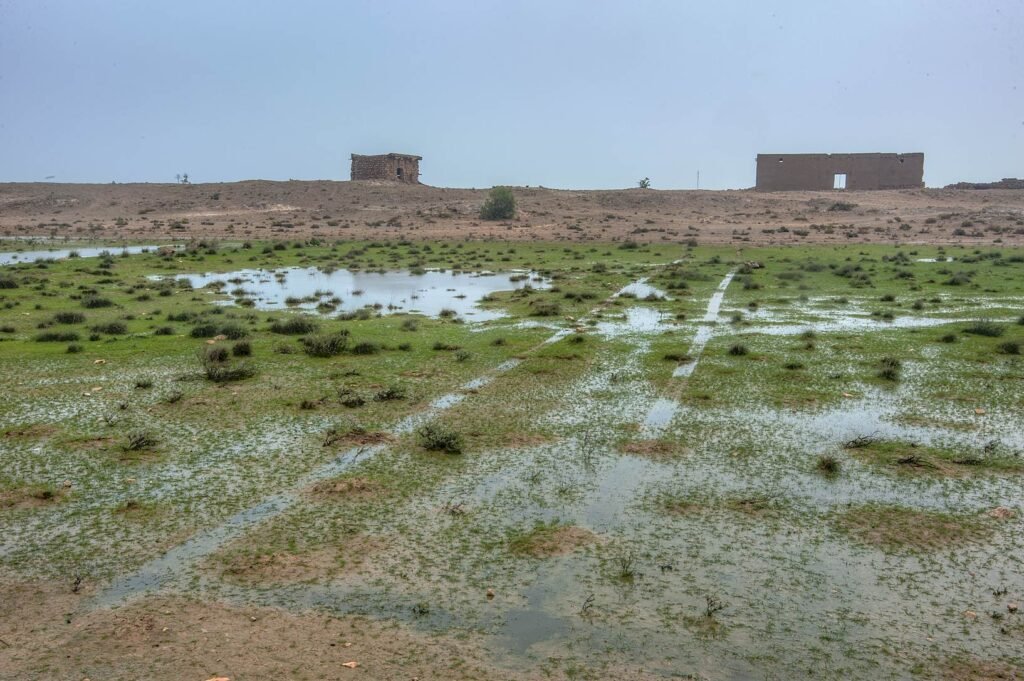
The photo above shows a rawda in northern Qatar; the bowls around Rawdat Rashed look much the same after a good winter.
What to see and do
Read the landscape from the road
The easiest way to appreciate a rawda is to notice how suddenly the land changes. On the paved roads around Rawdat Rashed, flat brown gravel gives way to dips filled with shrubs and small trees, then back again. Stop in a safe lay-by and look at the pattern: plants cluster exactly where water collects. After a wet winter, the contrast is striking; in late summer, you will need a sharper eye.
Look for the trees and shrubs
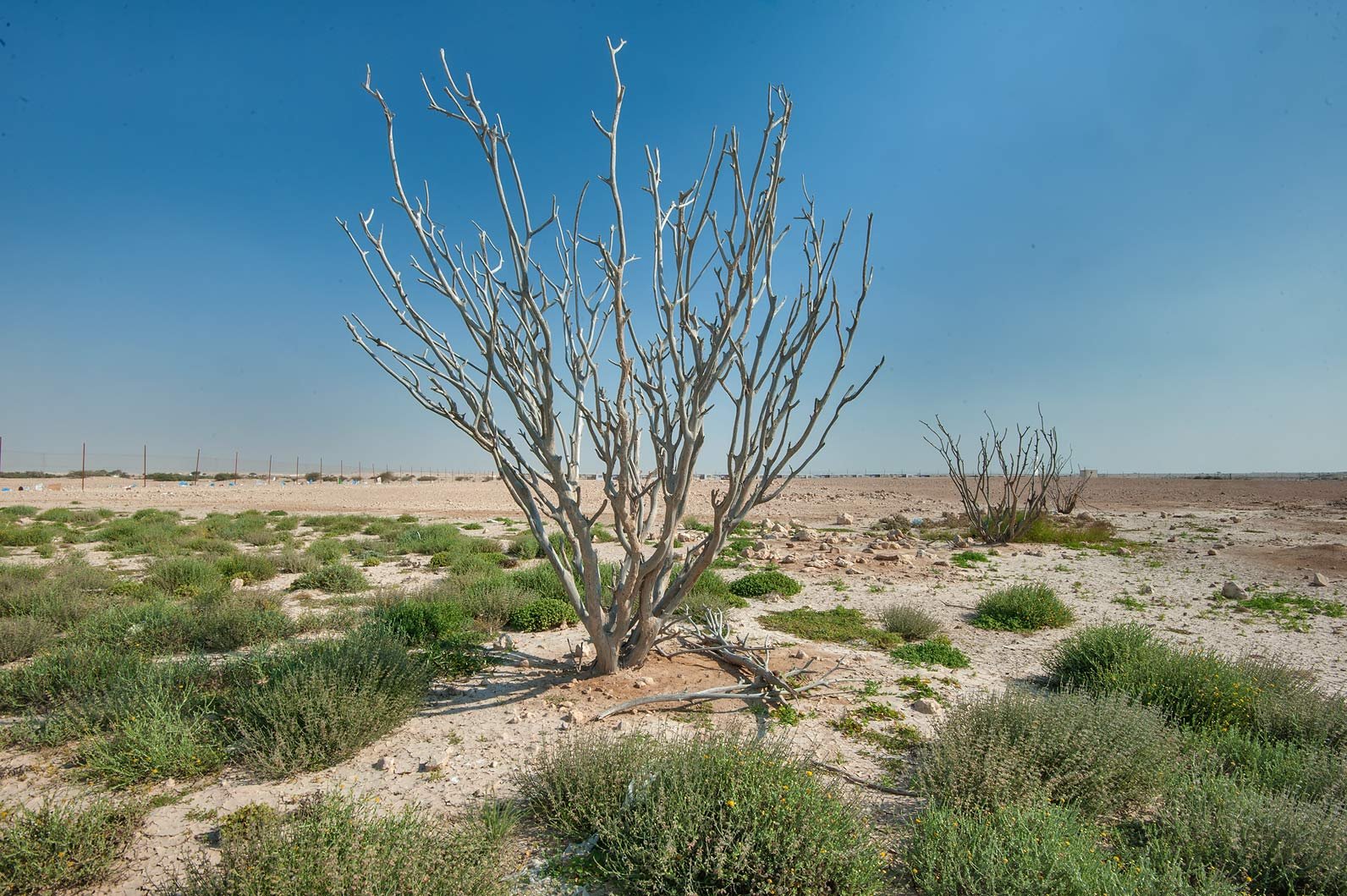
Mature rawdas support trees such as the umbrella thorn acacia (samr) and the wild jujube or sidr, along with shrubs like Lycium shawii. After rain, the ground fills with annuals including Tetraena qatarensis, a low succulent named after Qatar. Many of the trees are slow-growing and old, and in a country with so little natural shade they have long been gathering points for people and animals.
Find the ghaf at Rawdat Al Ghafat
The ghaf (Prosopis cineraria) is a hardy, deep-rooted desert tree with drooping grey-green leaves. It is common in parts of the UAE and Oman, but rare in Qatar, and Rawdat Al Ghafat next to Rawdat Rashed holds one of the country’s only stands. Only a handful of mature trees were recorded here in 2005, and the area has since been fenced and replanted. View it from outside the fence; the young trees inside need to be left alone.
Watch for desert wildlife
Rawdas are biodiversity hotspots in an otherwise harsh landscape. Look for spiny-tailed lizards (dhub) basking near their burrows, jerboa tracks in soft sand, and birds using the trees for shade and nesting. Foxes and hedgehogs live here too, but are mostly active at night. Arabian fat-tailed scorpions also live in rawdas, so never put your hands under stones or logs.
Visit Dahl Al Misfir
Immediately south of Rawdat Rashed lies Dahl Al Misfir, a sinkhole cave around 40 metres deep whose walls glitter with fibrous gypsum. It is the same karst process that creates rawdas, taken to its extreme. The site is fenced but has been open to visitors without a ticket; read our full Dahl Al Misfir guide before going down.
Join the winter camping season
Rawdat Rashed has been one of the central-region zones in Qatar’s official winter camping season, which in 2025 to 2026 ran from 15 October to 15 April. Camp permits are issued by the Ministry of Environment and Climate Change through its website and the Be’ah app, and recent rules limited applicants to Qatari nationals aged 25 or over. Visitors who are not eligible can still experience desert camping through licensed tour operators. Check the ministry’s announcement for the current season before making plans.
Rules that protect the rawdas
The ministry has stepped up protection in recent years, fencing more than 70 sensitive desert sites, planting over 14,600 native seedlings in 2025 and using drones to monitor violations. The main rules visitors need to know:
- No off-road driving inside rawdas. Stay on existing tracks and never drive across vegetation.
- No camping outside the permitted season and zones. Illegal camps are removed and referred for legal action.
- No cutting plants or collecting firewood. Bring your own fuel if you are allowed a fire.
- No open fires on the ground. Use a raised fire pit or stove where fires are permitted.
- No littering. Plastic is a particular problem for grazing animals and wildlife.
- Respect fences and gates. Fenced rawdas are being restored; view them from outside.
How to get there
Rawdat Rashed is roughly 45 km from central Doha. The simplest approach is from the north: take the Dukhan Highway west through Al Rayyan, then turn south onto Rawdat Rashed Road, which runs down into the area. Alternatively, drive west on Salwa Road and head north on local roads. Allow 45 minutes to an hour.
The main roads through the area are paved, and you can see roadside rawdas from any car. To reach specific depressions, Dahl Al Misfir or camping areas, you need to leave the tarmac on stony desert tracks, and a 4×4 is recommended. Do not attempt soft or sandy sections in a saloon car, and avoid the tracks after heavy rain. There is no public transport.
Best time to visit
Visit between December and March, ideally a few weeks after good winter rain, when the rawdas are at their greenest and annual plants may be flowering. Rain in Qatar is irregular, so some years are far greener than others. From May to September the heat is severe and the vegetation dries out.
Go early in the morning or in the last two hours before sunset. The low light brings out the texture of the land and the colour of the plants, and wildlife is more active. Weekends in camping season are busier, with families heading out to camps and picnics.
Tips for your visit
- Stay on tracks. Tyre marks across a rawda can last for years and kill young plants. It is also against the rules.
- Park on bare ground. Never park under trees or on vegetation, however tempting the shade.
- Go in convoy if you leave the tarmac. Two vehicles, a tyre-pressure gauge, a shovel and recovery gear are standard practice.
- Carry more water than you think. There are no shops in the rawdas themselves.
- Download offline maps. Tracks multiply and signal can drop away from the main roads.
- Watch where you put your hands. Scorpions and snakes shelter under stones and in thick shrubs.
- Keep your distance from camps and livestock. Private camps and herds are common in season; ask before approaching or photographing.
- Take every scrap of rubbish home. That includes food waste and cigarette ends.
What to bring
- Plenty of water and snacks
- Hat, sunglasses and sunscreen
- Closed shoes or walking boots
- Binoculars for birds and lizards
- A plant or wildlife ID app
- Recovery gear and a spare tyre if going off tarmac
- Rubbish bags
Combine it with nearby places
Dahl Al Misfir. Qatar’s best-known cave is right next door, and seeing it after the rawdas helps the geology click into place.
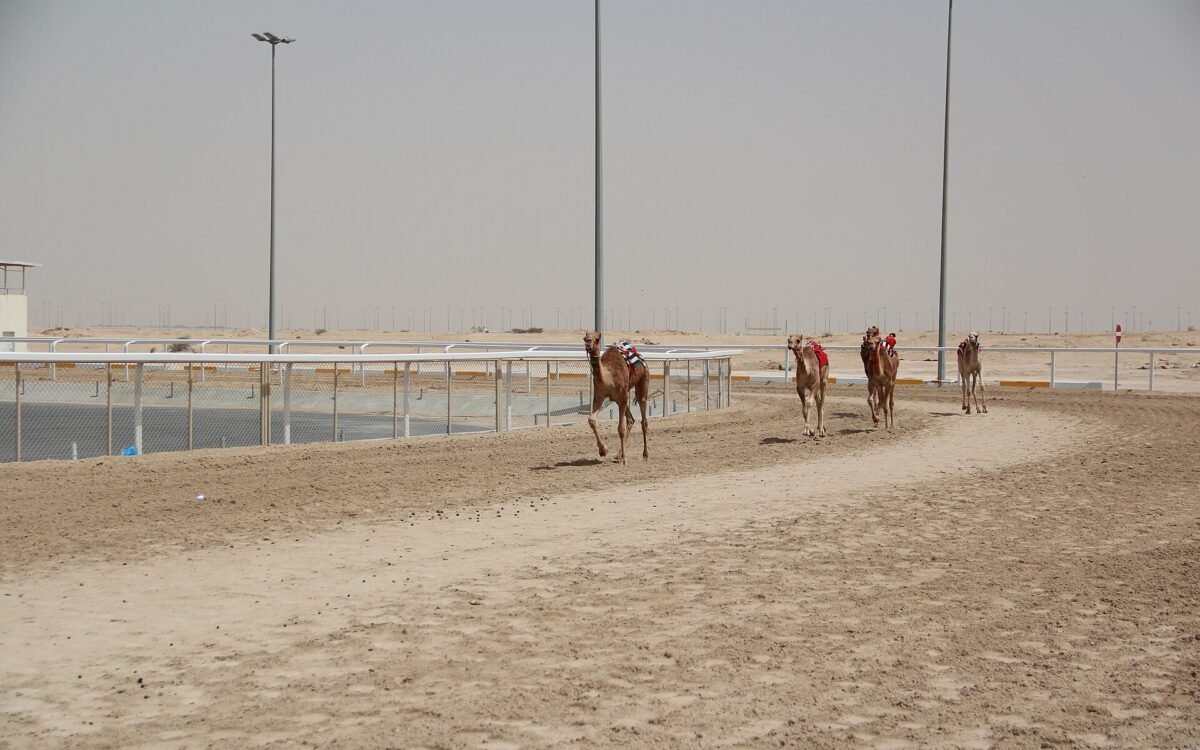
Al Shahaniya Camel Racetrack. North-west via the Dukhan Highway, early-morning races run in the cooler months.
Sheikh Faisal Bin Qassim Al Thani Museum. Off the Dukhan Highway at Al Samriya, a big private museum that is a good indoor stop when the sun gets strong.
Heenat Salma Farm. An organic farm in Al Shahaniya with farm-to-table meals and workshops; book ahead for breakfast or lunch after a morning in the desert.
Al Karaana Lagoon. Further south off Salwa Road, these reclaimed lagoons attract birds and make a contrasting “water in the desert” stop.
Frequently asked questions
What is a rawda?
A rawda is a natural depression in the desert where rainwater and soil collect, allowing trees, shrubs and annual plants to grow. Most in Qatar formed when underground limestone cavities collapsed and filled with sediment.
Can I drive into a rawda?
No. Off-road driving inside rawdas is prohibited, and many have been fenced. Stay on existing tracks and view vegetation on foot from the edge.
Can I camp at Rawdat Rashed?
Only with a permit during the official winter camping season, when Rawdat Rashed has been one of the designated central zones. Permits are issued by the Ministry of Environment and Climate Change.
Do I need a 4×4?
Not for the paved roads, from which you can see roadside rawdas. To reach Dahl Al Misfir, camps or remote depressions on desert tracks, a 4×4 is recommended.
When are the rawdas green?
Usually from mid-winter to early spring, a few weeks after good rains. In dry years and in summer they look brown and dusty.
Where can I see ghaf trees in Qatar?
Rawdat Al Ghafat, next to Rawdat Rashed, holds one of Qatar’s only natural stands of ghaf. It is fenced for protection, so view it from outside.
Last checked October 2026. Hours, fees and access can change, so confirm with the official source before you go.
More places nearby
All places →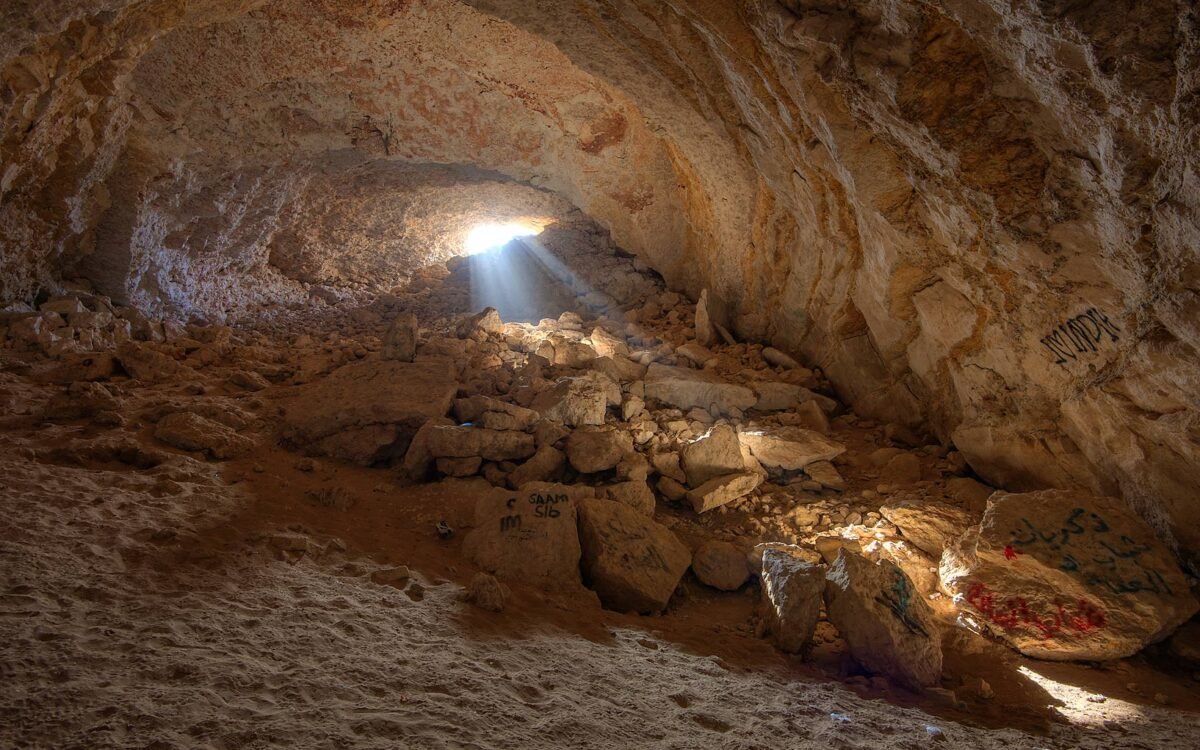

Run a tour, café or stay near Rawdat Rashed and the Desert Rawdas, Al Shahaniya?
List your business free on Companies in Qatar, or get featured on Qatar Unseen in front of people planning their trip.