Al Thakira Mangroves Kayaking, Al Khor
Paddle the densest mangrove channels in Qatar: how the tours work, the right tide and wind, what you will see and how to get the most from a first kayak trip.
Al Thakhira, north of Al Khor (north-east coast)
Overview
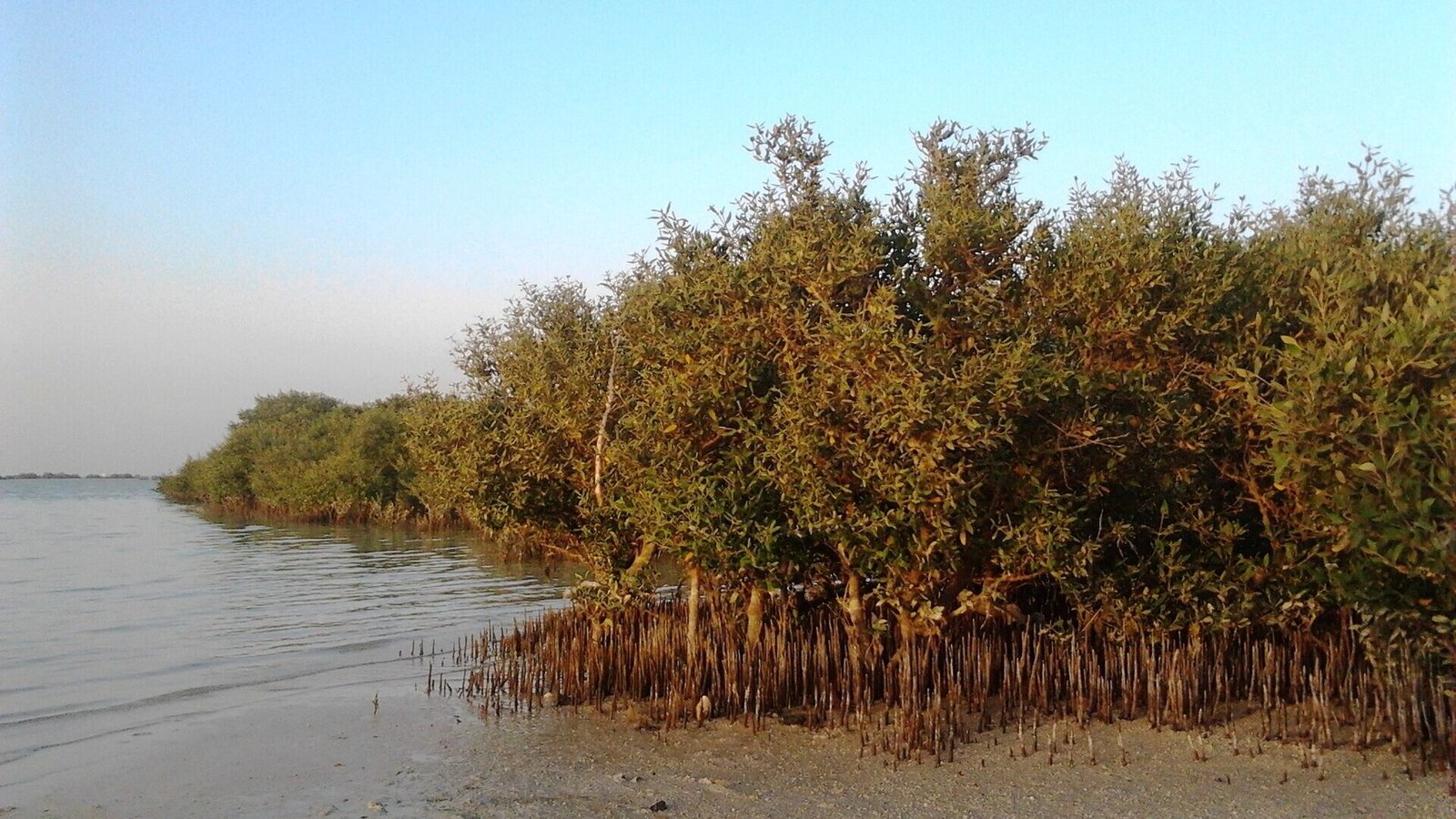
The coast between Al Khor and the small town of Al Thakhira holds the densest stands of mangrove in Qatar, and the best way to see them is from a kayak. Sheltered channels wind between walls of grey mangrove, the water is shallow and usually flat, and within a few minutes of pushing off you can lose sight of roads and buildings altogether. It is one of the very few places in the country where you can paddle through something that feels like a forest.
This guide is written for paddlers. It covers how the tours work, how to pick one, what the tide and wind do to your trip, what you will see from the water and the small mistakes that make a first paddle less enjoyable than it should be. No experience is needed. Most people on a tour have never been in a kayak before, and children usually manage well in a double kayak with an adult.
Al Thakhira is about 60 km north of Doha, so it works as a half-day trip. Combine a morning paddle with a walk on Purple Island or lunch in Al Khor and you have a full, easy day out.
History and background
The name Al Thakhira (also written Al Dhakira or Al Zakhira) comes from an Arabic root meaning provision or store. The Ministry of Municipality gives two explanations: one says the area was once used to store goods, the other tells of a sailor who sheltered here from a storm and named the place in thanks for the refuge it gave him. Either way, the name suits a sheltered inlet protected by mangroves, which is exactly what made it useful to boats.
The town was founded by families of the Al Muhannadi tribe who came from nearby Al Khor, and like most of Qatar’s coast it lived from pearling and fishing. J. G. Lorimer’s Gazetteer of the Persian Gulf, published in 1908, described a village of about 300 houses whose men were all pearl divers, with fifteen pearling boats and a handful of other vessels. Drinking water had to be brought from wells inland. After the diving season, families hauled their boats ashore and moved inland to spend the winter in tents with their animals.
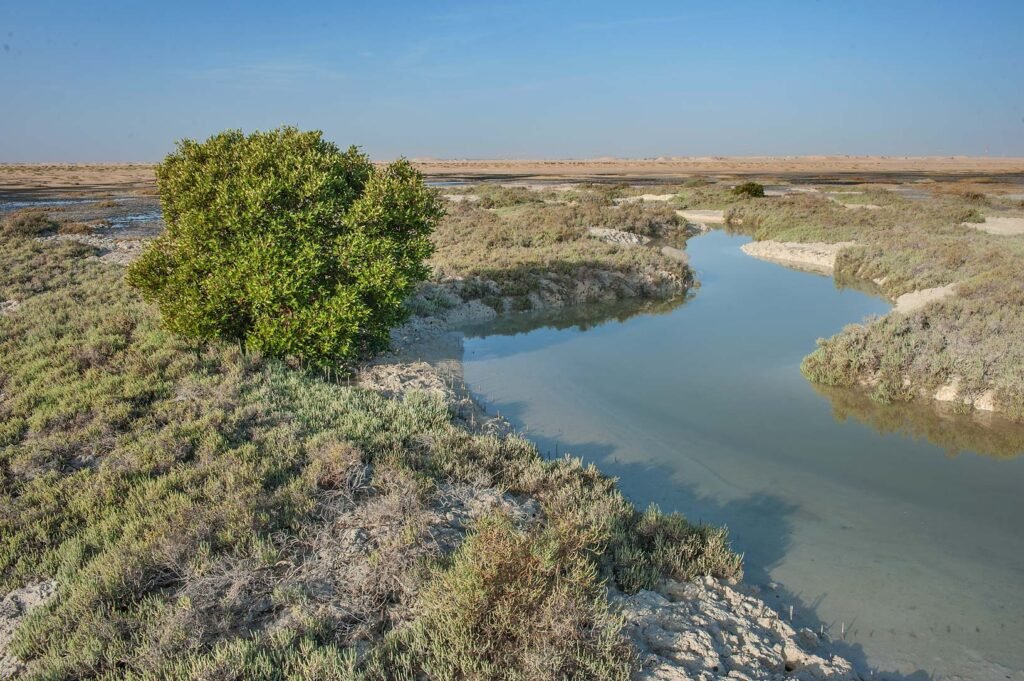
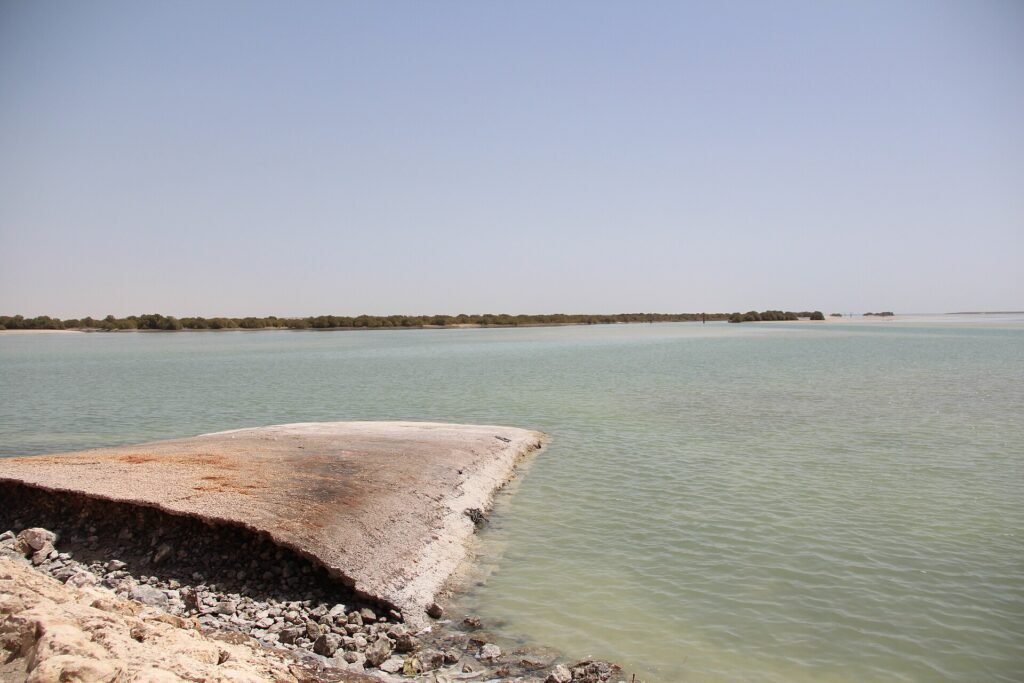
The mangroves themselves are the grey mangrove, Avicennia marina, which tolerates very salty water and fierce summer heat. Together, Al Khor and Al Thakhira have roughly 1,400 hectares of mangrove, and the government designated the Al Thakhira Nature Reserve in 2006. It covers about 14 square kilometres of mangrove, shoreline, wadis and salt flats, including the small mangrove island of Umm Al Far, once a mooring place for Qatari and Bahraini boats and known for good fishing. The mangroves act as a nursery for fish and shrimp, protect the shore from erosion and give migrating birds a place to feed and rest, which is why paddling here comes with a few simple rules.
What to see and do
A guided kayak tour
This is how most people paddle here, and for a first visit it is the sensible choice. Several Doha-based companies run tours through the channels, and they are listed on the big booking platforms as well as on the operators’ own sites and social media. A typical tour lasts about 1.5 to 2 hours on the water, plus a short briefing on the beach. Kayak, paddle and life jacket are provided, and the guide shows you how to hold the paddle, steer and get in and out without capsizing.
Prices vary with the operator and the season. Published group tours in 2025–26 ranged from roughly QAR 100 to QAR 200 per person, with private trips and packages that include transport from Doha costing more. Operators usually ask that children are accompanied by a parent, and most will put young children in a double kayak with an adult.
Choosing between tours
Before you book, check four things: the meeting point (some tours start near Al Thakhira, others from the Purple Island side of the same mangrove system), whether transport from Doha is included, the group size, and whether the start time is set around the tide. A good operator will move your slot if the tide is wrong for paddling. Reviews that mention the guide by name are a better sign than a slick photo.
Stand-up paddleboarding
Some operators offer paddleboard tours on the same routes. Standing up gives you a better view down into the clear shallows and across the tops of the roots, but it is harder in wind, and you are more likely to end up in the water. If you have never paddleboarded, choose a kayak for your first trip and come back for the board.
Paddling into the mangrove channels
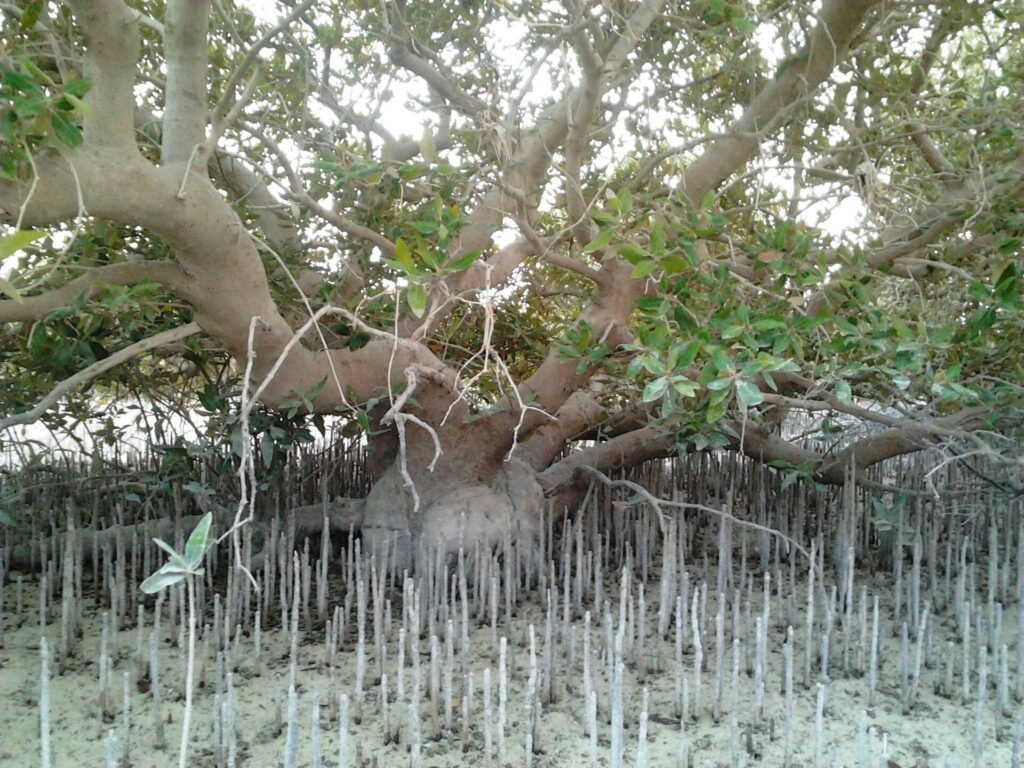
The heart of the trip is the narrow creeks between the trees. Here the water is still, the mangroves close in on both sides and the only sounds are birds and the drip from your paddle. Look at the mud banks for the pencil-thin breathing roots, called pneumatophores, that stick up around each tree. At the edges you will see crabs scuttling into their burrows, and in clear water small fish dart under the kayak.
Birds from the water
A kayak lets you get closer to birds than you could on foot, as long as you move slowly and quietly. Visit Qatar lists herons, flamingos, gulls, cormorants and waders among the birds seen here, and winter is the best season. Flamingos in particular feed in the shallow, salty water around the reserve. Drift rather than paddle hard towards them, and back off if they start to walk away.
Photography from a kayak
A phone in a waterproof pouch on a lanyard is the most practical camera. Low light in the first and last hours of the day gives reflections in the channels and warm colour on the leaves. Keep anything that cannot get wet in a dry bag, because the moment you most want a photo is often the moment you drift into a branch.
Al Thakhira beach and the old mosque
After a paddle, the simple beach at Al Thakhira is a place to sit, eat and dry off, with views across the water to the mangrove islands. In the old part of town, the Al Thakhira Grand Mosque near the former harbour dates from around 1900 and was restored in 1959 and again in 2015. It is a working mosque, so admire it from outside unless you are there to pray.
How to get there
Al Thakhira is about 60 km north of Doha, and the drive takes roughly 45 minutes to an hour. Take Al Shamal Road or the Al Khor Coastal Road north to Al Khor, then follow the signs for Al Thakhira through the northern side of town. The roads are paved all the way to the town. Depending on your meeting point, the last few hundred metres to the water may be on a sandy or gravel track, which ordinary cars normally manage when it is dry.
Your tour operator will send a map pin for the meeting point. Save it before you leave Doha, as mobile signal and signposting near the shore are not always reliable. Parking is informal, on open ground near the beach or the start of the boardwalk.
There is no public transport to the mangroves. A taxi or ride-hailing car can get you there, but finding a car back from Al Thakhira is difficult. If you don’t drive, book a tour package that includes transfers from Doha hotels; several operators offer this.
Best time to visit
The paddling season runs from about October to April. Winter mornings are the most comfortable, and this is when migratory birds are around. In summer the heat is extreme even on the water, and tours move to sunrise or late afternoon slots. If you paddle between May and September, go at first light and carry more water than you think you need.
Tide: this matters more than anything else. At or near high tide the channels fill and you can paddle deep into the mangroves. At low tide some creeks become too shallow and you end up dragging the kayak over mud. Reputable operators schedule tours around the best tide window, so if you are organising your own trip, check a tide table for Al Khor and aim for the couple of hours around high water.
Wind: the channels are sheltered, but the open stretches between them are not. A strong north-westerly (the shamal) can make the return leg hard work. Mornings are usually calmer than afternoons.
Day of the week: Friday and Saturday are busiest, with several groups on the water at once. A weekday tour is quieter and better for birds.
Tips for your visit
- Book ahead in winter. Weekend slots at good tide times fill quickly.
- Wear water shoes or sandals with a strap. You will step into shallow water and soft mud when launching. Flip-flops get lost.
- Dress for getting wet. Quick-dry clothes that cover shoulders and knees are practical and appropriate. Leave jeans at home.
- Never stand on the roots or pull on branches. The roots are how the trees breathe, and damage takes years to recover.
- Keep your feet inside the kayak in the channels. Sharp shells and roots under the surface can cut skin.
- Use a dry bag. Keys, wallet and phone go in a sealed bag clipped to the kayak, or stay locked in the car.
- Listen to the briefing. Two minutes on how to steer and how to get back in after a capsize saves a lot of zig-zagging.
- Take nothing away and leave nothing behind. This is a nature reserve, so no picking plants, collecting shells or dropping litter.
What to bring
- Water, at least 1 litre per person
- Hat with a strap, sunglasses with a cord and sunscreen
- Water shoes or strapped sandals
- A waterproof phone pouch and a small dry bag
- A towel and a full change of clothes for the drive home
- Binoculars in winter, if you can keep them dry
- Snacks for after the paddle
Combine it with nearby places
Purple Island (Jazirat Bin Ghanim). The island sits on the same mangrove coast just south of Al Thakhira. After paddling past it, walk over the wooden footbridge, climb the limestone hillocks and look for the site of a 3,000-year-old purple dye industry.
Al Farkiya Beach. If you want to swim or picnic after paddling, Al Khor’s family beach has shade, showers and calm, shallow water.
Al Khor Corniche. A pleasant seafront in Al Khor town with lawns, benches and views of the fishing dhows, plus plenty of cafés and restaurants nearby for lunch after an early paddle.
Al Khor Towers. Three early 20th-century stone watchtowers on the Al Khor coast that once guarded the port and the Ain Hleetan well. They are a quick heritage stop on the way home.
Al Zubarah Fort and Archaeological Site. If you have a full day, continue north-west across the peninsula to Qatar’s UNESCO World Heritage Site, roughly an hour or a little more by car from Al Thakhira. Check opening times before you go, as the fort keeps shorter hours on Fridays.
Frequently asked questions
Do I need kayaking experience to paddle at Al Thakira?
No. The channels are shallow and sheltered, and guided tours start with a short lesson. Most participants are complete beginners, and families with children are common.
How much does a mangrove kayak tour cost?
Published group tours have ranged from roughly QAR 100 to QAR 200 per person for about two hours, including kayak, paddle, life jacket and guide. Private tours and packages with transport from Doha cost more. Check current prices with the operator.
Can I bring my own kayak?
Yes, people do launch their own kayaks and paddleboards here. If you go independently, plan around high tide, stay in the sheltered channels, tell someone your route and never paddle alone. Respect the rules of the nature reserve and stay off the roots.
What is the best tide for kayaking?
At or around high tide, when the channels are full. At low tide parts of the creeks are too shallow to paddle. Tour operators set their times around the tide, so the slot they offer is usually the right one.
Will I see flamingos?
Possibly, in winter. Flamingos, herons and other waders feed in the shallows around Al Thakhira between roughly November and February, but sightings depend on the day. Early morning tours on quieter weekdays give the best chance.
Is it safe to kayak in summer?
Only very early or late in the day. Temperatures and humidity are extreme from May to September, and there is little shade on the water. Take plenty of water and turn back at any sign of heat exhaustion.
What is the difference between Al Thakira and Purple Island?
They are part of the same stretch of mangrove coast. Purple Island (Al Khor Island) sits just south of Al Thakhira and is reached by a footbridge, so it is best for walking. Al Thakhira’s channels are the main area for kayak tours. Many tours pass both.
Last checked October 2026. Hours, fees and access can change, so confirm with the official source before you go.
Read the Companies in Qatar visitor guide ↗
More places nearby
All places →
Run a tour, café or stay near Al Thakira Mangroves Kayaking, Al Khor?
List your business free on Companies in Qatar, or get featured on Qatar Unseen in front of people planning their trip.