Horse Stables & Camel Pen, Souq Waqif
Arabian horses, mounted heritage police and a pen of camels behind stone arches: the animal corner of Souq Waqif and its winter horse festival.
Western side of Souq Waqif, Jasim Bin Mohammed St / Al Jasra St, central Doha
Overview
Souq Waqif is famous for spices, perfume and falcons, but on its western side it also keeps animals that most visitors don’t expect to find in the middle of a capital city. There are stables of Arabian horses, ridden through the market by the souq’s heritage police, and a sandy pen where camels doze behind a row of stone arches. Both are free to look at, a few minutes’ walk from each other and from the Falcon Souq.
Neither place is a zoo or a formal attraction. The stables are working stables, and the horses are there because they have a job to do. The camel pen is a small enclosure that Lonely Planet describes, fairly, as a simple photo stop. That modesty is part of their appeal. In a city of towers and malls, the smell of hay and the sight of a camel chewing in the shade are a reminder of how recently Doha was a small trading town on the edge of the desert.
This guide covers what you can actually see, when the animals are most likely to be around, how to behave near them and how to time a visit with the souq’s winter horse festival. It suits families with young children, photographers and anyone who has already done the main souq lanes and wants something different. A visit takes 20 minutes to an hour.
Horses, camels and the old market
Souq Waqif began as a market where Bedouin and townspeople traded livestock and goods on the banks of the Musheireb valley, and for most of its history animals were part of daily business here. Camels carried goods in from the desert, and horses were a mark of status and a working partner for tribal families across the Arabian Peninsula. The Arabian horse, small, hardy and fast, with its dished face and high tail, is one of the oldest horse breeds in the world and a source of great pride in Qatar.
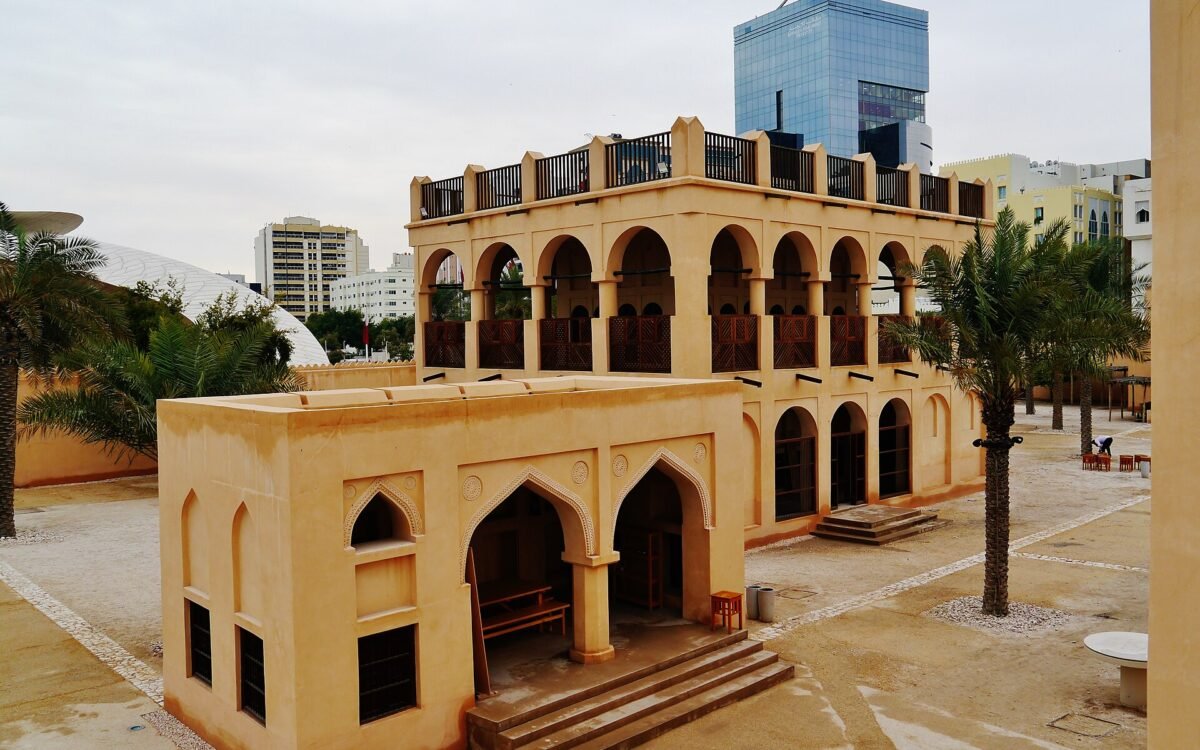
When the state restored Souq Waqif between 2006 and around 2008, after years of decline and a damaging fire in 2003, it chose to bring that heritage back into the market’s daily life. Visit Qatar describes the stables, often called the Emiri stables, as home to Arabian horses that are both on view and used by the heritage police on their daily rounds of the souq. CNN describes an outdoor sand arena and notes that the mounted officers set out from here on their ride through the market lanes.
The stables have also become a centre for the Arabian horse world. Each winter the souq hosts the Souq Waqif Equestrian Festival, with international shows for purebred Arabian horses, children’s heritage competitions and an auction. In January 2026 the festival ran from 20 to 27 January, according to Marhaba, and included the 7th Souq Waqif International Arabian Horse Show and the 15th Qatar International Arabian Peninsula Horse Show. At the 2025 edition, The Peninsula reported that 57 horses went under the hammer at the closing auction, fetching a total of QAR 575,000.
What to see and do
Look into the stables
The stable block is on the western side of the souq, close to the Falcon Souq. Through the openings you can see horses in their boxes, grooms at work and the sand arena where horses are exercised. The horses are well cared for and many are striking greys and chestnuts with the classic Arabian profile. Stay outside any barriers and don’t feed or touch the horses unless a groom invites you to.
Watch the mounted heritage police
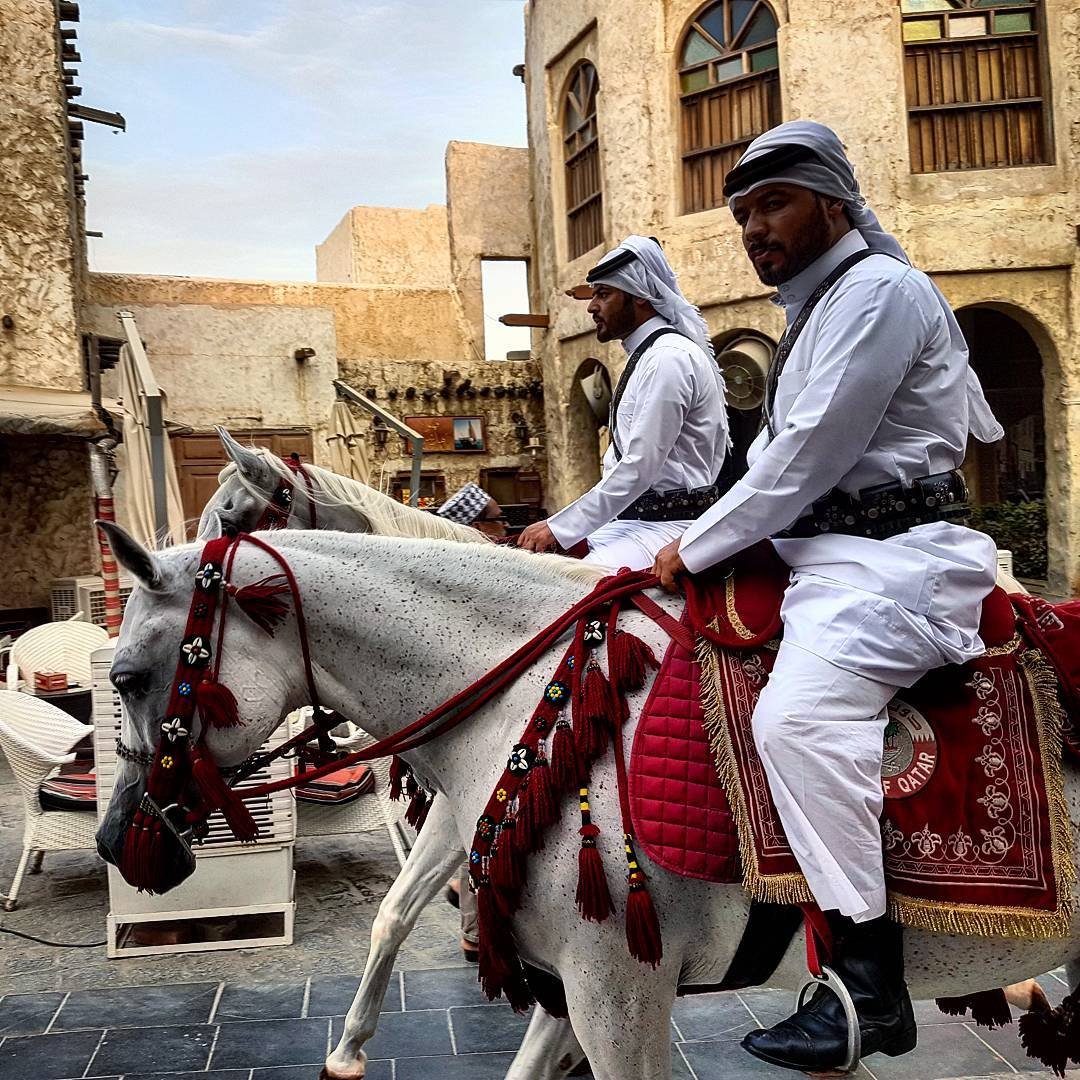
One of the most photographed sights in Souq Waqif is a pair of officers in traditional dress riding Arabian horses slowly through the lanes. Their patrols are a mix of policing and ceremony, and they are part of the souq’s character. You can’t book this; you simply have to be in the right place. Your best chance is in the late afternoon and evening, when the souq is busy. Give the horses plenty of room and keep children well back as they pass.
See the camels in their pen
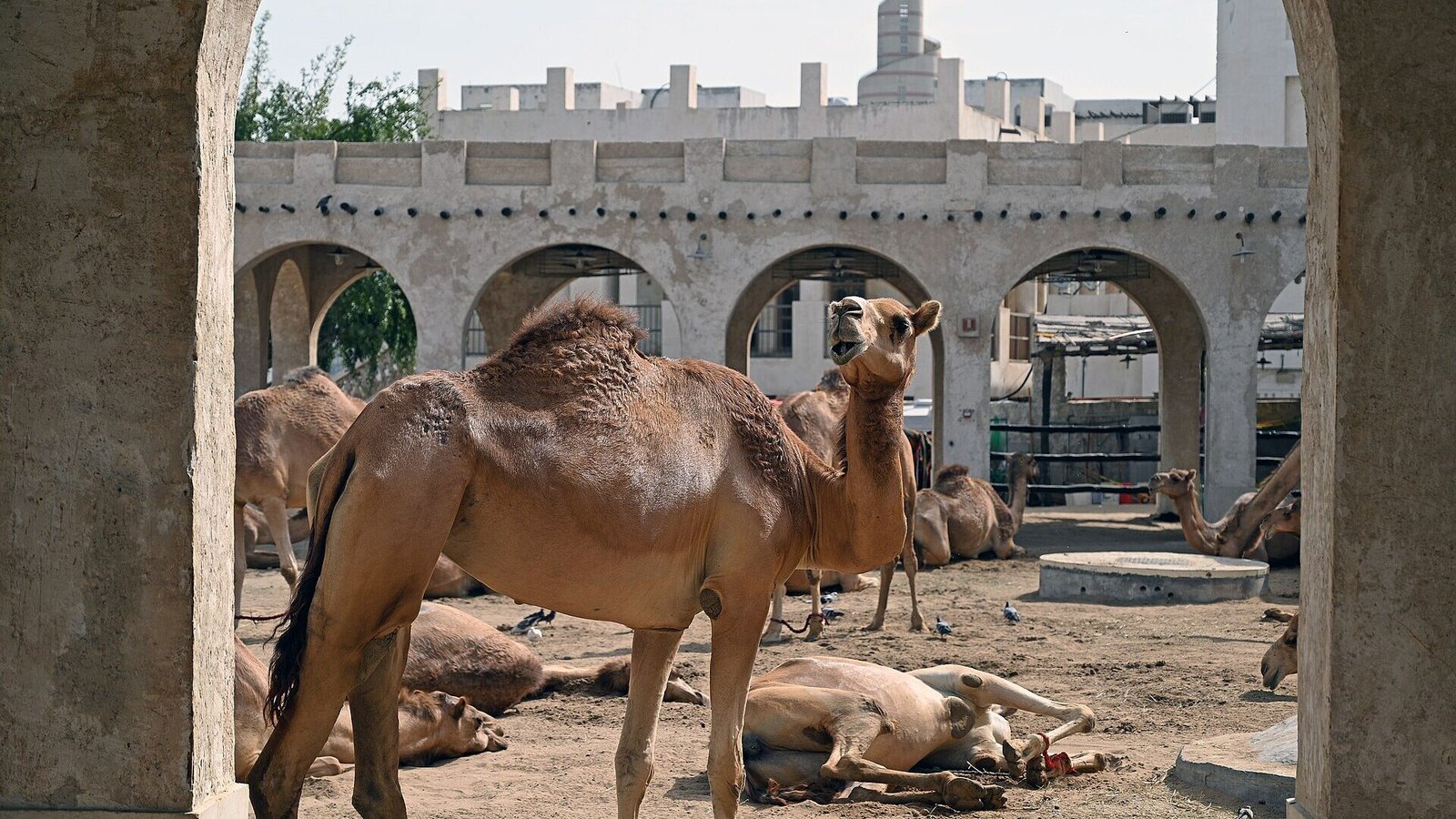
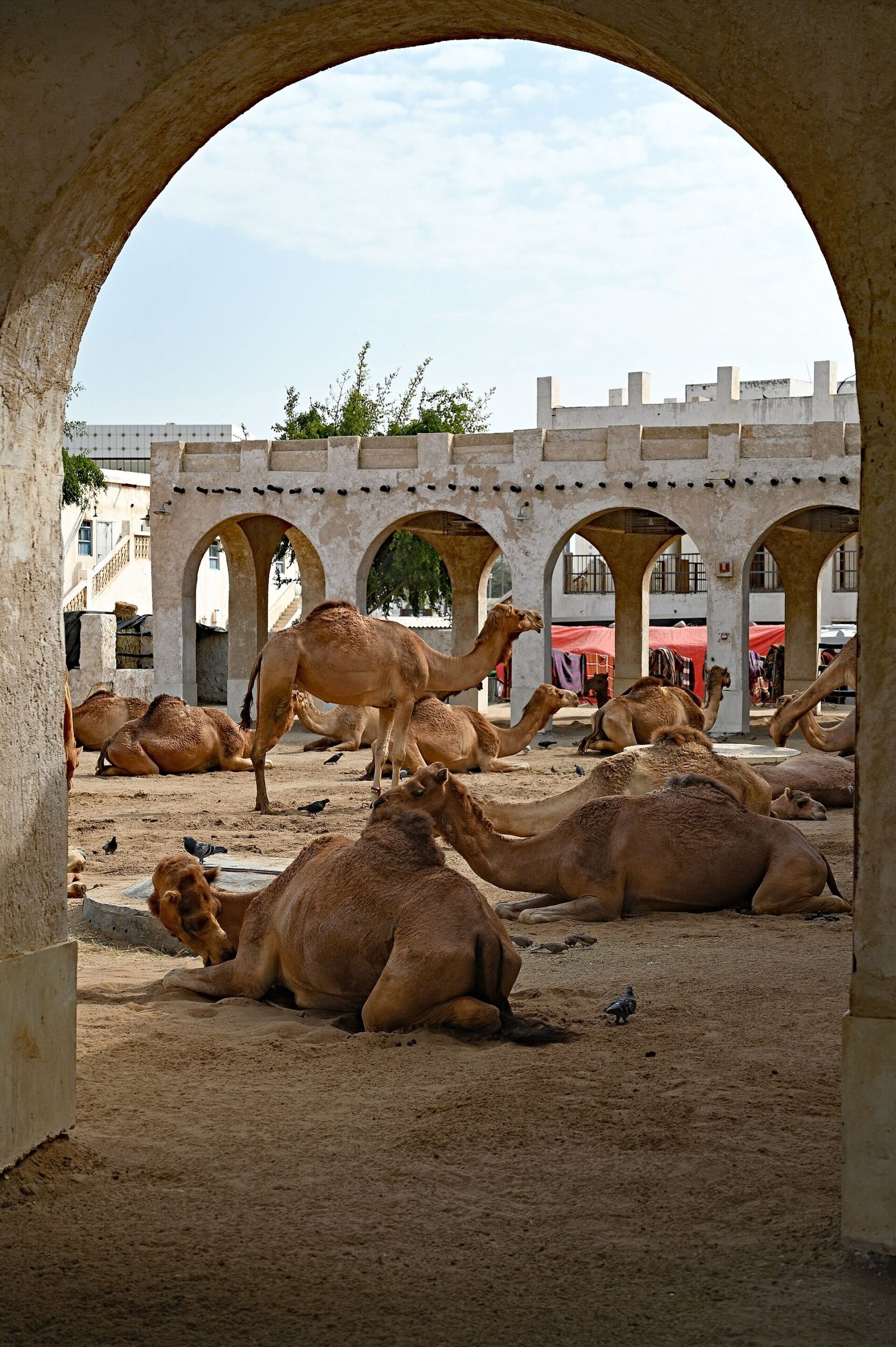
The camel pen sits at the corner of Al Jasra Street and Abdulla Bin Jassim Street, near the Corniche. Lonely Planet says the camels are usually in the pen for most of the day and into the early evening. Viewed through the arches of the surrounding wall, with the souq’s restored buildings behind, they make one of the most unexpected photos in central Doha. There are times when the pen is empty, so treat it as a bonus rather than the main event.
Catch the Souq Waqif Equestrian Festival
If you are in Doha in winter, check whether the equestrian festival is on. The Peninsula reported that the 2025 event, held in the souq’s Western Square, was open to the public. Shows for different age classes run over several days, and the halter classes, where horses are presented for their beauty and movement, are a spectacle even if you know nothing about horses. Dates change each year; the festival’s own site, swef.qa, and its social media accounts carry the schedule.
Know what to look for at a horse show
The two big shows at the festival have different letters in their names. Gulf Times and Marhaba describe the (A) show as the international championship for purebred Arabian horses, and the (S) show as the Qatar International Arabian Peninsula show. The 2025 show began with yearling classes and continued with two-, three-, four- and six-year-old categories. In each class, handlers run the horses on a lead in front of the judges, who score head, neck, body, legs and movement. Watch how the handlers make the horses stand alert, ears forward and tail high: that proud stance is what judges and crowds love.
Join a children’s heritage day
The festival usually includes a day of heritage activities and competitions for children. These are a gentle introduction to Qatar’s equestrian culture and a good reason for families to plan a visit around the festival dates.
Combine with the falcons
Because the stables, the camel pen and the Falcon Souq are all on the same side of the souq, you can see Qatar’s three most iconic heritage animals in one short walk. Few places in the Gulf make it this easy.
What first-timers get wrong
Most people stumble on the horses by accident, see a patrol go by and assume that is all there is. It is worth seeking out the stables deliberately and looking at the arena and the stable yard, which give a better sense of the horses as working animals.
Others come at midday, when the souq is at its sleepiest and the heat keeps everyone indoors. The animals, the patrols and the people are all far more active later in the day.
Finally, visitors sometimes treat the animals as a petting attraction. They are not. Admire them from a respectful distance, and if a groom offers you a closer look, follow their lead.
How to get there
The stables and the camel pen are on the western side of Souq Waqif in central Doha, near the main car park on Al Jasra Street and a short walk from the Corniche.
By metro: Souq Waqif station on the Gold Line is the nearest. Msheireb interchange station is also within walking distance.
By car: Park in the Souq Waqif car parks, ideally on the western side, and walk. The area is very busy on Thursday and Friday evenings.
By taxi: Ask to be dropped at Souq Waqif near the falcon souq or the horse stables.
The area is flat and paved, and suitable for pushchairs and wheelchairs, though the sand around the pens can be soft.
Best time to visit
The cooler months, from November to March, are by far the best. The animals are more active, it is pleasant to stand outside and, in January, there is a chance to coincide with the equestrian festival. In summer the midday heat is punishing for people and animals alike, so keep visits to the early morning or evening.
For time of day, the late afternoon is ideal. The camels are usually still in their pen, the light is soft for photos and the souq is starting to fill up, which is when mounted patrols are most likely. Weekday visits are calmer than weekends.
Tips for your visit
- Never feed the horses or camels unless a handler offers you the chance; human food can make them ill.
- Keep fingers away from the camels’ mouths and stay out of kicking range behind horses.
- Don’t use flash photography close to the animals.
- Ask before photographing the heritage police officers or stable staff.
- Give mounted patrols right of way in the lanes, and hold children’s hands as they pass.
- Check the festival dates if you are visiting in December or January; it changes the atmosphere completely.
- Dress modestly, as you would in the rest of the souq.
What to bring
- A camera or phone; a zoom helps you get close-ups without disturbing the animals
- Hand wipes or sanitiser
- Water and a hat if you come before late afternoon
- Closed shoes for the sandy areas
Combine it with nearby places
Falcon Souq & Falcon Hospital. Next to the stables, with hooded falcons, leather hoods and a specialist bird hospital.
Dhow Harbour. Cross to the Corniche for wooden dhows and a short boat ride across the bay at sunset.
Gold Souq. The glittering jewellery arcade on the eastern side of Souq Waqif, at its best in the evening.
Shay Al Shoomoos. A small café in the souq serving a home-style Qatari breakfast, if you come early in the day.
Al Bidda Park. Doha’s big central park on the Corniche, for families who want space to run around afterwards.
Frequently asked questions
Is it free to see the horses and camels at Souq Waqif?
Yes. There is no charge to look at the stables or the camel pen, and the souq itself is free to enter.
Where are the horse stables in Souq Waqif?
On the western side of the souq, near the Falcon Souq and the main car park on Al Jasra Street.
Can I ride a horse or camel at Souq Waqif?
The stables are working stables for the heritage police and festival events, not a riding school, and the camel pen is for viewing. For camel rides, head to the desert around Sealine.
When are the camels in the camel pen?
Usually during the day and into the early evening, according to Lonely Planet, but the pen is sometimes empty. Late afternoon is your best chance.
When is the Souq Waqif Equestrian Festival?
It is held in winter. The 2026 festival ran from 20 to 27 January. Check swef.qa or the festival’s social media for future dates.
Is this a good stop with young children?
Yes. It is short, free and close to cafés and toilets in the souq. Keep children close to you around the animals and the mounted patrols.
Last checked October 2026. Hours, fees and access can change, so confirm with the official source before you go.
Read the Companies in Qatar visitor guide ↗
More places nearby
All places →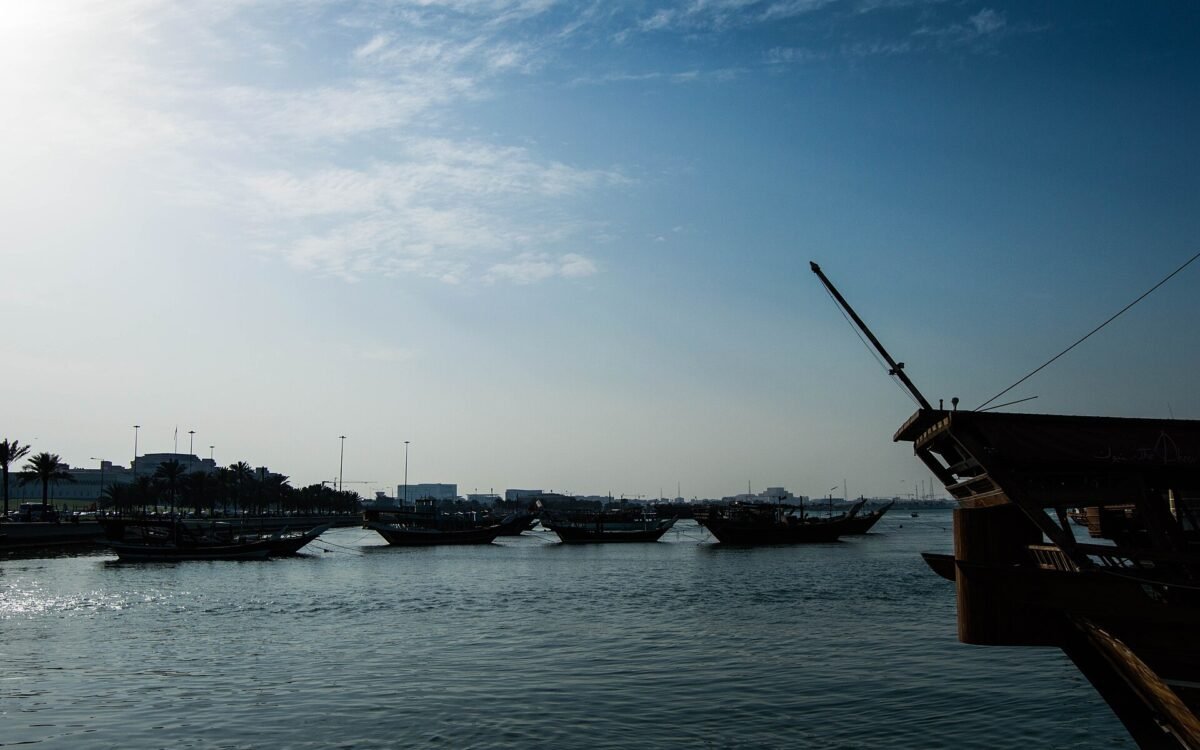
Run a tour, café or stay near Horse Stables & Camel Pen, Souq Waqif?
List your business free on Companies in Qatar, or get featured on Qatar Unseen in front of people planning their trip.