Al Mafjar Beach, Al Shamal
Qatar's northern tip at its best: clear shallows, mangroves you can wade towards, old dhows on the sand and the islets of Umm Tais offshore.
Al Mafjar, east of Al Ruwais (northern tip)
Overview
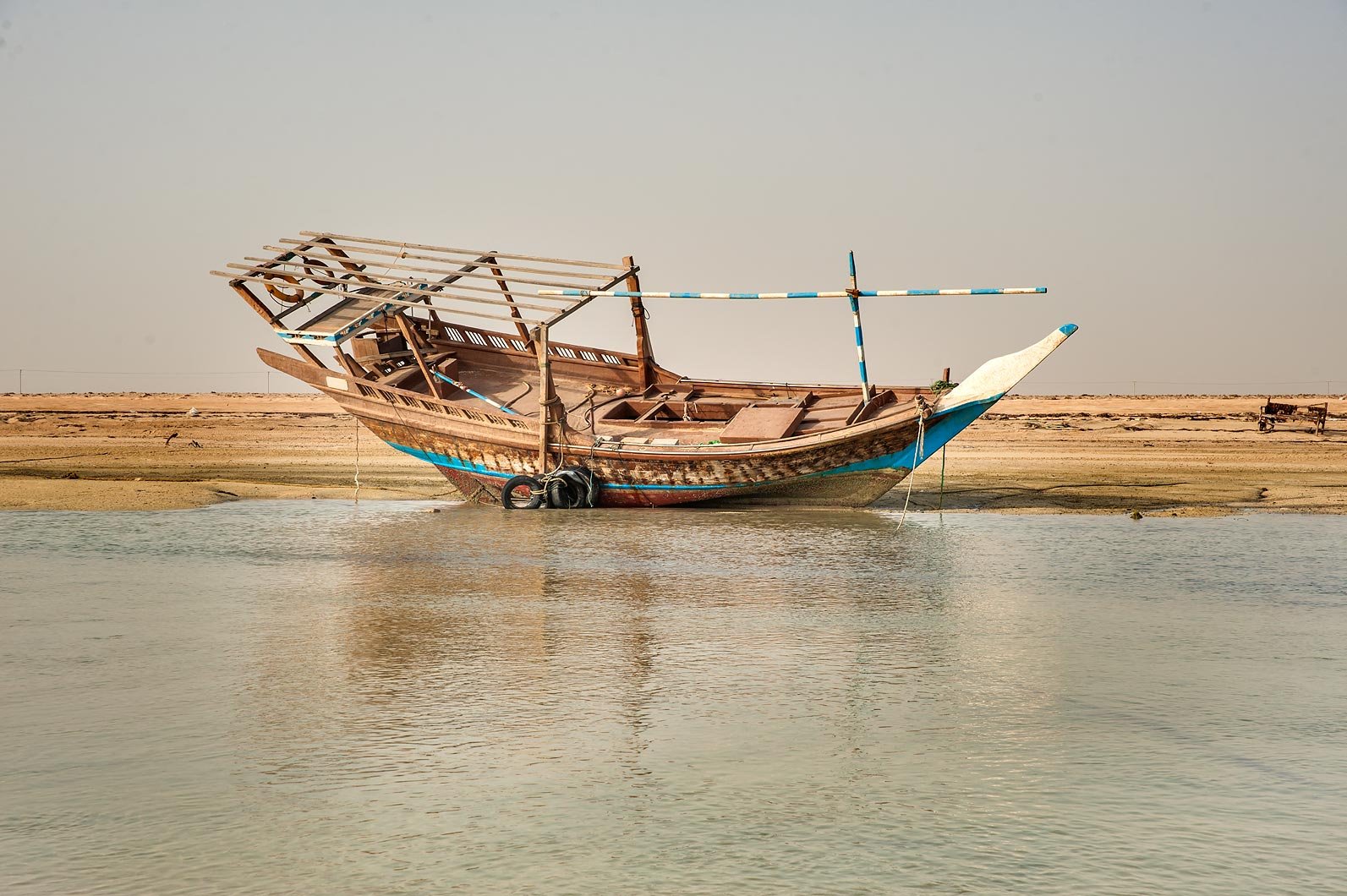
Al Mafjar is a beach on the very northern tip of Qatar, a few kilometres east of Al Ruwais, where soft pale sand meets shallow, startlingly clear water. Behind the shore are the ruins of an abandoned village; offshore lie the low islets and mangroves of Umm Tais National Park. Old wooden dhows are often pulled up on the sand, and at the right tide you can wade out towards the mangroves through knee-deep water.
Visit Qatar describes it as a beach with “soft, unspoiled sandy areas” and notes that members of the Qatar Natural History Group once named it the most beautiful beach in the country. It is also known locally as Old Ruins Beach. Compared with Doha’s busy family beaches, it feels raw and spacious: no resorts, no loud music, just water, mangroves and sky.
It is a great choice for families who like natural beaches, for paddlers and snorkellers, for birdwatchers and for anyone combining a day in the north with Al Ruwais, Al Jumail or Al Zubarah. This guide explains how the tide shapes your visit, what you can and can’t do around the protected areas, and how to make a full day of it.
History and background
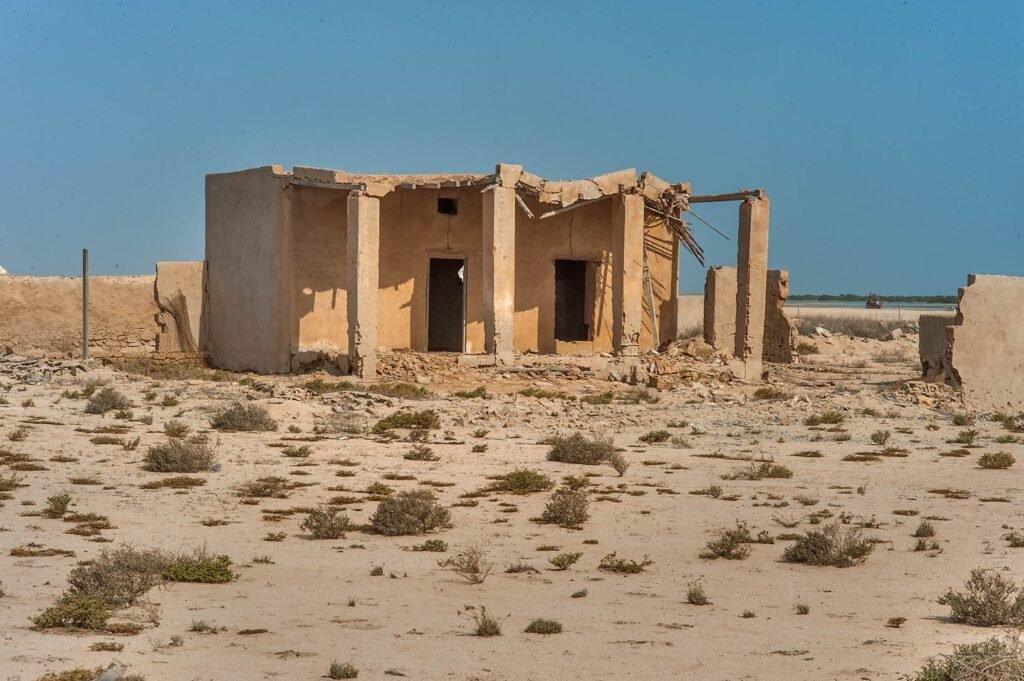
Al Mafjar was once a small coastal village whose people lived from the sea, like most communities along this northern shore. Local tradition explains the name with a story: when the sea rose unexpectedly, the water is said to have “burst” out and spread around the village. The settlement was eventually abandoned, and its stone ruins still stand a short walk from the beach. Visit Qatar notes that the ruins, including a colonial-style villa, are fenced for conservation and can be seen from the perimeter. There have been plans to restore the old village as a tourist attraction.
Geographers use Al Mafjar as a landmark too. A line drawn between Al Mafjar and Abu Dhalouf marks the boundary between Qatar’s northern coastal plain and the interior plains to the south, which is why the landscape here feels so flat and low, with sabkha, sand and mangrove creeks rather than limestone ridges.
The sea in front of the beach is part of one of Qatar’s most important natural areas. Umm Tais National Park, created in 2006 when Qatar hosted the Asian Games, covers the uninhabited island and the sand bars and islets around it, with mangroves, migratory birds and one of the main nesting sites in the country for the hawksbill sea turtle. The Ministry of Municipality now includes Al Mafjar among the public beaches it services, alongside the other northern beaches at Al Shamal, Al Arish and Al Ghariya.
What to see and do
Wade out towards the mangroves
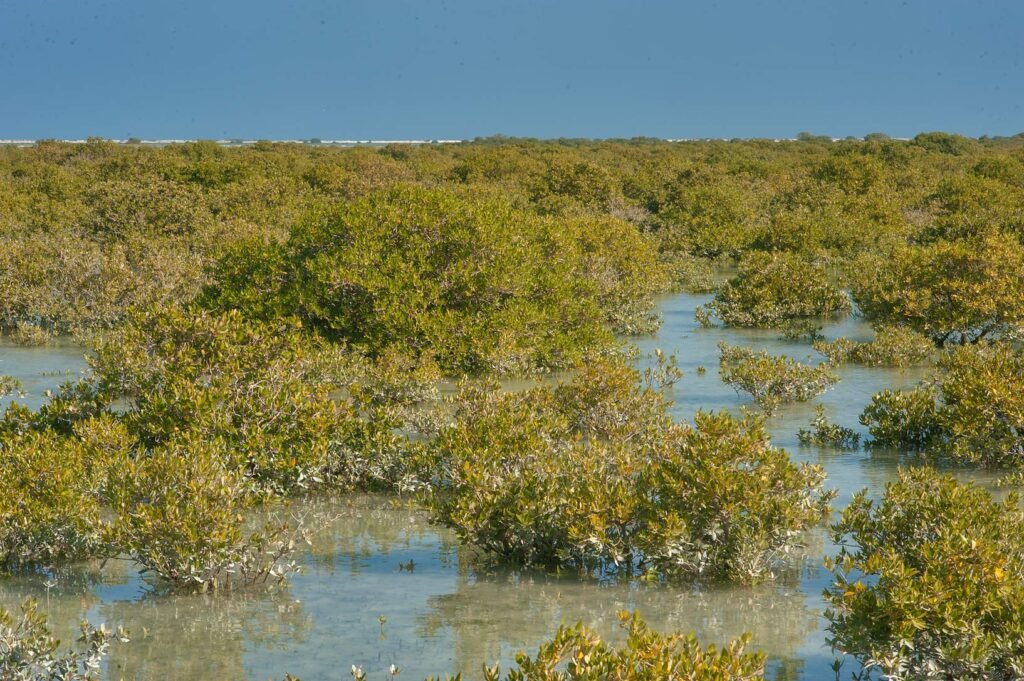
The signature experience at Al Mafjar is walking through clear, calm water towards the mangroves. Visit Qatar notes that at high tide you can wade knee-deep towards them. The bottom is mostly sandy, but there are patches of rock and shell, so wear water shoes. Move slowly and you will see small fish, crabs and, often, wading birds feeding along the edges.
Explore the low-tide sand bars
As the tide drops, sand bars and a small peninsula appear, and the shoreline changes shape completely. It is a lovely time for a picnic on the exposed sand or a walk along the water’s edge. Keep an eye on the time, because the tide comes back in quickly across flat ground.
Snorkel the clear shallows
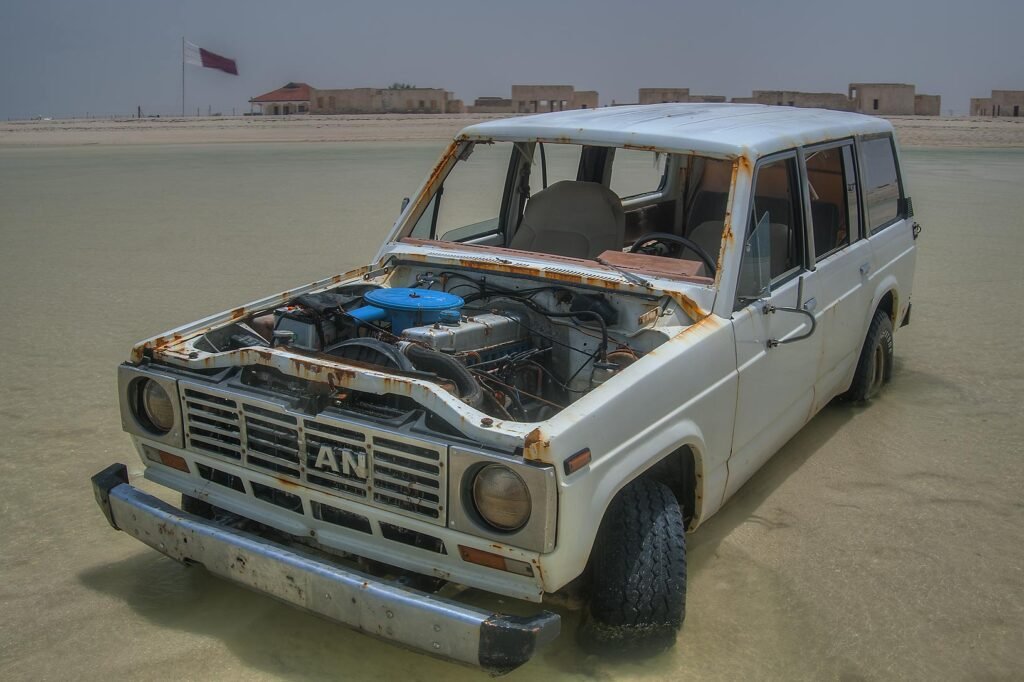
Visibility is often excellent on calm days. Visit Qatar mentions a submerged old vehicle offshore that snorkellers like to explore. Never stand on corals or touch marine life, and stay well clear of boats and kitesurfers.
Kayak or paddleboard the mangroves
Several Doha operators run guided kayak and stand-up paddle tours in the Al Mafjar mangroves, typically around 90 minutes on the water with equipment, a safety briefing and some explanation of the ecosystem. A guided trip is the best way to get into the narrower channels and learn how to paddle without disturbing wildlife. Check current schedules with operators, as trips depend on season and tides.
Watch kitesurfers and birds
On breezy days, kitesurfers use the shallow, flat water off the beach. On calm days, the stars are birds: herons, egrets and waders feeding along the mangroves and sand bars, and flocks of migrants in the cooler months. Binoculars are worth bringing.
See the dhows and the village ruins
Traditional wooden boats are often pulled up on the beach, some still in use, some slowly falling apart. They make great photographs at low sun. Behind the beach, look at the old village from outside its fence, and imagine the community that lived here before oil.
How to get there
From Doha, drive north on the Al Shamal Road until the highway ends near Madinat ash Shamal and Al Ruwais. Visit Qatar’s directions are to turn right at the second roundabout after the highway ends, continue for about 2.5 km and then turn left onto a paved road that leads towards the beach. The map pin on this page is set on the beach. The trip is about 110 km and takes around an hour and a quarter.
The approach is largely paved, and a normal car can reach the main parking area. A 4×4 helps only if you want to drive on softer sand or explore tracks along the coast. Never drive into the mangroves, onto turtle nesting beaches or across fragile flats.
There is no public transport to the beach. Kayak tour operators usually ask participants to meet at a petrol station in Al Shamal and then drive in convoy to the launch point, so you still need your own car.
Best time to visit
The beach season runs from October to April, with November to March the most comfortable for long days outdoors. In summer, early morning is the only bearable time. If you want to wade out to the mangroves, aim for a rising or high tide; for sand bars and the little peninsula, go at low tide. Check a tide table for the north coast before you set off.
Weekday mornings are calmest and quietest. Friday and Saturday afternoons bring more families and campers. Hawksbill turtles nest on the islands of Umm Tais in the warmer months, so if you are out on the water then, keep well away from nesting beaches and follow any guidance from rangers or tour leaders.
Tips for your visit
- Check the tide. It decides whether you wade, walk on sand bars or paddle. The water moves surprisingly fast over the flats.
- Wear water shoes. Shells, rock and the occasional sharp object hide in the shallows.
- Respect the protected areas. Umm Tais is a national park. Don’t land on nesting beaches, disturb birds or damage mangroves.
- View the ruins from outside. The abandoned village is fenced for conservation.
- Book paddling with a guide. It is safer and you’ll see more of the mangrove channels.
- Bring shade and supplies. Facilities are limited; the nearest shops and fuel are in Al Ruwais and Madinat ash Shamal.
- Keep it clean. Take every scrap of rubbish home; litter quickly ends up in the mangroves.
- Dress modestly off the sand. This is a local family beach.
What to bring
- Water shoes, swimwear and a towel
- Mask and snorkel
- Beach shade, sunscreen and hats
- Plenty of water and a picnic
- Binoculars for birds
- Dry bag for phones and keys
- Rubbish bags
Combine it with nearby places
Al Ruwais Mosque and Old Port. A short drive west, with a historic mosque and the harbour where dhows still come and go.
Al Jumail Abandoned Village. One of the north’s most atmospheric deserted villages, a few minutes beyond Al Ruwais.
Al Khuwayr Abandoned Village. The seaside ruins of the old raider’s base of Khor Hassan, further west along the coast.
Al Ghariya Beach. A long beach on the north-east coast, with a public stretch and the women-only Al Mamlha beach.
Zulal Wellness Resort. If you want to stay the night in the north, this wellness resort sits on the coast nearby.
Frequently asked questions
Is Al Mafjar Beach free?
Yes. It is a public beach with no entry fee.
Can you visit Umm Tais National Park?
The park covers an uninhabited island and surrounding islets, sand bars and mangroves. You can enjoy the area from Al Mafjar beach or on a guided kayak trip; avoid landing on nesting beaches and follow any posted rules.
Can I enter the abandoned village at Al Mafjar?
The ruins are fenced for conservation. You can see them from the perimeter.
Is Al Mafjar good for children?
Yes, with supervision. The water is shallow and usually calm, but there are no lifeguards and the tide changes quickly.
Do I need a 4×4?
No, the main beach can be reached on paved roads. A 4×4 is only useful for driving on soft sand.
Where can I kayak the Al Mafjar mangroves?
Several Doha-based operators run guided kayak and paddleboard tours here. Book in advance and check the meeting point, which is usually in Al Shamal.
Last checked October 2026. Hours, fees and access can change, so confirm with the official source before you go.
More places nearby
All places → Beaches & IslandsAbu Dhalouf Park and Bahar Mosque, Al ShamalAl Shamal & Zubarah
 Beaches & IslandsAl Ghariya Beach, Al ShamalAl Shamal & Zubarah
 Heritage & FortsAl Jassasiya Rock Carvings, Al ShamalAl Shamal & Zubarah
Run a tour, café or stay near Al Mafjar Beach, Al Shamal?
List your business free on Companies in Qatar, or get featured on Qatar Unseen in front of people planning their trip.