Imam Muhammad ibn Abd al-Wahhab Mosque (State Grand Mosque), Doha
Qatar's largest mosque, with 93 domes and room for 30,000 worshippers. Visitors of all faiths are welcome outside prayer times.
Al Muhandiseen Street, Lejbailat, Doha
Overview
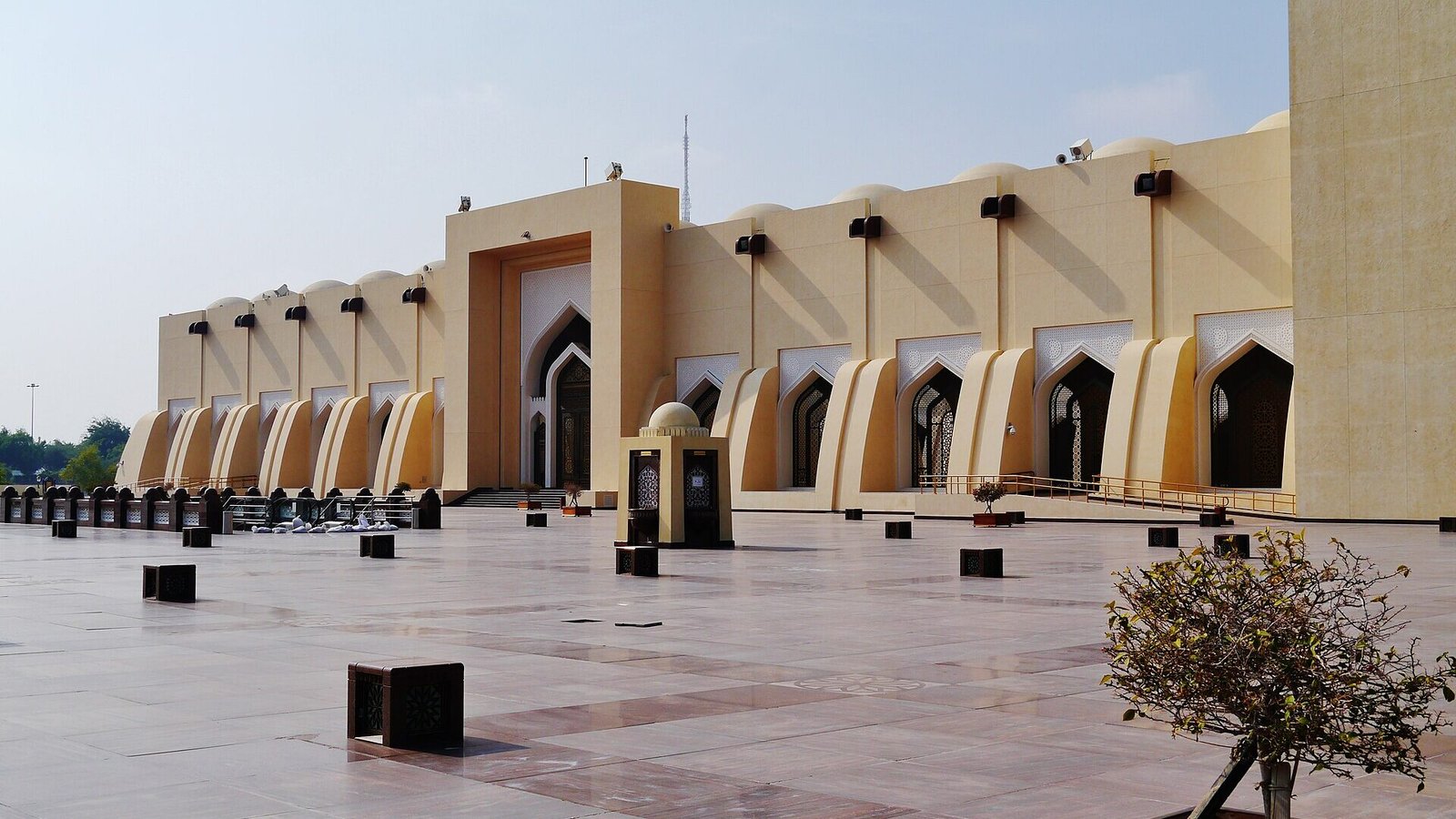
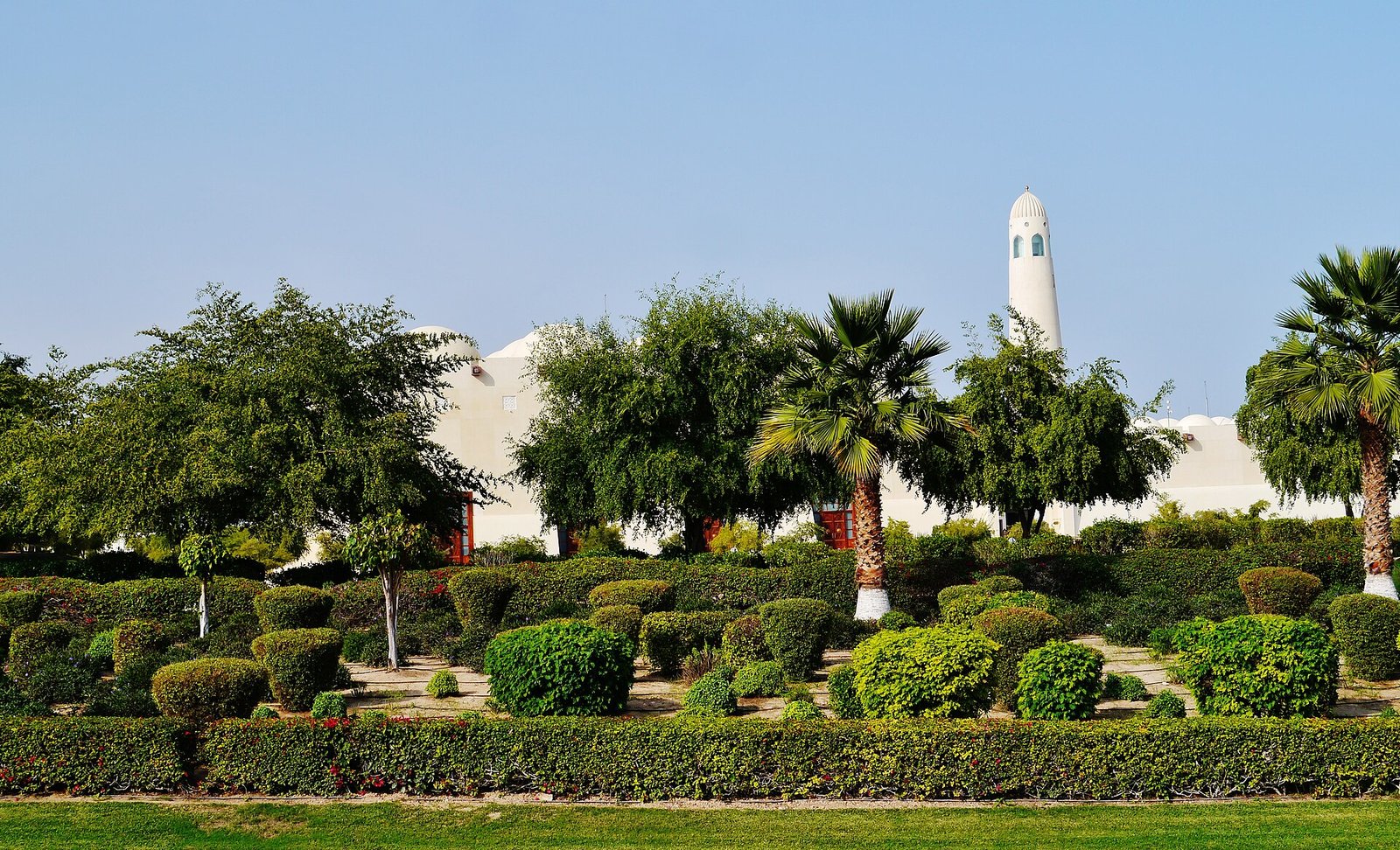
The Imam Muhammad ibn Abd al-Wahhab Mosque is Qatar’s national mosque and the largest in the country. Most people simply call it the State Grand Mosque or the State Mosque. It stands on raised ground in the Lejbailat area, a few kilometres west of the West Bay towers, and from the outside it is unmistakable: a long, low sandstone building crowned with rows of small, rounded domes and a single tall, square minaret.
It is a working mosque first. Friday prayers, the nightly prayers of Ramadan and the five daily prayers fill it with worshippers. Outside prayer times, though, visitors of any faith are welcome to come in, take their shoes off, walk the shaded arcades and see the vast prayer hall with its copper chandeliers. Visit Qatar describes entry as open to all visitors outside prayer times.
Go if you are interested in Islamic architecture, want to understand everyday religious life in Qatar, or simply want a calm, cool hour away from malls and traffic. It suits respectful travellers, architecture fans and photographers. It is not a sightseeing attraction with tickets and exhibits, and it is not suitable for small children, who are not permitted inside (more on that below).
History and background
The mosque was completed and opened in 2011, with the then Emir, Sheikh Hamad bin Khalifa Al Thani, presiding over the opening. It was built as Qatar’s state mosque, the place for major national prayers, and its scale reflects that role.
It is named after Muhammad ibn Abd al-Wahhab (1703–1792), an 18th-century scholar from Najd in central Arabia whose reform movement became known as Wahhabism. The choice of name drew attention abroad, and in 2017 a group describing themselves as his descendants objected to it in a statement published in a Saudi newspaper. For visitors, the important point is simply that the building serves as the country’s main congregational mosque.
The figures are large. According to Wikipedia and Marhaba, the mosque can hold about 30,000 worshippers in all. The air-conditioned central prayer hall takes around 10,000 to 11,000 men, and a women’s gallery holds about 1,200. The building covers roughly 19,500 square metres on a site of about 175,000 square metres, with parking for around 3,000 cars. Visit Qatar and Marhaba give the number of domes as 93, and Marhaba notes that the popular story about 99 domes, one for each of the names of God, is a myth.
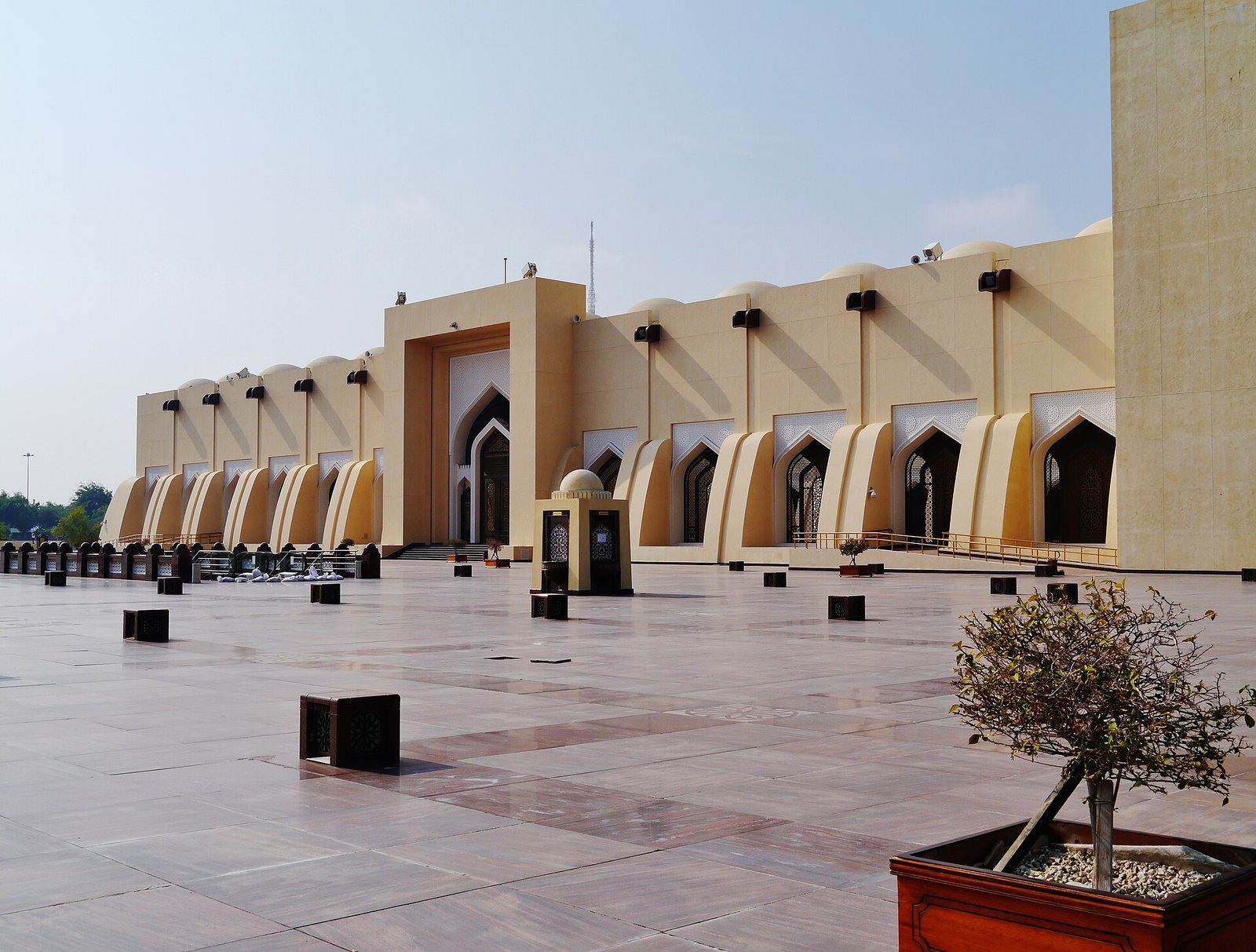
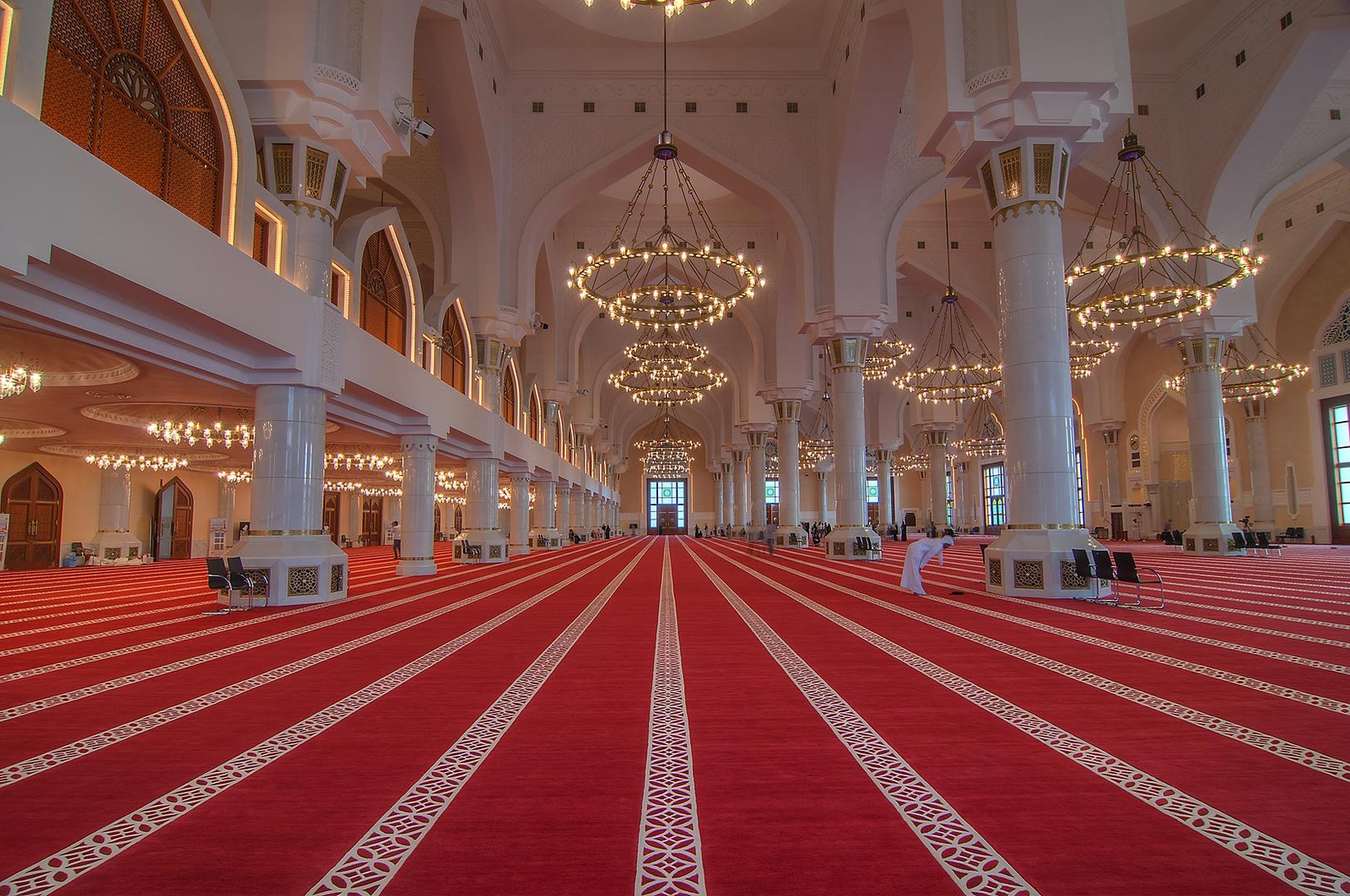
The design deliberately looks back to traditional Arabian architecture rather than to glass and steel. The walls are sandstone-coloured, the courtyards are paved in earth-coloured marble that stays cool underfoot, and long colonnades of arches throw shade along the edges. Wikipedia lists three main entrances and 17 side entrances, and a single minaret. Inside, 28 multi-tiered copper chandeliers hang high above the prayer hall, and the mihrab, the niche that shows the direction of Mecca, is faced in white marble.
What to see and do
The domed roofline from outside
Before you go in, walk along the outside. The roof is a field of small, rounded domes in neat rows, which reads beautifully from the gardens and the approach road. The square minaret rises from one corner, plain and tall. The mosque is surrounded by lawns and a belt of trees, so you can frame the domes with palms in the foreground. Morning light on the sandstone is soft and warm.
The marble courtyard and shaded arcades
The open courtyard is paved in earth-toned marble, and the corridors around it are roofed with smaller domes that keep them in shade. Visit Qatar points out that the marble is chosen to stay cool in summer. Walk the colonnades slowly: the repeated arches, the play of light and the quiet are the real experience here, more than any single feature.
The main prayer hall
The central hall is enormous, with a sea of patterned carpet, rows of columns and copper chandeliers hanging high overhead. Visitors can look in and walk in quietly outside prayer times; keep to the edges and away from anyone praying. Notice how the sound is controlled: Wikipedia notes that the audio system was designed to reduce echo in a space this size.
The mihrab and the qibla wall
At the front of the hall, the mihrab marks the direction of prayer towards Mecca. Here it is finished in white marble, and it is one of the most photographed details inside. Ask before you photograph if anyone is nearby, and never photograph people at prayer.
The libraries
Marhaba reports that the mosque has three libraries: two with Arabic-language Islamic books and a third with books on Islam in many languages. It also notes that library access is in the men’s areas. If you are curious about Islam, a guided visit is the best way to ask questions.
Take a guided visit
Visit Qatar recommends booking an organised tour rather than wandering in on your own. Marhaba reported that tours have been arranged through the Sheikh Abdulla Bin Zaid Al Mahmoud Islamic Cultural Center, known as Fanar. Arrangements change, so check with Visit Qatar or the cultural centre for the current way to book. A guide can explain the prayer, the architecture and the etiquette, which makes the visit far more meaningful.
Ramadan nights
During Ramadan the mosque is one of the busiest in Doha for the night prayers, tarawih and later qiyam, which draw very large congregations. It is a moving sight from outside, but it is not the time for a sightseeing visit. Read our guide to Ramadan in Qatar for etiquette during the holy month.
How to get there
The mosque is in Lejbailat, a few kilometres west of the West Bay towers. Visit Qatar gives the address as Al Muhandiseen Street, Doha. By car it is around 10 to 15 minutes from West Bay or the Corniche, depending on traffic, on ordinary city roads. No 4×4 is needed.
By car: There is a very large car park, with space for roughly 3,000 cars. It only fills at Friday prayers, Eid and during Ramadan nights, when traffic around the mosque can be heavy.
By taxi or ride-hailing: This is the easiest way for most visitors. Ask for the State Mosque or Imam Abdul Wahhab Mosque; drivers know it well.
By metro: There is no station at the mosque. West Bay station on the Red Line is the nearest, roughly 1.5 km away in a straight line, but the walk follows busy roads with little shade. Take the metro to West Bay and a short taxi from there.
Best time to visit
The key rule is to avoid prayer times. The five daily prayers move through the year with the sun, so check the day’s times on a prayer-time app or the Ministry of Endowments and Islamic Affairs website before you go. A comfortable window is mid-morning, after sunrise and well before the midday prayer, or mid to late afternoon between the afternoon and sunset prayers. Allow a margin: the hall fills up before the call to prayer and stays busy for a while after it.
Avoid Friday late morning and early afternoon, when the weekly congregational prayer and sermon take place, and expect very large crowds after sunset during Ramadan. November to March is the most pleasant season for walking the courtyard and gardens. In summer, the prayer hall is air-conditioned, but the outside areas are very hot by mid-morning.
Tips for your visit
- Dress conservatively. Men should wear long trousers and covered shoulders; women should cover arms, legs and hair. Visit Qatar notes that headscarves and, where needed, abayas are provided for women.
- Take your shoes off before entering and leave them in the racks provided.
- Children under seven are not allowed in, according to Visit Qatar and Marhaba. Plan accordingly if you are travelling with young children.
- Switch your phone to silent and keep your voice low.
- Do not bring food inside.
- Photography is strictly prohibited in the women’s prayer area. Elsewhere, be discreet and never photograph worshippers without permission.
- Do not walk in front of anyone who is praying.
- Visit Qatar lists a phone number for the mosque, +974 4470 0000, if you want to check arrangements in advance.
What to bring
- Loose clothing that covers arms and legs, and a scarf for women
- Shoes that are easy to slip on and off
- A small bag for your shoes if racks are full
- Water for the walk around the outside, to drink before you go in
Combine it with nearby places
Sheraton Park and the Corniche. A short drive east, the green park at the top of the Corniche is a good place to unwind afterwards and watch the West Bay skyline light up. See our Sheraton Park guide.
Al Bidda Park. Doha’s big central park, with shady lawns and cafés, makes an easy family stop. Read our Al Bidda Park guide.
Museum of Islamic Art. To see Islamic art and design from three continents, MIA on the Corniche is essential. Read our MIA guide.
Education City Mosque (Minaretein). For a striking contrast, visit Doha’s contemporary mosque, with its two minarets and bold contemporary design. Read our Education City Mosque guide.
Katara Cultural Village. North of West Bay, Katara Cultural Village has the pigeon towers, an amphitheatre and a paid-entry beach. Start with our Katara pigeon towers guide.
Frequently asked questions
Can non-Muslims visit the State Grand Mosque in Doha?
Yes. Visit Qatar says visitors of any background may enter outside prayer times. Dress modestly, remove your shoes and behave respectfully. A guided visit is recommended.
Is there an entry fee?
We have not found any entry fee for visiting the mosque. Guided tours may be arranged through official channels; check current arrangements before you go.
What should I wear to visit the mosque?
Cover your arms and legs. Women should also cover their hair; Visit Qatar notes that headscarves and abayas are provided for women where needed.
Can children visit the mosque?
Children under seven are not permitted inside, according to Visit Qatar and Marhaba. Older children are welcome if they are calm and respectful.
How many domes does the mosque have?
Visit Qatar and Marhaba give the total as 93 domes. Some sources give slightly different counts depending on which small domes are included.
Can I take photos inside the mosque?
Photography is strictly prohibited in the women’s prayer area. Elsewhere, take photos discreetly and never photograph people praying without their permission.
When is the best time to visit?
Mid-morning or mid-afternoon, between prayer times, from November to March. Avoid Friday around midday and Ramadan evenings, when the mosque is full of worshippers.
Last checked October 2026. Hours, fees and access can change, so confirm with the official source before you go.
More places nearby
All places →
Run a tour, café or stay near Imam Muhammad ibn Abd al-Wahhab Mosque (State Grand Mosque), Doha?
List your business free on Companies in Qatar, or get featured on Qatar Unseen in front of people planning their trip.