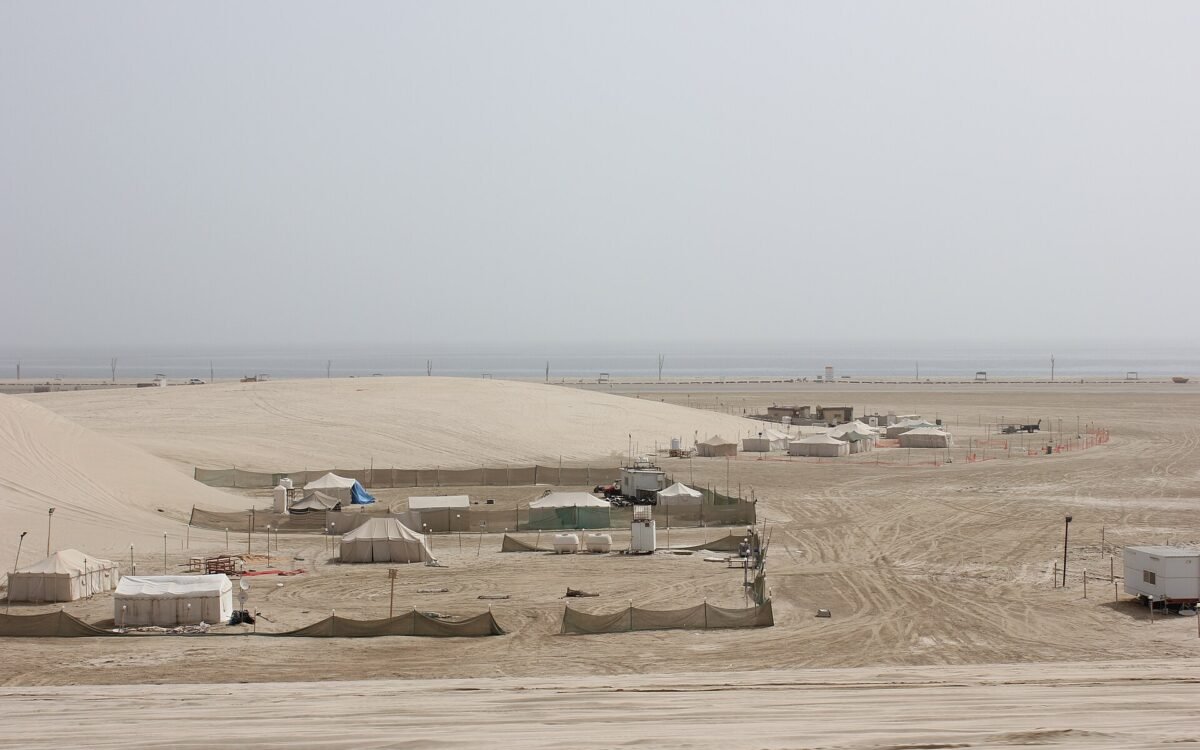
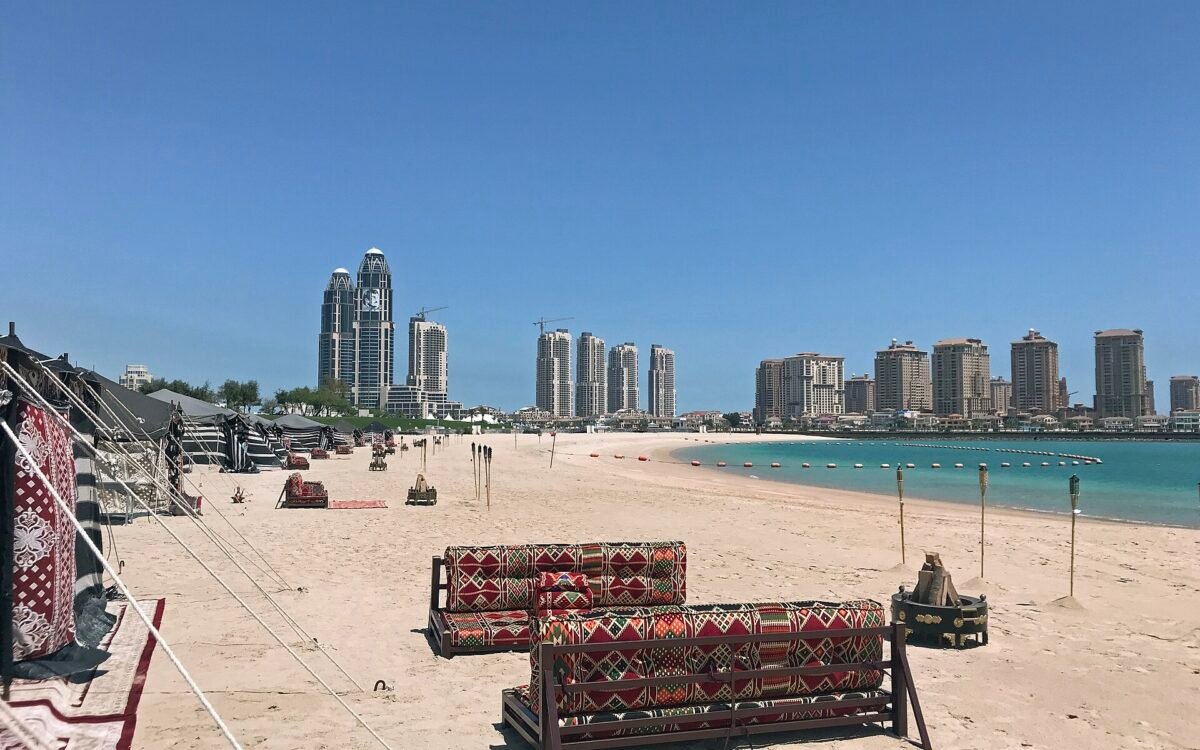
Al Khor is the easiest proper day out north of Doha. In about 45 minutes on the Al Khor Coastal Road you swap towers and traffic for mangrove creeks, a working harbour full of wooden dhows, calm shallow beaches and an island where people made purple dye more than 3,000 years ago. The best things to do in Al Khor are walking Purple Island, kayaking the Al Thakhira mangroves, a family afternoon at Al Farkiya Beach or Al Khor Park and its pandas, and an evening on the corniche by the old watchtowers.
It is not a place of big-ticket attractions, and that is the point. Al Khor is a real town of fishermen, families and long-established cafeterias, with some of the best nature in Qatar on its doorstep. Most of what is worth doing is free, open-air and dependent on two things you should plan around: the season and the tide.
This guide covers Al Khor town and the wider north-east coast, from Al Thakhira up to Fuwairit and Al Ghariya, with honest notes on what is closed (Simaisma Beach, Al Jassasiya), where to eat, how to get there without a car, a one-day and a half-day plan, and the practical detail that makes the difference between a good trip and a hot, muddy one.
At a glance
- Distance: Al Khor town is about 50 to 60 km north of Doha, roughly 45 minutes by car.
- Top picks: Purple Island, a kayak through the Al Thakhira mangroves, Al Farkiya Beach, Al Khor Park and Panda House, the corniche and Al Khor Towers.
- Cost: most spots are free; Al Khor Park is QAR 15 for adults, Panda House and kayak tours cost extra.
- 4×4: not needed for anything in or around the town; only useful for the quieter sandy stretches further north.
- Best season: November to March. Plan mangrove and island visits around the tide.
- Closed: Simaisma Beach (since June 2025, long-term redevelopment); Fuwairit nesting beach 1 April to 1 August; Al Jassasiya rock carvings temporarily closed.
- No car? Metro to Lusail, then a Mowasalat bus to Al Khor, but the nature spots are hard to reach without a car or tour.
Al Khor in brief: where it is and why it is worth the drive
Al Khor sits on a wide, sheltered bay on Qatar’s north-east coast, in the municipality of Al Khor and Al Thakhira. The name means “creek” in Arabic, and until the mid-20th century the town was usually called Khor Al Shaqiq. According to local tradition, families of the Al Muhannadi tribe settled here in the mid-18th century after finding fresh water at a spring later known as Ain Hleetan. The town grew into one of the main pearling and fishing ports of the north, and the three stone watchtowers that still stand along the coast were built around 1900 to watch the harbour and guard that well.
Today it is a quiet, spread-out town of around 30,000 people, with a busy fishing harbour, a landscaped corniche, a large family park, Al Bayt Stadium (the tent-shaped venue that hosted the opening match of the 2022 FIFA World Cup) and, just outside, the densest mangroves in the country. Together, Al Khor and Al Thakhira hold roughly 1,400 hectares of grey mangrove, the only mangrove species that grows naturally in Qatar.
What makes Al Khor work as a day trip is variety within a short radius. Purple Island, the town corniche, Al Farkiya Beach and Al Khor Park are all within 10 to 15 minutes of each other, and Al Thakhira is only a little further up the coast. You can mix nature, history, a beach and a proper lunch without spending the day in the car.
It suits families with young children, walkers and birdwatchers, photographers, kayakers and anyone who has “done” Doha and wants to see a more local side of Qatar. It is less suited to anyone looking for nightlife, big resorts or deep-water swimming.
The best things to do in Al Khor
1. Walk across to Purple Island (Jazirat Bin Ghannam)
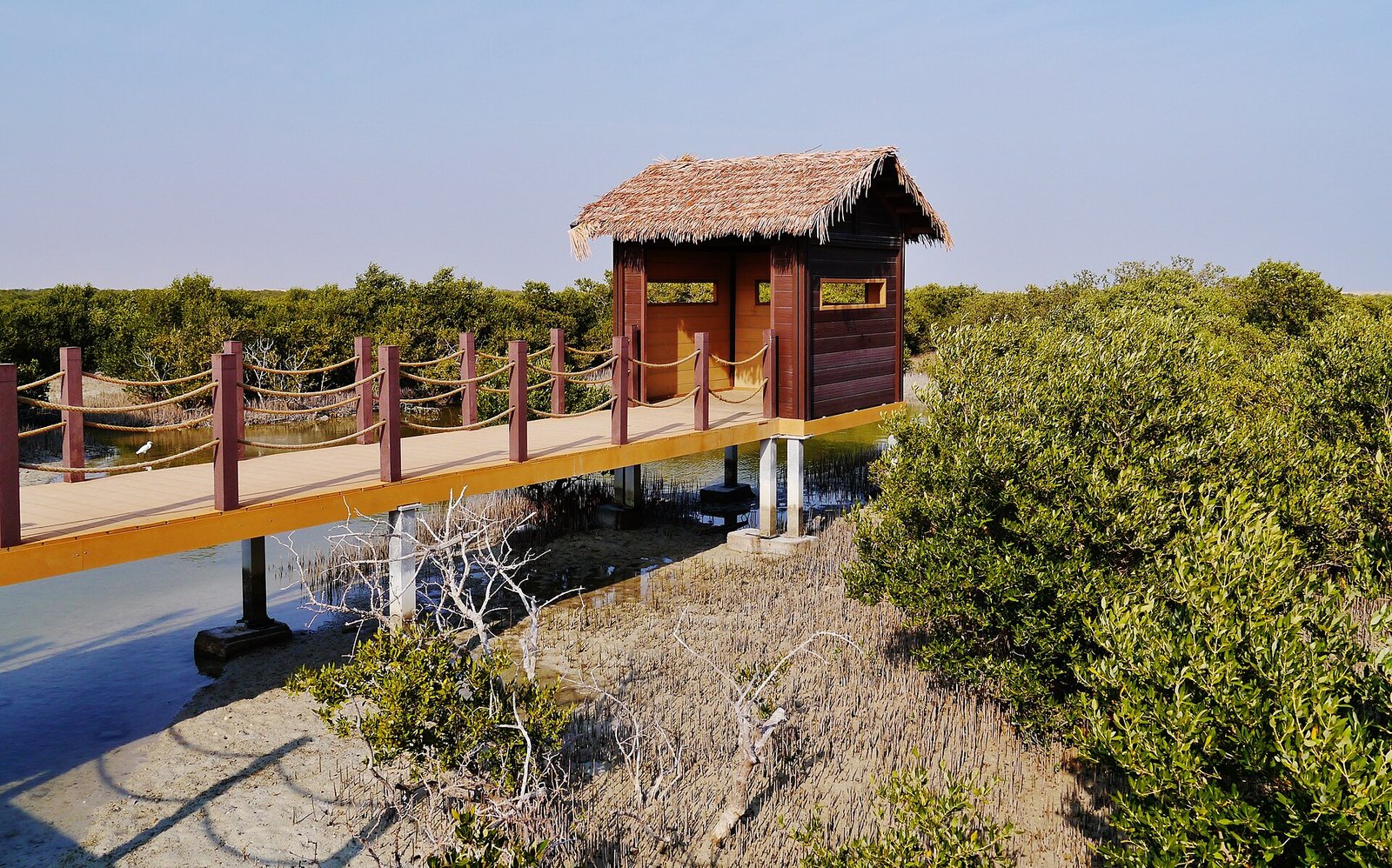
Purple Island is the name most people use for Al Khor Island, also mapped as Jazirat Bin Ghannam (or Bin Ghanim). It is a low island of salt marsh, mangrove creeks, beachrock and small limestone hills on the eastern side of Al Khor bay, and a wooden footbridge built in 2019 lets you walk across from the car park without wading.
The green channels are what draw most visitors, but the island’s real story is older. Archaeologists found around 2.9 million crushed sea-snail shells here, according to Qatar Museums, left by a dye industry of the Kassite period, roughly 1400 to 1100 BC. The snails were a murex species, the same family used for the famous Tyrian purple of the Mediterranean, which is where the English name comes from. It is the only site in Qatar attributed to the second millennium BC, and Qatar Museums lists it among the country’s heritage sites.
What you see on the ground is modest: no visitor centre, very little signage, low mounds and scattered shell. The pleasure is the walk itself. Cross the boardwalk slowly and watch for crabs on the mud, scramble up one of the limestone hillocks (the tallest is about 8.5 metres) for a view over the mangroves to the town, and look for herons, waders and, in winter, flamingos in the lagoons.
- Who it suits: families with children who don’t mind mud, walkers, birdwatchers, photographers.
- Access: paved road to the car park, then on foot. No 4×4 needed.
- Cost and facilities: free; no toilets or shops on the island, only shaded rest points along the boardwalk.
- Best time: November to March, early morning or late afternoon. At high tide the creeks look their best; at low tide you get exposed mud, crabs and wading birds.
Read our full guide to Purple Island, Al Khor
2. Kayak the Al Thakhira mangroves
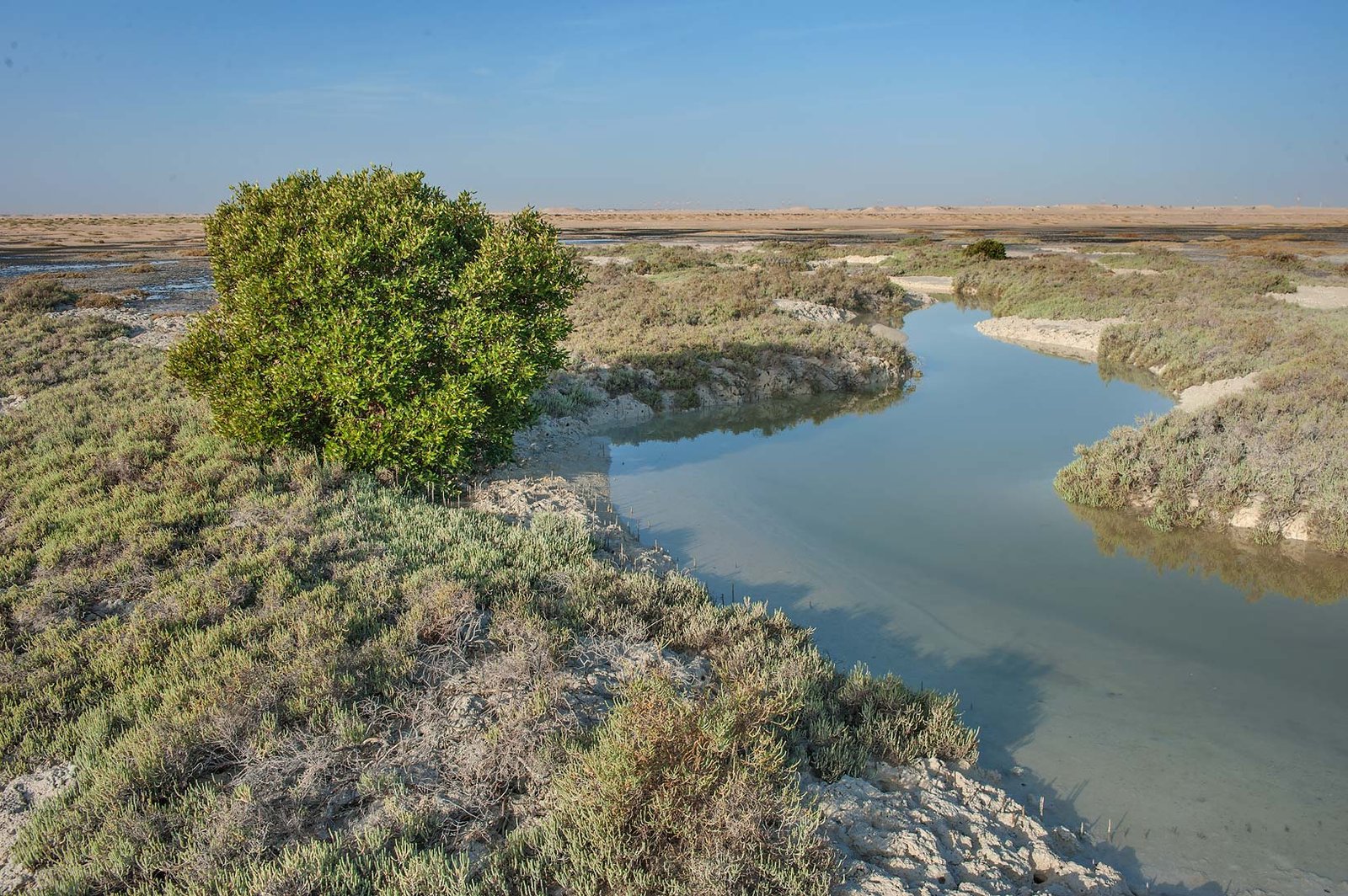
If you do one thing in Al Khor, make it a paddle through the mangroves between Al Khor and Al Thakhira. This is the densest mangrove forest in Qatar, protected within the Al Thakhira Nature Reserve (designated in 2006), and from a kayak you slip into narrow, still channels where the only sounds are birds and your paddle. It is one of very few places in the country that genuinely feels like a forest.
Most people go with a guided tour. Several Doha-based operators run them, typically 1.5 to 2 hours on the water plus a short briefing, with kayak, paddle and life jacket included. Published group prices in 2025 to 2026 ranged from roughly QAR 100 to QAR 200 per person, more for private trips or packages with transport from Doha. No experience is needed and children usually manage well in a double kayak with an adult. Some operators also offer stand-up paddleboarding on the same routes.
Tide matters more than anything. The channels need water in them, so good operators set start times around high tide and will move your slot if the tide is wrong. Before you book, check the meeting point (some tours start near Al Thakhira, others from the Purple Island side of the same system), group size and whether the timing follows the tide.
- Who it suits: almost everyone from about school age up; nature lovers and photographers especially.
- Access: paved roads to the launch points. No 4×4 needed.
- Cost: free to visit; guided tours roughly QAR 100 to 200 per person.
- Best time: October to April, mornings, around high tide. Winter brings the most birds.
Read our full guide to kayaking the Al Thakira mangroves
3. Spend a family afternoon at Al Farkiya Beach
Al Farkiya (also written Al Farkiah or Farkeh Coast) is Al Khor’s fenced public family beach, about 1,350 metres of sand on the south-eastern side of town. It was renovated by the Ministry of Municipality before the 2022 World Cup and now has shaded seating, walkways, play areas, toilets, showers and kiosks. The water is very shallow for a long way out, which makes it ideal for toddlers and poor for real swimming.
It is a family beach, so groups of men on their own should expect to be turned away. Published hours are 7am to midnight, and some weekdays are reserved for women and children (current listings show Sundays and Wednesdays). Entry and parking are free.
- Who it suits: families with small children, picnics, relaxed sunset visits.
- Access: paved road to its own car park. Any car.
- Cost and facilities: free; shade, play areas, toilets and showers, kiosks.
- Best time: October to April, afternoon into sunset, ideally nearer high tide.
Read our full guide to Al Farkiya Beach
4. Al Khor Park, the zoo and Panda House
Al Khor Family Park and Zoo, on the southern edge of town, is one of the largest parks in Qatar at around 240,000 square metres. When it reopened in 2020 after a long redevelopment, the Ministry of Municipality had added a zoo of 315 animals from 49 species, many moved from the old Doha Zoo, along with a battery-powered train, playgrounds, mini golf, a skating area, an amphitheatre and a small air-conditioned museum. It is the one paid park in the country, because of the zoo: QAR 15 for adults and QAR 10 for children under 10, with the train a small extra.
Next door is Panda House, home to Suhail and Thuraya, the two giant pandas Qatar received from China in 2022, the first in the Middle East. It is a separate attraction with its own tickets, sold through the Ministry of Municipality’s Oun app. Recent listings give 10am to 6pm and around QAR 50 for adults and QAR 25 for children, but check the app before you go.
- Who it suits: families, especially with under-10s.
- Hours: park 8am to 10pm, zoo 8am to 6pm at the time of writing; Tuesdays are for women and children only.
- Access: paved roads, large car park. Any car.
- Best time: November to March, arriving early so you see the zoo while the animals are active.
Read our full guide to Al Khor Park and Zoo
5. Stroll Al Khor Corniche and the dhow harbour
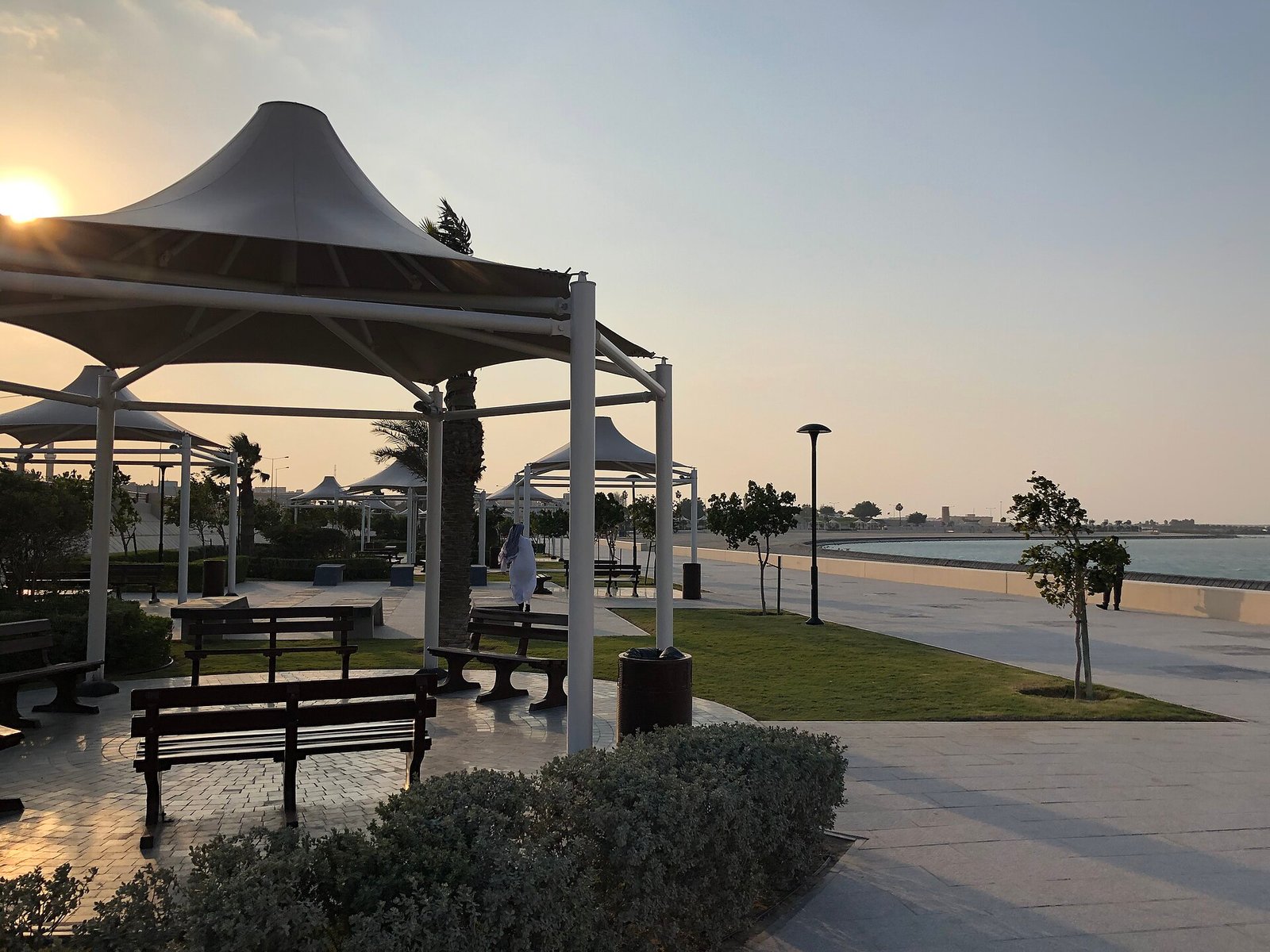
Al Khor Corniche is a landscaped seafront of about 28,000 square metres, with shaded seating, lawns, play areas and parking, opened in stages from 2018. It is smaller and far quieter than the Doha Corniche, and much more local. In the evening families spread out on the grass, men fish from the edges and the karak sellers do steady business.
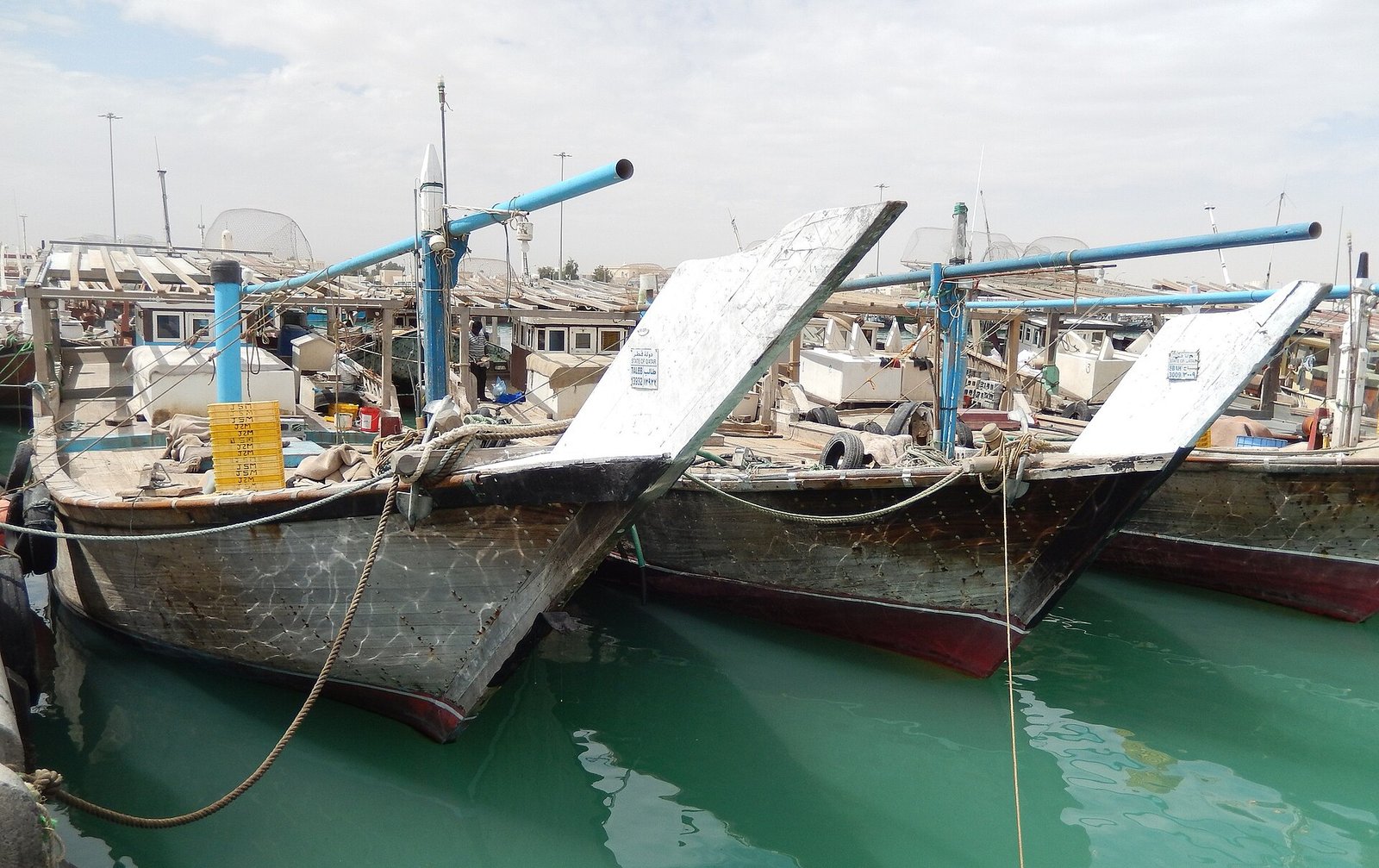
The best part is the working harbour. Wooden fishing dhows moor here in rows, and in the morning you can watch boats unload and crews sort nets. Keep a respectful distance, don’t climb on boats or equipment, and ask before photographing people up close.
- Who it suits: everyone; ideal for an evening walk after a day outdoors.
- Cost: free.
- Best time: late afternoon to sunset, or early morning for harbour activity.
6. See the Al Khor Towers
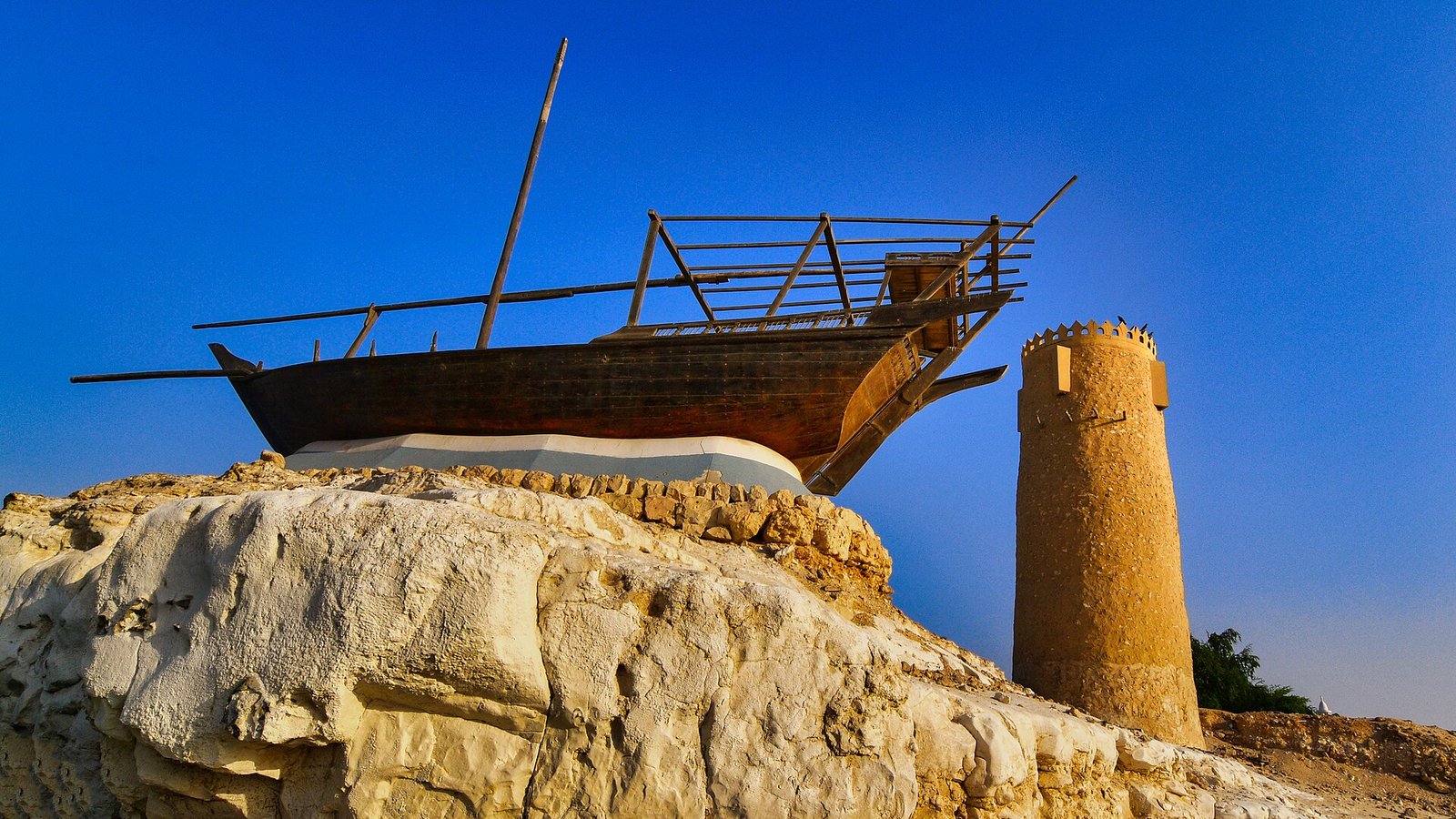
Al Khor’s three cylindrical watchtowers are the town’s best-known heritage landmark. Built around 1900 from local stone and mud, each is about 8 metres tall with walls around 60 centimetres thick. Qatar Museums describes them as guarding the port and the Ain Hleetan well, the settlement’s main water source, at a time when Al Khor was an important fishing and pearling centre. The upper openings and parapets were designed for defence, and originally the only way up was by rope.
Qatar Museums lists the towers as open to visitors. In practice this is a look-from-outside stop: walk around the towers, read the setting against the harbour and take photographs. The most photographed tower stands on a rocky outcrop near the seafront beside a replica dhow, and it looks its best in the low, warm light before sunset.
7. Visit the Al Khor fish market
Al Khor’s fish market moved into a new building at the Al Khor jetty in November 2022. The Peninsula reported 20 fish stalls, two fish-cleaning areas, vegetable shops, a supermarket, a restaurant and a cafeteria, opening from 5am every day. Come early in the morning to see the catch at its freshest, when the harbour and the market are at their busiest.
If you are staying somewhere with a kitchen or planning a barbecue, you can buy fish and have it cleaned on the spot. Otherwise it is simply a lively, authentic slice of town life. Prices are not posted in the way supermarkets do; ask, and don’t be shy about comparing stalls.
8. Drive out to Al Thakhira village
Al Thakhira (also spelt Al Dhakira or Al Zakhira) is a small coastal town just north of Al Khor, founded by Al Muhannadi families from Al Khor. In 1908 J. G. Lorimer’s Gazetteer of the Persian Gulf described about 300 houses whose men were all pearl divers. Today the old core is quiet, with its grand mosque near the former harbour and a simple beach looking across the water to the mangrove islands.
It is the natural base for kayak tours and a pleasant place to sit after a paddle. Don’t expect cafés or facilities on the shore; bring what you need or drive back to Al Khor.
9. Let off steam at Al Bayt Stadium Park
The park around Al Bayt Stadium opened in 2020 and is one of the biggest green spaces in the north, with running and cycling tracks, exercise stations, playgrounds and more than 1,000 trees. It is a good free alternative to Al Khor Park for a run, a cycle or an evening kickabout, and the stadium itself, designed to resemble a traditional Bedouin tent, is striking at dusk.
10. A note on Al Khor Museum
The Al Khor Museum occupies a former two-storey police station on the seafront and has displayed pearling and fishing equipment and finds from the Purple Island excavations. Its opening status has been unclear for some time and no confirmed hours are published, so don’t build a trip around it. If you are passing, look from outside and check with Qatar Museums before planning a visit.
Al Khor spots compared
Use this table to plan your day. Times are for a relaxed visit, not including driving.
| Spot | Best for | Time needed | Cost | 4×4? |
|---|---|---|---|---|
| Purple Island | Mangrove walk, history, birds | 1.5 to 2 hours | Free | No |
| Al Thakhira mangroves | Kayaking, paddleboarding, birds | 2 to 3 hours | Free; tours approx. QAR 100 to 200 | No |
| Al Farkiya Beach | Families, paddling, picnics | 2 to 4 hours | Free | No |
| Al Khor Park and Zoo | Children, animals, playgrounds | 2 to 3 hours | QAR 15 adults, QAR 10 children | No |
| Panda House | Families, panda fans | 45 minutes to 1 hour | Approx. QAR 50 adults, QAR 25 children | No |
| Al Khor Corniche and harbour | Evening walk, dhows, sunset | 45 minutes to 1 hour | Free | No |
| Al Khor Towers | Heritage, photography | 20 to 30 minutes | Free | No |
| Al Khor fish market | Early-morning atmosphere, fresh fish | 30 minutes | Free to browse | No |
| Al Bayt Stadium Park | Running, cycling, play | 1 to 2 hours | Free | No |
| Fuwairit Beach | Quiet beach, kitesurfing, turtles (from a distance) | Half day | Free | No, but sandy last stretch |
| Al Ghariya Beach | Beach day, camping, ruins | Half day | Free | Recommended for quieter stretches |
Beyond the town: Simaisma, Fuwairit, Al Ghariya and Al Jassasiya
Al Khor is also the gateway to the north-east coast. If you have a full day and a car, a loop north adds some of the quietest beaches in Qatar. Heading the other way, the old favourite on the drive up from Doha is currently out of action.
Simaisma: the beach is closed
Simaisma, about 40 km north of Doha on the Al Khor Coastal Road, used to be the classic stop on the way to Al Khor: a long family beach with shaded seating and small mangrove islands offshore. Simaisma Beach closed on 10 June 2025 and is expected to stay closed for around five years while the whole coastal strip is redeveloped by Qatari Diar. Some apps and older listings still show it as open; they are wrong. You can still drive through the old town and see its 1930s mosque from outside, but for a beach, go to Al Farkiya instead.
Read our full guide to Simaisma Beach and Corniche
Fuwairit Beach
Fuwairit, north of Al Khor in the municipality of Al Shamal, has soft pale sand, clear shallow water and a big place in history: according to historical sources summarised on Wikipedia, the Al Thani family lived here before moving to Al Bidda (Doha) in 1847. It is also Qatar’s most important nesting beach for the critically endangered hawksbill turtle, with close to 30 per cent of the country’s nests according to Visit Qatar.
Because of that, the nesting beach is closed every year from 1 April to 1 August. From October to March it is open and quiet, and popular with kitesurfers when the winter winds blow. The main roads are paved, but the last tracks to the shore can be sandy, so in an ordinary car park on firm ground and walk. Never drive onto the sand.
Read our full guide to Fuwairit Beach
Al Ghariya Beach
A short drive beyond Fuwairit, Al Ghariya is a long, shallow beach backed by low rocky hills, a lighthouse and the ruins of a village abandoned when its wells failed. It comes alive on winter weekends with families and campers and is almost empty on weekdays. There is also a women-only beach, Al Mamlha, with a small entry fee. Visit Qatar suggests a 4×4 for the sandier stretches, though you can reach the main access points in an ordinary car.
Read our full guide to Al Ghariya Beach
Al Jassasiya rock carvings
Between Al Khor and Fuwairit, a low limestone ridge at Al Jassasiya holds the largest collection of rock carvings in Qatar, around 874 figures including cup marks, rosettes and detailed boats. Qatar Museums currently lists the site as temporarily closed, so check before you detour.
Read our full guide to the Al Jassasiya rock carvings
Where to eat in Al Khor
Al Khor is not a destination for fine dining, but it eats well and cheaply if you like seafood, grills, Indian and Arabic food. Small independent restaurants open and close often, so check recent reviews and current hours on your map app before you drive to one specifically.
Al Khor Coastal Road strip
The stretch of the Al Khor Coastal Road through town, roughly between Al Khor Plaza and Al Khor Mall, is lined with restaurants and cafeterias: seafood, mandi, Afghan, Turkish and Indian (including vegetarian) places, plus tea shops. The best known is Pearl of Beirut, a long-running seafood and Arabic restaurant near the fish market that ILoveQatar described as one of the most famous restaurants in Al Khor, with Doha residents driving up just to eat there. Check current hours before you go.
Dakhira Road
The road towards Al Thakhira has a second cluster of casual places, featured in an ILoveQatar food-street guide: burger joints, Egyptian koshari, Yemeni mandi and grills, Southeast Asian food and a coffee lounge. It is handy after a morning kayak, since most tours finish on this side of town.
The fish market
The market building at the jetty includes a restaurant and a cafeteria alongside the fish stalls. It is the most local option in town and a good early breakfast stop if you are there at dawn for the boats.
Al Khor Mall and supermarkets
Al Khor Mall, on the southern side of town, has more than 100 outlets, a Lulu hypermarket, a cinema and a food court. It is the easiest choice with fussy children, and the hypermarket is the place to stock up on water, ice and picnic food before a beach afternoon.
Karak and a picnic
Some of the best meals in Al Khor are the simplest: a cup of karak and a chapati or samosa from a cafeteria, eaten on the corniche at sunset. Al Farkiya and Al Khor Park both have shaded picnic areas, and a cool box of your own food is completely normal here. Leave nothing behind.
A one-day Al Khor itinerary
This plan assumes a cool-season weekend, a car and a high tide in the morning. Swap the kayak and island around if the tide falls later.
- 7am: Leave Doha. Take the Al Khor Coastal Road north. Simaisma’s beach is closed, so don’t stop; you’ll reach Al Khor in about 45 minutes.
- 8am: Harbour and fish market. Watch the dhows unload, wander the stalls and grab tea and something to eat at the market cafeteria.
- 9am to 11.30am: Kayak the Al Thakhira mangroves. Book a tour timed around high tide. Afterwards, sit for a while on the beach at Al Thakhira.
- 12pm: Lunch. Head back into town for grills or seafood on the Coastal Road or Dakhira Road.
- 1.30pm to 3pm: Rest in the shade. In the warmer shoulder months, this is the time for Al Khor Park’s shaded lawns or the mall. With children, see the zoo or Panda House now.
- 3.30pm to 5pm: Purple Island. Walk the boardwalk as the light softens and climb a hillock for the view across the bay.
- 5pm: Towers and sunset. Drive to the seafront, photograph the Al Khor Towers in the golden light, then walk the corniche with a karak as the sun goes down.
- 7pm: Drive home. Or have dinner in town first; the Coastal Road restaurants are busiest after sunset.
Family version: replace the kayak with Al Khor Park and the zoo in the morning, then spend the afternoon at Al Farkiya Beach and finish on the corniche.
North-coast version: skip the park and mall, and after Purple Island drive north for sunset at Fuwairit or Al Ghariya (October to March only for Fuwairit’s nesting beach).
A half-day Al Khor itinerary
If you only have a morning or an afternoon, keep it tight and centred on the town.
Morning half day
- Leave Doha at 6.30am and go straight to Purple Island. Walk the boardwalk and the island for about 90 minutes while it is cool and the birds are active.
- Drive five minutes to the harbour and the fish market for tea and a look at the catch.
- Photograph the towers, walk a stretch of the corniche and be back in Doha by lunchtime.
Afternoon half day
- Leave Doha around 2pm and spend two hours at Al Farkiya Beach (families) or on a late-afternoon kayak tour if one fits the tide.
- Move on to Purple Island for the last hour of light, or go straight to the towers for sunset.
- Walk the corniche, eat on the Coastal Road and drive home after dark.
Getting to Al Khor from Doha
By car
Driving is by far the best way to explore Al Khor, because the places worth seeing are spread around the bay rather than in one walkable centre. Visit Qatar puts the drive at about 45 minutes; allow up to an hour from the south of Doha or in weekend traffic.
- Al Khor Coastal Road: the direct route. Head north past Lusail and Simaisma and it takes you straight into the south of Al Khor town, close to Al Khor Park, Al Khor Mall and Al Farkiya.
- Al Shamal Road: the main northern highway, running inland. It is the better choice if you are coming from the west of Doha or continuing north to Al Jassasiya, Fuwairit and Al Ghariya afterwards.
All the main spots in and around town are on paved roads with free parking, and none needs a 4×4. Approximate distances from central Doha: Simaisma about 40 km, Al Khor Park and Purple Island around 50 km, Al Farkiya about 53 km, Al Thakhira about 60 km. Fuwairit and Al Ghariya are 80 to 100 km from Doha; Visit Qatar allows 1.5 to 2 hours for the drive.
By public transport
There is no metro to Al Khor. The practical option is the Red Line to Lusail, then a Mowasalat (Karwa) bus from the Lusail bus station to Al Khor, a route Visit Qatar also suggests. At the time of writing, route R702 ran roughly hourly and took a little over an hour, but routes and numbers change, so check the Karwa Journey Planner app before you travel.
The honest reality: the bus gets you to Al Khor town, not to the mangroves, Purple Island or the beaches. Taxis and ride-hailing cars can take you out from Doha, but getting one back from Al Khor or Al Thakhira can mean a long wait, so arrange your return in advance or keep the car waiting.
By tour
Kayak operators often sell packages that include transport from Doha, and some north-coast day tours combine Al Khor with Purple Island and the northern beaches. For visitors without a car, a tour is usually cheaper and less stressful than two long taxi rides.
Best time to visit: season, time of day and tides
Season
- November to March: the best time for everything. Warm days, cool evenings and the most birds in the mangroves and around Purple Island.
- October and April: good, but go early in the morning or late in the afternoon.
- May to September: extreme heat and humidity. Limit yourself to an early-morning walk or kayak and an air-conditioned lunch, or leave Al Khor for the winter.
Time of day
Early morning is the best time for the harbour, the fish market, birds and walking. Late afternoon into sunset suits Purple Island, the towers and the corniche, when the light is warm and the heat has eased. Midday is for shade, food and the park.
Tides
The tide changes Al Khor more than any other place near Doha. At high tide the mangrove channels are full and paddleable and Purple Island’s creeks look green and glassy. At low tide the kayak routes can become too shallow, while the mudflats fill with crabs and feeding waders. Check a tide table for Al Khor before you set off, book kayak tours around high tide, and pick the tide you prefer for the island walk.
Weekends, holidays and the camping season
Friday and Saturday are the busiest days, especially at Al Khor Park, Al Farkiya and the northern beaches. Weekdays are much quieter. If you plan to camp on the north-east coast, note that camping is only allowed in the official winter camping season with registration through the Ministry of Environment and Climate Change. The 2025 to 2026 season ran from 15 October to 15 April; check the ministry’s announcement for the 2026 to 2027 dates and rules.
Al Khor with children
Al Khor is one of the most family-friendly day trips in Qatar. A few pointers:
- Under-5s: Al Farkiya’s shallow water and play areas, and the Al Khor Park train and playgrounds, are the winners. Purple Island’s boardwalk works with a sturdy pushchair, but the island itself doesn’t.
- Ages 5 to 12: the zoo and pandas, crab-spotting from the Purple Island boardwalk and a double kayak with a parent. Most kayak operators ask that children are accompanied by an adult.
- Teenagers: kayaking or paddleboarding, scrambling up the hillocks on Purple Island, and the cycling tracks at Al Bayt Stadium Park.
- Women-and-children days: Al Khor Park is for women and children only on Tuesdays, and Al Farkiya reserves some weekdays for women and children. Families are welcome on other days.
- Toilets: available at Al Khor Park, Al Farkiya and the mall; not on Purple Island or at the mangrove launch points. Plan stops accordingly.
Rules, etiquette and what to bring
Rules and etiquette
- Dress modestly in town, at the harbour and on family beaches: shoulders and knees covered, and burkinis or swimwear with a cover-up for women at Al Farkiya.
- Family areas mean families. Groups of men on their own may be refused entry at family beaches and parks.
- No alcohol in public places, including beaches and parks.
- Protect the mangroves. Don’t break branches, trample seedlings or disturb birds. Al Thakhira is a nature reserve.
- Leave archaeology alone. On Purple Island, don’t collect shells or pottery, dig, or move stones.
- Never drive on beaches or mudflats, and stay off the Fuwairit nesting beach during the closure.
- Leave no trace. Take all rubbish home; bins can be scarce and overflow on busy weekends.
- Ask before photographing people, especially women and fishermen at work.
What to bring
- More water than you think you need, even in winter
- Sun hat, sunglasses and reef-safe sunscreen
- Shoes that can get muddy, or water shoes for the beaches and beachrock
- A waterproof phone pouch and dry bag for kayaking
- Binoculars for birdwatching in winter
- Insect repellent for evenings near the mangroves
- A cool box, mat and sunshade for beach and park picnics
- A light jacket for winter evenings on the corniche
Mistakes to avoid
- Ignoring the tide. A low-tide kayak slot can mean dragging the boat across mud. Ask the operator how they time trips.
- Heading for Simaisma Beach. It has been closed since June 2025. Don’t trust old listings.
- Driving to Fuwairit between April and August. The nesting beach is closed from 1 April to 1 August.
- Expecting a museum on Purple Island. There is no visitor centre. Go for the walk and the story.
- Arriving at the zoo late. The zoo closes well before the park, at 6pm at the time of writing.
- Relying on a taxi back. Book your return or drive; cars are scarce in Al Khor.
- Doing it all at midday. Even in March the sun is strong. Put the outdoor walks at either end of the day.
Frequently asked questions
What are the best things to do in Al Khor?
The highlights are walking Purple Island, kayaking the Al Thakhira mangroves, a family afternoon at Al Farkiya Beach, Al Khor Park’s zoo and Panda House, and an evening on the corniche by the Al Khor Towers and the dhow harbour. With more time, drive north to Fuwairit or Al Ghariya beaches.
How far is Al Khor from Doha?
Al Khor town is about 50 to 60 km north of Doha, roughly 45 minutes by car via the Al Khor Coastal Road. Allow up to an hour in weekend traffic or from the south of the city.
Can I get to Al Khor without a car?
Yes, but it is limited. Take the metro to Lusail and a Mowasalat bus to Al Khor (check the Karwa Journey Planner for the current route). The buses don’t serve the mangroves, Purple Island or beaches well, so a tour with transport or a pre-booked taxi is more practical.
Is Purple Island free to visit?
Yes. Purple Island has no entry fee and no set hours, but there are no facilities on the island. Visit in daylight, ideally early morning or late afternoon, and bring water.
Do I need a 4×4 in Al Khor?
No. Everything in and around Al Khor town, including Purple Island, Al Thakhira, Al Farkiya and Al Khor Park, is reachable on paved roads. A 4×4 only helps for the sandier stretches of the north-east coast, such as parts of Al Ghariya.
Is Simaisma Beach open?
No. Simaisma Beach closed on 10 June 2025 for a large coastal redevelopment and is expected to remain closed for around five years. The nearest good alternative is Al Farkiya Beach in Al Khor.
When is the best time to kayak in the Al Thakhira mangroves?
From October to April, in the morning and around high tide, when the channels are full and the air is cool. Winter brings the most birds, including herons and flamingos.
Is Al Khor good for families?
Very. Al Farkiya’s shallow water, Al Khor Park’s zoo, train and playgrounds, Panda House and the Purple Island boardwalk make it one of the best family day trips from Doha. Note the women-and-children days at the park and beach.
Last checked October 2026. Rules, fees and access can change, so confirm with the official source before you go.