Winter is the reason many people fall for Qatar. From November to March the heat finally breaks, daytime highs settle in the low to mid-20s and the whole country moves outdoors: families pitch tents in the desert, the beaches fill on Friday afternoons, camel racing season is in full swing and the calendar fills with festivals that only make sense in cool weather. If you are wondering what to do in Qatar in winter, the short answer is: get outside, early and often, because the window is shorter than it looks.
This guide covers the season month by month, then groups the best winter activities by theme: beaches, desert trips and camping, heritage sites, mangroves and kayaking, parks, camel racing, falconry, horses, the big festivals and the winter markets. Every place we have a full guide for is linked, so you can go deeper before you drive out. Where 2026–27 dates have been officially announced we give them; where they haven’t (as of early October 2026), we give last season’s dates and label them clearly, because many Qatari events are confirmed only a few weeks ahead.
We have also been honest about what is closed. Several heritage forts in the north are listed by Qatar Museums as temporarily closed, Simaisma Beach is shut for redevelopment and some desert areas open only during event seasons. Knowing that before you set off saves a long drive to a locked gate.
At a glance
- Best months: December to February are the coolest (typical highs 23–25°C); November and March are warm but very pleasant at the edges of the day.
- Big dates: Qatar National Day is 18 December, with the Darb Al Saai festival in Umm Salal in the run-up. Brouq Season at Ras Abrouq, the Marmi falconry festival and camel racing festivals cluster between late November and February.
- Camping: the official winter camping season ran 15 October 2025 to 15 April 2026; 2026–27 dates had not been published at the start of October 2026. Permits are for Qatari nationals, so most visitors use licensed camps or overnight tours.
- Must-do outdoors: a 4×4 trip to Khor Al Adaid, kayaking the Al Thakira mangroves, a morning at the Al Shahaniya camel racetrack and sunset at Richard Serra’s East-West/West-East.
- Closures to know: Simaisma Beach is closed for redevelopment; Al Jassasiya, Zekreet Fort, Al Rakiyat, Al Thaqab and Barzan Towers are listed as temporarily closed.
- Watch out for: early sunsets (before 5pm in December), occasional heavy showers that flood desert tracks, and shamal winds that whip up dust and rough seas.
What winter in Qatar is really like
“Winter” in Qatar is a relative term. There is no snow and very little rain, but the change from summer is dramatic. Average highs fall from the high 30s in October to around 23°C in January, nights can drop to the mid-teens, and the humidity that makes summer so draining eases off. In the desert, especially on clear nights, it can feel properly cold after dark. Bring a fleece or light jacket for any evening outdoors.
Rain is scarce but arrives almost entirely between December and April, usually as short, sometimes heavy showers. A single downpour can flood underpasses in Doha and turn desert tracks and low-lying rawdas (depressions) into mud, so check the forecast from the Qatar Meteorology Department before an off-road trip. The good news is that rain is what brings the desert briefly green: a few weeks after a wet spell, places like Rawdat Rashed and the desert rawdas can sprout grass and wild flowers.
The other things that shape a winter day are wind and daylight. North-westerly shamal winds can blow for a day or several, raising dust, cutting visibility and making the sea choppy; on those days, pick a museum or a sheltered park over a beach or boat trip. Morning fog also settles occasionally in mid-winter, especially inland. And the days are short: the sun sets before 5pm in December and only around 6pm by late March, so plan long drives to arrive with plenty of light in hand.
Month-by-month: weather and events
The figures below are long-term averages for Doha (inland and desert areas swing wider, with cooler nights and warmer afternoons). Event dates are the latest confirmed: where 2026–27 dates were not yet announced in early October 2026, we show the 2025–26 dates in brackets as a guide to timing.
| Month | Avg high / low (Doha) | Sea temp | Conditions | Key events and seasons |
|---|---|---|---|---|
| November | 30°C / 22°C | about 28°C | Warm days, comfortable evenings; best swimming month of the cool season | Formula 1 Qatar Grand Prix, Lusail (27–29 Nov 2026). Qatar Boat Show, Old Doha Port (4–7 Nov 2026). Katara Traditional Dhow Festival (27 Nov–18 Dec 2025). Brouq Season opened (26 Nov 2025). Camel racing season under way. |
| December | 25°C / 17°C | about 24°C | Mild, mostly sunny; first showers possible; sunset before 5pm | Qatar National Day, 18 Dec (fixed). Darb Al Saai, Umm Salal (10–20 Dec 2025). Qatar Balloon Festival, Al Bidda Park (11–20 Dec 2025). Founder Sheikh Jassim Camel Festival (13–27 Dec 2025). |
| January | 23°C / 15°C | about 21°C | Coolest month; chilly desert nights; occasional rain, fog and shamal | Qatar International Food Festival, Lusail (13–23 Jan 2027, announced). Marmi falconry festival, Sealine (1–24 Jan 2026). Souq Waqif equestrian festival and Arabian horse shows (20–27 Jan 2026). |
| February | 24°C / 15°C | about 20°C | Still cool; best month for green rawdas after rain; windy spells | National Sport Day (second Tuesday of February: 9 Feb 2027). CHI Al Shaqab (18–21 Feb 2026). Father Amir camel festival (2–12 Feb 2026). Brouq Season closed 10 Feb 2026. Ramadan expected to begin around 8 Feb 2027, subject to moon sighting. |
| March | 28°C / 18°C | about 21°C | Warming fast; mornings and evenings still lovely; dust more likely | Ramadan continues into early March 2027, with Eid Al Fitr expected around 10 March (moon sighting). Winter farmers’ markets wind down from February to early April. |
October and April sit either side of the season. October still reaches the mid-30s, though evenings start to soften and the camping season traditionally opens mid-month; April brings highs in the low 30s and the end of camping. Both work for early-morning and evening outings but not for midday hikes.
Beaches in winter
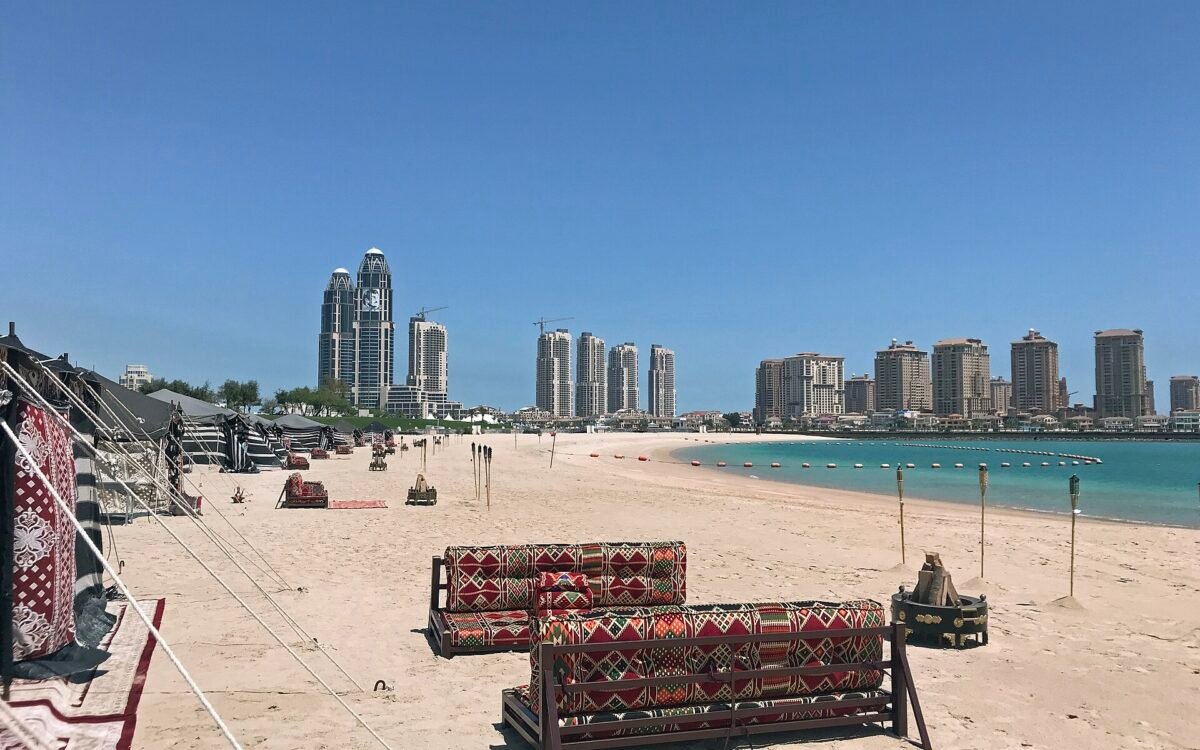
Qatar’s beaches are at their best in November and again in March, when the sea is still warm enough for a proper swim. In December to February the water drops to around 20–24°C: bracing but swimmable for many people, and the beaches are lovely for picnics, walks and sunset regardless. Friday and Saturday afternoons are busy; midweek mornings are quiet. For the full list, see our guide to the best beaches in Qatar.
North coast: wild beaches and turtle country
The north is the winter beach region. Fuwairit Beach is a nesting site for hawksbill turtles and is closed from 1 April to 1 August, which makes winter the only sensible time to go. Al Ghariya Beach nearby has shallow water and a fenced women-only section, Al Mamlha. Further up the coast, Al Mafjar Beach is best around high tide, and Abu Dhalouf Park and Bahar Mosque make a good sunset stop on the drive back. In Al Khor, Al Farkiya Beach is a fenced family beach with facilities; it is reserved for women and children on Sundays and Wednesdays.
South and west: dunes, palm trees and long sunsets
South of Doha, Sealine Beach is where the dunes meet the sea and where most Khor Al Adaid trips start; quad bikes and camel rides operate nearby. Al Wakrah Souq and Beach combines a shallow family beach with a souq for dinner afterwards. On the west coast, Dukhan Beach and Umm Bab (Palm Tree) Beach face the sunset and are rarely crowded midweek.
Resort beaches and island day passes
If you want sunbeds and a lifeguard, winter is also day-pass season. Banana Island Resort by Anantara sells day passes with a boat transfer from Doha. Sealine Beach, a Murwab Resort sits right on the dunes, and Hilton Salwa Beach Resort has a waterpark: note the resort says it is closed on Mondays from October to December 2026 (except 26 October) and for maintenance from 17 January to 20 February 2027.
Closed: Simaisma Beach
Simaisma Beach, once one of the most popular family beaches north of Doha, closed on 10 June 2025 for a redevelopment expected to last about five years. Don’t plan a winter picnic there.
Desert trips: dunes, inland sea and rawdas
Winter is the only comfortable time to spend a full day in the desert, and it is when most Doha residents get their 4×4 out. If you have never driven on sand, go with a licensed operator; our desert safari guide explains what tours include and what they cost.
Khor Al Adaid (the Inland Sea)
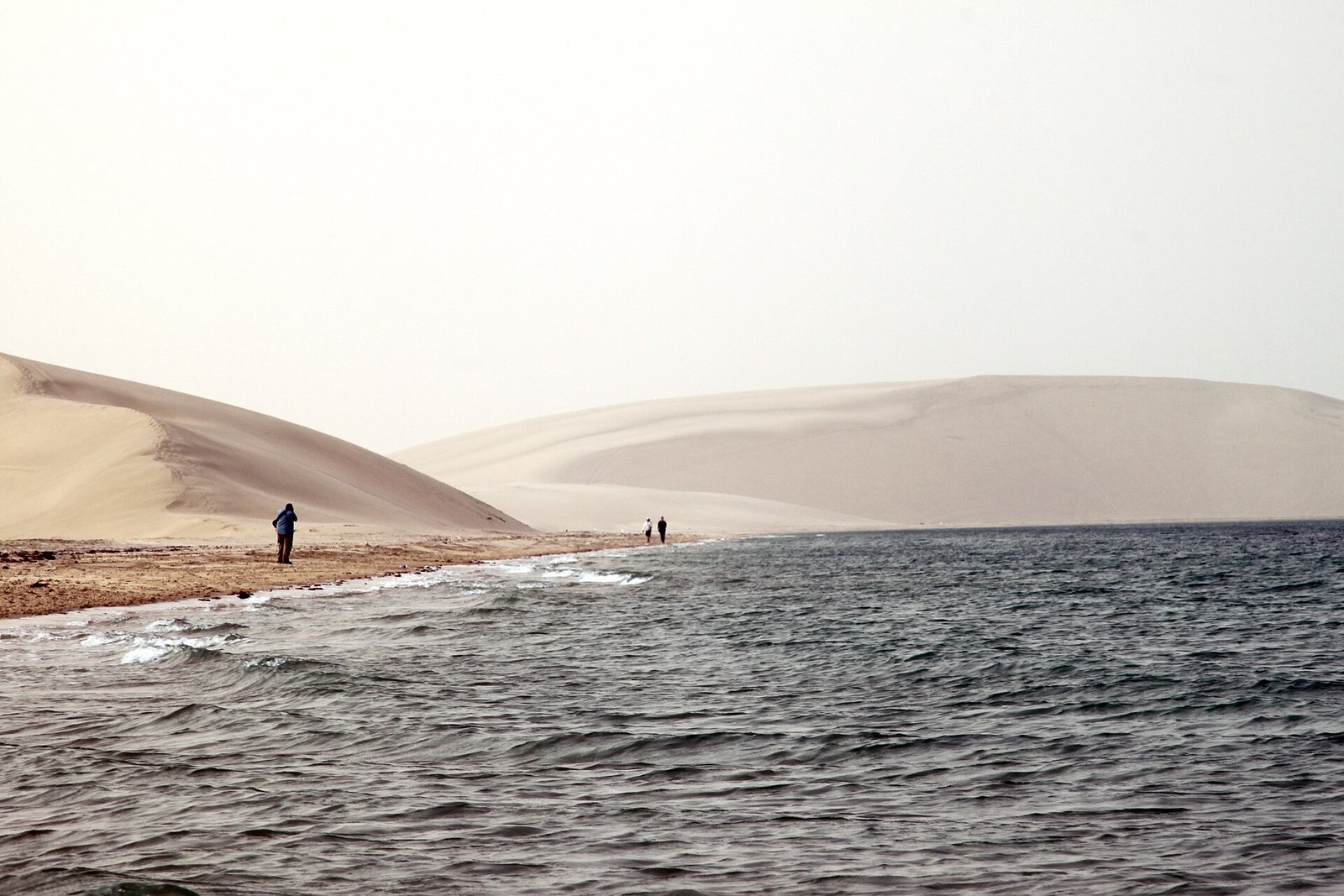
Khor Al Adaid is the headline desert trip: a tidal inlet ringed by high dunes in the far south-east, on the border with Saudi Arabia. There is no paved road, so you need a 4×4, tyre deflation and real dune-driving experience, ideally in a convoy. Late afternoon light is spectacular, but leave enough time to get back across the dunes before dark or stay overnight in a camp. Most tours start at Sealine.
Singing Sand Dunes and the Mesaieed area
Closer to Doha and reachable in an ordinary car with care, the Singing Sand Dunes hum when dry sand slides down the slip face. They perform best on dry, still afternoons, so skip them just after rain. Bring something to slide down on.
Rawdat Rashed, Dahl Al Misfir and the inland desert
West of Doha the desert is stonier and flatter. Rawdat Rashed and the desert rawdas are at their best from December to March after winter rain, and the area is also one of the designated camping zones. Nearby, Dahl Al Misfir Cave is a fenced, unstaffed limestone cavern; avoid it in rainy periods, when the slope down is slippery and the site may be shut.
Zekreet Peninsula: rocks, art and Film City
The west coast peninsula is one of the best winter day trips. The Zekreet mushroom rocks are wind-carved limestone formations, and the four steel plates of East-West/West-East by Richard Serra stand in a desert corridor that glows in the last 90 minutes of daylight. Zekreet Film City, a mock Arabian village built as a film set, and the northern tip at Ras Abrouq in the Al Reem Biosphere Reserve are gated for much of the year and open mainly during Brouq Season (below). For combining the stops, see our day trips from Doha guide.
Brouq Season at Ras Abrouq
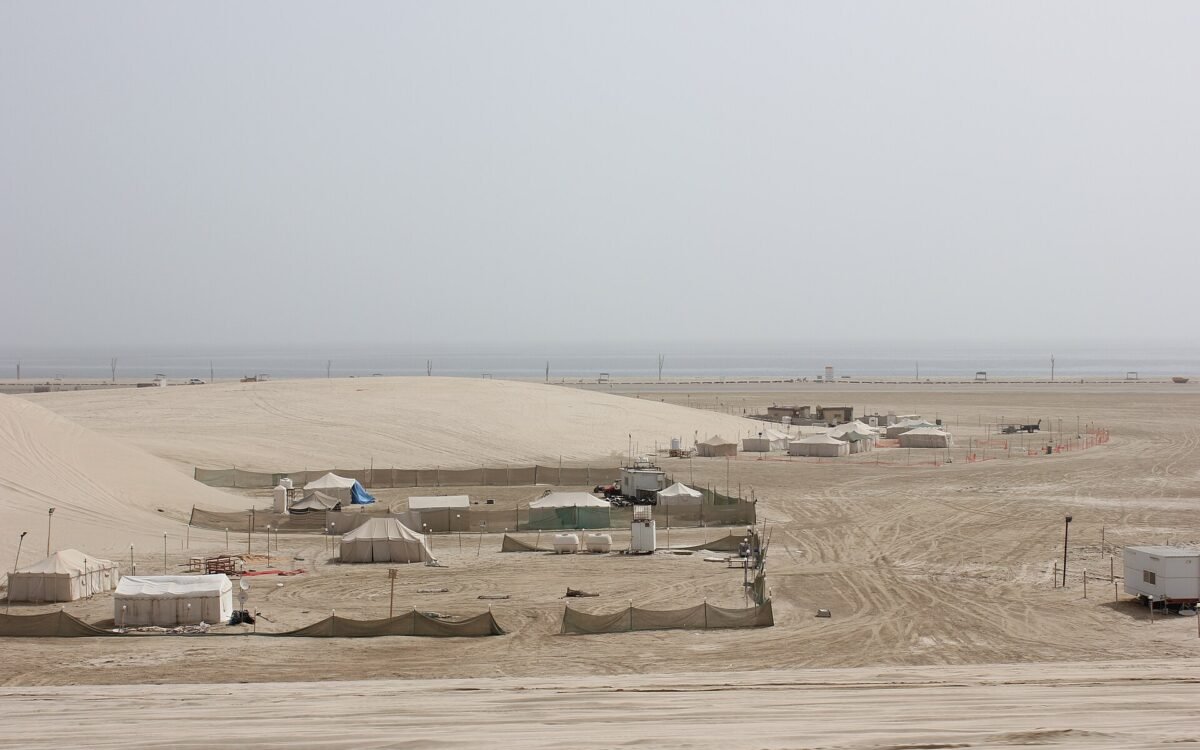
Brouq is Visit Qatar’s winter desert festival on the Zekreet peninsula, set among the limestone formations of the Al Reem Biosphere Reserve. In 2025–26 it ran from 26 November 2025 and, after an extension, closed on 10 February 2026. It was organised in four zones: Film City as a souq-style area with food stalls and performances; a Wildlife Experience with guided routes by camel or on horseback; Desert Escape with an adventure tower, zipline, climbing wall and outdoor dining; and a seaside glamping zone run with Our Habitas Ras Abrouq.
Last season’s general entry was QAR 50 for adults and QAR 30 for children under 12, with opening hours of 2–9pm on weekdays, 1–9pm on Fridays and 10am–9pm on Saturdays, booked through Platinumlist. Visit Qatar has listed Brouq in its 2026–27 calendar, but at the start of October 2026 its event page still said dates for the next edition were to be announced. Expect a late-November start if the pattern holds, and check Visit Qatar before you drive the 90 minutes or so from Doha.
Camping season: how winter camping works
Camping is the defining Qatari winter pastime, and the rules are stricter than many visitors expect. For the full picture, read our camping in Qatar guide; the essentials are below.
The official camping season
The Ministry of Environment and Climate Change (MECC) runs a winter camping season with registration through its website and the Be’ah app. The 2025–26 season ran from 15 October 2025 to 15 April 2026, with registration opened region by region (central, southern, then northern sites such as Rawdat Rashed, Sealine and Khor Al Adaid). Permits were limited to Qatari nationals aged 25 or over, cost QAR 3,000 plus a refundable QAR 10,000 deposit, and could not be rented out or transferred. As of September 2026, the ministry had not yet announced dates or rules for 2026–27, so don’t assume last season’s terms will carry over.
Options for residents and visitors
Without a permit, the realistic choices are licensed camps and overnight tours. Regency Sealine Camp offers overnight stays near the dunes from October to April, and the Brouq glamping pods have offered nights on the Zekreet coast. Overnight Khor Al Adaid tours from Sealine bundle the 4×4 driving, dinner and tents. A night at a camp is also the easiest way to see the desert sky well away from Doha’s lights.
Camping etiquette
- Don’t drive on protected rawdas, vegetation or fenced reserve land, and keep to existing tracks.
- Take all rubbish home: the ministry fines violations and can revoke permits.
- Keep fires in a raised fire pit or brazier, never directly on vegetation, and put them out fully.
- Pack warm layers: desert nights in January are noticeably colder than evenings in Doha.
Heritage sites and abandoned villages
Winter is the only sensible season for exploring Qatar’s forts, ruined pearling villages and archaeological sites, most of which have little or no shade. Go early or in the late afternoon for the light. Before you plan a route, check which sites are actually open, because the picture changed in 2025–26.
Open and worth the drive
Al Zubarah Fort and Archaeological Site, Qatar’s UNESCO World Heritage Site, is the anchor of any northern heritage day; it opens Saturday to Thursday 9am–5pm and Friday 12.30–5pm. Close by, Freiha is an unstaffed coastal site best seen at low tide in the late afternoon. On the way, Al Ruwais Mosque and Old Port is a quiet morning stop. The abandoned villages of Al Khuwayr and Al Arish are open-air ruins with no set hours, beautiful in the low winter sun. Inland, Al Wajbah Fort in Al Rayyan has no published ticketing; go early or late.
Closed or view-from-outside only
Several sites managed by Qatar Museums are listed as temporarily closed until further notice: Al Jassasiya Rock Carvings, Zekreet Fort, Al Rakiyat Fort, Al Thaqab Fort and Barzan Towers. Al Jumail and the fortified buildings at Umm Salal Mohammed are not open to visitors either. Most can still be seen and photographed from outside the fence, and our place guides explain what is visible. The same goes for the land-art piece Shadows Travelling on the Sea of the Day in the north, which is best visited in the cool months. Please respect fences and signs.
For a museum day when the shamal is blowing, the National Museum of Qatar and its Old Palace, the Msheireb Museums, the 3-2-1 Qatar Olympic and Sports Museum and the Sheikh Faisal Museum are all good choices. Watch the closing days: Qatar Museums sites shut on Tuesdays, Msheireb Museums on Sundays.
Mangroves, birds and parks
Winter brings migrating birds to Qatar’s coasts and wetlands and makes paddling comfortable for hours rather than minutes.
Kayaking the Al Thakira mangroves
The single best winter water activity near Doha is kayaking in the Al Thakira mangroves, about an hour north. Tours typically cost around QAR 100–200 and run around high tide, because the channels become too shallow at low water; check the tide table and book a morning slot. Combine it with Purple Island (Jazirat Bin Ghanim), where Qatar Museums mentions flamingos and herons among the migratory birds that use the lagoons between November and February. Our things to do in Al Khor guide builds a full day around both.
Birdwatching at Al Karaana and beyond
Al Karaana Lagoon, south-west of Doha, has recorded more than 55 bird species, including ospreys, purple herons and kestrels, and is busiest with birds in the cooler months; go early, bring binoculars and stay on firm ground. The north coast, from Fuwairit to Al Mafjar, is also good for shorebirds in winter.
Parks and city waterfronts
You don’t need a 4×4 to enjoy the season. Doha’s parks and waterfronts come back to life from November, and evenings are the best time to be out.
- Al Bidda Park: Doha’s big central park, with cycling and running tracks and lawns. It hosted the Qatar Balloon Festival from 11 to 20 December 2025, with free general viewing and paid balloon rides.
- MIA Park and Richard Serra’s 7: open 24 hours, with the best skyline view in town at blue hour.
- Oxygen Park: landscaped trails in Education City, good early morning or after sunset.
- Umm Al Seneem Park: a neighbourhood park with a cooled running track that is pleasant at any hour in winter.
- Al Khor Park: a family park with a small zoo, open 8am–10pm (zoo until 6pm), QAR 15 for adults.
- Waterfront walks: the Dhow Harbour on the Corniche (with shared dhow rides in the afternoon and evening), Old Doha Port and the Mina District, Lusail Marina Promenade, Qanat Quartier at The Pearl and the Katara Pigeon Towers at sunset.
- Free heritage ride: the Msheireb tram heritage loop, which runs again from 4pm after its midday break.
Camels, falcons and horses
Camel racing season
Camel racing is Qatar’s great winter spectator sport. The season runs from early autumn to spring, with October to February the most comfortable months to watch; the main venue is the Al Shahaniya Camel Racetrack, about 45 minutes west of Doha on the Dukhan Highway. Regular race days are free and start around sunrise. Robot jockeys ride the camels while owners follow in 4x4s on the track-side road, which is half the spectacle.
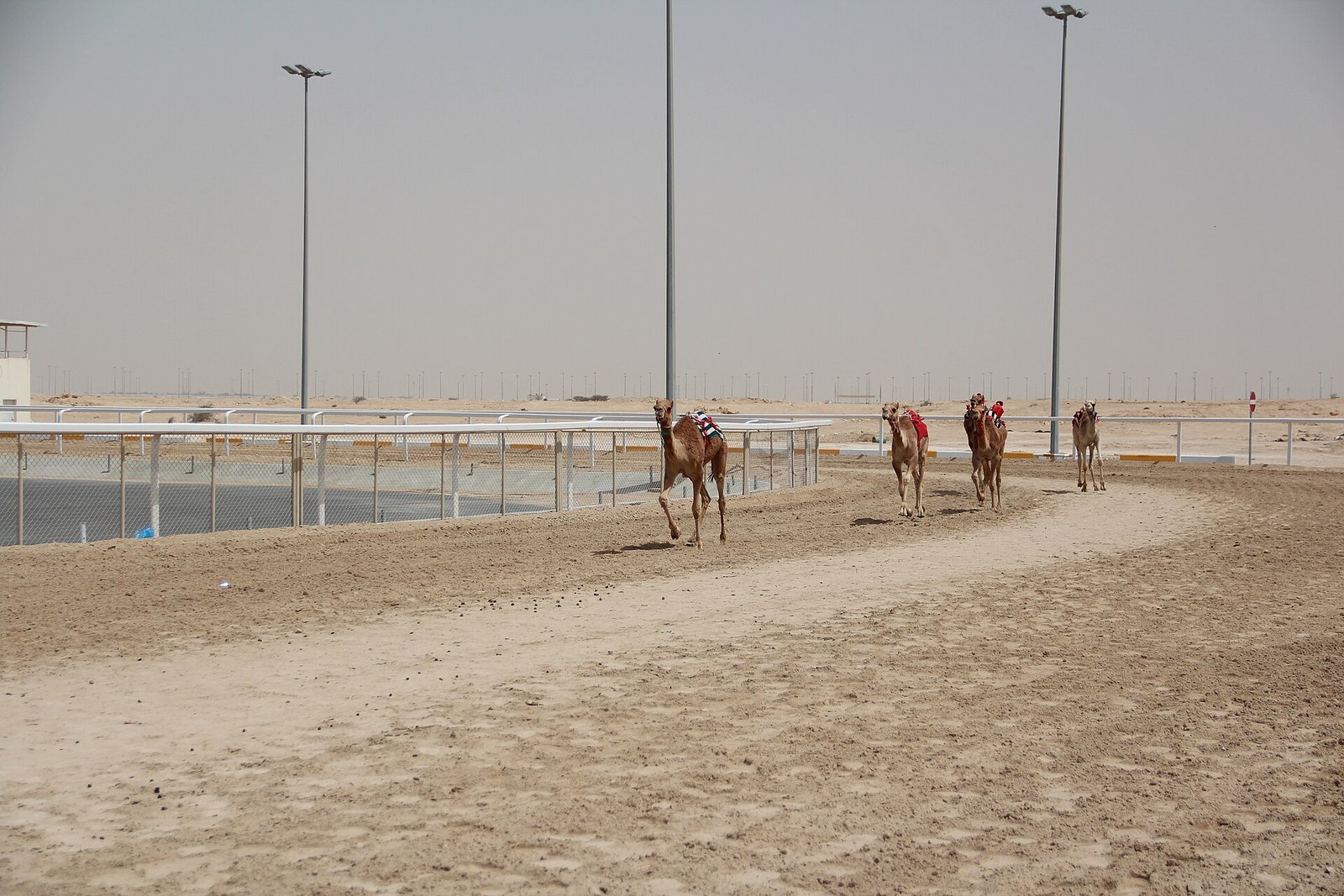
The season builds to big festivals. In 2025–26, the Founder Sheikh Jassim bin Mohammed bin Thani Camel Festival ran from 13 to 27 December 2025 at Al Shahaniya and Lebsair, with 337 races; the Father Amir’s festival followed on 2–12 February 2026 and the Amir’s Sword festival on 18–30 April 2026. 2026–27 festival dates were not published at the start of October 2026. Race days vary, so check the Camel Racing Committee’s announcements before setting the alarm. If you miss the races, the camel pen at Souq Waqif is an easy consolation in town.
Marmi: the Qatar International Falconry and Hunting Festival
Marmi is held each winter at Sabkhat Marmi in the Sealine area. The 17th edition ran from 1 to 24 January 2026, with competitions including the Hadd Al Tahaddi challenge, the Al Tala’ championship (falcons spotting and catching houbara released some distance away), a junior falconer contest for children and saluki racing. Bad weather pushed some rounds back by a day, which is typical of a desert event. Dates for Marmi 2027 had not been announced at the start of October 2026, but it has traditionally opened at the start of January. Check spectator access before driving out.
Falcon Souq and Falcon Hospital
In Doha, the Falcon Souq at Souq Waqif is where falconers buy birds, hoods and gear, especially in the evening from about 4pm. The neighbouring Falcon Hospital keeps clinic hours (Saturday to Thursday, 7am–2pm), so you will usually find it shut during the evening crowds.
Horses: Souq Waqif festival and Al Shaqab
Qatar’s Arabian horse world is at its busiest in winter. The Souq Waqif Equestrian Festival ran from 20 to 27 January 2026, including the 7th Souq Waqif International Arabian Horse Show; the stables beside the souq are worth a look any winter afternoon. At Al Shaqab, the 13th CHI Al Shaqab Presented by Longines, an international show jumping, dressage and para-dressage event, ran from 18 to 21 February 2026 in the Longines Arena. Al Shaqab itself is open Sunday to Thursday, 7.30am–3.30pm, with tours by arrangement. For a gentler encounter with animals, Heenat Salma Farm in Al Shahaniya runs farm meals, workshops and stays by booking.
National Day and winter festivals
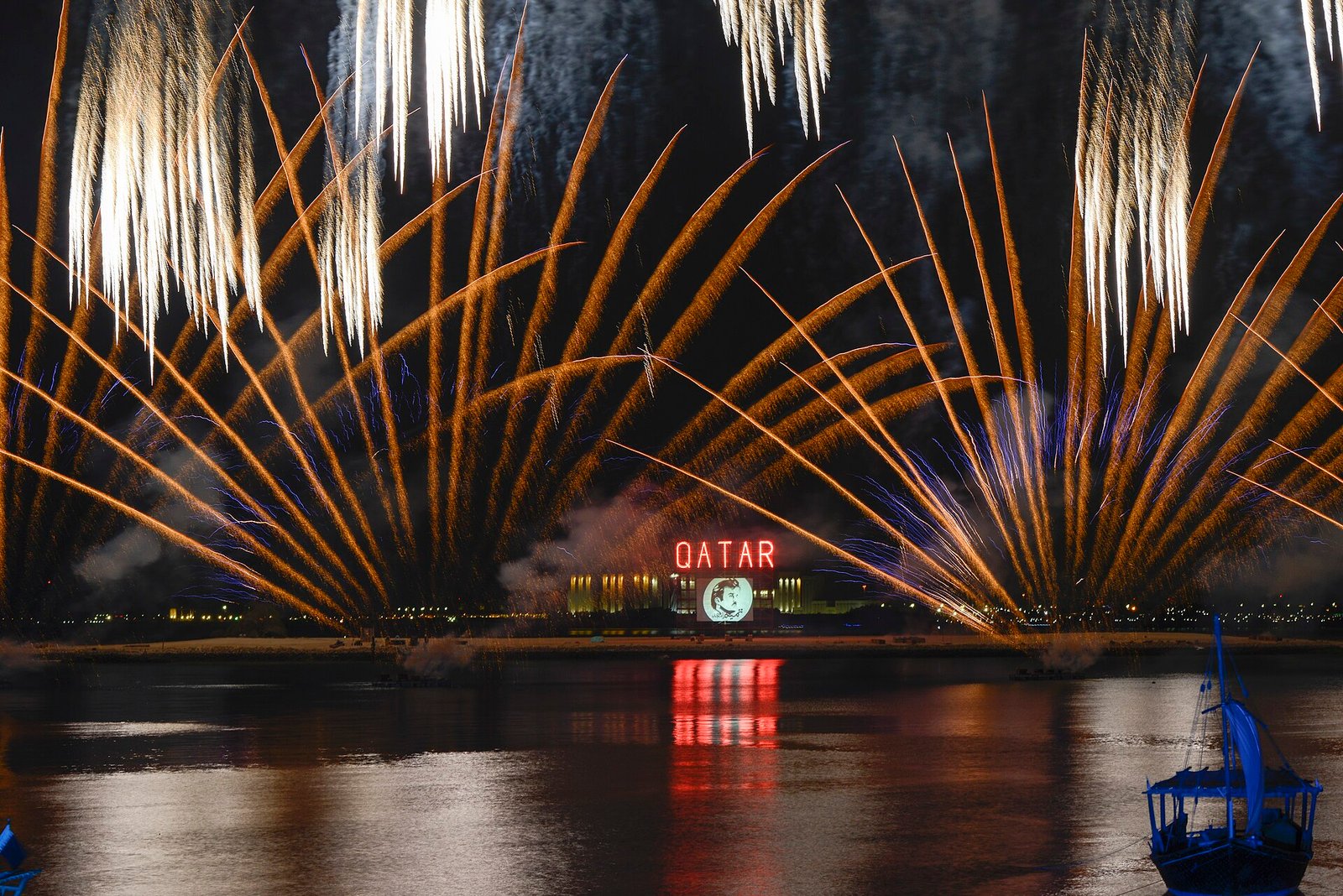
Qatar National Day on 18 December is the emotional high point of the winter. It marks Sheikh Jassim bin Mohammed bin Thani’s succession in 1878 and is a public holiday. Expect maroon-and-white flags on every car, fireworks, crowds on the Corniche and traffic everywhere.
Darb Al Saai
In the days before National Day, the Ministry of Culture runs Darb Al Saai at its permanent heritage venue in Umm Salal Mohammed, north of Doha. In 2025 it ran from 10 to 20 December, 3pm to 11pm daily, across a site of about 150,000 square metres. It is a free, family-focused celebration of Qatari heritage: recreations of an old souq and Qatari houses, Bedouin tents with poetry evenings, a falconry house and Sadu weaving, camel rides for children, a maritime zone and nightly performances. Go on a weekday afternoon if you can; weekend evenings are very busy. The 2026 dates had not been announced at the start of October 2026, but the festival has run in the ten days or so before 18 December. It is right beside Umm Salal Mohammed Fort and Barzan Towers, which you can see from outside.
The National Day parade
The traditional parade along the Doha Corniche returned on 18 December 2025 after three years in which celebrations were scaled back (2022’s took place on Lusail Boulevard after the World Cup final; 2023 and 2024 were cancelled in solidarity with the Palestinian people). Whether there is a parade in 2026 and its route will be announced nearer the date. Roads around the Corniche close on parade days, so use the Doha Metro.
Katara Traditional Dhow Festival
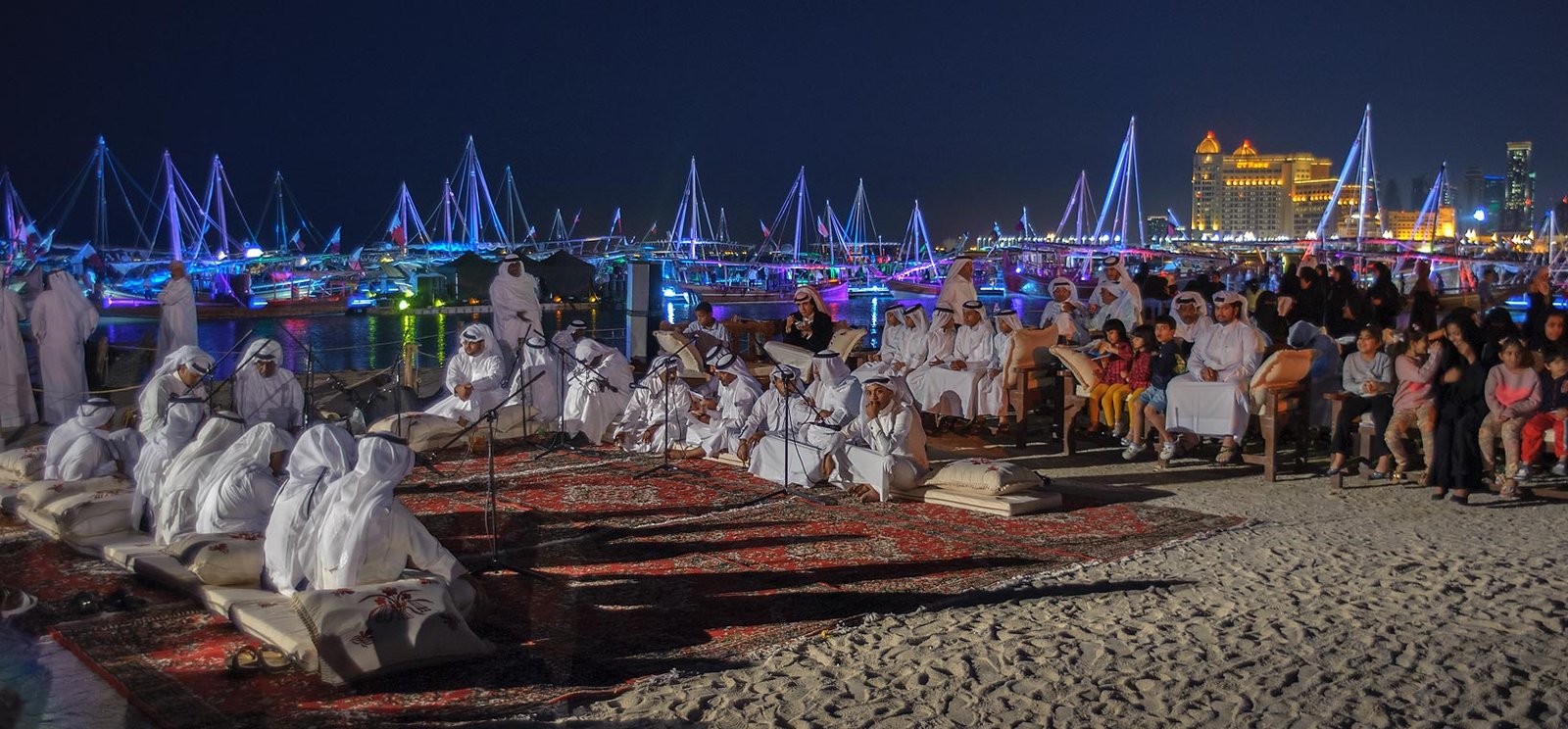
Katara Cultural Village’s dhow festival celebrates Gulf boat-building, pearling songs and sea crafts. The 15th edition ran from 27 November to 18 December 2025 at Katara, with participants from 12 countries, rowing and sailing races, fishing competitions, children’s boat races, workshops and evening folk performances. It is free and best in the evening. Combine it with the Pigeon Towers, a karak at Chapati & Karak or an early coffee at Kava Koffee. 2026 dates had not been published at the start of October 2026.
On the water
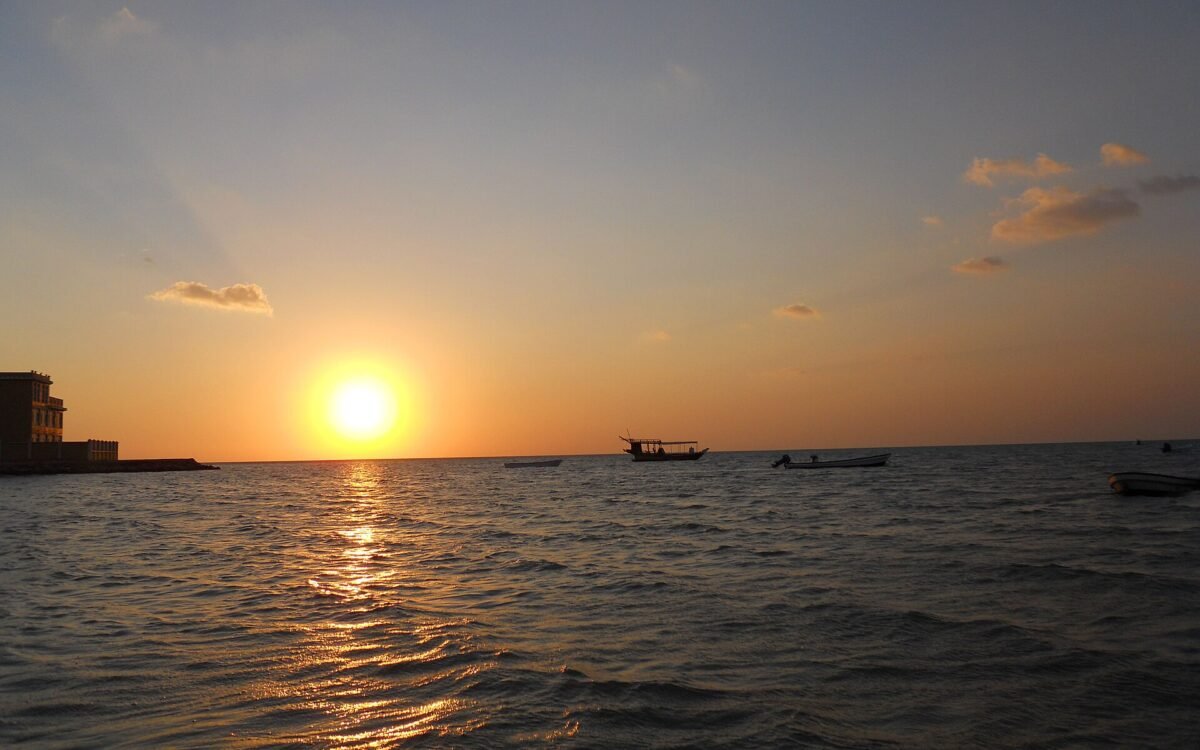
The cool months are the best time for a sunset dhow trip from the Dhow Harbour: shared rides have been reported at around QAR 20–25 per person, but agree the price and length of the trip before boarding. The Qatar Boat Show is scheduled for 4–7 November 2026 at Old Doha Port, which also hosts outdoor events through the winter.
Qatar Balloon Festival
The sixth Qatar Balloon Festival moved to Al Bidda Park and ran from 11 to 20 December 2025, with free general viewing in the evenings and paid sunrise flights. If it returns in 2026, the dawn launches are worth the early start.
Winter markets and seasonal food
Winter is harvest season for Qatar’s farms, and markets selling local vegetables, fruit, honey and plants pop up across the country.
- Al Mazrouah yards: the government-run farmers’ yards return each winter. In 2025–26 the Umm Salal yard opened daily 7am–3pm, while yards in Al Khor and Al Thakhira, Al Wakrah, Al Shahaniya and Al Shamal opened Thursday to Saturday, 7am–3pm. Combine Umm Salal with the Umm Salal Central Fish Market, which also has a local-products yard.
- Mahaseel Festival, Katara: a Thursday-to-Saturday evening market (7pm–midnight in recent seasons) of local farm produce in the southern part of Katara, organised with the Ministry of Municipality, running into spring.
- Torba Farmers Market, Education City: an organic and artisan market that has run through the winter; in 2025–26 it was scheduled until February.
- Qatar International Food Festival: Visit Qatar has announced the 2027 edition for 13–23 January 2027 at the Lusail Stadium precinct.
Two caveats: market schedules are confirmed season by season, and in spring 2026 some markets, including the MIA Park bazaar, were paused because of the regional situation. Check the organiser’s latest post before going. For a winter breakfast outdoors, the courtyard at Athr Café, Shay Al Shoomoos in Souq Waqif, Bayt Sharq on the Corniche and Harvest Coffee at Porto Arabia are all at their best now.
The perfect winter weekend in Qatar
This two-day plan packs in the season’s best outdoor experiences with a car (a 4×4 is only needed for the optional Khor Al Adaid swap). It assumes a Friday–Saturday weekend; on Friday, many sites open only after midday prayers, which the plan allows for.
Day 1 (Friday): mangroves, the north coast and the souq
- Early morning: drive an hour north to Al Khor and kayak the Al Thakira mangroves on the morning high tide (book ahead and check the tide time; if high tide is later, swap the order with the next stop).
- Late morning: walk the causeway at Purple Island and look for wading birds.
- Midday: lunch in Al Khor, then continue north-west.
- Afternoon: Al Zubarah Fort from 12.30pm (Friday hours), then the ruins at Al Khuwayr or Al Arish in the golden hour.
- Sunset: Al Ghariya Beach or Fuwairit on the east coast as you head back south.
- Evening: back in Doha, wander the Falcon Souq and the stables at Souq Waqif, then dinner at Bandar Aden. Stay over at the Souq Waqif Boutique Hotels if you want to wake up in the souq.
Day 2 (Saturday): camels, the western desert and Serra at sunset
- Sunrise: race morning at the Al Shahaniya Camel Racetrack (check the race schedule first).
- Mid-morning: brunch at Heenat Salma Farm nearby (booking needed), or a detour to Al Karaana for birds.
- Afternoon: continue west to the Zekreet peninsula: the mushroom rocks, then Film City and Ras Abrouq if Brouq Season is on.
- Sunset: East-West/West-East, arriving about 90 minutes before sunset. Or watch it from Dukhan Beach.
- Evening: drive back to Doha (about 90 minutes) for a late karak at Katara or a stroll at Lusail Marina.
Swap for the south: with a 4×4 tour, replace Day 2 with an afternoon dune drive from Sealine to Khor Al Adaid, a stop at the Singing Sand Dunes and a night at Regency Sealine Camp. For a slower weekend, base yourself at Zulal Wellness Resort in the far north or Marsa Malaz Kempinski at The Pearl.
Planning, rules and what to bring
Driving and 4×4 needs
Most of the places in this guide are reached on good paved highways: the north coast and Al Zubarah via the Al Shamal Road, Zekreet and Dukhan via the Dukhan Highway, and Sealine via the road through Mesaieed. A 4×4 is essential for Khor Al Adaid and helpful on sandy tracks at Zekreet, Freiha and some beaches; never take a normal car onto soft sand. If you drive off-road yourself, lower your tyre pressure, carry a shovel, tow strap and pressure gauge, travel with a second vehicle and tell someone your route.
Public transport and tours
The Doha Metro reaches the city’s parks, waterfronts and festival sites such as Al Bidda Park, Katara and Lusail, and is the best way to reach National Day events. Outside Doha, public transport is thin, so for the desert, the north and camel racing you will need a car, a taxi or ride-hailing for a return trip, or a tour.
Booking ahead
Winter weekends are peak season. Book desert camps, kayak tours, Brouq tickets, resort day passes and farm stays in advance, especially around National Day, the Formula 1 weekend and school holidays.
Rules and etiquette outdoors
- Dress modestly away from resort beaches: cover shoulders and knees in souqs, heritage sites and festivals. Swimwear is fine on the beach itself; cover up when you leave it.
- Family days: some public beaches and parks reserve days for women and children or families (Al Farkiya, for example, on Sundays and Wednesdays). Check signs.
- No alcohol in public places, including beaches, parks and the desert. It is served only in licensed hotel venues.
- Protected areas: respect turtle beach closures, reserve fences and Qatar Museums site rules; don’t climb on ruins or walls.
- Leave no trace: take every bag of rubbish home, don’t light fires on vegetation, and don’t drive across rawdas or plant life.
- Photography: ask before photographing people, especially women and families, and don’t fly drones without the required permission.
What to bring
- A warm layer for evenings and a proper jacket for desert nights.
- Sunscreen, sunglasses and a hat: the winter sun is still strong at midday.
- At least a litre of water per person for any outdoor trip, plus snacks (shops are scarce outside towns).
- Closed shoes for heritage sites, rocky desert and mangrove mud.
- Offline maps and a tide table for the coast.
- Binoculars for birdwatching and falconry.
- A bin bag, and for drivers, basic sand-recovery gear.
Mistakes to avoid
- Underestimating sunset: in December the sun sets before 5pm. Arrive at desert or heritage sites with daylight to spare and never cross dunes in the dark.
- Driving to a closed site: check our place guides and Qatar Museums’ listings first; several northern forts are closed for now.
- Ignoring the forecast: rain floods tracks and rawdas, and a strong shamal makes beaches and boat trips miserable.
- Assuming last year’s dates: festivals and the camping season are confirmed each year, sometimes only weeks ahead.
- Leaving everything to the weekend: if you can, do the desert and beaches midweek, when they are far quieter.
- Forgetting Ramadan: in 2027 it falls in February and March, changing opening hours and daytime eating rules.
Frequently asked questions
What is the best month to visit Qatar in winter?
December to February are the coolest months, with average Doha highs of around 23–25°C, and January is the coldest. For a mix of warm sea and comfortable days, go in November or early March. If events matter most, mid-December (National Day, Darb Al Saai, camel racing festivals) and January (Marmi, horse shows, the food festival) are the busiest.
Is it cold in Qatar in winter?
Days are mild rather than cold, but nights can feel chilly, especially in the desert and when the wind blows. Average lows in Doha are around 15°C in January and February. A fleece or light jacket is enough in the city; take something warmer for a desert evening or camp.
Can you swim in Qatar in winter?
Yes, though the sea cools to around 20–21°C in January and February, which many people find bracing. November and March are the most comfortable winter months for swimming. Some resort pools are heated.
Can tourists go camping in Qatar in winter?
Independent camping permits under the Ministry of Environment and Climate Change scheme were limited to Qatari nationals aged 25 or over in 2025–26. Visitors and most residents camp through licensed camps and overnight desert tours instead, such as those at Sealine. Check the ministry’s announcement for 2026–27 rules.
When is Brouq Season 2026–27?
At the start of October 2026, Visit Qatar had not published dates for the next edition. Last season ran from 26 November 2025 to 10 February 2026 at Ras Abrouq on the Zekreet peninsula, with adult entry at QAR 50.
When can I watch camel racing in Qatar?
The season runs from early autumn to spring, with races at Al Shahaniya usually starting around sunrise. The biggest festival of the early season, the Founder Sheikh Jassim Camel Festival, ran from 13 to 27 December in 2025. Regular race days are free; check the schedule first.
Does it rain in Qatar in winter?
Occasionally. Almost all of Qatar’s limited rain falls between December and April, in short but sometimes heavy showers. Rain can flood roads and desert tracks for a day or two, so check the forecast before off-road trips.
Is Simaisma Beach open in winter 2026–27?
No. Simaisma Beach closed on 10 June 2025 for a redevelopment expected to last about five years. Try Al Farkiya in Al Khor or the north-coast beaches at Al Ghariya and Fuwairit instead.
Last checked October 2026. Rules, fees and access can change, so confirm with the official source before you go.