Museum of Islamic Art, Doha
I. M. Pei's limestone landmark on the Corniche, with 18 galleries spanning 1,400 years of Islamic art. How to plan your visit floor by floor.
Off Al Corniche Street, Doha (southern end of Doha Bay)
Overview
The Museum of Islamic Art (MIA) is the building most people picture when they think of Doha: a pale, stepped limestone block standing on its own patch of reclaimed land at the southern end of the Corniche bay. Inside are 18 permanent galleries covering roughly 1,400 years of art from the Islamic world, from early Qur’an pages and Abbasid ceramics to Ottoman textiles, Mughal jewellery and a complete 19th-century reception room from Damascus.
It is a museum that rewards a plan. The collection is huge and beautifully lit, but the galleries run across several floors, and many first-time visitors spend an hour photographing the atrium, wander one gallery and leave. This guide is built around getting the most from a single visit: which floor to start on, what not to miss, when the building is quiet, and how to pair it with the rest of the waterfront.
MIA suits almost everyone. Art lovers and history buffs can easily spend half a day; families get a dedicated trail and weekend workshops; and anyone simply escaping the heat will find one of the calmest interiors in the city, with a café that looks straight across the water to West Bay.
History and background
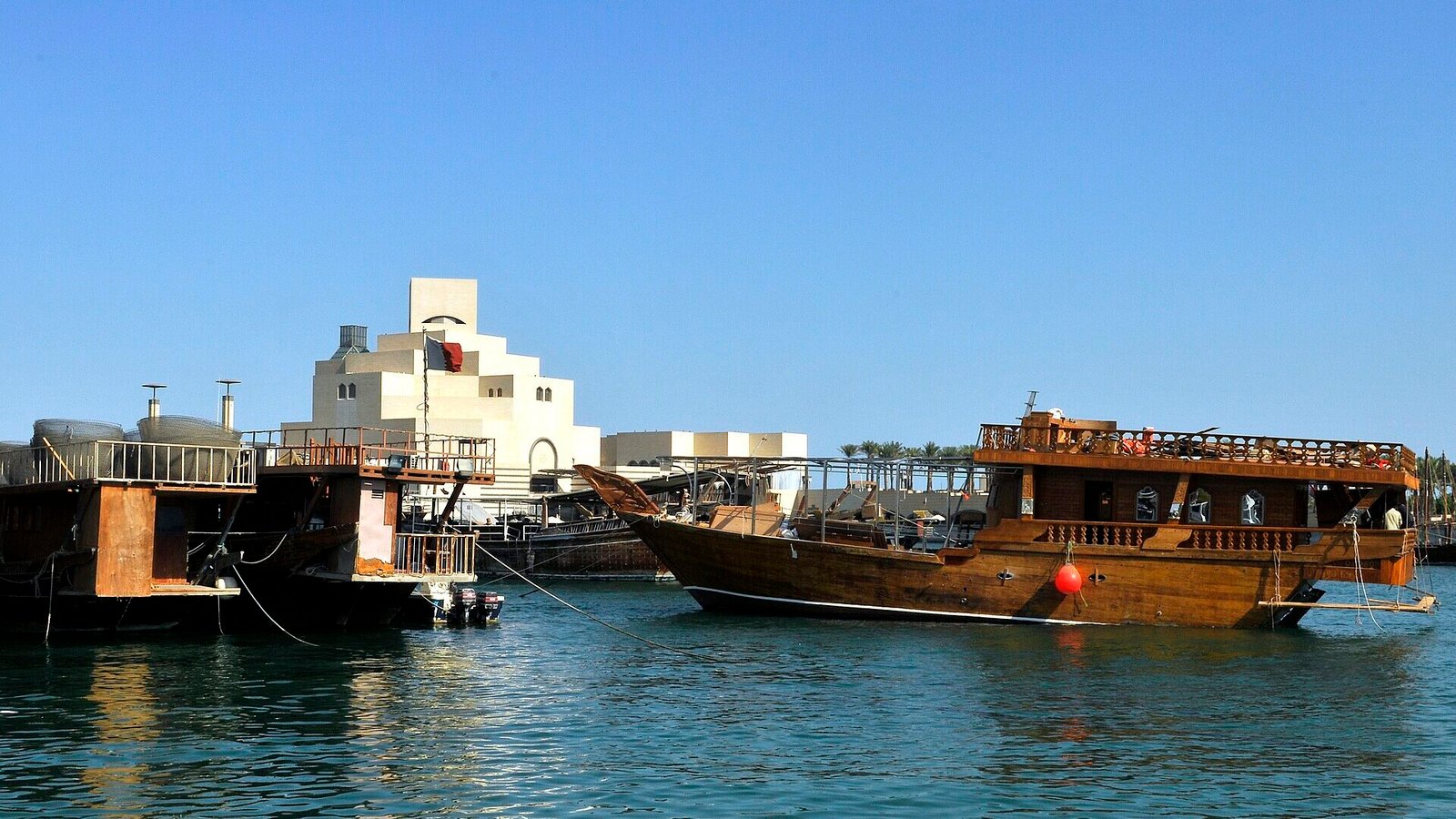
MIA was one of the first major projects of what is now Qatar Museums. The architect, I. M. Pei, best known for the glass pyramid at the Louvre, had largely retired when he accepted the commission in his early nineties. Before drawing anything he travelled through the Islamic world studying its architecture, and he eventually found his starting point in Cairo: the domed ablution fountain in the courtyard of the Mosque of Ibn Tulun, where a square base steps up through an octagon to a dome. You can read that same progression in MIA’s stacked geometric volumes.
Pei also asked for the museum to stand on its own island, about 60 metres off the Corniche, so that later buildings could never crowd it. The galleries were fitted out by Wilmotte & Associates, Pei’s interior collaborators from the Louvre. The museum was inaugurated on 22 November 2008 and opened to the public in early December that year, with the crescent-shaped MIA Park following around it.
In late 2021 MIA closed for a refurbishment of its facilities and a complete rethink of its permanent displays. It reopened in October 2022, just ahead of the FIFA World Cup, with reorganised galleries, more than 1,000 objects on show (many newly conserved or acquired and never displayed before), new sections on China and Southeast Asia, and a family trail running through the building.
What to see and do
The atrium and the great window
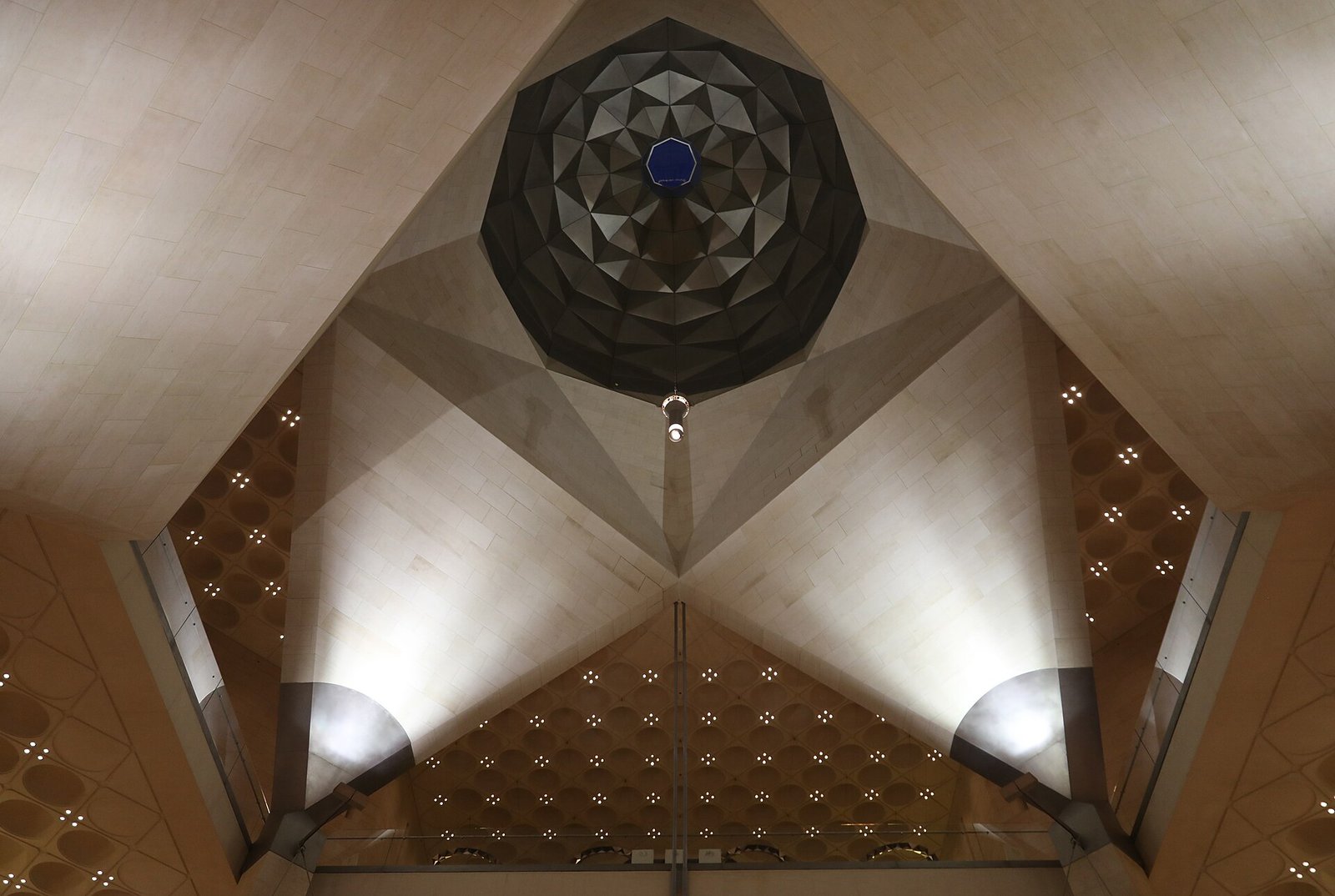
You enter a tall, domed atrium set inside the building’s central tower. An oculus at the top throws patterned light around the faceted dome, and below it a curved double staircase rises under a circular metal chandelier. On the north side, a 45-metre window frames the bay and the West Bay towers. It is the most photographed view in the museum, and it changes completely through the day: hazy and white in the morning, golden in late afternoon, and a band of lit towers after dark.
Before heading upstairs, find the ground-floor space devoted to the building itself. It tells the story of Pei’s design and makes the rest of your visit more rewarding, because you start to notice how the geometry repeats in the floors, the ceilings and even the window grilles.
Start on Level Two with the icons
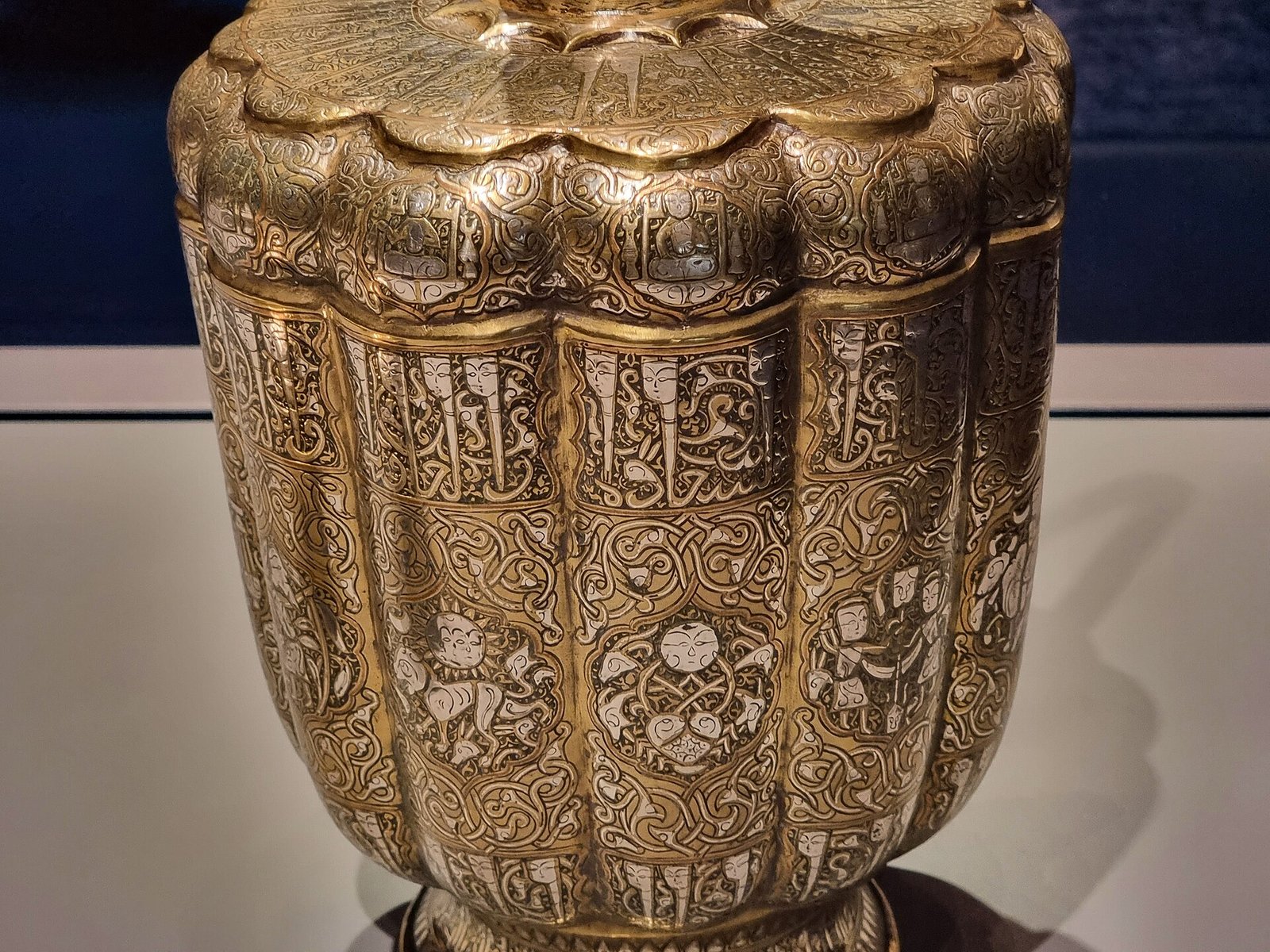
The permanent collection begins on Level Two with an introductory gallery that gathers a few of the museum’s most famous pieces in one room. Look for leaves from the Blue Qur’an, written in gold on indigo-dyed parchment; the Cavour Vase; and the Varanasi necklace. If you only have an hour, this room plus a couple of the galleries beyond it will give you a fair sense of the collection.
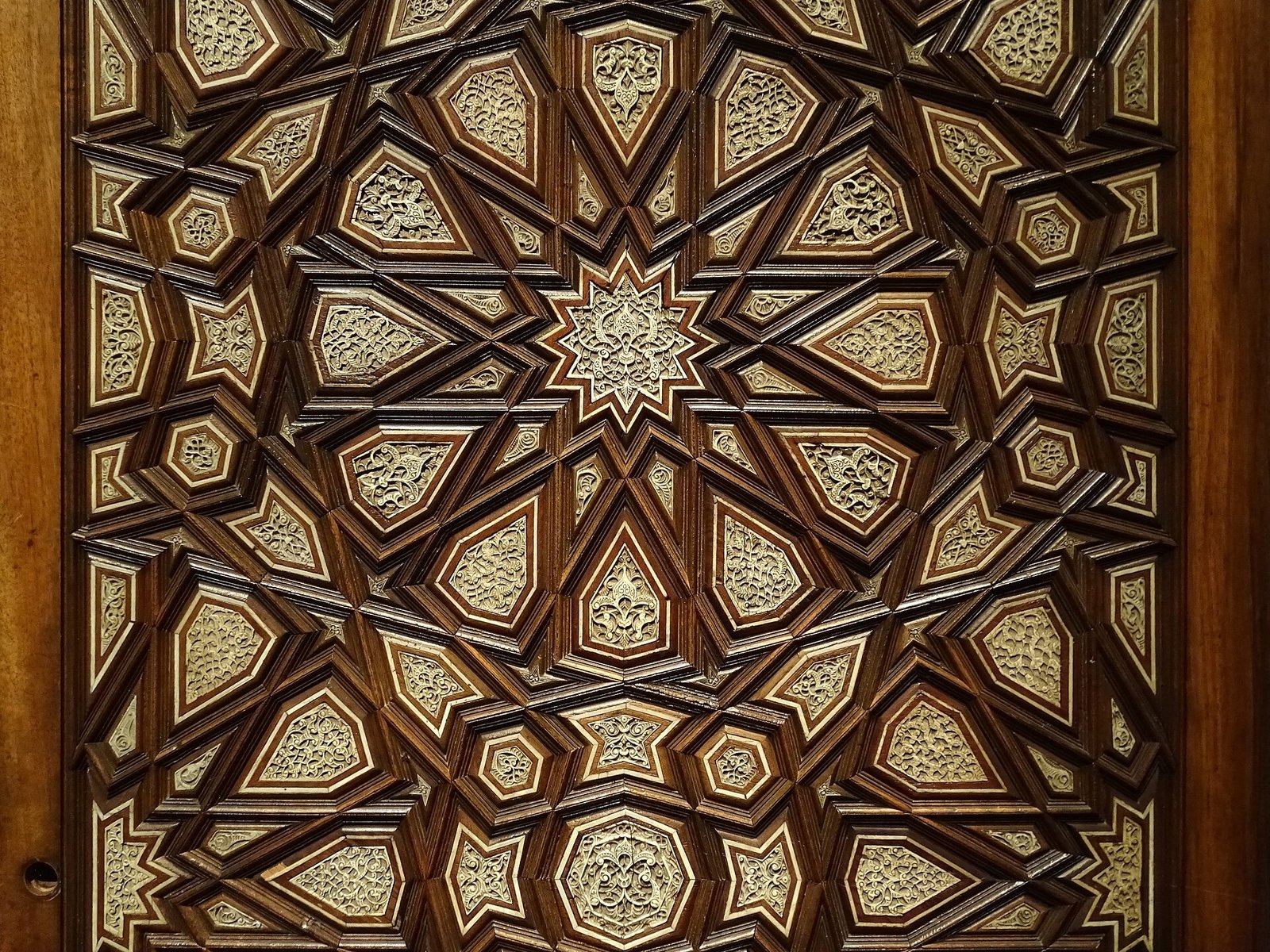
The rest of the floor follows the early story of Islam and its spread: the Qur’an and the written word, the Muslim community, science and learning, and the expansion of the faith east and west. Expect manuscripts, carpets and textiles, carved wood and ivory, ceramics, metalwork, stone and glass, displayed with clear English and Arabic labels.
Level Three: empires, trade and a Damascus room
Level Three moves from roughly the 11th to the 19th century and from the Mediterranean to the Indian Ocean. The great court cultures of the Ottomans, Safavids and Mughals dominate, with jewelled objects, fine textiles and royal manuscripts, and newer galleries look at China and Southeast Asia and at the trade routes that carried ideas and materials across the Islamic world.
The highlight for many visitors is a fully conserved 19th-century interior from a house in Damascus, with painted and gilded wooden panelling. Give it a few minutes; it is one of the few places in the museum where you can stand inside a room rather than look at objects in cases.
Temporary exhibitions and the library
MIA runs a changing programme of special exhibitions. As of October 2026 the main show is Uzbekistan: Heritage in Motion, on until 28 November 2026, and the library is hosting a small display on the animal fables of Kalila wa Dimna until 30 December 2026. Check the museum’s website for what is on when you visit, as the line-up changes every season.
The MIA Library holds more than 21,000 books on Islamic art and is open to the public, with a children’s section, a collection of rare books and bookable study rooms. It is a quiet, handsome space and a good place to reset if the galleries feel busy. It also hosts family story sessions on some weekends.
Families and the family trail
Children under 16 get in free, and the 2022 redisplay added a family trail through the galleries with interactive displays and multisensory touches such as films, sound recordings, scents and material demonstrations. MIA also runs regular family days, teen workshops and school programmes. Most are listed on the museum’s events calendar and some need booking.
Eating and shopping
IDAM, the fine-dining restaurant by Alain Ducasse, sits on the top floor with views over the water; book ahead and check current opening times. For something simpler, the MIA Café near the atrium serves coffee and light meals, and the gift shop stocks books, design objects and gifts inspired by the collection. You do not need a museum ticket to use the café or the shop.
Step outside to the park
Your visit does not end at the door. MIA Park wraps around the museum and runs out along a promenade to Richard Serra’s steel sculpture 7. We cover that walk in its own guide, Richard Serra’s 7 at MIA Park, so here we will just say: go out for sunset if you can.
How to get there
MIA sits off Al Corniche Street at the southern end of Doha Bay, between the Old Doha Port (Mina District) and the Souq Waqif area. The entrance is reached by a palm-lined ramp from the landward side, and the main building is linked to its education wing by a large central courtyard.
- By car: follow signs for MIA from the Corniche. There is an on-site car park, but spaces are limited and fill quickly at weekends, and it can close during big events in MIA Park. Arrive early on Fridays and Saturdays or come by taxi.
- By metro: the nearest stations are National Museum and Souq Waqif on the Gold Line. From either it is roughly a 15–20 minute walk, which is pleasant from November to March and hard work in summer.
- By taxi or ride-hailing: Karwa taxis and ride-hailing apps can drop you at the museum entrance. This is the easiest option from West Bay, The Pearl or the airport.
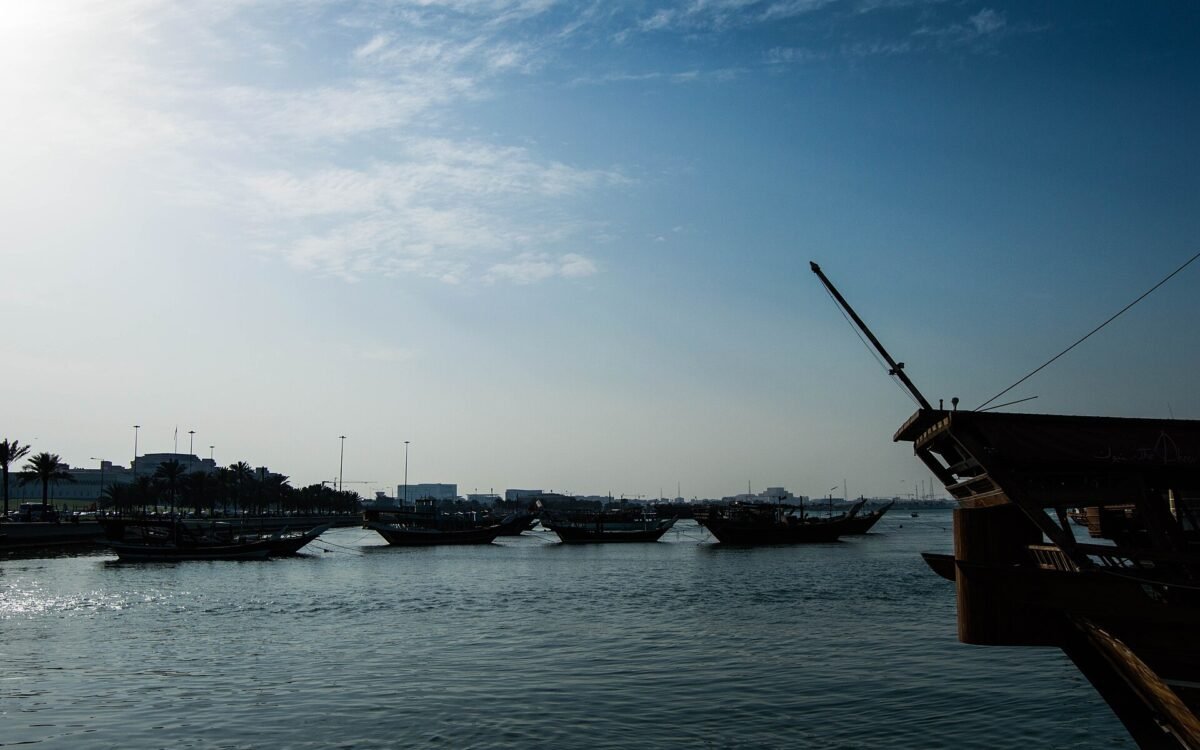
- On foot: if you are already on the Corniche or in Souq Waqif, walking is the nicest way in. The waterfront path brings you past the dhow harbour with the museum growing in front of you.
Best time to visit
The galleries are air-conditioned, so MIA works all year and is one of the best things to do in Doha in the summer heat. The outdoor parts of a visit, including the walk in and the park, are far more comfortable from November to March.
For quiet galleries, come on a weekday morning soon after the 9am opening. Friday opens only at 1:30pm and Friday afternoons and Saturdays are the busiest times. Thursday is the late night, with the museum open until 9pm, which lets you see the atrium window at dusk and then step outside as the skyline lights up. Remember that MIA is closed on Wednesdays.
During Ramadan, national holidays and major events, hours often change. Always check the official website the week you go.
Tips for your visit
- Book your ticket online in advance. Non-resident adults pay QAR 50 and non-resident students with ID pay QAR 25; Qatar residents with a valid QID and children under 16 enter free, but still need a ticket.
- Give yourself at least two to three hours for the permanent galleries. If time is short, focus on the introduction gallery on Level Two and the Damascus room on Level Three.
- Dress modestly, with shoulders and knees covered. A light layer helps too, as the galleries are kept cool.
- Large bags, food and drink are not allowed in the galleries, and flash photography is not permitted. Non-flash photos for personal use are usually allowed, but follow any signs in special exhibitions.
- Check the events calendar before you go: talks, family days, workshops and late openings are common during the cooler months.
- The café and gift shop do not need a gallery ticket, so you can drop in for a coffee with a view even if you have no time for the collection.
- Follow the family trail if you are visiting with children; it gives younger visitors something to look for in each gallery.
- Combine your visit with a meal: lunch at the café or an early dinner at IDAM turns the trip into a relaxed half day rather than a rushed hour.
Combine it with nearby places
MIA Park and Serra’s 7. Walk out along the park promenade to Richard Serra’s 24-metre steel sculpture at its tip, ideally around sunset. See our guide to Richard Serra’s 7 at MIA Park.
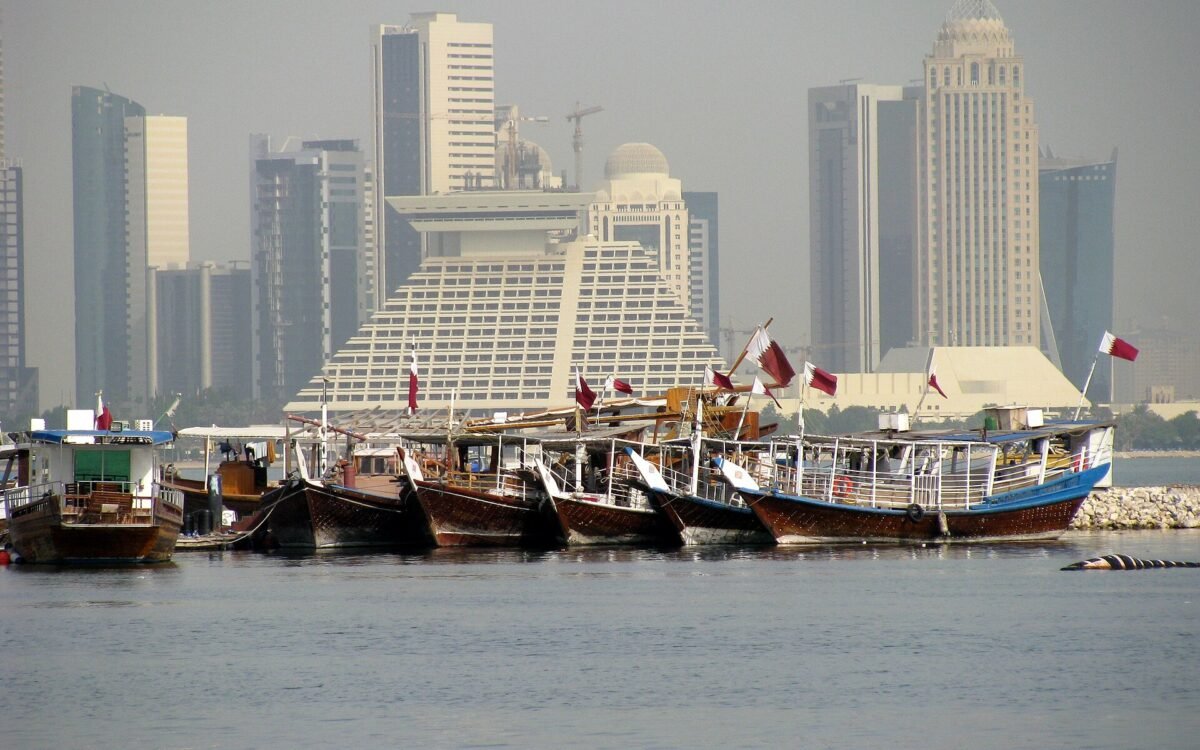
Dhow harbour. The wooden dhows moored beside the museum are one of the classic Doha views. Read our dhow harbour guide for evening boat trips.
Souq Waqif. A short walk or quick taxi ride away, the souq is the natural place for dinner after a museum afternoon. Start with our Souq Waqif guide.
Old Doha Port. Next door to the museum, the colourful Mina District has cafés, shops and harbour walks. See Old Doha Port (Mina District).
More museums. The National Museum of Qatar and its restored Old Palace are at the other end of the Corniche, and the Msheireb Museums are a short ride inland. Our guide to museums in Qatar helps you plan a museum day, and the Doha Corniche guide covers the waterfront walk.
Frequently asked questions
How much does the Museum of Islamic Art cost?
Under Qatar Museums’ pricing, non-resident adults pay QAR 50 and non-resident students with valid ID pay QAR 25. Qatar residents with a valid QID and children under 16 enter free. Everyone should book a ticket online before visiting.
What day is MIA closed?
MIA is closed on Wednesdays. It opens 9am to 7pm on Saturday to Tuesday, 9am to 9pm on Thursday and 1:30pm to 7pm on Friday. Hours can change during Ramadan and holidays.
How long do you need at the Museum of Islamic Art?
Plan on two to three hours for the permanent galleries and any temporary exhibition. Add an hour or more if you want lunch at the café and a walk in MIA Park.
Is there a dress code at MIA?
Yes. Visitors are asked to dress modestly, with shoulders and knees covered. This applies to men and women.
Who designed the Museum of Islamic Art?
The building was designed by I. M. Pei, the architect of the Louvre pyramid, who drew inspiration from the ablution fountain of the Ibn Tulun Mosque in Cairo. The galleries were designed by Wilmotte & Associates. The museum opened in 2008.
Is MIA good for children?
Yes. Under-16s go free, there is a family trail through the galleries, and the museum runs family days, story sessions in the library and workshops. MIA Park outside has plenty of space to run around.
Can I visit the café or restaurant without a museum ticket?
Yes. Visitors going only to the café, restaurant or gift shop do not need a gallery ticket. Book IDAM in advance.
Last checked October 2026. Hours, fees and access can change, so confirm with the official source before you go.
Read the Companies in Qatar visitor guide ↗
More places nearby
All places →
Run a tour, café or stay near Museum of Islamic Art, Doha?
List your business free on Companies in Qatar, or get featured on Qatar Unseen in front of people planning their trip.