Qatar has some of the most ambitious museums built anywhere this century, and most museums in Qatar sit within a 30-minute drive of each other in Doha. The Museum of Islamic Art and the National Museum of Qatar are the two everyone should see. Behind them is a deeper bench: Mathaf for modern Arab art, the 3-2-1 Olympic and Sports Museum for families, four restored houses in Msheireb, a brand-new museum devoted to M. F. Husain, a private collector’s palace of curiosities out in Al Samriya, and a scattering of world-class public art you can see for nothing.
The good news for budgets: if you live in Qatar and hold a QID, entry to the Qatar Museums venues is free, and so is entry for anyone under 16. Visitors from abroad pay QAR 50 per adult at MIA and 3-2-1 and QAR 25 at the National Museum, and several museums are free for everyone. The catch is that each museum closes on a different weekday, Friday mornings are mostly off-limits, and tickets are issued in timed slots.
This guide covers every museum worth your time in Qatar, what each is like, what it costs, which day it is shut, how long to allow, and how to string them together into sensible museum days without criss-crossing the city. It also flags what is closed or not yet open in October 2026, because a few things have changed this year.
At a glance
- Must-sees: the Museum of Islamic Art (closed Wednesdays) and the National Museum of Qatar with the Old Palace (closed Tuesdays).
- Tickets: free with a QID and for under-16s; QAR 50 for non-resident adults and QAR 25 for students at MIA, the National Museum and 3-2-1.
- Free for everyone: Mathaf (booking required), Msheireb Museums, Lawh Wa Qalam, the Qatar National Library and all the outdoor public art.
- Fridays: Qatar Museums venues open only from 1:30pm; Thursdays they stay open until 9pm.
- Dress: cover shoulders and knees; no flash, tripods or selfie sticks in the galleries.
- Best for kids: 3-2-1 Qatar Olympic and Sports Museum, the National Museum’s big-screen galleries and Dadu Gardens at Al Bidda Park.
- Not yet open: Dadu, the Children’s Museum of Qatar, is still listed as opening in 2026. Qatar Museums’ outdoor heritage sites were temporarily closed earlier this year, so check before driving out.
How tickets, passes and opening days work
Most of Qatar’s big museums are run by one organisation, Qatar Museums (QM), so the rules are similar across MIA, the National Museum of Qatar, Mathaf, 3-2-1 and the Fire Station. Msheireb Museums, Lawh Wa Qalam (run by Qatar Foundation) and the Sheikh Faisal Bin Qassim Al Thani Museum (privately owned) set their own hours and prices.
Who gets in free
Qatar Museums has made entry free for Qatari citizens and residents with a valid QID since its 2023 pricing change, and children under 16 get in free whatever their nationality. Visitors who are only going to the café or the gift shop do not need a museum ticket either. If you live here, bring your QID, as staff may ask to see it at the desk.
What visitors pay
At the time of writing, non-resident adults pay QAR 50 at the Museum of Islamic Art and the 3-2-1 Qatar Olympic and Sports Museum, and students with a valid card pay QAR 25. The National Museum of Qatar is cheaper: its official ticketing page lists QAR 25 for non-resident adults, with university students free. Each ticket covers the permanent galleries plus temporary exhibitions in that building. Mathaf is free for everyone but you still need to book a (free) ticket online. The Fire Station has charged non-residents for exhibitions in recent seasons, so check its listing when you book.
Outside the QM family, Msheireb Museums and Lawh Wa Qalam are free. The Sheikh Faisal museum charges QAR 50 for adults and QAR 30 for students, seniors and teachers, with free entry for children under 12.
Culture Pass and multi-museum passes
Qatar Museums runs a membership scheme called Culture Pass. The basic tier has historically been free and gives you the newsletter, invitations to talks, workshops and tours, and discounts at QM cafés and gift shops; paid family and premium tiers have added extras on top. QM and its Qatar Creates platform have also sold a multi-venue One Pass for visitors in recent seasons. Tiers, prices and inclusions have changed several times, so check the current offer on qm.org.qa before you buy anything. For most residents the simple answer is: your QID already gets you in free, and the free Culture Pass is worth having for the event invitations and café discount.
Closed days and opening hours
This is where most people get caught out. The QM museums share the same basic hours (9am to 7pm, late opening to 9pm on Thursdays, and 1:30pm to 7pm on Fridays), but each closes on a different weekday:
- Museum of Islamic Art: closed Wednesdays.
- National Museum of Qatar: closed Tuesdays.
- 3-2-1 Qatar Olympic and Sports Museum: closed Tuesdays.
- Mathaf: closed Mondays.
- Lawh Wa Qalam: closed Mondays (10am to 5pm most days, 1:30pm to 7:30pm Fridays).
- Msheireb Museums: closed Sundays (9am to 5pm, Fridays 3pm to 9pm).
- Sheikh Faisal museum: closed Sundays.
Last entry at the National Museum is 45 minutes before closing, and at Msheireb and the Sheikh Faisal museum it is 30 minutes before. Hours change during Ramadan (the museums usually shift to evening opening) and on public holidays such as National Day on 18 December, so check before you set out at those times.
Museums in Qatar compared
Use this table to plan around closed days and travel time. Prices are for non-resident adults; QID holders and under-16s go free wherever QM rules apply.
| Museum | Area | Ticket (visitor adult) | Closed | Time needed | Best for |
|---|---|---|---|---|---|
| Museum of Islamic Art | Corniche, central Doha | QAR 50 | Wednesday | 2–3 hours | First-timers, architecture, art lovers |
| National Museum of Qatar and Old Palace | South end of the Corniche | QAR 25 | Tuesday | 2–3 hours | Understanding Qatar, families |
| Mathaf: Arab Museum of Modern Art | Education City | Free (book online) | Monday | 1–2 hours | Modern and contemporary art |
| 3-2-1 Qatar Olympic and Sports Museum | Aspire Zone | QAR 50 | Tuesday | 2–3 hours | Kids, teens, sports fans |
| Msheireb Museums (four houses) | Msheireb Downtown Doha | Free | Sunday | 2–3 hours | Social history, a walk near Souq Waqif |
| Lawh Wa Qalam: M. F. Husain Museum | Education City | Free | Monday | 1.5–2 hours | Art lovers, South Asian visitors, architecture |
| Fire Station | Near Al Bidda Park | Varies by exhibition | Check listing | 1 hour | Contemporary art, local artists |
| Sheikh Faisal Bin Qassim Al Thani Museum | Al Samriya, off Dukhan Road | QAR 50 (under-12s free) | Sunday | 2–3 hours | Collectors, cars, a half-day out |
| Qatar National Library Heritage Library | Education City | Free | Friday and Saturday (reading room) | 1 hour | Manuscripts, old maps, quiet browsing |
The headline museums
If you only have a day or two, these four are the backbone of any museum plan in Qatar. Two of them sit on the Corniche, two in the western suburbs around Education City and Aspire Zone.
Museum of Islamic Art (MIA)
MIA is the building that put Doha on the cultural map. Designed by I. M. Pei, then in his nineties, it opened in 2008 on its own artificial peninsula off the Corniche, and it reopened in 2022 after a major refurbishment that reorganised the galleries. From the outside it is a stack of pale limestone cubes; inside, a five-floor atrium rises to a dome, and a tall wall of glass on the north side looks straight across the bay to West Bay’s towers.
The collection covers roughly 1,400 years of art from the Islamic world across three continents: Iznik tiles, carpets, Mamluk glass, Mughal jewellery, Qur’an manuscripts, astrolabes, metalwork and ceramics. The galleries are dimly lit and calm, and labels are in English and Arabic. Even if you are not an art person, the scale and craftsmanship of pieces like the illuminated manuscripts and carved woodwork tend to win people over.
- Who it suits: everyone, and especially first-time visitors to Doha.
- Cost: free with a QID and for under-16s; QAR 50 non-resident adults; QAR 25 students.
- Closed: Wednesdays. Open 9am to 7pm, Thursdays to 9pm, Fridays from 1:30pm.
- Time: allow at least two hours inside, more if you want lunch.
- Don’t miss: the view from the atrium window, then a walk round MIA Park outside, which is open 24 hours and ends at Richard Serra’s sculpture 7.
The museum car park is small and fills quickly at weekends, and it closes during major MIA Park events, so a taxi or ride-hail is often easier. Read our full guide to Richard Serra’s 7 in MIA Park.
National Museum of Qatar and the Old Palace
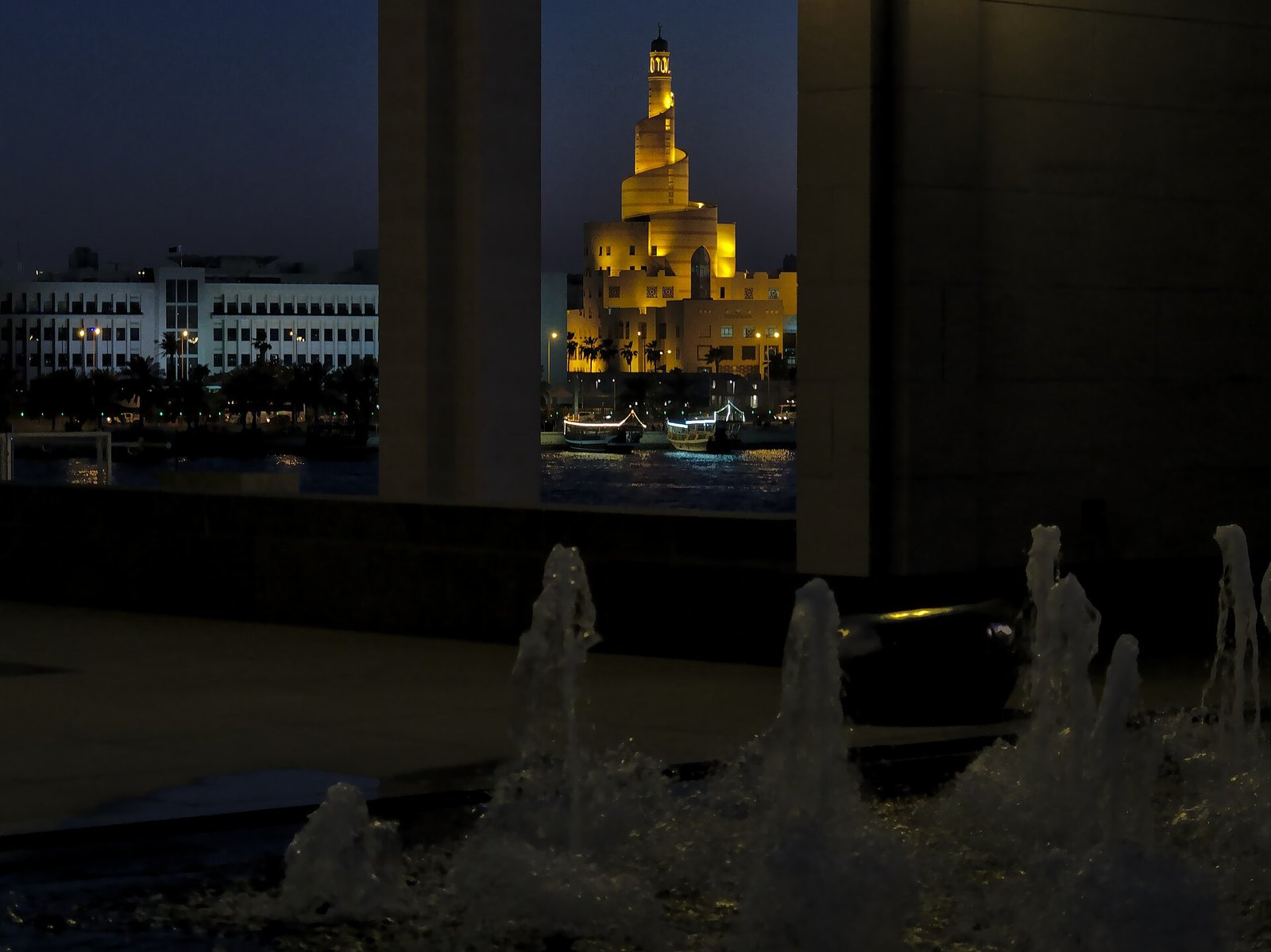
Jean Nouvel’s National Museum of Qatar (NMoQ), opened in 2019, is built from hundreds of interlocking curved discs inspired by the desert rose, the crystal formations found in Qatar’s sand. It wraps around the restored Old Palace of Sheikh Abdullah bin Jassim Al Thani, which served as the family home and seat of government in the early 20th century and later became the country’s first national museum.
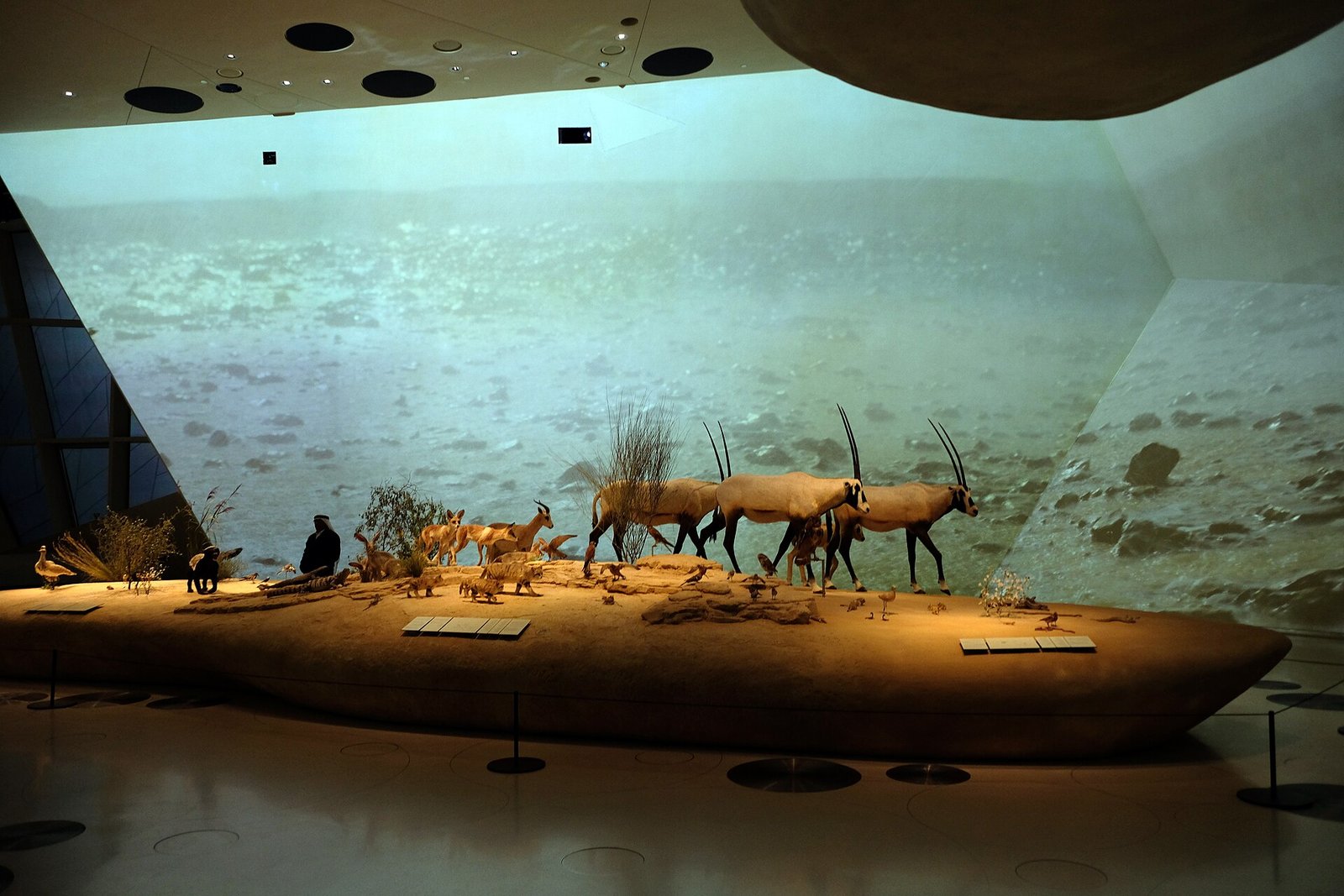
Inside, the galleries tell Qatar’s story in a long loop under three broad themes, Beginnings, Life in Qatar and the Modern Nation: geology and desert wildlife, Bedouin life, pearl diving, the arrival of oil and the founding of the state. Floor-to-ceiling film projections play across the curved walls, which children usually love. Among the treasures is the Pearl Carpet of Baroda, embroidered with more than a million natural pearls. The visit finishes back in the courtyard beside the Old Palace, whose painted rooms and wooden doors you can walk through.
- Who it suits: anyone who wants to understand Qatar; good for families.
- Cost: free with a QID and for under-16s; QAR 50 non-resident adults; QAR 25 students.
- Closed: Tuesdays. Open 9am to 7pm, Thursdays to 9pm, Fridays from 1:30pm; last entry 45 minutes before closing.
- Time: two to three hours, including the Old Palace.
- Note: the museum says some galleries may be closed for enhancement in 2026, so a few rooms may be shut on your visit.
The museum has its own Gold Line metro station (National Museum) and on-site parking. Read our full guide to the Old Palace at the National Museum of Qatar.
Mathaf: Arab Museum of Modern Art
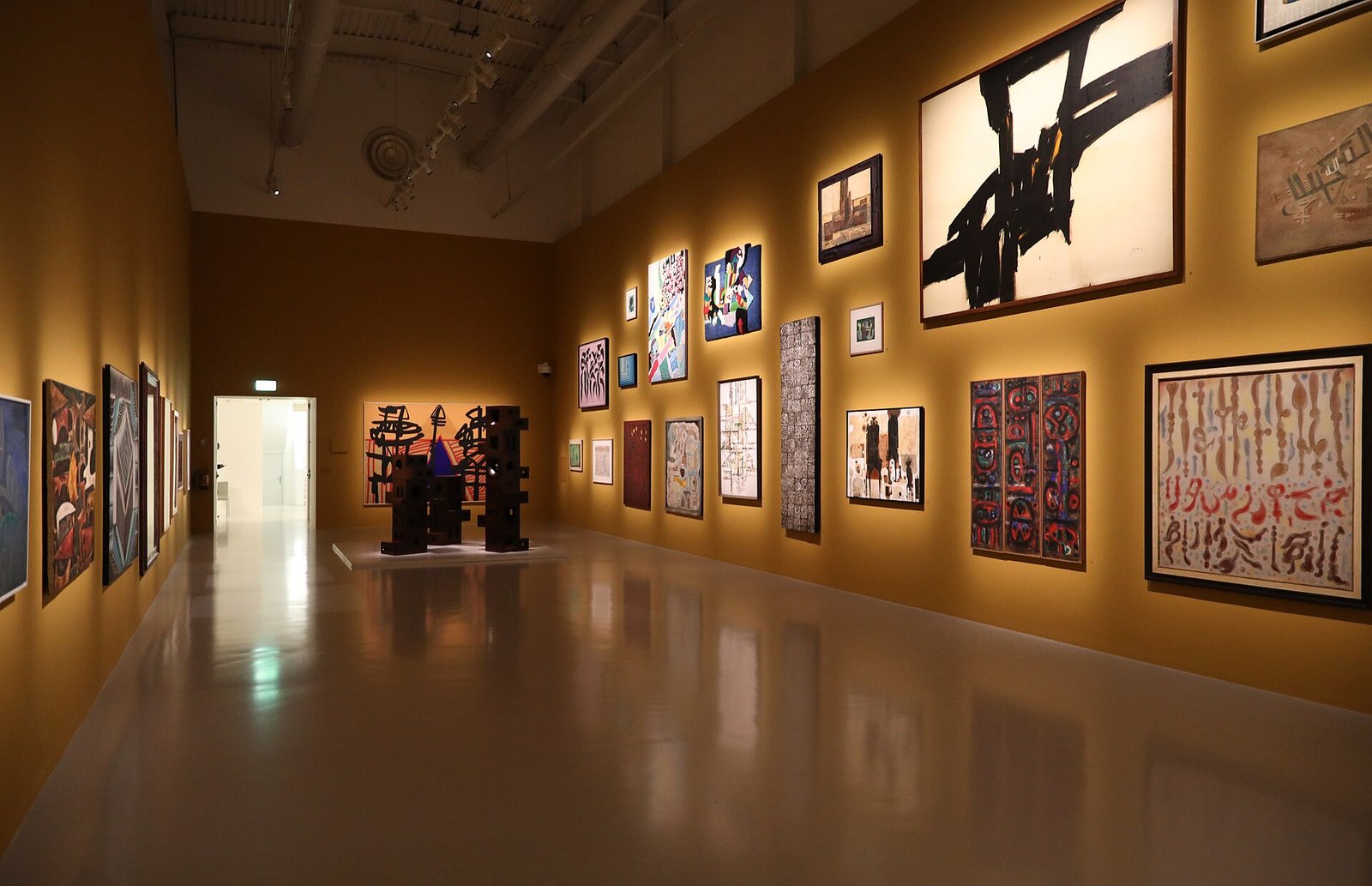
Mathaf (simply “museum” in Arabic) opened in 2010 in a converted school building in Education City. It holds one of the largest collections of modern and contemporary Arab art anywhere, built on the private collection of Sheikh Hassan bin Mohamed bin Ali Al Thani, and it shows it through changing exhibitions rather than a fixed permanent display. That means every visit is different, and also that the museum can feel thin between shows.
Entry is free for everyone, but you must book a ticket online in advance. Mathaf is closed on Mondays, and open 9am to 7pm on other days (to 9pm on Thursdays, from 1:30pm on Fridays). At the start of October 2026 the spring exhibitions had closed and the autumn season was about to begin, with What Lingers in the Artist Mind, an exhibition on the Baghdad Modern Art Group, scheduled to open on 25 October 2026. If you are visiting in the gap between seasons, check what is on before you make the trip.
- Who it suits: art lovers and anyone curious about 20th-century Arab history through its artists.
- Getting there: Green Line to Education City, then the free Education City tram or a 15-minute walk. The front car park was closed for renovation at the time of writing.
- Time: one to two hours.
3-2-1 Qatar Olympic and Sports Museum
Built into the side of Khalifa International Stadium in Aspire Zone, the 3-2-1 museum opened in 2022 and is the one children ask to go back to. Seven galleries run from the sports of the ancient world to the modern Olympic Games, with a big section on world-famous athletes and another on Qatar’s own sporting story. The visit ends in an interactive zone where you can test your reactions, speed and balance, and there is an esports lounge on the seventh floor.
- Who it suits: families with children of almost any age, teenagers, sports fans.
- Cost: free with a QID and for under-16s; QAR 50 non-resident adults; QAR 25 students.
- Closed: Tuesdays (same hours as NMoQ).
- Time: two to three hours with children.
- Getting there: Gold Line to Sport City, or drive and park at Aspire Zone.
Read our full guide to the 3-2-1 Qatar Olympic and Sports Museum.
Smaller museums and galleries worth your time
Once you have done the big names, these are the places that give a richer, more personal picture of Qatar. Several are free, and most are quieter than MIA or NMoQ.
Msheireb Museums
In the Heritage Quarter of Msheireb Downtown Doha, a few minutes’ walk from Souq Waqif, four restored courtyard houses have been turned into small museums, each with its own subject. Bin Jelmood House deals with the history of slavery in the Indian Ocean world and in Qatar, and with modern forms of exploitation; it is unusually frank and very moving. Company House was the office of Qatar’s first oil company and tells the story of the early oil workers. Mohammed Bin Jassim House covers the history of the Msheireb neighbourhood and its rebuilding, and Radwani House shows everyday family life before oil.
Entry to all four is free. The houses are open Monday to Thursday and Saturday from 9am to 5pm and Friday from 3pm to 9pm, and closed on Sundays. Allow two to three hours for all four, or pick one or two and combine them with lunch in Msheireb. Read our full guide to Msheireb Museums, and if you want to see the rest of the district, follow our Msheireb tram and heritage loop.
Lawh Wa Qalam: M. F. Husain Museum
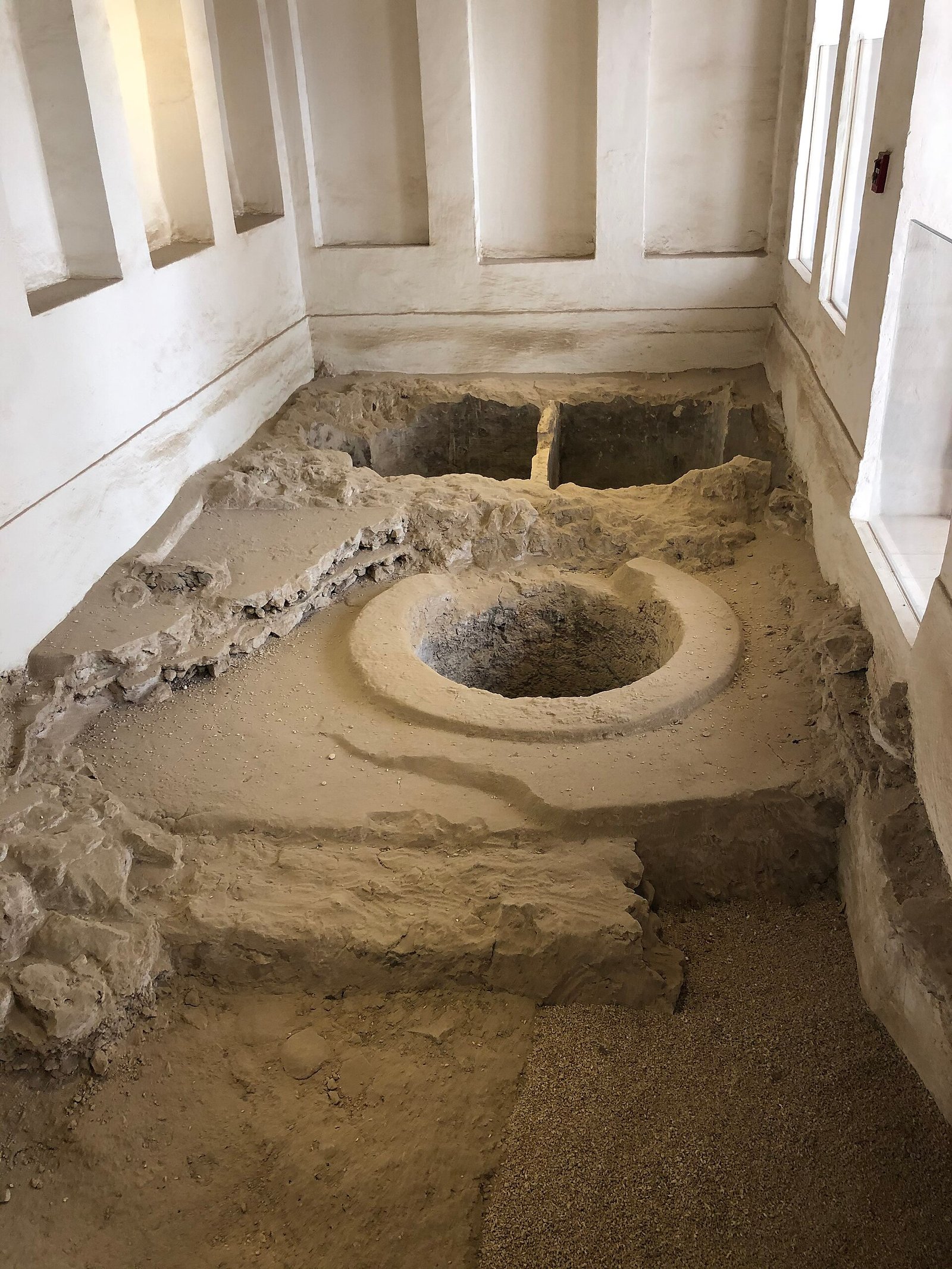
The newest museum on this list opened in Education City at the end of November 2025. It is devoted to Maqbool Fida Husain, the Indian modernist painter who spent his last years in Qatar, and its name means “tablet and pen” in Arabic. The building, which grew out of a sketch Husain made in 2008, is one of the most distinctive in Doha, and the galleries trace his life from painting cinema hoardings in Bombay to the large late works made in Qatar. TIME included it in its 2026 list of the World’s Greatest Places.
Entry is free. It opens 10am to 5pm on Saturday, Sunday and Tuesday to Thursday, 1:30pm to 7:30pm on Friday, and closes on Mondays and national holidays. Allow 90 minutes to two hours. Read our full guide to Lawh Wa Qalam.
Fire Station
Doha’s old civil defence headquarters, built in 1982, was converted into an arts centre and opened in 2015. The tower, the honeycomb facade and even the firefighters’ pole were kept. Today it runs Qatar Museums’ artist-in-residence programme for Qatari and Qatar-based artists, and its galleries host exhibitions by residents and international names; during Art Basel Qatar in February 2026 it opened three solo shows. There is a cinema, a café and an art supply shop on site.
The building sits close to Al Bidda Park. Galleries only open when an exhibition is running, although the café and shop stay open, so check the Qatar Museums calendar before you go. It is a good add-on to an MIA or Corniche day.
Sheikh Faisal Bin Qassim Al Thani Museum
About 35 to 45 minutes west of central Doha off Dukhan Road, inside the Al Samriya estate, a fort-like building holds one of the largest private collections in the region, gathered over decades by Sheikh Faisal Bin Qassim Al Thani. It is gloriously eclectic: Islamic art, coins, weapons, carpets, fossils, a reconstructed Syrian house, traditional Qatari boats and a hall full of vintage cars. Do not expect the tight curation of MIA; do expect to be surprised.
Tickets are QAR 50 for adults, QAR 30 for students, seniors and teachers, and free for children under 12. It is open Monday to Thursday 9am to 5pm, Friday 2pm to 7pm and Saturday 10am to 6pm, and closed on Sundays. Book online, allow around three hours, and pair it with a drive west. Read our full guide to the Sheikh Faisal Museum.
Qatar National Library and the Heritage Library
Rem Koolhaas’s Qatar National Library in Education City is worth a visit for the building alone, a vast open hall with terraced bookshelves. Sunk into its centre is the Heritage Library, the closest thing it has to a museum: more than 3,500 manuscripts, over 1,200 historic maps (including what the library describes as the first printed map to mention Qatar, from 1478), early Arabic printed books, historic photographs of the Gulf, globes and old navigation instruments. Selected items are often on display, and the space itself, below the main hall, is worth a look.
The library is open Saturday to Thursday 8am to 8pm and Friday 4pm to 8pm, and it is free. The Heritage Library reading room keeps shorter hours (Sunday to Thursday 9:30am to 4:30pm) and its items are for reference only. The library has its own Green Line metro station.
Coming soon: Dadu and other new museums
Dadu, the Children’s Museum of Qatar is being built in Al Bidda Park. Visit Qatar still lists it as set to open in 2026, but at the start of October 2026 we could not confirm an opening date, so treat it as upcoming. In the meantime, Dadu Gardens, its outdoor “living classroom” next door, is open, with water play, edible gardens, a mud kitchen and an amphitheatre aimed at children aged 11 and under, who must be with an adult.
Qatar Museums has also announced several other projects, including the Art Mill on the old flour mill site near the port, the Qatar Auto Museum and Lusail Museum. None was open to the public at the time of writing, and timelines have moved before, so don’t plan a trip around them yet.
Public art: Qatar’s museum without walls
Some of the best art in Qatar is not inside a museum at all. Qatar Museums has placed major works by international artists in parks, hospitals, conference centres and the open desert, and all of them are free to see.
7 by Richard Serra, MIA Park
A 24-metre steel tower at the end of the MIA Park promenade, made of seven plates arranged in a heptagon. Walk inside to look up at the sky. Free and open at all hours, it is the natural finish to an MIA visit. Read our full guide to 7.
East-West/West-East by Richard Serra, Brouq Nature Reserve
Four steel plates, each well over 14 metres tall, stretched across more than a kilometre of gypsum desert on the Zekreet peninsula, roughly an hour and a quarter’s drive west of Doha. It is one of the most memorable things to see in Qatar. The last stretch is on unpaved tracks, so go in daylight and check conditions. Read our full guide to East-West/West-East.
The Miraculous Journey by Damien Hirst, Sidra Medicine
Fourteen giant bronze sculptures outside Sidra Medicine that follow a baby’s development from conception to birth, ending in a newborn 14 metres tall. Free and visible at any time from outside the hospital. Read our full guide to The Miraculous Journey.
Maman by Louise Bourgeois, QNCC
Bourgeois’s famous giant spider, around nine metres high, stands in the glass foyer of the Qatar National Convention Centre in Education City. The foyer is generally accessible when the centre is hosting events, so time a visit around an exhibition or conference. Read our full guide to Maman.
Shadows Travelling on the Sea of the Day by Olafur Eliasson
Circular mirrored canopies set in the desert just north of Al Zubarah, about 100 km from Doha, that throw shifting shadows on the ground, best combined with a day trip to the fort. Read our full guide to Shadows Travelling on the Sea of the Day.
Qatar Museums heritage sites: check before you go
Qatar Museums also looks after the country’s forts, archaeological sites and rock carvings, including the UNESCO-listed Al Zubarah in the north. These are outdoor sites, often remote, with limited or no facilities. When QM reopened its museums and indoor venues on 21 March 2026 after a temporary closure, it said that outdoor sites, including heritage and archaeological locations, remained temporarily closed. Al Zubarah’s official page currently lists normal hours (9am to 5pm, Fridays from 12:30pm) with a ticket required, but we could not find a formal announcement that every heritage site has reopened. Check the Qatar Museums website or call before making a long drive.
Our guides to Al Zubarah Fort and Archaeological Site, Al Jassasiya rock carvings, Barzan Towers and Zekreet Fort explain what you can see at each, and what is visible from outside if a site is closed.
Suggested museum days and routes
The trick to a good museum day in Qatar is to cluster by area and dodge the closing days. These routes work from Saturday to Thursday unless noted. Fridays work too, but only from 1:30pm at the QM museums.
Day 1: the Corniche classics
Start at the National Museum of Qatar at 9am (not on a Tuesday), giving yourself until about midday including the Old Palace. Take a taxi or walk along the Corniche to the Museum of Islamic Art (not on a Wednesday) for lunch at the museum café and the afternoon in the galleries. Finish with sunset in MIA Park at Serra’s 7, then walk into Souq Waqif for dinner. Since NMoQ closes on Tuesday and MIA on Wednesday, this day works on any day except those two. On Thursday both stay open until 9pm, so you can start late and finish after dark.
Day 2: Education City and Aspire Zone
Spend the morning at Mathaf (closed Mondays) and Lawh Wa Qalam (also closed Mondays), which are both in Education City and linked by the free campus tram. Have lunch nearby, then visit the Qatar National Library for an hour. Detour past Maman at QNCC if there is an event on, and The Miraculous Journey outside Sidra Medicine. Families can swap the library for the 3-2-1 museum at Aspire Zone (closed Tuesdays), a short drive away. Best days: Saturday, Sunday, Wednesday or Thursday.
Half day: Msheireb and the old centre
Ride the Metro to Msheireb station and walk the four Msheireb Museums (closed Sundays), then cross into Souq Waqif. Add the Fire Station if an exhibition is running. On Fridays Msheireb opens 3pm to 9pm, which makes this a good Friday-evening plan.
Out of town: Al Samriya and the west
Drive out to the Sheikh Faisal museum (closed Sundays) for the morning, then continue west towards the Zekreet peninsula for East-West/West-East in the afternoon light. You’ll need a full day, plenty of water, and ideally a car that is happy on gravel tracks. See our day trips from Doha guide for more ideas.
Museums for kids
Qatar’s museums are, on the whole, very welcoming to children, and under-16s get into the QM museums free. Some suit young visitors much better than others.
- 3-2-1 Qatar Olympic and Sports Museum is the clear winner, with the hands-on sports zone at the end and family trails you can pick up at the desk. It works for toddlers through to teenagers.
- National Museum of Qatar holds children’s attention better than you might expect, thanks to the huge wraparound films, the animal dioramas and the pearl-diving story. Pace it, and let them run around the courtyard and the Old Palace at the end.
- Museum of Islamic Art is calmer and better for school-age children with an interest in patterns, swords or old maps. MIA Park outside, with its playgrounds and lawns, is the reward.
- Dadu Gardens at Al Bidda Park is built for under-12s, with water play and a mud kitchen. The full Dadu children’s museum next door is still upcoming.
- Qatar National Library has a dedicated children’s library, open until 6:30pm most days and 8pm on Fridays and Saturdays.
- Public art such as The Miraculous Journey and Maman makes for short, memorable stops that need no ticket.
Qatar Museums asks that children under 12 are accompanied by an adult at all times. For a wider list of family activities, see our Qatar with kids guide.
Dress, photography and museum etiquette
Museum rules in Qatar are straightforward and mostly common sense, but a few catch visitors out.
- Dress modestly. Qatar Museums asks visitors to cover shoulders and knees in museums and other public buildings. Loose trousers or a long skirt and a T-shirt are fine for everyone. You won’t need a headscarf for a museum, only for a mosque.
- Photography: personal photos are allowed in the galleries, but flash, tripods and selfie sticks are not. Some temporary exhibitions ban photography entirely, so look for signs. Commercial shoots need written permission.
- Bags: large bags must be checked in before you enter the galleries.
- Food and drink: not allowed in gallery spaces. Finish your coffee in the café.
- Arrive on time: QM tickets are for one-hour entry slots, and staff may ask you to wait for the next slot if you are very late.
- Layers: galleries are strongly air-conditioned, even when it is 40°C outside. A light jumper or scarf helps.
Cafés, restaurants and gift shops
Museum dining in Doha is good enough to plan around, and you don’t need a museum ticket to eat or shop.
- Museum of Islamic Art: IDAM, Alain Ducasse’s fine-dining restaurant on the top floor, with views across the bay, and the more casual MIA Café. Book IDAM ahead.
- National Museum of Qatar: Jiwan, a restaurant serving modern Qatari cuisine, the Desert Rose Café inside, and the plant-based Thalatheen café outdoors.
- 3-2-1 museum: the 3-2-1 Café, with a lighter, active-lifestyle menu.
- Mathaf: a Joe & The Juice outlet for coffee, juice and sandwiches.
- Fire Station: a café and an art supply shop that stay open even between exhibitions.
The QM gift shops are among the best places in Doha for gifts that are not souvenir-stand clichés: design objects, books on Qatari history, prints and children’s books. Culture Pass members have traditionally had a discount in QM shops and cafés. Museum cafés generally follow the museum’s closing day, so don’t count on lunch at NMoQ on a Tuesday.
Getting around: metro, taxis and parking
Doha’s driverless metro reaches most of the museums, and a single journey is cheap. Use the stations below, then walk or take a short taxi ride for the last stretch.
- National Museum of Qatar: National Museum station (Gold Line), right at the door.
- Museum of Islamic Art: Souq Waqif station (Gold Line) is the nearest, then a walk along the Corniche; a taxi is easier in summer.
- Msheireb Museums: Msheireb station, the interchange for all three lines.
- Mathaf, Lawh Wa Qalam and QNCC: Education City station (Green Line), then the free Education City tram.
- Qatar National Library: its own station on the Green Line.
- 3-2-1 museum: Sport City station (Gold Line).
- Sheikh Faisal museum and the desert public art: you’ll need a car, a taxi or a tour.
Ride-hailing apps such as Uber and Careem and Karwa taxis work everywhere in Doha. If you drive, the National Museum and Education City have plenty of parking; MIA’s car park is small, fills up at weekends and closes during big park events.
Best time to visit and mistakes to avoid
When to go
Museums are the perfect year-round activity in Qatar, and they come into their own from June to September, when it is too hot to do much outdoors during the day. The cooler months, roughly November to March, are the busiest, with new exhibitions, school groups on weekday mornings and crowds of visitors on weekends. Within the week, Sunday to Wednesday mornings are usually the quietest. Thursday evenings, when the QM museums stay open until 9pm, are lively and a good time to combine a museum with dinner.
The new exhibition season at Qatar Museums usually launches in the autumn, and big programming often lines up with major events in the winter, so October and November are a good time to catch fresh shows. Public art in the desert is best between November and March, early or late in the day.
Mistakes first-timers make
- Turning up on the closed day. MIA shuts on Wednesday, NMoQ and 3-2-1 on Tuesday, Mathaf and Lawh Wa Qalam on Monday, Msheireb and the Sheikh Faisal museum on Sunday.
- Planning a Friday morning museum visit. QM museums open at 1:30pm on Fridays, Msheireb at 3pm.
- Not booking free tickets. Mathaf requires a booking even though entry is free, and timed slots at the big museums can sell out on busy days.
- Trying to do MIA and NMoQ in a rush. Each deserves at least two hours. Doing both in one day is fine; adding a third museum is too much for most people.
- Driving to MIA on a weekend evening. The car park fills quickly and closes during park events.
- Assuming everything is open. Some NMoQ galleries may be closed for enhancement, Mathaf’s shows change between seasons, Dadu is not yet open, and QM’s outdoor heritage sites were temporarily closed earlier in 2026.
- Forgetting to cover up. Bring a scarf or light layer, both for the dress code and the air-conditioning.
If you are watching your budget, our guide to free things to do in Qatar covers the free museums and public art in more detail, and hidden gems in Doha has quieter cultural corners to add to your list.
Frequently asked questions
Are museums in Qatar free?
For Qatari citizens and residents with a valid QID, entry to Qatar Museums venues is free, and children under 16 get in free whatever their nationality. Non-resident adults pay QAR 50 at the Museum of Islamic Art and the 3-2-1 Olympic and Sports Museum (students QAR 25) and QAR 25 at the National Museum of Qatar. Mathaf, Msheireb Museums, Lawh Wa Qalam and the Qatar National Library are free for everyone.
Which museum in Qatar should I visit first?
If you only have time for one, choose the Museum of Islamic Art for its building, collection and bay views, or the National Museum of Qatar if you want to understand the country’s history. Most visitors manage both in a single day, as they are a short taxi ride apart on the Corniche.
What day are Qatar’s museums closed?
It depends on the museum. MIA is closed on Wednesdays, the National Museum and 3-2-1 on Tuesdays, Mathaf and Lawh Wa Qalam on Mondays, and Msheireb Museums and the Sheikh Faisal museum on Sundays. On Fridays the Qatar Museums venues open from 1:30pm.
Do I need to book museum tickets in advance?
It is strongly recommended. Qatar Museums issues tickets in one-hour time slots, and Mathaf requires an online booking even though it is free. Booking the day before is usually enough outside major events.
What should I wear to a museum in Qatar?
Clothes that cover your shoulders and knees. Women don’t need to cover their hair in a museum. The galleries are cold, so a light layer is useful.
Can I take photos inside Qatar’s museums?
Yes, personal photography is allowed in most galleries, but not with flash, tripods or selfie sticks. Some temporary exhibitions do not allow photography at all, so follow the signs.
Is the Dadu Children’s Museum open?
Not as of early October 2026. Dadu is listed as opening in 2026 in Al Bidda Park, but no opening date had been confirmed when we checked. Dadu Gardens, its outdoor play and learning area, is already open to families with young children.
How long do I need for the Museum of Islamic Art and the National Museum?
Allow two to three hours for each. That gives you time for the main galleries, the Old Palace at the National Museum, and a coffee or a walk in MIA Park.
Last checked October 2026. Rules, fees and access can change, so confirm with the official source before you go.