The best cafés in Doha fall into three very different worlds, and the fun is trying all of them. There are the homegrown speciality coffee houses, many founded by young Qataris since the late 2010s, where baristas talk you through a Yemeni or Ethiopian pour-over. There are the karak stops, from roadside hatches to a famous stand at Katara, where a sweet, spiced milky tea costs a few riyals and people drink it in their cars at midnight. And there is gahwa, the pale, cardamom-scented Arabic coffee poured from a dallah, which you will meet in courtyard cafés in Souq Waqif and in modern spots that keep the ritual alive.
This guide groups the cafés we have visited and researched by area, so you can plan around where you are staying or sightseeing: Souq Waqif, Msheireb, Katara, The Pearl, Lusail, and West Bay, the Corniche and Education City. Every café with its own Qatar Unseen guide is linked, so you can read the full detail on what to order, how to get there and when to go. Further down you will find a comparison table, a short explainer on karak and Arabic coffee etiquette, advice on opening hours and Ramadan, and ready-made routes for a café crawl.
A word on how we chose. We only included cafés with clear signs of trading in 2025 and 2026, and we describe drinks and dishes only where the café itself or reliable local press has reported them. We have left out prices except where a recent source gave them, because menus in Doha change often. Opening hours move too, especially on Fridays and during Ramadan, so treat any hours here as a starting point.
At a glance
- Best for speciality coffee: Harvest Coffee at Porto Arabia, NOMAD Coffee by Souq Waqif, Kava Koffee at Katara.
- Best karak: Chapati & Karak at Katara for the late-night drive-up ritual; Tea Time and Karak Mqanes branches for everyday cups.
- Best Arabic coffee experience: Athr Café in Souq Waqif and Savant Café in Msheireb, both of which serve gahwa from a dallah.
- Best Qatari breakfast with tea: Shay Al Shoomoos in Souq Waqif, or Bayt Sharq near the eastern Corniche.
- Best view: Plan B Café, on the 20th floor of a Lusail Marina tower.
- Best for a quiet read: the upstairs library at Volume Café, Qanat Quartier.
- When: November to March for terraces; early mornings are calmest, evenings are when Doha comes out.
Doha’s café scene in a nutshell
Coffee has deep roots on the Arabian Peninsula, but Doha’s modern café culture is young and moves fast. Local press dates the first wave of third-wave coffee shops in Qatar to the mid-2010s: Marhaba’s 2026 guide to homegrown cafés describes Flat White, founded in 2016, as one of the first, followed by names such as Hundred Coffee (2017), Volume (2017), Kava Koffee (2018) and Harvest (2019). Many of these brands are Qatari-owned, and several now have multiple branches in malls, towers and university campuses.
The standard is high. Harvest Coffee, founded in Qatar in 2019, was ranked 44th in The World’s 100 Best Coffee Shops 2026, and Doha’s better cafés offer rotating single origins, V60 pour-overs and cold brew alongside the sweet milk drinks, such as the Spanish latte, that are hugely popular locally.
Two older traditions run alongside the speciality scene. Karak, a strong, sweet tea boiled with evaporated milk and cardamom, is the everyday drink of the country and is sold almost everywhere, often for a riyal or two at roadside shops. Gahwa, Arabic coffee, is the drink of hospitality: lightly roasted, spiced with cardamom and sometimes saffron, and served in small handleless cups. In 2015 UNESCO added Arabic coffee to its list of the Intangible Cultural Heritage of Humanity, in a joint nomination that included Qatar.
A few practical things shape how cafés work here. The weekend is Friday and Saturday, and some cafés open late on Friday because of midday prayers, or close entirely on Fridays if they serve offices and campuses. Evenings, especially from Thursday night, are the busiest time for cafés across the city. And in the summer months, from roughly May to September, almost everyone sits inside in the air conditioning; terraces come into their own from November to March.
Souq Waqif: courtyards, Qatari breakfast and gahwa
Souq Waqif is where most first-time visitors drink their first karak or Arabic coffee, and the main lanes are lined with tea houses and terraces where you can watch the evening crowd go by. The cafés below are the ones worth seeking out for something more than a seat on the main drag. For the wider area, read our complete Souq Waqif guide. New to the city? Start with our Doha for first-timers guide.
Athr Café
Athr is the quiet one. It sits around an open courtyard inside the souq, near the perfume lanes, with a fountain and traditional architectural details, so it feels a world away from the busy main walkways. The name means “trace” or “mark” in Arabic, and the menu matches it: traditional Qatari coffee and balaleet (sweet saffron vermicelli topped with a thin omelette) sit next to croissants, matcha and speciality lattes. Reviewers single out the Athr Croissant Benedict and an Arabic coffee tiramisu that folds the cardamom notes of gahwa into an Italian dessert.
Best for: a slow breakfast, families looking for a calm table, and anyone who wants to try gahwa properly. Good to know: it has been reported to close for a break in the middle of the day, which is common in the souq, so check its Instagram before a midday visit. Read our full guide to Athr Café.
Shay Al Shoomoos
This small, busy breakfast restaurant is run by Shams Al Qassabi, one of the best-known women in Doha’s food scene, who started out selling homemade preserves and spice mixes and opened the restaurant in the souq in 2014. It is the easiest place in central Doha to taste a Qatari home-style breakfast: regag (paper-thin bread cooked on a hot dome), balaleet, eggs cooked with tomato, chickpeas and broad beans, finished with milky tea scented with cardamom or saffron.
It is not a coffee shop in the speciality sense, and the room is simple, its walls covered in photos of famous guests. You come for the food and the tea. Best for: first-timers, families and budget travellers. Good to know: it is mainly a breakfast place, and Friday and Saturday mornings bring queues of local families. Read our full guide to Shay Al Shoomoos.
Tea Time in the souq
For a quick, cheap karak between shops, Tea Time is one of the best-known karak chains in Qatar, with a branch in Souq Waqif as well as street outlets across the country. Qatar Living’s July 2026 guide to karak and late-night cafés notes that street karak at its branches often costs QAR 1 to 3, and that most branches stay open late. It is a functional stop rather than a destination, which is exactly how karak is meant to be enjoyed.
Msheireb: speciality coffee in Doha’s new old town
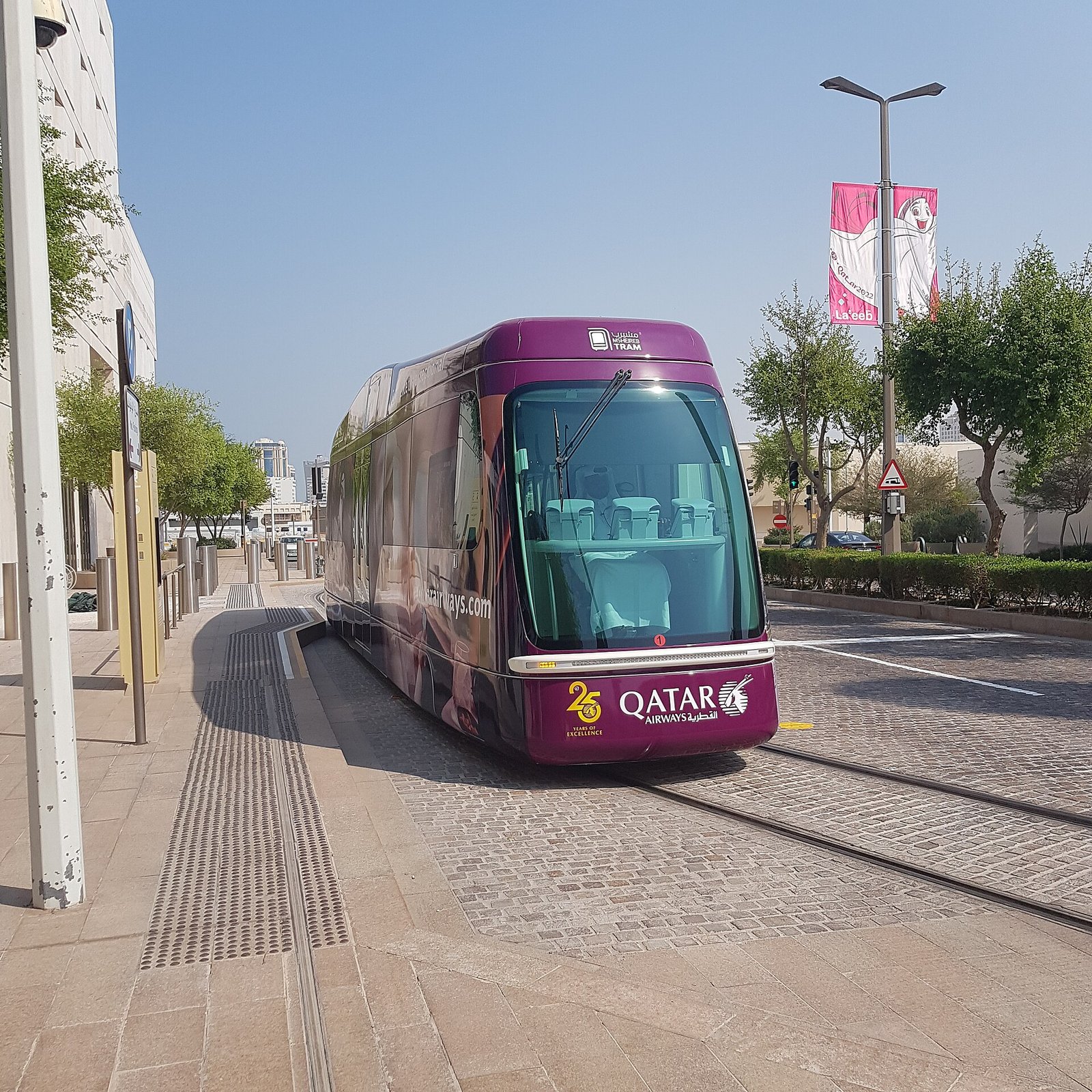
Msheireb Downtown Doha sits right next to Souq Waqif, and the two are linked by a pedestrian underpass. The district was rebuilt from 2010 by Msheireb Properties, a Qatar Foundation subsidiary, as a walkable neighbourhood of shaded streets, museums, offices and homes, served by a free tram and the country’s largest Metro station. It has become one of the best areas in the city for serious coffee. See our guides to Msheireb Downtown Doha and the Msheireb tram heritage loop for the wider area.
NOMAD Coffee
NOMAD is a tiny speciality coffee bar inside the underpass between Msheireb and Souq Waqif, and most people walk straight past it. Coffee lovers don’t. It is known for Yemeni beans (ListMag’s March 2026 round-up mentions beans from the port of Mokha) and for the house NOMAD Signature, a coffee flavoured with cinnamon and cardamom that nods to the spices of traditional Arabic coffee. Order a Yemeni V60 if you want to taste the beans properly, or compare it with an Ethiopian filter if you are sharing.
Best for: coffee enthusiasts, solo travellers and anyone walking between the souq and Msheireb. Because it is underground, it works in any season. Good to know: it is small and can feel snug at busy times; weekdays are calmer than Thursday or Friday evenings. NOMAD also has a second branch at Place Vendôme in Lusail. Read our full guide to NOMAD Coffee.
Savant Café
Savant is a locally owned, gallery-style café on Al Kahraba Street, the “electricity street” remembered as the first fully lit street in Qatar. It balances two traditions neatly: speciality espresso, iced Ethiopian filter and matcha on one side, and Arabic coffee served from a dallah on the other. Breakfast is the main draw, with avocado egg toast and breakfast boxes often mentioned by reviewers, and its Spanish latte comes up again and again in local guides.
Best for: breakfast, couples and friends catching up, and visitors who want both a modern coffee and a taste of gahwa in one sitting. Good to know: weekend mornings are busy; there is seating inside and out. Read our full guide to Savant Café.
Other Msheireb names to know
Msheireb has more speciality coffee than any other single district in central Doha. ListMag’s 2026 list includes The Ministry of Coffee, which has its roastery in Msheireb (with another branch at Lusail Marina) and is known for V60, cold brew and seasonal blends, and Earth Organic Coffee, which uses organic beans and plant-based milks and serves vegan cakes. Marhaba’s 2026 guide also lists NK Café in Msheireb. If you are spending a day at the Msheireb Museums, you will not be short of options.
Katara: karak by the car window and a sea-breeze terrace
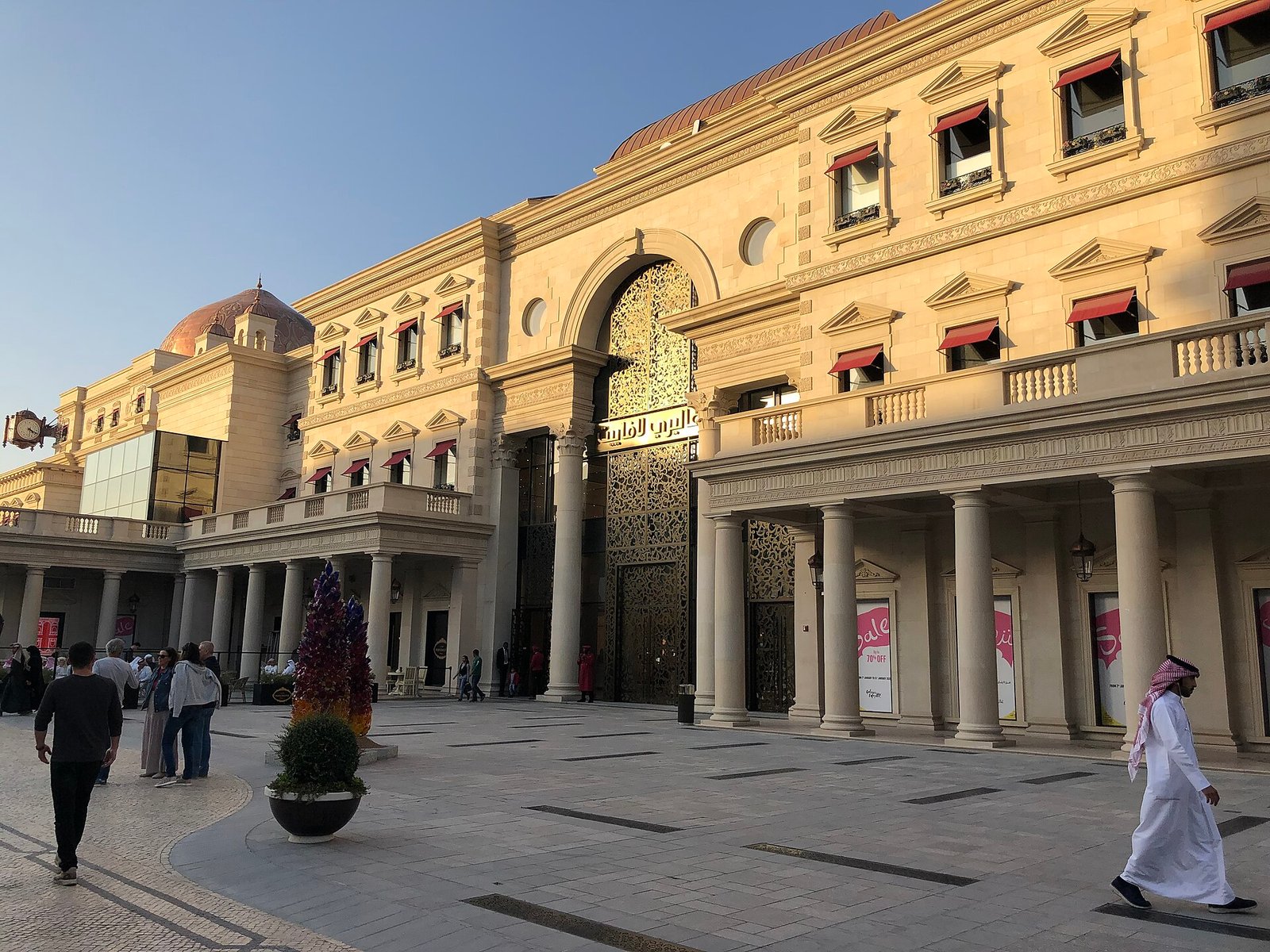
Katara Cultural Village, on the coast between West Bay and The Pearl, is where families stroll in the evening between the amphitheatre, galleries, mosques and the beach. Two very different cafés here sum up Doha’s drinking culture perfectly. For the full area guide, read our Katara Cultural Village guide.
Chapati & Karak
A small, no-frills stand that has become one of the most famous places in Doha for a late-night cup. After dark, especially at weekends, you will see a line of cars queuing beside it; staff take orders at the window and bring tea and flatbreads out to you. Qatar Living’s 2026 guide singles out the ginger karak and the sweet chapati, and gave prices of around QAR 3 to 5 for karak and QAR 5 to 10 for chapati and snacks. Savoury chapatis with cheese, za’atar or egg are also on offer.
The same guide reported that the Katara stand runs around the clock for most of the week, with a break on Friday mornings. Best for: seeing a slice of everyday Doha life, late-night snacks and the cheapest good drink in this guide. Read our full guide to Chapati & Karak at Katara.
Kava Koffee
Kava is the quiet alternative to Katara’s big waterfront restaurants: a homegrown speciality brand founded in 2018, in a heritage-style building with an interior of terracotta and earthy tones and a terrace that catches the sea breeze. It is known for its flat white and for cold brew served in glass bottles, which ListMag singled out in 2026. Marhaba highlights its matcha chia pudding, and reviewers mention brownies and a hot chocolate that is popular with children.
Listed hours at the time of writing start early in the morning, which makes Kava one of the best places in Doha for a sunrise coffee followed by a walk on Katara Beach. Best for: speciality coffee, remote work and early risers. Read our full guide to Kava Koffee.
The Pearl: marina coffee and a canal-side library
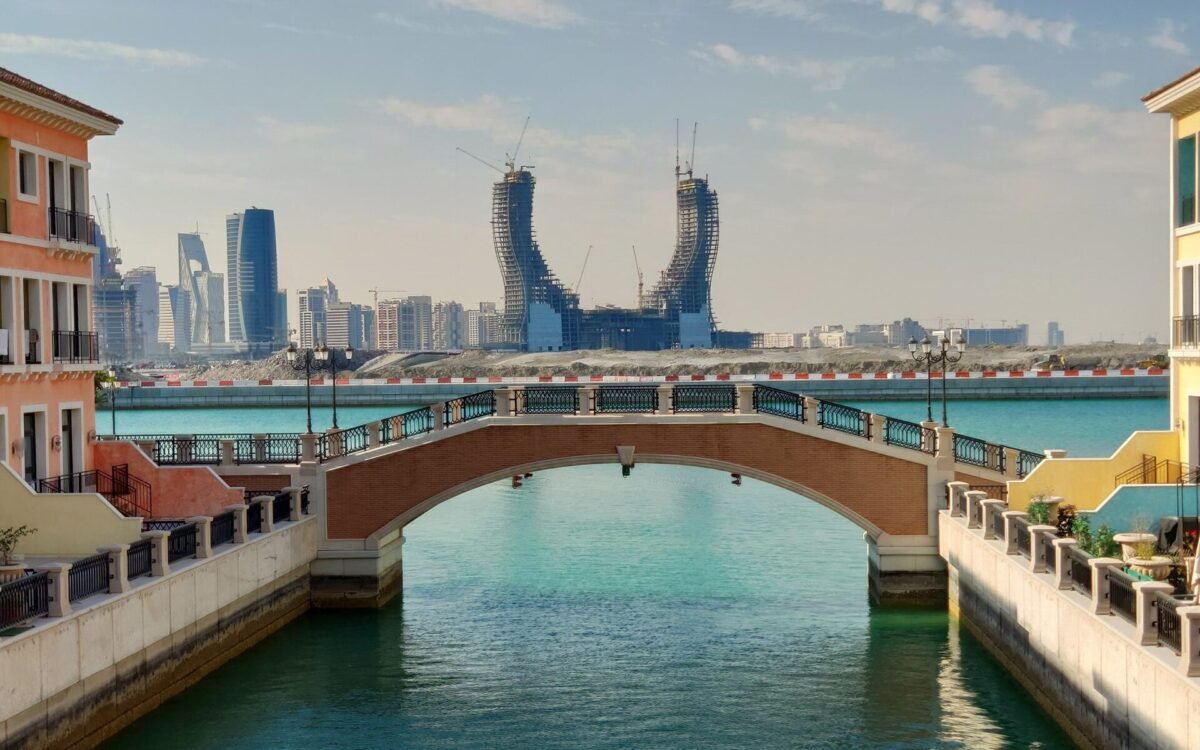
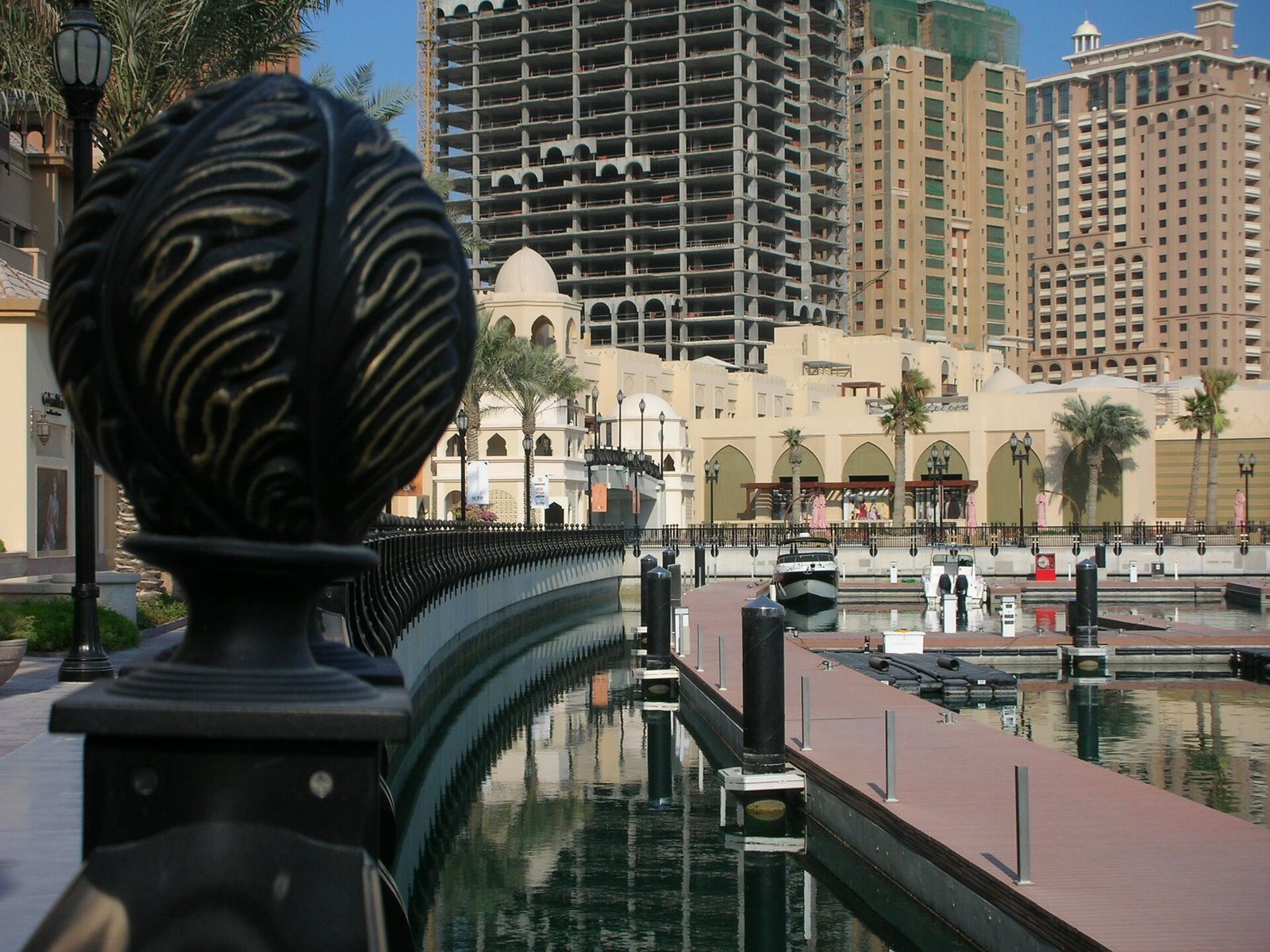
The Pearl is an artificial island off Doha’s northern coast, and its two best-known districts, Porto Arabia with its marina and Qanat Quartier with its Venetian-style canals, are packed with cafés. Two stand out, for very different reasons. For the wider area see our Lusail and The Pearl guide, plus our guides to Porto Arabia and Qanat Quartier.
Harvest Coffee, Porto Arabia
If Doha’s coffee community had to pick one café to show a visitor, many would pick this one. Harvest opened on the Porto Arabia marina in 2019 and was ranked No. 44 in The World’s 100 Best Coffee Shops 2026. Filter coffee is the signature: the V60 menu rotates with the seasons, and recent menus have featured beans from Ethiopia, Kenya, Panama and Indonesia. The all-day menu leans to brunch, with the “Sunday in Doha” walnut pancakes the dish most often mentioned in features.
Best for: serious coffee drinkers, brunch and a marina walk. Listed hours at the time of writing run from early morning to late evening, and the first hours are the calmest. Harvest also has branches at West Walk, Education City and QFBA. Read our full guide to Harvest Coffee, Porto Arabia.
Volume Café, Qanat Quartier
Volume opened in Qanat Quartier in June 2017 with the motto “Coffee, Culture & Community”, and the original branch is still the best. It spreads over two floors: the café downstairs, a library of international books and quieter seating upstairs, and terraces by the canal. It is less about coffee geekery than about atmosphere. ListMag recommends the cappuccino and the house honey cake, and Marhaba lists tiramisu as a signature.
Best for: reading, studying, couples and a calm break during a Qanat Quartier walk. Good to know: weekday afternoons are quietest; in summer, head upstairs and save the canal walk for after dark. Read our full guide to Volume Café.
Karak on The Pearl
For karak with a sit-down setting, Qatar Living’s 2026 guide points to Karaki in Medina Centrale, which it describes as open 24 hours a day and serving classic karak, speciality teas and desserts at prices higher than a roadside kiosk. Several other homegrown chains, including Flat White and Café 42, also have branches on The Pearl.
Lusail: coffee with a skyline
Lusail, about 20 kilometres north of central Doha, is Qatar’s newest planned city, and its cafés tend to be in towers, malls and along the marina rather than on street corners. See our guides to Lusail Marina Promenade and Place Vendôme for the wider area.
Plan B Café
Plan B is easy to miss because it is not at street level: it sits on the 20th floor of Marina Twin Tower A in the Marina District, and you take a lift through the tower to reach it. The reward is a sweeping view over the Lusail seafront and the curved Katara Towers. The café roasts its own espresso, and ListMag’s 2026 guide mentions the brulee latte, strawberry matcha, French toast and za’atar babka. Reviewers also mention a private study room for quieter work.
Best for: sunset coffee, brunch with a view and photographers. Listed hours at the time of writing were 8am to 11pm, running to midnight later in the week. Clear winter days give the sharpest panoramas. Read our full guide to Plan B Café.
Other Lusail options
Several of Doha’s homegrown names have Lusail branches, which is handy if you are staying in the area. According to recent local guides, these include NOMAD and Volume at Place Vendôme, The Ministry of Coffee at Lusail Marina, and branches of Cranio, Charger and Republic in Lusail City. They are useful for a coffee between sights, but the originals elsewhere in this guide have more character.
West Bay, the Corniche, Old Doha Port and Education City
Outside the main café districts, a handful of spots are worth knowing about, either because they are close to the sights or because they offer something you won’t find elsewhere.
Bayt Sharq, near the eastern Corniche
Not a café but a Qatari restaurant, Bayt Sharq is set in a restored family house, roughly a century old, just off the eastern end of the Corniche near the National Museum of Qatar. It opens for breakfast, and a traditional Qatari breakfast in the courtyard, with balaleet, chickpeas and broad beans, ending with karak, is one of the nicest ways to start a winter morning in Doha. It is more polished and pricier than the souq’s budget cafés. Read our full guide to Bayt Sharq.
Karak on the Corniche
Qatar Living’s 2026 guide lists Koffee & Karak on Corniche Road, around the Horizon Manor Hotel, as open 24 hours, serving house karak and coffee. It is a practical stop before or after an evening walk on the Doha Corniche.
Hotel coffee in West Bay
West Bay’s towers are mostly offices and hotels, and its cafés tend to be inside them. Visit Qatar points to the Sheraton, which it calls a local institution, for Arabic and Turkish coffee in old-world surroundings. Harvest also has a branch at QFBA, which Marhaba places at QFC Tower in West Bay. These are good fallbacks if you are staying nearby, but for atmosphere, head to Msheireb or Katara.
Old Doha Port
The colourful Mina District at Old Doha Port has its own café cluster. Marhaba’s 2026 guide lists a branch of NOIR Café there, described as a floating location, and Qatar Living notes a Tea Time outlet at Box Park where karak starts from QAR 1.
Education City
Education City, the Qatar Foundation campus in Al Rayyan, has a surprisingly good café line-up, mostly aimed at students and staff. According to Education City’s own directory, the Multaqa building houses Karak Mqanes, which the directory describes as a falconry and hunting-themed coffee shop, alongside Flat White and Graze Café. Safahat Café is inside the Qatar National Library, and Harvest has a branch at ThinkBay. Several campus cafés are closed or open only in the afternoon on Fridays, so check before you go. Combine a coffee with Education City Mosque and Oxygen Park.
Comparison table: Doha cafés at a glance
| Café | Area | Best for | Vibe |
|---|---|---|---|
| Athr Café | Souq Waqif | Gahwa, slow breakfast | Quiet heritage courtyard |
| Shay Al Shoomoos | Souq Waqif | Qatari breakfast, tea | Simple, busy, local |
| NOMAD Coffee | Msheireb / Souq Waqif underpass | Yemeni coffee, pour-over | Tiny coffee bar |
| Savant Café | Msheireb | Breakfast, Spanish latte, gahwa | Stylish, gallery-like |
| Chapati & Karak | Katara | Late-night karak, chapati | Drive-up, no frills |
| Kava Koffee | Katara | Flat white, bottled cold brew | Calm, earthy, sea breeze |
| Harvest Coffee | The Pearl (Porto Arabia) | Filter coffee, brunch | Marina-side, relaxed |
| Volume Café | The Pearl (Qanat Quartier) | Reading, canal views | Cosy library café |
| Plan B Café | Lusail | Sunset views, brunch | Design-led, 20th floor |
| Bayt Sharq | Eastern Corniche | Qatari breakfast, karak | Restored family house |
| Karak Mqanes | Education City and other branches | Karak with Qatari breakfast | Local, casual |
| Tea Time | Souq Waqif and across Qatar | Cheap everyday karak | Quick takeaway |
Karak and Arabic coffee: what to know
Karak: Qatar’s everyday tea
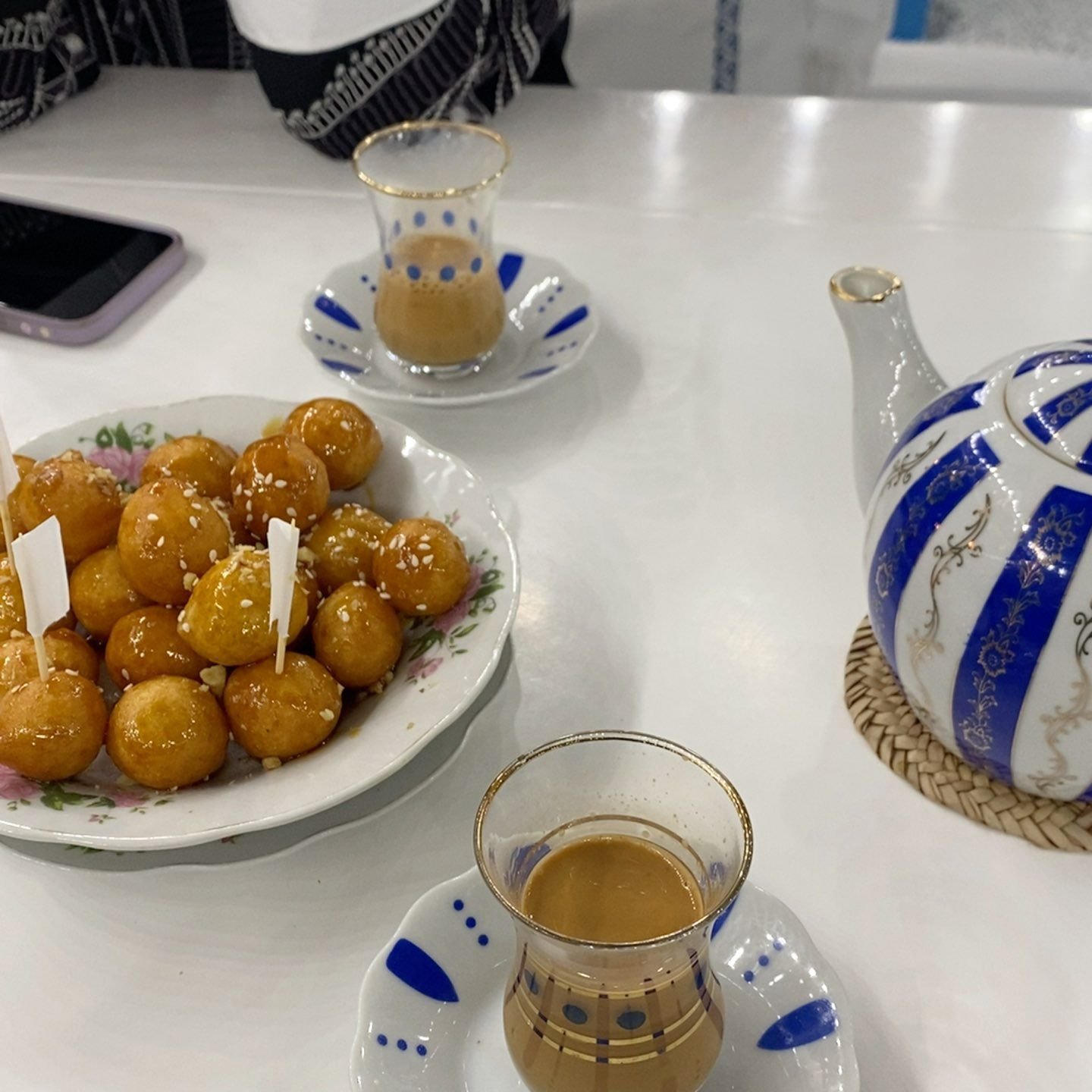
If you only try one local drink in Qatar, make it karak. It is strong black tea boiled with evaporated milk, sugar and cardamom, sometimes with saffron or ginger added. The drink came to the Gulf with workers and traders from India and Pakistan, and the name is usually traced to a word meaning “strong” in Hindi and Urdu. Over the decades it became Qatar’s own: sold at roadside cafeterias and petrol stations, drunk at breakfast, offered to guests at home and in the majlis, and above all bought late at night.
The karak run
The ritual that surprises visitors is the drive-up. At many karak shops you pull in, wave or flash your lights, and a server comes to the car window, takes your order and brings out tea in a small paper cup. It is a social habit: friends and families go for a drive in the evening and stop for karak and a snack, often chapati. The queue of cars at Chapati & Karak in Katara is the most famous example, but the same scene plays out at small shops all over Doha.
Where to try karak
- For the classic late-night experience: Chapati & Karak, Katara. Try the ginger karak with a sweet chapati.
- For a cheap cup on the go: Tea Time, which has branches in Souq Waqif, at Box Park in Old Doha Port and on streets across Qatar.
- With a Qatari breakfast: Karak Mqanes, a local chain with roadside takeaways and sit-down branches, including one at Education City; or Bayt Sharq.
- Somewhere to sit, any time: Karaki at Medina Centrale on The Pearl, or Koffee & Karak on Corniche Road, both listed by Qatar Living as open 24 hours.
How to order karak
Karak usually comes sweet. If you prefer less sugar, ask for it “less sweet” when you order; at busy drive-ups, keep it simple. Cups are small, so many people order two. Try the standard cardamom version first, then experiment with ginger or saffron.
Gahwa: the coffee of hospitality
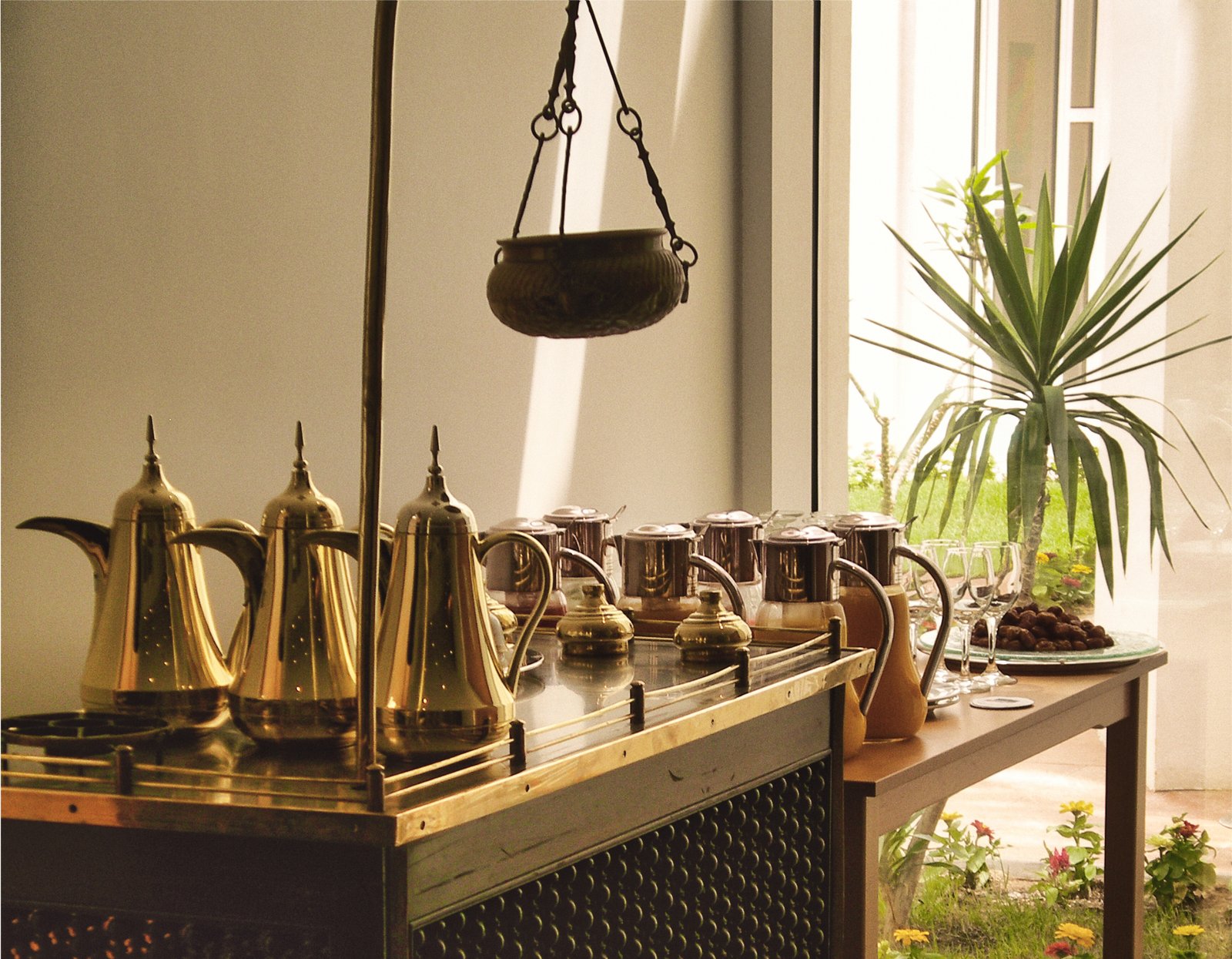
Gahwa, also written qahwa, is not the dark, bitter coffee many visitors expect. In Qatar it is usually made from lightly roasted beans and flavoured with cardamom and sometimes saffron, so it pours a pale gold. It is served in small handleless cups called finjan, poured from a long-spouted pot called a dallah, and almost always comes with dates or something sweet. You will be offered it in homes, in a majlis, at offices, in hotel lobbies and at some cafés, including Athr and Savant.
Arabic coffee (gahwa) etiquette
- Use your right hand. Visit Qatar notes that the finjan is handed over with the right hand, never the left. Receive it with your right hand too.
- Expect a small pour. The cup is filled only about a third of the way. That is a sign of hospitality, not stinginess: it keeps the coffee hot and means your host can keep refilling it.
- Seniority comes first. Service traditionally starts with the most senior person present and moves around the room. Younger family members usually do the pouring.
- Shake to stop. The server will keep refilling your cup. When you have had enough, gently shake the empty cup from side to side before handing it back.
- Have a date. Dates or a sweet are part of the ritual and balance the spice of the coffee.
Accepting and declining
Accepting at least one cup is polite when you are offered gahwa as a guest. You don’t have to drink several; one cup and a shake is perfectly fine. In a café, of course, it is simply something you order, often as a small pot to share.
Café hours, weekends and Ramadan
Doha keeps late hours. Many cafés open early, around 6am to 8am, and stay open until 10pm or later, and some karak spots run around the clock. A few patterns are worth knowing before you plan.
Fridays
Friday is the main day of prayer. Some cafés open later on Friday, after the midday prayer, and cafés in offices and on campuses may be closed all day; several Education City cafés, for example, list Friday as closed or afternoon-only. Qatar Living reported that even the round-the-clock Chapati & Karak at Katara takes a break on Friday mornings.
Weekends and evenings
Friday and Saturday mornings are the busiest times for breakfast spots such as Shay Al Shoomoos and Savant, and Thursday night is the big night out. If you want a quiet table, aim for a weekday morning.
Ramadan
Ramadan 2027 is tentatively expected to begin around 8 February 2027, subject to moon sighting. During the holy month, eating and drinking in public during daylight hours is an offence in Qatar, and most cafés either close in the daytime or serve takeaway only, then open after iftar (sunset) and stay open late into the night. Evenings during Ramadan are a lovely time for karak and sweets, and many cafés run special menus, but hours change every year, so confirm before you go. Read our guide to Ramadan in Qatar for more.
Summer
From roughly May to September, daytime heat makes terraces impractical. Indoor and underground spots such as NOMAD and the library at Volume come into their own, and the city’s café life shifts towards the evening. See our Doha in summer guide for more ideas.
Laptop-friendly and family-friendly cafés
Working from a café
Plenty of Doha residents work from cafés, and several places in this guide are popular for it. Take this as a guide rather than a promise: policies on laptops, Wi-Fi and how long you can stay vary, and weekend afternoons are not the time to occupy a table for hours.
- Harvest Coffee was designed as a “home away from home” where people are encouraged to linger, and early mornings are calm.
- Kava Koffee is described by reviewers as calm and cosy, with early opening hours.
- Plan B Café has a private study room mentioned by reviewers, plus a view to look up at.
- Volume Café has quieter seating upstairs in its library.
- The Qatar National Library in Education City, with Safahat Café inside, is a strong option if you need a genuinely quiet space.
Cup & Go Coffee, which has several branches around Doha, is described by Marhaba as a co-working style café with books and games alongside its coffee.
Cafés for families
Cafés in Qatar are generally welcoming to children, and families out together in the evening are a normal part of café life. Good choices include Athr Café for its quiet courtyard, Shay Al Shoomoos for a simple, filling breakfast, Kava Koffee for hot chocolate before the beach, and Bayt Sharq, where the courtyard gives children a little room. The drive-up karak stands are also easy with small children, since everyone stays in the car. For more, see our Qatar with kids guide.
How to plan a café crawl in Doha
Doha is spread out, so the best café crawls stick to one or two neighbouring areas. Here are three routes that work.
Route 1: Souq Waqif and Msheireb on foot (half a day)
- Start with breakfast at Shay Al Shoomoos or gahwa and balaleet at Athr Café.
- Wander the souq lanes, perhaps via the Falcon Souq.
- Take the underpass towards Msheireb and stop at NOMAD Coffee for a Yemeni pour-over.
- Walk on to Al Kahraba Street for a Spanish latte or lunch at Savant Café.
- Finish with the Msheireb Museums or a ride on the free tram.
Route 2: Katara and The Pearl (morning or evening)
- Begin early with a flat white at Kava Koffee and a walk on Katara Beach.
- Take a short taxi to Porto Arabia for filter coffee and brunch at Harvest Coffee.
- Continue to Qanat Quartier and settle into the library at Volume Café.
- Or reverse it: end the evening in the car queue at Chapati & Karak.
Route 3: Lusail sunset and a late karak
- Arrive at Plan B Café in the late afternoon for the view as the sun goes down.
- Walk the Lusail Marina Promenade after dark.
- Drive back towards the city via Katara for a ginger karak at Chapati & Karak.
Getting around
Souq Waqif and Msheireb are walkable and well served by the Doha Metro, with Msheireb station a short walk from both. Katara, The Pearl and Lusail are best reached by taxi or ride-hailing app, since the distances are longer and pavements are not continuous everywhere. If you are on a budget, the souq-and-Msheireb route costs little more than the drinks; see our Qatar on a budget guide for more money-saving ideas.
Mistakes to avoid
- Trusting old opening hours. Hours change often, especially on Fridays and in Ramadan. Check the café’s Instagram or call before a special trip.
- Planning a midday souq coffee. Some cafés in Souq Waqif close for a break in the afternoon, and the lanes are at their quietest. Mornings and evenings are better.
- Sitting outside in summer. From May to September, terraces are uncomfortable for most of the day. Choose indoor seating or come after dark.
- Expecting gahwa to taste like espresso. Arabic coffee is light, spiced and served in tiny cups. Enjoy it for what it is, with a date.
- Using your left hand to take a finjan. Offer and accept with your right hand.
- Eating or drinking in public during Ramadan daylight hours. It is an offence; wait for iftar or eat inside a venue that is serving.
- Trying to cover the whole city in one crawl. Doha is spread out. Pick one or two neighbouring areas and enjoy them properly.
- Camping at a busy café with a laptop at peak times. Weekend mornings and evenings are when cafés need their tables.
Looking for more places off the main tourist trail? Read our guide to hidden gems in Doha.
Frequently asked questions
What is the best café in Doha for speciality coffee?
Harvest Coffee at Porto Arabia, ranked 44th in The World’s 100 Best Coffee Shops 2026, is the strongest single pick. NOMAD Coffee by Souq Waqif is excellent for Yemeni coffee, and Kava Koffee at Katara for flat whites and bottled cold brew.
Where can I try karak in Doha?
Almost anywhere, but the classic experience is Chapati & Karak at Katara, where cars queue late at night for ginger karak and chapati. Tea Time and Karak Mqanes branches are good for an everyday cup, and Karaki at Medina Centrale on The Pearl is open around the clock, according to Qatar Living.
How much does karak cost in Qatar?
Very little. Qatar Living’s 2026 guide put street karak at Tea Time branches at around QAR 1 to 3 and karak at Chapati & Karak in Katara at around QAR 3 to 5. Sit-down cafés charge more.
Where can I try Arabic coffee in Doha?
Athr Café in Souq Waqif and Savant Café in Msheireb both serve gahwa from a dallah. You may also be offered it in hotel lobbies and at cultural venues. Remember to take the cup with your right hand and shake it gently when you have had enough.
Are cafés open during Ramadan in Qatar?
Most cafés close or serve takeaway only during daylight hours, then open after iftar and stay open late. Eating and drinking in public during the fast is an offence, so wait until sunset. Hours change each year, so check before you go.
Which Doha cafés are good for working on a laptop?
Harvest Coffee, Kava Koffee, Plan B Café and the upstairs library at Volume Café are popular with people working remotely, and the Qatar National Library is ideal if you need quiet. Policies vary, so avoid peak weekend times.
Are Doha cafés family-friendly?
Yes, generally. Families are a normal part of café life, especially in the evening. Athr Café, Shay Al Shoomoos, Kava Koffee and Bayt Sharq are good choices with children.
What is the best time of year for café hopping in Doha?
November to March, when mornings and evenings are mild enough to sit outside on terraces at Katara, Porto Arabia and Qanat Quartier. In summer, choose indoor cafés and go out in the evening.
Last checked October 2026. Rules, fees and access can change, so confirm with the official source before you go.