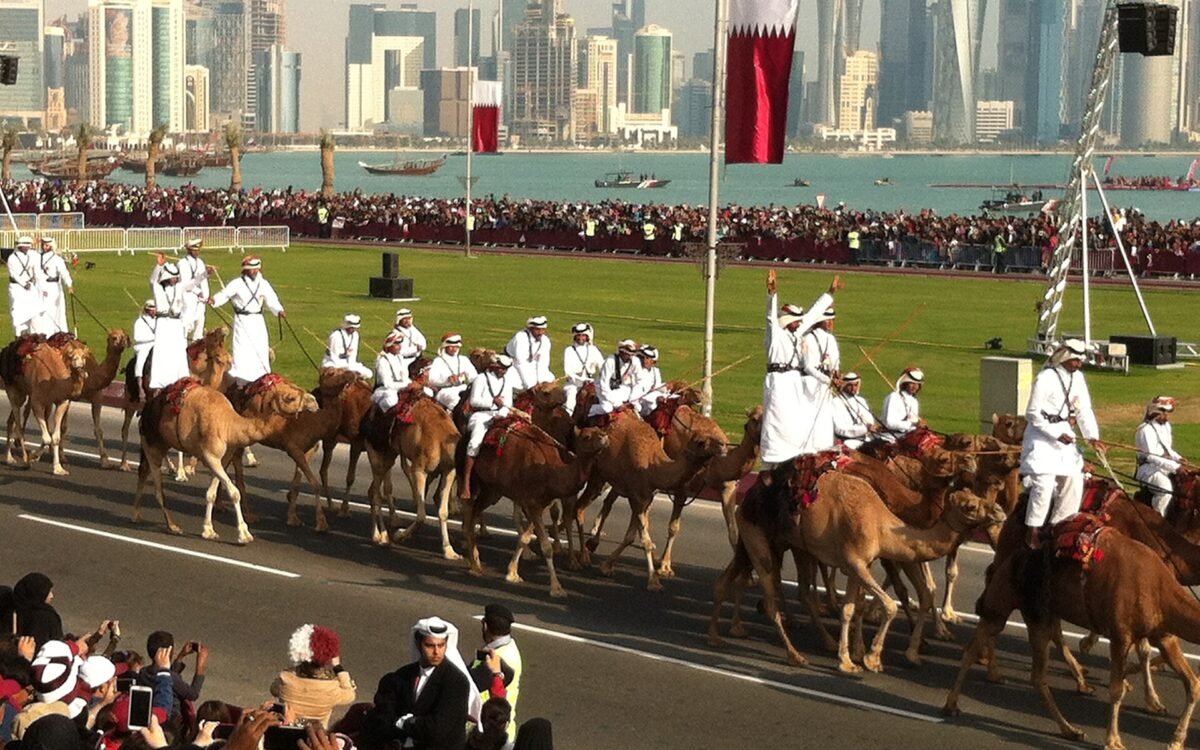
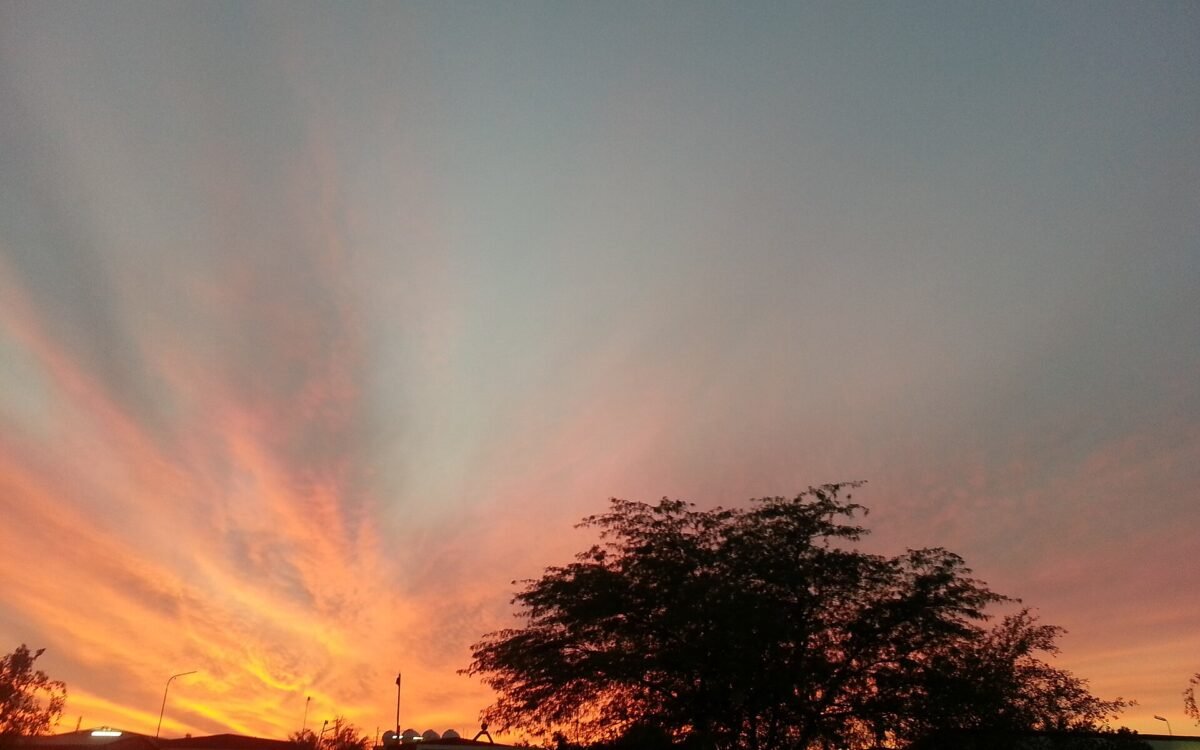
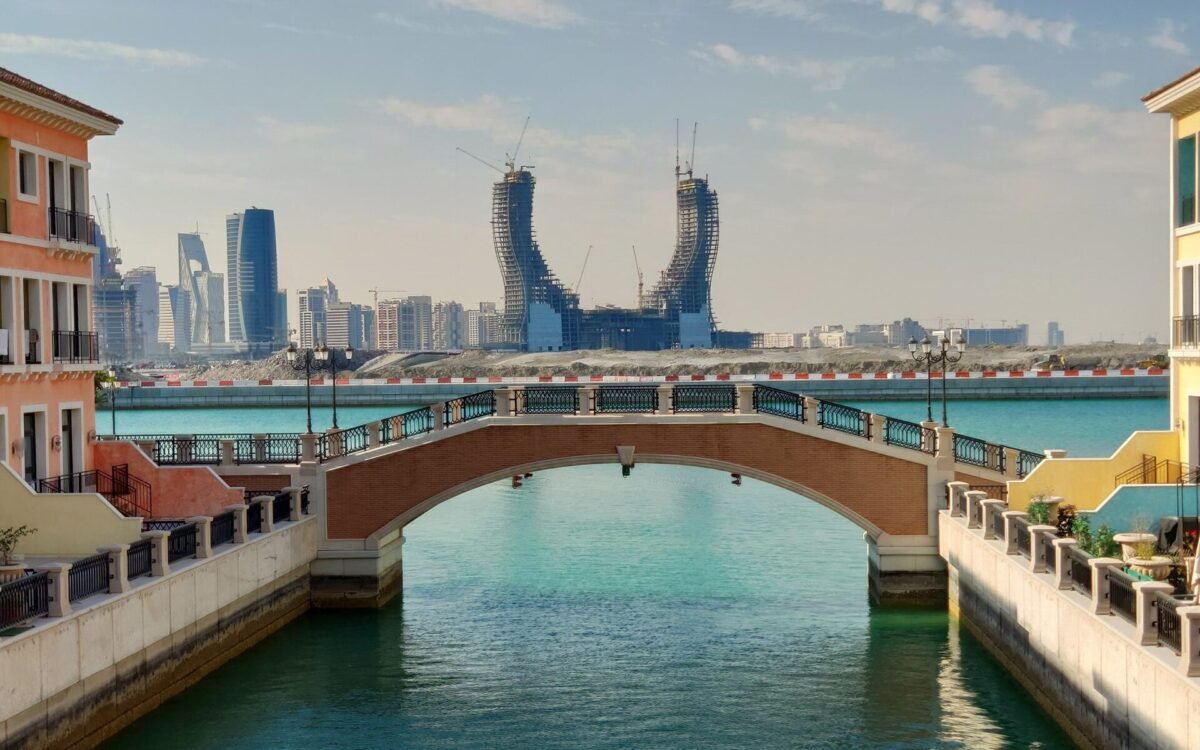
Katara Cultural Village is a free-to-enter cultural district on the coast of Doha, between West Bay and The Pearl. In one compact, walkable area you get a 5,000-seat open-air amphitheatre, two of the most photographed mosques in Qatar, clay pigeon towers, galleries, an opera house, a planetarium, a 1.5 km public beach, a luxury outdoor shopping street and dozens of restaurants and cafés. Most of it costs nothing to see.
Katara soft-opened in October 2010 and was built to look older than it is: sand-coloured buildings, shaded lanes and courtyards that borrow from traditional Gulf architecture. It is also a working cultural institution, not just a promenade. Festivals, exhibitions, concerts and heritage events run here through the cooler months, and on a winter evening the whole place fills with families, couples and groups of friends.
This guide is built around a practical question: how do you spend a good day (or evening) at Katara? It covers what each part of the village is like, how long to allow, how the beach works and what it costs, where to eat, which annual events are worth planning around, how to get there by metro or car, and the etiquette that matters at the mosques and on the sand.
At a glance
- Entry: free to walk the village, plazas, hills, mosque exteriors and most exhibitions. The beach has its own rules and, at least in summer 2026, an adult fee of QAR 10.
- Getting there: Katara has its own station on the Doha Metro Red Line, opened in December 2019. Taxis and ride-hailing are easy; parking fills up on winter weekend evenings.
- Don’t miss: the amphitheatre, the blue-tiled Katara Mosque, the Golden Mosque, the pigeon towers and a karak at dusk.
- Time needed: 2–3 hours for the highlights; a full afternoon and evening if you add the beach, a gallery and dinner.
- Best time: November to March, from late afternoon into the evening. In summer, come after dark.
- Light: the beach faces east, so you get sunrise over the sea and, at sunset, warm light on the buildings rather than the sun dropping into the water.
- Dress: modest clothing in the village (shoulders and knees covered); stricter rules apply inside the mosques.
What Katara is, and why it’s worth a proper visit
Katara (officially Katara Cultural Village) sits on reclaimed land on Doha’s eastern coast, north of the West Bay towers and just south of The Pearl. It soft-opened in October 2010, during that year’s Doha Tribeca Film Festival, and was conceived as a home for cultural organisations as much as a visitor attraction. The name recalls “Catara”, a name used for the Qatar peninsula on some early European maps.
Walk in and the first thing you notice is the scale. It feels like a village rather than a single attraction: low buildings in sand and ochre tones, narrow shaded alleys, small squares, archways and sudden views out to the sea. Galleries, cultural societies, theatres, cafés and restaurants occupy these buildings, and several of Qatar’s cultural organisations have offices here.
It’s easy to treat Katara as somewhere to grab dinner by the beach. That undersells it. The mosques are genuinely beautiful, the amphitheatre is one of the most striking public spaces in Doha, the hills behind the village are a quiet green escape, and the events calendar (dhow festival, Arabian horse festival, falconry exhibition, concerts) gives you a real window into Qatari and Gulf heritage. Spend a few hours and you’ll understand why so many residents come back week after week.
Who Katara suits
- First-time visitors to Doha who want a single, easy place to see Gulf-style architecture, a mosque, a beach and a good meal.
- Families, thanks to wide pedestrian areas, the beach, the planetarium and open green space on the hills.
- Photographers, for the tilework, the towers and the evening light on sandstone.
- Culture fans, who can time a visit to a concert, exhibition or festival.
- Residents who want a walkable evening out without a mall ceiling overhead.
What to see and how long to allow
The village is long and thin, running roughly north to south along the shore, with the beach on the seaward (east) side and the hills and mosques on the landward (west) side. Here is a quick planning table for the main sights.
| Sight | Where in Katara | Cost | Time to allow | Best for |
|---|---|---|---|---|
| Amphitheatre | Centre of the village, facing the sea | Free to view; event tickets vary | 20–30 min | Architecture, photos, concerts |
| Katara Mosque (blue-tiled) | Inland side, near the pigeon towers | Free | 20–30 min | Tilework, photography |
| Golden Mosque | Near the amphitheatre | Free | 10–15 min | Photography |
| Pigeon towers | Beside Katara Mosque, plus a pair nearer the sea | Free | 20–30 min | Golden hour photos |
| Galleries and art centre | Scattered through the village buildings | Many exhibitions free | 30–90 min | Art, rainy-day or hot-day plans |
| Al Thuraya Planetarium | Building 41 | Check the current programme | 45–60 min | Families, space fans |
| Katara Beach | Seaward side, about 1.5 km long | QAR 10 adults in summer 2026 (see below) | 1–3 hours | Swimming, water sports |
| Katara Hills | Landscaped slopes behind the village | Free | 30–60 min | Walking, picnics, views |
| 21 High Street (Katara Plaza) | Southern end, near the metro | Free to walk | 30–90 min | Shopping, Galeries Lafayette |
The amphitheatre
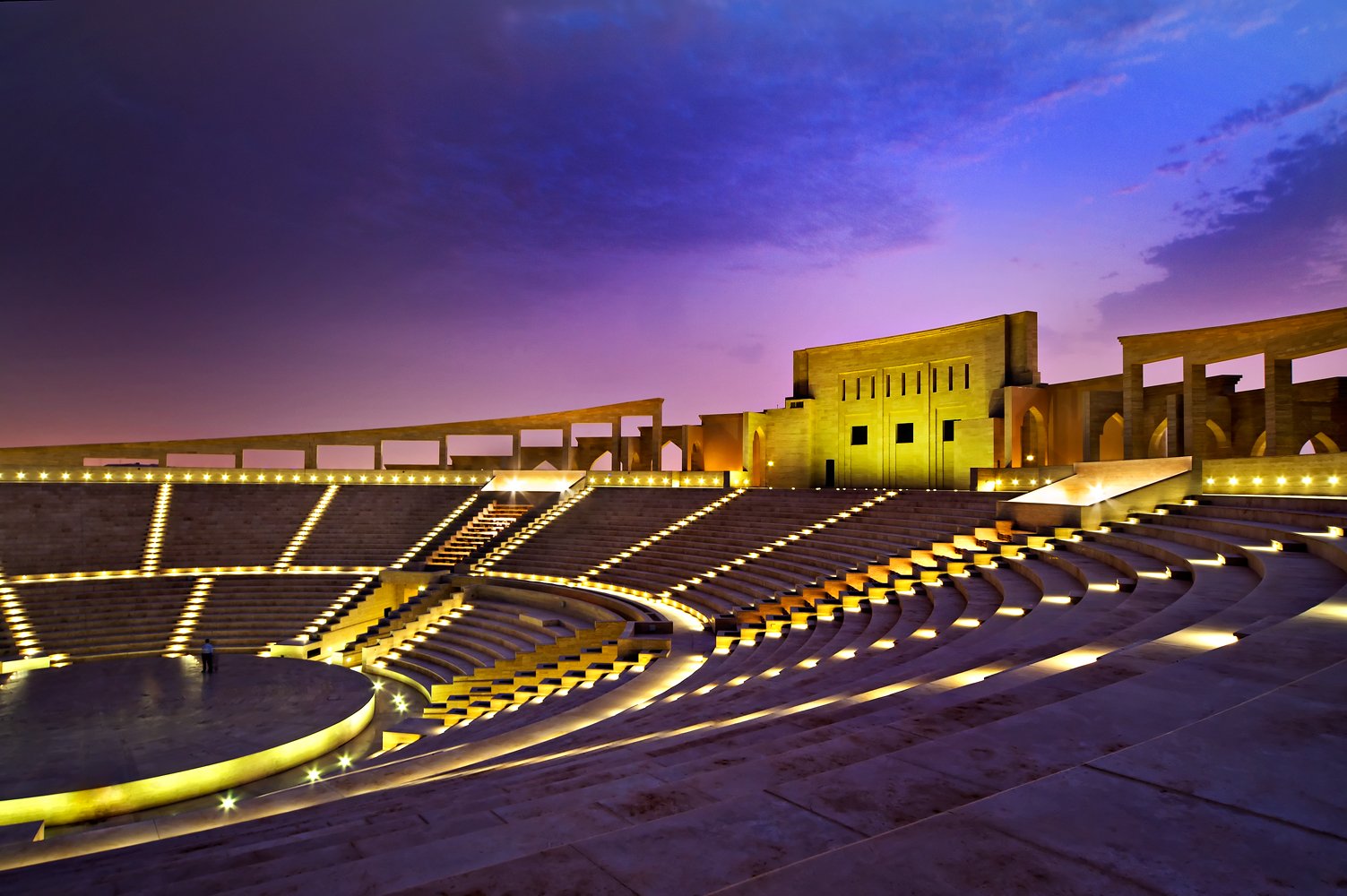
If you only see one thing at Katara, make it the amphitheatre. It’s a huge open-air venue that blends classical Greek theatre design with Islamic architectural detail, with tiered stone seating for around 5,000 people stepping down towards a stage, and the sea beyond. Columns and arched galleries ring the upper level, and the pale stone turns honey-coloured in the late afternoon.
On non-event days you can usually walk in and climb the tiers. Sit at the top and you see the whole layout of Katara: the stage below, the beach and the water ahead, and the high-rises of West Bay to the south. In the evening, when the lights come on, the amphitheatre becomes one of the best places in Doha for a quiet sit-down with a view.
It’s also a working venue. Concerts, national-day and Eid celebrations, film screenings and festival performances are staged here. If something is on, access may be ticketed or closed during set-up, so check Katara’s events listings if seeing the space empty matters to you.
Photography tip
Because the amphitheatre faces the sea, and the sea at Katara is to the east, the sun sets behind you as you look out from the seats. That’s good news: the arches and seating catch warm side light in the last hour of the day. For the classic symmetrical shot, stand on the top tier in the centre and shoot down towards the stage.
Katara Mosque and the Golden Mosque
Katara has two mosques, and they could hardly be more different. Both are active places of worship, so visit outside prayer times and follow the etiquette below.
Katara Mosque (the blue-tiled mosque)
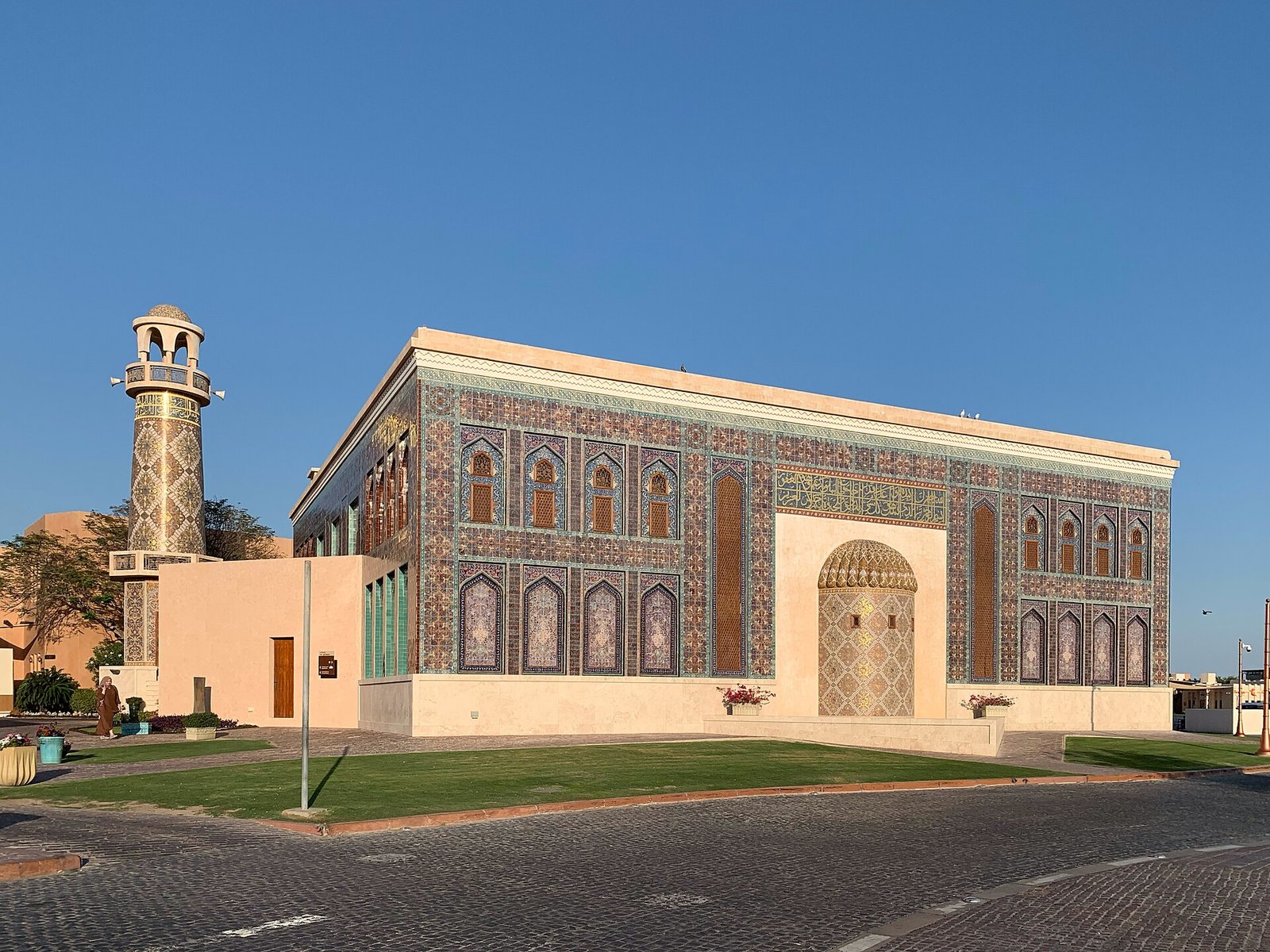
The larger Katara Mosque is the one you’ll see on postcards. It was designed by the Turkish designer Zeynep Fadıllıoğlu, and its walls are covered in Persian- and Turkish-style tile and enamel work in shades of blue, turquoise and gold, with flowing patterns and calligraphy. Up close the detail is extraordinary, and the colours change with the light: deep and cool in the morning, almost glowing in the late afternoon.
The mosque stands on the inland side of the village, near the foot of the hills, with the pigeon towers right beside it. That makes it easy to combine the two in one short walk, ideally in the hour before sunset.
The Golden Mosque
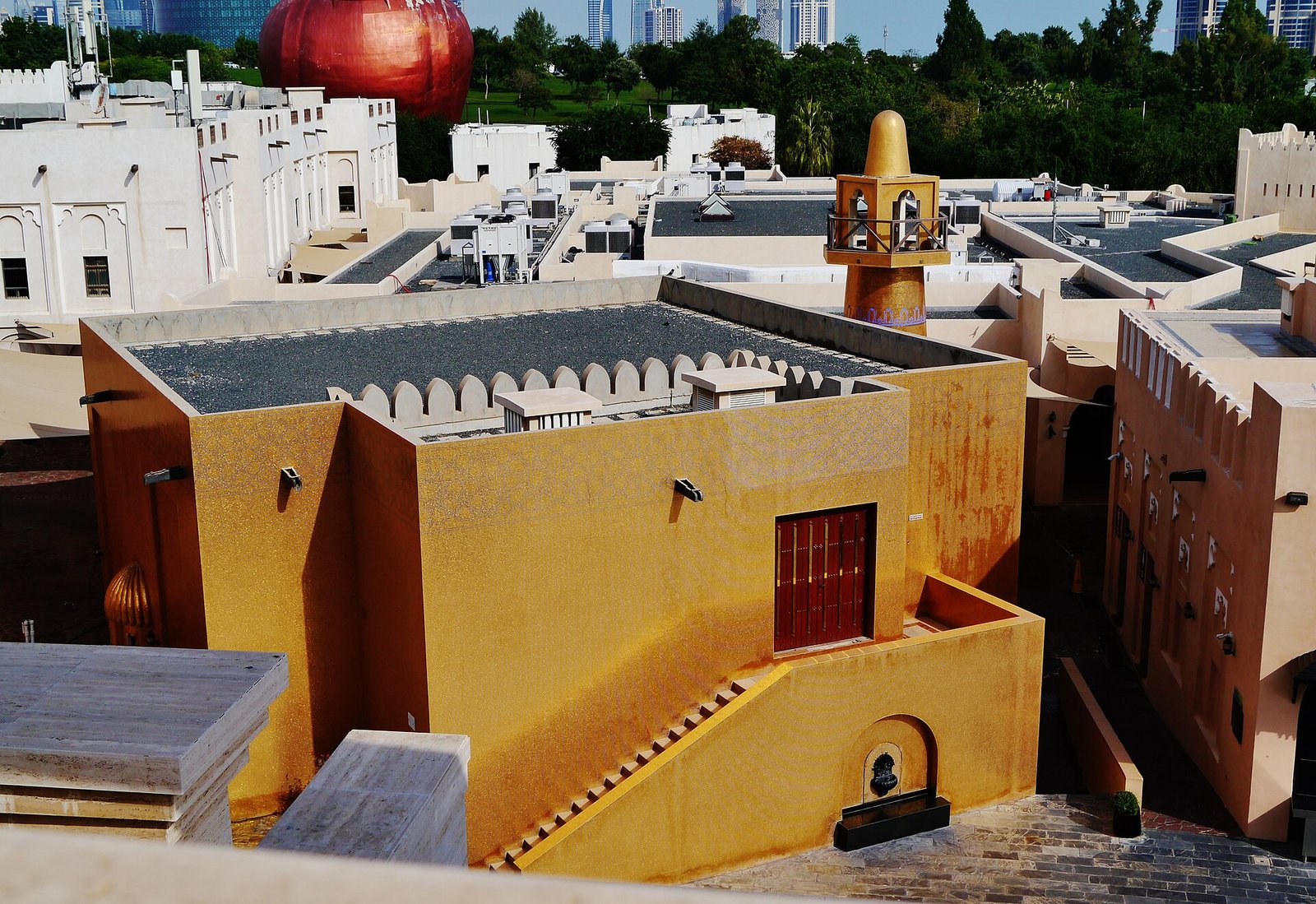
The smaller Golden Mosque faces the amphitheatre. Its exterior is clad in gold-coloured tiles with intricate patterning, and its slim minaret makes a neat contrast with the bulk of the amphitheatre behind it. It’s a quick stop, but on a sunny afternoon it’s one of the most eye-catching buildings in Doha.
Mosque etiquette for visitors
- Avoid prayer times, especially Friday midday prayers. Prayer times shift through the year, so check a local prayer-time app before you go.
- Dress conservatively: long trousers or skirts, covered shoulders and arms. Women should bring a scarf to cover their hair if they want to step inside.
- Take your shoes off before entering any prayer area.
- Photograph the exteriors freely, but don’t photograph people praying, and keep your voice low.
- If you’re unsure whether you can go in, ask anyone on duty or simply admire the exterior. Both mosques are worth the visit for their outsides alone.
The pigeon towers
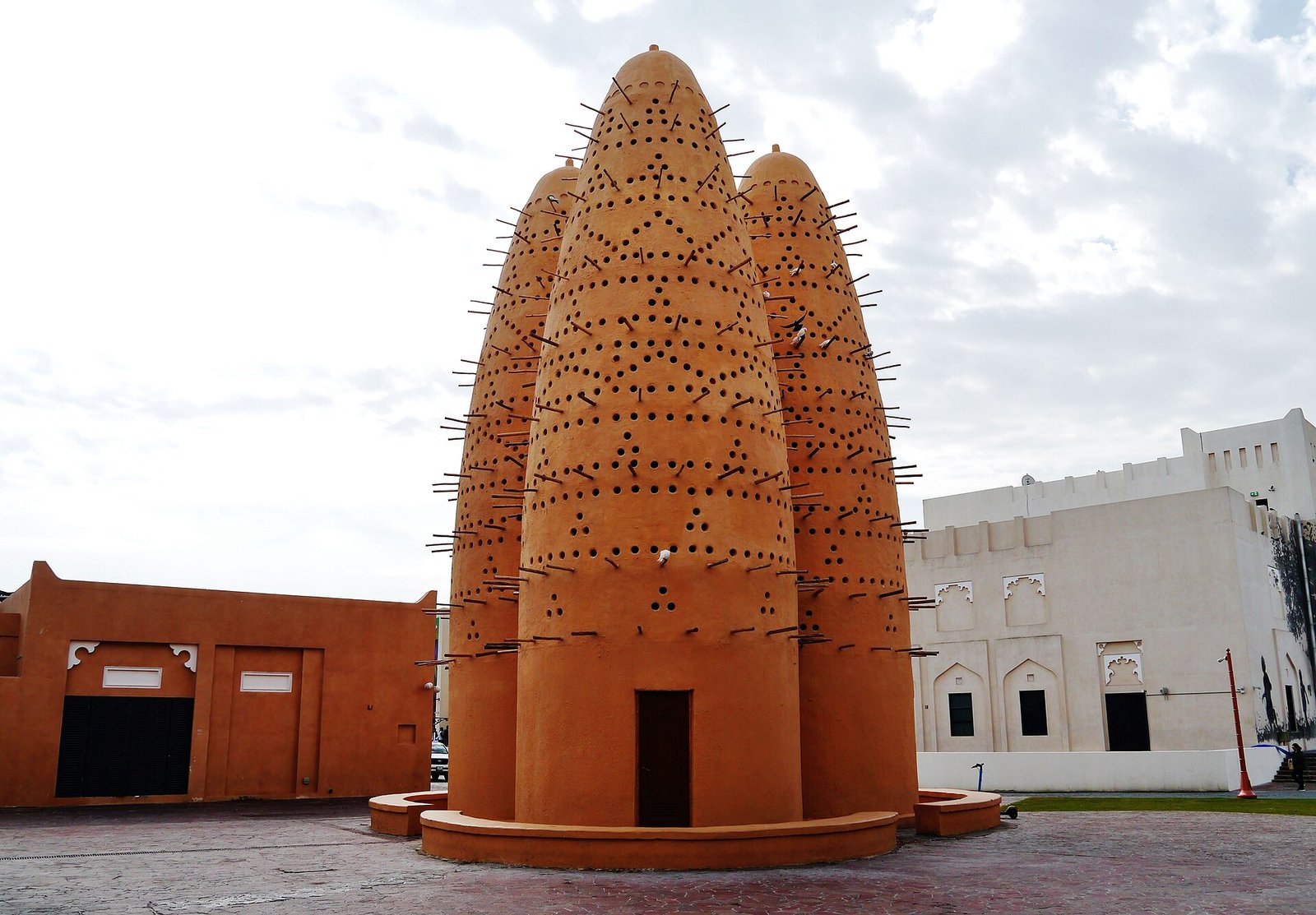
Beside Katara Mosque stand tall, tapering towers of clay and brick, studded with wooden perches. They are modern versions of the dovecotes once built across the Middle East to house pigeons, whose droppings were collected as fertiliser and which were also used as messengers. There are two groups: three towers next to the mosque and a pair on the eastern side, closer to the sea.
The towers are one of the most recognisable shapes in Doha, and they’re at their best in the hour before sunset, when the clay glows orange against the sky. You’ll often see pigeons circling and settling on the perches. It’s a short, calm stop, and a good way to see a quieter corner of Katara away from the beachfront.
For the full story behind the towers, where to stand for photos and how to fit them into an evening, read our full guide to the Katara pigeon towers. They also feature in our round-ups of the best sunset spots in Qatar and hidden gems in Doha.
Galleries, the Opera House and the planetarium
Katara’s cultural side is the part many visitors miss. Exhibitions change constantly, so treat this section as a map of what exists rather than a fixed programme, and check what’s on before you go.
Art galleries and studios
Gallery spaces are scattered through the village buildings, including the Katara Art Center and a Qatar Museums gallery space, alongside art studios and smaller exhibition halls. Shows range from contemporary Arab art to photography, calligraphy and visiting international exhibitions, and many are free to enter. They’re a good way to cool down in the afternoon, and an easy win if you’re visiting in the warmer months.
Keep an eye out for public art as you walk. Katara has several large outdoor installations, including Subodh Gupta’s Gandhi’s Three Monkeys, built from cooking pots and household utensils, and a bronze by Lorenzo Quinn.
Katara Opera House and Drama Theatre
The Opera House is an indoor venue of around 550 seats and is closely associated with the Qatar Philharmonic Orchestra, which performs there. Concerts, recitals and touring productions are announced through the season, which mostly runs through the cooler months. Katara also has a separate Drama Theatre for plays and screenings. Tickets, dress expectations and timings vary by event, so book through the official channels listed on Katara’s website.
Al Thuraya Planetarium
The Al Thuraya Planetarium, in Building 41, has a full-dome digital projection system and runs astronomy shows, films and children’s workshops. It is one of the better options at Katara for families and for hot days. Show schedules change and some sessions need advance registration, so check the current programme. As an example of what goes on, Katara is hosting events for World Space Week at the planetarium from 4 to 7 October 2026, with free workshops for participants who register.
Katara Beach: what it’s like, fees and rules
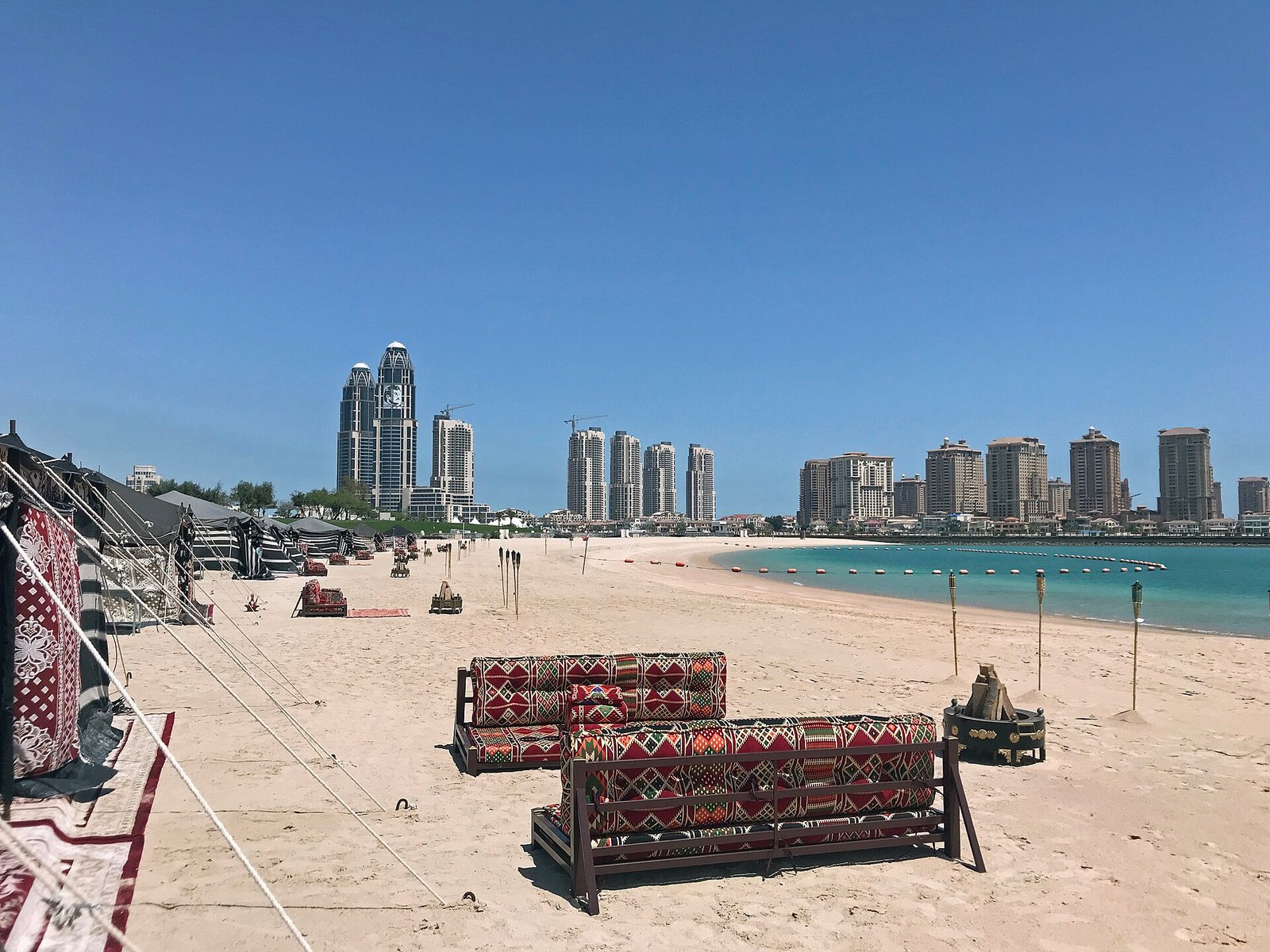
Katara Beach runs for about 1.5 km along the seaward side of the village. It’s a managed public beach with fine sand, designated swimming areas, rentals and a water-sports centre. Because it’s in the city, you swim with a view of high-rise towers, which is part of its appeal.
Entry fee: read this carefully
Sources disagree about whether Katara Beach charges for entry, mainly because the rules have changed over time and differ by season.
- For summer 2026, Katara announced (as reported by The Peninsula in June 2026) beach access daily from 3:30pm to 11pm from 1 June, with swimming and water sports from 3:30pm until sunset. Entry was QAR 10 for adults, and free for children under 15, people aged 60 and over, people with disabilities, caregivers and domestic workers. People booking water sports got free access. Chairs and umbrellas were QAR 5 each.
- Qatar Tourism’s Years of Culture guide gives the same QAR 10 adult fee.
- Some other guides, including a 2025 beach round-up from insurer QIC, describe general access as free, with charges only for activities.
Our reading: assume you may pay a small adult fee, carry a card, and check the current hours at the beach gate or on Katara’s official channels. Opening hours outside summer are likely to differ from the summer timetable above.
Sections and dress code
The beach is divided into several sections, including family areas. Katara asks for modest swimwear: one-piece swimsuits or tankinis for women and swim shorts for men, with a T-shirt or cover-up once you leave the sand. Bikinis and very revealing swimwear are not appropriate here, even though they are fine at hotel beaches.
Water sports
The water-sports operator has offered kayaking, pedal boats, waterskiing, wakeboarding and kneeboarding, traditional dhow rides and, seasonally, parasailing. Qatar Living’s July 2026 guide put many activities at around QAR 150 for 30 minutes, but prices and the line-up change, so check on the day.
Sunrise, not sunset, over the water
Katara faces east across the bay. That means the sun rises over the sea here, and at sunset it goes down behind the village, not into the water. If you want a sun-on-the-horizon sea sunset, head to the west coast instead (see our sunset guide). If you’re an early riser, a sunrise walk on the sand is calm and quiet, but note that summer beach access hours start in the afternoon, so you may only be able to watch from the promenade.
Katara Hills and 21 High Street (Katara Plaza)
Katara Hills
Behind the village rise the Katara Hills, an artificial landscape of lawns, trees, paths, a water stream and viewpoints. Marhaba describes the area at around 361,500 square metres, with gardens, jogging tracks and a padel venue. It’s the calmest part of Katara: good for a walk, a picnic in the cooler months, or a view back over the mosques and towers towards the sea. The hills are also home to a luxury hotel, Katara Hills (part of Hilton’s LXR collection).
21 High Street and Galeries Lafayette
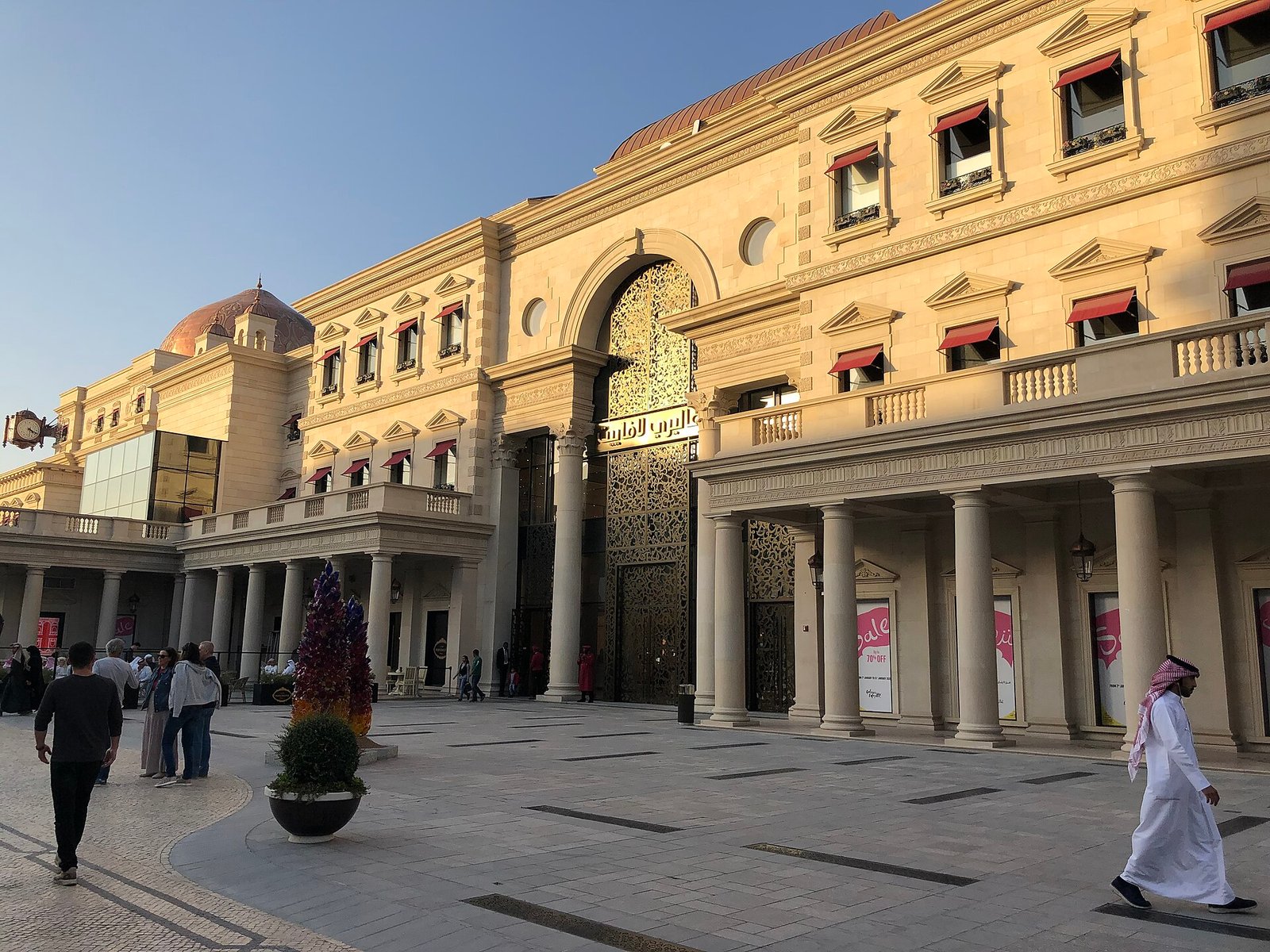
At the southern end of Katara is 21 High Street, also known as Katara Plaza, a large open-air luxury shopping street anchored by Galeries Lafayette Doha. It’s built around wide pedestrian boulevards with grand facades, and has outdoor cooling systems that take the edge off the heat. Besides fashion and beauty, it has cafés and restaurants and the SNAN Food Hall. Even if you’re not shopping, the architecture is worth a stroll, and this end of Katara is closest to the metro station.
Where to eat and drink at Katara
Katara has dozens of places to eat, from beachfront restaurants to tiny karak stands. The line-up changes, so treat the names below as starting points that were reported operating in 2026, and check current hours before you go.
Karak and late-night snacks
The most Katara thing you can do is order a cup of karak and a chapati after dark. Chapati & Karak is a small, budget stand where, on busy evenings, staff bring paper cups of sweet spiced tea and folded flatbreads straight to people waiting in their cars. Qatar Living put it top of its 2026 round-up of late-night karak spots. It’s a snack stop, not a meal, and reviews are mixed on quality, but the ritual is the point. Read our full guide to Chapati & Karak.
Specialty coffee
For a proper coffee, Kava Koffee is a homegrown Qatari specialty brand founded in 2018, in a heritage-style building with indoor and terrace seating. It opens early (listed from 6am daily; check Instagram for current hours), which makes it one of the few places in Katara for a serious coffee before the village wakes up. Its flat white and bottled cold brew are the drinks most often praised. Read our full guide to Kava Koffee.
Restaurants
Qatar Living’s July 2026 guide to Katara listed restaurants including Mamig (Armenian), L’wzaar Seafood Market, Khan Farouk Tarab Café (Egyptian), Ard Canaan (Palestinian), Sukar Pasha (Turkish), Saffron Lounge (Indian) and Le Vesuvio (Italian). Many have terraces facing the sea or the plazas, which are lovely in winter and less so in summer. Expect busy evenings at weekends and during festivals; booking is sensible for larger groups.
At the southern end, 21 High Street adds the SNAN Food Hall and other cafés, which are handy if you arrive by metro.
Alcohol
Katara is a family-oriented cultural district. Don’t expect alcohol in its restaurants; if that matters to you, licensed venues are mostly found in hotels elsewhere in Doha.
Festivals and events worth planning around
Katara runs a busy calendar, mostly from autumn to spring. Dates move from year to year, so use these as a guide to the season and confirm the current edition on Katara’s website or social media.
| Event | Recent dates | What it’s about |
|---|---|---|
| S’hail – Katara International Hunting and Falcons Exhibition | 10th edition, 8–12 September 2026 | Falconry, hunting gear, camping equipment, falcon auctions and exhibitors from across the region |
| Katara Traditional Dhow Festival | 15th edition, 27 November – 18 December 2025 | Wooden dhows, maritime crafts, sea songs, rowing and sailing races, heritage markets |
| Katara International Arabian Horse Festival | 6th edition, 4–12 February 2026 | Arabian horse shows and championships, auctions, parades and exhibitions |
| Eid and national celebrations | Around Eid al-Fitr, Eid al-Adha and Qatar National Day (18 December) | Performances, fireworks on some occasions, family activities |
Katara Traditional Dhow Festival
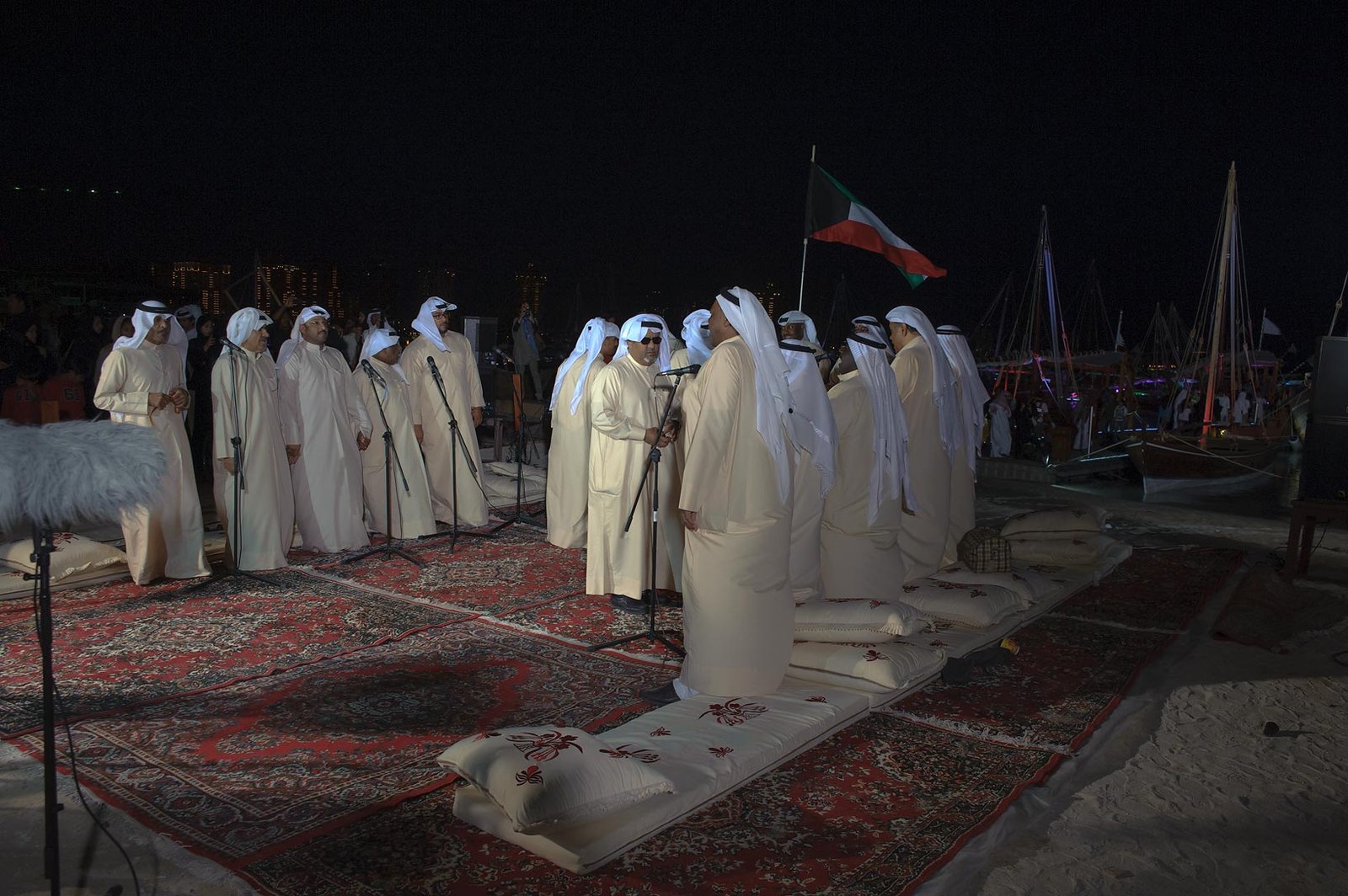
This is the event to plan a winter visit around. The 2025 edition, the 15th, ran from 27 November to 18 December in Katara’s southern area, known as Fereej Katara, with participants from 12 countries. Expect traditional wooden boats, demonstrations of shipbuilding and navigation tools, folk performances and sea songs, rowing and sailing races, heritage exhibits, a traditional market and a family zone. If you’re in Doha in late autumn, check whether the next edition falls during your trip.
Katara International Arabian Horse Festival
The sixth edition ran from 4 to 12 February 2026 at Katara, with international Arabian horse shows and championships, horse auctions, exhibitions and parades. Some shows are ticketed, and organisers have asked for smart or traditional dress at the main ring.
S’hail falconry exhibition
Each September, Katara hosts S’hail, a large exhibition on falconry and hunting. The 10th edition ran from 8 to 12 September 2026. Even if you have no interest in hunting, it’s a rare chance to see falcons up close and understand how central they are to Gulf heritage.
Other regular events
Katara also hosts art festivals, book and literary events (including the Katara Prize for Arabic Novel), concerts, film screenings, Ramadan and Garangao activities for children, and pop-up markets. Check Katara’s official “What’s On” listings or the Katara app in the week you’re visiting.
Getting to Katara
By metro
Katara has its own station on the Red Line of the Doha Metro, between Al Qassar and Legtaifiya. It opened to the public on 10 December 2019. ILoveQatar notes that the station brings you out near Galeries Lafayette at the southern end of Katara, within walking distance of the cultural village. From there, allow 10–20 minutes on foot to reach the amphitheatre, mosques or beach, depending on where you’re heading; the village is long, so wear comfortable shoes.
From central Doha, ride the Red Line north towards Lusail. Stations near Souq Waqif (Msheireb) and the Corniche are on the same line, so there’s no change needed from the old centre. Al Qassar station is the next stop south, and before Katara station opened, people walked from there.
By taxi or ride-hailing
Karwa taxis, Uber and other ride-hailing apps all serve Katara. Ask for a specific drop-off point, such as the amphitheatre, the beach or Galeries Lafayette, because entrances are spread out along the village. Expect a 15–25 minute drive from Souq Waqif or the Corniche in normal traffic, longer on weekend evenings.
By car and parking
Katara is just off the main road between West Bay and Lusail. There are several car parks, including underground parking, but demand rises sharply on winter weekend evenings and during festivals, when you can spend a while circling. Arrive before about 5pm on Thursday to Saturday, or use the metro.
By bus
Karwa public buses serve the Katara area, but routes and stops change. If you prefer the bus, use the Karwa Journey Planner app for the current route from your starting point.
Getting around inside Katara
The village is designed for walking, with mostly flat paved lanes and some steps and slopes towards the hills. From the southern end (21 High Street) to the northern beach areas is a fair walk, so plan your route: for example, start at the metro end, walk north through the plazas to the amphitheatre and Golden Mosque, cut inland to Katara Mosque and the pigeon towers, then finish at the beach or a restaurant.
Best time to visit and how to plan your day
Season
November to March is the best season, with mild days and comfortable evenings. This is also when most festivals, concerts and outdoor events happen. April and October are warm but manageable in the evening. From May to September, daytime temperatures in Doha are very high, so stick to galleries and the planetarium during the day, or come after dark when the village is at its liveliest.
Time of day
- Early morning: quiet lanes, soft light on the mosques, and coffee at Kava. Few other people around.
- Late afternoon (golden hour): the best time for photos of the amphitheatre, mosques and pigeon towers, as the sun drops behind the village and lights the stone.
- Evening: the busiest, most atmospheric time, with families out walking, the amphitheatre lit up and restaurants full.
Days of the week
Weekends in Qatar fall on Friday and Saturday, and Thursday evening is also busy. If you want space for photos or easy parking, visit on a weekday afternoon. If you want buzz and people-watching, go on a Thursday or Friday night.
How to spend a day at Katara: a sample plan
This plan is for a cool-season day. In summer, skip the beach until late afternoon and spend the middle of the day indoors.
| Time | What to do |
|---|---|
| Morning | Coffee and breakfast at Kava Koffee, then a quiet walk to Katara Mosque and the pigeon towers before the crowds. |
| Late morning | Climb the Katara Hills for a view over the village, then visit a gallery or the Katara Art Center. |
| Lunch | A long lunch at one of the restaurants by the plazas or the sea. |
| Afternoon | A planetarium show with children, or browse 21 High Street. Then the beach: swim, kayak or just sit by the water. |
| Golden hour | Back to the amphitheatre and Golden Mosque for photos as the stone turns gold, then the pigeon towers. |
| Evening | Dinner, a stroll through the lit lanes and a karak and chapati from the stand before you head home. |
Short on time? A two-to-three-hour version works well: arrive an hour before sunset, walk from the amphitheatre to the Golden Mosque, Katara Mosque and the towers, then have dinner and karak.
Practical tips: etiquette, families and what to bring
Dress code, etiquette and rules
- Dress modestly in the village. Shoulders and knees should be covered. Very short shorts, crop tops and sleeveless tops will draw attention, and may lead to you being asked to cover up.
- Mosques: long sleeves and trousers or long skirts, headscarf for women, shoes off, and avoid prayer times.
- Beach: modest swimwear (no bikinis), and cover up when you leave the sand.
- No alcohol in public places, and public drunkenness is an offence in Qatar.
- Photography: fine for buildings and general scenes. Always ask before photographing people, especially women and families, and don’t fly drones without the required permission.
- Public behaviour: keep displays of affection low-key, and keep music and noise down.
- Litter: use the bins, especially on the hills and the beach.
Tips for families
Katara is one of the easiest days out in Doha with children: it’s free to enter, largely pedestrian, and has open space plus indoor back-up options.
- Beach time: children under 15 entered the beach free in summer 2026. Stick to the designated swimming areas and bring swim shirts and sun hats.
- Planetarium: look for family shows and children’s workshops at Al Thuraya.
- Space to run: the lawns and paths on Katara Hills, and the wide plazas in the evening, suit scooters and small bikes when it’s not crowded.
- Festivals: the dhow festival and many seasonal events include family zones and workshops.
- Pigeons: younger children love watching the birds at the towers.
- Toilets and prayer rooms: available around the village and at the metro station.
- Pushchairs: most lanes are paved and manageable, but the hills and some older lanes have steps.
For more ideas, see our guide to Qatar with kids.
What to bring
- Water, especially from April to October.
- Sunscreen, sunglasses and a hat for the beach and plazas.
- A light scarf or cover-up for the mosques.
- Modest swimwear and a towel if you plan to swim.
- A bank card for beach fees, rentals and karak (cash is useful too for small stands).
- Comfortable shoes: you’ll walk more than you expect.
Mistakes to avoid
- Expecting a sea sunset. The beach faces east. Come for golden light on the buildings, or for sunrise over the water.
- Driving in on a weekend evening. Parking can be slow. Take the metro or arrive early.
- Turning up at the mosques at prayer time. Check times first.
- Assuming the beach is free and open all day. Summer 2026 rules meant afternoon-and-evening access only, with an adult fee.
- Seeing only the beachfront. The hills, galleries and the inland lanes are where Katara is at its calmest and most interesting.
- Visiting in the midday summer heat. Stick to indoor spaces and come back after dark.
Combine Katara with nearby places
Katara sits between West Bay, Lusail and The Pearl, so it pairs well with an evening in one of the neighbouring districts. Our hidden gems in Doha guide includes a ready-made evening loop from Katara to Lusail and The Pearl.
The Pearl
Just north of Katara, The Pearl is a man-made island with marinas and colourful canal-side neighbourhoods. Qanat Quartier, with its Venetian-style canals and pastel facades, is a lovely place for an evening walk; read our full guide to Qanat Quartier. For coffee, try Volume Café in Qanat Quartier or Harvest Coffee at Porto Arabia. For a beach-resort day, see our guide to Marsa Malaz Kempinski.
Lusail
A short drive or a few metro stops north, Lusail is Qatar’s newest city. The Lusail Marina Promenade is a long waterfront walk that’s lovely after dark, with views across the marina to the city lights; read our full guide. Nearby, Plan B Café is a good coffee stop.
West Bay and the Corniche
Head south and you reach the glass towers of West Bay and the start of the Doha Corniche, which you can also reach on the Red Line. For more evening ideas around the city, see our guide to the best sunset spots in Qatar.
Frequently asked questions
Is Katara Cultural Village free to enter?
Yes. Walking around the village, the plazas, the hills and the outside of the mosques, amphitheatre and pigeon towers is free, and many exhibitions are free too. Concerts, some festival events, planetarium sessions, water sports and, in summer 2026, adult beach entry (QAR 10) have their own charges.
Is there a metro station at Katara?
Yes. Katara station is on the Doha Metro Red Line, between Al Qassar and Legtaifiya, and opened in December 2019. It brings you out near Galeries Lafayette at the southern end of Katara; allow 10–20 minutes to walk to the amphitheatre, mosques or beach.
How much does Katara Beach cost?
For summer 2026, Katara set adult entry at QAR 10, with free entry for children under 15, people aged 60 and over, people with disabilities, caregivers and domestic workers, and chairs and umbrellas at QAR 5 each. Some guides describe the beach as free outside these periods, so check current rules at the gate.
Can you watch the sunset from Katara?
You can enjoy sunset at Katara, but not over the sea. The beach faces east, so the sun sets behind the village. The payoff is warm golden light on the amphitheatre, mosques and pigeon towers. For sunrise over the water, Katara Beach is one of the easiest spots in Doha.
Can non-Muslims visit the mosques at Katara?
Both mosques are active places of worship. Anyone can admire and photograph the exteriors. If you’d like to step inside, go outside prayer times, dress modestly (women should cover their hair), remove your shoes, and check with anyone on duty first.
What should I wear to Katara?
Modest, comfortable clothing that covers your shoulders and knees. On the beach, wear a one-piece or tankini (women) or swim shorts (men), and cover up when you leave the sand.
How long do you need at Katara?
Two to three hours covers the amphitheatre, the mosques, the pigeon towers and a snack. Allow a full afternoon and evening if you want the beach, a gallery or planetarium show, and dinner.
When is the Katara dhow festival?
The Katara Traditional Dhow Festival is held in late autumn and early winter. The 15th edition ran from 27 November to 18 December 2025. Check Katara’s official channels for the dates of the next edition.
Last checked October 2026. Rules, fees and access can change, so confirm with the official source before you go.