Msheireb Downtown Doha, Doha
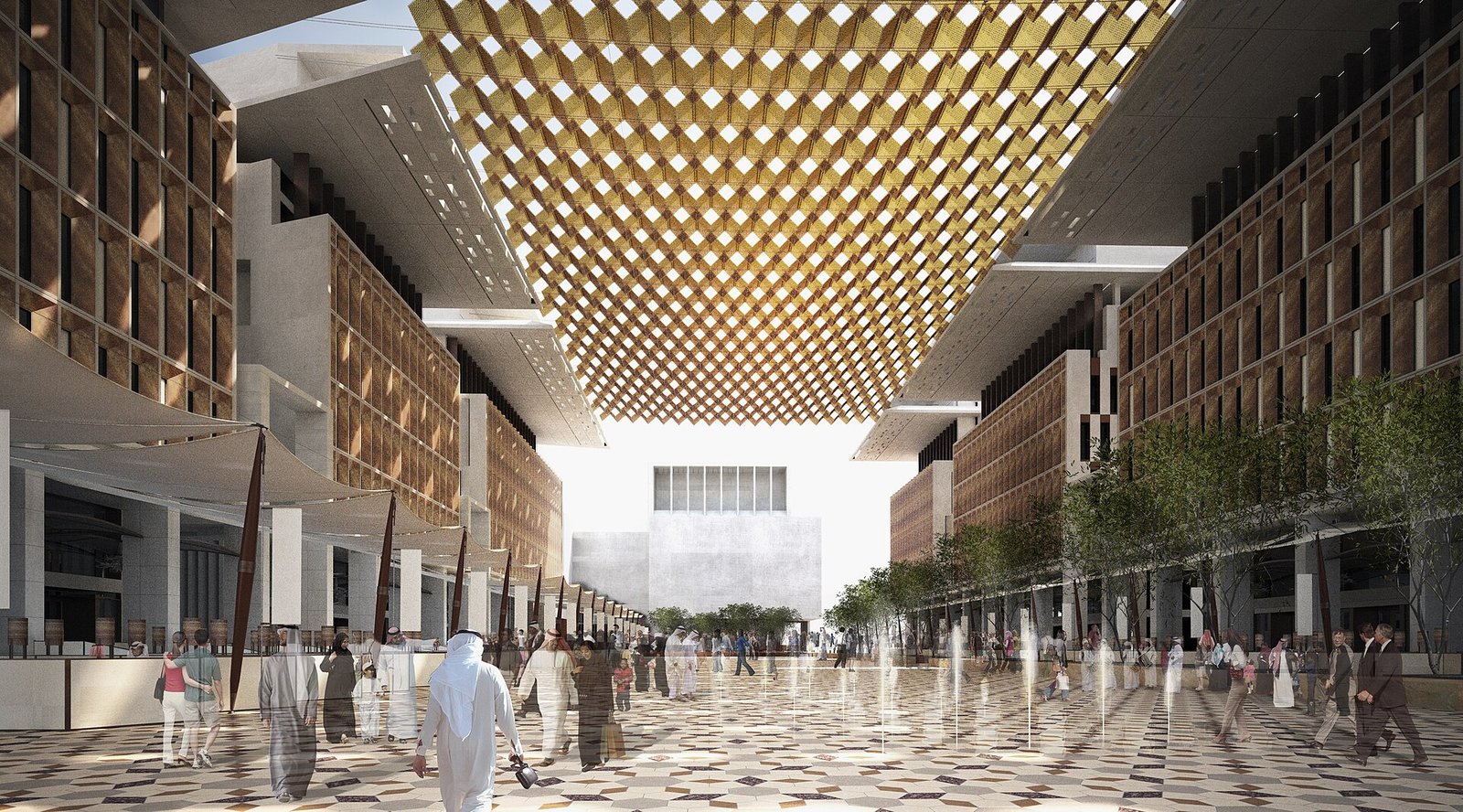
Doha's rebuilt old centre: shaded lanes, a covered square with a retractable roof, design galleries, hotel dining and a free tram, next to Souq Waqif.
Msheireb Downtown Doha, central Doha (next to Souq Waqif)
Overview
Msheireb Downtown Doha is the city’s rebuilt old centre: a compact grid of pale, low-rise buildings, shaded lanes and small squares sitting directly behind the Amiri Diwan and a short walk from Souq Waqif. It is where Doha tried to answer a hard question: what would a modern Qatari neighbourhood look like if you designed it from local tradition rather than glass towers?
For a visitor, Msheireb works best as a place to wander rather than a single attraction. You come for the architecture and the street life, for the big covered square at Barahat Msheireb, for design shows at M7 and the Doha Design District, and for a coffee or a long dinner in one of the hotel restaurants. Four restored heritage houses, the Msheireb Museums, sit inside the district too, and a free tram circles the streets.
It suits first-time visitors who want to see how Doha is changing, architecture and design fans, photographers who like clean lines and evening light, and anyone staying near Souq Waqif who wants somewhere calmer to walk. Families do well here in the cooler months, when the square fills up with seasonal events.
The story behind Msheireb
The name is usually explained as “a place to drink water” in Arabic, a nod to the area’s origins as a water source for old Doha. In J. G. Lorimer’s Gazetteer of the Persian Gulf (1908), Mushayrib is described as the place where Al Bidda drew its water, although the supply was noted as brackish and scanty. The area also had one of the few date plantations in the town at the time.
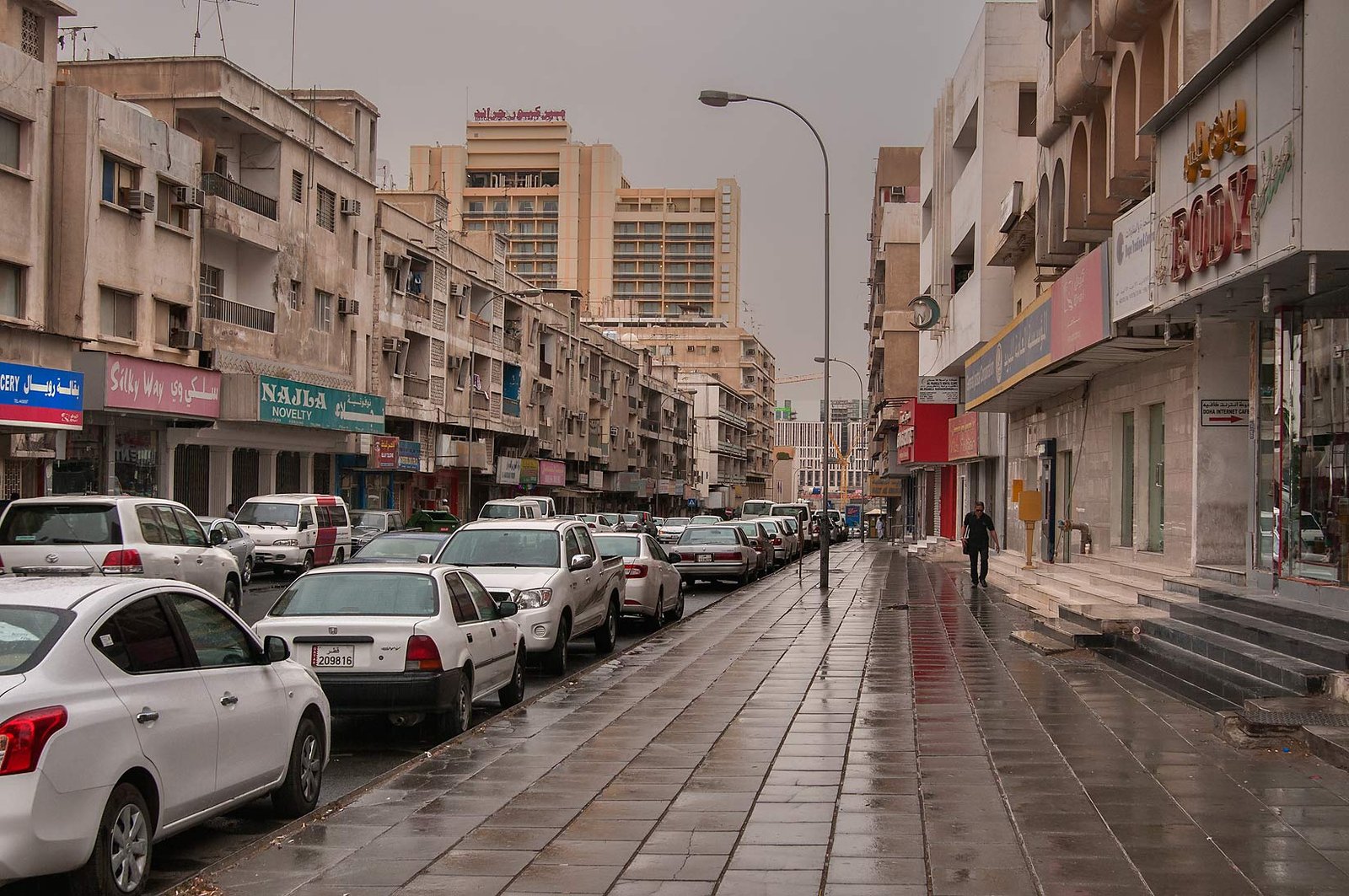
Through the 20th century the neighbourhood grew into a busy commercial quarter. Al Kahraba Street, which runs through it, is remembered as the country’s first street to be lit with electricity, and its name simply means “Electricity Street”. By the late 1900s, though, many of the older buildings had deteriorated, and the area had become densely packed housing for workers.
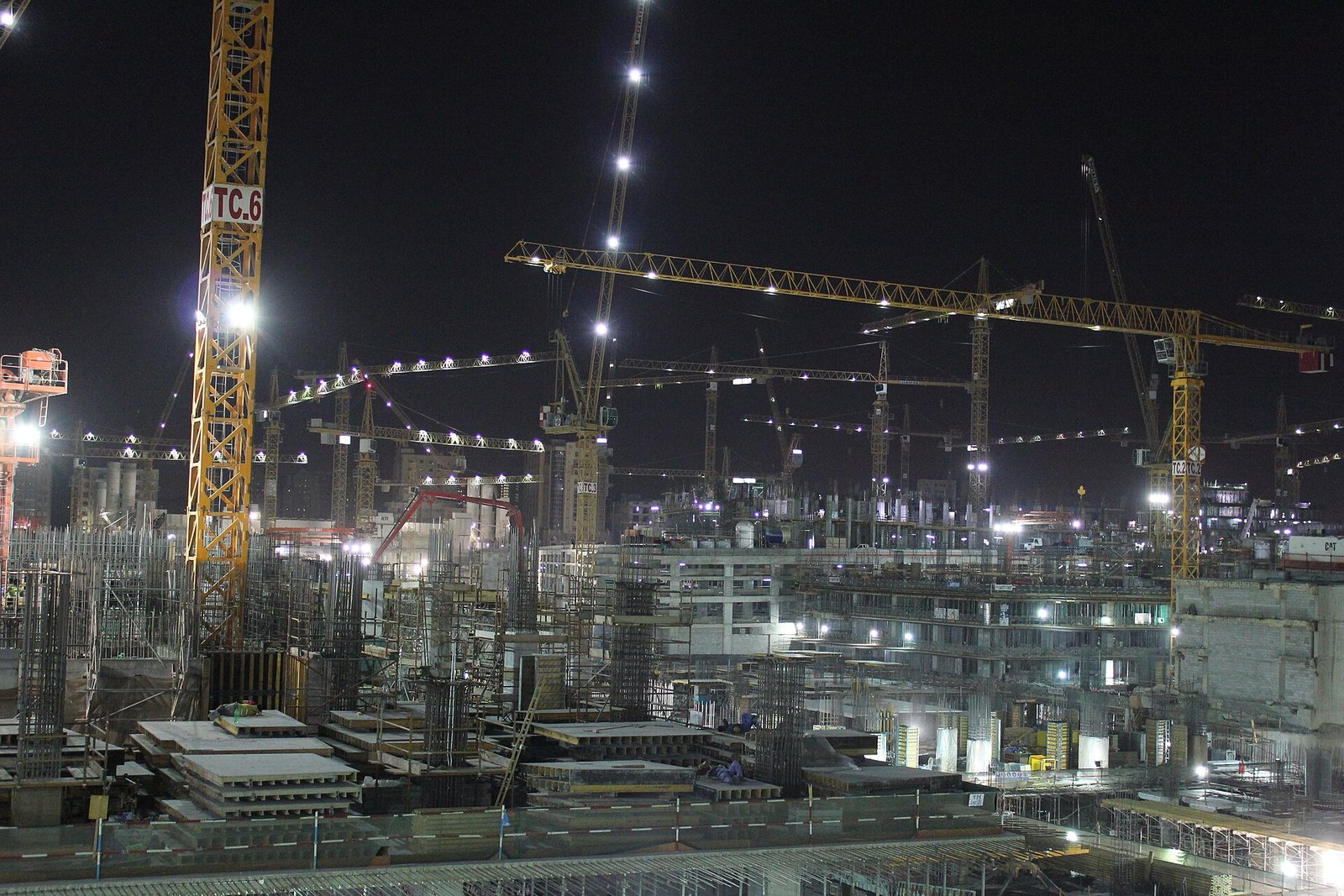
Msheireb Properties, a subsidiary of Qatar Foundation, took on the job of rebuilding it. Construction started in January 2010 and the project was delivered in phases, with the last phase completed in March 2022. The result covers about 31 hectares and more than 100 buildings, at a reported cost of around QAR 20 billion (US$5.5 billion). Sustainability was part of the brief from the start: the developer targeted LEED Gold or Platinum for its buildings, and thousands of rooftop solar panels generate electricity and heat water.
A handful of historic houses were kept and restored rather than demolished. They reopened as the Msheireb Museums in October 2015. Underground, Msheireb became the meeting point of the Doha Metro’s Red, Gold and Green Lines in 2019, and the station later won a Prix Versailles award for its interior.
What to see and do
Barahat Msheireb, the covered square
Barahat Msheireb is the district’s main public square and the natural place to start. Its standout feature is a huge retractable roof, which Gulf Times and Marhaba describe as the largest of its kind in the region. The roof slides across to shade the square in the heat and opens up on mild evenings. The architect, Michel Mossessian, pitched the space as a meeting place of cultures, and that is roughly how it works in practice: families, office workers and visitors drifting between cafés, kiosks and whatever event happens to be on.
The square is roughly 7,000 square metres. The Mandarin Oriental and Msheireb Galleria open onto it, and food kiosks line one edge. In the cooler months it hosts pop-ups, concerts and outdoor screenings; over the 2025–26 winter, for example, it ran an open-air family cinema, and during Ramadan 2026 it held iftar and suhoor evenings with live music.
Sikkat Wadi Msheireb and the side lanes
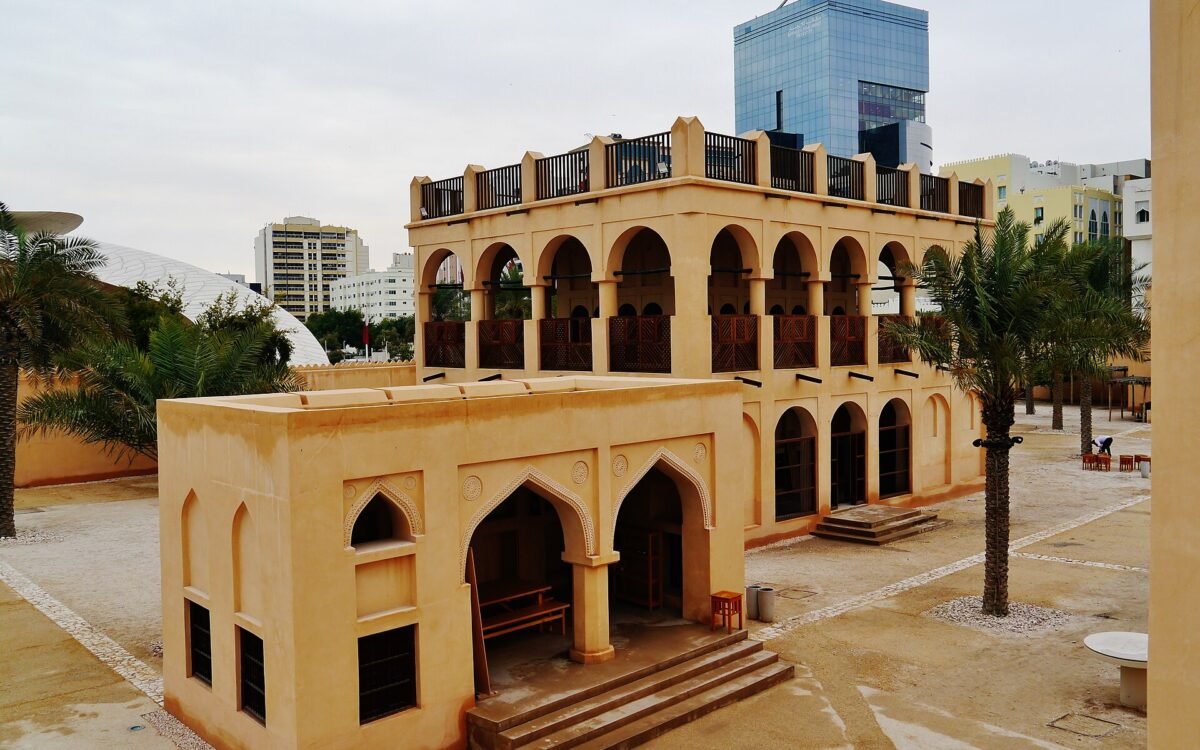
Sikkat Wadi Msheireb is one of the district’s main pedestrian routes, a heritage walkway with shops, cafés and Park Hyatt Doha along it. Nearby squares such as Sahat Al Nakheel and Sahat Wadi Msheireb are used for seasonal markets and children’s activities. Wander off it and you will find quiet alleys with screened windows, deep doorways and shaded arcades, which is where the district’s design ideas are easiest to see.
Look out for the way buildings are packed closely together to shade each other, the light stone colours, and the narrow streets that channel breezes. It is a contemporary take on the old fereej (neighbourhood) layout rather than a replica.
Al Kahraba Street
Al Kahraba Street is one of the few street names in the district that carries real history. It was part of old Doha’s commercial heart, and the redevelopment has kept it as a walkable street with shops and cafés. During Ramadan 2026 it was used for light installations telling the story of Doha’s first electrically lit street, so check the events calendar if you visit in the holy month.
Design and galleries: M7 and the Doha Design District
M7 is Qatar’s hub for fashion, design and technology. It runs exhibitions, a concept store and studios for local creative businesses, and in February 2026 it was the main venue for the first Art Basel Qatar, which also spread across the Doha Design District and public spaces in Msheireb. Exhibitions change, so look at what is on before you go.
The Doha Design District, launched in 2021 near Sahat Ghanim Bin Ali, mixes design galleries and furniture and lighting showrooms with workshops and creative services. Browsing is free, and it pairs well with M7 for an hour or two of design-focused wandering.
The Msheireb Museums
The four restored heritage houses, Bin Jelmood House, Company House, Mohammed Bin Jassim House and Radwani House, are the district’s most important cultural sight and are free to visit. We cover them in detail in our Msheireb Museums guide, including which house to prioritise if you are short on time. The National Archives of Qatar, which opened in January 2024, is also in the district.
Ride the free tram
The Msheireb Tram is a free loop of about 2 km with nine stops, using small air-conditioned hydrogen-powered cars. One full circuit takes around 18 minutes. It is a handy way to get your bearings on a hot afternoon or to rest your legs between stops. Our Msheireb Tram Heritage Loop guide suggests where to hop off.
Coffee, dining and the hotels
Msheireb has three five-star hotels: Mandarin Oriental, Doha (opened March 2019), Park Hyatt Doha (opened December 2019 on Sikkat Al Wadi) and Alwadi Hotel Doha, part of the MGallery collection. They are worth knowing about even if you are not staying, because they hold some of the district’s best-known restaurants. Mandarin Oriental’s line-up includes IZU, a French-Mediterranean restaurant by chef Izu Ani; Liang for Cantonese food; Mosaic for international dishes; and Baraha Lounge, which overlooks the square. Some outlets, such as its rooftop venue, are seasonal.
For coffee, the district has plenty of independent spots. Two we have written up are NOMAD Coffee and Savant Café. Msheireb Galleria adds a supermarket, a cinema and more casual places to eat across four levels.
How to get there
By metro: this is the easiest option. Msheireb station is the largest on the Doha Metro and the only one where the Red, Gold and Green Lines all meet, so you can reach it from most of the network without changing. Exits come up inside the district, a few minutes’ walk from Barahat Msheireb. The station also connects with the Msheireb Tram.
By taxi or ride-hailing: ask for Barahat Msheireb or one of the hotels as your drop-off point. The district is in the centre of Doha, so from West Bay or the Corniche it is a short ride, though evening traffic around Souq Waqif can slow things down.
By car: Msheireb has public underground car parks spread across the district, plus valet and VIP parking at selected locations. Barahat Msheireb North is the most convenient for the square and M7. Parking is paid; you can pay through the Msheireb app, with QR codes in the car parks or at on-site machines. Check the tariff at the entrance, as it is not widely published.
On foot: if you are already at Souq Waqif, you can walk across in 10 to 15 minutes. The two areas are next to each other, separated only by main roads, so take care crossing.
Best time to visit
The outdoor parts of Msheireb are most pleasant from November to March, when evenings are mild and the event calendar is busiest. Winter weekends, the National Day period in December and Ramadan are when the squares feel most alive, with markets, concerts and family activities.
In summer, the district is still usable thanks to the shaded streets, the covered square, the tram and the indoor spaces, but go after sunset and plan short walks between air-conditioned stops. The roof and cooling at Barahat Msheireb were designed for exactly this, but the lanes themselves are hot in the middle of the day.
Late afternoon into evening is the best time of day year-round. The pale stone looks its best in low sun, and the cafés and restaurants pick up after about 7pm. Weekday mornings are quiet, with mostly office workers about.
Tips for your visit
- Check the events page on the official Msheireb website before you go; what is on at Barahat Msheireb changes the feel of a visit completely.
- Arrive by metro if you can. It saves you hunting for the right car park and paying for parking.
- Use the free tram as a shuttle between the far ends of the district rather than walking in the heat.
- If you want to visit the Msheireb Museums, check their hours first; they keep shorter hours on some days and are closed on others.
- Dress modestly, as you would in any public area in Qatar. Cover shoulders and knees.
- Photography of the streets and squares is fine, but ask before photographing people, and avoid pointing your camera at the Amiri Diwan’s security area next door.
- Bring a light layer for the hotel restaurants and galleries, where the air-conditioning can be strong.
- Save time for Souq Waqif. Msheireb is quieter and more polished; the souq is busy and atmospheric, and seeing both in one evening makes a good contrast.
What to bring
- Comfortable shoes for walking on stone paving
- A refillable water bottle, especially from April to October
- A light layer or scarf for air-conditioned interiors
- A metro travel card if you are using public transport
Combine it with nearby places
Souq Waqif: the old market is right next door and is the obvious partner for an evening in Msheireb. Our complete Souq Waqif guide covers the lanes, the food and the Falcon Souq.
Gold Souq: a short walk from the edge of Msheireb, the Gold Souq is worth a browse even if you are not buying.
Museum of Islamic Art and MIA Park: about 2 km away on the Corniche, the Museum of Islamic Art is a short taxi ride and a natural next stop for a culture-focused day.
Al Bidda Park and the Corniche: head north towards Al Bidda Park or walk along the waterfront using our Doha Corniche guide.
Old Doha Port: the colourful Mina District at Old Doha Port is a short taxi ride away and good for an evening stroll by the water.
Planning a longer trip? Msheireb fits neatly into day one of our Qatar itinerary, and you will find more quiet corners of the capital in our guide to hidden gems in Doha.
Frequently asked questions
Is Msheireb Downtown Doha free to visit?
Yes. The streets, squares and the Msheireb Tram are free, and so are the Msheireb Museums. You only pay for food, shopping, parking and ticketed events, some of which are held at Barahat Msheireb.
What is Barahat Msheireb?
Barahat Msheireb is the district’s main public square, roughly 7,000 square metres in size, with a large retractable roof that shades it in hot weather. It is surrounded by cafés, the Mandarin Oriental and Msheireb Galleria, and it hosts seasonal events such as markets, concerts and outdoor cinema.
Which metro station is closest to Msheireb?
Msheireb station, which sits inside the district. It is the interchange for the Red, Gold and Green Lines of the Doha Metro, so it is easy to reach from the airport, West Bay, Education City and most other parts of the network.
Is there parking at Msheireb Downtown Doha?
Yes. There are paid public car parks underground across the district, with valet and VIP options at selected locations. You can pay using the Msheireb app, QR codes in the car parks or the on-site machines.
How long should I spend at Msheireb?
Allow two to three hours for a walk, a tram loop and a coffee or meal. Add an hour or two per museum house you want to see properly, or plan a full evening if there is an event at Barahat Msheireb.
Is Msheireb worth visiting if I have already been to Souq Waqif?
Yes. The two are very different. Souq Waqif is a restored traditional market, while Msheireb is a new district designed with traditional ideas in mind, with design galleries, museums and a calmer atmosphere. They sit next to each other, so you can easily do both in one afternoon and evening.
Is Msheireb good for children?
It can be, especially in winter when the squares host family events, markets and outdoor screenings. The free tram is popular with younger children. Note that Bin Jelmood House, one of the Msheireb Museums, deals with the history of slavery, so you may want to prepare older children for the subject.
Last checked October 2026. Hours, fees and access can change, so confirm with the official source before you go.
Read the Companies in Qatar visitor guide ↗
More places nearby
All places →
Run a tour, café or stay near Msheireb Downtown Doha, Doha?
List your business free on Companies in Qatar, or get featured on Qatar Unseen in front of people planning their trip.