Birdwatching in Qatar is far better than most visitors expect. The peninsula sits on one of the main migration routes between Europe, Central Asia and Africa, and the Qatar Bird Observation Group, which runs the country’s bird records website, put the national list at 357 species in February 2026. Most of them are passage migrants and winter visitors, which means the real season runs from late summer to late spring, with the coolest and most comfortable birding between November and March.
The mangroves are the obvious place to start. Qatar has only one native mangrove, the grey mangrove, and its largest stands line the creeks between Al Khor and Al Thakhira on the north-east coast, about an hour’s drive from Doha. You can walk into them on the footbridge to Purple Island, or paddle through them on a guided kayak tour, and in winter both come with herons, egrets, waders and, in good years, flamingos. Away from the coast, a handful of man-made wetlands and green farms in the desert, from Al Karaana Lagoon to Irkhaya, pull in birds you would never see on the shore.
This guide covers where the mangroves are and how to explore them, how the tide changes a visit, the best birding sites, a seasonal migration calendar and the rules that protect nesting birds and turtles. Access to farms, lagoons and reserves can change, so confirm before a long drive.
At a glance
- Best season: November to March for comfort and winter visitors; mid-August to October and March to May for migration passage.
- Best mangroves: Al Thakira and Purple Island (Al Khor), with smaller stands near Fuwairit, Al Mafjar and Simaisma.
- Best wetland birding: Al Karaana Lagoon and the Irkhaya farm area, both off Salwa Road to the south-west of Doha.
- Kayaking: guided tours of about 1.5 to 2 hours, timed around high tide; published group prices in 2025–26 were roughly QAR 100 to 200 per person.
- Flamingos: winter visitors, usually seen from about November to April in shallow, salty lagoons and mangrove creeks.
- Turtles: Fuwairit’s nesting beach is closed from 1 April to 1 August every year.
- Golden rules: stay on paths and banks, keep your distance, no drones without the required approvals, and never drive onto mudflats or into mangroves.
Why Qatar is a good place to watch birds
On a map, Qatar looks like an unpromising place for birds: a low, dry peninsula with little rain and almost no natural fresh water. The trick is its position. Every autumn, huge numbers of birds leave their breeding grounds in Europe, western Siberia and Central Asia and head for Africa and South Asia, and every spring they come back. Qatar sticks out into the Gulf right across that path, so tired migrants make landfall on its coast, rest in its few green patches and feed on its tidal flats before moving on.
The numbers reflect that. The Qatar Bird Observation Group’s site (qatarbirds.org), which is affiliated with the Qatar Bird Records Committee, listed 357 recorded species in February 2026, of which only around 55 are resident breeders. Everything else is a migrant, a winter visitor or a rare vagrant. New species are still being added, often found by a small community of resident birders who visit the same farms and lagoons week after week.
Treated wastewater, irrigated farms and city parks have also created green, wet habitats in the middle of the desert. Some of the best birding in the country is at places never designed for wildlife, such as the lagoons at Al Karaana or the fodder fields at Irkhaya, and they can be outstanding one year and quiet the next, depending on water levels and rain.
Conservation is part of the picture too. According to the state news agency QNA, Qatar’s nature reserves covered roughly a quarter of the country’s area in 2025, with a goal of 30 per cent by 2030. Wildlife and natural habitats are protected under Decree Law No. 19 of 2004, and reserves such as Al Thakhira, Al Reem and Khor Al Adaid have their own designations. You do not need a permit to watch birds from public land, but you do need to respect the rules in these areas.
Qatar’s mangroves explained
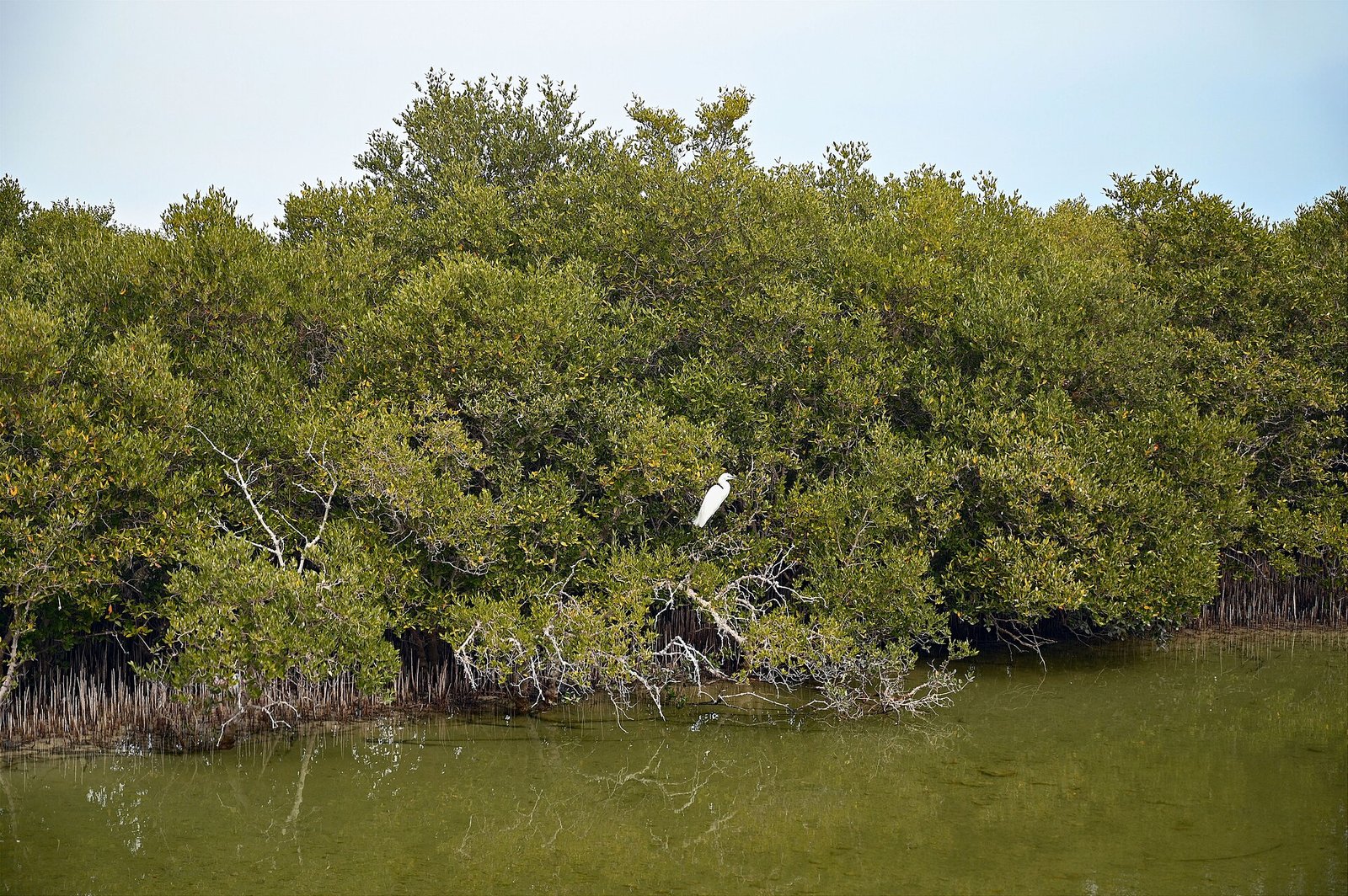
Mangroves are trees that grow in salt water, and in Qatar there is just one species: the grey mangrove, Avicennia marina. It copes with extreme salinity and summer sea temperatures that would kill most trees, and it does so by pushing up hundreds of pencil-thin breathing roots, called pneumatophores, through the mud around each trunk. At low tide these roots stand out like a bed of nails; at high tide they disappear and the trees look as if they are floating.
The mangroves matter far beyond their size. They are nurseries for fish and shrimp, they trap sediment and protect the shore from erosion, and they give herons, egrets, kingfishers and waders a place to feed and roost. Qatar’s environment ministry describes Al Thakhira as almost the only place in the country where trees grow naturally, which tells you how rare this habitat is here.
Al Thakira (Al Thakhira), north of Al Khor
The largest and densest mangroves in Qatar grow in the shallow inlet at Al Thakhira, about 60 km north of Doha. The Al Thakhira Nature Reserve was designated in 2006 and covers about 14 square kilometres of mangrove, shoreline, wadis and salt flats, including the small island of Umm Al Far. Together, the Al Khor and Al Thakhira mangroves cover roughly 1,400 hectares. This is the main kayaking area and one of the best winter sites for flamingos, which Visit Qatar describes resting and feeding in the shallow, salty water here.
From the beach at Al Thakhira you can look straight across to the mangrove islands, and a simple walk along the shore at a rising tide is a good introduction. To get inside the creeks, though, you need a kayak. Read our full guide to Al Thakira mangroves and kayaking.
Purple Island (Bin Ghanim), Al Khor
Purple Island, officially Al Khor Island or Jazirat Bin Ghanim, sits on the eastern side of Al Khor bay, a few kilometres south of Al Thakhira and part of the same mangrove system. A wooden footbridge, built in 2019, carries you over the creeks from the car park, so this is the easiest place in Qatar to stand among mangroves without getting wet. Qatar Museums mentions flamingos and herons using the lagoons around the island between November and February, and waders feed on the mud as the tide drops.
The island is also one of Qatar’s oldest archaeological sites, where people crushed millions of sea snails to make purple dye more than 3,000 years ago. Treat the ground as a protected site and stay on the paths. Read our full guide to Purple Island.
Fuwairit and the northern coast
North of Al Khor, the coast around Fuwairit mixes white sand with patches of grey mangrove, low limestone cliffs and shallow lagoons. More than 50 bird species have been recorded in the area, and herons and waders feed along the mangrove edges. Fuwairit is also Qatar’s most important nesting beach for hawksbill turtles, so access depends on the season (see the turtle section below). Read our full guide to Fuwairit Beach.
Further north still, at the tip of the peninsula, Al Mafjar Beach looks out to the mangrove islets and sand bars of Umm Tais National Park, created in 2006. It is a quieter, wilder alternative to Al Khor, with herons, egrets and waders along the mangroves and migrants in the cooler months. Read our guide to Al Mafjar Beach if you plan a full day in the north.
Simaisma and the coast north of Doha
Small mangrove islets grow just offshore at Simaisma, about 40 km north of Doha. The public family beach closed on 10 June 2025 for a large tourism development and is expected to stay closed for several years, so this is no longer a place to plan a visit around. If you pass by, you can still see the mangroves from the road and the old corniche area, but don’t rely on old map listings for opening hours. Our Simaisma guide has the latest on the closure.
Kayaking and paddleboarding in the mangroves
A kayak is the best way to experience Qatar’s mangroves. The channels at Al Thakhira are sheltered and usually calm, the water is shallow, and once you turn into the narrow creeks the roads and buildings vanish behind a green wall. Because you move quietly, you can also get closer to feeding herons and egrets than you ever would on foot.
How tours work
Several Doha-based adventure companies run guided kayak and stand-up paddleboard trips at Al Thakhira, and some launch from the Purple Island side of the same mangroves. You will find them on the big activity booking platforms, on their own websites and on social media, and Visit Qatar links to some of them from its mangrove pages. A typical trip includes a safety briefing on the beach, a kayak, paddle and life jacket, and about 1.5 to 2 hours on the water with a guide who points out plants and wildlife. Visit Qatar also mentions sunrise and sunset paddles and, with some operators, overnight kayak camping.
No experience is needed, and children usually go in a double kayak with an adult.
What it costs
Prices vary by operator, season and what is included. Published group tours in 2025–26 ranged from roughly QAR 100 to QAR 200 per person; private trips and packages with transport from Doha cost more.
Choosing a tour
- Tide: a good operator sets the start time around high water and will move you if the tide is wrong. Ask how they plan around it.
- Meeting point: Al Thakhira and Purple Island starts are both common; they are close but not the same place.
- Transport: some trips include a pick-up from Doha, which saves an hour’s drive each way.
- Paddleboard or kayak: paddleboards give a better view into the water but are harder in wind. First-timers should choose a kayak.
Tides and timing in the mangroves
The tide decides almost everything at Al Thakhira and Purple Island, so check a tide table for Al Khor before you set off. Whatever the tide, birds are most active in the first hours after sunrise and in the late afternoon.
High tide
Around high water, the creeks are full and you can paddle deep into the mangroves. This is the time for kayaking. It is also a good time to walk the Purple Island footbridge and watch fish moving through the roots below. Birds tend to gather on whatever higher ground or exposed sand bars remain, which can make them easier to find in one place.
Low tide
At low water, the creeks shrink to trickles and wide mudflats open up. Kayaks run aground, but the flats become a feeding table for waders, herons and egrets, and crabs pour out of their burrows. A falling tide, when food is being exposed, is often the best time to watch birds from the shore.
The best birdwatching spots in Qatar
Qatar’s birding sites fall into four groups: the coast and mangroves, man-made wetlands and farms in the desert, protected desert and coastal reserves, and city parks. Here are the ones most worth your time, with honest notes on access.
Al Thakira mangroves
What it’s like: the country’s largest mangrove reserve, with creeks, mudflats and small islands. Birds: Visit Qatar lists herons, flamingos, gulls, cormorants and waders; geese, mallard and teal also appear in winter. Who it suits: kayakers, families and photographers. Access: paved roads all the way, no 4×4 needed; free to visit the shore, kayak tours extra. Best time: November to March, early morning. Read our full guide to Al Thakira mangroves.
Purple Island, Al Khor
What it’s like: a mangrove-fringed island with a footbridge, salt marsh and low limestone hillocks you can climb for a view. Birds: flamingos and herons in winter, waders on the falling tide, plus egrets in the creeks. Who it suits: walkers, families and casual birders without a kayak. Access: free, no 4×4, no facilities on the island itself. Best time: November to February, early morning. Read our full guide to Purple Island.
Al Karaana Lagoon
What it’s like: three artificial lagoons of treated effluent in open desert about 60 km south-west of Doha, created after the Public Works Authority (Ashghal) cleaned up a badly polluted industrial dumping site and finished the project in 2019. Birds: the Qatar Natural History Group recorded 31 species here on a single day during the 2020 Global Big Day, and more than 55 have been reported since; local press and birders mention ospreys, purple herons, kestrels and water pipits, and the environment ministry has noted pelicans. Who it suits: keen birders and wildlife photographers. Access: off Salwa Road, with the last stretch on gravel tracks; no facilities; no swimming or fishing. Best time: November to March, and during migration. Read our full guide to Al Karaana Lagoon.
Irkhaya (Irkaya) farm area
What it’s like: a large green farm with fodder fields, trees and seasonal pools off Abu Samra Road, about 50 km west of Doha. The environment ministry’s nature site lists Irkaya among Qatar’s protected areas and notes that it lies on a flight path for migratory birds. Birds: birding site guides credit it with close to 250 species, and Qatar’s annual bird reviews describe it as one of the most important sites in the country, with many first records. Typical birds include blue-cheeked bee-eater, grey francolin, isabelline shrike, red-wattled lapwing and collared pratincole. Who it suits: serious birders. Access: this is a working farm, and access to the fields is at the discretion of the staff on the gate. Birders report that the southern gate is used and that the small pools beside the road, outside the fence, are open to all but dry out in summer. Be polite, follow instructions and leave if asked. Best time: spring and autumn migration, and winter.
Abu Nakhla
The treated-water lagoons at Abu Nakhla, off Salwa Road on the south-western edge of Doha, have long been a favourite of the local birding community, and they appear regularly in Qatar’s annual bird reports. They are working infrastructure rather than a visitor site, so access to the ponds themselves may be restricted. Don’t enter fenced areas; if you want to bird here, go with someone from the local birding groups who knows the current situation.
Al Wakrah coast
The very shallow shoreline at Al Wakrah, about 20 km south of Doha, is a handy coastal stop, and Wakra appears in Qatar’s annual bird reviews. Gulls, terns, herons and waders use the shore, especially when the tide is low. Combine early-morning birding with a walk through Souq Al Wakrah later in the day. Read our guide to Al Wakrah Souq and beach.
Ras Abrouq and the Al Reem Biosphere Reserve
What it’s like: a dramatic west-coast landscape of white limestone, gravel plains and clear shallow water inside the Al Reem Biosphere Reserve, recognised by UNESCO in 2007. Birds: the environment ministry lists houbara bustard, Socotra cormorant, greater hoopoe-lark, terns and flamingos; a photographer found a small group of flamingos at an inlet north of Zekreet in December 2008. Other wildlife: Arabian oryx, sand gazelles and ostriches. Access: the northern tip of the peninsula is gated and has been closed to general traffic for long periods since around 2020–21, opening for the winter Brouq Season event and resort guests. If a gate is closed, don’t drive around it. Best time: November to March, first and last hours of light. Read our full guide to Ras Abrouq and Al Reem.
Khor Al Adaid (the Inland Sea)
Qatar’s largest protected area, in the far south-east, is better known for dunes than birds, but ospreys fish along the channel, waders feed on the tidal flats early in the morning, and Visit Qatar lists flamingos among the species found here. It is a 4×4-only trip across soft sand, so most people go with a tour. Read our guide to Khor Al Adaid.
Aspire Park, Doha
What it’s like: Qatar’s largest park, with an artificial lake of about 3.4 hectares. Birds: domestic ducks and geese live on the lake all year; wild mallards, great cormorants and migrating waterbirds turn up in the cooler months, and the trees attract passing songbirds. Who it suits: beginners, families and anyone with an hour in Doha. Access: free, open 24 hours, easy parking. Best time: the first hour after sunrise. Read our full guide to Aspire Park.
Other city parks
Doha’s green parks, including MIA Park and Al Bidda Park, attract migrant songbirds during passage, as well as resident species such as white-eared bulbuls, mynas and introduced parakeets. If you are heading out along Salwa Road towards Al Karaana, Umm Al Seneem Park in Ain Khaled is a convenient stop for a stretch and a coffee, but be clear about what it is: a fitness park famous for its air-conditioned running track, not a wetland or a recognised birding site.
Al Khor Park
If you want guaranteed flamingos, the zoo at Al Khor Park keeps them in its bird section, along with macaws, peacocks and ostriches. These are captive birds, of course, but the park makes a useful family stop on the way back from the mangroves, and the lake and lawns are pleasant on a winter afternoon.
Birding hotspots at a glance
Use this table to pick a site.
| Site | Area | Best months | Key birds | Access |
|---|---|---|---|---|
| Al Thakira mangroves | Al Khor / Al Thakhira | Nov–Mar | Flamingos, herons, egrets, cormorants, waders | Paved; free shore; kayak tours extra |
| Purple Island | Al Khor | Nov–Feb | Flamingos, herons, waders | Paved; footbridge; free |
| Al Karaana Lagoon | Salwa Road, south-west | Nov–Mar, migration | Ospreys, purple heron, kestrel, water pipit, ducks | Gravel tracks at the end; no facilities |
| Irkhaya farm area | Off Abu Samra Road, west | Mar–May, Aug–Nov, winter | Bee-eaters, shrikes, lapwings, pratincoles, francolin | Working farm; staff discretion |
| Abu Nakhla | Salwa Road, edge of Doha | Winter, migration | Waterbirds and waders | Working infrastructure; may be restricted |
| Al Wakrah coast | Al Wakrah | Oct–Apr, low tide | Gulls, terns, herons, waders | Easy; free |
| Fuwairit and Al Mafjar | North-east and north coast | Aug–Mar (Fuwairit closed 1 Apr–1 Aug) | Herons, egrets, waders, migrants | Paved; seasonal closures |
| Ras Abrouq / Al Reem | West coast, Zekreet | Nov–Mar | Houbara, hoopoe-lark, terns, flamingos | Northern tip gated outside events |
| Khor Al Adaid | South-east | Nov–Apr | Ospreys, waders, flamingos in some seasons | 4×4 only; tours recommended |
| Aspire Park | Doha (Al Rayyan) | Nov–Mar | Ducks, cormorants, migrant songbirds | Free; open 24 hours |
Seasons and migration: a birding calendar
Ornithologists usually describe Qatar’s migration as running from late August to early June, with winter visitors settling in between. Here is what that means on the ground.
Autumn passage (mid-August to November)
The first migrants arrive while it is still very hot. Birding guidance from the Ornithological Society of the Middle East (OSME) singles out the northern coast around Al Shamal as a resting area in autumn for birds that have just crossed the Gulf, and as the place to look for crab-plover and cream-coloured courser in August and September. By October and November, farms and parks hold shrikes, wheatears, warblers and flycatchers on the move, and raptors start to pass through. Go out at dawn; by mid-morning in September it is far too hot.
Winter (November to March)
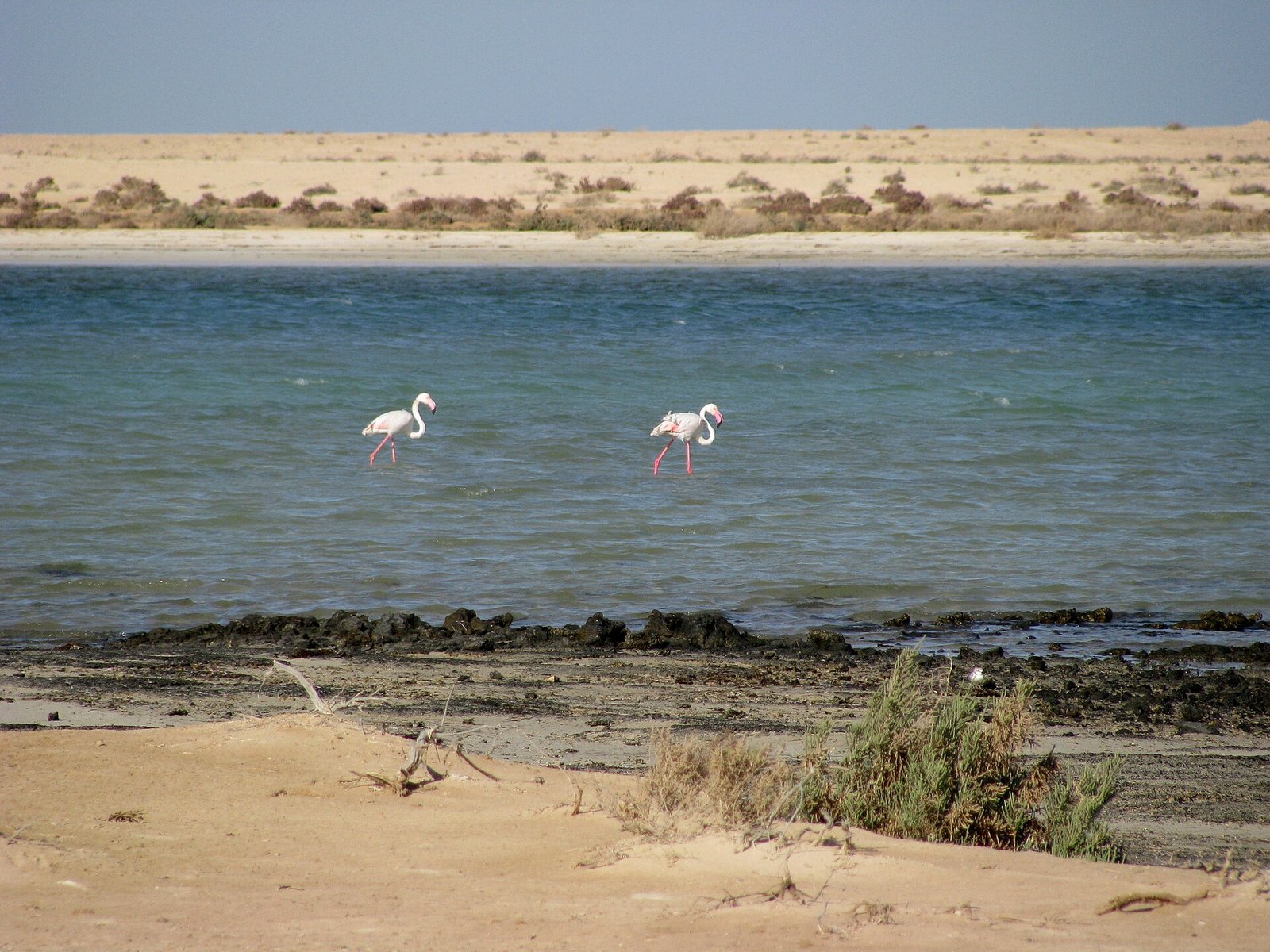
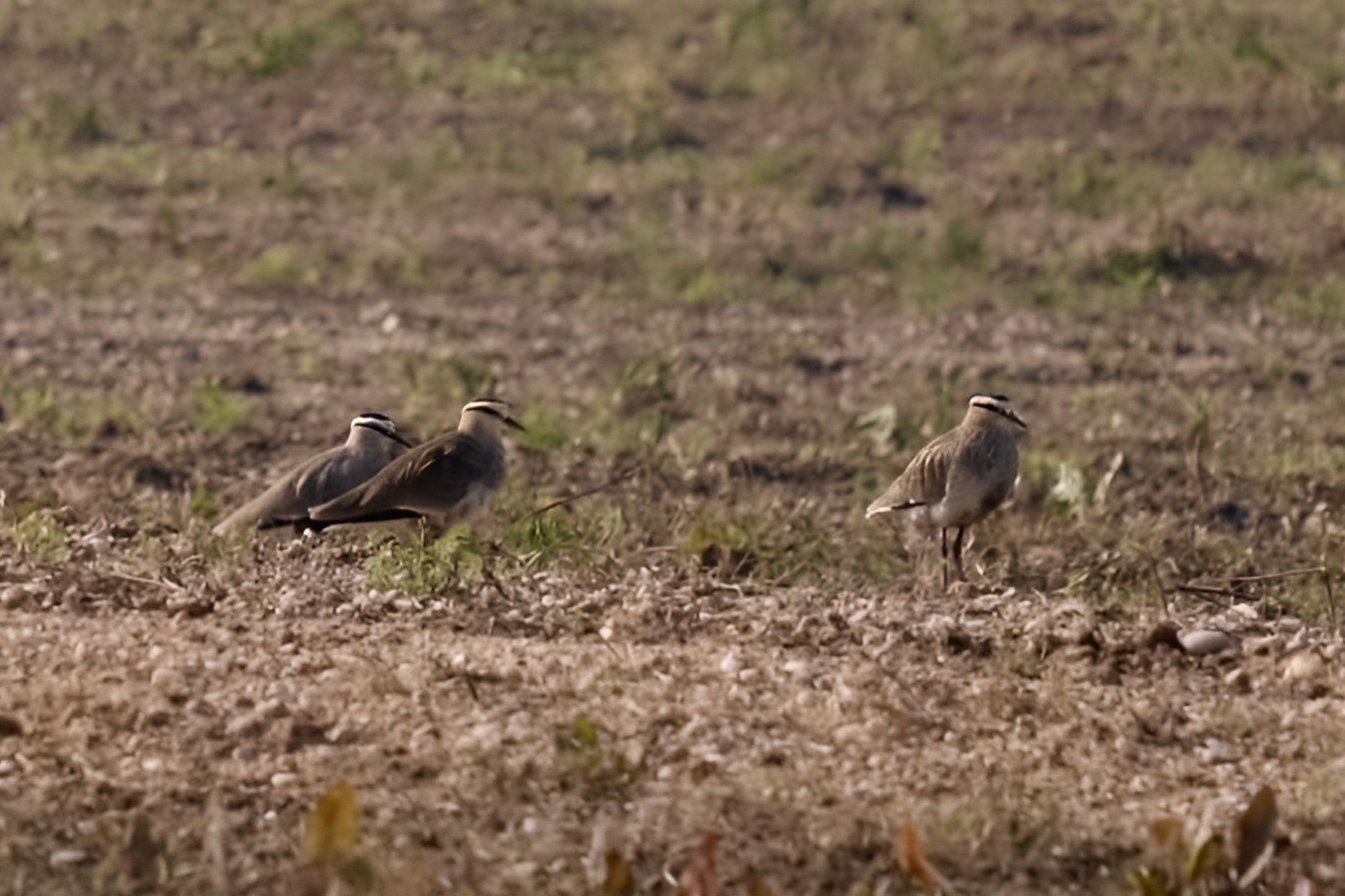
This is the main season for most visitors. Greater flamingos are usually present from about November to April, and Qatar Tourism has noted they can stay in the wetlands for up to six months. Herons, egrets, cormorants, gulls and waders fill the coast and mangroves, and ducks such as mallard and teal turn up on lagoons. Local press reports from recent winters have named species such as northern lapwing, Pacific golden plover, Eurasian curlew, black-tailed godwit and marsh harrier, along with eagles such as eastern imperial and greater spotted eagle. The houbara bustard also visits Qatar in winter. Winter is also when the critically endangered sociable lapwing has been found, and a group described as the largest found in Qatar was photographed in January 2023.
Spring passage (March to May)
Spring is short and intense. Birds heading north to breed make landfall on the northern coast, and OSME describes the Al Shamal area as a migrant bottleneck at this time of year. Farms such as Irkhaya can be busy with bee-eaters, shrikes, wagtails, pipits and wheatears. Timing varies from year to year: Qatar’s annual bird review for 2021 noted that spring migration peaked in late April, three or four weeks later than usual.
Summer (June to mid-August)
Summer is hot, humid and quiet. Resident birds remain, but limit outings to the hour after sunrise. It is also turtle nesting season, when Fuwairit is closed.
Birds to look out for
You don’t need to be an expert to enjoy birding in Qatar, but it helps to know what you are likely to see. These are the groups that most visitors notice first.
Flamingos
The greater flamingo is the star of the winter. Visit Qatar describes hundreds arriving on the coast each year and wading in shallow, salty water to feed. Al Thakhira and the lagoons around Purple Island are the classic places, but small groups also turn up on the west coast and in the south. They are easily disturbed, so watch from a distance and let them come to you.
Herons and egrets
Herons and egrets are the most visible birds in the mangroves. Grey herons stand motionless along the creeks, little egrets dash about in the shallows, and purple herons have been seen at Al Karaana. Look for them on the mud at low tide and perched in the mangroves at high tide.
Waders
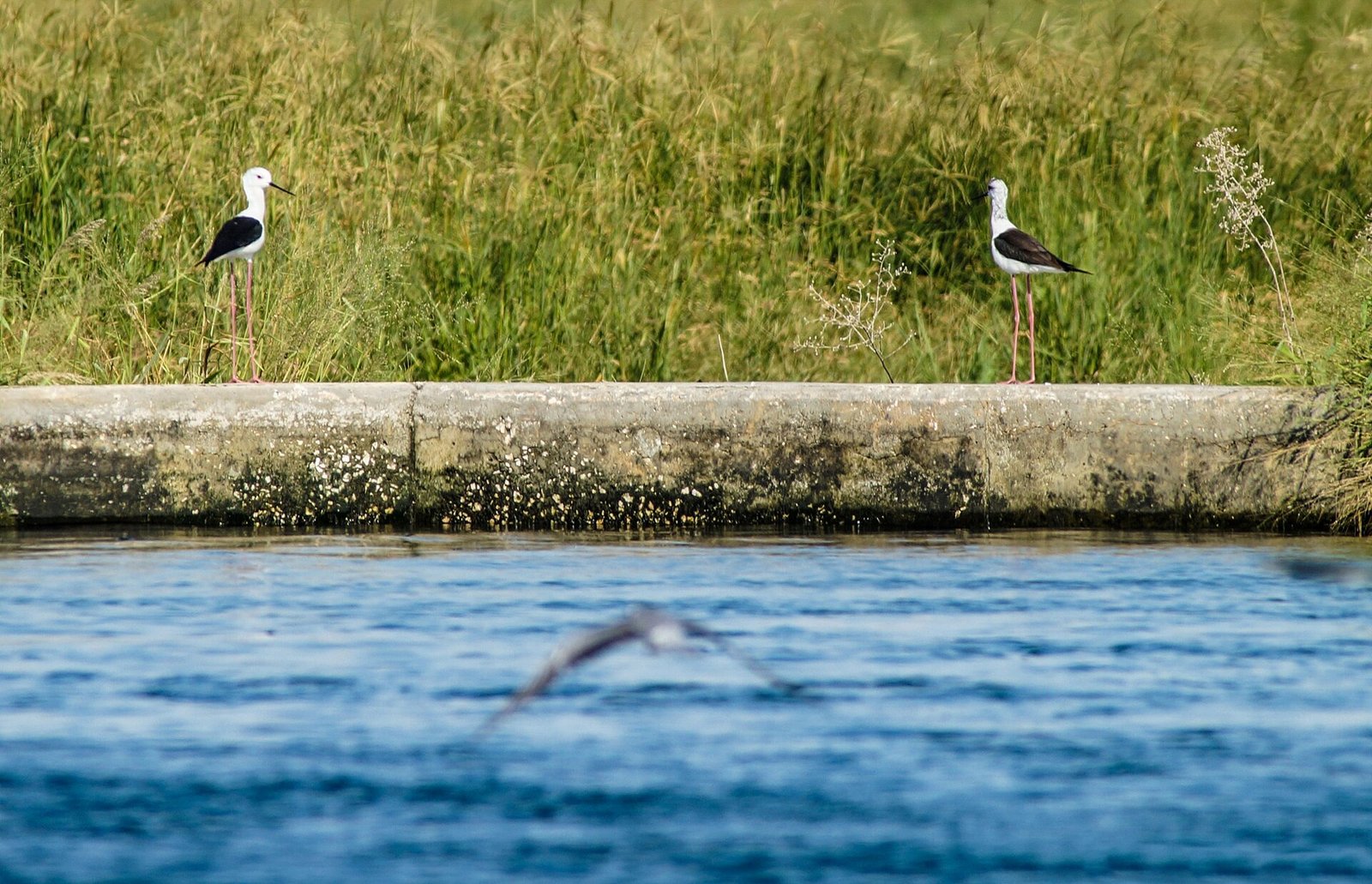
Plovers, sandpipers, curlews, godwits and stilts work the mudflats as the tide drops. Black-winged stilts, with their absurdly long pink legs, are among the easiest to identify. On the northern coast, look for the striking black-and-white crab-plover, one of the region’s special birds.
Seabirds and cormorants
Gulls, terns and cormorants feed along every stretch of coast. The Socotra cormorant, which is found only in the Gulf and Arabian Sea and is classed as Vulnerable by the IUCN, breeds on offshore islands and is listed by the environment ministry for the Al Reem reserve. In April 2026 the ministry apprehended fishermen for catching 95 of these birds, a reminder that they are protected.
Birds of prey
Ospreys fish along the channels at Khor Al Adaid and are reported at Al Karaana. Kestrels are common, marsh harriers quarter the reedbeds in winter, and migrating eagles pass over the desert.
Related wildlife: turtles, oryx and foxes
Birding trips often turn up other animals, and some wildlife sites have seasonal rules.
Hawksbill turtles at Fuwairit
Fuwairit is Qatar’s most important nesting beach for the critically endangered hawksbill turtle. Visit Qatar says it hosts close to 30 per cent of the country’s turtle nests, and in the 2026 season the Ministry of Environment and Climate Change recorded 67 nests and released 3,875 hatchlings from this beach. To protect them, the nesting beach is closed from 1 April to 1 August each year, with fences, signs and ranger patrols, and night access to nesting zones is not allowed. Outside those dates the beach is normally open, though some zones can stay fenced. Never use lights near nesting beaches at night, and report anyone disturbing turtles or nests to the ministry’s environmental hotline, 998. Read our full guide to Fuwairit Beach.
Oryx and gazelles in the west
The Al Reem Biosphere Reserve protects Arabian oryx, sand gazelles, Arabian red foxes and other desert animals, and a visit for birds often comes with a herd of oryx in the distance. Keep to the tracks and stay in your car near the animals.
Birding ethics and the rules
Qatar’s wetlands are small and its birds are concentrated in a few places, so disturbance has a big effect. These rules protect the wildlife and keep sites open to everyone.
Respect protected areas
Al Thakhira, Al Reem, Khor Al Adaid, Irkaya and the other reserves are protected under Qatari law and managed by the Ministry of Environment and Climate Change. Follow signs and fences, don’t drive around closed gates, and don’t collect plants, shells, eggs or archaeological material. Some reserves have restricted zones; when in doubt, stay out. Catching or harming protected birds is an offence: report trapping, shooting or nest disturbance to the ministry’s hotline, 998.
Don’t disturb birds
- Keep your distance. If a bird stops feeding, raises its head or starts walking away, you are too close.
- Never flush flocks for a photo, and don’t approach roosting birds at high tide, when they have nowhere else to go.
- Stay well away from nesting birds and colonies, including terns and cormorants on islands and beaches.
- Don’t use playback of bird calls to lure birds.
- Don’t feed wild birds, and don’t feed bread to the ducks and geese in parks.
No drones without approval
Drones disturb birds badly and are tightly regulated in Qatar. The Qatar Civil Aviation Authority has explained that under Law No. 10 of 2026 on unmanned aircraft, drones must be registered and users need licences and operational permits before flying. Unless you have every approval in place, leave the drone at home, and never fly one over wildlife, nesting beaches or reserves.
Stay on paths and off the mud
Walk on footbridges, tracks and embankments. Mudflats can be soft enough to trap you, mangrove roots are easily damaged, and vehicles leave scars on salt flats and sabkha that last for years. Never drive onto beaches during the turtle closure or into mangroves at any time.
What to bring
- Binoculars (8x or 10x magnification is ideal) and, if you have one, a telescope for the mudflats and lagoons.
- A field guide or bird ID app with Middle East coverage.
- Plenty of water, even in winter, plus snacks; most birding sites have no shops.
- A wide-brimmed hat, sunglasses and high-factor sunscreen.
- Closed shoes with grip for mud and beachrock, or water shoes if you plan to wade.
- Insect repellent, especially near the mangroves and lagoons at dawn and dusk.
- For kayaking: a dry bag, a phone pouch on a lanyard and clothes you don’t mind getting wet.
- A rubbish bag to take everything home.
Photography tips
Lenses and settings
For birds, a long lens makes the difference: 300 mm is a minimum for waders and herons, and 400 to 600 mm is better for flamingos, which rarely let you close. Use a fast shutter speed for birds in flight, and shoot in the first and last hours of the day, when the light is soft and the heat shimmer over the flats is weakest.
Fieldcraft
Your car is an excellent hide at lagoons and farms. Birds are far less nervous of a stationary vehicle than of a person on foot, so park, switch off the engine and wait. On foot, move slowly, keep low and stop often. In the mangroves, drift towards birds in a kayak rather than paddling straight at them.
Permissions and respect
Birding guidance for the region notes that watching birds with binoculars and telescopes is generally fine, but photography can need permission in some places. Ask before photographing on farms or near any industrial or government infrastructure, don’t photograph people without asking, and never sacrifice a bird’s welfare for a picture.
Planning your birding trip
Getting around
You need a car for almost all of these sites. Al Thakhira and Purple Island are reached on paved roads, about an hour north of Doha on the Al Khor Coastal Road. Al Karaana and the farm area to the west are off Salwa Road and Abu Samra Road, roughly 45 minutes to an hour from central Doha, with gravel tracks at the end. Khor Al Adaid is the only site here that needs a 4×4 and off-road experience; for everything else a normal car is fine. Taxis and ride-hailing apps will take you to Al Khor, but arranging a return from the mangroves can be difficult, so many visitors choose a kayak tour that includes transport.
Two easy day plans
The north-east mangroves: leave Doha before sunrise, paddle at Al Thakhira around high tide, walk Purple Island as the tide falls, then have lunch in Al Khor and visit Al Khor Park in the afternoon. From August to March, add Fuwairit. Our guides to things to do in Al Khor and day trips from Doha have more ideas for the area.
The south-west wetlands: start at dawn at Al Karaana Lagoon, check the roadside pools near the Irkhaya farm area, and finish with a picnic or a coffee on the way back into Doha (our best cafés in Doha guide has ideas). On another morning, try Aspire Park at sunrise.
Heat and safety
Even in winter the sun is strong, and from May to September temperatures can make midday outings dangerous. Carry more water than you think you need, tell someone where you are going if you head to remote lagoons, and don’t walk on soft mud or wade into channels on a rising tide.
Etiquette
Dress modestly away from beaches and resorts, with shoulders and knees covered. Public alcohol is not allowed. Some public beaches and parks have family-only or women-and-children days, so check before you go. Farms and lagoons are often someone’s workplace: be courteous to guards and staff, and park where you won’t block gates or tracks.
For more ideas for the cool season, see our guide to things to do in Qatar in winter.
Mistakes to avoid
- Ignoring the tide. Arriving at low tide for a paddle, or at high tide hoping to see waders on the flats, is the most common way to waste a trip to Al Khor.
- Going too late. By 10am the light is flat, the heat shimmer is strong and the birds have gone quiet.
- Chasing the flamingos. Walk or paddle straight at them and they will fly, and they may not settle again that day.
- Trusting old listings. Simaisma Beach has been closed since June 2025, Fuwairit closes every spring and summer, and Ras Abrouq’s northern tip is gated outside events.
- Driving onto mud or sabkha. Even 4x4s get stuck, and the tyre tracks damage fragile habitats.
- Bringing a drone. It will scare the birds and may break the law.
Frequently asked questions
When is the best time for birdwatching in Qatar?
November to March is the most comfortable time and brings winter visitors such as flamingos, herons, ducks and waders. For the greatest variety, birders also target the migration seasons, from mid-August to November and from March to May.
Where can I see flamingos in Qatar?
Greater flamingos are usually present from about November to April. The best-known places are the Al Thakira mangroves and the lagoons around Purple Island near Al Khor, but small groups also turn up on the west coast and in the south, including Khor Al Adaid.
How many bird species are there in Qatar?
The Qatar Bird Observation Group’s site listed 357 recorded species in February 2026. Only around 55 of them breed in the country; the rest are migrants, winter visitors and rare vagrants.
Can you kayak in the Qatar mangroves?
Yes. Several Doha-based operators run guided kayak and paddleboard tours at Al Thakhira, north of Al Khor. Trips usually last about 1.5 to 2 hours on the water, need no experience, and published group prices in 2025–26 were roughly QAR 100 to 200 per person.
Do I need a permit to go birdwatching in Qatar?
No permit is needed to watch birds from public land, beaches and parks. Protected areas have their own rules and some zones are closed, farms and treatment lagoons are private or working sites where access is at the operator’s discretion, and photography can need permission in some places.
Can I fly a drone to photograph birds?
Not without the right approvals. Under Qatar’s 2026 drone law, drones must be registered and users need licences and permits before flying. Drones also disturb birds and nesting turtles, so leave them at home on a wildlife trip.
When is Fuwairit Beach closed for turtles?
The hawksbill turtle nesting beach at Fuwairit is closed every year from 1 April to 1 August. Some zones can remain fenced outside those dates, so follow the signs on the ground.
Last checked October 2026. Rules, fees and access can change, so confirm with the official source before you go.