The best day trips from Doha are closer than most people expect. Qatar is a small peninsula, so almost everywhere worth seeing sits within 20 minutes to two hours of the city: UNESCO-listed ruins and old fishing villages in the far north, mangroves and family beaches around Al Khor, strange limestone country and a Richard Serra sculpture on the west coast, a cave and a camel racetrack in the middle, and big dunes running down to the sea in the south. You can leave after breakfast, see two or three places, and be back in Doha for dinner.
This guide groups 12 easy escapes by direction, because that is how you should plan them. For each one you get the drive time and distance, whether an ordinary car will do or you need a 4×4, what to combine it with in one day, where to eat, the best season and time of day, and, just as important, whether the place is actually open right now. Several Qatar Museums heritage sites are temporarily closed or fenced, some beaches have seasonal closures, and one of the west coast highlights opens mainly during a winter event, so a little checking saves a wasted drive.
Every trip links to our full place guide with directions and map pins. Short on time? Jump to the sample itineraries.
At a glance
- Closest: Al Wakrah (25–30 minutes south) and Umm Salal (20–30 minutes north).
- Furthest normal-car trips: Al Zubarah, Al Ruwais and Umm Bab, all around 75–90 minutes each way.
- 4×4 needed: Khor Al Adaid (Inland Sea), Dahl Al Misfir and, outside event season, the tracks around Zekreet Film City.
- Best season: November to March. From June to September keep outdoor time to early morning or just before sunset.
- Currently closed or view-only: Barzan Towers, Al Jassasiya, Al Rakiyat, Al Jumail, Al Thaqab and Umm Salal Mohammed Fort; Fuwairit Beach closes 1 April to 1 August; Simaisma Beach closed since June 2025.
- Food: pack snacks and water for the north and west, where cafés are few and far apart.
- Weekend tip: Friday and Saturday are busiest everywhere; go midweek if you can.
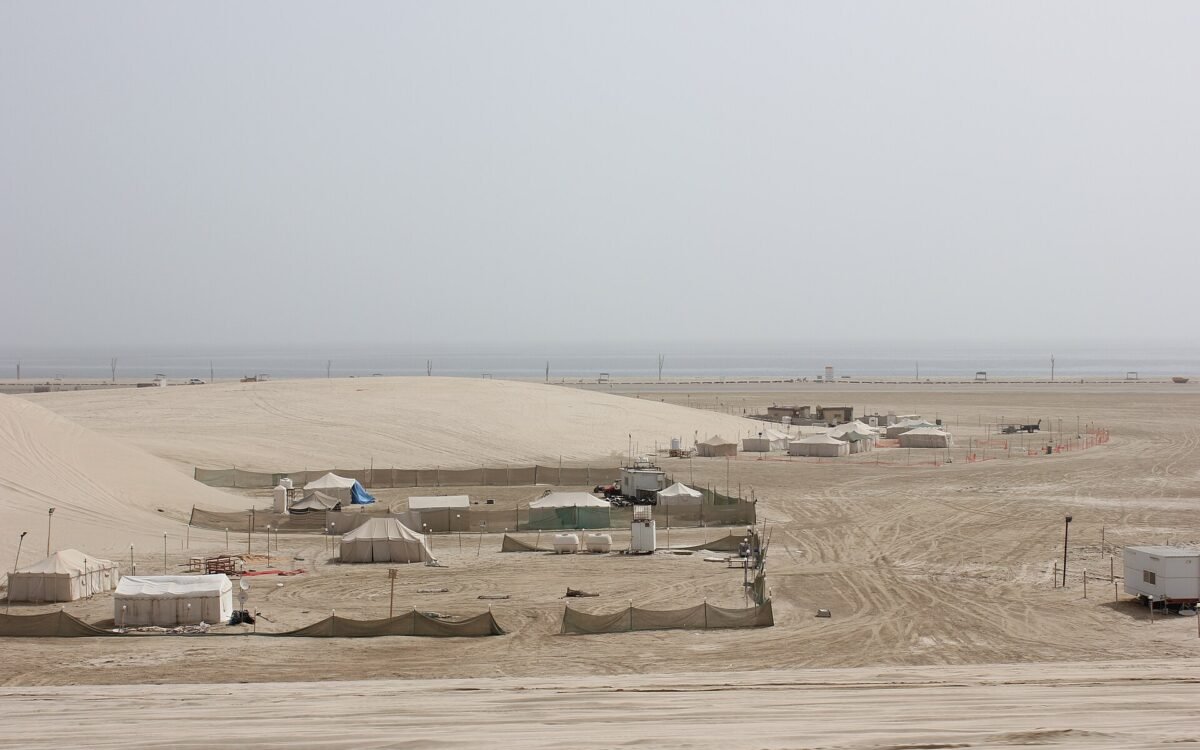
Day trips from Doha compared
Use this table to shortlist. Drive times are from central Doha in normal traffic, and “normal car” means any saloon driven carefully on dry roads. Where a 4×4 is listed, do not try it without one.
| Trip | Drive time from Doha | Car type | Best for | Season |
|---|---|---|---|---|
| 1. Al Zubarah and the north-west forts | 75–90 min (about 100 km) | Normal car | History, UNESCO site | Nov–Mar, mornings |
| 2. Al Ruwais and the northern tip | 75–90 min (about 110 km) | Normal car | Old port, mosque, slow lunch | Nov–Mar, mornings |
| 3. Al Ghariya, Fuwairit and Al Jassasiya | 60 min–2 h (60–100 km) | Normal car; 4×4 for quiet beach tracks | Quiet beaches, kitesurfing | Oct–Mar (Fuwairit closed 1 Apr–1 Aug) |
| 4. Purple Island and Al Thakira mangroves | 45–60 min (about 60 km) | Normal car | Kayaking, birdlife, easy walk | Oct–Apr, near high tide |
| 5. Al Farkiya Beach and Al Khor Park | 40–60 min (about 50 km) | Normal car | Families, picnics, swimming | Oct–Apr |
| 6. Zekreet: Film City, Mushroom Rocks, Ras Abrouq | 60–90 min (80–90 km) | 4×4 or high-clearance SUV advised | Photography, desert scenery | Nov–Mar, Brouq Season |
| 7. East-West/West-East by Richard Serra | About 75 min | SUV or 4×4 advised on tracks | Land art, sunset | Nov–Mar, late afternoon |
| 8. Umm Bab and the Dukhan coast | About 90 min (about 110 km) | Normal car to main beach | Palm Tree Beach, sunset, barbecue | Oct–Apr |
| 9. Dahl Al Misfir and Al Shahaniya | About 50 min (about 40 km) | 4×4 for the cave | Cave, camels, museum | Nov–Mar; races Fridays Oct–Feb |
| 10. Umm Salal: Barzan Towers and fish market | 20–35 min (about 20 km) | Normal car | Short half day, early start | Oct–Apr |
| 11. Sealine, Singing Dunes and Al Wakrah | 40–60 min (40–60 km) | Normal car (4×4 only for dunes) | Beach, dunes, souq dinner | Oct–Apr, afternoon to evening |
| 12. Khor Al Adaid Inland Sea | About 1 h to Sealine, then 40–60 min over dunes | 4×4 with experience, or a tour | Big desert, sea-meets-dunes views | Nov–Apr |
North: Al Shamal and the heritage coast
The north is Qatar’s history country. Al Shamal Road runs straight up the peninsula to Al Ruwais, and from it you branch west to Al Zubarah or east to the beaches of Al Ghariya and Fuwairit. The roads are excellent and a normal car reaches almost everything, but services are sparse: fill up and buy water before you leave the highway towns.
1. Al Zubarah and the north-west forts
- Drive: about 100 km, 75–90 minutes each way; paved to the car park.
- Car: any car.
- Status: Al Zubarah is open Saturday to Thursday 9am–5pm and Friday 12.30–5pm; entry is free but you need a ticket. Al Rakiyat Fort is temporarily closed and Al Thaqab Fort is not open to the public.
- Best time: November to March, arriving at opening time.
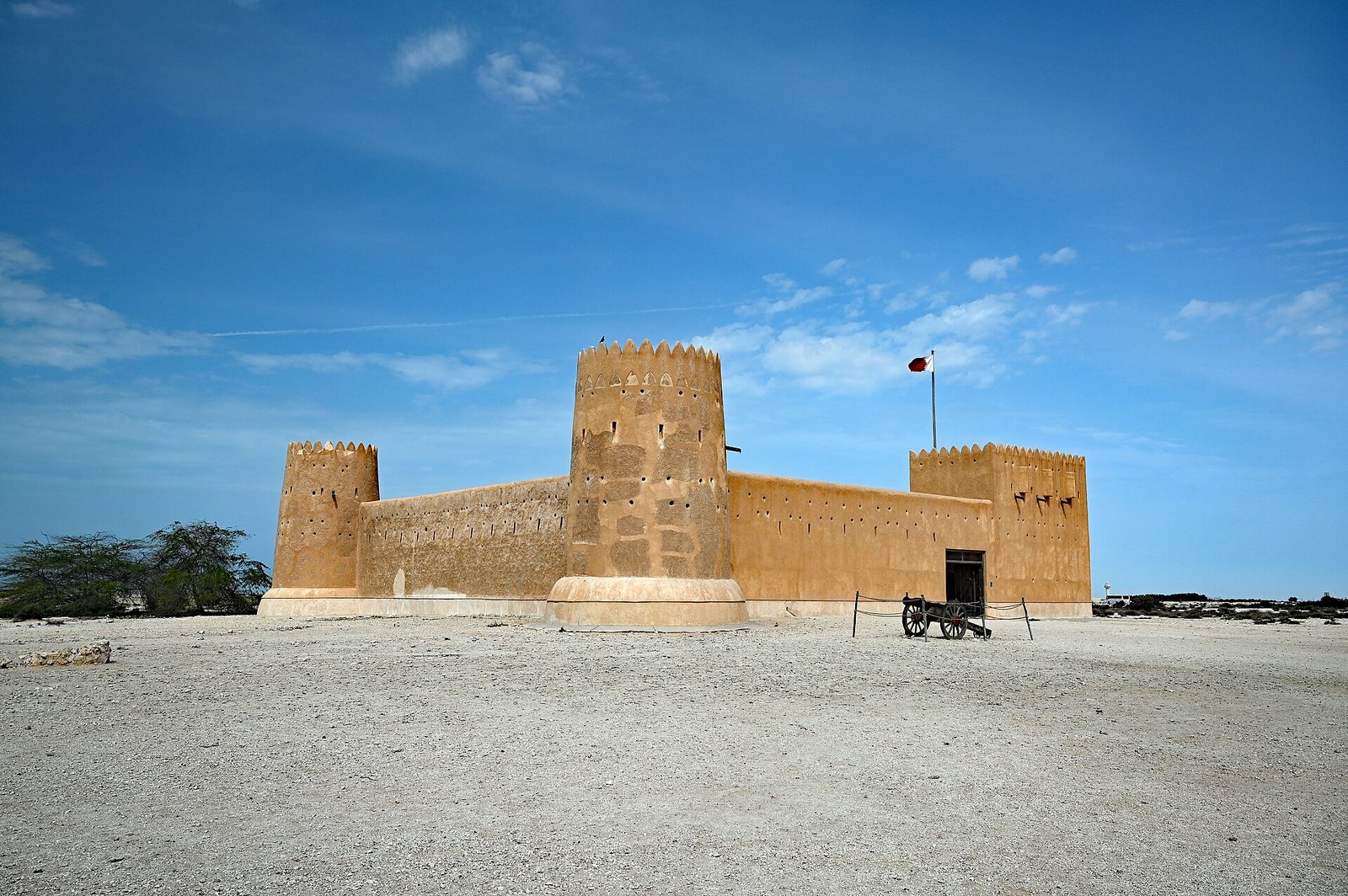
This is the classic northern day out and the one to do first. Al Zubarah was a busy pearl-diving and trading town in the 18th century, and the excavated town and its later fort are Qatar’s UNESCO World Heritage Site. The compact fort is photogenic; the town site beyond is large and exposed, so start early even in winter. Allow two to three hours.
On the way back, two smaller forts sit inland, roughly 10–12 km from Al Zubarah. Al Rakiyat Fort is temporarily closed by Qatar Museums and Al Thaqab Fort is not open, so treat both as short photo stops from outside the walls. Al Thaqab may involve a short unmade track, so drive slowly and stay on firm ground. Just north of Al Zubarah, near the abandoned village of Ain Mohammed, Olafur Eliasson’s mirrored discs, Shadows Travelling on the Sea of the Day, stand in open desert. Park by the gate and walk in; it is free and takes 30 to 60 minutes.
Where to eat: there is no restaurant at Al Zubarah and very little on the Al Zubarah road. Bring a packed lunch, or drive on to Madinat Al Shamal or Al Ruwais, which have cafés and restaurants.
Read our full guides to Al Zubarah Fort and Archaeological Site and Shadows Travelling on the Sea of the Day.
2. Al Ruwais and the northern tip
- Drive: about 110 km, 75–90 minutes; dual carriageway all the way.
- Car: any car; Al Jumail needs a short dirt track that a normal car manages when dry.
- Status: Al Ruwais waterfront open; the mosque can be viewed outside prayer times. Al Jumail is not open to the public (Qatar Museums) and is seen from outside.
- Best time: November to March, mornings; late afternoon for Al Jumail.
Al Shamal Road ends at Al Ruwais, a small working port at the very top of the peninsula. The draw is the old waterfront, where the historic Al Ruwais Mosque stands almost on the shore beside the fishing harbour. Watch the boats and sit with a karak before heading back.
About 6.5 km west of the first Madinat Al Shamal roundabout on the Al Areesh road, a signposted turning leads to Al Jumail Abandoned Village, a ruined 19th-century fishing settlement with a surviving minaret. The site itself is closed to visitors, so the “viewpoint” is the edge of the fenced area and the shoreline beside it, where you look back over the collapsed coral-stone houses. For a treat, Zulal Wellness Resort by Chiva-Som at Al Ruwais sells a pre-booked adult day pass (QAR 700 in October 2026) that includes spa access and a meal.
Where to eat: Al Ruwais and Madinat Al Shamal have cafés, restaurants, shops and petrol stations, and a café has operated in the annex of the old police station by the port.
Read our full guides to Al Ruwais Mosque and Old Port and Al Jumail Abandoned Village.
3. Al Ghariya, Fuwairit and Al Jassasiya
- Drive: Al Jassasiya about 60 km (around an hour, Exit 66 on Al Shamal Road); Fuwairit and Al Ghariya 80–100 km (about 1.5 hours; Visit Qatar puts Fuwairit at up to 2 hours).
- Car: a normal car reaches the main access points; Visit Qatar recommends a 4×4 for Al Ghariya if you want the quieter sandy stretches.
- Status: Fuwairit’s turtle-nesting beach is closed from 1 April to 1 August. Al Jassasiya Rock Carvings are temporarily closed. Al Ghariya is open daily.
- Best time: October to March, early morning.
The north-east coast has long, pale shores and very few people on weekdays. Al Ghariya Beach is the most relaxed, with a chain of small islands offshore and Al Mamlha, a women-only section with facilities that opens 9am–10pm for a small fee. Fuwairit Beach, just to the south, is one of Qatar’s main hawksbill turtle nesting sites, which is why it closes every spring and summer and why you must never drive onto the sand. Outside the closure it is a lovely, wind-swept beach, and the Fuwairit Kite Beach resort next door runs a kite school and has a restaurant and pool for guests and day visitors.
Further south, Al Jassasiya Rock Carvings preserves hundreds of petroglyphs, including cup marks and boat shapes, cut into low limestone ridges. The site is temporarily closed, so check Qatar Museums before building a day around it.
Where to eat: the Kite Beach resort at Fuwairit is the only proper option on this stretch; otherwise bring a picnic, or continue to Al Ruwais for lunch by the harbour.
Read our full guides to Al Ghariya Beach, Fuwairit Beach and Al Jassasiya Rock Carvings.
North-east: Al Khor and Al Thakira
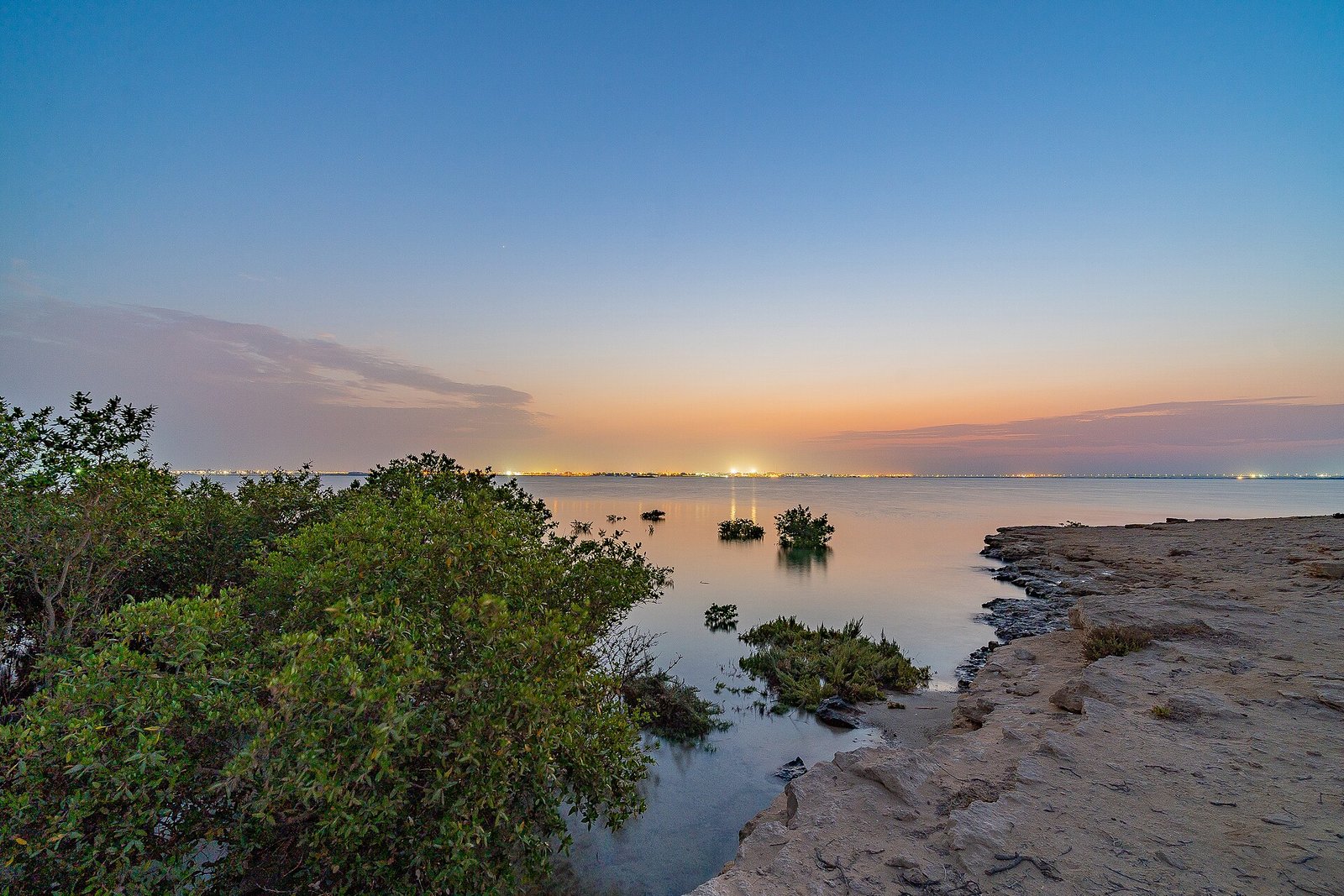
Al Khor is the easiest “proper” day trip from Doha: under an hour on the Al Khor Coastal Road or Al Shamal Road, paved all the way, with a real town at the end where you can eat. The bay here is fringed by grey mangroves, the densest in the country, and in winter the mudflats fill with wading birds.
4. Purple Island and Al Thakira mangroves
- Drive: 45–60 minutes (about 60 km to Al Thakhira).
- Car: a normal car is fine in dry weather; the last kilometre to the Purple Island car park and some kayak meeting points are on dirt tracks.
- Status: open-air with no set hours; visit in daylight. Kayak tours run in daylight and cost roughly QAR 100–200.
- Best time: October to April, in the morning and ideally around high tide.
Purple Island (Jazirat Bin Ghanim) is a low island joined to the shore by a footbridge and boardwalk through the mangroves. Its name comes from a purple dye made here from sea snails more than 3,000 years ago. Today it is an easy, free walk of an hour or two, good for families and birdwatchers, with no shops on the island.
A few minutes north, the channels at Al Thakhira are the best place in Qatar to paddle through mangroves. Book a guided Al Thakira mangroves kayaking trip for your first visit: operators time departures to the tide, supply the kayaks and send a map pin for the meeting point. At low tide the channels drain and you may end up dragging the boat through mud.
Where to eat: nothing on the island itself. Al Khor town has plenty of cafés and restaurants near the corniche and fishing harbour, which is where most people have lunch after an early paddle.
Read our full guides to Purple Island and Al Thakira Mangroves Kayaking.
5. Al Farkiya Beach and Al Khor Park
- Drive: 40–60 minutes (about 50 km).
- Car: any car; free parking at both.
- Status: Al Farkiya is open daily 7am–midnight, with Sunday and Wednesday reserved for women and children. Al Khor Park is open 8am–10pm, its zoo 8am–6pm, and Tuesday is for women and children only. Park entry is QAR 15 for adults and QAR 10 for children under 10.
- Best time: October to April; zoo in the morning, beach in the afternoon.
This is the pairing for families with young children. Al Khor Park, on the southern edge of the town, reopened after a major redevelopment with a zoo (big cats, primates, birds), a small train, play areas, lawns and a museum. Arrive at 8am on a winter weekday and do the zoo while the animals are active. Al Farkiya Beach (Farkeh Coast) is a well-kept, fenced family beach with shaded huts, play areas and watchtowers. The water is shallow and calm, and it is at its best in the afternoon close to high tide.
Check the family days before you go, as mixed groups and men are turned away on those days. On the way home, note that Simaisma Beach, halfway between Doha and Al Khor, has been closed for redevelopment since June 2025, so it only works as a brief town stop.
Where to eat: Al Khor Park has a restaurant and kiosks; Al Khor’s seafront promenade and town centre have many cafés. At Al Farkiya, bring a picnic and a flask of karak for sunset.
Read our full guides to Al Khor Park and Al Farkiya Beach.
West: Zekreet, Dukhan and Umm Bab
Head west on Dukhan Highway and the landscape changes completely. The Zekreet Peninsula, just north of the oil town of Dukhan, is a pale plain of chalky limestone mesas, wind-cut pillars and hidden bays, much of it inside the Al Reem Biosphere Reserve. It is Qatar’s most photogenic desert and the setting for its most famous piece of land art. The trade-off is access: the tarmac ends near Zekreet village, the tracks beyond are rutted and sandy in places, and the northern tip is gated outside events. Go in an SUV or 4×4 if you can, and download an offline map before you leave the highway.
6. Zekreet: Film City, Mushroom Rocks and Ras Abrouq
- Drive: 80–90 km, 60–90 minutes; Dukhan Highway to the Zekreet exit (exit 72), then Zekreet Road and desert tracks.
- Car: outside event season, a 4×4 or at least a high-clearance SUV for Film City. During Brouq Season the route is signposted with event parking.
- Status: the northern part of the peninsula has been gated for long periods since around 2020–21 and opens for Visit Qatar’s winter Brouq Season, resort guests and permitted tours. Film City is often closed outside the event.
- Best time: November to March, sunrise or late afternoon.
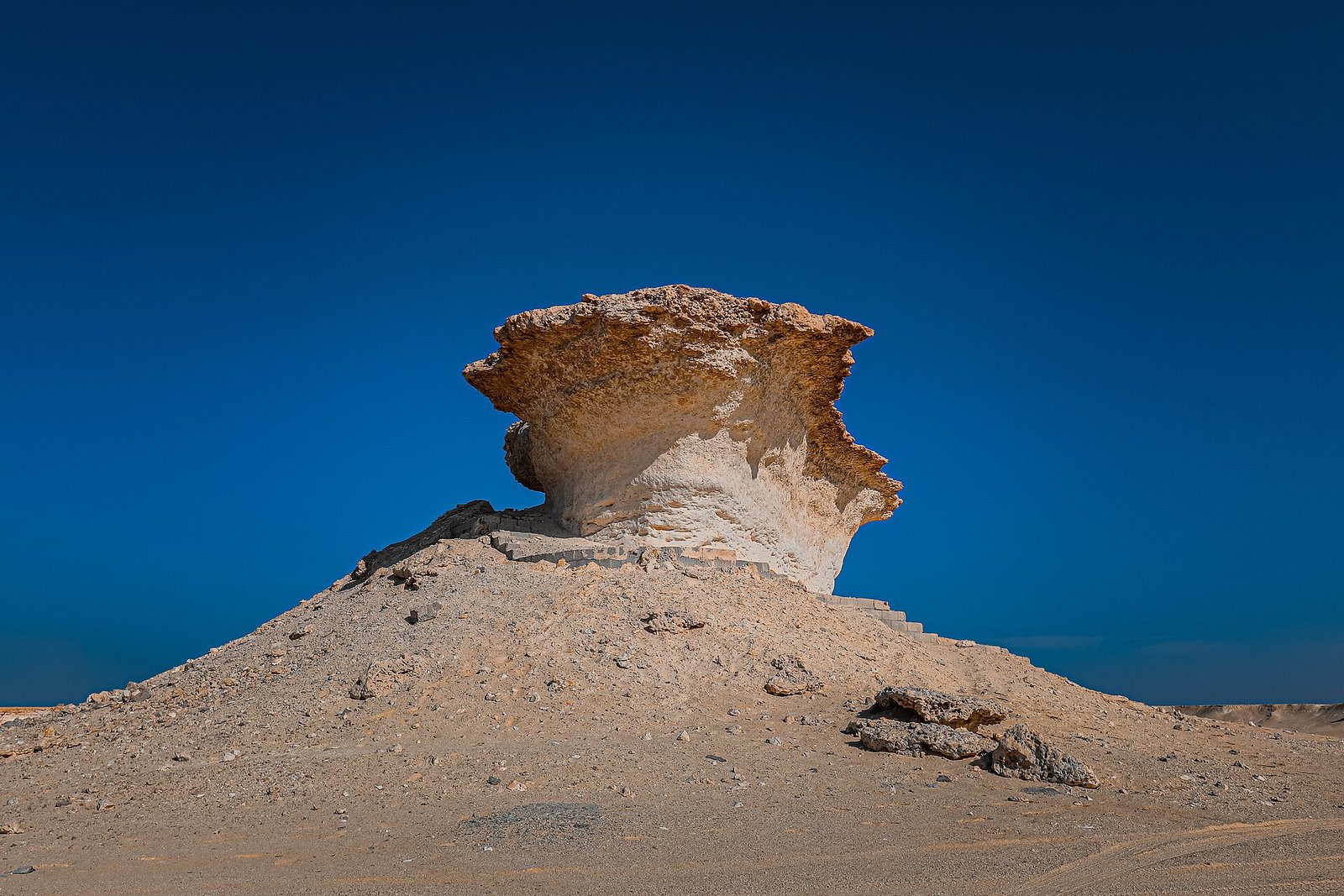
Zekreet Film City is a walled “old Arabian village” built as a television set and left in the desert. Around it, and scattered south towards the Serra sculpture, are the Zekreet Mushroom Rocks: limestone caps balanced on softer pedestals, beautiful in low light. At the northern tip, Ras Abrouq has white cliffs, a quiet bay and a chance of seeing Arabian oryx and gazelles grazing in the reserve.
The 2025–26 Brouq Season ran from 26 November 2025 to 17 January 2026, with Film City entry at QAR 50 for adults and other Ras Abrouq experiences from QAR 30. Visit Qatar has included Brouq in its 2026–27 calendar, but at the time of writing the dates had not been confirmed, so check Visit Qatar before you set off. If a gate is shut, do not drive round it: the southern outcrops near the Serra valley are still worth the trip on their own. Qatar Museums also lists the restored Zekreet Fort, near the village, as open on selected days; check its current hours.
Where to eat: during Brouq Season, Film City has doubled as the event’s market and food zone. Otherwise the only restaurant is Qissa at Our Habitas Ras Abrouq, and every visitor needs a day pass, room, restaurant or event reservation to enter. Plan on a picnic, and buy supplies in Dukhan or Al Shahaniya.
Read our full guides to Zekreet Film City, Zekreet Mushroom Rocks and Ras Abrouq and Al Reem Biosphere Reserve.
7. East-West/West-East by Richard Serra
- Drive: about an hour and a quarter each way, the last section on unpaved tracks.
- Car: an SUV or 4×4 is the comfortable choice; the tracks have ruts, rocky patches and soft sand.
- Status: open-air with no set hours; free. Visit in daylight.
- Best time: November to March, arriving about 90 minutes before sunset.
Four tall steel plates stand in a straight line more than a kilometre long across a natural corridor between gypsum plateaus. East-West/West-East, installed in 2014 for Qatar Museums, only makes sense in person: the plates look small from the track, then enormous up close, glowing rust-brown as the sun drops. Walk the full line if you have the energy, and do not add graffiti or climb the plates.
It pairs naturally with trip 6 (see the west coast itinerary below). Leave before dark: the tracks are hard to read at night.
Read our full guide to East-West/West-East by Richard Serra.
8. Umm Bab and the Dukhan coast
- Drive: about 110 km, roughly 90 minutes, via Salwa Road and the Sawda Natheel (Umm Bab) road. Dukhan town is about 80 km west of Doha on Dukhan Highway.
- Car: a normal car reaches the main Palm Tree Beach parking; a 4×4 with lowered tyres is needed to drive along the shore.
- Status: open access.
- Best time: October to April, late afternoon to sunset.
Umm Bab Beach, better known as Palm Tree Beach, is a cluster of palms by a breakwater on the south-west coast, a favourite for barbecues, camping and sunsets over the Gulf. It is not a lifeguarded, café-lined beach: the seabed is shallow and stony in places and facilities are limited. The road there is a long single carriageway shared with trucks from the cement works and quarries, so drive in daylight and do not overtake unless you can see well ahead.
From Zekreet, the same Sawda Natheel road runs south from Dukhan Highway. Dukhan’s public beach is reached by turning left at the Dukhan gates and following the coast road for about 9 km; watch for sharp rocks under the water. For a more comfortable day on the south-west coast, Hilton Salwa Beach Resort at Exit 86 on Salwa Road sells waterpark day tickets (QAR 150 in October 2026; the waterpark is closed on Mondays from October to December 2026).
Where to eat: nothing at Umm Bab. Bring a cool box and your own barbecue, and take all rubbish home.
Read our full guide to Umm Bab Beach (Palm Tree Beach).
Centre: Umm Salal, Rawdat Rashed and Al Shahaniya
The middle of Qatar is flat, stony desert dotted with farms and rawdat, the shallow depressions that turn green after winter rain. It looks plain, but two good short trips hide here.
9. Dahl Al Misfir and Al Shahaniya
- Drive: Dahl Al Misfir is about 40 km south-west of Doha, roughly 50 minutes; Al Shahaniya lies west of Doha off Dukhan Highway.
- Car: a 4×4 for the stony, sandy tracks to the cave; any car for Al Shahaniya.
- Status: the cave is open in daylight but closed in rainy periods. Camel races take place on Fridays from October to February, with the major Emir’s races in March and April.
- Best time: November to March, starting mid-morning at the cave.
Dahl Al Misfir is Qatar’s best-known cave, a sinkhole in the desert near Rawdat Rashed whose gypsum walls catch the light. The ground inside is uneven and there are no facilities, so wear proper shoes, bring a torch and never go down in or after rain.
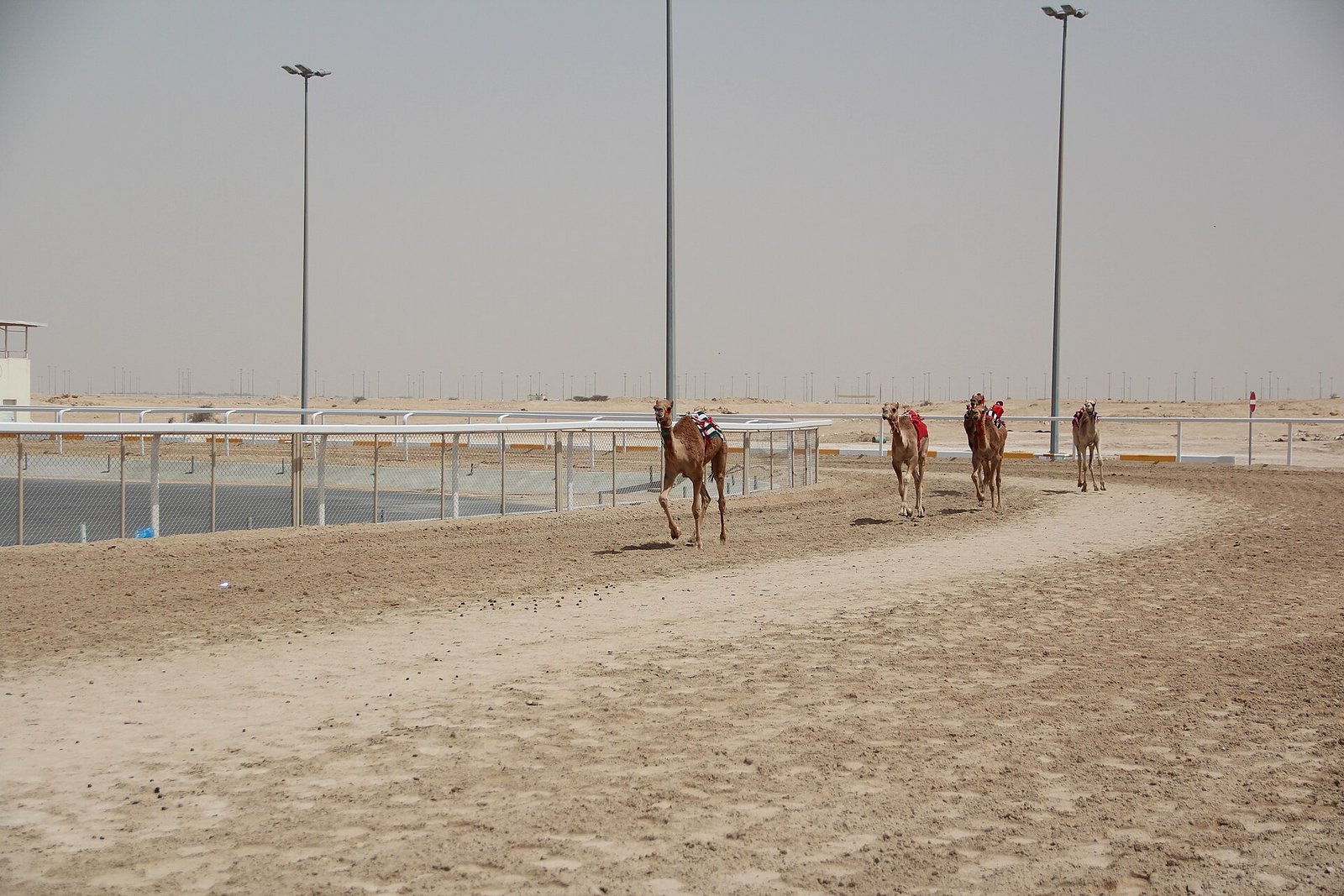
From the cave, head north to Dukhan Highway and west to Al Shahaniya, home of Qatar’s main camel racetrack. Visit Qatar says you can stop by any morning to watch camels training, even when no race is scheduled; on race days you can watch from the shaded grandstand or, as locals do, drive alongside the camels and their robot jockeys on the parallel road. Nearby at Al Samriya, the privately run Sheikh Faisal Bin Qassim Al Thani Museum holds a huge, eclectic private collection. It is closed on Sundays and opens Monday to Thursday 9am–5pm, Friday 2pm–7pm and Saturday from 10am; adult tickets are QAR 50 and children under 12 go free.
Where to eat: nothing at the cave. Al Shahaniya town has small local restaurants and cafeterias, or return to Doha for lunch.
Read our full guide to Dahl Al Misfir Cave.
10. Umm Salal: Barzan Towers, the fort and the fish market
- Drive: about 20 km, 20–35 minutes via Al Shamal Road.
- Car: any car.
- Status: Barzan Towers are temporarily closed and Umm Salal Mohammed Fort is not open to visitors; both are seen from outside. The fish market is open from early morning.
- Best time: October to April; early morning for the market, late afternoon for photographs of the towers.
This is a short half day, or a first stop on any drive north. Early in the morning, the Umm Salal Central Fish Market (off Al Shamal Road at exit 16) is busy with the day’s catch: hamour, safi, kingfish and prawns laid out on ice. There is no official “buy here, eat here” service, so check before you count on having your fish cooked.
A few minutes away in Umm Salal Mohammed, the watchtowers of Barzan Towers and the walls of Umm Salal Mohammed Fort form a fortified complex from the early 20th century. With both closed, you walk round the outside; park considerately in this residential area.
Where to eat: a seafood restaurant has been reported in the fish market complex; otherwise continue north to Al Khor.
Read our full guides to Barzan Towers, Umm Salal Mohammed Fort and Umm Salal Central Fish Market.
South: Sealine, the dunes and the Inland Sea
South of Doha, past Al Wakrah and the industrial port of Mesaieed, the flat ground gives way to real sand dunes. The paved road ends at Sealine; everything beyond is sand.
11. Sealine, the Singing Sand Dunes and Al Wakrah
- Drive: Sealine is 50–60 km, around 40 minutes to an hour; the Singing Sand Dunes about 40 km, 40–50 minutes; Al Wakrah about 19 km, 25–30 minutes.
- Car: any car on the paved roads. Keep ordinary cars off the soft sand near the shore; driving into the dunes needs a 4×4, lowered tyre pressure and experience.
- Status: Sealine public beach is open daily and free; the dunes are open desert; Souq Al Wakrah comes alive from late afternoon.
- Best time: October to April, afternoon into evening. Visit the Singing Dunes on a dry day, not after rain.
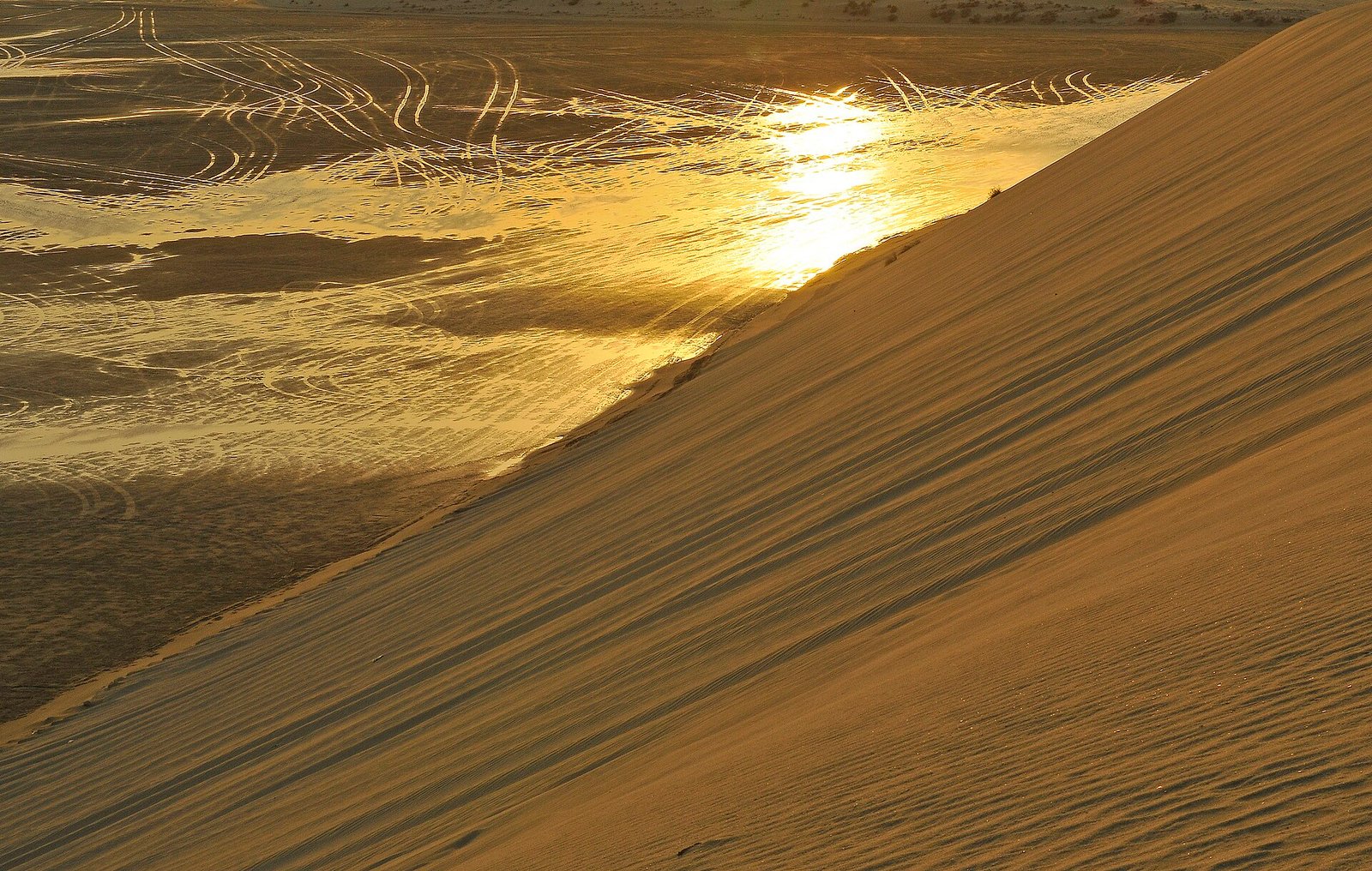
This is the easiest southern loop, and it needs no off-road driving. Start at the Singing Sand Dunes west of Mesaieed: park on firm ground and walk up a crescent dune, then push sand down its steep face. When conditions are dry the whole slope can answer with a deep hum you feel in your feet. Then drive round to Sealine Beach, where tall dunes run right down to the sea. Quad bikes, dune buggies and camel rides are on offer near the beach; insist on helmets.
On the way back, stop at Al Wakrah Souq and Beach. Arrive before sunset, wander the restored lanes as the lights come on, then eat grilled fish by the sea. Al Wakrah is also reachable on the Doha Metro Red Line to Al Wakra station, then a feeder bus or short taxi ride.
Where to eat: Sealine Beach, a Murwab Resort has several restaurants, including Al Odaid for Arabian and international food; day use is sold as packages. Al Wakrah souq has the widest choice of seafood restaurants, sweet shops and karak cafés on the southern side of Doha.
Read our full guides to Sealine Beach, the Singing Sand Dunes and Al Wakrah Souq and Beach.
12. Khor Al Adaid Inland Sea
- Drive: about an hour from Doha to Sealine on tarmac, then roughly 40 minutes to an hour across open dunes.
- Car: a capable 4×4 driven by someone experienced in soft sand, ideally in a convoy, or a desert safari with a licensed operator. Normal cars, taxis and ride-hailing cars cannot go beyond Sealine.
- Status: open access; visit in daylight unless you are with an overnight camp. Khor Al Adaid is a protected nature reserve and on UNESCO’s Tentative List.
- Best time: November to April, late afternoon; December to February is coolest and busiest.
Khor Al Adaid, the Inland Sea, is where a tidal inlet from the Gulf reaches deep into the dunes on the Saudi border. Blue water on one side and sand to the horizon on the other make it one of the great sights of the Gulf. Getting there is the adventure: drivers lower tyre pressures to around 18–20 psi before leaving the tarmac, navigate by GPS with no marked tracks, and pump the tyres back up before returning to the road.
For most visitors, especially anyone in a rental car (many agreements forbid off-roading), a tour is the right answer. Desert safaris from Doha take four to six hours with pick-up, often with dune bashing and optional dinner or an overnight camp. If you drive yourself, never go alone, carry recovery gear and a compressor, and tell someone your plan.
Where to eat: there is nothing at the Inland Sea unless your tour or camp provides a meal. Eat at Sealine before or after, or bring a full picnic and take every scrap home.
Read our full guide to Khor Al Adaid Inland Sea.
Sample itineraries
These plans assume a winter weekday, a 7.30am departure from central Doha and your own car. Shift everything 30 to 60 minutes earlier in October and March, when the midday sun is stronger, and remember that in December and January the sun sets before 5pm.
North heritage loop (full day, normal car)
Not on a Friday, when Al Zubarah only opens at 12.30pm; if Friday is your only day, do the loop in reverse.
- 7.30am Leave Doha on Al Shamal Road. Optional quick stop at the Umm Salal fish market (exit 16) to look at the morning catch.
- 9.00am Arrive at Al Zubarah as it opens. Fort first, then the archaeological site before the heat builds.
- 11.30am Short drive north to Shadows Travelling on the Sea of the Day; photo stops at Al Rakiyat and Al Thaqab from outside.
- 1.00pm Lunch in Al Ruwais or Madinat Al Shamal, then a walk along the old port and Al Ruwais Mosque.
- 3.30pm Al Jumail for late-afternoon light over the ruins (from outside the fence).
- 4.30pm Head south on Al Shamal Road.
- 6.00pm Back in Doha.
West coast art and desert day (full day, SUV or 4×4)
- 9.00am Leave Doha on Dukhan Highway, with an offline map and a full tank.
- 10.00am Zekreet exit. If Brouq Season is running, head north to Film City and Ras Abrouq first; if the gates are closed, explore the southern mushroom rocks instead.
- 1.00pm Picnic lunch in the shade of your car, or a reserved lunch at Qissa, Our Habitas Ras Abrouq.
- 2.30pm Rest, or drive slowly between the rock formations for photographs.
- 3.30pm Arrive at East-West/West-East and walk the line of plates as the light softens.
- 5.00pm Leave the tracks before dark and rejoin Dukhan Highway.
- 6.30pm Back in Doha.
Al Khor mangroves morning (half day, normal car)
- 7.00am Leave Doha, timing your start to the tide; your kayak operator will confirm.
- 8.00am Guided paddle through the Al Thakira mangroves (about two hours).
- 10.30am Walk the boardwalk to Purple Island and look for wading birds on the mudflats.
- 12.00pm Lunch in Al Khor town near the corniche.
- 1.30pm Return to Doha, or stay for Al Farkiya Beach in the afternoon if it is not a family day.
Driving out of Doha: cars, 4x4s and navigation
The metro stops at Al Wakra and Lusail, and taxis rarely wait to bring you back from the north or west, so for almost every trip you need your own car or a tour.
- Normal car: fine for trips 1–5, 8, 10 and 11, as long as you stay on tarmac and firm ground.
- SUV or 4×4: strongly advised for Zekreet and the Serra sculpture (trips 6–7), and needed for Dahl Al Misfir and the Inland Sea (trips 9 and 12).
- Navigation: download offline maps and save map pins from our place guides before you leave. Signal and signposting fade quickly in the west and north.
- Fuel: fill up in Doha, Al Khor, Madinat Al Shamal, Dukhan or Mesaieed; there is nothing on the desert tracks.
When to go: a seasonal calendar
| Months | Conditions | What works |
|---|---|---|
| October | Hot days, humid evenings | Early-morning beaches, Al Khor, Al Wakrah evenings; camel racing season begins |
| November–February | Warm days, cool nights, short daylight | Everything: Zubarah, Zekreet and Brouq Season, the Inland Sea, camping |
| March–April | Warming fast, occasional dust | Mornings and late afternoons; Emir’s camel races; Fuwairit closes 1 April |
| May–September | Extreme heat and humidity | Sunrise or sunset only; indoor alternatives; resort day passes |
The 2025–26 winter camping season ran from 15 October 2025 to 15 April 2026. The Ministry of Environment and Climate Change had not published the 2026–27 dates when we checked. Seasonal permits are for Qatari applicants only; day-trippers just need to respect fenced camps.
Heat, safety and what to bring
Most problems come from heat, soft sand and running out of daylight. Even in winter there is almost no shade at the heritage sites, dunes or Serra sculpture.
- At least a litre and a half of water per person, more from April to October, plus snacks or a packed lunch.
- Hat, sunscreen and closed shoes; a torch for Dahl Al Misfir.
- A fully charged phone, a power bank and an offline map.
- For any sand driving: tyre gauge, compressor, shovel, recovery straps and a second vehicle.
- A rubbish bag, because bins are rare outside town.
Plan to be back on tarmac by sunset. If you get stuck, stop revving, lower the tyre pressure and dig out.
Rules and etiquette outside the city
- Dress: cover shoulders and knees in villages, souqs and near mosques; swimwear is for the beach itself.
- Family days: respect women-and-children-only days at Al Farkiya, Al Khor Park and Al Mamlha.
- No alcohol in public places, including beaches and the desert.
- Heritage sites: do not climb fences, walls or artworks, and do not remove pottery, shells or stones.
- Wildlife: never drive on turtle beaches or chase oryx and gazelles.
- Tracks: stay on existing tracks, respect closed gates, and do not drive over green rawdat vegetation.
- Leave no trace: take all rubbish, including barbecue charcoal, back to Doha.
Mistakes first-timers make
- Driving two hours to a site that is closed. Check the status notes above and the official page the day before.
- Starting too late. In December the light goes before 5pm, and the best places are an hour or more from town.
- Taking a saloon onto soft sand at Sealine or Umm Bab and needing a tow.
- Planning a morning at Al Zubarah on a Friday, when it opens at 12.30pm.
Frequently asked questions
What is the best day trip from Doha for first-time visitors?
Al Zubarah Fort and Archaeological Site, Qatar’s UNESCO World Heritage Site, is about 75–90 minutes north on paved roads. Combine it with Al Ruwais for lunch and Al Jumail on the way back for a complete heritage day in a normal car.
Can I do day trips from Doha without a 4×4?
Yes. Al Zubarah, Al Ruwais, Al Khor, Purple Island, Al Farkiya, Umm Salal, Sealine, the Singing Sand Dunes and Al Wakrah are all reachable in an ordinary car. You need a 4×4, or a tour, for the Inland Sea and Dahl Al Misfir, and an SUV is strongly advised on the Zekreet Peninsula.
How far is the Inland Sea from Doha?
Allow about an hour to drive to Sealine on tarmac, then 40 minutes to an hour across the dunes to Khor Al Adaid. Most desert safaris from Doha take four to six hours in total.
Is Zekreet Film City open?
It has mainly opened during Visit Qatar’s winter Brouq Season, which ran from 26 November 2025 to 17 January 2026. Brouq is in the 2026–27 calendar, but check Visit Qatar for confirmed dates; outside the event the compound and northern gates are often closed.
Which heritage sites near Doha are closed?
At the time of writing, Barzan Towers, Al Jassasiya Rock Carvings and Al Rakiyat Fort are temporarily closed, and Al Jumail, Al Thaqab and Umm Salal Mohammed Fort are not open to the public. Al Zubarah is open.
Can I visit Fuwairit Beach in summer?
No. The beach is closed from 1 April to 1 August each year to protect nesting hawksbill turtles. Go to Al Ghariya, just to the north, instead.
Last checked October 2026. Rules, fees and access can change, so confirm with the official source before you go.