A desert safari in Qatar almost always means one thing: a 4×4 ride from Doha to the tall dunes south of Mesaieed, a stretch of “dune bashing” across the sand, and a stop at Khor Al Adaid, the Inland Sea, where the desert runs straight into a tidal lagoon on the Saudi border. Add a camel ride, a go on a sandboard, perhaps a quad bike and a sunset, and you have the classic half-day trip that most visitors book.
Beyond that simple formula there are real choices to make. Do you want a four-hour shared tour, a private car for the family, a full day with a meal at a camp, or a night under the stars? Should you drive yourself? What is a fair price, and how do you tell a careful, licensed operator from someone with a Land Cruiser and a WhatsApp number? This guide answers those questions with prices from dated sources, the safety checks worth making before you pay, and the practical detail (clothing, timing, motion sickness, children, rules) that makes the difference between a great afternoon and a miserable one.
At a glance
- Where: most safaris run in the dunes between Sealine (about 40 minutes south of Doha) and Khor Al Adaid, the Inland Sea.
- Classic trip: a half-day of about four hours, with hotel pick-up, dune bashing and a stop at the Inland Sea.
- Indicative prices: roughly QAR 215–330 per person for a shared half-day; more for private cars, evening packages with dinner and overnight camps (see our price section for dated sources).
- Best season: November to March; October, April and early May work early or late in the day.
- Best time of day: an afternoon trip that ends at sunset, or an early-morning trip to beat the heat.
- Who should skip the dune bashing: pregnant travellers, young children and anyone with back, neck or heart problems. Most operators bar them from the dune drive.
- Self-drive? Only with dune experience, a capable 4×4, recovery gear and at least one other car.
What a Qatar desert safari includes
Most tours follow the same basic pattern. A driver collects you from your hotel or home in Doha in an air-conditioned 4×4, usually a Toyota Land Cruiser or similar, and drives south on the paved road past Al Wakrah and Mesaieed. At the edge of the sand near Sealine the car stops so the driver can let the tyres down, and then the off-road part begins. A Qatar Living round-up of evening safaris published in July 2026 lists the standard inclusions as pick-up and drop-off in Doha, the air-conditioned 4×4, an experienced driver, vehicle preparation at Sealine, the dune drive, a stop at Khor Al Adaid, and water or light refreshments.
What changes from tour to tour is everything that is added on top. Visit Qatar describes the wider menu as 4×4 dune bashing, camel rides and falcon experiences, quad biking and sandboarding, sunset viewpoints, and optional dinner and overnight camping.
Dune bashing
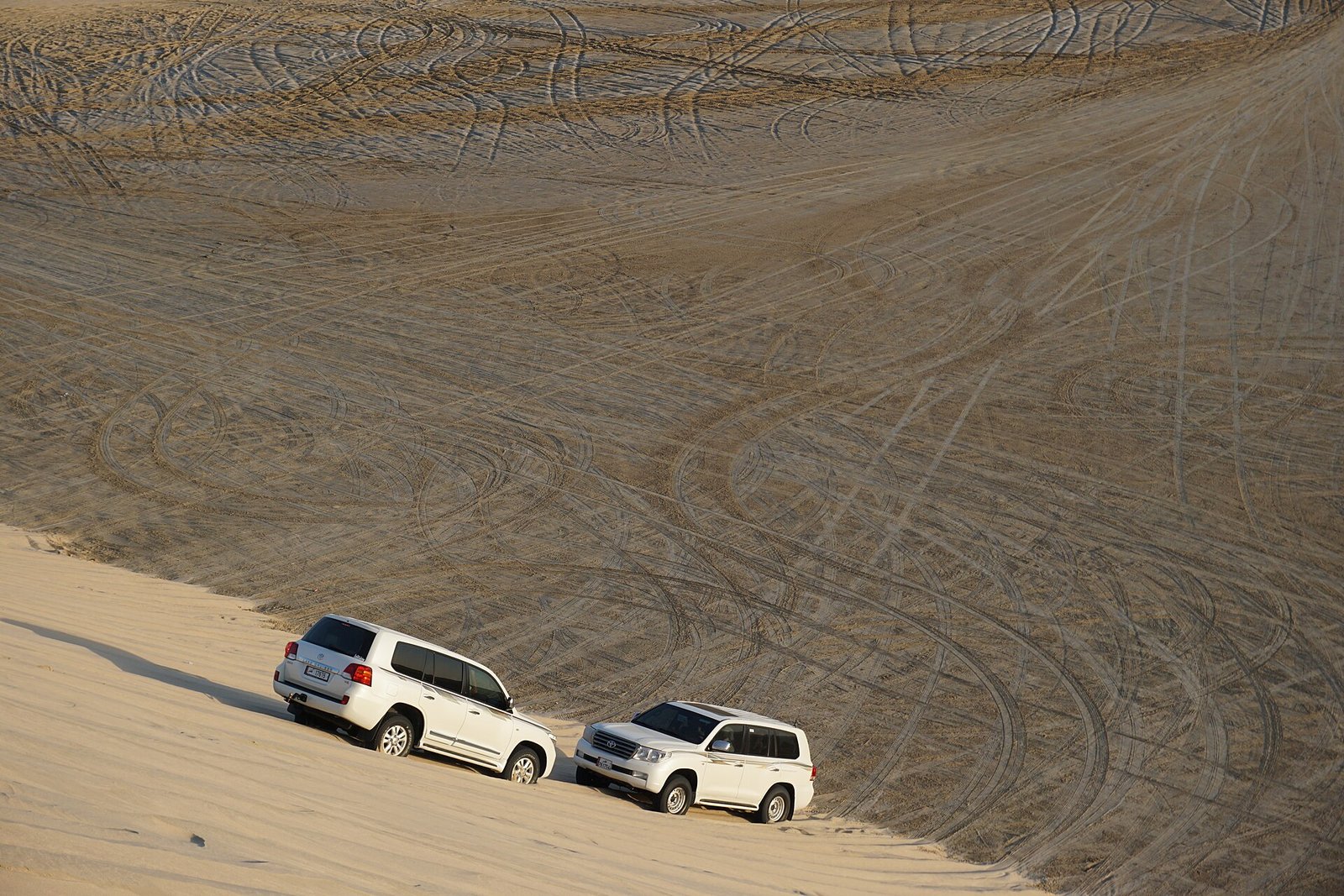
This is the heart of the trip. The driver takes the car up the long faces of the dunes, across the ridges and down the steep, soft slip faces on the far side, sometimes sideways across a slope. It feels much more dramatic from the inside than it looks from outside, with sudden drops, sliding sand and a lot of weight shifting around the cabin. You can always ask for a gentler ride.
The dunes around Sealine and the Inland Sea are the biggest in Qatar. One ticketed half-day tour sold on Platinumlist describes dunes of up to 50 metres, and Visit Qatar gives heights of around 40 metres around Khor Al Adaid.
Khor Al Adaid, the Inland Sea
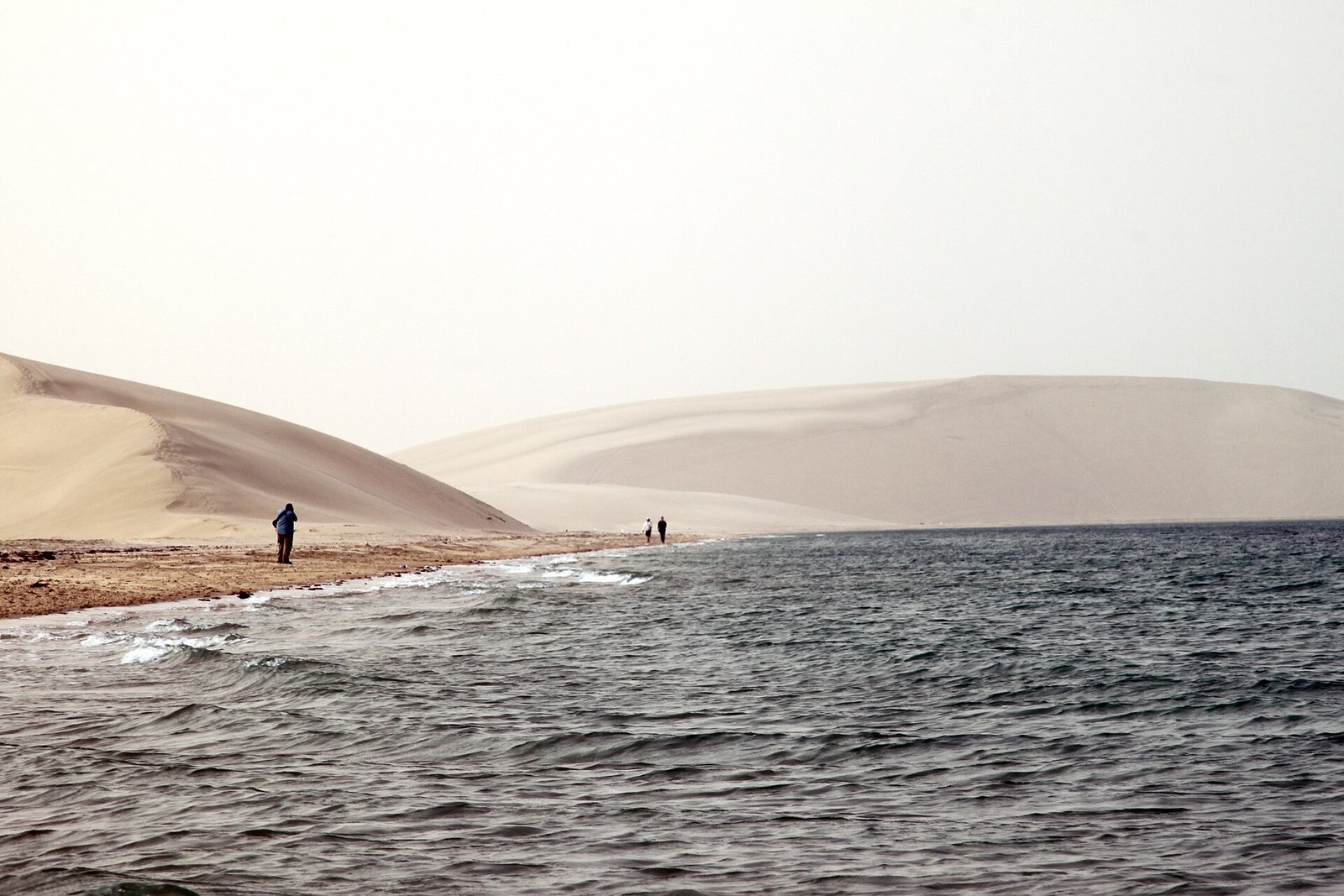
The destination of almost every safari is Khor Al Adaid, a tidal inlet that winds inland from the Gulf to form a shallow lagoon ringed by dunes. It is Qatar’s largest protected area, a nature reserve since 2007 and on UNESCO’s Tentative List for World Heritage status. The view from the top of the dunes, with blue water below and Saudi Arabia on the far shore, is the photograph everyone comes for. The crossing from the end of the tarmac takes around 40 minutes to an hour, depending on the route and how many stops you make.
Most half-day tours give you somewhere between a short photo stop and an hour at the shore. The water is usually calm and shallow at the edge, and many people paddle or swim, but there are no lifeguards, changing rooms or toilets. Read our full guide to Khor Al Adaid for the reserve’s history, wildlife and overnight options.
Sealine and the beach
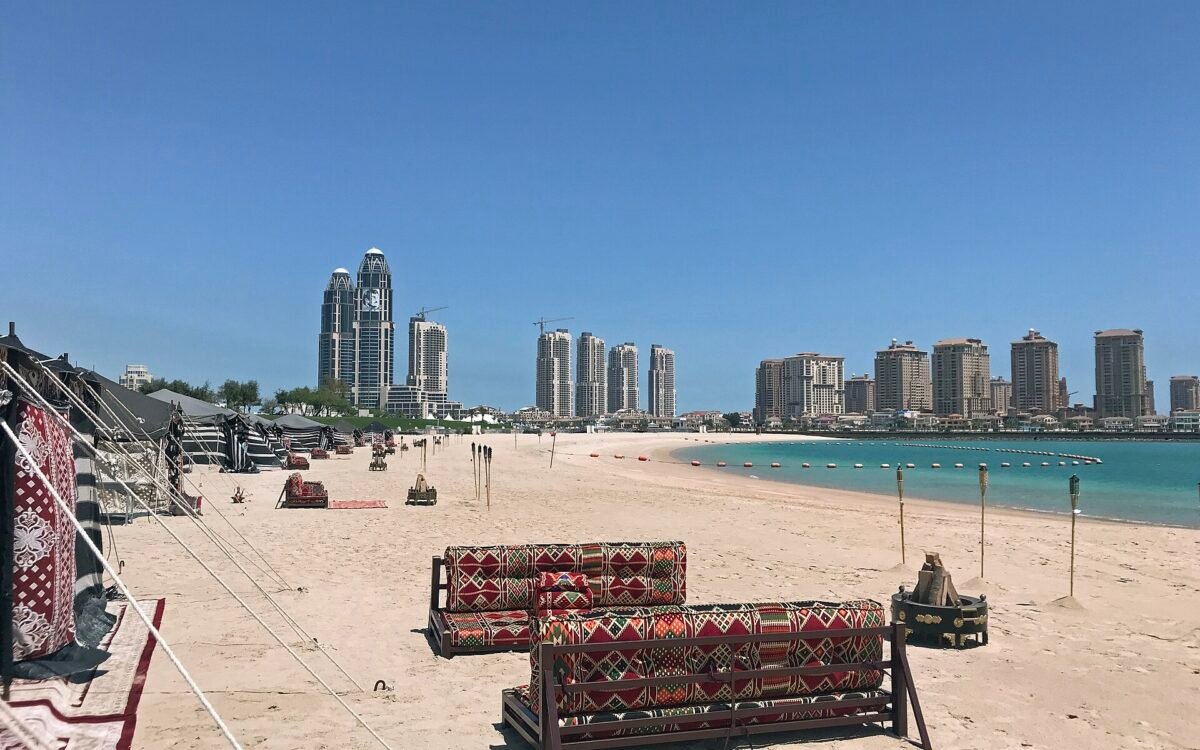
Sealine Beach is where the safari leaves the road, and many tours include time here before or after the dunes. It is a free public beach with dunes rising right behind the shore, camel handlers waiting near the sand and rental yards hiring out quad bikes and buggies. Next door, Sealine Beach, a Murwab Resort is the main hotel on this stretch of coast and a common base for desert trips.
Sandboarding
Many operators carry a sandboard or two in the car and stop at a steep, clean slope so you can slide down. It is slower than snowboarding and much more forgiving when you fall. Children usually love it. Ask whether boards are included if this matters to you.
Camel rides
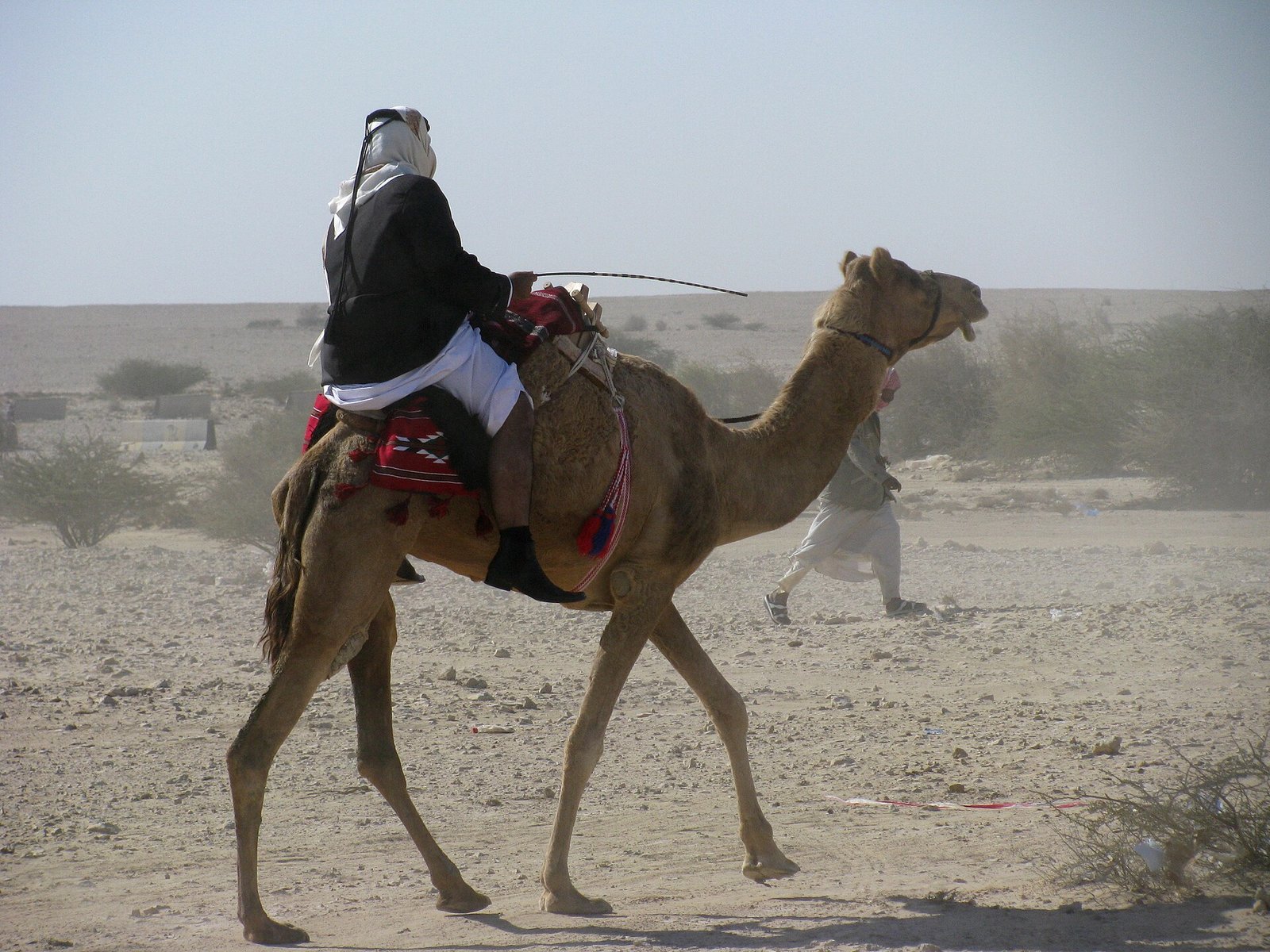
Short camel rides are a standard add-on, usually near Sealine or at a desert camp. Expect a few minutes’ walk led by a handler rather than a trek. Hold on tightly when the camel stands up and sits down, since it rocks you forward and back. Some tours include a ride; otherwise, agree the price with the handler before you climb on.
Quad bikes and dune buggies
Quad bikes and buggies are hired separately from yards around Sealine, usually by the half hour or hour, and ridden in set areas of the dunes. Some safari packages include a short session. Helmets should be provided and worn. Quads are the biggest safety risk at Sealine, so ride within your ability, stay in the area you are shown and never let a child ride an adult-sized machine.
Sunset, dinner and overnight camps
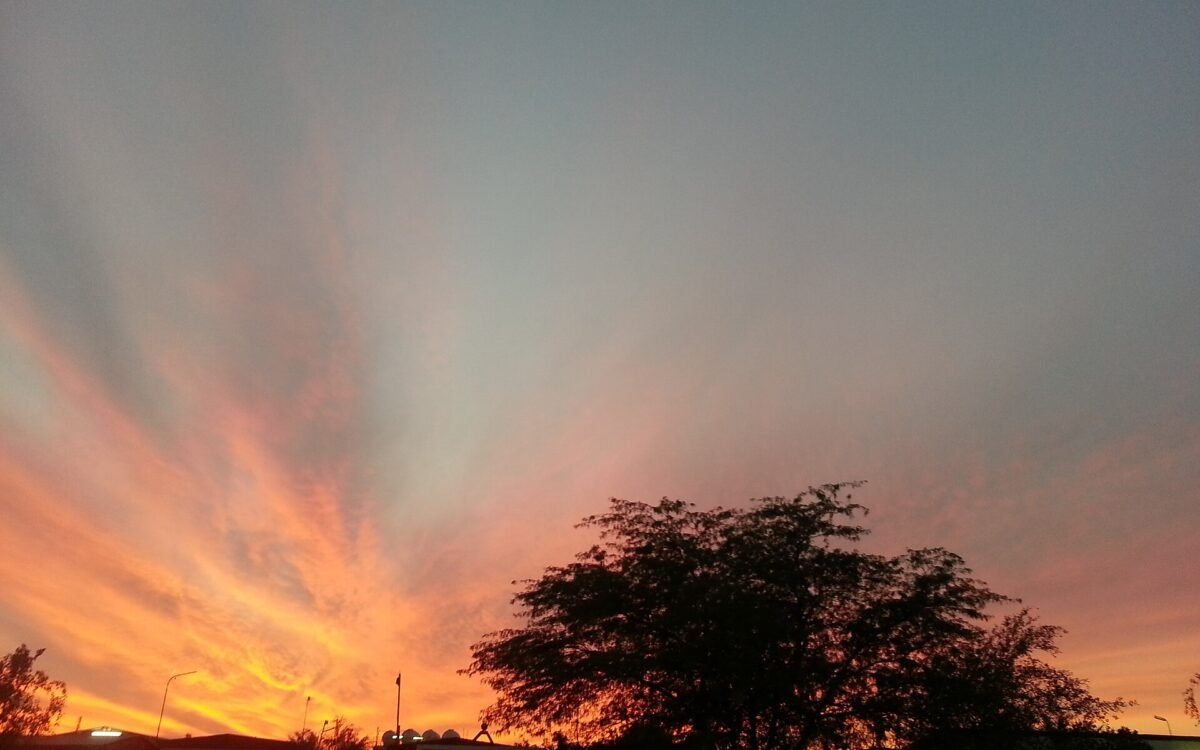
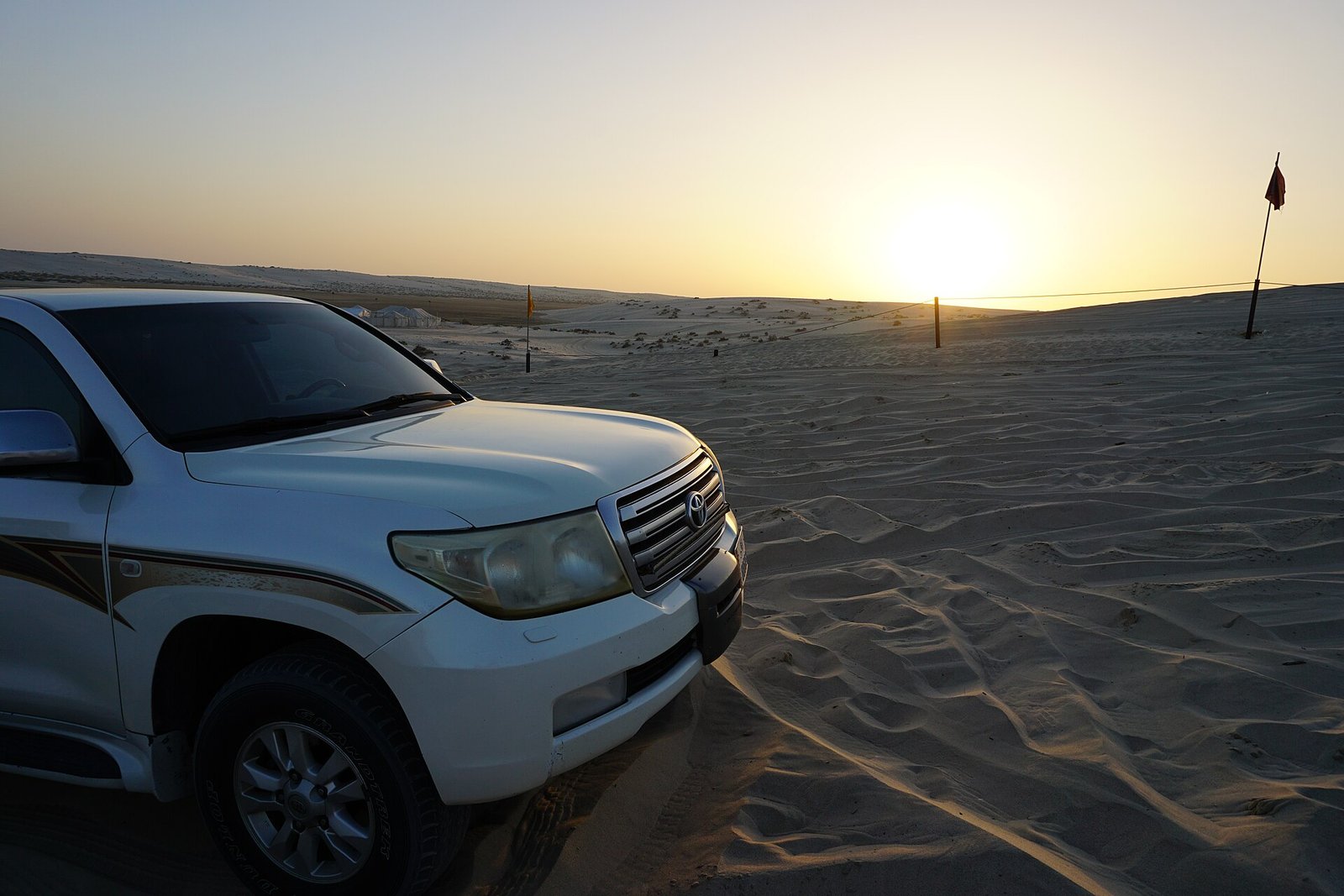
Afternoon tours are timed so that you watch the sun go down over the dunes, when the sand turns orange and the lagoon goes silver. Longer packages continue to a desert camp for a barbecue or buffet dinner, sometimes with Arabic coffee, shisha or entertainment, and overnight packages add a tent and breakfast. Visit Qatar names Sealine Beach (a Murwab resort), Regency Sealine Camp and Outpost Al Barari among the places to stay in the Sealine and Khor Al Adaid area.
Half-day, full-day or overnight: choosing your safari
The format you choose matters more than the operator’s brochure. Think about how much time you have, who is coming, how you cope with heat and bumpy rides, and whether you want the desert at night.
Half-day safari (about four hours)
This is the most popular option and enough for most first-timers. Tours run in the morning or afternoon, with pick-up in Doha, the dune drive, a stop at the Inland Sea and usually a short break near Sealine. Platinumlist’s listing for a shared half-day tour shows 09:00 to 13:00 and 12:00 to 16:00 departures, and Qatar Living describes four hours as the standard half-day length. Transit tours for airport layover passengers follow a similar pattern and last around four hours.
Choose it if: you have limited time, you are travelling with older children, or you just want to see the dunes and the Inland Sea without committing a whole day.
Evening or sunset safari with dinner (five to eight hours)
These leave in the afternoon, include the dune drive and sunset, then stop at a camp for dinner before the drive back to Doha after dark. Qatar Living notes that packages including dinner or camp experiences typically run five to eight hours.
Choose it if: you want the best light, cooler temperatures and an easy evening out without organising food.
Full-day safari
Full-day tours give you more time at the lagoon for swimming, walking and sandboarding, sometimes with lunch or dinner by the water and extra stops such as the Singing Sand Dunes near Mesaieed. They suit people who find the half-day too rushed. In summer, a full day in the dunes is hard going, so save this format for the cooler months.
Choose it if: you want time to relax at the Inland Sea, or you are combining several southern sights in one trip.
Overnight camp
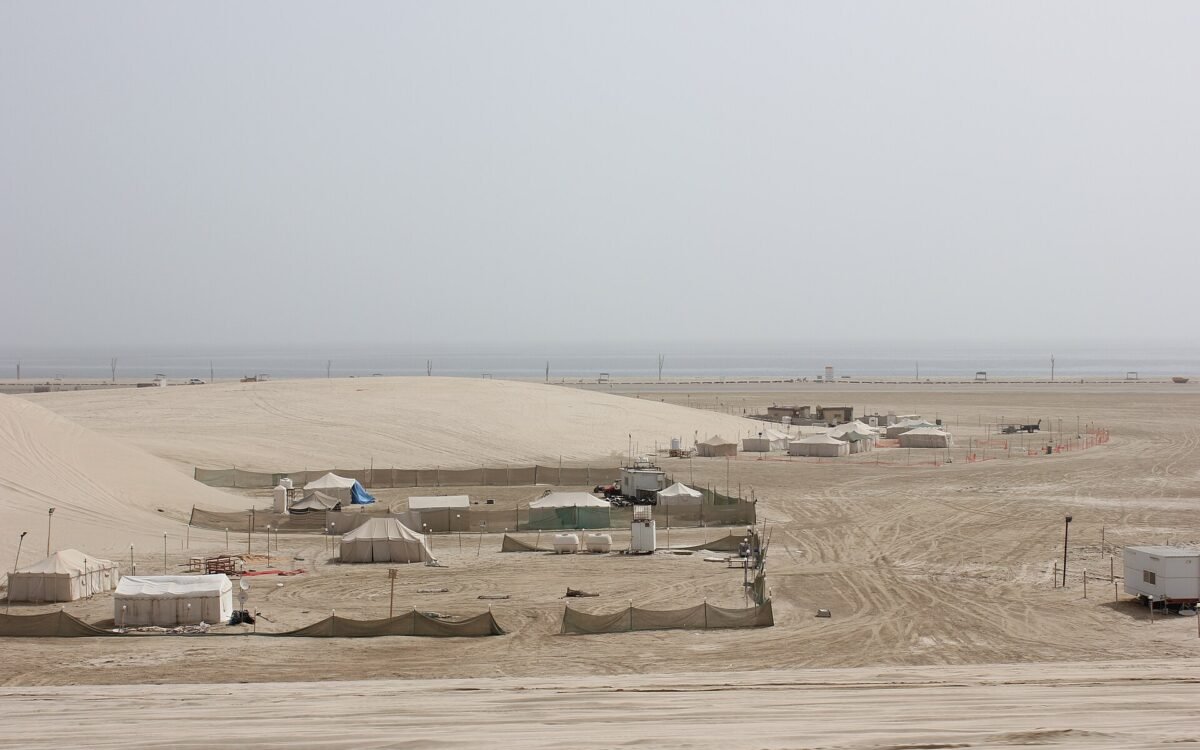
Overnight packages usually include the dune drive in the afternoon, sunset, a barbecue dinner, a night in a Bedouin-style tent or cabin at a licensed camp, and breakfast, with the return to Doha the next morning. The draw is the night sky: this far from the city there is very little light pollution, and on a clear, moonless winter night the stars are spectacular. Camps vary enormously, from basic shared tents to private air-conditioned units, so ask exactly what you are sleeping in, what the bathrooms are like and whether the camp is on the Inland Sea shore or inland.
Choose it if: you want the desert at its quietest, you are travelling as a group, or stargazing matters more to you than a hotel bed.
Comparison of safari types
| Safari type | Typical length | What’s usually included | Indicative price (see notes) | Best for |
|---|---|---|---|---|
| Shared half-day | About 4 hours | Doha pick-up, dune bashing, Inland Sea stop, water | About QAR 215 per adult, QAR 145 per child (Platinumlist, Oct 2026); QAR 220–330 per person depending on group size (Qatar Living, Jul 2026) | First-timers, couples, short stays |
| Private half-day | About 4 hours | As above, whole car for your group, flexible timing | About QAR 900 for a single guest on a private four-hour 4×4 (Qatar Living, Jul 2026); per-person cost falls as more share | Families, small groups, nervous passengers |
| Sunset or evening with dinner | 5–8 hours | Dune drive, sunset, camp activities, dinner | From about QAR 330 per person for a half-day with sunset, food and camp activities (Qatar Living, Jul 2026) | Best light, cooler temperatures |
| Full day | 7–9 hours | Longer at the Inland Sea, meal, extra stops | Varies widely; ask for a written quote | Swimming, relaxing, combining sights |
| Overnight camp | About 13–18 hours | Dune drive, sunset, BBQ dinner, tent, breakfast | Roughly QAR 750–1,170 per person on international booking sites (converted from US dollars, Oct 2026) | Stargazing, groups, special occasions |
| Quad bike or buggy hire | 30–60 minutes | Machine, helmet, fuel, set riding area | Around QAR 100–350 per hour for a quad, QAR 500 and up for a buggy (one Sealine rental firm’s published list, Oct 2026) | Adding speed to a Sealine visit |
Prices are indicative only, taken from the dated sources shown, and change with season, day of the week, group size and inclusions. Always confirm the full price and what it covers before you book.
What a desert safari costs
There is no official price list for desert safaris in Qatar, and operators set their own rates. The figures below come from sources we could date, and they give a realistic sense of the range rather than a promise.
- Shared half-day, per person: a four-hour shared tour sold through Platinumlist was listed at QAR 215 for adults (12 and over) and QAR 145 for children aged 3 to 11, with under-3s free, when we checked in October 2026. Qatar Living’s July 2026 article quotes QAR 220 per person for a four-hour dunes and Inland Sea tour with three people sharing, rising to QAR 330 per person with two sharing.
- Private car: the same Qatar Living article gives QAR 900 for a four-hour private 4×4 tour for one guest, noting that the cost per person drops as more people share the car. Discover Qatar, the destination management company, prices its private Desert and Inland Sea tour per vehicle for up to five people.
- Evening packages: Qatar Living quotes QAR 330 per person for a half-day with sunset, food and camp activities.
- Overnight camps: international booking platforms listed overnight desert camping packages with dinner and breakfast from about USD 207 to USD 320 per person in October 2026, roughly QAR 750 to QAR 1,170. Private-group packages sit at the upper end.
- Quad bikes and buggies: one Sealine rental company’s published price list shows quads from QAR 100 to QAR 350 an hour depending on engine size, and buggies from QAR 500 an hour upwards, with helmets, goggles and fuel included.
- Camel rides: usually agreed on the spot with the handler, unless included in your package.
What pushes the price up or down
- Group size and car sharing. The biggest single factor. A full car is far cheaper per head.
- Season and day. Winter weekends and holidays are the busiest times. Summer and weekday trips are often discounted.
- Inclusions. Sandboarding, camel rides, quad sessions, meals and camp time all add up. Compare what is actually included, not just the headline figure.
- Vehicle and driver. Newer, well-equipped vehicles and experienced, licensed driver-guides cost more to run. Very cheap offers sometimes cut corners here.
How to choose a safe, licensed operator
Dune bashing is fun because it feels a little dangerous. The job of a good operator is to make sure it only feels that way. The Australian government’s Smartraveller advice for Qatar warns that transport and tour operators don’t always follow safety and maintenance standards, specifically including 4WD desert activities, and suggests choosing another provider if proper safety equipment isn’t available. That is sound advice anywhere.
Check the licence
Tourism in Qatar is regulated under Law No. 20 of 2018 on the regulation of tourism, and Qatar Tourism is the body that licenses, classifies and inspects tourism establishments, including tour guiding offices and tourism transport offices. Qatar Tourism also runs a training and licensing programme for tour guides. A reputable operator will happily tell you its licence details and show a licensed driver-guide. If a seller can’t or won’t answer, or offers a cash-only deal from a private car, walk away. Booking through a licensed operator also matters if something goes wrong, because you have a registered business to deal with.
Look at the vehicle
You don’t need to be a mechanic. Look for a car in good condition with working air conditioning, seatbelts in every seat that actually buckle, and tyres that look well maintained. When the then Qatar Tourism Authority proposed tighter safari rules in 2014, it listed roll bars, first-aid kits and front “bull bars” among the safety features it wanted on safari vehicles, and advanced off-road driver training, roll-over training and first-aid certificates for drivers. It is fair to ask whether your operator’s cars and drivers meet that kind of standard.
Seatbelts, always
Everyone should be belted in for the whole dune drive, including in the back. A driver who tells you seatbelts aren’t necessary on the sand is telling you something important about how he works. Stow loose bags so they don’t fly around on a steep descent.
Experience and communication
Ask how long the driver has been driving the dunes and whether the company travels with a second car or has radio or satellite contact on the way to the Inland Sea, where mobile coverage is patchy. A good driver briefs you before leaving the tarmac, asks whether anyone is nervous or prone to car sickness, and adjusts the drive accordingly. If your driver ignores requests to slow down, say so clearly, and report it to the company afterwards.
Insurance and health restrictions
Check that your travel insurance covers desert activities, including 4×4 excursions and quad biking, and medical evacuation. Many standard policies exclude motorised off-road activities unless you add cover. A responsible operator will also be clear about who shouldn’t take the dune drive (see the section on health and children below) rather than quietly selling seats to anyone.
Red flags
- No licence details, no business name, or pressure to pay cash up front.
- Seatbelts missing, broken or discouraged.
- Bald or visibly damaged tyres, or a car that looks tired and dented.
- No helmets for quad bikes, or children put on adult-sized quads.
- A driver showing off with high-speed jumps, one-handed driving or phone use on the dunes.
Self-drive or guided tour?
Plenty of residents drive their own 4x4s to the Inland Sea, and it can be a superb day. It is also how people end up stuck, stranded without signal or hurt. The honest answer for most visitors is to book a tour for the first trip.
When a tour makes sense
- You have never driven on soft sand, or never recovered a stuck vehicle.
- You are in a rental car. Many rental agreements in Qatar don’t allow off-road driving, and damage in the dunes may not be covered.
- You only have one car. Never go into the big dunes alone.
- You want to relax, take photos and let someone else handle navigation, tyre pressure and recovery.
When self-driving makes sense
If you have real dune experience in the Gulf, a capable 4×4 in good condition and at least one other vehicle travelling with you, driving yourself gives you complete freedom over timing and stops. The basics, as covered in our Khor Al Adaid guide: let your tyres down before leaving the tarmac (Visit Qatar and experienced local drivers suggest around 18 to 20 psi), navigate with GPS and saved offline maps, climb dunes at an angle, crest slowly, and never try to power out of trouble. Carry a tow rope, shovel, compressor, tyre pressure gauge, spare tyre and recovery boards, and re-inflate before driving on tarmac again. Tell someone at home your route and return time.
Stay on the Qatari side of the lagoon. Khor Al Adaid lies against the Saudi border, so don’t drive around the southern shore or try to cross the channel.
If you just want a taste of the sand, the paved road reaches Sealine Beach and the dunes behind it, so any car can get you to the edge of the desert.
Health, pregnancy, children and motion sickness
Dune bashing is a physical experience. The car tilts steeply, drops suddenly and jolts on landing, and you can be thrown against your seatbelt. That is why operators restrict who can take part.
Pregnancy and medical conditions
Discover Qatar’s terms for its Desert and Inland Sea tour exclude pregnant women, children under six, and people with heart problems, back pain or injuries, and neck pain or injuries. Qatar Living notes that similar restrictions apply across the industry. If any of these apply to you, don’t take the dune bashing element. You can still enjoy the desert: stay at Sealine, sit with the camels and watch the sunset from a low dune, or ask a private operator whether they can take a very gentle route. Always check with your doctor first if you are unsure.
Children
Age rules vary by operator. Discover Qatar sets a minimum age of six for its dune tour and does not allow child seats on the excursion, while the shared half-day tour sold on Platinumlist sells child tickets from age three and lets under-threes ride free. Given how rough the ride is, many parents wait until children are old enough to sit securely with an adult seatbelt. Whatever the operator allows, make sure every child is properly restrained, sit them in the middle where possible, and ask the driver to take it easy. Younger children often enjoy the sandboarding, camels and beach more than the dune drive itself.
Motion sickness
Car sickness is common on dune drives, even among people who never feel it on the road. To reduce the risk:
- Tell the driver before you leave the tarmac. Good drivers will go more gently.
- Sit in the front passenger seat if you can, and look at the horizon rather than your phone.
- Eat something light beforehand, not a heavy meal, and sip water.
- If you know you are prone to it, speak to a pharmacist about travel sickness remedies before the trip.
What to wear and what to bring
The desert is hotter, brighter and sandier than you expect, and winter evenings can be surprisingly cool.
What to wear
- Light, loose, breathable clothes that cover shoulders and knees. Long sleeves protect you from the sun better than sunscreen alone.
- Closed shoes or sturdy sandals for the sand. Some people go barefoot on the dunes, but the sand can be scorching from spring onwards.
- A hat and sunglasses. Visit Qatar recommends polarised sunglasses to cut the glare.
- A warm layer from December to February, especially for sunset and overnight trips, when temperatures drop quickly after dark.
- Swimwear under your clothes if you plan to swim at the Inland Sea, with a cover-up for the camp and car.
What to bring
- Plenty of water, even if the operator provides some
- Sunscreen, applied generously before you set off
- A small bag or dry bag to keep sand away from phones and cameras
- A towel and change of clothes if you plan to swim
- Cash for camel rides, tips or small purchases at Sealine
- ID for everyone, as for any trip outside the city
- Any medication you may need, including travel sickness remedies
Best season and time of day
The comfortable season runs from about November to March, with October, April and early May usable if you go early in the morning or late in the afternoon. December to February are the coolest months and the busiest. Smartraveller notes that temperatures can exceed 50°C from June to September, when the sand radiates heat and there is no shade at the lagoon. Summer safaris do still run, but only early in the morning or towards sunset, and the heat is a real safety risk.
Morning or afternoon?
- Afternoon trips that end at sunset are the most popular. The light is at its best, the dunes glow and it is cooling down as you head home.
- Morning trips are quieter and cooler, especially outside winter. Visit Qatar notes that desert animals are more active and visible at dawn, which makes mornings better for birdwatching at the lagoon.
Weekends, wind and events
Friday and Saturday afternoons, especially in winter, bring far more cars, quads and camps to Sealine and the dunes. Go midweek for space. Check the wind forecast too: strong north-westerly shamal winds can whip up sand and cut visibility, which makes the trip unpleasant and the photos hazy. After rare winter rain, some sites close temporarily and the sand behaves differently.
Visit Qatar has run a multi-week Sealine Season event each January, with concerts, desert activities and family entertainment, which makes the area livelier (and busier) than usual. In early 2026 Qatar temporarily suspended public events and tourism activities during a regional security incident. Operators were advertising safaris again by mid-2026, but check official announcements and your own government’s travel advice before you travel.
A simple seasonal calendar
- October: the season starts. Hot by day, so choose sunset or early-morning trips.
- November to February: peak season. Pleasant days, cool evenings, licensed camps open, busiest weekends.
- March to April: still good, warming up. Afternoon trips get hot by April.
- May: early mornings and late afternoons only.
- June to September: extreme heat. Short, early or evening trips only, and many visitors skip the desert altogether.
Desert etiquette and environmental rules
Qatar’s desert looks empty and indestructible. It is neither.
Respect local customs
- Dress modestly away from the water. Swimwear is fine at the lagoon or beach, but cover up at camps, the resort and on the drive.
- Ask before photographing people, especially women and families. Camel handlers may expect a tip if you photograph them or their animals.
- No alcohol in public. Drinking alcohol in public places, including the desert and beaches, is not allowed. Licensed hotels are the exception.
Protect the desert
- Take all your rubbish home. Bins are few and overflow at weekends. Bring bags and leave the sand cleaner than you found it.
- Don’t drive over vegetation. The environment ministry has fenced off more than 70 rawdas (green desert depressions) to protect them from off-road driving, illegal camping, overgrazing and litter, and says violations are recorded and referred for legal action, according to Gulf Times in January 2026.
- Never chase wildlife in a vehicle or on a quad. Keep well back from animals and nesting birds, especially around the Khor Al Adaid reserve.
- No fires on bare sand outside licensed camps and designated barbecue areas, and never leave hot coals buried in the sand, where they burn bare feet the next day.
- Don’t take anything. Fossil shells, stones and plants belong in the reserve.
Camping rules
Private camping in Qatar’s desert and nature reserves is run through the Ministry of Environment and Climate Change’s seasonal permit system. For the 2025–26 season, the camping period ran from 15 October 2025 to 15 April 2026, permits were limited to Qatari nationals aged 25 and over, and a permit cost QAR 3,000 with a QAR 10,000 refundable deposit. As of September 2026 the ministry had not published the 2026–27 dates and conditions, so check its latest announcement. For residents and visitors who aren’t eligible, a licensed commercial camp or an overnight tour is the way to sleep in the desert.
Photography tips
The desert is wonderfully photogenic and hard on cameras.
- Shoot the golden hour. The hour before sunset gives long shadows that bring out the ripples and ridges of the dunes. Midday light flattens everything.
- Find a high point. The classic Inland Sea shot is from the top of a dune looking down to the water and across to Saudi Arabia. It is worth the climb.
- Use people and cars for scale. A figure on a ridge or a 4×4 on a slope shows how big the dunes are. Take these shots from a safe distance, well away from any vehicle’s path.
- Protect your gear. Keep phones and cameras in a zip-lock or dry bag between shots, avoid changing lenses in the wind, and bring a blower brush to clean sand off.
- Try the stars. On an overnight trip, a phone night mode or a camera on a small tripod can capture the Milky Way on a clear, moonless winter night.
- Drones need permission. Drone flying in Qatar is regulated by the Qatar Civil Aviation Authority, and parts of the south are close to sensitive sites and the border. Don’t fly unless you have checked and met the current rules.
Beyond the Inland Sea: other desert trips
The Sealine to Khor Al Adaid route is the classic, but it is not the only desert in Qatar. Visit Qatar describes four main safari zones: Mesaieed and the Inland Sea, Sealine, Zekreet in the west, and the north. Some operators build tours around these, or you can combine them with a southern safari.
Singing Sand Dunes
A short drive inland from Mesaieed, these crescent dunes can hum when dry sand slides down their steep faces. It is free, unstaffed and one of the easiest desert outings from Doha, and some full-day safaris stop here. Read our full guide to the Singing Sand Dunes.
Dahl Al Misfir
Qatar’s largest accessible cave, south-west of Doha near Rawdat Rashed, is a steep, boulder-strewn chamber lined with gypsum. It is free and open in daylight, closes during rainy periods, and suits adventurous adults and older children with good footwear. Read our full guide to Dahl Al Misfir.
The Zekreet Peninsula
West of Doha, near Dukhan, the desert changes character completely: flat, chalky plains, white limestone escarpments and wind-carved rocks. Here you can walk among the Zekreet mushroom rocks, see Richard Serra’s steel land art East-West/West-East at sunset, and visit the abandoned TV set of Film City, which has mainly been open during Visit Qatar’s winter events at Ras Abrouq. The northern tip, Ras Abrouq in the Al Reem Biosphere Reserve, has been gated for long periods, with access mainly through the seasonal Brouq event or a stay at Our Habitas Ras Abrouq. Driving conditions here are gentler than in the southern dunes, but the last stretches are unpaved.
Northern Qatar
Northern tours tend to be about heritage rather than dunes, combining desert tracks with sites such as Al Zubarah Fort and archaeological site. It is a good choice if you have already seen the Inland Sea and want a different kind of day.
An easy Sealine afternoon
If you are driving yourself and only want a taste of the desert, spend the afternoon on Sealine Beach, hire a quad for half an hour, watch the sunset from a low dune and stop in Al Wakrah on the way home for dinner at the restored Al Wakrah Souq.
Mistakes to avoid
- Booking on price alone. The cheapest offer may be a quick photo stop in a tired car with an unlicensed driver. Compare inclusions and check the licence.
- Going in the middle of a summer day. The heat in the dunes is dangerous from late spring to early autumn. Choose early morning or sunset.
- Eating a big meal just before the dune drive. A recipe for car sickness. Eat lightly and have dinner afterwards.
- Not mentioning health problems. Tell the operator about pregnancy, back or neck problems and heart conditions when you book, not when you are halfway up a dune.
- Taking a rental or saloon car onto the sand. Getting stuck is common, recovery is expensive, and your rental contract probably doesn’t cover it.
- Self-driving alone. Always go in convoy, with recovery gear and saved offline maps.
- Leaving rubbish or driving over plants. It harms the desert, and the environment ministry records and prosecutes violations.
Frequently asked questions
How much does a desert safari in Qatar cost?
As a rough guide, shared half-day tours were listed at around QAR 215–330 per person in mid to late 2026, depending on the operator and how many people share the car. Private cars cost more for one or two people, and overnight camp packages were listed at roughly QAR 750–1,170 per person on international booking sites. Prices change often, so treat these as indicative and confirm before booking.
How long is a Qatar desert safari?
A standard half-day safari lasts about four hours including pick-up and drop-off in Doha. Evening packages with dinner run five to eight hours, full-day tours longer, and overnight trips return the following morning.
Is dune bashing in Qatar safe?
With a licensed operator, a well-maintained 4×4, an experienced driver and everyone wearing seatbelts, dune bashing is a popular and generally well-managed activity. Risks rise with unlicensed drivers, poor vehicles and reckless driving, so check the operator before you book and speak up if the driving feels unsafe.
Can pregnant women or young children go on a desert safari?
Most operators do not allow pregnant women on the dune drive, and many set a minimum age for children (Discover Qatar’s is six). People with back, neck or heart problems are usually excluded too. You can still visit Sealine, the beach and the camels without the dune bashing.
Can I drive to the Inland Sea myself?
Only in a capable 4×4, with real dune-driving experience, recovery equipment and at least one other vehicle. There is no road to the water, mobile signal is patchy, and rental contracts often forbid off-road driving. For a first visit, a tour is the safer choice.
What is the best time of year for a desert safari in Qatar?
November to March is the most comfortable period. October, April and early May are fine early or late in the day. From June to September, only early-morning or sunset trips are sensible because of the extreme heat.
Can I camp overnight in the Qatar desert?
Yes, at licensed commercial camps or on an overnight tour. Private camping in the reserves needs a permit from the Ministry of Environment and Climate Change, and in the 2025–26 season permits were limited to Qatari nationals aged 25 and over.
What should I wear on a desert safari?
Light, loose clothes that cover your shoulders and knees, closed shoes or sturdy sandals, a hat and sunglasses. Bring swimwear if you plan to swim at the Inland Sea and a warm layer for winter evenings.
Last checked October 2026. Rules, fees and access can change, so confirm with the official source before you go.