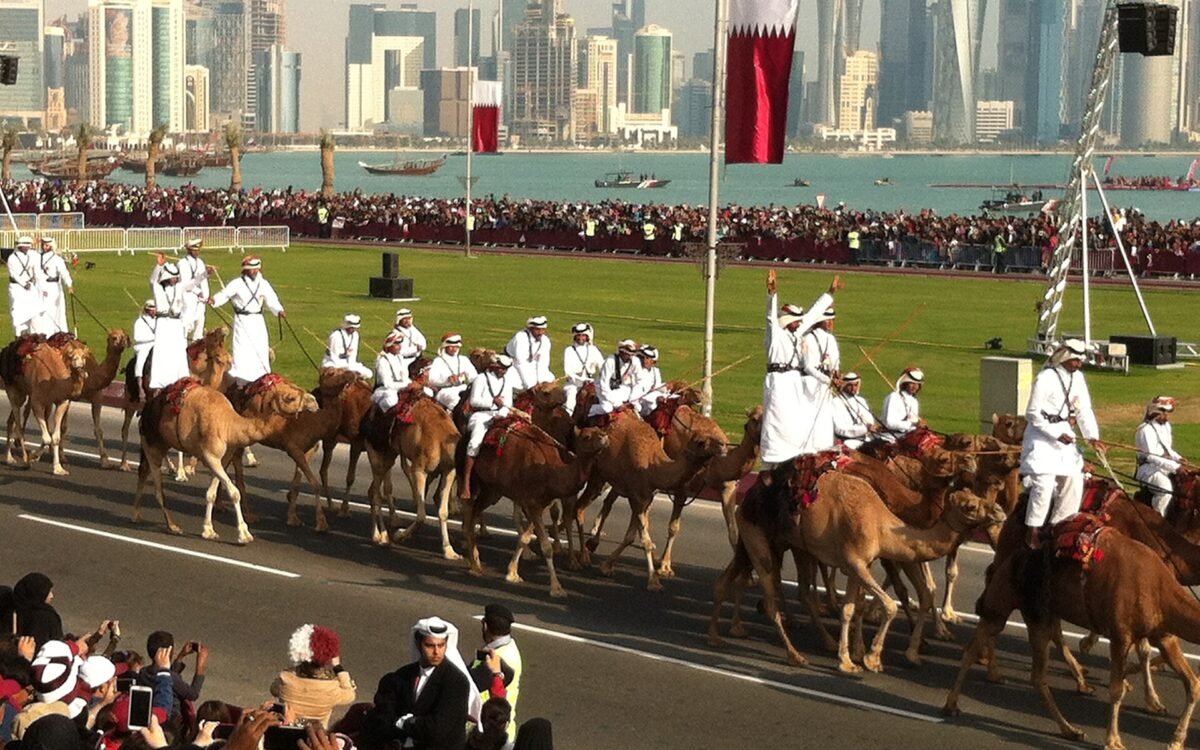
Shopping in Doha comes in two very different flavours. On one side are the souqs: Souq Waqif and its lanes of spice sacks, oud and perfume counters, the glittering Gold Souq across the road, the falcon market, and smaller working markets out in Al Wakrah and Umm Salal. On the other are some of the biggest and most theatrical malls in the Gulf, with canals, gondolas, fountain shows and indoor theme parks under one roof. Most visitors want a bit of both, and the city makes that easy: the main souqs and several big malls sit on or near the Doha Metro.
The short version: go to Souq Waqif in the late afternoon or evening for oud, perfume, spices, dates, textiles and souvenirs, and cross to the Gold Souq if jewellery is on your list. Use the malls for international brands, air conditioning and a family day out, choosing Mall of Qatar, Villaggio, Place Vendôme or Doha Festival City for scale and entertainment, or City Center Doha if you are staying in West Bay. Bargain politely in the souqs, not in mall chain stores, and plan around the long midday lull in traditional shops and the break for Friday prayers.
This guide covers where to go, what is genuinely worth buying, how bargaining and opening hours work, the tax position (Qatar still has no VAT), the shopping festivals, what you can take home, and the mistakes first-timers tend to make. Wherever we have a detailed guide to a place, we link to it.
At a glance
- Best traditional market: Souq Waqif, with the Gold Souq and Falcon Souq beside it. Free to wander, liveliest after about 4pm.
- Best malls: Mall of Qatar and Doha Festival City for a full day out, Villaggio and Place Vendôme for the setting, City Center Doha for convenience in West Bay.
- What to buy: oud and bakhoor, Arabic perfume oils, spices and saffron, Qatari dates, 21 and 22 carat gold, textiles and tailoring, falconry gear.
- Bargaining: expected in souqs and at independent shops, not in mall chains. On gold, the making charge is negotiable, the daily gold rate is not.
- Hours: souq shops often open roughly 10am to noon and 4pm to 10pm; malls run from about 10am to 10pm or later, with a break around Friday midday prayers.
- Tax: no VAT in Qatar as of October 2026, so there is no tourist tax refund to claim.
- Going home: declare cash, gold or gems worth QAR 50,000 or more when leaving, and check your own country’s rules on food, oud and animal products.
Souq Waqif and its specialist souqs
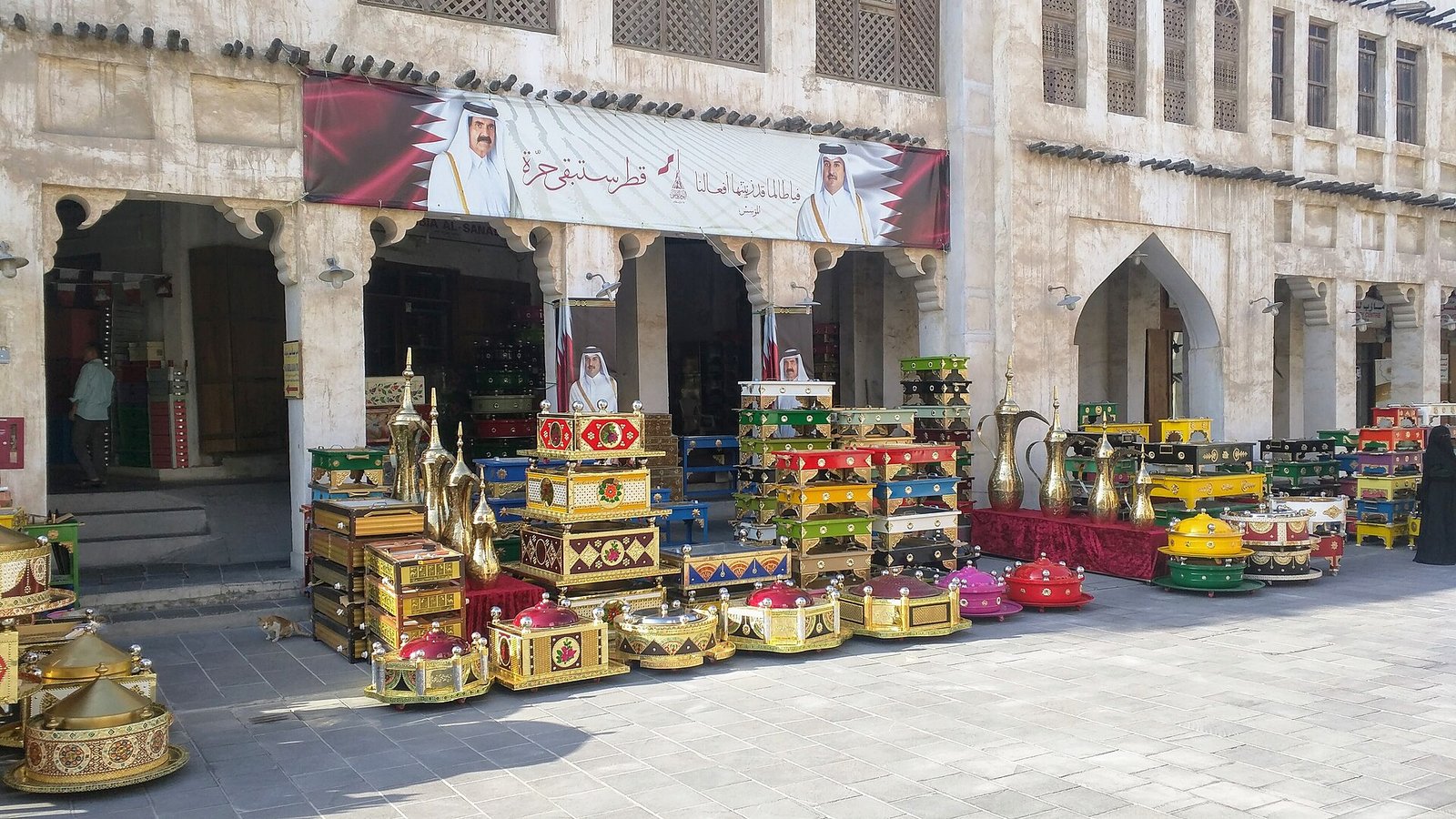
If you only do one shopping trip in Qatar, make it Souq Waqif. It is Doha’s old market, rebuilt in a traditional style between 2006 and 2008 on the site of a trading market that stood by the old Wadi Musheireb. It is free to enter, a short walk from the Corniche, and served by its own station on the Gold Line of the Doha Metro. For the full background, layout, food and events, read our complete guide to Souq Waqif. Here we focus on shopping.
The souq is best understood as a main paved walkway lined with cafés and souvenir shops, with a dense grid of covered alleys on either side where the specialist trades cluster. Each part has its own character, and wandering from one to the next is the point.
Spice, food and incense lanes
These are the alleys most people picture: open sacks and bowls of cardamom, turmeric, cinnamon bark, dried limes, rosebuds and saffron, alongside dried fruit, nuts, honey, rice and ready-made blends for machboos and other Gulf dishes. The same shops often sell frankincense, gum resins and incense. Prices are usually per kilo or per 100 grams, and you can buy small quantities. Ask for a smell or a taste before you commit; traders expect it.
Perfume and oud shops
Perfume counters are scattered through the souq, from small stalls with rows of glass bottles to polished boutiques selling local and regional brands. This is where you find oud (agarwood) in chip form for burning, bakhoor (scented incense pieces), and concentrated perfume oils that can be blended to order. There is more on how to buy them in the “What to buy” section below.
Textiles, abayas and tailoring
Fabric shops and tailors sell bolts of cotton and silk, embroidered cushion covers, scarves and pashminas, and ready-made thobes, abayas and children’s traditional outfits, which sell strongly before Eid and Qatar National Day on 18 December. Many tailors will make a garment to measure, but turnaround depends on the season, so agree a pick-up date in writing.
Souvenirs, crafts and homeware
Along the main lane you will find the classic souvenir haul: brass and copper coffee pots (dallah), incense burners (mabkhara), lanterns, wooden chests, miniature dhows, camel and falcon figures, and woven items. Quality varies hugely, from mass-produced trinkets to properly made pieces. Lift things up, look at joins and finishes, and compare a few shops before buying anything substantial.
The Falcon Souq
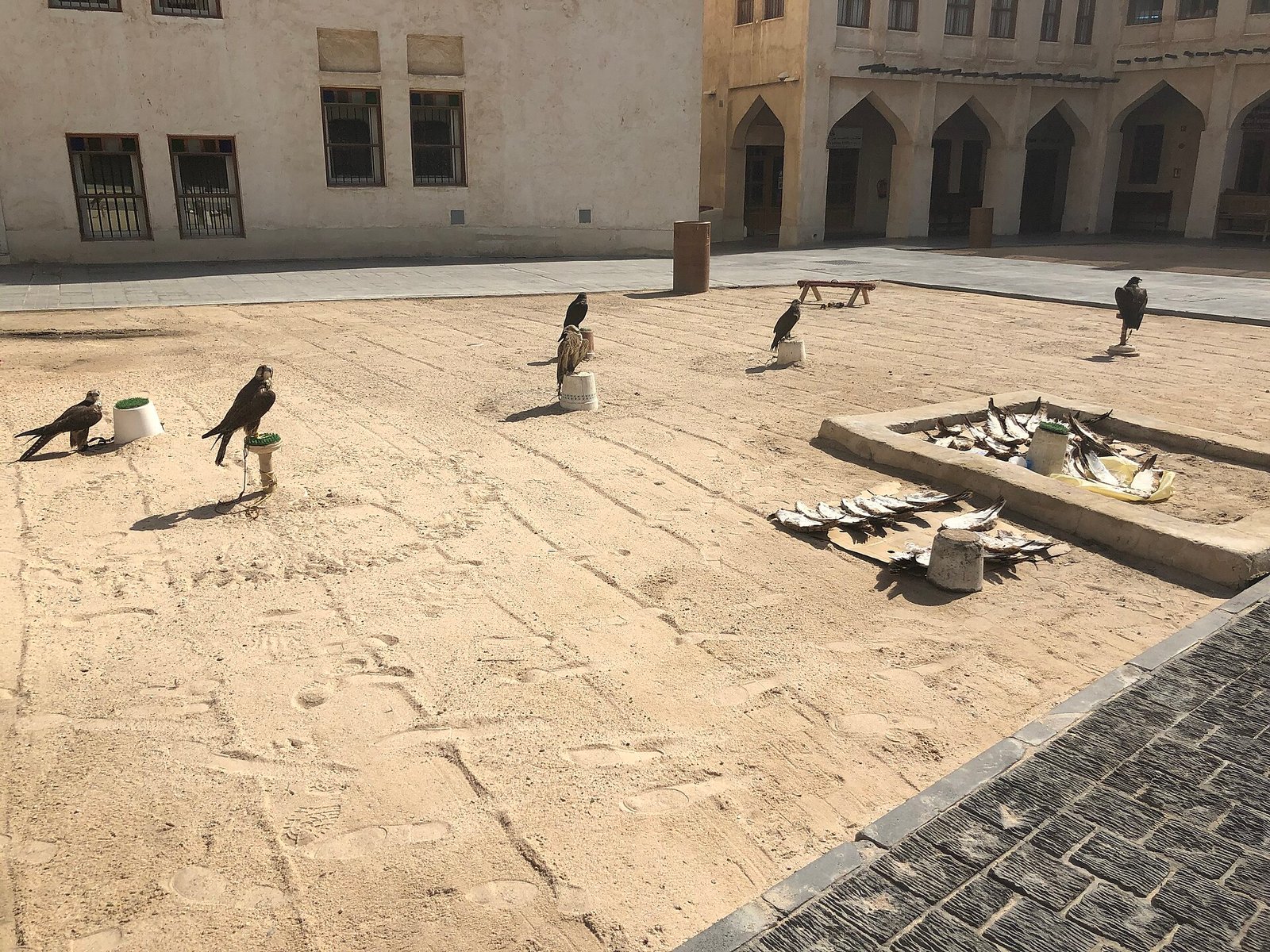
On the western side of the souq, close to the main car park, a lane of shops is given over to falcons and falconry. Hooded birds sit on perches, owners come in for advice, and the shelves hold hoods, gloves, leashes, perches and tracking gear. The Souq Waqif Falcon Hospital is next door. It is a working market first and a sight second, so ask before photographing birds or people. Visit from October, when the hunting season begins and the shops are at their busiest. Our guide to the Falcon Souq explains what you are looking at, and the souq’s horse stables and camel pen are close by.
The Gold Souq across the road
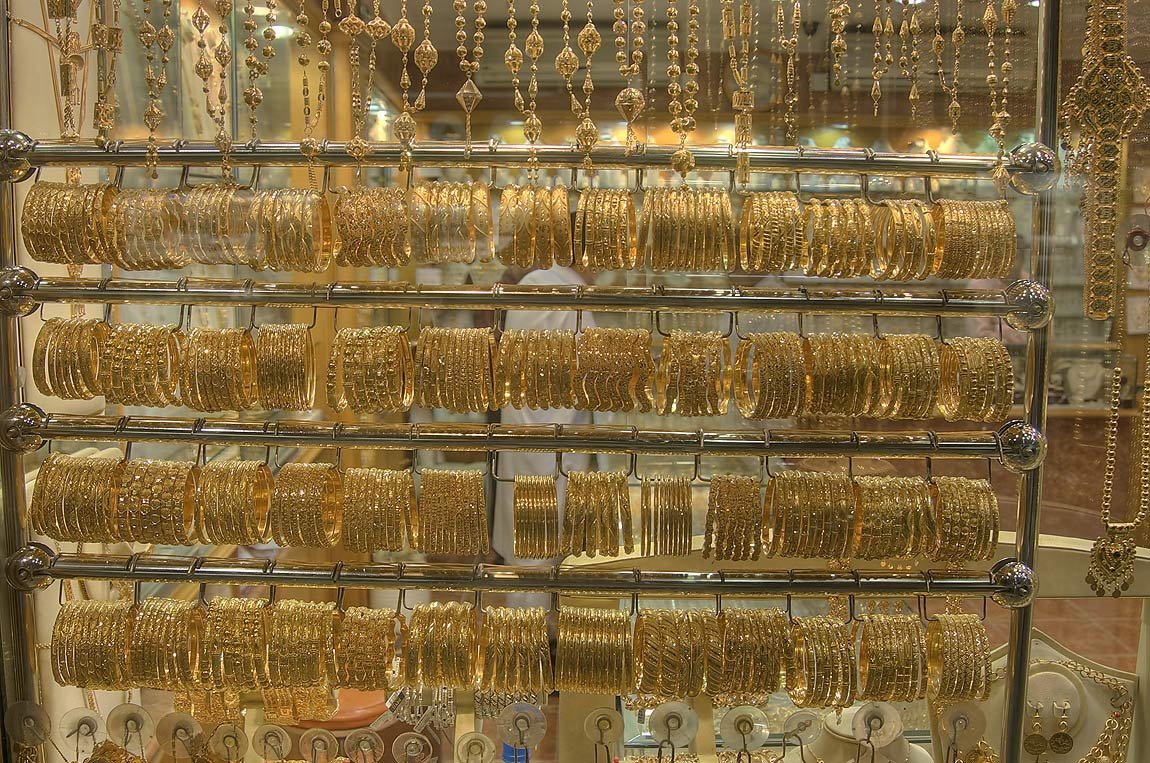
Doha’s Gold Souq is a compact arcade of jewellery shops in Souq Al Najada on Ali Bin Abdulla Street, a few minutes’ walk east of Souq Waqif. Many visitors never find it because it looks like an ordinary modern building from the outside. Inside, windows are packed with bangles, bridal sets, chains and coins, mostly in 18, 21 and 22 carat gold. It is at its busiest in the run-up to Eid. See our Gold Souq guide for how pricing works shop by shop.
Taking a break
For breakfast try Shay Al Shoomoos, for Yemeni food Bandar Aden, and for a quieter coffee Athr Café. To stay in the middle of it all, look at the Souq Waqif Boutique Hotels.
Other traditional markets worth the trip
Souq Waqif is the showpiece, but Doha’s working markets tell you more about how people here actually shop. None of them is set up for tourists, which is exactly why they are interesting.
The fabric souqs: Al Asiery, Al Dira and the Central Souq
Close to the Gold Souq, in the older commercial streets around Souq Al Najada, is a cluster of textile markets that residents use for fabric and tailoring. Marhaba describes Souq Al Asiery as the “Escalator Souq”, because it was Doha’s first with an escalator, selling a big range of fabrics at most price points along with clothing, shoes and perfume. Souq Al Dira, behind it, is the more upmarket option for beaded fabrics, heavy lace and designer textiles; Visit Qatar notes Indian silks, high-grade embroidery and cashmere pashminas, with tailoring that usually takes three days to a week. The Central Souq (Souq Al Madina) is a good stop for embroidery and abayas or jalabiyas made to order. Many of these shops close in the afternoon, so go mid-morning or after about 4pm.
Souq Al Wakrah
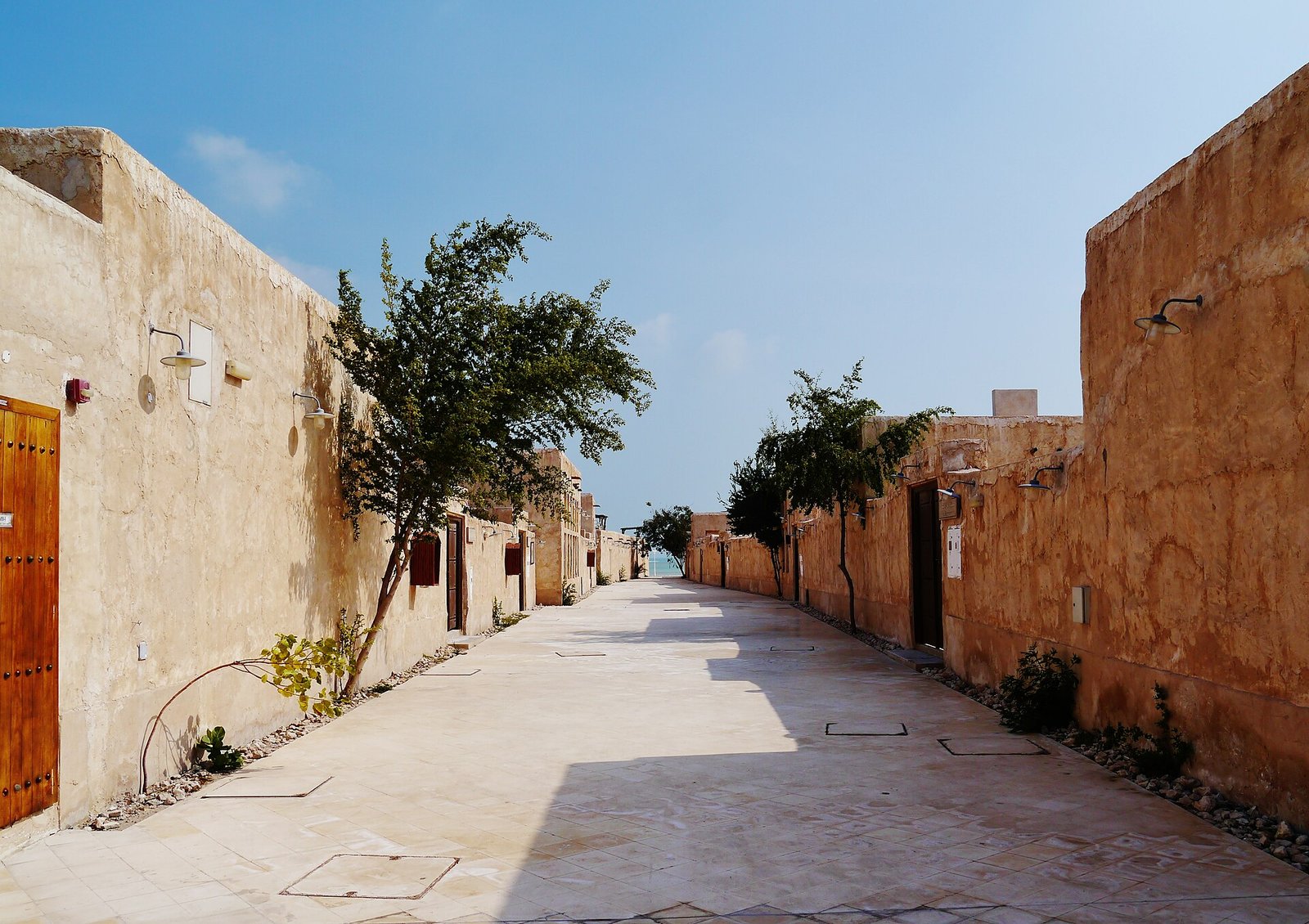
About 19 km south of central Doha, Souq Al Wakrah is a rebuilt souq of low, clay-coloured buildings right on the seafront, next to a public beach. Visit Qatar calls it the “Souq by the Sea”. It has far fewer shops than Souq Waqif and is better as an evening out than a serious shopping trip: walk the shore at sunset, browse the small shops selling spices, perfume and souvenirs as the lights come on, then eat grilled fish. It is also handy for a last stop before a flight from Hamad International Airport. Read our Al Wakrah Souq and beach guide.
Umm Salal Central Market (fish, produce and dates)
North of Doha off Al Shamal Road, the Umm Salal Central Market opened in 2017 and is where much of Qatar’s fish is auctioned and sold. Around the main fish hall with its hamour, safi, kingfish, prawns and crabs on ice are a cleaning area where your purchase is gutted and cut to order, and sections for vegetables, dates, poultry and livestock. It is wet, noisy and smells of fish, but it is a real slice of local life. Hours have varied over the years, so check before you go. Our Umm Salal Central Fish Market guide covers how buying works. You can combine it with Umm Salal Mohammed Fort and Barzan Towers nearby.
Al Mazrouah and the seasonal vegetable yards
Each winter the Ministry of Municipality runs farmers’ market yards where Qatari farms sell vegetables, honey, dates and other seasonal produce directly. The 2025/2026 season opened on 6 November 2025 at Al Khor, Al Thakhira, Al Wakrah, Al Shamal and Al Shahaniya, with the Al Mazrouah yard (near the Umm Salal market) operating year-round, according to The Peninsula. The yards opened Thursday, Friday and Saturday from 7am to 3pm last season. The new season usually starts in November; watch for the ministry’s announcement before you go.
Doha’s best malls
Malls are where much of Doha’s social life happens, especially from May to October when it is too hot to be outside for long. They are free to enter, fully air-conditioned and family-oriented, with cinemas, play zones and long food courts. Here is how the main ones differ.
Mall of Qatar
On Dukhan Highway in Al Rayyan, Mall of Qatar is built for whole days rather than quick errands. It opened in stages from December 2016, and Visit Qatar lists more than 520 stores across around 500,000 square metres. The big draw is its central atrium, the Oasis, where a revolving stage hosts free shows for much of the year, plus a large cinema, the Xtremeland entertainment zone and more than 100 cafés and restaurants. It has its own metro stop, Al Riffa – Mall of Qatar, at the end of the Green Line. Best for families and anyone who wants to combine shopping with entertainment. Read our Mall of Qatar guide.
Villaggio Mall
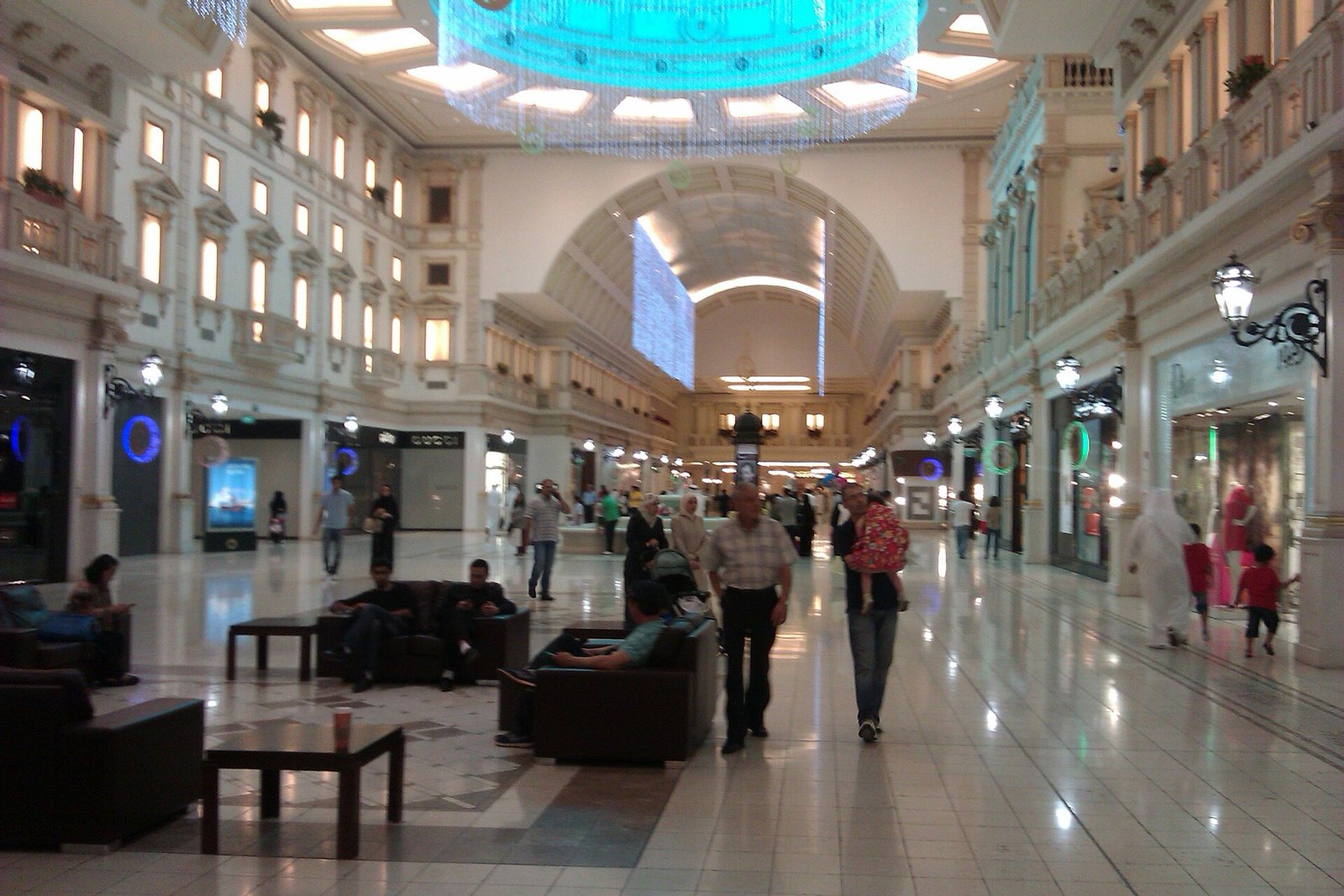
In Aspire Zone, Villaggio is the Italian-themed mall with painted skies, cobbled-look avenues and a canal where gondolas carry passengers past the shopfronts. More than 200 shops share one long level, from high-street names to the luxury houses of the Via Domo wing, alongside an ice rink, the Gondolania theme park and a cinema. It opened in 2006 and sits opposite Al Aziziyah station on the Gold Line. Pair it with an evening walk in Aspire Park. See our Villaggio Mall guide.
Place Vendôme, Lusail
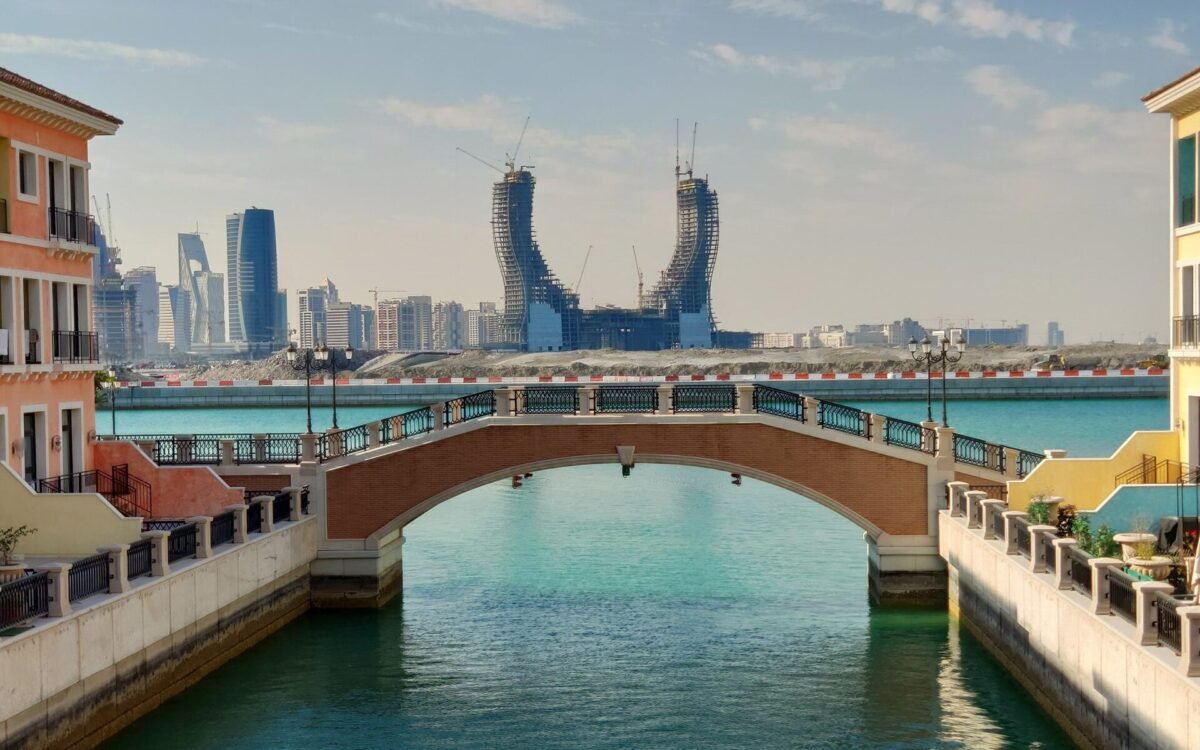
Opened in April 2022 in Lusail, about 11 km north of central Doha, Place Vendôme borrows its look from Parisian architecture: symmetrical façades, arcades, an outdoor canal and a plaza with a musical fountain show. It has more than 580 shops, a strong luxury wing and an indoor theme park, but most people remember the setting more than the shopping. Get there on the Red Line to Legtaifiya, then the Lusail Tram to Tarfat South. Combine it with a stroll on Lusail Boulevard. Full details in our Place Vendôme guide.
Doha Festival City
North of the city in Umm Salal, Doha Festival City grew around Qatar’s IKEA, which opened in 2013, and was expanded in 2017. Wikipedia counts more than 500 stores, including Harvey Nichols, along with an 18-screen VOX cinema, more than 100 places to eat and three leisure attractions: Angry Birds World, the Snow Dunes indoor snow park and the Virtuocity gaming zone. It is the obvious choice for a family day with older children. By public transport, take the Red Line to Lusail QNB and the free M145 Metrolink bus, which Property Finder puts at around 10 to 15 minutes.
City Center Doha
In the middle of West Bay, opposite the Doha Exhibition and Convention Center, City Center Doha is one of the city’s older large malls and still one of the most convenient. Visit Qatar lists more than 200 international and regional brands across five floors, a 14-screen cinema and a children’s play area, and it connects to two hotels. DECC station on the Red Line is right next to it. Best for anyone staying in West Bay who wants a quick, practical shop.
Lagoona Mall
At West Bay Lagoon, on the way north to Lusail, Lagoona is a quieter mid-sized mall with fashion, homeware and restaurants, about a seven to ten-minute walk from Legtaifiya station on the Red Line.
Tawar Mall
Tawar Mall in Al Duhail, opposite Dahl Al Hamam Park, opened in March 2018 with more than 300 stores. Its point of difference is an indoor traditional-style souq section and a musical water fountain outside, along with a focus on local Qatari businesses. It is a residents’ mall more than a tourist sight, but it is a useful option if you want souq-style browsing in air-conditioned comfort in summer.
Galeries Lafayette Doha at 21 High Street, Katara
The Doha branch of the Paris department store sits in the domed 21 High Street complex at the southern end of Katara Cultural Village. Visit Qatar describes it as a 14,500 square metre store with around 400 brands, focused on fashion, beauty and luxury, and the store was hosting events as recently as January 2026. Katara station on the Red Line is close by. Make a day of it with our Katara Cultural Village guide and the nearby pigeon towers.
Al Hazm, The Pearl and Msheireb
For high-end boutiques in a quieter setting, Visit Qatar points to Al Hazm, an Italian-style complex of marbled arcades, and to The Pearl, where local designer boutiques sit beside international luxury names. On The Pearl, the canal-side streets of Qanat Quartier make a pleasant browse with a coffee stop. In the old centre, Msheireb Downtown Doha is more about design, architecture and cafés than shopping, but its galleries, concept stores and seasonal markets are worth an hour on the way to Souq Waqif.
Souqs and malls compared
Use this table to match the place to your plans. Hours are as published or reported at the time of writing; they change during Ramadan and on public holidays.
| Place | Type | Best for | Hours | Metro |
|---|---|---|---|---|
| Souq Waqif | Traditional souq | Spices, oud, perfume, textiles, souvenirs | Many shops about 10am–noon and 4pm–10pm; cafés later | Souq Waqif (Gold Line) |
| Gold Souq | Jewellery arcade | Gold, name pendants, pearls | Varies by shop; mornings and about 4pm–10pm | Souq Waqif (Gold Line) |
| Falcon Souq | Specialist souq | Falconry gear, seeing falcons | Shops about 4pm–10pm, some mornings | Souq Waqif (Gold Line) |
| Souq Al Wakrah | Seaside souq | Evening stroll, small souvenirs, seafood | Mostly afternoon to late evening | Al Wakra (Red Line), then feeder bus or taxi |
| Umm Salal Central Market | Working market | Fish, produce, dates | Varies; check before going | None practical |
| Mall of Qatar | Mega mall | Families, free shows, a full day out | Sat–Wed 10am–10pm; Thu–Fri 10am–midnight | Al Riffa – Mall of Qatar (Green Line) |
| Villaggio | Themed mall | Gondolas, ice rink, luxury wing | Sun–Wed 9am–10pm; Thu and Sat 9am–11pm; Fri 9–11am and 12.30–11pm | Al Aziziyah (Gold Line) |
| Place Vendôme | Luxury mall | Fountain shows, big brands, evenings | 10am–11pm daily | Legtaifiya (Red Line), then tram to Tarfat South |
| Doha Festival City | Mega mall | IKEA, indoor theme parks, families | Check current hours | Lusail QNB (Red Line), then M145 bus |
| City Center Doha | City mall | Convenience in West Bay | Sun–Wed 10am–10pm; Thu and Sat 10am–midnight; Fri 10–11am and 1pm–midnight | DECC (Red Line) |
| Lagoona Mall | Mid-sized mall | Quieter shopping near West Bay Lagoon | Check current hours | Legtaifiya (Red Line), 7–10 min walk |
| Tawar Mall | Community mall | Indoor souq section, local brands | Check current hours | Taxi recommended |
| Galeries Lafayette, 21 High Street | Department store | Fashion, beauty, luxury | Check current hours | Katara (Red Line) |
What to buy in Doha
Doha is not a bargain city for international brands, which cost much the same as elsewhere in the Gulf. Where it shines is in things that are part of daily life here: scent, spice, dates, gold and cloth. These are the purchases worth making room in your suitcase for.
Oud and bakhoor
Oud is the resinous heartwood of the agarwood tree, and burning it is part of Gulf hospitality. You will see it sold as dark chips, graded and priced by weight, with the best pieces costing a great deal. Bakhoor is a cheaper and more forgiving alternative: pieces of wood or compressed material soaked in perfume oils, burned over charcoal or an electric burner. Ask the seller to burn a sample so you can smell it properly, and buy a small mabkhara (incense burner) if you do not have one. If you are new to oud, start with a modest amount of mid-range bakhoor rather than expensive chips.
Arabic perfumes and perfume oils
Perfume shops in the souqs and malls sell concentrated oils (often alcohol-free), sprays and custom blends. Oils are frequently sold by the tola, a traditional measure of about 12 ml. Test on skin, not paper, and wait ten minutes or so to see how the scent develops before deciding. Many shops will mix a personal blend in front of you. Prices vary enormously by ingredient, so ask what is in the bottle, especially if you are paying for “oud”.
Spices, saffron and Arabic coffee
Cardamom, dried limes (loomi), turmeric, cinnamon bark and ready-mixed spice blends for machboos all make light, useful souvenirs. Saffron is popular too; buy whole threads rather than powder, which is easier to bulk out. Arabic (Gulf) coffee uses lightly roasted beans, usually ground with cardamom and sometimes saffron, and many spice shops sell it ready-mixed alongside the brass dallah pots used to serve it.
Dates
Dates are central to Qatari hospitality, and you will find loose dates by the kilo in the souqs and Umm Salal market as well as boxed, stuffed and chocolate-dipped versions in mall shops. If you are in Doha in late July or early August, the Local Dates Festival in Souq Waqif’s Eastern Square is the best place to buy fresh local rutab dates direct from Qatari farms; the 2026 edition ran from 25 July to 10 August.
Gold
Gold in Qatar is priced by weight at the day’s rate for its purity, plus a making charge for the workmanship. The traditional choices are 21 and 22 carat, which are soft and rich in colour; 18 carat is harder-wearing and used for gem-set and lighter Western-style pieces. Check the day’s gold rate on your phone before you go in, so you know how much of the price is metal and how much is workmanship. A popular souvenir is a pendant with a name in Arabic script, made to order in gold or silver. Ask for a detailed invoice showing carat, weight and making charge.
Pearls
Before oil, Qatar’s wealth came from pearl diving, and pearls are still sold in the Gold Souq and Souq Waqif. Most are cultured. In a 2023 report, The Peninsula quoted Souq Waqif traders selling cultured pearl bracelets for around QAR 30 to 50, while a single natural pearl bead could cost around QAR 100,000. A pearl diver interviewed for the piece said natural and cultured pearls are almost impossible to tell apart by eye, and that an X-ray is needed to be sure. If a seller says “natural”, get it written on the receipt, and for a serious purchase ask about laboratory certification.
Textiles, abayas and thobes
Fabric is good value in the souqs, and tailoring is where Doha really delivers: abayas, jalabiyas, thobes, kaftans and copies of a favourite garment made to measure. Allow several days and agree the price, the fabric and the collection date before you pay a deposit. Embroidered cushion covers, scarves and pashminas make easy gifts.
Falconry gear
Even if you will never fly a falcon, a hand-stitched leather hood (burqa) from the Falcon Souq is a distinctive and very Qatari souvenir. Shops also sell gloves, perches and decorative pieces. Leave the birds themselves to the falconers: buying and exporting a live falcon involves permits and health paperwork far beyond a holiday purchase.
How to bargain in Doha’s souqs
Bargaining is normal in the souqs and in small independent shops, and it is done in a relaxed, friendly way. Nobody expects a fight, and a smile goes much further than a hard line. In malls, chain stores, supermarkets and pharmacies, prices are fixed; asking for a discount there will just cause confusion, although some independent mall boutiques may round down a bigger purchase.
- Browse first. Walk a few lanes and ask prices in two or three shops before you commit. Many shops sell similar things, and you will quickly get a feel for the range.
- Let the seller name a price. Then make a counter-offer comfortably below it and meet somewhere in the middle. There is no fixed formula; the margin is wider on souvenirs than on staples like spices.
- Bundle. You will usually get a better deal buying several items from one shop than one item from each of several.
- Know what is negotiable. On gold, the daily metal rate is set by the market, but the making charge is often open to discussion. On spices and dates sold by weight, there is less room than on crafts.
- Only haggle if you mean it. Agreeing a price and then walking away is considered poor form. If you are just curious, say so.
- Stay polite and patient. Accepting a tea or coffee while you talk is normal and does not oblige you to buy.
Opening hours, Fridays and Ramadan
Souq hours
Traditional shops in Souq Waqif and the surrounding souqs often open from about 10am to noon, close through the hottest part of the day and reopen from about 4pm until 10pm. Cafés stay open, but at 2pm many shutters are down. Malls generally open around 10am and close at 10pm or later. Marhaba notes that the fabric souqs near Al Najada keep similar split hours, often closing by about 7pm. The souqs come alive after dark, and the busiest nights are Thursday and Friday.
Friday patterns
Friday is the main day of prayer and the start of the weekend in Qatar, which runs Friday to Saturday. Many malls close for a period around the midday prayer: City Center Doha, for example, publishes Friday hours of 10am to 11am and then 1pm to midnight, and Villaggio 9am to 11am and 12.30pm to 11pm. Traditional souq shops are often shut on Friday morning and open later in the day. The Doha Metro also starts later on Fridays: Qatar Rail’s timetable from January 2025 runs Friday services from 9am, and the Lusail Tram has started later still, so check the current timetable before you set out. The simplest plan is to treat Friday as an afternoon and evening shopping day.
Ramadan and Eid
During Ramadan, daytime hours shrink and evening hours stretch: many malls and souq shops open later in the day and stay open well past midnight. Eating and drinking in public during daylight hours is not allowed, so plan any daytime shopping around that. The nights before Eid are among the busiest of the year in the Gold Souq and textile shops. Ramadan in 2027 is expected to begin in early February, depending on the moon sighting. Our Ramadan in Qatar guide explains what changes.
Prices, tax and paying
Is there VAT in Qatar?
No. As of October 2026, Qatar has no value added tax. A 5% VAT has long been expected under the Gulf-wide framework, and preparatory steps such as an e-invoicing law approved in May 2026 have been reported, but no VAT law is in force and no start date has been announced. That means prices on the shelf are what you pay, and there is no tourist VAT refund scheme to claim at the airport. Qatar does levy a selective (excise) tax, introduced in 2019, on goods such as tobacco, energy drinks and sugary drinks, which is built into the shelf price. If you are reading this later, check whether VAT has been introduced, since it would change these points.
Currency and cards
The Qatari riyal (QAR) is pegged to the US dollar at about 3.64 riyals to the dollar. Debit and credit cards, including contactless and phone payments, are accepted almost everywhere in malls and in most souq shops. Smaller stalls, tailors and market traders may prefer cash, and ATMs are easy to find in malls and around Souq Waqif.
Shopping festivals and seasonal markets
Shop Qatar
Shop Qatar is the country’s main shopping festival, organised by Visit Qatar with discounts, raffles and live events across participating malls. The 2025 edition ran from 1 to 31 January across 20 malls, including Mall of Qatar, City Center, Doha Festival City, Place Vendôme, Villaggio and Lagoona, with cash prizes and cars in the raffle draws. At the time of writing, no dates for a winter 2026–27 edition had been published on Visit Qatar’s events calendar, so check there before you plan around it.
Summer shopping festivals
Summer has its own promotions to tempt residents into the malls. In 2026 Visit Qatar ran the Hala Summer Shopping Festival from 1 to 31 August at Place Vendôme, Doha Festival City, Villaggio and Mall of Qatar, with raffle coupons for purchases of QAR 200 or more and weekly draws. The Doha Exhibition and Convention Center hosted the Doha Shopping Season exhibition from 23 July to 5 August 2026, with free entry and goods from more than 20 countries.
National Day and Eid
The weeks before Qatar National Day on 18 December bring maroon-and-white flags, scarves and souvenirs to every souq and mall, and plenty of promotions. Eid al-Fitr and Eid al-Adha also bring sales and very busy evenings. See our Qatar National Day guide for the celebrations.
Taking it home: customs and packing
Leaving Qatar
Qatar’s General Authority of Customs requires anyone entering or leaving the country with cash, bearer financial instruments, precious metals or precious stones worth QAR 50,000 or more (or the equivalent) to declare them. That includes gold, silver, platinum, diamonds and pearls, so a big jewellery purchase can bring you over the limit. Keep your invoices, and declare when in doubt; false declarations can lead to fines, confiscation or worse.
Oud, perfume and liquids
Agarwood (oud) is protected under CITES, the international wildlife trade convention. Under the CITES personal-effects exemption, travellers can usually carry up to 1 kg of oud chips, 24 ml of oud oil and two sets of beads or prayer beads per person without permits, but individual countries can apply stricter rules, so check yours. Perfume oils and sprays bought in the city must follow normal cabin liquid rules, so pack bottles over 100 ml in checked luggage, wrapped well. Liquids bought airside at Hamad come in sealed bags; keep them sealed if you have a connecting flight.
Food and animal products
Dates, spices, coffee and sealed sweets are generally fine to take home, but many countries restrict food imports. Australia and New Zealand require you to declare all food, and the UK and EU restrict personal imports of meat and dairy products. Avoid buying anything made from protected wildlife, and do not try to take a live bird home. Falconry hoods and leather gear are fine as souvenirs.
Planning a shopping day in Doha
Doha is spread out and hot for much of the year, so group places by area and use the metro where you can. From November to March you can happily spend an evening walking between souqs; from May to September, save outdoor shopping for after dark and use the malls in the day; our Doha in summer guide has more hot-weather plans.
Old Doha evening
Start at Msheireb Downtown in the late afternoon and look round the Msheireb Museums or the design galleries, then walk to Souq Waqif as the shops reopen at about 4pm. Work through the spice, perfume and textile lanes, cross to the Gold Souq, and finish with dinner in the souq or a stroll on the Corniche. Souq Waqif and Msheireb metro stations bracket the route. Our Doha Corniche guide covers the waterfront.
West Bay and Lusail
Take the Red Line north. Shop at City Center Doha (DECC station) or Lagoona Mall (Legtaifiya), then change to the tram for Place Vendôme in time for the evening fountain show, and finish on Lusail Boulevard. Our Lusail and The Pearl guide has more ideas for the area.
Aspire and Al Rayyan
Spend the afternoon at Villaggio, then walk across to Aspire Park at sunset. On another day, Mall of Qatar at the end of the Green Line works well as a full family outing.
Visiting with children? Our Qatar with kids guide covers the mall theme parks and play zones in more detail, and our free things to do in Qatar list and Qatar on a budget guide are useful if the shopping budget runs low.
Mistakes to avoid
- Arriving at the souq in the early afternoon. Many shops close between about noon and 4pm. Come in the late afternoon or evening.
- Planning a Friday morning shop. Souq shops are often shut, malls break for midday prayer and the metro starts later.
- Haggling in mall chain stores. Prices there are fixed. Save your bargaining for the souqs.
- Buying gold without checking the rate. Look up the day’s gold price, ask for the weight and making charge separately, and get an itemised invoice.
- Assuming pearls are natural. Most are cultured. If you are paying for natural pearls, get it in writing and consider certification.
- Buying saffron powder or “oud” without asking what is in it. Buy saffron threads and ask what a perfume oil contains before paying oud prices.
- Packing perfume in your cabin bag. Bottles over 100 ml will be taken at security.
- Forgetting the QAR 50,000 declaration rule. Cash, gold and gems together count towards it.
- Ignoring the dress code. Visitors are asked to dress modestly in public places, including malls; covering shoulders and knees is the safe rule.
- Photographing people without asking. Always ask before photographing traders, falconers and especially women and families.
Frequently asked questions
Where is the best place for shopping in Doha?
For local goods such as oud, perfume, spices, dates and textiles, Souq Waqif is the best place to start, with the Gold Souq a few minutes’ walk away for jewellery. For international brands and a family day out, Mall of Qatar, Doha Festival City, Villaggio and Place Vendôme are the biggest and most entertaining malls.
Is there VAT or tax-free shopping in Qatar?
Qatar has no VAT as of October 2026, so there is nothing to reclaim at the airport and the price on the tag is what you pay. A selective tax applies to products such as tobacco and sugary and energy drinks, but it is already included in shelf prices.
What time do the souqs open in Doha?
Many shops in Souq Waqif and the nearby souqs open from about 10am to noon and again from about 4pm to 10pm, closing in the early afternoon. Cafés and restaurants stay open longer. On Fridays, most souq shops open only in the afternoon and evening.
Can you bargain in Doha?
Yes, in the souqs and at small independent shops, where polite bargaining is expected. Prices in mall chain stores, supermarkets and pharmacies are fixed. On gold, you can negotiate the making charge but not the day’s gold rate.
Is gold cheaper in Doha?
Gold is priced at the international market rate plus a making charge, so the metal itself costs much the same everywhere. What can make Doha good value is a competitive making charge and the range of 21 and 22 carat designs. Check the day’s rate, ask for weight and workmanship to be listed separately and keep the invoice.
When is the Shop Qatar festival?
Shop Qatar has run through January in recent years; the 2025 edition was held from 1 to 31 January across 20 malls. Dates for the next edition had not been announced in early October 2026, so check Visit Qatar’s events calendar. A separate summer festival ran in August 2026.
Last checked October 2026. Rules, fees and access can change, so confirm with the official source before you go.