Ramadan in Qatar is the holy month of fasting, and it changes the rhythm of the whole country. From dawn to sunset Muslims go without food, water and cigarettes, offices work short days and shops close for the afternoon. Then, at the sound of the call to prayer and the boom of the iftar cannon, Doha wakes up: families sit down to break the fast, Souq Waqif fills with people, malls stay open past midnight and cafés serve until suhoor, the last meal before dawn.
For visitors, Ramadan 2027 is expected to begin around 8 February 2027, with Eid al-Fitr around 9 or 10 March 2027. These are estimates: the exact dates depend on the sighting of the new moon and are confirmed by Qatar’s crescent sighting committee only a day or so beforehand. The month falls in the cool season, so the weather is about as good as Qatar gets.
Can you visit during Ramadan? Yes, and many people find it the most memorable time to come. You need to adjust a few habits: no eating, drinking or smoking in public during daylight, dress a little more modestly, and plan sightseeing around shorter daytime hours and long, lively evenings. This guide covers the rules, how opening hours change (with 2026 examples), iftar and suhoor, Garangao, the Ramadan cannon, mosques, Eid and a sample day.
At a glance
- Expected dates: Ramadan 2027 begins around 8 February 2027; Eid al-Fitr around 9–10 March 2027 (moon sighting decides).
- The key rule: don’t eat, drink (including water) or smoke in public between dawn and sunset. It is an offence under Qatari law, and it applies to visitors too.
- Daytime vs night: mornings are quiet, afternoons very quiet, and the city is busiest from iftar (around 5.20–5.45pm in 2027) until well after midnight.
- Opening hours: in Ramadan 2026 Qatar Museums opened 9am–2pm and 8pm–midnight; Souq Waqif shops 8am–noon and iftar to midnight; malls typically split their day.
- Don’t miss: the iftar cannon at Souq Waqif, a Ramadan tent or iftar buffet, Garangao on the 14th night, and late-night strolls in Msheireb, Katara and Lusail.
- Driving: roads are at their most dangerous in the hour before iftar. Avoid it or drive very carefully.
- Greeting: “Ramadan Kareem” or “Ramadan Mubarak” is always welcome.
What Ramadan is, and when it falls in 2027
Ramadan is the ninth month of the Islamic lunar calendar. For Muslims it is the month in which the Quran was first revealed, and fasting during its daylight hours is one of the five pillars of Islam. The fast runs from the pre-dawn call to prayer (Fajr) until sunset (Maghrib), and it means no food, no drink, no smoking and a conscious effort to avoid arguments, gossip and bad language. Children, the sick, travellers, pregnant women and the elderly are among those not expected to fast.
It is also a social and generous month. Families gather every evening for iftar, charities and mosques hand out free meals, people visit relatives late into the night, and Qatar puts on a full calendar of markets, cultural nights and sport.
Expected dates for 2027
Because the Islamic calendar is lunar, Ramadan moves about 11 days earlier each year. In 2026 Ramadan began in Qatar on 18 February and Eid al-Fitr fell on Friday 20 March. For 2027 the expected dates are:
- First day of Ramadan: around Monday 8 February 2027.
- Garangao (mid-Ramadan): the 14th night of Ramadan, so around 21 February 2027.
- Last ten nights (including Laylat al-Qadr): roughly from 27 February to early March 2027.
- Eid al-Fitr: around 9 or 10 March 2027.
Treat all of these as estimates and expect a one-day shift either way. If you are booking flights around the start or end of the month, build in a day of flexibility.
How long is the fast?
In February and early March the days are short. In Doha, dawn is a little before 5am and sunset falls at around 5.20pm in early February, moving to about 5.40pm by early March, so the fast lasts roughly 12½–13 hours. Exact prayer times are published daily by Qatar’s Ministry of Endowments and Islamic Affairs and appear on mosque apps and local news sites.
Rules for visitors: what the law and etiquette expect
You are not expected to fast if you are not Muslim. You are expected not to make fasting harder for anyone else, and part of that is written into law.
No eating, drinking or smoking in public in daylight
Qatar’s Penal Code (Law No. 11 of 2004, Article 267, as reported by local media) makes publicly eating or drinking during the daytime in Ramadan an offence, with penalties reported as up to three months in prison and/or a fine of up to QAR 3,000. Visit Qatar’s own guidance asks visitors not to “eat, drink or smoke in public between sunrise and sunset”. In practice:
- “Public” means streets, parks, beaches, malls, taxis, metro stations and trains, and your car if people can see you. It includes water, coffee and chewing gum.
- Eat and drink in your hotel room, at home, or in restaurants licensed to serve in the daytime, which are screened from view.
- If you are travelling with small children, feed them discreetly in the car, a hotel room or a screened restaurant.
- Smoking and vaping in public during the day are covered by the same expectation.
Enforcement is usually a quiet word rather than an arrest, but the law is real and you should not test it. Penalties and enforcement can change, so check current official guidance before you travel.
Alcohol
Alcohol is never allowed in public in Qatar. During Ramadan the rules tighten further: the single licensed alcohol shop (Qatar Distribution Company) normally closes for the month and hotel bars typically stop serving or close. Reports differ on what, if anything, individual hotels offer, so assume you will not be drinking and you won’t be disappointed.
Dress
Qatar always asks visitors to cover shoulders and knees in public places such as malls, museums and government buildings. During Ramadan, Visit Qatar describes short or revealing clothing as disrespectful, so lean towards the modest end: loose trousers or long skirts, tops with sleeves, nothing see-through. Swimwear is fine at hotel pools and private beaches. Women do not need to cover their hair except inside mosques, where abayas and scarves are usually provided.
Noise, music and behaviour
- Avoid loud music in public, including from your car with the windows down.
- Avoid swearing, arguing and public displays of affection, which are frowned upon at any time and more so in Ramadan.
- Be patient. People are hungry, thirsty and short of sleep by late afternoon; tempers can be short, and service can be slower.
- Say yes to invitations. If someone offers you dates and Arabic coffee at iftar, accept with your right hand and say thank you.
How opening hours change during Ramadan
Almost everything in Qatar shifts its hours for Ramadan. The pattern is a short morning session, a long afternoon break and a second opening from iftar or later until midnight or beyond. Hours for 2027 will be announced in the days before Ramadan, so the 2026 examples below are a guide to the shape of the day, not a promise.
| Type of place | Typical Ramadan pattern (2026 examples) | What it means for you |
|---|---|---|
| Government offices | Five hours a day, 9am–2pm (Cabinet circular, 2026) | Do visa or official errands in the morning |
| Private sector | Shorter days; Qatar’s Labour Law caps Ramadan working time at six hours a day | Tour operators and services may run reduced schedules |
| Qatar Museums | Sat–Thu 9am–2pm and 8pm–midnight; Fri 8pm–midnight | Late-night museum visits are a Ramadan treat |
| Souq Waqif | Shops 8am–noon and iftar–midnight; restaurants iftar to suhoor | Go at sunset and stay late |
| Malls | Often around 10am–3pm and 7pm–midnight, later in the second half of the month | Shops busy after 9pm; food courts open after iftar |
| Supermarkets | Early morning to about 1am; some branches 24 hours | Stock up on snacks for your room |
| Doha Metro | Sat–Thu 5.30am–1.30am; Fri 9.30am–1.30am | Easy late-night travel |
| Lusail Tram | Sat–Thu 5.30am–2am; Fri 2.30pm–2am | Good for Lusail Boulevard evenings |
| Banks | Around 9am–2pm; mall branches often reopen in the evening | Use apps and ATMs |
Museums
Qatar Museums announced split hours for Ramadan 2026: Saturday to Thursday from 9am to 2pm and again from 8pm to midnight, with Friday evenings only (8pm to midnight). Each museum kept its usual closing day: the Museum of Islamic Art closed on Wednesdays, the National Museum of Qatar and the 3-2-1 Qatar Olympic and Sports Museum on Tuesdays, and Mathaf on Mondays. Walking the National Museum at 10pm, or seeing MIA’s atrium lit up after dark, is a very different experience from a hot midday visit. See our guide to museums in Qatar for what each one offers, and check qm.org.qa for 2027 hours.
Souqs, malls and markets
Souq Waqif is the heart of Ramadan evenings in Doha. In 2026 Visit Qatar listed shop hours of 8am to noon and from iftar to midnight, with restaurants open from iftar to suhoor. Nearby, the Gold Souq and the Falcon Souq follow a similar morning-and-evening rhythm, and evenings are when most people shop. Malls such as Place Vendôme, Mall of Qatar and Villaggio publish their own Ramadan timings, usually closing in the afternoon and reopening until midnight or later.
Restaurants and cafés in daytime
Most independent restaurants and cafés are closed until sunset, or open only for takeaway and delivery in the afternoon. Restaurants that want to serve during the day need a special licence and must screen diners from public view; in practice most large hotels keep at least one outlet open for breakfast and lunch. Food delivery apps work throughout the day for orders to your hotel or home.
Iftar and suhoor: how to eat well during Ramadan
Iftar is the meal that breaks the fast at sunset, traditionally started with dates and water or laban, followed by soup and a spread of dishes. Suhoor is the late meal eaten before dawn. Both are social occasions, and both are open to non-Muslim visitors.
Traditional Ramadan dishes
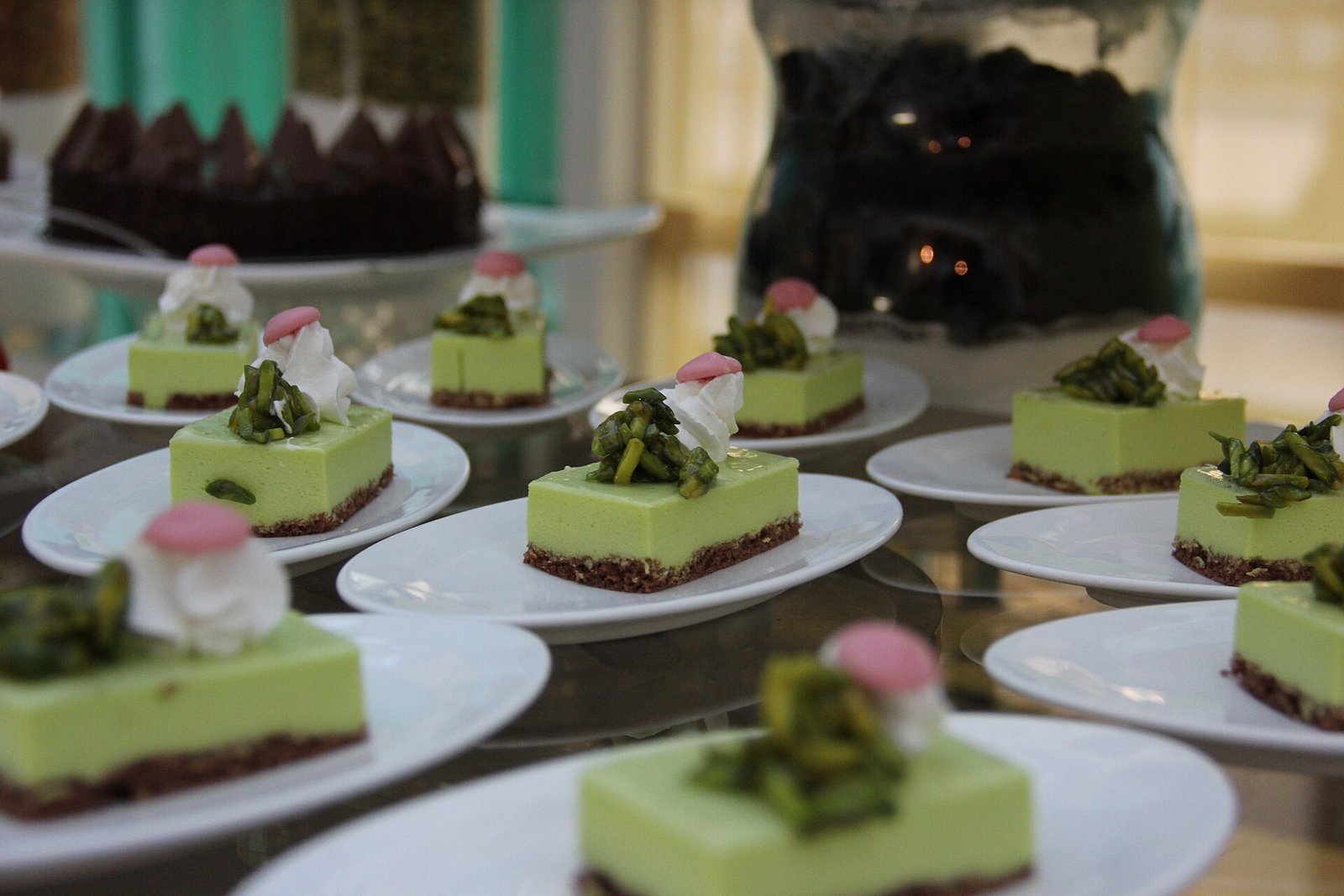
Look out for harees (slow-cooked wheat and meat beaten to a smooth porridge), thareed (bread soaked in a meat and vegetable stew) and luqaimat (small fried dumplings drizzled with date syrup). Visit Qatar names all three as Ramadan staples. Lentil soup, samboosa, Arabic coffee and sweet tea are common too.
Hotel iftar buffets and Ramadan tents
Most large hotels in Doha run an iftar buffet every evening, and many set up a Ramadan tent: a large air-conditioned marquee or ballroom decorated with lanterns and carpets, serving iftar and then staying open late for suhoor, shisha, coffee and card games. They are popular with companies and families, so book ahead for weekends. Prices, menus and locations change every year and are announced shortly before Ramadan, so check hotels’ own channels rather than relying on last year’s listings.
Iftar in Souq Waqif and Katara
For a more local feel, head to Souq Waqif. Restaurants fill up from about half an hour before sunset as families and groups claim tables. Long-running places such as Bandar Aden, known for Yemeni mandi and saltah, are classic choices; reserve if you can or arrive early. For breakfast-style Qatari dishes, Shay Al Shoomoos and Athr Café are worth knowing, but their Ramadan hours vary, so check before you go. Our Souq Waqif guide has the full picture.
Katara Cultural Village is the other big Ramadan gathering place, with restaurants along the beachfront and amphitheatre area and a busy late-night scene. The chapati and karak stalls are a favourite stop after taraweeh prayers. See our Katara Cultural Village guide for the layout.
Suhoor
Suhoor runs from late evening until shortly before dawn. Hotel tents, souq restaurants and many cafés stay open for it, and it is often the most relaxed time to be out: the rush of iftar is over, the air is cool and people linger for hours. Coffee shops in Msheireb Downtown Doha, Lusail Boulevard and Katara (try Kava Koffee) are popular, though again, check Ramadan hours.
Free iftars and charity
You will see iftar meals handed out at traffic lights and outside mosques, and large charity iftar tents for workers. These are for people who need them. If you want to take part, the best route is to volunteer or donate through a registered charity such as Qatar Red Crescent or Qatar Charity rather than queue for a meal.
The Ramadan cannon: where to see it fired
Every evening of Ramadan a cannon is fired at the exact moment of sunset to announce iftar. The tradition is centuries old across the region (it is usually traced to Mamluk-era Egypt) and in Qatar the cannon became part of Ramadan life long before loudspeakers carried the call to prayer across every neighbourhood. Today the firing is broadcast on Qatar TV, and watching it in person is one of the most popular Ramadan outings for families.
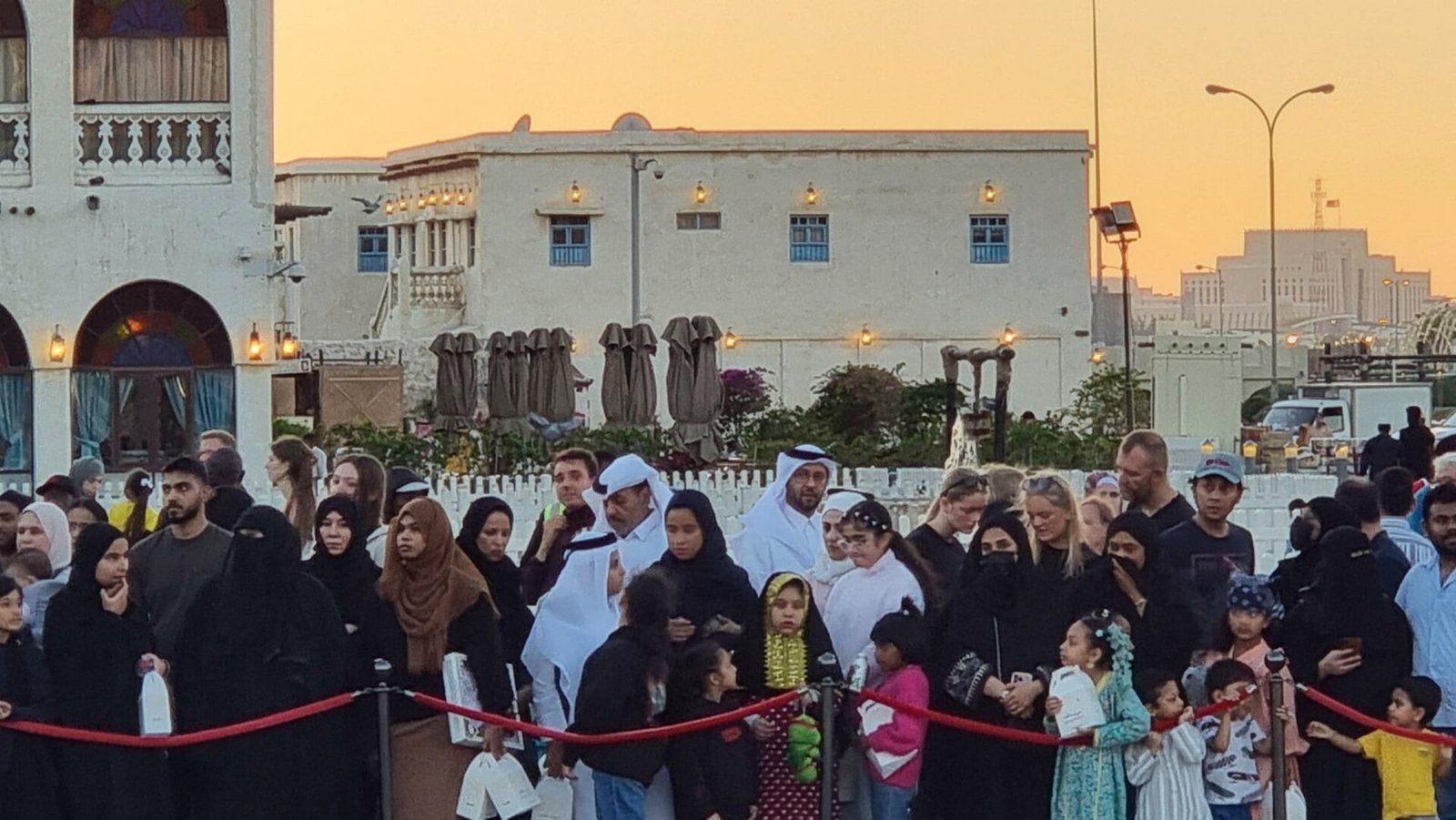
Souq Waqif
The best-known cannon is fired in the open square at the eastern side of Souq Waqif, near the spiral minaret of the Abdulla Bin Zaid Al Mahmoud Islamic Cultural Center (the old Fanar building). Visit Qatar’s 2026 listing describes the daily firing in the Eastern Square, along with iftar boxes and small toys handed out to children. Arrive by about 30–40 minutes before sunset to get a view; the crowd is several rows deep by the time the guards load the cannon.
Other locations
The cannon has been fired at several other places in recent years. Visit Qatar names Katara, the Imam Muhammad ibn Abd al-Wahhab Mosque (State Grand Mosque) and Souq Al Wakrah as good places to witness it, and Katara has fired its iftar cannon in its southern area every evening of Ramadan. In 2026 Old Doha Port also listed an iftar cannon among its Ramadan activities, and the cannon has been fired in Lusail in past years. Locations can change from year to year, so check the Qatar Calendar or Visit Qatar listings for Ramadan 2027.
- Souq Waqif: the classic, with the souq lanes to explore afterwards.
- Katara: family atmosphere and beachfront restaurants for iftar.
- State Grand Mosque: a quieter, more spiritual setting with the call to prayer.
- Al Wakrah: combine with iftar by the sea at Al Wakrah Souq.
- Old Doha Port: combine with the Mina District and its Ramadan food festival (2026).
Garangao: the mid-Ramadan children’s celebration
Garangao (also spelt Qaranqasho or Gergean elsewhere in the Gulf) is Qatar’s favourite Ramadan tradition for children. It falls on the 14th night of Ramadan, after iftar, marking the middle of the month and rewarding children for their fasting. Children dress in traditional clothes, girls often in colourful embroidered dresses with gold-coloured headpieces and boys in thobes and caps, and go from house to house with cloth bags, singing the Garangao song. Neighbours fill the bags with nuts, sweets and sugar-coated treats.
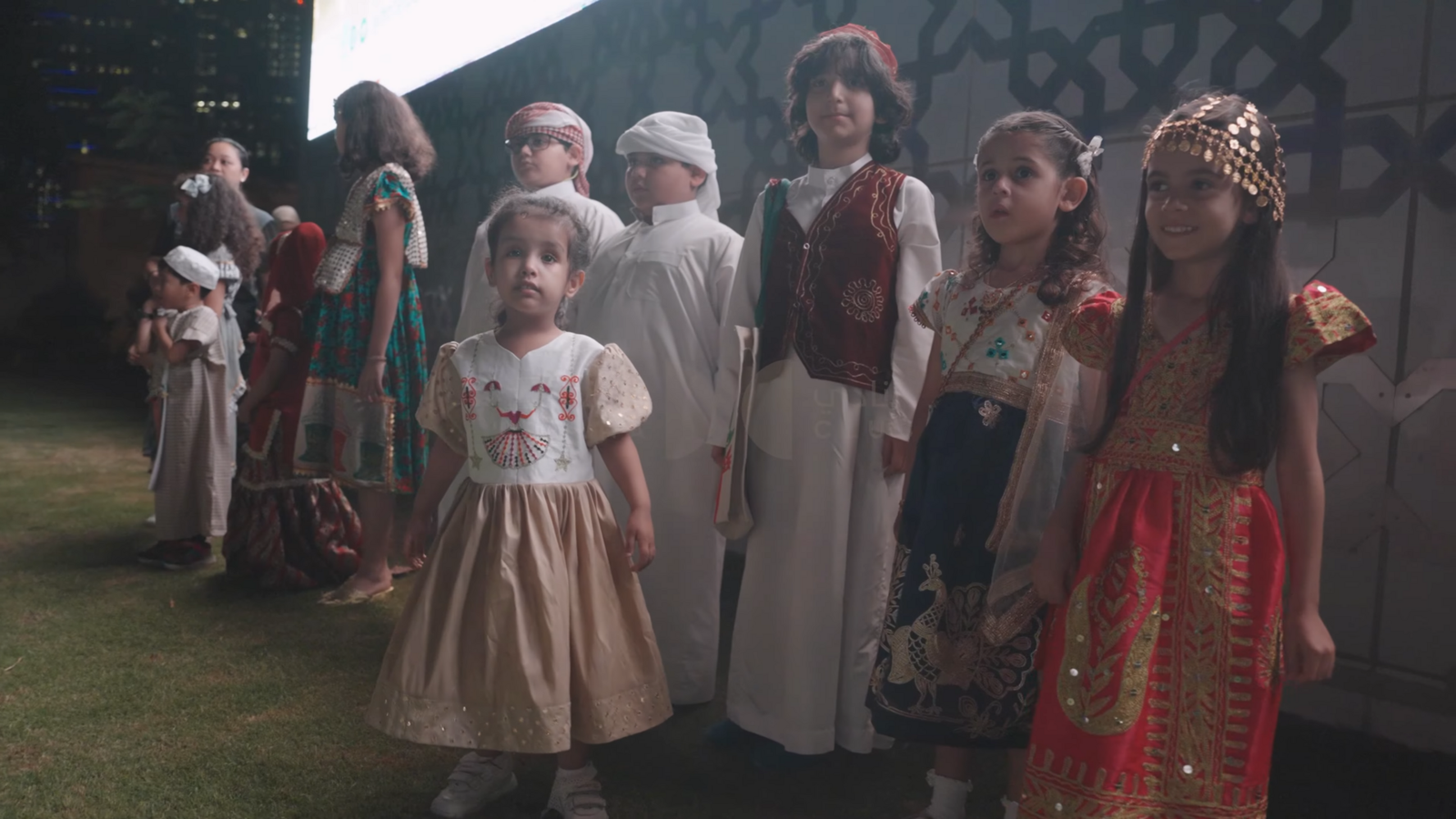
Where Garangao was celebrated in 2026
Garangao is mainly a neighbourhood and family event, but public venues hold their own celebrations that visitors can join. In 2026 these included Souq Waqif, The Pearl and Gewan Island, Old Doha Port, Msheireb Downtown Doha, Darb Al Saai, Katara, West Walk, Torba Market in Education City and a children’s session at Qatar National Library. Malls and hotels also hand out Garangao bags. Expect the 2027 programme to look similar, around 21 February 2027.
Joining in as a visitor
- It is fine to watch and photograph public celebrations, but ask parents before photographing children up close.
- Garangao bags of nuts and sweets are sold in supermarkets and the souq if you want to give some to children you know.
- Don’t knock on doors in residential areas unless you are with local friends who invite you.
Ramadan nights: markets, festivals and late-night Doha
After iftar and the night prayers, Doha’s streets fill until long after midnight. The specific programme changes every year and is published on the Qatar Calendar and Visit Qatar shortly before Ramadan. The 2026 line-up gives a good idea of what to expect.
Ramadan 2026 highlights (for reference)
- Ramadaniyat at Heenat Salma Farm: workshops, a Ramadan bazaar, storytelling, stargazing and Garangao activities at the organic farm in Al Shahaniya.
- Throwback Food Festival, Old Doha Port: its third edition ran through Ramadan 2026 with food and design inspired by the 1970s to 1990s.
- Barahat Ramadan Nights and Layali Msheireb: iftar, suhoor and cultural programming in Msheireb’s squares.
- Al Razji at Darb Al Saai: Qatari crafts, traditional dress and folk performances.
- Markets: Hayyi Ramadan at the Doha Exhibition and Convention Centre, The Pearl Ramadan Bazaar, the Museum of Islamic Art Bazaar, Lagoona Mall Ramadan Nights and a Ramadan shopping fair at Al Wakrah Old Souq.
- Katara: the Noor Ramadan lecture series, and in recent years the musaharati, a drummer who walks the lanes before suhoor to wake people for the last meal.
- Souq Waqif: an Asian nuts and dried fruits exhibition, plus Sadu weaving and Arabic calligraphy displays at the Souq Waqif Art Center.
Where to wander after iftar
If there is no particular event on, these are reliable places for an evening walk:
- Souq Waqif and the neighbouring horse stables and camel pen: lanterns, incense and crowds until midnight.
- Msheireb Downtown Doha: shaded lanes and squares that hosted Ramadan nights programmes in 2026; the free Msheireb tram loops the district.
- Lusail Boulevard and the Lusail Marina Promenade: lit-up towers, Ramadan decorations and cafés, reached easily by tram.
- Old Doha Port and Mina District: colourful lanes and waterfront food.
- Qanat Quartier, The Pearl: canal-side cafés and the Ramadan bazaar.
- Katara: beach, amphitheatre and the pigeon towers by the mosque.
Mosques, taraweeh and Laylat al-Qadr
Mosques are at the centre of Ramadan. After the evening prayer (Isha) comes taraweeh, long night prayers in which a section of the Quran is recited each night, and in the last ten nights many mosques add qiyam (or tahajjud) prayers in the small hours. Mosques are therefore busier and more crowded than usual, especially in the evenings.
Education City Mosque (Minaretein)
With its two calligraphy-covered minarets, the Education City Mosque is one of the most striking in Qatar and openly welcomes visitors of all backgrounds. During Ramadan 2026 Qatar Foundation hosted taraweeh and qiyam prayers there, a zero-waste iftar, nightly lectures and Quran sessions, alongside Ramadan sports events across Education City. For a respectful visit, go in the morning or early afternoon, outside prayer times, and check qf.org.qa for the 2027 Ramadan programme. Nearby, Qatar National Library and Oxygen Park make a calm evening walk.
Imam Muhammad ibn Abd al-Wahhab Mosque (State Grand Mosque)
Qatar’s largest mosque, opened in 2011, sits on a rise in Al Jubailat with views over West Bay. Its central hall holds around 10,000 men, with space for many more in the courtyards, and in Ramadan it is one of the main venues for taraweeh and for the huge crowds of the last ten nights. Non-Muslim visitors are welcome outside prayer times; women are asked to wear an abaya and headscarf, which the mosque provides. Guided visits have been arranged through the Abdulla Bin Zaid Al Mahmoud Islamic Cultural Center; during Ramadan, call ahead before planning a daytime visit, and avoid evenings altogether unless you are going to pray.
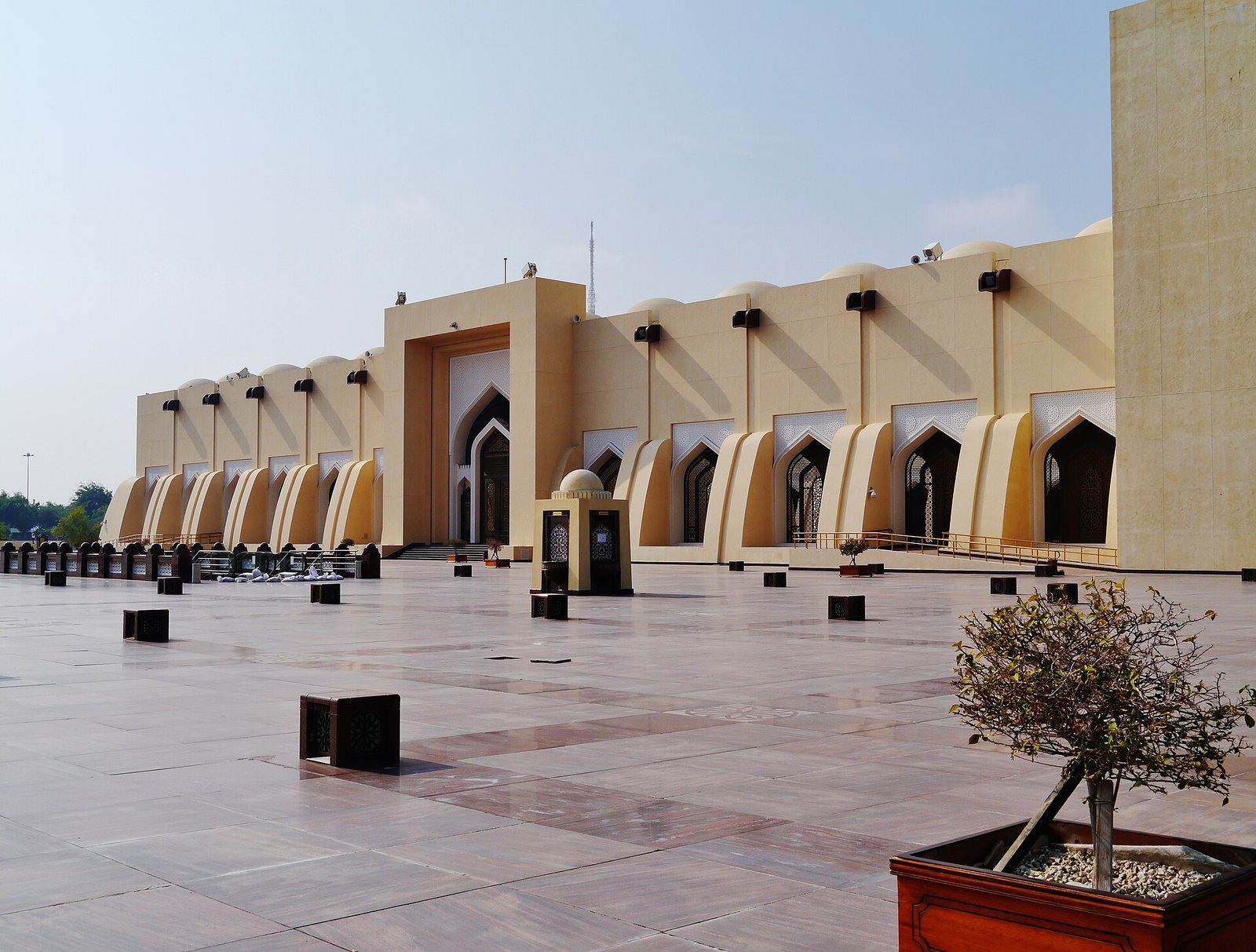
Mosque etiquette for visitors
- Cover arms and legs; women should cover their hair inside (scarves are usually available).
- Remove your shoes before entering the prayer hall.
- Don’t walk in front of people who are praying, and don’t photograph worshippers.
- Keep your phone silent and your voice low.
- Never bring food or drink inside.
Laylat al-Qadr and the last ten nights
The last ten nights of Ramadan are the most important of the month. Among them is Laylat al-Qadr, the “Night of Power”, which Muslims believe is better than a thousand months. Its exact date is not known; it is sought in the odd-numbered nights of the last ten, with the 27th night especially popular. In 2027 the last ten nights should fall roughly between 27 February and early March.
What this means for visitors:
- Large mosques, especially the State Grand Mosque, draw enormous crowds late at night, and roads and car parks around them fill up.
- Many people take time off or stay home for worship, and some businesses run quieter schedules.
- At the same time, malls and markets get busier with Eid shopping, often staying open until 1 or 2am in the final week.
Be considerate around mosques on these nights: park legally, keep away from the entrances and expect slower traffic.
Eid al-Fitr: the end of Ramadan
Ramadan ends with Eid al-Fitr, the “festival of breaking the fast”. It begins with special Eid prayers shortly after sunrise, followed by family visits, new clothes, sweets and gifts of money (eidiya) for children. In 2027 Eid is expected around 9 or 10 March, announced the evening before after the moon sighting.
Holidays and hours
Government offices close for an extended break. In 2026 the Amiri Diwan announced a public-sector Eid holiday from Tuesday 17 March to Monday 23 March. Shops and restaurants reopen with normal daytime hours from the first day of Eid, though some small businesses close for a few days while staff travel.
Eid events
Qatar usually marks Eid with festivals and family events, plus special programmes in malls and hotels. Visit Qatar’s 2026 Eid listings included festive markets, cultural showcases, live oud performances, Hot Wheels Live, Al Ruwais Village and Sneaker Con. In 2026 celebrations were also adapted to the regional situation: Eid prayers were held inside mosques only and residents were asked to keep gatherings in enclosed venues. Check the Qatar Calendar for the 2027 programme. Hotels and attractions are busy over Eid, so book early.
Getting around: traffic before iftar and late nights
Ramadan changes traffic patterns completely. Mornings are lighter than usual, there is a rush when offices close in the early afternoon, and then the roads go almost empty during iftar itself, as everyone is sitting down to eat.
The hour before iftar
This is the most dangerous time to be on the road. Each Ramadan Qatar’s Ministry of Interior warns drivers against speeding before iftar, as people race to get home or to family gatherings and accidents rise. If you are driving:
- Plan to arrive at your iftar spot before the rush, or set off after sunset.
- Keep extra distance and watch for sudden lane changes.
- Be especially careful around roundabouts and junctions near mosques.
- Expect delivery motorbikes everywhere in the last hour.
Metro, tram and taxis
Public transport is the easy option at night. In Ramadan 2026 the Doha Metro ran from 5.30am to 1.30am Saturday to Thursday and from 9.30am to 1.30am on Fridays; the Lusail Tram ran until 2am. Ride-hailing apps work around the clock, but waits can be long right after iftar and late at night near busy venues.
Sport and night-time activities
Ramadan is a big month for evening sport in Qatar. Once the fast is broken, five-a-side football, padel, volleyball and basketball tournaments fill courts and pitches until late, and running and cycling groups head out after taraweeh.
- Major events: the 2026 Ramadan calendar included the Qatar ExxonMobil Open tennis, CHI Al Shaqab equestrian event (see Al Shaqab), squash, basketball, beach volleyball and a padel event at Lusail International Circuit. The 2027 calendar will be different, but expect a similar mix.
- Education City: Qatar Foundation’s 2026 programme included a Ramadan race series, an aquathlon and community tournaments, with registration through its app.
- Parks after dark: Aspire Park and Al Bidda Park are busy with walkers and runners in the cool evenings.
- Desert and camping: the season falls in winter camping time; desert trips are still possible, but operators may run shorter or evening-focused schedules. See our desert safari guide and camping guide.
If you exercise during the day, do it indoors or in a hotel gym, and don’t drink from your bottle while jogging along the Corniche.
Tips for non-Muslim visitors and mistakes to avoid
Practical tips
- Shift your day later. Sightsee in the morning, rest in the afternoon, and plan your main outing from sunset to midnight.
- Book a hotel with a daytime restaurant. It makes lunch simple, especially with children.
- Stock your room. Supermarkets open late, so buy water and snacks for the day ahead.
- Try iftar at least once. A hotel buffet, a Ramadan tent or a souq restaurant: it is the best way to feel the month.
- Learn two greetings. “Ramadan Kareem” during the month and “Eid Mubarak” at the end.
- Accept hospitality. Dates and Arabic coffee offered at sunset are a welcome, not a sales pitch.
- Check hours every time. Ramadan timings are announced late and vary by venue and by week.
- Use the cool weather. February and March are among the best months for outdoor walks; see things to do in Qatar in winter.
- Bring children along in the evening. Garangao, the cannon and the markets are made for families; our Qatar with kids guide has more ideas.
Mistakes to avoid
- Drinking water in public “because it’s only water”. It still counts. Drink indoors or out of sight.
- Planning a busy afternoon. Between about 2pm and sunset many places are closed and the city is very quiet.
- Arriving at a restaurant at 6.30pm without a booking. Popular places are full from before sunset; book or arrive early.
- Driving fast just before sunset. This is when most Ramadan accidents happen.
- Assuming last year’s hours still apply. They change every year.
- Visiting a mosque during taraweeh as a sightseer. Go in the morning instead.
- Expecting bars and brunches. Alcohol is effectively off the menu for the month.
- Booking a tight connection on the last day. Eid dates move by a day, and flights and hotels are busy.
A sample Ramadan day in Doha, and where to stay
This is how a first-time visitor might spend a full day in Doha during Ramadan. For longer trips, see our Qatar itinerary.
- 8.30am: breakfast in your hotel’s daytime restaurant.
- 9.30am–1.30pm: the Museum of Islamic Art (not Wednesday) or the National Museum, then a walk on the Corniche while it is still cool. Morning is also the best time to visit the Education City Mosque.
- 1.30pm–4.30pm: back to the hotel for lunch, the pool and a rest. The city is at its quietest.
- 4.45pm: head to Souq Waqif by metro or taxi, before the pre-iftar traffic peaks.
- Sunset (about 5.20–5.45pm): watch the iftar cannon in the square, then iftar at a souq restaurant or a nearby hotel.
- 7.30pm–10pm: wander the souq lanes as shops reopen, then walk or take the tram to Msheireb. On museum nights, the evening session (8pm–midnight in 2026) is a cooler alternative.
- 10pm–late: Lusail Boulevard or Katara for coffee, karak and people-watching; suhoor at a hotel tent if you are still hungry.
Where to stay during Ramadan
Choose a hotel with at least one restaurant open in the daytime, an iftar offer you’d actually like to try, and easy access to the metro. Staying near Souq Waqif, such as the Souq Waqif Boutique Hotels, puts the cannon, iftar and late-night lanes on your doorstep, while West Bay and Lusail hotels are convenient for malls, Katara and Lusail Boulevard. Rates are often reasonable during Ramadan itself and rise sharply over Eid.
Frequently asked questions
When is Ramadan 2027 in Qatar?
Ramadan 2027 is expected to begin around Monday 8 February 2027 and end with Eid al-Fitr around 9 or 10 March 2027. The exact dates depend on the sighting of the new moon and are confirmed only shortly before.
Can tourists eat and drink in public during Ramadan in Qatar?
No. Eating, drinking (including water) and smoking in public during daylight hours is not allowed, and publicly eating or drinking is an offence under Qatar’s Penal Code, with penalties reported as up to three months in prison and/or a fine of up to QAR 3,000. Eat and drink in your hotel, at home or in screened, licensed restaurants.
Is it a good idea to visit Qatar during Ramadan?
Yes, if you are happy to slow down in the day. The weather in February and March is pleasant, evenings are lively, and you can experience iftar, the cannon and Garangao. Daytime options are more limited, and alcohol is effectively unavailable.
Are restaurants open during the day in Ramadan?
Most independent restaurants and cafés open only after sunset. Licensed outlets, mainly in hotels, can serve during the day behind screens, and delivery apps work throughout.
What should I wear in Qatar during Ramadan?
Dress modestly: shoulders and knees covered, loose clothing and nothing see-through. Women don’t need to cover their hair except in mosques. Swimwear is fine at hotel pools and private beaches.
Where can I see the Ramadan cannon in Doha?
The best-known cannon is fired at sunset in the eastern square of Souq Waqif. Katara, the State Grand Mosque, Souq Al Wakrah and, in 2026, Old Doha Port have also hosted it. Arrive 30–40 minutes early.
What is Garangao and when is it?
Garangao is a mid-Ramadan celebration for children on the 14th night of Ramadan (around 21 February 2027). Children in traditional dress sing and collect nuts and sweets, and venues such as Souq Waqif, Katara, Msheireb and The Pearl hold public celebrations.
Are museums open during Ramadan in Qatar?
Yes, with split hours. In Ramadan 2026 Qatar Museums opened Saturday to Thursday 9am–2pm and 8pm–midnight, and Friday 8pm–midnight, with each museum keeping its usual weekly closing day. Check qm.org.qa for 2027 timings.
Last checked October 2026. Rules, fees and access can change, so confirm with the official source before you go.