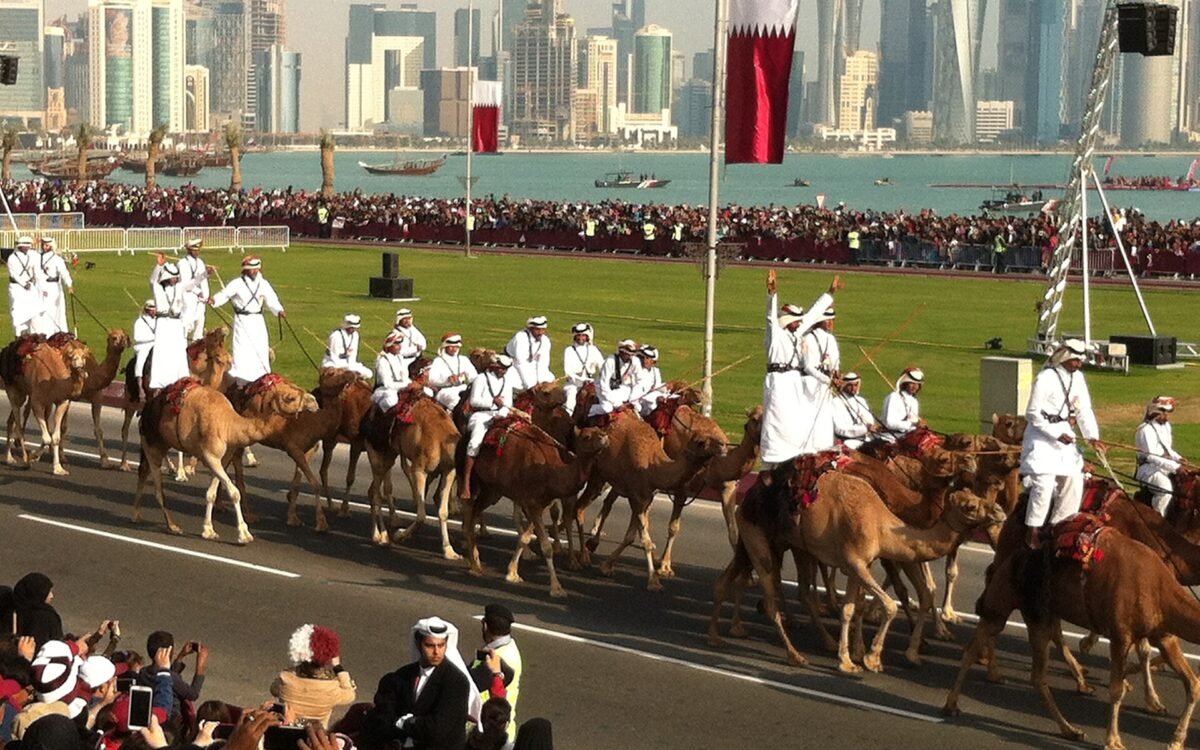
If this is your first time in Doha, the city can feel harder to read than it really is. The skyline suggests one big downtown, but Doha is a string of quite separate districts spread along the bay, each with its own character: an old market quarter, a glass-tower business district, a cultural village, an artificial island and a brand-new city to the north. Once you know which is which, and how the metro ties them together, everything else falls into place.
This guide is the orientation we wish every visitor had before landing. It explains the neighbourhoods, how to get from Hamad International Airport into town, how to get around, money and tipping, phones, the weather by season, the Friday–Saturday weekend, why so many places close in the afternoon, what to wear, the rules on alcohol and photography, Ramadan, safety and where to stay. It ends with a first-day checklist, ten must-sees and the mistakes first-timers make most often.
It is deliberately not a day-by-day plan. When you are ready to plan your days, our Qatar itinerary has ready-made routes for one to seven days, and every place mentioned below links to our full guide with hours, prices and directions.
At a glance
- Getting in: the Doha Metro Red Line runs from Hamad International Airport into the city; a standard journey costs QAR 2, with a QAR 6 daily cap.
- Weekend: Friday and Saturday. Many sights open only after midday prayers on Friday.
- Weekly closures: the Museum of Islamic Art closes on Wednesdays; the National Museum of Qatar and 3-2-1 close on Tuesdays.
- Dress: cover shoulders and knees in public places such as malls, museums, souqs and government buildings, men and women alike.
- Alcohol: only in licensed venues, mostly hotels; drinking or being drunk in public is illegal, and the legal age is 21.
- Best time to visit: November to March. June to September is very hot and humid, and outdoor sightseeing moves to early morning and after dark.
- Money: the Qatari riyal is pegged at about QAR 3.64 to USD 1; tipping is appreciated but not expected.
Doha’s neighbourhoods explained
Doha wraps around a crescent-shaped bay. The old centre sits at the southern end of the curve, the towers of West Bay at the northern end, and the 7 km Corniche promenade links the two. Further north are Katara, The Pearl and Lusail; to the west, a long drive inland, is the Education City and Aspire area. Here is what each one is like and who it suits.
Souq Waqif and Msheireb: the old centre
This is where most first-timers should start. Souq Waqif is a restored market quarter of mud-rendered lanes, spice and textile stalls, perfume shops, cafés and restaurants, with the Falcon Souq, the horse stables and camel pen and the Gold Souq folded in around it. It is busiest and most atmospheric in the evening.
Right next door, Msheireb Downtown Doha is the opposite approach to heritage: a newly built district of shaded lanes and low, pale buildings that borrows from traditional Qatari design. It holds the four restored heritage houses of the Msheireb Museums, good cafés and a free tram loop. Msheireb station is the interchange of all three metro lines, which makes this area the most practical base in the city.
The Corniche and Museum Park
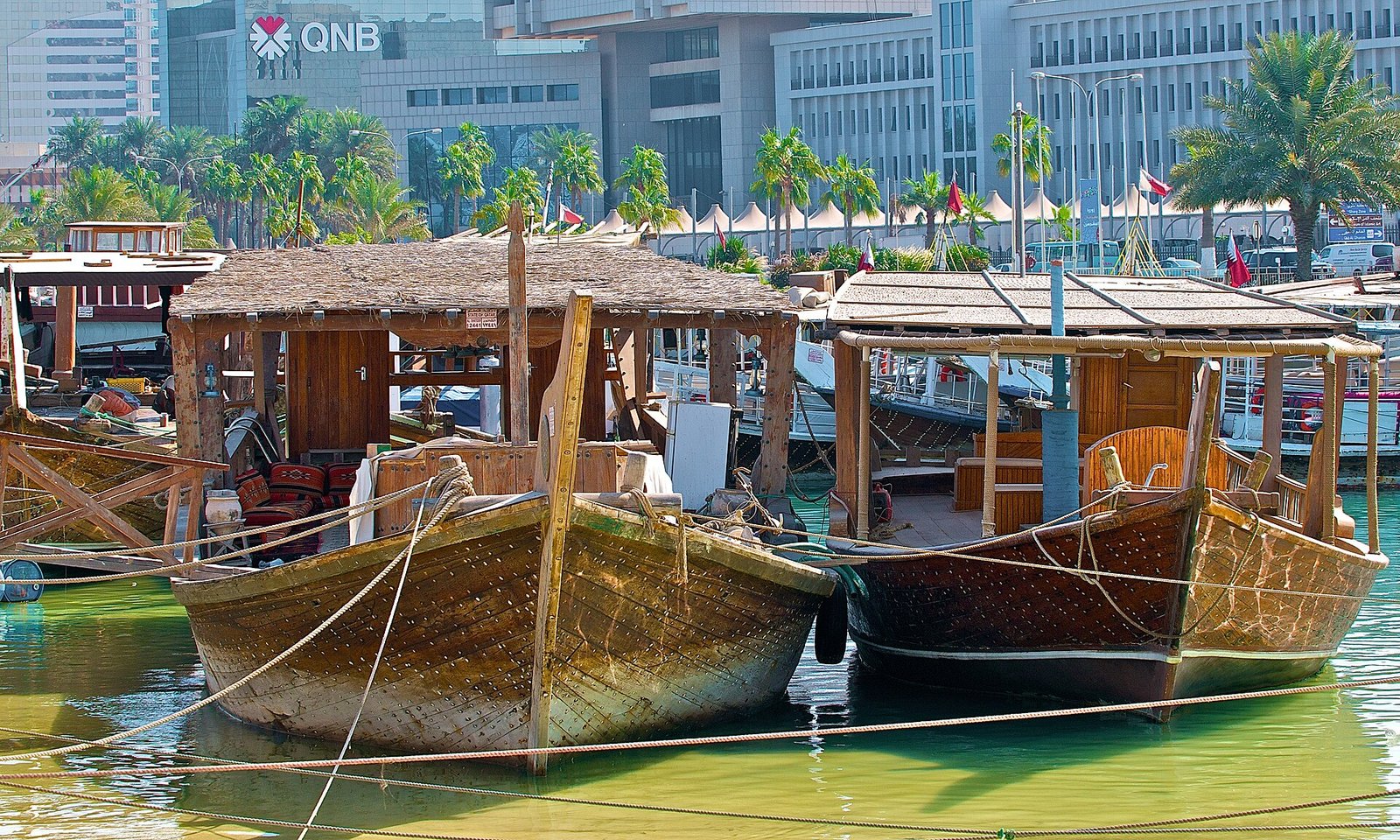
The Doha Corniche is the city’s seafront promenade, a long palm-lined walk around the bay with views across the water to West Bay. At its southern end the Museum of Islamic Art stands on its own island beside MIA Park, with Richard Serra’s sculpture 7 at the tip of the park. Opposite the souq, the dhow harbour runs short boat rides, and just to the east is the redeveloped Old Doha Port and its colourful Mina District. At the other end of the old centre, the National Museum of Qatar is the building shaped like a desert rose.
West Bay
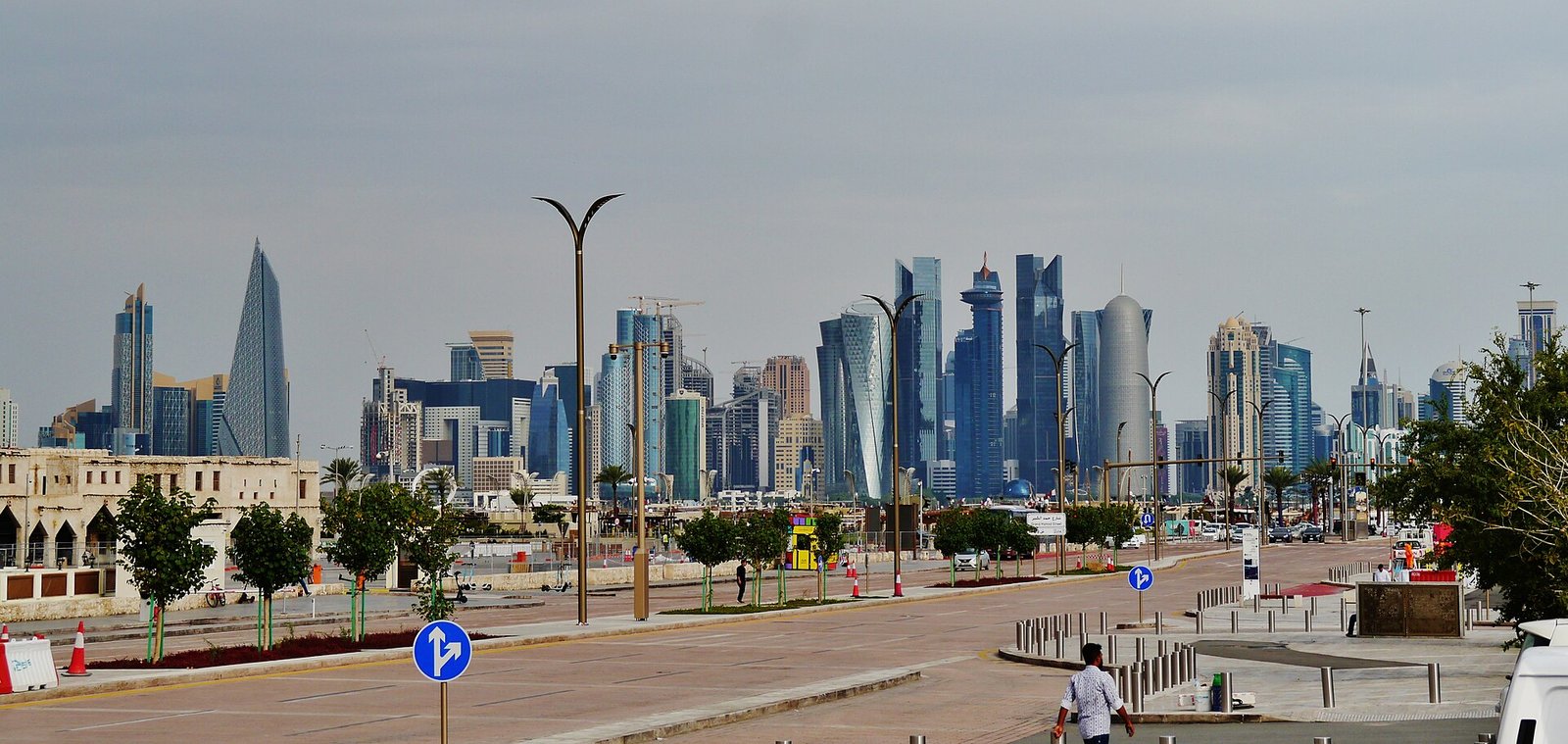
West Bay is the cluster of towers you see on every postcard of Doha. It is the business and diplomatic district, home to many of the large international hotels, offices and some malls. It is impressive from a distance and at night, less interesting at street level, where it is built around cars. Stay here for a big-brand hotel with a view and easy Red Line access; spend your sightseeing time elsewhere. Al Bidda Park, between West Bay and the old centre, is the city’s big central park.
Katara Cultural Village
North of West Bay, Katara is a purpose-built cultural district on the shore, with an amphitheatre, galleries, two striking mosques, the photogenic pigeon towers, a public beach and a long row of restaurants. It has its own Red Line station and fills up on winter evenings and at weekends. Locals end the night here with chapati and karak from the late-night stalls.
The Pearl-Qatar
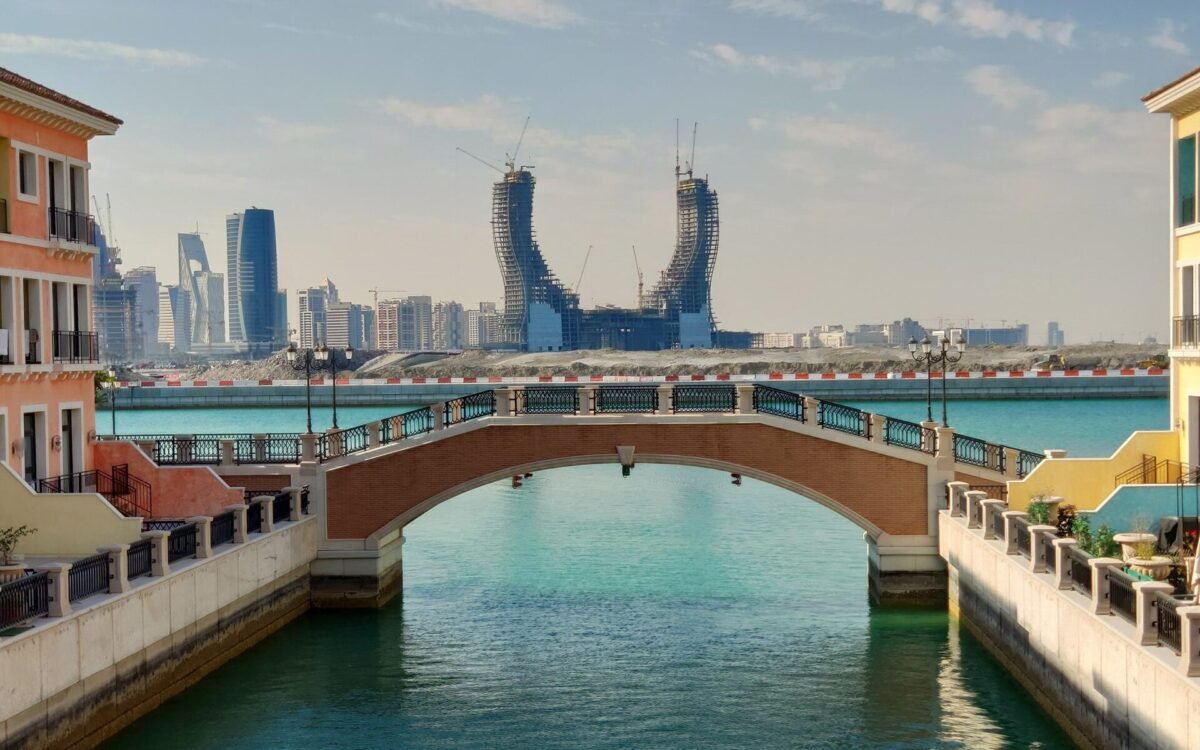
The Pearl is a man-made island of residential towers, marinas and canals just off the coast near Katara. For visitors it means two things: the yacht-lined boardwalk of Porto Arabia and the pastel, Venetian-style canals of Qanat Quartier. It is pleasant for a coffee, a stroll and dinner, but it has no metro station: you need a taxi, a car or the Metrolink feeder bus from Legtaifiya.
Lusail
Lusail, north of The Pearl, is Qatar’s newest city: wide avenues, a marina, towers, malls and the stadium that hosted the 2022 World Cup final. Visitors come for the Lusail Boulevard, the Marina Promenade and the Venice-themed mall Place Vendôme, and for big events such as the Formula 1 weekend and National Day celebrations. It is best in the evening and well served by the Red Line and the Lusail Tram. Our Lusail and The Pearl guide covers both districts in detail.
Education City and Aspire Zone
West of the centre, Education City is a campus of universities and landmark buildings, including the Qatar National Library, the Education City Mosque with its two tilted minarets, and Louise Bourgeois’s giant spider Maman in the convention centre foyer. Mathaf: Arab Museum of Modern Art is nearby. A few kilometres south, Aspire Zone has Aspire Park, the Torch tower and Khalifa International Stadium, the 3-2-1 Qatar Olympic and Sports Museum and Villaggio Mall. Education City is on the Green Line and Aspire Zone on the Gold Line (Sport City station), and both are better for a half-day visit than as a base.
Neighbourhoods at a glance
| Area | What it’s like | Metro | Best for | Best time |
|---|---|---|---|---|
| Souq Waqif and Msheireb | Old market lanes and a new heritage-style district | Souq Waqif (Gold), Msheireb (all lines) | Atmosphere, food, first night | Morning or evening |
| Corniche and Museum Park | Seafront promenade, MIA and the National Museum | Corniche (Red), National Museum (Gold) | Walks, museums, skyline views | Late afternoon to night |
| West Bay | Business towers and big hotels | Red Line (several stations) | Hotel base, night views | Night |
| Katara | Cultural village by the sea | Katara (Red) | Architecture, beach, dinner | Evening |
| The Pearl | Island of marinas and canals | None (taxi or feeder bus) | Cafés, marina walks | Morning or sunset |
| Lusail | New city, boulevard and marina | Red Line plus Lusail Tram | Skylines, events | Sunset to about 10pm |
| Education City and Aspire | Campus landmarks, park, sports museum | Green Line (Education City); Gold Line (Sport City) | Architecture, families | Daytime |
Arriving at Hamad International Airport
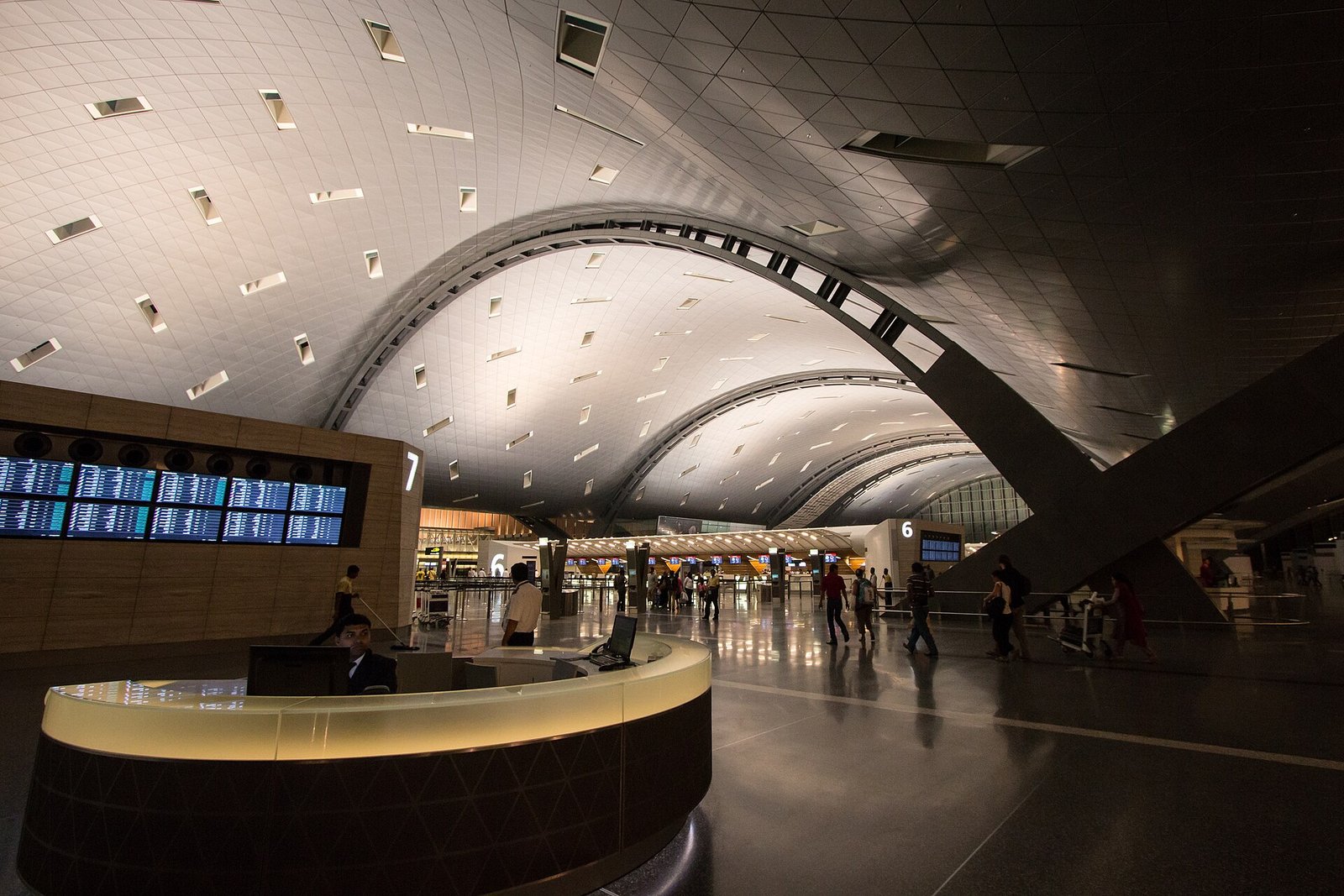
Almost every visitor arrives at Hamad International Airport (DOH), the hub of Qatar Airways and one of the most comfortable airports in the region. It sits on the southern edge of Doha; Visit Qatar and the souq’s own site put Souq Waqif about 15 minutes’ drive away, traffic permitting.
Before you land: visas and entry
Entry rules depend on your nationality. Citizens of many countries can enter Qatar without arranging a visa in advance, while others need to apply before travelling. Rules change, so check Visit Qatar’s visa information or your government’s travel advice before you book, and make sure your passport is valid for at least six months. If you are only passing through, Visit Qatar describes a transit visa for Qatar Airways passengers with a layover of at least six hours; our Qatar stopover guide has plans for short layovers.
From the airport into town
By metro. The airport has its own station on the Red Line, signposted from arrivals. Buy a Standard Travel Card (the card costs QAR 10, then you top it up), tap in and ride towards the city. Msheireb is the interchange for Souq Waqif on the Gold Line, and the Corniche and West Bay stations are a few stops further north. Since January 2025 the metro has run from 5am to 1am Saturday to Thursday and from 9am on Fridays, so on a Friday morning you will need a taxi.
By taxi. Turquoise Karwa taxis wait at the rank outside arrivals and are metered. Qatar Living’s 2026 transport guide gives a starting fare of QAR 25 from the airport and a typical ride to central Doha of about QAR 40 to 55.
By ride-hailing. Uber works in Qatar, alongside local apps such as Badrgo and Ryde, which the same source names as authorised airport operators. Fares are dynamic, so compare with the metered taxi at busy times.
Getting around Doha
Doha is not a walking city in the way that old European cities are. Distances between districts are long, roads are wide and fast, and for much of the year the heat makes long walks unpleasant. The good news is that the metro covers almost every major sight, and taxis fill the gaps.
Doha Metro
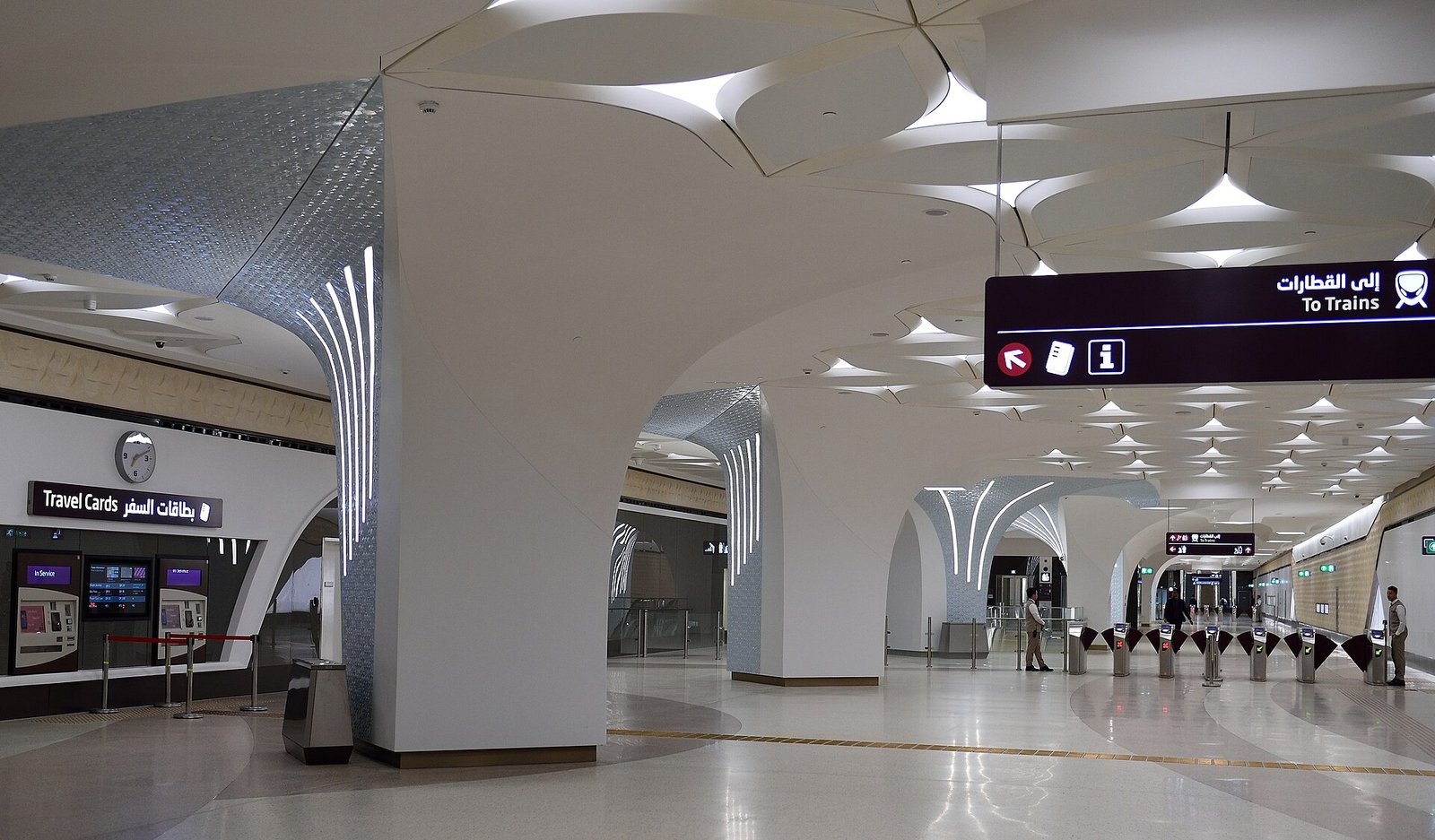
The Doha Metro has three lines. The Red Line runs north–south from the airport through the old centre, the Corniche and West Bay to Katara and Lusail, and south to Al Wakrah. The Gold Line runs east–west through Souq Waqif, the National Museum and Sport City (for Aspire Zone and Villaggio). The Green Line runs west to Education City and the Qatar National Library. All three meet at Msheireb.
A standard single journey costs QAR 2 and daily travel is capped at QAR 6. Buy the reusable QAR 10 Standard Travel Card once rather than single-use tickets every day. There is also a pricier premium class, Gold Club. Trains are clean, cold and frequent; hours change in Ramadan and on event nights, so check the Qatar Rail app.
Trams and feeder buses
Three useful extras cost nothing: the Msheireb tram loops the downtown district, the Education City tram links the campus buildings, and the Metrolink feeder buses connect stations to nearby neighbourhoods (including The Pearl, from Legtaifiya). The Lusail Tram is a separate network that uses the same travel card as the metro and connects the Lusail stations with the marina, the boulevard, Place Vendôme and the stadium.
Taxis and ride-hailing
Karwa taxis are metered. According to Qatar Living’s 2026 guide, the city flag fall is QAR 4, the minimum fare QAR 10, and the rate roughly QAR 1.60 per kilometre by day and QAR 1.90 at night. Uber and the local apps are often cheaper for groups. The smart combination is the metro for long distances plus a short ride from the nearest station. After big events and on winter weekend nights, expect waits and surge pricing.
Car hire
You do not need a car for Doha itself, and driving in the city is fast and assertive. A hire car does make sense for day trips north and west, for example to Al Zubarah or the west coast. Most visitors need their home licence plus an International Driving Permit, though the rules depend on your nationality, so confirm with the rental company. Many rental agreements forbid off-road driving; for the dunes and the Inland Sea, book a licensed 4×4 tour instead (see our desert safari guide). Our budget guide has current rental price ranges and a full transport cost comparison.
Money, prices and tipping
Currency and payments
The currency is the Qatari riyal (QAR, also written QR), pegged to the US dollar at about QAR 3.64 to USD 1, so QAR 10 is a little under USD 3. Cards, including contactless payments, are accepted almost everywhere in hotels, malls, restaurants and taxis booked through apps. Carry a little cash for small souq stalls, karak stands and tips. ATMs are easy to find in malls, at the airport and in the souq.
What things cost
Doha can be as cheap or as expensive as you make it. A metro ride is QAR 2 and a glass of karak a few riyals, while hotel dining and alcohol are expensive. Museum tickets are fair by international standards: non-resident adults pay QAR 50 at the Museum of Islamic Art and 3-2-1, and QAR 25 at the National Museum of Qatar, while QID holders and under-16s go free. For a full breakdown of accommodation tiers, cheap eats and a sample budget, see our Qatar on a budget guide and our list of free things to do in Qatar. Polite bargaining is normal in the souqs but not in malls; our shopping in Doha guide explains where to buy what.
Tipping
Tipping in Qatar is appreciated but not expected, and there is no fixed percentage. A Gulf Times report from January 2026 describes it as optional and seldom expected, a personal way of saying thanks. In practice, many visitors round up a taxi fare, leave a small tip for good restaurant service (check the bill first, as some places add a service charge), and leave a few riyals for hotel housekeeping or porters. Delivery riders and baristas, many of whom earn modest wages, value small cash tips.
Phones, SIM cards and eSIMs
Qatar has two mobile operators, Ooredoo and Vodafone Qatar. Both sell prepaid visitor SIMs, and both have desks in the arrivals hall at Hamad International Airport as well as stores across Doha. You will need your passport, as SIM cards are registered to the buyer. Visitor packages, prices and data allowances change often, so compare the current offers on the operators’ own websites before you fly.
If your phone supports eSIM, a travel eSIM bought before departure is the simplest option: you land with data already working. Several international eSIM providers sell Qatar plans that run on the local networks; coverage and speeds vary by provider, so read recent reviews. Check your home operator’s roaming rates too, which can be expensive in the Gulf.
Two practical notes: free Wi-Fi is common in malls, hotels, cafés and the airport, and some internet calling services may not work as they do at home, so test your preferred messaging app early. Download the Qatar Rail, Karwa and your chosen ride-hailing app before you arrive.
Weather by season
Qatar has two real seasons: a warm, mostly sunny winter and a long, very hot summer, with short, fast-changing shoulder months in between. Rain is scarce and falls almost entirely between December and April, usually as short showers.
| Months | Typical daytime highs (Doha) | What it feels like | Sightseeing pattern |
|---|---|---|---|
| November | About 30°C | Warm days, comfortable evenings | Outdoor plans most of the day; good swimming |
| December–February | About 23–25°C | Mild and sunny; nights in the mid-teens; occasional rain, fog and wind | Peak season: desert, beaches, walking tours, outdoor events |
| March | About 28°C | Warming fast; dust more likely | Outdoors in the morning and evening |
| April–May | Climbing into the high 30s | Hot by midday | Early mornings, museums by day, evenings out |
| June–September | About 39–42°C, nights around 30°C | Very hot; humidity rises in August and September | Indoors by day; sunrise and after-dark outdoors |
| October | Falling from the high 30s | Still hot, slowly easing | Evenings become pleasant again late in the month |
The figures above are averages drawn from Qatar Meteorology Department data, as summarised in our winter guide and Doha in summer guide. In December the sun sets before 5pm, so plan outdoor sightseeing earlier in the day than you might expect. If you are visiting between June and September, read our summer guide first: the heat is a genuine health risk, especially for children, older people and anyone not used to it.
Big dates in the 2026–27 season
- 27–29 November 2026: Formula 1 Qatar Grand Prix at Lusail International Circuit, with busy roads and hotels around Lusail.
- 18 December: Qatar National Day, with celebrations along the Corniche and in Lusail. See our National Day guide.
- Around 8 February to early March 2027: Ramadan (moon sighting decides the exact dates), followed by Eid al-Fitr.
- 25 October 2026 to 20 April 2027: the official winter camping season, if you plan a desert night (see our camping guide).
The weekend, opening hours and the daily rhythm
Doha runs on a rhythm that catches out almost every first-time visitor. Once you understand it, planning becomes easy.
The weekend is Friday and Saturday
Qatar’s weekend is Friday and Saturday, with Sunday a normal working day. Thursday and Friday evenings are the busiest of the week: restaurants fill up, roads to the beaches and desert are crowded, and car parks at the souq and Katara can be full by early evening. If you want calm, go on a weekday evening.
Friday mornings
Friday is the main day of congregational prayer. Many shops, souq stalls and attractions stay closed in the morning and open after midday prayers. Most Qatar Museums sites open at 1:30pm on Friday, Al Zubarah opens at 12:30pm, and the Msheireb Museums open only from 3pm. The metro starts at 9am. Use Friday morning for a slow breakfast, a hotel pool, a beach, or a walk along the Corniche.
Afternoon closures
Traditional businesses, including many souq shops, close for a few hours in the early afternoon and reopen around 4pm until late evening. The Falcon Souq shops, for example, are mostly open from about 4pm to 10pm, and the Gold Souq works mornings and evenings. Malls, museums and big restaurants stay open through the afternoon. That makes the afternoon the natural time for a museum, a mall, or a rest at the hotel, and the evening the time for the souqs and the waterfront.
Museum closing days
Each museum closes on a different weekday, which can wreck a short trip if you don’t check:
- Museum of Islamic Art: closed Wednesday; open until 9pm on Thursday.
- National Museum of Qatar: closed Tuesday; open until 9pm on Thursday.
- 3-2-1 Qatar Olympic and Sports Museum: closed Tuesday.
- Mathaf: closed Monday.
- Msheireb Museums: closed Sunday.
Our guide to museums in Qatar has full hours, prices and what each one offers.
Dress code and etiquette
Qatar is a conservative Muslim country that is used to visitors and generally relaxed with them, provided they show basic respect. None of this is complicated.
What to wear
Cover your shoulders and knees in public places: malls, museums, souqs, government buildings and on the street. The rule applies to men as well as women. Qatar Museums asks visitors to dress this way and says staff may refuse entry if they consider clothing unsuitable, and the UK government notes that the dress code is strictly enforced in government buildings, healthcare facilities and banks. Avoid see-through, very tight or very short clothes, and don’t wear clothing with offensive slogans.
In practice: light trousers, midi or maxi skirts and dresses, and T-shirts with sleeves all work. Women do not need to cover their hair in public, but should bring a scarf for mosques. Swimwear is fine at hotel pools, hotel beaches and beach clubs; cover up when you leave them. Pack a light layer too: malls, cinemas and the metro are heavily air-conditioned.
Visiting a mosque
Some mosques welcome non-Muslim visitors outside prayer times, including the Education City Mosque. Cover shoulders and knees; women should also cover their hair; take your shoes off before entering; and keep your voice low. Don’t walk in during prayers.
Public behaviour
- Affection: keep it minimal. Holding hands is usually fine, but kissing and other intimacy in public can lead to arrest.
- Language and gestures: swearing and rude gestures count as obscene acts in Qatar and can lead to jail or deportation. Stay calm, especially with officials and in traffic disputes.
- Vaping: using e-cigarettes is illegal in Qatar, and smoking is banned in all closed public spaces.
- Family areas: some parks and beaches have women-and-children or family-only days, for example Al Khor Park on Tuesdays and Al Farkiya Beach on Sundays and Wednesdays. Respect the signs.
- Carry ID: keep your passport (or a copy) on you; you may be asked to show the original.
Photographing people
Take photos of buildings, the skyline and the souq freely, but always ask before photographing people, especially women and children, and accept a no. Qatari law takes privacy seriously: the UK government warns that sharing images of people without their consent can lead to imprisonment or a fine of up to QAR 100,000. Don’t photograph military, government or police sites, or accident scenes. Inside museums, tripods, selfie sticks and flash are not allowed, and flying a drone requires approval.
Alcohol rules
Alcohol is legal in Qatar but tightly controlled. For visitors the rules are simple:
- Only licensed venues can sell alcohol, and in practice that means bars and restaurants in hotels, plus a few licensed clubs.
- The legal drinking age is 21, and venues ask for original photo ID. Copies are not accepted, so bring your passport.
- Drinking alcohol or being drunk in public is illegal. The UK government notes penalties of up to six months in prison or a fine of up to QAR 3,000 for drinking in a non-licensed public place.
- There is zero tolerance for drink-driving.
- The only shop selling alcohol is for residents with a permit, so visitors cannot buy a bottle to take back to their room. Don’t plan to bring alcohol in your luggage.
- Drinks are expensive. Hotel happy hours help.
Souq Waqif, Katara, Msheireb and the malls are alcohol-free, which is part of what makes them such easy family places in the evening. During Ramadan, hotel bars typically stop serving or close.
Ramadan, Eid and public holidays
Visiting during Ramadan is a rewarding experience, but it changes the city. During daylight hours, eating, drinking, smoking and chewing gum in public are not allowed, and that includes your car if people can see you. Restaurants that serve in the daytime do so behind screens, and most large hotels keep at least one outlet open. Opening hours shift later: in 2026 Qatar Museums ran split hours, morning and late evening, and the souqs come alive after sunset.
Ramadan 2027 is expected to begin around 8 February 2027, with Eid al-Fitr around 9 or 10 March (moon sighting decides). Iftar, the sunset meal, is the moment to join in: a hotel buffet, a Ramadan tent or a souq restaurant. Our full Ramadan in Qatar guide covers the rules, hours and the best ways to experience the month.
Over Eid, hotels and attractions are busy and prices rise, so book early.
Safety and health
Doha is a very safe city for visitors. Crime levels are low and you can walk the souq or the Corniche late at night without worry. The usual sensible precautions apply: the UK government advises women travelling alone at night to use reputable taxis or recognised apps.
The real risks are the environment and the roads:
- Heat: from May to September, heat exhaustion and heat stroke are a genuine danger. Avoid the midday sun, drink far more water than you think, and recognise the warning signs. See our summer guide.
- Roads: driving is fast, and road discipline can be poor. Take extra care crossing large roads; use crossings and bridges.
- Desert: never take a normal car into the dunes. Desert trips need a properly equipped 4×4, an experienced driver and travelling in convoy, which is why most visitors book a tour.
- Medicines: some medicines legal elsewhere are controlled in Qatar. Carry prescriptions and check the rules before you fly. Qatar has zero tolerance for drugs, including residual amounts in transit.
- Emergencies: dial 999 for police, ambulance or fire.
Wider regional tensions can occasionally affect flights in the Gulf, so check your government’s current travel advice and buy travel insurance before you go.
Where to stay: which area suits you
Qatar is small, so you can see almost everything from one base. The choice is about atmosphere and transport rather than distance. We don’t quote nightly prices here because they change daily with demand; our budget guide has average room rates and tips for finding deals.
Souq Waqif and Msheireb: best for a first visit
Staying in the old centre puts the souq, the Corniche, MIA and the National Museum within walking distance or a stop on the metro, and Msheireb station connects you to every line. Options range from the small heritage hotels of the Souq Waqif Boutique Hotels, tucked into the lanes, to modern hotels in Msheireb and older, simpler hotels in the streets behind the souq. The trade-off: the souq stays lively and noisy late at night, especially at weekends.
West Bay and the Corniche: best for big hotels and views
This is where most of the large international hotels are, many with bay views, pools and beaches. It suits business travellers and anyone who wants a familiar brand and easy Red Line access. Evenings are quieter at street level, so expect to travel to the souq or Katara for atmosphere.
The Pearl and Lusail: best for a resort or marina feel
Hotels and serviced apartments here feel more like a seaside resort, with marina walks and restaurants on the doorstep; the palace-style Marsa Malaz Kempinski on The Pearl is the best-known. Lusail is well served by the Red Line and tram, but The Pearl has no metro station, so you’ll rely on taxis to reach the old centre.
Your first-day checklist
- Get connected: activate your eSIM or buy a visitor SIM at the airport.
- Buy a Standard Travel Card at the airport metro station and top it up; it works on the metro and the Lusail Tram.
- Download the apps: Qatar Rail, Karwa, a ride-hailing app and an offline map.
- Get some cash from an ATM for souq stalls, karak and tips.
- Check the day of the week: which museums close today, and is it Friday morning?
- Dress for the souq: shoulders and knees covered, comfortable shoes, a scarf if you plan to see a mosque.
- Carry water and sunscreen, even in winter.
- Keep your passport or a copy on you, and the original if you plan to have a drink at a hotel bar.
- Spend the first evening in Souq Waqif: it is the easiest place to get your bearings, eat well and feel the city.
10 must-sees for your first visit
If you see only these, you’ll leave with a good sense of the country. Our itinerary guide arranges them into day plans, and our hidden gems guide is the next step once you’ve covered the classics.
1. Museum of Islamic Art and MIA Park
I. M. Pei’s building on its own island is Doha’s most famous landmark, and the collection inside spans more than a thousand years of Islamic art. Afterwards, walk through the park to Serra’s 7 for the classic view of the West Bay skyline. Closed Wednesdays. Read our full guide to the Museum of Islamic Art.
2. Souq Waqif
Wander the lanes in the evening, watch the falcons, have dinner and a karak. Breakfast spots such as Shay Al Shoomoos and Bandar Aden show you the souq’s morning side. Read our full guide to Souq Waqif.
3. National Museum of Qatar
Jean Nouvel’s desert-rose building tells the story of Qatar from geology to pearling to oil, and wraps around the restored Old Palace. It is the best single introduction to the country. Closed Tuesdays. Read our full guide to the National Museum of Qatar.
4. The Corniche and the dhow harbour
Walk a stretch of the Corniche at sunset, then take a short ride on one of the dhows from the dhow harbour to see the skyline light up from the water. Read our full guide to the Doha Corniche.
5. Msheireb Downtown and the Msheireb Museums
The four heritage houses of the free Msheireb Museums cover Qatari family life, the country’s first oil workers and the history of slavery in the Gulf. Combine them with coffee in Msheireb Downtown, for example at Savant.
6. Katara Cultural Village
The amphitheatre, the tiled Katara Mosque, the pigeon towers and the beach make an easy evening, ending with chapati and karak. Read our full guide to Katara.
7. The Pearl: Porto Arabia and Qanat Quartier
Superyachts, marina cafés and pastel canals: a different, more polished Doha. Read our full guide to Porto Arabia and our guide to Qanat Quartier.
8. Lusail Boulevard and the marina
Go after dark, when the towers are lit, the boulevard is busy and the Marina Promenade catches the breeze. Fans can see Lusail Stadium from outside. Read our full guide to Lusail Boulevard.
9. Education City
The Qatar National Library is one of the finest modern interiors in the Gulf and free to visit; add the Education City Mosque, Maman and Mathaf. It is a good plan for a hot afternoon.
10. The desert and the Inland Sea
Leave the city at least once. A half-day 4×4 safari to Khor Al Adaid, where the dunes meet the sea, is the classic choice; the Singing Sand Dunes are a shorter alternative. Read our desert safari guide and our day trips from Doha for more.
Mistakes first-timers make
- Turning up on the wrong day. Arriving at MIA on a Wednesday or the National Museum on a Tuesday is the most common first-trip disappointment. Check before you go.
- Planning a Friday morning of sightseeing. Many places open only after midday prayers, and the metro starts at 9am.
- Visiting the souq at 2pm. Many shops are closed and the lanes are empty. Go in the morning or after about 4pm.
- Trying to walk between districts. West Bay to the souq looks close on a map; in the heat it isn’t. Use the metro.
- Underestimating the heat. From May to September, plan outdoor sightseeing for early morning and after sunset only.
- Dressing for the beach in the city. Shorts above the knee and sleeveless tops can get you turned away from museums and government buildings.
- Photographing people without asking. It is impolite and can be a legal problem.
- Expecting to drink anywhere. Alcohol is only in licensed venues, mostly hotels, and you’ll need your original passport.
- Driving a saloon onto the sand. Normal cars stay on the tarmac; book a licensed 4×4 tour for the dunes.
- Ignoring the calendar. Ramadan, Eid, National Day and the Grand Prix all change crowds, prices and opening hours.
Frequently asked questions
Is Doha good for a first-time visitor?
Yes. It is safe, compact enough to cover in three or four days, easy to get around by metro and English is widely spoken. The main things to learn are the Friday–Saturday weekend, the afternoon closures and the dress code.
How many days do I need in Doha for a first visit?
Three days covers the main museums, Souq Waqif, the Corniche, Katara, The Pearl and Lusail. Add a fourth for the desert and a fifth for a day trip north or west. Our itinerary guide has plans for one to seven days.
What should I wear in Doha as a tourist?
Cover your shoulders and knees in public places such as malls, museums, souqs and government buildings; this applies to men and women. Women don’t need to cover their hair except in mosques. Swimwear is fine at hotel pools and beaches.
Can tourists drink alcohol in Qatar?
Yes, but only in licensed venues, mostly hotel bars and restaurants, and only if you are 21 or over with original photo ID. Drinking or being drunk in public is illegal, and visitors cannot buy alcohol in a shop.
How do I get from Hamad International Airport to Doha city centre?
Take the Doha Metro Red Line from the airport station for QAR 2, changing at Msheireb for Souq Waqif. Karwa taxis and ride-hailing apps are also available; a taxi to central Doha typically costs about QAR 40 to 55. On Friday mornings the metro starts at 9am.
Is the weekend in Qatar on Friday and Saturday?
Yes. Friday and Saturday are the weekend. Many attractions and shops open only after midday prayers on Friday, and Thursday and Friday evenings are the busiest times of the week.
Do I need to tip in Doha?
Tipping is appreciated but not expected. Rounding up a taxi fare, leaving a small tip for good restaurant service (if no service charge has been added) and a few riyals for hotel staff is usual.
When is the best time for a first visit to Doha?
November to March, when daytime highs are roughly 23–30°C. December to February is the coolest and busiest period. Summer is very hot, but hotels are cheaper and indoor attractions are quiet.
Last checked October 2026. Rules, fees and access can change, so confirm with the official source before you go.